Your ShelfYour Projects

Review and Herald, Vol. 79, No. 21.

OUR COUNTRY

Review and Herald

May 27, 1902

Seventh-day Adventist Publishing Association · Battle Creek, Mich. · May 27, 1902

OUR COUNTRY

THE MARVEL OF NATIONS
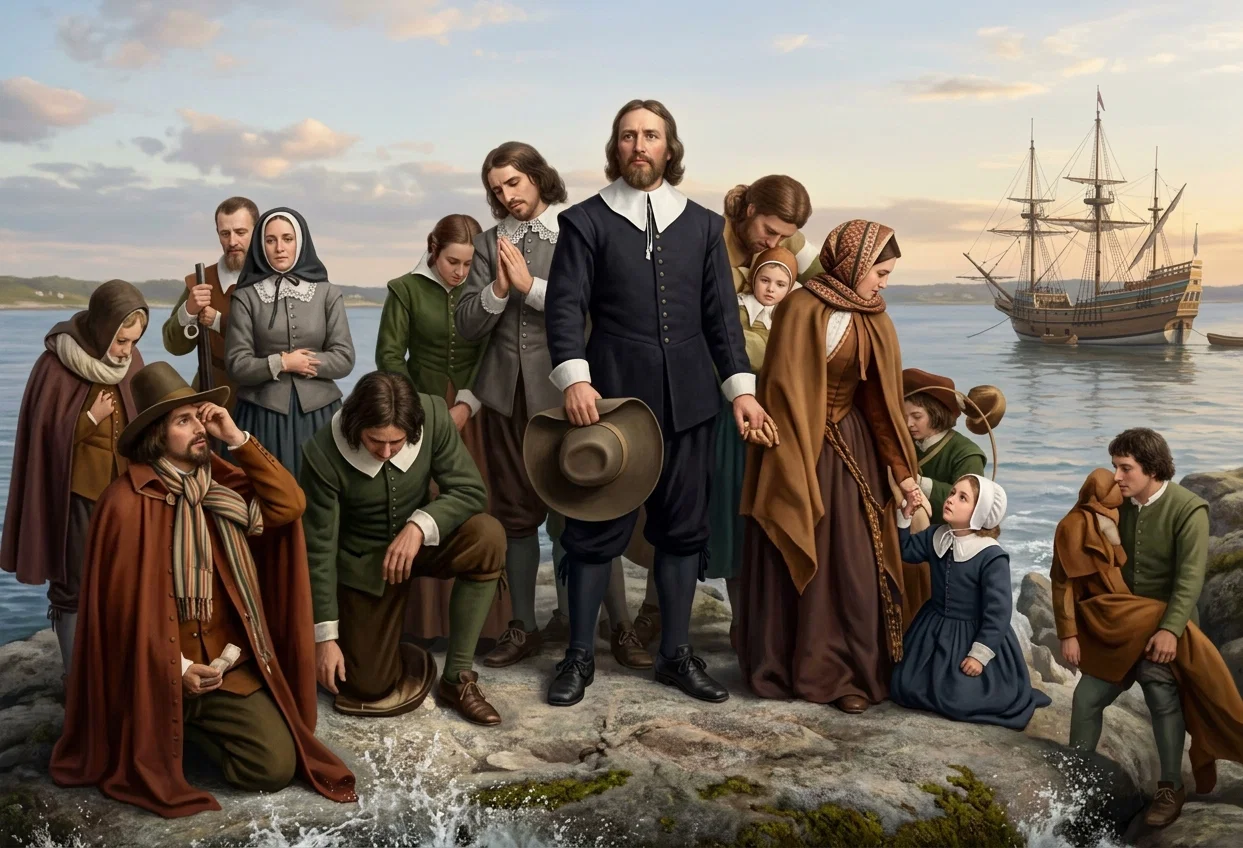
The important element in history is the working of divine providence in the affairs of men. To rightly interpret this, and learn its lessons, and shape our own lives in accordance therewith, is the part of true wisdom. Nebuchadnezzar was taught that the most high God ruled in the kingdom of men (Dan. 5:22); and the Jews missed the golden opportunity to prolong their national existence, because they knew not the time of their visitation. Luke 19:44. This is the day of God's preparation. Nah. 2:3. This is the day of OUR visitation. None should fail to know it.
“The Marvel of Nations” pictures the situation. Under the fostering care of a beneficent providence, our country has surpassed all other nations in material development, till now it stands forth the richest nation in ready money, the richest in resources, the richest in facilities for defense and conquest, of any nation on the globe. These developments are a marvel. It has been a friend of liberty, morality, and that righteousness that exalteth a nation. Prov. 13:34. This book tells how these principles have been exploited, and the results. All this was predelineated on the prophetic page. Hence the wonderful physique of this nation.
Its expansion and prowess became a living object lesson of the voice of God to the people. The thought of fulfilling prophecy should sweep the cobwebs of indifference from every mind, and when all the environing evidence shows that the fulfilling prophecy pertains to our own time, the very days in which we live, and to our own place, the very location which we occupy, so that our life and experience is inseparably interwoven therewith, what power can divert our minds from making all that field a theme of study to ascertain how far we may be enlightened and benefited by it. From every point of view this nation is a marvel, and challenges every man's attention. We can not ignore the mighty strides made in its progress, and we can not disregard expansion, the wonderful discoveries and inventions, which have almost lifted this nation into another realm. We can not set aside what God has said concerning it. We can not shut our eyes to the spirit of apostasy and decay beginning to manifest itself; we can not be indifferent to the issues clustering in the very focus through which we must pass. The pathetic voice spoken to the Jews is virtually repeated to us to-day, “If thou hadst known, even thou, at least in this thy day, the things which belong unto thy peace!” Hold up before this land, the light. Warn the people of their danger. Rescue the perishing. This is the object of all revelation.

The Missionary Spirit

Editorial

The Missionary Spirit

A MISSIONARY is one who is sent by another. This is the meaning of the word. The missionary spirit is the spirit which desires to be sent. This is the spirit of the gospel. One who has the missionary spirit is listening for the call, “Whom shall I send, and who will go for us?” and then promptly responds, “Here am I; send me.”

The Great Missionary

JESUS regarded himself as one who was sent to represent another. Over and over again he used the expressions, “The Father which hath sent me,” and, “He that sent me.” Such a form of reference to his Father occurs over twenty times in the Gospel of John alone. While it was the desire of Jesus to be sent to this world as its Redeemer, yet his will was so completely submitted to the will of his Father that he did not come of himself. He was sent by his Father, and he was sent to represent his Father. He said: “I came down from heaven, not to do mine own will, but the will of him that sent me.” “He that hath seen me hath seen the Father.”

The Missionary Commission

WHEN Jesus had finished his work which he had been sent to do, he commissioned his followers to represent him in the work of saving men. His words are: “As my Father hath sent me, even so send I you.” And his parting command was, “Go ye into all the world, and preach the gospel to every creature.” The followers of Jesus are missionaries, persons who are sent to represent another. This distinguishes them from those who go without being sent by the Lord, and who represent only themselves. The apostle Paul understood this commission, and regarded himself as a representative of Jesus and so completely identified with him that he applied to himself the prophecy which was uttered primarily with reference to the Messiah and his work. In justifying his turning to the Gentiles with the gospel message after the Jews at Antioch in Pisidia had refused to receive it, he used the prophecy recorded in Isa. 49:6, saying “For so hath the Lord commanded us, saying, I have set thee to be a light of the Gentiles, that thou shouldest be for salvation unto the ends of the earth.” The life of Jesus was so fully manifested in the apostle Paul that he became a light of men and for salvation to all. Thus the Saviour of the world carries forward his work of salvation through men who by their union with him become saviors of others.

The Missionary Work

THE primary work of the missionary is to represent the one who has sent him. In reality this is his only work. There is much done by those who profess to be missionaries which is in no sense missionary work. One is not necessarily a missionary, and is not necessarily doing missionary work, simply because he has gone to a distant country to work under the direction of some board or conference. Those only are genuine missionaries, and are doing missionary work, whom the Lord has sent, and who really represent the Lord in their daily life and in the character of their work. Those who represent themselves, and work according to their own ways, are not the Lord’s missionaries, although they may be called missionaries by men. The true missionaries can say: “Now then we are ambassadors for Christ, as though God did beseech you by us: we pray you in Christ’s stead, be ye reconciled to God.” Such missionary work as this is possible only when Christ dwells in the heart by faith. Paul’s experience as a missionary was the natural result of Paul’s experience as a Christian, which he expressed in these words: “I have been crucified with Christ; and it is no longer I that live, but Christ liveth in me.” And this is the only basis of successful missionary work. We cannot of ourselves imitate the life of Christ. We can represent him only as he dwells in us and reveals himself through us. “It pleased God . . . to reveal his Son in me, that I might preach him among the heathen.” The man who has the same kind of a Christian experience as the apostle Paul had, will have the same kind of a missionary experience as he had. “Of the apostles of Christ it is written, ‘They went forth, and preached everywhere, the Lord working with them, and confirming the word with signs following.’ Still the heavenly universe is waiting for channels through which the tide of mercy may flow throughout the world. The same power that the apostles had is now for those who will do God’s service.” The cry is coming up from many a field, “Come over . . . and help us.” Some hearts have been touched by this call, and have said, “Here am I; send me.” And still the Lord is calling for genuine missionaries for the work nigh and afar off. The church of Christ must be a missionary church. Are we living members of the true church of Christ? “By their fruits ye shall know them.”

The Carte Blanche of Prophecy “Then Shall”

When one would do another person an unconditional and an unlimited favor, he sometimes gives him what is called a “carte blanche,” a paper containing his signature, and sometimes sealed with his seal, to make it authoritative, leaving the receiver to fill out the obligation as may please him, and superscribe it with any conditions he may desire to fill out. And the giver considers himself bound by them all.
Prophecy does to us, virtually, the same thing; that is, it spreads out before us the whole field of the prophecy, with all its promises, and often opens its formulas in regard to them thus, “Then shall,” leaving us to gather up any of the promises we may desire, and complete the declaration with that. Thus we have placed in our hands a carte blanche with reference to any of the promises, to be filled out by any which we please. Is not this a blessed privilege? Two instances come to mind: one is from the prophecy of Daniel: “And at that time shall Michael stand up;” or, “Then shall Michael stand up,” “and many of them that sleep in the dust of the earth shall awake.” Dan. 12: 1, 2. The other passage is a part of the discourse of our Lord in his great prophecy of the kingdom: “And this gospel of the kingdom shall be preached in all the world for a witness unto all nations; and then shall the endcome.” Matt. 24: 14.
We stand to-day with these two assurances in our hands. In the one case we attach the words, “shall Michael stand up,” and in the other, we fill out the declaration, “This gospel of the kingdom shall be preached,” with the words “shall the end come.”
The inquiry, Are we nearing the end of this age? was never more deeply agitating the minds of the people than at the present time; and the prophecy quoted from Matt. 24: 14 is the basis of it. And the Saviour’s words, “This gospel of the kingdom shall be preached in all the world for a witness unto all nations,” must indicate the publishing abroad to all nations of the coming of Christ, as the sign and the precursor of that event. Never were the evidences that the words of Christ were in a further stage of advanced fulfillment clearer than now. This we have statistics to show. Never was there such a world-wide work of evangelism in progress as now. Over three hundred missionary societies, more than ten thousand missionaries, and fifty thousand native helpers have spread their network over the earth. The Bible has been translated into between three hundred and four hundred languages and dialects, and publishes by its printed pages the gospel message which living tongues proclaim. A few countries like Tibet remain to be entered; but even their iron doors seem about to open; and thus the time may be very near when the work of evangelization can be finished, and to every nation the witness may have been presented of the near advent of the coming King. And even those peoples among whom no missionaries are yet located, are said to have come in contact with other missionaries and the testimony of the Scriptures, till they perceive the distinctive features of the gospel and the leading features of Christianity.
Looking the broad field over, we see a portion of the church wherein apostasy and “a falling away” was to be witnessed; and we see it fulfilled. But outside the professedly Christian world, in the domestic and commercial world, and especially in the political world, where the jealousies, bickerings, and antagonisms of men come into play, it is very plain that men are not led by the Prince of peace nor by the spirit of the gospel. Through the spirit of selfishness, which everywhere prevails, men are more and more throwing off the restraints of law, and anarchy is more and more controlling the world, as it was in the days of Noah before the flood. As we look out over the earth, in a broad survey, we inquire, What feature of any sign given to point out the coming of the day of God, is lacking from the picture? These things do not reveal the day nor the hour of the coming of the Lord; but they loudly call upon all men to awake and be watchful; for great and important changes are now hanging over the world. “Ye, brethren,” Paul says, “are not in darkness, that that day should overtake you as a thief. Ye are all the children of light, and the children of the day. . . . Therefore let us not sleep, as do others; but let us watch and be sober.” 1 Thess. 5: 4–6.
U. S.

Prophecies of Destruction

INTEREST in the subject of volcanic activity, its phenomena and causes, has been greatly stimulated by the recent catastrophe on Martinique, which ranks as one of the greatest and most tragic disasters ever wrought by the outburst of the earth’s internal fires.
Regarding the origin of these fiery upheavals, science affords us no positive information. No man has been able to interview nature on this subject. In the volcano man beholds the working of forces beside which his own boasted powers sink into utter oblivion, and before whose terrors his wisdom can suggest only precipitate flight. His study of these stupendous phenomena must be conducted at a safe distance, and has resulted thus far only in speculation and theory. It is no longer believed, as it was once, that the earth is a vast molten mass covered with a hardened crust a few miles in thickness, through which in places the internal fires find vent. While it is known that there is heat stored in the interior of the earth, it is not thought that this is sufficient to account for such an excessive temperature as that in the interior of an active crater, where rocks and metals lie in a fluid state, to be ejected in the form of molten, flowing lava. It is regarded as quite certain that the explosive force within the volcano is steam,—not merely the vapor of water heated to the boiling point, but steam generated under the pressure of miles of overlying rock and earth strata, where it is heated to a temperature of several thousand degrees. Water unconfined boils at a temperature of 212° Fahrenheit, and becomes steam; but under the tremendous pressure of a mile or more of earth crust it is believed there might be red-hot or even white-hot water, prevented by such great pressure from expanding into a gaseous form. When, however, this pressure is from some cause partially removed, or the pent-up subterranean forces are sufficiently augmented to burst the barrier, the laws governing the action of heated water suddenly assert themselves, the superheated water becomes superheated steam, of such tremendous explosive force as to pulverize the rocks about it and produce the tremendous and awe-inspiring phenomena characteristic of volcanic eruptions. Whether the high temperature which generates this superheated steam is caused by internal friction from the weight and shrinking of the earth’s crust, or by chemical action, or by some other agency unknown, are questions concerning which scientists are yet speculating.
Three classes of volcanoes are recognized,—the active, the quiescent, and the extinct. It is to be noted, however, that this classification is based rather on supposition than on actual knowledge. “Extinct” volcanoes have sometimes awakened to sudden and tremendous activity. The celebrated Mt. Vesuvius was an “extinct” volcano prior to the overthrow of Pompeii in A. D. 79. In the same chain of mountains to which Vesuvius belongs are volcanoes which, after the destruction of Pompeii, remained quiet for seventeen centuries, and then broke out again into sudden activity. Some volcanoes seem to be subject to a law of periodical activity, eruptions coming at somewhat regular intervals. Cotopaxi, in Mexico, is an example of this class. Stromboli, on the other hand, which is sometimes called “the lighthouse of the Mediterranean,” has been in continuous eruption since the beginning of human recollection.
The greatest volcano in the world is in the territory of the United States. It is the vast crater of Kilauea, in the Hawaiian Islands. Ten times within the last century this volcano has been in eruption, and it is always more or less active. The crater is more than three miles in diameter, and within it is a literal lake of fire and brimstone, a vast, seething mass of lava, from the surface of which balls of liquid fire are continually rising and bursting in the air. In 1855 this great crater poured out 38,000,000,000 cubic feet of molten lava, and again in 1859 a stream of lava flowed for a distance of fifty miles from the crater, covering this distance in eight days.
The amount of matter thrown out from the interior of the earth in a great volcanic eruption is almost inconceivably vast. In 1783 Skaptar Jokull, one of the principal volcanoes in Iceland, vomited forth an amount of lava estimated to be greater in volume than Mount Blanc. Cosiguina, a volcano in Nicaragua, in 1835 buried a district nearly fifty miles wide under eight feet of ashes and volcanic dust. The present eruption on St. Vincent is estimated by Governor Hodgson, of Barbados, to have cast two million tons of dust across the sea and on to the latter island. Here we have examples of vast changes in the earth’s strata taking place almost in a day, instead of occupying the eons of time which some geologists assert must elapse before any extensive alteration in the earth layers can be accomplished.
The explosives manufactured in these subterranean laboratories of nature possess a power beside which all man’s boasted achievements with powder and dynamite are cast completely into the shade. The largest gun in the world is capable, theoretically, of hurling aprojectile weighing less than one ton, a distance of twenty-one miles. Some authorities assert that its range will be but little over half this distance. But Cotopaxi, in one of its periodic eruptions, shot out a mass of stone weighing two hundred tons, which landed nine miles away from the crater’s mouth. Smaller stones have been hurled a distance of thirty-five miles.
The greatest eruption within recent times, and probably the greatest ever recorded, was that of Krakatau, a small mountain only about three thousand feet high, situated on an island between Java and Sumatra. This was one of the “extinct” volcanoes, there being no record of any previous eruption during the three centuries it has been known to Europeans. On Aug. 29, 1883, it became the center of an earth convulsion which was felt almost around the world. Terrific explosions followed one another every few minutes, the sound of which was heard thousands of miles away. A huge tidal wave was sent rolling across the Pacific, inundating the shores of Java and Sumatra, and drowning thirty thousand people. So great was the violence of the ejecting force, that it pulverized the matter it sent up from the crater, hurling it many miles into the air, in which the finer dust remained suspended until it had drifted around the globe, producing the red sunsets which were a phenomenon of that year in this country. A large part of the Indian Ocean was showered with lava dust to a depth of several inches.
Besides such materials as lava, ashes, mud, steam, and sulphur, a volcanic eruption usually sends out poisonous gases and vapors, which are almost instantly fatal to animal life. There is every reason to believe that it was from such poisonous fumes that most of the people of St. Pierre came to their sudden death.
Modern exploration has brought to our knowledge more than five hundred volcanoes, scattered from the arctic to the antarctic regions, but especially numerous along the borders of the Pacific Ocean. The number of eruptions recorded within recent years points to the conclusion that the earth’s internal fires are increasing rather than diminishing, as indeed is to be expected in a world “reserved unto fire” at the end, to which it is now hastening. In the light of Bible prophecy these great catastrophes become typical of the coming “day of judgment and perdition of ungodly men.”
L. A. S.

Into the Heart of Africa

It was but a few weeks ago that the call came to enter Nyassaland. Our mission funds were low, and work was already planned to the extent of the resources. But the time has come for quick work. When the trumpet sounds the charge, we must go forward. The Lord laid the burden upon the conferences, and now a well-equipped party is ready to sail for Africa, and a mission station awaits them, so that there will be no long, expensive, and wearing delay of months in seeking a place and building suitable quarters in which to open work. It has been a quick work, even as that in Hezekiah’s day, of which we read: “And Hezekiah rejoiced, and all the people, that God had prepared the whole people: for the thing was done suddenly.” 2 Chron. 29:36. The details of our Nyassaland arrangements are told in another department of this paper.
This move is a token of good cheer to this people. God knows the path into all the dark fields. He is preparing his workmen to lead us into every corner of this earth. As we rise to the high plane of heaven’s own missionary enthusiasm, so that every resource is devoted to the finishing of this work, do you not believe that we shall see the work of years done in a few short weeks? We certainly shall.
It is an inspiring view that we get of the dark continent just now. In the British colonial fields to the southward, strong conference interests are being built up, so that in the near future splendid resources for pushing the work into the interior will be available. Already a strong mission committee has been formed in South Africa, in whose hands the home board has placed the advisory direction of the work for the interior.
From Matabeleland, northward, our brethren are pushing their stations, having already reached the Zambezi, not far from Victoria Falls. On the Gold Coast we have still a foothold, and the work begun there years ago must be revived and pushed eastward. From Egypt our brethren are looking southward toward the Sudan and the head waters of the Nile. Now, in Nyassaland, our workers will push northward toward the same point. We lack only an Abyssinian contingent, to operate from the east to the westward, and Africa would be surrounded. The thought is enough to fire every heart. It may sound like big talk to speak of surrounding Africa with the few workers we have in the field. But we may count the angels on our side.
Africa is a vast continent. Its numerous tribes speak over seven hundred dialects. But a few score of leading languages will reach most of the people. We need not be at all dismayed. The Lord knows all the tongues, and his angels have threaded every one of those thousands of beaten paths that run from the coast away toward the heart of Africa, where sin has reigned so cruelly. The slave trade, the drink traffic, the white man’s greed, have wrought ruin these many years. Now the time has come for the blessed message of Christ’s coming to be carried to those who are waiting for it. That multitudes are even now prepared to receive it is evident from what has been done in Matabeleland, the Gold Coast, Egypt, and now Nyassaland, to which we have but just been introduced. Pushing in from all sides toward the heart of the continent, it need take but a few years till even darkest Africa is lighted up with this blessed message that is now sent to lighten the whole world with its glory.
W. A. S.

The World's Unrest

It is a remarkable and significant picture which is drawn from day to day by the press telegrams setting forth the condition of affairs in the various countries and governments of the earth. Strife and commotion prevail over a large portion of the civilized world. Year by year events have been leading up to this condition of things, until we have become so accustomed to the daily account of political and social disturbances, war, riot, and revolution, pestilence and famine, earthquakes, and disasters by land and sea, that we fail to think of these occurrences as anything out of the natural order of events. It may be profitable to note briefly just how far our world is to-day from that condition of peace and safety bordering on a coming millennium, the reality of which is so often assumed by religious teachers.
Beginning with the situation in Europe, we note that the largest country there — Russia — appears to be in a state of general upheaval. A revolutionary propaganda has attained vast proportions among the students in the colleges, and serious outbreaks are frequent, followed by wholesale arrests by the police. In central Russia and in the Baltic provinces the peasants have been driven by famine to throw aside all legal restraints, and vast districts are in a state of anarchy. The reports which reach the world outside of Russia are believed to suppress rather than exaggerate the truth.
In Sweden all trade and industry were at last reports paralyzed by a general strike, which it was threatened would be kept up until the people in general were granted the right of suffrage.
In Germany there is great industrial depression, and vast numbers of people in the large cities are out of work. In Spain the young boy king has just succeeded in taking his throne, after much anxiety and exertion on the part of hisadherents to prevent a revolution. His assassination on the day of his coronation was prevented only by the fortunate discovery of the plot which had been laid in Madrid by his political enemies.
Passing to Asia, we find the great empire of China still unsettled from the effects of the recent rude awakening it received at the hands of the great world powers. There is revolution and fighting in the south, and in the north the question of Russian occupation of Manchuria disturbs not only China, but Japan and England as well.
In India there is little to be seen but a dark picture. Plague and famine hold deadly sway over vast districts, and thousands of victims perish daily, while the great world goes unheedingly on, too busy with other matters to pay attention to its neighbor lying wounded by the roadside.
In South Africa affairs have not yet righted themselves from the shock of the Boer war. Up to the present time, fighting has been general over a large district, and industry is but just beginning to recover from the paralysis inflicted by the war and by martial law. How much longer the war may continue, there is no reliable means of knowing. Its termination may still be some distance in the future.
In the Western hemisphere the quest for general peace and quiet is equally vain. Here likewise is seen the smoke of war, and the ear is disturbed by the harsh sounds of political and industrial strife. Hayti and Santo Domingo are in the throes of revolution, and there is civil war in Colombia and Venezuela. Not much more stable is the condition of affairs in Ecuador and other South American countries. Argentina and Chile have long stood ready to settle their differences by means of the sword.
In our own country there is just now a great strike which paralyzes the anthracite coal industry, and brings distress upon hundreds of thousands of people. The rapid growth of the trusts, and the contest some of them are now waging with the government to determine whether they or the people are to be supreme, cast a dark shadow upon the outlook for industrial peace.
Nature herself is in a state of strange unrest. Disasters by land and sea follow one another in quick succession, and the hearts of many are failing them for fear. The mysterious forces locked up in nature's arsenal are breaking loose, and scenes are witnessed which suggest the end of the world. These things add greatly to the general confusion and disquiet.
All this is not in the natural order of human events, and this is a fact each of us should realize. We are drifting upon a rapid current, which is taking the world more and more swiftly, though to the final gulf. Where are some of the landmarks that were prominent a few years ago? What has become of the Armenians, the tale of whose woes filled the columns of the papers not long ago? Have the Kurds ceased their work of massacre and pillage? Are the Armenians and the Jews now accorded better treatment by the Turk? At last accounts they were being persecuted as before, but the matter evoked no feeling in other lands, because it was without any particular political or monetary significance. The Russianizing of Finland is filling that land with bitter oppression and suffering, but scarce a mention of it appears, because it is not a matter that affects the price of stocks. The shocking murders which once required a column or more each in the daily press for adequate mention, are now too common and insignificant in comparison with other things to occupy more than a few lines in fine print in the columns of the large dailies. These are omens significant of rapid changes and the swift approach of some great event.
Because of the wickedness of men, the Spirit of God, which is the Spirit of peace, is being more and more withdrawn from the world, and with the loss of its restraining influence, the spirit of strife takes possession of the people. This state of affairs must continue and grow worse and worse, until, having driven the divine Spirit wholly away, men are wholly given over to the possession of evil passions. Then the judgments of heaven will fall upon a world confirmed in impenitence, and the Prince of peace will come to cleanse the earth of its iniquity and prepare it for the inauguration of his eternal reign.
L. A. S.

Salvation Is a Common Salvation

“A MAN cannot be saved by himself. Salvation is a common salvation. The very bond that unites to Christ, unites to his people. The new life in the soul wages an unremitting war against selfishness.”

Studies in the Gospel Message

THE subject of the Sabbath school lesson for June 7, the tenth in the present series, is The Promises to David, and the special portion of Scripture studied is 2 Sam. 7:1–17.
In the present lesson we have a good example of how the outward circumstances under which instruction is given in the Scripture are in themselves a part of the lesson, and often serve as a key to the correct understanding of the real subject matter of the lesson. In the first place it is David “the king” rather than David as a private individual, and then David “my servant,” who is mentioned. This is emphasized by the fact that the name “David” does not occur at first, but he is referred to simply as “the king.” Then the circumstance is mentioned that “the king sat in his house.” This is not done merely that we may know just where David happened to be at this time, but because it is a part of the real lesson, which deals with the house of him who is both King and Servant. The first thing mentioned is that the Lord had given him rest round about from all his enemies.
This circumstance was in harmony with the work which he thought to do, as he himself afterward said: “I had in mine heart to build an house of rest for the ark of the covenant of the Lord.” 1 Chron. 28:2. Furthermore, because the house of the Lord must be “an house of rest,” it was not David’s privilege to build it, although he made the preparations for it. His purpose was pleasing to the Lord, but that purpose was to be fully carried out only through his son. Solomon said, at the time of the dedication of the house: “It was in the heart of David my father to build an house for the name of the Lord God of Israel. And the Lord said unto David my father, Whereas it was in thine heart to build an house unto my name, thou didst well that it was in thine heart. Nevertheless thou shalt not build the house; but thy son that shall come forth out of thy loins, he shall build the house unto my name.” 1 Kings 8:17–19.
David himself had informed Solomon, his son, of his purpose, and had told him the reason why he was not permitted to build the house, and of the Lord’s promise to him of a son who should build the house. “And David said to Solomon, My son, as for me, it was in my mind to build an house unto the name of the Lord my God: but the word of the Lord came to me, saying, Thou hast shed blood abundantly, and hast made great wars; thou shalt not build an house unto my name, because thou hast shed much blood upon the earth in my sight. Behold, a son shall be born to thee, who shall be a man of rest; and I will give him rest from all his enemies round about: for his name shall be Solomon, and I will give peace and quietness unto Israel in his days. He shall build an house for my name.” 1 Chron. 22:7–10.
The house of the Lord is a house of rest. The King who dwells in the house of the Lord says, “Come unto me, . . . and I will give you rest.” And the very name which the Lord gave to David’s son, Solomon, which means peaceable, was in harmony with the whole object lesson. When the greater Son of David was born, of whom it is prophesied, “Even he shall build the temple of the Lord,” the angel choir sang of “peace, good will toward men.” And “he is our peace,” and he has “made peace through the blood of his cross,” and in his parting talk with his disciples he said, “Peace I leave with you, my peace I give unto you.” It was therefore indeed fitting that the man who was to build the house of the Lord, which was in itself a prophecy of the incarnation of him who was to make the flesh his tabernacle, should be “a man of rest,” that his name should be Solomon, and that the time of his reign should be a time of peace and quietness. So full of meaning are the very circumstances under which the promises

Note and Comment

“SMOKING Church Services” are the latest innovation in London, reports the Literary Digest. These “services,” it adds, “promise to attract workingmen who have hitherto been outside the pale of religious influence. Archdeacon Wilberforce, of Westminster, started the movement in April by inviting the men who were fitting up the Abbey for the coronation, to attend service in the cloisters during their lunch hour, and giving each man an ounce of tobacco. Many accepted the invitation, and joined heartily in the services.”
To this it seems appropriate to add the comment that the church might be made still more attractive in this same line to most people by breaking down all its barriers of distinction between godliness and carnality, and making it like the world altogether.
Continue reading: From America to England