Your ShelfYour Projects

Review and Herald, Vol. 79, No. 21.

OUR COUNTRY
Earlier text: The Last Appeal

The Medical Missionary Work at Atlanta, Georgia

It was recently my privilege to spend four days in Atlanta, Ga., which is the most beautiful city I have seen in the South. It has many fine public buildings and beautiful residences. Its streets are well supplied with shade trees, in full leaf. The peach trees are loaded with fruit. All nature is bursting forth into living green. Atlanta has a population of one hundred and twenty-five thousand, and a few years ago was the center of our work in the South. Here a branch of the Review and Herald office was located for twelve years or more. A good meeting house was built, in which a church of about one hundred and fifty members met for worship in their comfortable church building.
Whatever may have been the effect upon other localities in the Southern field, perhaps favorably affected in various ways by the distribution of laborers and material previously located at Atlanta, it must be evident that the effect upon the work in that city and throughout the State of Georgia, of which Atlanta is the capital, could but be depressing. I shall not undertake in this article to balance up the effects of these changes, nor would I cast censure upon anyone connected with them. Whether the advantages of the course pursued were greater than the disadvantages I will not undertake to say. Those things are all in the past. We have to do only with the present and the future.
In view of all the conditions, I was most happy to find a better state of things in the church and community than I had expected. I spoke to the brethren and sisters twice, with freedom, and we had a precious social meeting. The Spirit of our God was with us. Tears were shed, and hearts were touched. An excellent spirit of labor exists in the church. Most of the membership are sisters, who are seeking to do a blessed work forothers. A large tithe is being paid, almost as much as when the church was four or five times larger than it is now, and the circulation of our literature is being pushed with commendable activity. The blessing of our God is with the church. Their hearty interest was a great encouragement to me in view of all the past.
It is with pleasure that I speak of the medical missionary work under the direction of Brother Charles F. Curtis and his devoted wife. The removal of the work from Atlanta was a sad disappointment to them. They, however, did not remove with it, but determined to do what they could to keep up the interest in this great city, where their lot was cast. He was a trained nurse from the Battle Creek Training School. They both went earnestly to work, doing all the good they could, helping the poor and needy without charge, caring for neglected children, making their house a private sanitarium, and when that became crowded, Brother Curtis built another close beside it, doing nearly all the work with his own hands, for lack of means to do otherwise. He also gave treatment to the rich as the way opened, who were, of course, only too glad to pay for such services. The result of a few years of such kind of labor seems simply wonderful. God has greatly blessed Brother Curtis, and given him a high standing among leading citizens in Atlanta. Remarkable success has attended his efforts. For example: In the family of a member of the United States Congress six cases of typhoid fever developed, and two of them were given up to die by the attending physician. Having a well-established reputation as a trained nurse, Brother Curtis's services were secured. As a result all six recovered. Such work does not fail to have its effect upon those who are benefited thereby. The superintendent of the telegraph lines in all this Southern region of the Western Union Telegraph Company, calls Brother Curtis to attend all cases of sickness in his family, and manifests the highest regard for him and his services. I have before me a list of about twenty prominent citizens of Atlanta who call on Brother Curtis whenever sickness enters their families. They give him perfect liberty to use their names as references at any time. Among these are those I have just referred to, and leading physicians of the city, presidents of banks, prominent merchants, one of the leading editors of the Atlanta Constitution, a man known throughout the South. Brother Curtis showed me in his account book scores of other names of respected citizens of greater or less prominence who are his warmest friends, and always anxious for his services in times of distress and sickness.
What a noble work is this! and what is to hinder the entrance of every prominent city in the South with this blessed medical missionary work, teaching, as it does, the man of influence and the women of refinement? Sister Curtis tells me of many instances in which she has been welcomed into fine mansions, and treated with the greatest consideration by the inmates, because of her connection with the medical missionary work. There is nothing else in all our work that so enables us to get access to the influential classes. Our dear Brother Hanson is doing medical missionary work in Nashville, with excellent success. It has also been successfully tried in other cities.
If, through the generosity of the Review and Herald Board, we are enabled to possess the building left in Atlanta, for sanitarium purposes, it will greatly increase these influences for good, and will place this work upon a higher plane, where it can accomplish vastly more good.
Here is an object lesson that should reveal to hundreds, yea, thousands, of our membership, wonderful openings for usefulness. Brother and Sister Curtis had no one to help them. They resolved to do their best for the cause of truth where they were, in periods of discouragement trusting alone in God. They met many great difficulties and discouragements, were cramped for means, but labored on, praying continually for divine help. And the Lord has not failed them. Now they see a great work opening up, and have precious opportunities for doing good. What is to hinder many others from doing just the same kind of work in various places, yea, almost everywhere? God has given us great light as a people; and if we will use that light in an intelligent manner, with a consecrated, humble spirit, he will make our lives useful, fill our souls with joy and peace, and help us in the great work of saving souls; and at last we shall hear the words: “Well done, thou good and faithful servant; . . . enter thou into the joy of thy Lord.” Brother and Sister Curtis enjoy the blessing of God in their souls. My stay with them was made very pleasant by their kindness. May God's blessing ever remain with them and with all who are engaged in that good work.
GEO. I. BUTLER.

Texas

FORT WORTH.—The interest here is still increasing; one more has decided to obey the truth, and three others are in the valley of decision. God is working in a marked manner. He has prepared the hearts of the people to receive the truth, and angels of God stand ready to co-operate with us by impressing the hearts of the people. We have Brother Harris (colored) with us, and one of his brothers has recently taken his stand for the truth. This brother’s wife, his daughter, and three others are favorably inclined.
O that God may guide us in the work here! Many may be helped through the mission who could never be reached in any other way. May God help his people to establish missions in every city as soon as possible, for soon it will be too late.
We are giving the message in full, and it is well received. The harvest is truly ripe, and the laborers are few. Two other places are calling for a worker. O that God would give his people a true burden for souls! Remember the work here. O. GLASS.

The New Missionary Enterprise

Nyassaland

Our mission to Nyassaland, British East Central Africa, is fairly launched.
When Brother Joseph Booth, who had been carrying on industrial mission work under the First-day Baptists, accepted the Sabbath truth in Plainfield, N. J., about five years ago, a private association of the Plainfield friends sent him out to establish a Sabbath-keeping mission. They bought an estate of two thousand acres, with buildings, and expected to make the mission practically self-supporting by coffee planting. They paid fifteen thousand dollars for the estate, and have expended very nearly ten thousand dollars more in clearing land and in operating expenses during these years. A blight, however, struck the coffee plants, and as a financially paying investment the coffee plantation was a failure.
During these years Brother Booth has felt drawn ever more decidedly to the Adventist position; and when he decided to stand with us, our Seventh-day Baptist brethren were led to consider what they ought to do with their station. Several out-stations had been established, and teachers had been raised up among the native Sabbath keepers. All of these people, however, knew Brother Booth as their spiritual father, and our brethren in Plainfield felt that it would be somewhat difficult for them to continue their work to the best advantage if Brother Booth returned to open up missions for us in Nyassaland. Moreover, as a private association, they hardly had the resources available in workers and means to push ahead as they would have desired.
Under these circumstances, negotiations were opened for the transfer of their interests to ourselves. I recently visited Plainfield to confer with the association in the matter. Although the friends might, undoubtedly, have secured better terms from first-day societies, they preferred, at a sacrifice, to turn the mission over to us in order that the Sabbath standard which they had unfurled might still remain, and be carried on further yet into the interior. The coffee industry, of course, did not appeal to us, as we should not think of engaging in it. It was arranged that, for the sum of four thousand dollars, the property and mission interests should pass to our board. Thus we, in a large measure, enter into the labors of our Plainfield friends, and we trust that they will ever feel that they have a large interest in the work which may be built upon the foundations they have laid.

How the Way Was Opened Financially

When Brother Booth met our brethren at the Lake Union Conference, in Chicago, and told his story of Nyassaland, all felt that it was of God that we should enter the field. But the Mission Board had planned work which required all the funds available, and in our mission work we can go only so far as the Lord sends the means. The Lake Union Conference said, “Go ahead,” and voted its surplus funds, five hundred dollars, for Nyassaland. When the matter was presented at Des Moines, in the Northwestern Union Conference, and at the Topeka Union Conference, the Spirit of God manifestly touched all hearts, and brethren and conference committees responded with assurances of support, and said, “Go on, at God’s call, into the heart of the dark continent!”
Altogether, pledges of $7,000 were made to this enterprise. The roll of conference donors was as follows: Minnesota, $1,000; Iowa, $1,000; Lake Union, $500; Dakota, $500; Nebraska, $500; Kansas, $500; Southwestern Union, $500; Central Union, $500; Colorado, $250; Missouri, $100. The missionary society of the Battle Creek church has added a further $500 to the list.
The board had within sight sufficient to get the workers to the field, and to provide for the work for the first six months, and to make the first cash payment of two thousand dollars for the mission station. The terms allowed us to issue a note for the remainder of the purchase price. But we felt that this call of God to us to move into the heart of Africa must surely bring with it sufficient to enable us to pay as we go, and owe no man anything. And just as we were waiting to see how deliverance would come, California sent the Mission Board the cheering message by wire: “You can draw two thousand dollars to-day. Blessings upon Nyassaland!”
Thus we take upon ourselves a blessed ministry for the people of Nyassaland,—the land of Livingstone,—with a clear sheet financially. Thanks be to the Lord for this.

The Workers

Brother and Sister Booth, and their little daughter, of about five years, are now in London, preparing for the journey. The Battle Creek church has voted to pay Brother Booth’s salary for the year.
The situation in Central Africa is such that colored workers may render special service, where the white face could not get access. The natives ofthe interior have besought Brother Booth, if he loved them, to bring out to Africa one of their own brethren, of whom they have vaguely heard. It was therefore decided that we might appropriately send out one of our colored brethren as our first contribution to Brother Booth’s party. Colorado recommended Brother Thomas H. Branch as one in whom all had confidence as a consecrated man and a teacher of the truth. His wife is a nurse, his daughter a school-teacher, and the two little boys, of seven and eleven, will learn the languages most readily of all. And Colorado agrees to support this family in Africa. Passages have been secured for them on the “St. Paul,” sailing June 4.
Late in June the whole party will be leaving London for South Africa. Let us pray God to send his angels before them to bring them into the place. This is only the beginning. Other workers must follow next season. We must press on and on, deeper into the heart of Africa. And now that the initial expense is met, let our brethren remember that there is a constant and growing demand wherever we are entering vast fields.
W. A. Spicer.
Secretary Mission Board.

In the Middle West

DURING the past few weeks I have been in the field; have attended the Lake Union Conference at Chicago, the Northwestern at Des Moines, Iowa, and the Southwestern at Topeka, Kan. It is not my design to give a report of these conferences, but to notice some features of special interest in all. At each of these meetings, missionary work was made prominent, and the introduction of the subject imparted enthusiasm to all departments of the work.
On Sabbath, March 29, the Lake Union Conference at Chicago was addressed by Brother Booth, who has labored for ten years in Nyassaland, Central Africa. He was formerly a farmer and dairyman in Australia, but was so deeply impressed that he should labor for the benighted heathen tribes of Central Africa, that he left all, and with his family moved to Africa. Through the blessing of God his work was a success, and many natives have not only been civilized, but Christianized. Missionary stations have been established, and the natives educated to labor in industrial and spiritual lines, and they are pressing the work into the regions beyond. Two hundred of these natives are now keeping the Sabbath. Brother Booth has fully accepted the truths taught by our people, and desires the Mission Board to send to Africa suitable help to carry on evangelistic and medical missionary work in that field. For that purpose the Lake Union, the Northwestern Union, and Southwestern Union Conferences have, during the conferences just closed, raised in cash and pledges over six thousand dollars.
The last Sabbath meeting at Des Moines, Iowa, was especially good. The Young People's Society in the city is accomplishing a wonderful amount of good, and many of the young people are becoming real missionaries. They have established Sabbath schools in three different parts of the city—two among the poorer classes, and one among the more wealthy. They rent a room for the school in the suburbs, and then visit surrounding families, and by interesting the parents, the children are readily secured for the Sabbath school. They aid the poor, visit the sick, and cheer the disconsolate. The Sabbath schools are held in the afternoon, and the same lessons are taught that the young teachers have learned and recited as pupils in the forenoon in the church Sabbath school. Such a course trains these young teachers to study their own lessons well, and their effort to impart knowledge to the children in the outskirts of the city stamps the truth on their own hearts, and influences their own lives, as well as the children's, for good.
Sabbath, April 12, at the opening of the Des Moines church Sabbath school, about thirty of these children were in attendance, and it was wonderful to note how well they sang, repeated texts of Scripture, and recited their lesson. The sight was not only a pleasant one, but really soul-cheering and inspiring. The teachers, who only a few years ago were active, wide-awake, and often mischievous children, are carrying on this good work in a commendable manner. A former teacher of these young persons was present, and was deeply interested and much gratified with their missionary zeal. This missionary work is seemingly their salvation. Our books and papers are used in these Sabbath schools.
On Sunday night, April 13, the writer had the privilege of speaking in one of the Sabbath-school rooms to quite a number of the pupils and their parents.
Such a work might be carried on in scores of cities where we have churches if some one would, in the fear of the Lord, take hold of the work and establish schools.
April 15 and 16 I had the privilege of meeting with the students of Union College, at College View, Neb., in connection with many of the members of the College View church, and some from the Lincoln church. The students were addressed on missionary work by Elder Daniells. The sermon was well received, and a real missionary spirit was aroused, which will certainly bear fruit. An excellent spirit pervades the school, and a fine class of earnest young men and women are in attendance.
The Southwestern Union Conference held at Topeka, Kan., was a decided success. The Lord has been blessing in this conference. There has been an advance in all departments of the work. The meetings were held in the city Auditorium, which will seat four thousand people. The use of this building, heated, lighted, and cared for, was given us free of charge. At each evening meeting quite a goodly number attended from the city, and seemed interested.
Sunday, April 20, several of our ministers were invited to speak in the city churches. The meetings were well attended, and marked attention was shown. In the evening the writer spoke in the Auditorium to a large congregation, on the Signs of the Times. The secretary of the Railroad division of the Young Men's Christian Association was present, and requested me to speak at the general shops of the Santa Fé R. R. Company, in Topeka, at the noon meeting on Thursday, April 25. There was a large attendance, and the men were deeply interested as I called their attention to the manner in which the Lord is using the great and marvelous inventions of the last days to carry the truth to all nations.
At all the conferences and at College View the writer has introduced the subject of the Missionary Acre work, and ministers and people favor the enterprise, and are willing to donate the proceeds of farm and garden to the purchasing of the Battle Creek College property for the use of the medical college for the training of physicians and nurses to labor in our sanitariums and in cities and villages in all parts of the world. Those who cannot farm or garden are giving of their means. Sabbath and Sunday, April 26 and 27, I held meetings at Ottawa and Pomona, Kan., in the interest of this work. We enjoyed some excellent meetings. I have received in pledges and in money about three hundred dollars, besides acres of produce, the proceeds of poultry, etc. The good work is surely starting well.
Reader, are you planting and sowing for the Lord? If you have not done so, please send a pledge to P. T. Magan, Berrien Springs, Mich. I expect to visit all the churches and general meetings I can in various States this summer and autumn; but do not wait for a personal visit. Plan to aid this noble work. The Lord is certainly in it. Who will aid now? S. H. LANE.

The Work among the Scandinavians in San Francisco

IN describing the condition of society in the last days the apostle Paul says that men should be “lovers of pleasures more than lovers of God.” The truthfulness of this prediction is experienced every day, and more so in the large cities than in other places. The gayety, the fashions, the theaters, the brilliantly lighted and gorgeously decorated stores, and many, many other things, too numerous to mention, appeal to “the lust of the flesh, and the lust of the eyes, and the pride of life,” and attract the mind away from heavenly and eternal things.
Although sober and thoughtful by nature, the Scandinavians are, I am sorry to say, imitating the people among whom they live, and are drawn into the great vortex of evil that characterizes our time. In visiting their houses of worship one is painfully reminded of this fact; the small attendance, and the seemingly low spiritual condition of the members are clear indications of the prevailing state of affairs.
But there are exceptions, and the Lord knows where they are, and he will bring them out into the clear light of the glorious gospel of our Lord and Saviour Jesus Christ; and to be instrumental in leading men and women to a better understanding of God and his ways is a privilege that fills my heart with a sense of appreciation and gladness. The promise of the Lord is that they that turn many to righteousness shall shine as the stars forever and ever.
Already I have seen some good results from the efforts put forth, and Providence is all the time opening up larger doors for wider and more extended usefulness in this great field of labor—“not that we are sufficient of ourselves to think anything as of ourselves; but our sufficiency is of God;” “not by might, nor by power, but by my Spirit, saith the Lord of hosts.” Then “let us not be weary in welldoing: for in due season we shall reap, if we faint not.”
C. CASTBERG.

J. A. LELAND

Mexico

GUADALAJARA.—Our mission work here is growing. To-day we gave forty-three treatments. The church is also prospering. I have recently received seventy dollars, Mexican money, in tithe, besides a subscription list which covers the expenses of the church. About a dozen have been added to the church this year, and there is yet an interest.

J. A. LELAND

Jamaica

SAV-LA-MAR.— The Lord is giving us souls for our hire. Four more met with us last Sabbath, and several others have promised to come to our meetings. People move slowly here. It is hard to break old habits. But God is searching out the honest in heart, and as the message goes forth, they soon show on which side they choose to stand. J. B. BECKNER.

Donors to the Relief of the Schools

The Total Cash received on the Relief of the Schools Fund up to May 17, is $42,842.92.
NAME AMOUNT
J. E. Collison $2 00
Irving Jersey 5 00
Mrs. W. Rowe 25
J. Shultz 5 00
Kate Lumly 5 00
Nathan Osborne 1 00
Jennie Dike 50
Julia Berry 1 00
Mrs. M. Carr 1 00
F. A. Detamore 10 00
E. J. LaPhant 3 00
Mrs. A. Howe 2 00
S. T. Shafer 50
Mrs. L. B. Seveney 1 00
W. P. Ritchie 1 00
Mrs. M. Wentkee 5 00
W. B. Reed 1 00
J. & A. M. Emerson 2 00
G. W. Wilson 1 00
Martha McCadden 25
Mrs. A. W. Keck 5 00
J. D. Bishop 1 00
Mrs. M. Bishop 50
E. Nelson 5 00
Louise Peasley 1 00
A. W. Bell 1 00
Mrs. A. Bailey 1 00
Mrs. Chegwiden 2 00
Mrs. F. L. White 1 00
L. Eastlick 100 00
A. H. Hurd 3 00
W. W. Thompson 25
Mrs. L. T. White 1 00
C. W. Clark 10 00
J. B. Norton 1 00
F. Reiter 5 00
Jennie Davis 1 00
Mrs. L. A. Fuller 1 00
J. S. Tucker 13 00
S. J. Tucker 5 00
Mrs. E. M. Brown 2 00
S. Z. (Spring Hill) 1 00
Mrs. C. Camp 2 00
Mrs. E. M. Leffingwell 7 00
Raisy Rand 1 00
Mrs. Carter 1 00
Mrs. E. M. Williams 1 00
Mrs. J. Sumner 1 00
Mrs. L. Emery 1 00
Mrs. F. H. Hendell 5 00
Mrs. M. A. Cook 1 00
Mrs. H. R. Searle 3 00
A. A. Meyers 1 50
T. Houck & brother 10 00
Viola Russell 24
Margaret Scott 1 00
Mrs. A. Diebert 5 00
Hannah Witt 1 00
Minnie Wells 5 00
Maggie Moore 1 00
Mrs. P. Sherman 2 00
M. J. Baldwin 5 00
R. I. Francis 10 00
Friend (Newark) 60
Estella Norman 1 00
Mrs. B. Roesch 1 00
Hildebran, N. C. 1 95
P. S. Pierce 2 00
Perkins, Mich. 1 50
M. Waterbury 1 00
H. A. Hoxie 5 00
J. Bigne 25
C. Licklider 1 00
Sarah Acker 1 00
S. A. & Pauline Bretz & M. A. Sharp 60
P. H. Henderson 5 00
M. L. Shurrwing 1 00
B. Putman 2 50
M. Hollingsworth 5 00
Mrs. A. Hoffman 1 35
C. W. Cornings 5 00
Mrs. E. W. Strode 1 25
H. J. Carlson 1 00
Mrs. O. A. Bemis 1 00

The Fiji Mission Field

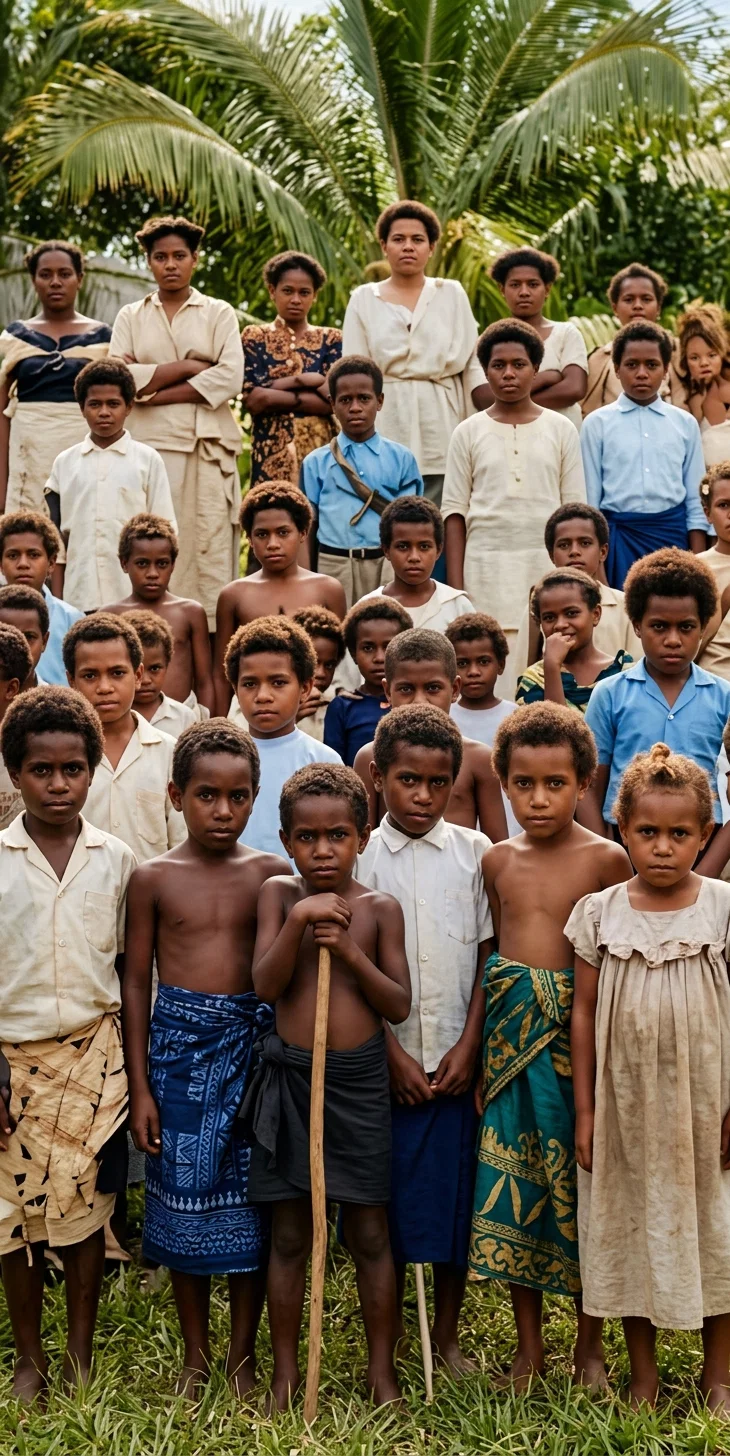
We are happy to report that our people are contributing so well for our little oil launch. We have received about six hundred dollars so far, and we hear of more to come. One blind brother in New Zealand sent us over ten dollars. Our native brethren have done well. Money is very hard for them to obtain, yet our Fijian company raised over one hundred dollars toward the launch. When I told our boat builder that they had given over twenty pounds, he was much surprised, and told me that if they had given only twenty shillings, he would have thought that they had done well.
We shall be glad when our launch is finished. We have a good supply of books to sell, but are crippled without a boat. We have a large number of tracts and papers also. Those who live in countries where there are roads hardly realize how we are situated here. There are eighty inhabited islands, and the settlements are usually near the coasts, and in many cases there is only the roughest kind of a trail from town to town. A short time ago Brother Currow and I walked along the coast on one of these roads. We were compelled to swim rivers where sharks are abundant; in fact, one of the rivers we crossed is called the Hole of Sharks. Most of the natives travel in boats or canoes. Good roads are rare, and are built only by the government.
We have had a number of applications recently from half-castes and natives, asking us to take their children into our school. We have received some, and we must take others. The last one to come is the eighteen-year-old son of a native preacher. This is quite a step for the father to take. He has been interested in our work, and has been a subscriber to our little native paper, for over a year. He also bought a book from us, and asks for tracts on different points of faith. The half-castes, as they are called here—the children of white fathers who have native wives—are in great need of help. There are many of these who desire education. We have one half-caste boy with us now—a very good boy. A girl from the same family wishes to come. We are taking these children, and caring for them just as we do for our own children. We realize that it is a great work properly to teach these young people who cast themselves upon our care. Some of the parents are able to help support their children, but we can hardly expect to get full remuneration in many cases.
With the work of preaching and going from place to place with our literature, we find ourselves unable to do the work of teaching as it should be done. We are now asking our Polynesian committee to send us a teacher. If this is done, our work can be carried on more successfully. The public schools of Fiji are raising the tuition of natives and half-castes to such a high rate that it practically debars them. An effort to help these poor young people should be made now.
A GROUP OF FIJIAN CHILDREN

A Call for Help

Our Fijian brethren here in Suva Vou wish to erect a church building. They are willing to sacrifice, as has been proved by the fact that they have given over one hundred dollars to buy a new boat. But they will need help in building a church, and we invite any one who believes this to be a worthy cause to contribute toward such a fund. All donations should be sent to the Mission Board or to the nearest tract society. The building now used for a church is needed for other purposes, and as the number of our students increases, a church building is greatly needed. We trust that we may have the help of some of our brethren who have means.
We believe that the Lord is opening the way before us here. We ask for the prayers of God's people that we may have grace and wisdom. Pray that our physical strength may be sustained. In giving to our mission work, you will become foreign missionaries, and will some day rejoice in seeing some of these poor people in the kingdom of God.
J. E. FULTON.
Continue reading: An Appeal for the Southern Work