Your ShelfYour Projects

Signs of the Times, Vol. 26, No. 4.

IS IT PEACE?

Signs of the Times

Jan 24, 1900

Pacific Press Publishing Company · Oakland, California · Jan 24, 1900

"IS IT PEACE?"
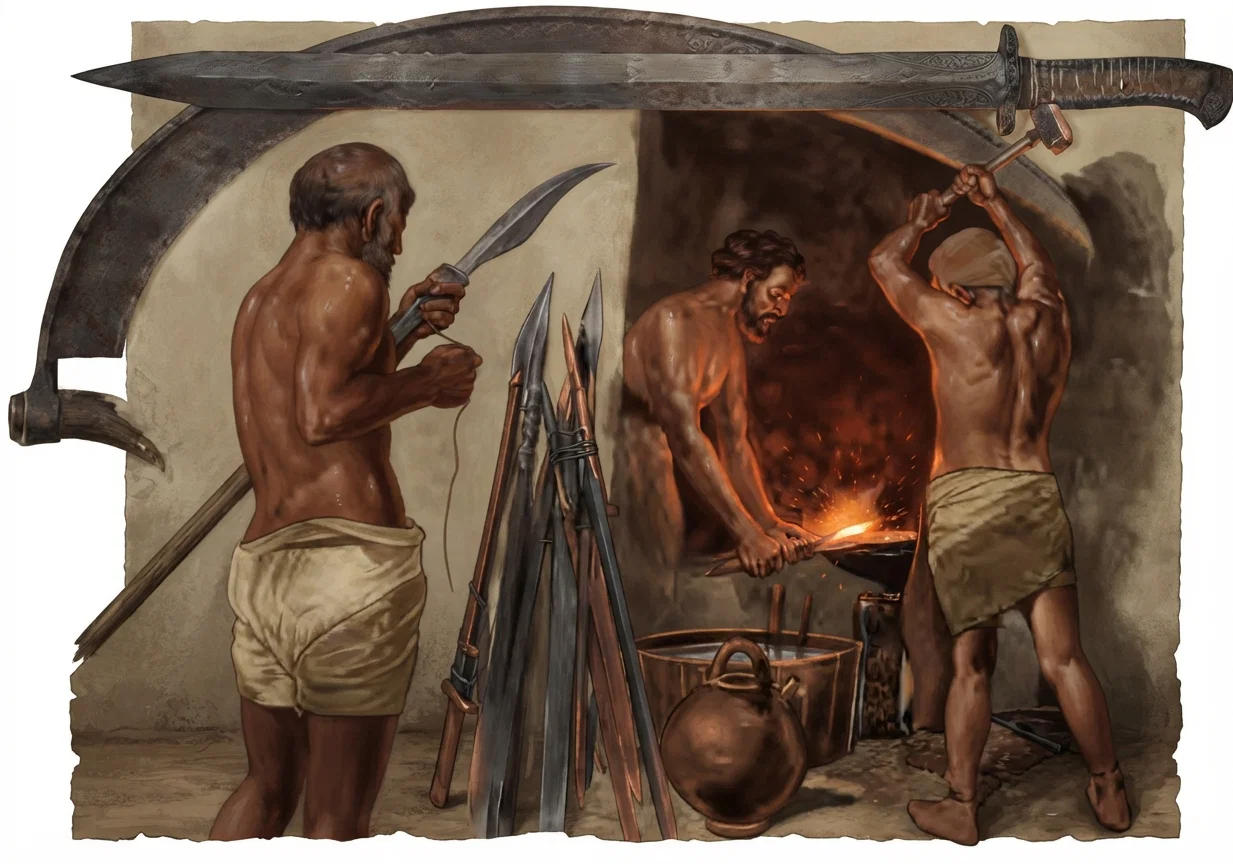
IT is an old question, as old as war. Three times it was asked of Jehu, that zealous captain and furious driver, as he swept on in his warrior's chariot. "Is it peace?" asked the two messengers; and they immediately became a part of his company of war. "Is it peace, Jehu?" asked the wicked, profligate King Joram; and the reply was a rebuke for his wickedness, and a smiting to his heart.
"Is it peace?" thousands in the earth are asking to-day. Like fierce gladiators of old the nations of the earth stand, armed to the teeth, the sword half drawn from its scabbard, the great guns unlimbered and shotted, and their black mouths turned toward expectant enemies. More millions of men are connected with armies to-day than a century ago there were myriads! The people are groaning under the crushing weights of ever-increasing war expenses. The heaviest items in the annual financial budgets are not for the purpose of bettering the nation or conserving the equal rights of its citizens, but for the destruction of those who in the expected struggle may be counted as foes.
Proclaim ye this among the Gentiles: Prepare war, wake up the mighty men, let all the men of war draw near; let them come up; beat your plowshares into swords, and your pruning-hooks into spears; let the weak say, I am strong. Joel 3:9, 10.
NOT once but many times have these nations armed anew in the last half century. After the long season when the most powerful rifle was the old muzzle loader of powder and ball, came the era of invention and discovery,—invention of cartridge and breech-loader and needle gun and magazine rifle, ever lighter in weight and ever more deadly in execution; and discovery of greater and more terrific explosives, in the scale of which old-fashioned mortar powder ranked at 30; rifle powder, at 35; atlas powder, 54; dynamite, No. 1, 62.6; best quality nitro-glycerine, 73; Americanite, 82; Rossel's mixture, 89.5; perunite B, 100; and since that come Lyddite and Thorite, still stronger and more deadly in explosive power, and fatally noxious gases.
SMOKELESS powders have added to the uncertainties, and the old arts of war are in face of them obsolete. The problem is still further complicated by Krupp, Gatling, and Maxim long-range guns, quick-firing guns, machine-guns, the use of shrapnel and shells which explode in a thousand pieces, instead of thirty, as formerly. It is now contended that a three-millimeter bullet is possible, instead of about seven, as at present, enabling the soldier to carry several hundred more cartridges. This means new armaments, and increased financial burdens. Great battle-ships have been built during the last quarter century, with many of smaller types, costing millions and millions of dollars, which have grown obsolete waiting for war; and at tremendous expense new and more expensive ones are being built. What will the end be? Is it peace?
YES, it will be peace, responded the adorers of the Peace Conference which lately adjourned at The Hague. Yet hardly had the benedictions pronounced upon its farcical proceedings died away, from which peace-loving and war-burdened souls hoped so much, ere two of the most Christian nations were using unheard-of and more powerful explosives,—the one against the ignorant natives of Central Africa, the other against the natives of the islands of the sea who had fought for two centuries for liberty from medieval intolerance.
JUST recently a work in several volumes has been issued by M. Bloch, a Polish-Russian economist, on "The Future of War." In it the author elaborates, in its economic, destructive, strategic, and various phases, the complex and appalling condition of the present war status of the world, and what a future war would mean,—suicide to all nations who entered it. His arguments are forcible. Looking at the matter from the author's view-point alone, one is impressed with his argument. His contention is that, as no nation wishes to commit suicide, and as no nation can engage in a great war without committing suicide, there will be, therefore, no great war. And he has made others hope that time would confirm his words of peace. But how finite is man!
AS LONG as men are at strife with God, there can be no peace with one another. As long as nations are made up of such men, there will be strife and bloodshed among nations. As long as there are chances of winning, nations, or the few who rule but do not do the fighting, will take the chances. Human life is cheap compared with the glory of empire, many think; let it be sacrificed if deemed necessary or expedient. This has been human nature in all the past; it is human nature to-day. And so, hardly before the ink was dry and the signatures gathered in the last volume of M. Bloch's six-volume work, rendered into English, the greatest nation of the world was engaged in war, a war taxing all her resources to the utmost in men, provisions, and money; a war in which a larger army has been transported across the seas than modern history knows. That war is waged against, nominally, two small States; yet we are told that it is against not only the little republics of South Africa, but against many thousands of Russians, and French, and Germans, and Americans. It is a war being fought for very existence by the principals, a war which, if England should be defeated, would greatly affect the world, and the work of missions in the world. The war dogs of other nations are held in leash. All the nations are prepared; it is a crisis of the ages.
NAY; in the very nature of things, and from the world's standpoint, it is not peace. The new year dawns with blood-red streaks across its sky, betokening the mighty storms that are to follow. The demand in all the nations of earth is for ships and guns and men and explosives. The plethora is great, but the demand is for more.
Is it peace? What says the Guide-book of God? The world is dark. Rulers and statesmen and commanders rush on in blindness, knowing not whither they are going. The blind are leading the blind. God has given His Word, a "lamp" to the "feet," a "light" to the "path." His prophecy is as a "light in a dark place until the day dawn and the day star arise in your hearts." What does the "more sure word of prophecy" say as to "the future of war," as to peace?
HERE it is: Eight hundred years before Christ, God gave a seer of His a vision of the future, which included this time, just before the impending "day of Jehovah" shall burst upon the world. This is what he heard and saw concerning this time: "Proclaim ye this among the nations; prepare war; stir up the mighty men; let all the men of war draw near, let them come up. Beat your plowshares into swords, and your pruning-hooks into spears; let the weak [like little Transvaal] say, I am strong. Haste ye, and come, all ye nations round about, and gather yourselves together; thither cause Thy mighty ones to come down, O Lord. Let the nations bestir themselves, and come up to the valley of Jehoshaphat [Jehovah judgeth]; for there will I sit to judge all the nations round about. Put ye in the sickle, for the harvest is ripe; come, tread ye; for the wine-press is full, the fats overflow; for their wickedness is great. Multitudes, multitudes in the valley of decision! for the day of the Lord is near in the valley of decision." Joel 3:9-14, R.V.
ANOTHER prophet names many of these nations thus possessed by a spirit of war, even "all the kingdoms of the world, which are upon the face of the earth." The Lord tells us that because of the sins of the earth, "I will call for a sword upon all the inhabitants of the earth." "Evil shall go forth from nation to nation," and the slain "shall be at that day from one end of the earth even unto the other end of the earth." See Jer. 25:15-38, R.V.
STILL another prophet declares that the ultimate battle fought in this great preparation, is "the battle of the great day of God Almighty," the great conflict of Armageddon, and that the actuators of this strife are the "spirits of demons," which are out in all the world, preparing men for the sanguinary conflict. We have noted the fulfilment first; the prophecy is demonstrated. There are other prophecies as clear as these to which we have referred. Men may prophesy peace; God has told us that "many people" and "many nations" would do this; and they have been doing it; they endeavor to persuade themselves that in various ways, by choice or necessity, peace will be brought about; but peace, as regards this earth, lies dead in the dissecting room of nations. Men may try to galvanize her into life; there may be fitful, uncanny, gruesome signs; but peace, worldly peace, is dead; and over her remains are heard, not the joyful songs of rest, but the booming of cannon or the sharp crack of the rifle.
"AND is there no peace?" you ask. Yes; there is peace, blessed peace. It is not originated by pope or czar or emperor or president, or by all these and the nations they represent, combined. It is all in Jesus Christ; "for He is our peace." He says to all who would be His children, who unconditionally surrender to Him, "Peace I leave with you, My peace I give unto you; not as the world giveth, give I unto you." God is not at enmity with man; He pities and loves man so that He gave His only-begotten Son to save him. But carnal man is at enmity with God, and is not subject to the law of God. This is all that prevents peace between God and man,—the enmity of man's carnal heart, man's sin, and his love of it. Let man give it all up, and God gives pardon and peace. "Being justified by faith we have peace with God through our Lord Jesus Christ." Christ has purchased peace with the blood of the cross. He has abolished in the flesh the enmity. He offers it all to you. Blessed peace—nothing between the soul and God to separate from His life and love. It is a peace which lifts above all earthly strife. He says of the sinner, "Let him take hold of My strength and make peace with Me, and he shall make peace with Me," and concerning such, "Thou wilt keep him in perfect peace whose mind is stayed on Thee, because he trusteth in Thee." It will be peace amid all the world's strife, the peace and rest of God. And then, when the world's strife is ended, and the baubles men fought for are perished, and the warrior's little day of glory is passed forever,—then, and not till then, "the meek [the peace-loving] shall inherit the earth; and shall delight themselves in the abundance of peace."

POLYGAMY AND THE REFORMERS.

The Catholic Mirror says:—
As a rule, the people of this country ascribe incorrectly the origin of this pestiferous doctrine of polygamy to Brigham Young and his associates, but its true paternity is to be traced to Martin Luther, of "open Bible" record, and his colleagues, as we propose to show in this article.
The only thing shown in this article is the alleged position of Luther and other of his contemporaries on the doctrine of divorce. He is not once shown to be a defender of polygamy. Now, while we do not propose to stand as Luther's defender in the doctrine of divorce, we still believe the loose system of divorce, evil as it is, a thousand times preferable to the Catholic doctrine of the celibacy of the clergy, with its countless scandals, and the existing loose relation between the sexes in countries which have been under the tutelage of Roman Catholics for centuries.
Martin Luther and his co-laborers were pioneers. They saw through a glass darkly. Their vision was blinded, their minds darkened by the errors of Roman Catholicism, to which they still held. Their principles—fundamental principles of Protestantism or Christianity—were correct. Above the civil magistrate was placed the tribunal of conscience, and above the visible church the authority of the Word of God. In the words of another: "The Reformation was accomplished in the name of a spiritual principle. It had proclaimed for its teacher the Word of God; for salvation, faith; for king, Jesus Christ; for arms, the Holy Ghost; and had by these very means rejected all worldly elements." The only reason why Protestantism has failed to be the power in the world that God designed she should be is that she has been false to these principles. Was Luther false to these?—It was owing either to the perversity of his humanity, common to all, Protestant and Catholic, or to the errors which he inherited from his former religion.
Martin Luther is no more a guide to true Protestants, to Bible Christians, than is Leo X, or Tetzel of Indulgence fame. We honor the Reformers only for the principle and courage they manifested in following the little light. They blazed the path through the interminable Roman jungle of errors. God wants His children who come after, by clearer light, to make that path a plain highway of holiness, cleared from rubbish and stumbling, prepared for the last generation and the coming King.

CREATION VERSUS EVOLUTION.

"What of the Sabbath?"

WE are asked to notice an article from an esteemed contemporary, in which the editor says: "Any interpretation of the book of Genesis . . . which attempts to make the divine creative day and the twenty-four-hour day of the human calendar identical, is too narrow and too 'Jewish' to be entertained for a moment. The friends of the Sabbath do not entertain such notions, altho superficial investigators have sometimes attributed such notions to them."
This appeared some months ago; but we did not notice it at the time. We have no disposition now to criticize our contemporary; but we do wish to place ourselves on record as one of "the friends of the Sabbath," who holds that "the divine creative day [of Gen. 1:5, 8, 13, etc.] and the twenty-four-hour day [beginning at sunset and closing at sunset] are identical." Neither is this a notion; it is as clear a revelation as that of the origin of the Sabbath. Let the reader consider:—
1. The days of Genesis 1 are composed of two parts, evening and morning, even as our day now.
2. These days, regulated by diffused light, perhaps because of the state of the atmosphere, for the first three days, are from the fourth day forward regulated by the sun.
3. The first seventh day, the next day after Adam's creation, came and went obviously, a brief period of time; and the succeeding seventh day of the cycle was afterward set apart for all time to come, because that in it God "had rested from all His work." This day was evidently a day, not a long evolutionary period. It was one day of many others of Adam's life. The only reasonable conclusion is that the other days of Genesis 1 were similar days.
4. The fourth commandment and other scriptures all refer to the six days as so many literal days, and the seventh day following as a literal day, which men were to observe in harmony with the example of their Creator. See Ex. 20:8-11; 16:23-30, et al.
To say that this plain language of the Bible does not mean what it says, that "days" does not mean days, that "evening and morning" does not mean evening and morning, is to declare that we know nothing by the Word of what Genesis 1 does teach, and that it is but a beautiful myth after all.
More than this: Throughout the entire Word of God the Deity is said to be Creator, not by a long process of evolution, but by creative power. God's power to create is set before us as the sinner's only hope; for the sinner whohas tried over and over in himself resolution and evolution, knows that evolution is a hopeless void. But one thing can work the change in character demanded even by an enlightened conscience, and by the Word of God, and that is God's creative power.
God said, "Let there be light," "Let the earth bring forth," "Let the waters bring forth," etc. The result was, "it was so;" "there was light;" "and the earth brought forth;" "the waters brought forth." "By the word of the Lord were the heavens made; and all the host of them by the breath of His mouth." "For He spake, and it was; He commanded, and it stood fast."
So also Christians do not evolve into righteousness. "Of His own will begat He us with the word of truth." "Being born again . . . by the word of God." "If any man is in Christ, there is a new creation." R.V., margin. "For we are His workmanship, created in Christ Jesus unto good works." "Put on the new man, which after God is created in righteousness and true holiness." "For God, who commanded the light to shine out of darkness, hath shined in our hearts, to give the light of the knowledge of the glory of God in the face of Jesus Christ."
How is all this wrought—by a process of evolution?—Not at all. Jesus Christ was the revelation of God to men. What was the teaching of His work? Read: "And, behold, there came a leper and worshiped Him, saying, Lord, if Thou wilt, Thou canst make me clean. And Jesus put forth His hand, and touched him, saying, I will; be thou clean. And immediately his leprosy was cleansed." He spake to the dead at the grave of Lazarus, "and he that was dead came forth" at once. At a distance from the centurion's He spoke the word concerning the servant sick unto death, and the "servant was healed in the selfsame hour." The woman diseased with the issue of blood touched, in faith, His garment, and His power immediately healed her. He said to the dead daughter of Jairus, and the dead son of the widow of Nain, "Arise," and immediately they lived. So God wrought during the six days.
To yield faith in the record concerning God's direct, creative power in Genesis is to yield it as respects man's spiritual regeneration. The evolutionist begins by rejecting the Mosaic account of the creation, and ends by rejecting the miracles of Christ and Biblical regeneration. Jesus spake truly when He said to the Jews: "Had ye believed Moses, ye would have believed Me; for he wrote of Me. But if ye believe not his writings, how shall ye believe My words?" Are not these words applicable now?
Child of God, fear not. The old Book, with Genesis and all its records, will stand when all opposing contradictory systems originated of Satan to destroy man, are crumbled into the dust.

A DUST-COVERED INSTRUMENT.

A STRANGE instrument hung on an old castle wall—so the legend runs. No one knew its use. Its strings were broken and covered with dust. Those who saw it wondered what it was and how it had been used. Then one day a stranger came to the castle gate and entered the hall. His eye saw the dark object on the wall, and, taking it down, he reverently brushed the dust from its sides and tenderly reset its broken strings; then chords, long silent, woke beneath his touch, and all hearts were strangely thrilled as he played. It was the master, long absent, who had come back to his castle again.
It is but a legend, yet the meaning is plain. In every human soul there hangs a marvelous harp, dust-covered, with strings broken, while yet the Master's hand has not found it. Is there no joy in your heart? Is your soul-harp hanging silent on the wall? Have you learned the secret of glad, happy days?
"O, could the tender Christ but brush away, And o'er the slumbering tones His fingers sweep, A world would pause to catch the echoing chord Of music weakened 'neath the touch of God."
Open your heart, dear reader, and let Christ enter it. He will repair its broken strings, brush away the dust of sin, and fill your soul with melody divine.—Christian's Guide.

BEFORE PILATE.

“Then led they Jesus from Caiaphas unto the hall of judgment; and it was early; and they themselves went not into the judgment-hall, lest they should be defiled; but that they might eat the Passover.” The Jewish priests were strict in observing their own traditions. They would not enter the Roman judgment-hall, for fear of defilement. But their hearts were already defiled by sin. They were seeking the death of Him who was represented by the Passover, and who passed over the houses of the Israelites, and slew the Egyptians. Through their own evil work the priests and rulers had already separated themselves from God, and were confederating with the synagog of Satan. By cherishing envy and jealousy, they were transgressing every precept of the law of God. They were acting out the attributes of the enemy of God.
“Pilate then went out unto them, and said, What accusation bring ye against this Man? They answered and said unto him, If He were not a malefactor, we would not have delivered Him up unto thee. Then said Pilate unto them, Take ye Him, and judge Him according to your law. The Jews therefore said unto him, It is not lawful for us to put any man to death.” “Then Pilate entered into the judgment-hall again, and called Jesus, and said unto Him, Art thou the King of the Jews? Jesus answered him, Sayest thou this thing of thyself, or did others tell it thee of Me? Pilate answered, Am I a Jew? Thine own nation and the chief priests have delivered Thee unto me; What hast Thou done? Jesus answered, My kingdom is not of this world; if My kingdom were of this world, then would My servants fight, that I should not be delivered to the Jews; but now is My kingdom not from hence. Pilate therefore said unto Him, Art Thou a king then? Jesus answered, Thou sayest that I am a king. To this end was I born, and for this cause came I into the world, that I should bear witness unto the truth. Every one that is of the truth heareth My voice.” Christ affirmed that His word was in itself a key which would unlock the mystery to those who were prepared to receive it. It had a self-commending power, and this was the secret of the spread of His kingdom of truth. He desired Pilate to understand that only by receiving and appropriating truth could ruined nature be reconstructed.
Pilate was convicted. “What is truth?” he inquired. But he did not wait for a reply. The tumult outside recalled him to the interests of the hour; for the priests were clamorous for immediate action. Going out to the Jews, who stood beyond the door of the hall, he declared emphatically, “I find no fault in Him at all.” O, if Pilate had only stood firm, refusing to condemn a man whom he found guiltless, he would have broken the fatal chain that was to bind him in remorse and guilt as long as he lived! Many who heard his words remembered them ever after. As they thought of the Man pronounced innocent by the judge, and yet given up to mob law, they were led to ask themselves what power they were under.
When the priests heard Pilate's words, they broke out into a torrent of accusation. Standing behind Pilate, in view of all in the court, Christ heard the abuse, but to all the false charges against Him He answered not a word. His whole bearing gave evidence of conscious innocence. He stood unmoved by the fury of the waves that beat about Him. It was as if the heavy surges of wrath, rising higher and higher, like the waves of the boisterous ocean, broke about Him, but did not touch Him. He stood silent, but His silence was eloquence. It was as a light shining from the inner to the outer man. Thus He gave evidence of His superior wisdom.
Pilate was astonished at His bearing. Does this Man disregard the proceedings because He does not care to save His life? he asked himself. Christ had spoken to Pilate of His kingdom of truth, and conviction had fastened itself in the mind of the governor. He was fully convinced that the Prisoner had been deliveredto him from motives of envy. As he looked at Jesus, bearing insult and mockery without retaliation, he felt that he could not be as unrighteous and unjust as were the clamoring priests. He felt compelled to declare the Prisoner's innocence.
“I find no fault in this Man,” he declared. As the priests heard this, “they were the more fierce, saying, He stirreth up the people, teaching throughout all Jewry, beginning from Galilee to this place.” When Pilate heard of Galilee, he asked whether the Man were a Galilean. And as soon as he knew that He belonged unto Herod's jurisdiction, he sent Him to Herod, who himself also was at Jerusalem at that time. Besides escaping responsibility in regard to the trial of Christ, Pilate thought that this would be a good opportunity to heal an old quarrel between himself and Herod. In this he was not wrong; for the two magistrates made friends over the trial of the Saviour.
“When Herod saw Jesus, he was exceeding glad; for he was desirous to see Him of a long season, because he had heard many things of Him; and he hoped to have seen some miracle done by Him. Then he questioned with Him in many words.” But to all the questions asked by Herod, Christ answered nothing. He knew the wickedness of the men before Him. He knew that were He to say anything, however true and elevating it might be, it would be like casting pearls before swine. They would trample them under their feet, and turn again and rend Him.
“And the chief priests and scribes stood and vehemently accused Him.” They were acting under the inspiration of the first apostate, the enemy of God. When the rulers of the people are wicked and designing, Satan has every opportunity of representing his character as it is.
“And Herod with His men of war set Him at naught, and mocked Him, and arrayed Him in a gorgeous robe.” The Jewish priests encouraged the insults and cruelty of the mob. One day priests and rulers will see as in a mirror the words spoken and the actions performed in order to stir up the wildest passions of the hardened soldiers to mock and ridicule Christ. But it will be too late, too late to take back that night's work.
MRS. E. G. WHITE.

ONE ONLY.

"One Lord Jesus Christ, by whom are all things, and we by Him." 1 Cor. 8: 6.
All matter is leavened by motive, With perfect profusion inwrought, While purpose, platonic and votive, Indwelleth in being and thought; Within at the core of all wholeness, Where fate doth her riddles decide, Designer of symbol and fulness, Doth Christ, the Creator, abide.
The seasons display His devotion To beauty's beneficent skill; While magnitude, measure, and motion Are sanctified seers of His will; The fervor of summer He sendeth All florulent forms to improve; And light, an evangel, He lendeth To publish His bountiful love.
Where color, her harmonies blending, Delighteth to charm and refine, And fragrance, on incense ascending, Ariseth from meadow and vine, In music, love's royal rendition, Expressing, to throne and to thrall, The pleasure of God, in volition, He dwelleth, the essence of all.
Yet these are but frenular fringes Of garments enrobing the Great; From under Divineness impinges, While mortals like mendicants wait; All creeds and conceptions in-biding; The pulse of all pureness, His tryst; Life's tone as its genesis guiding: The heart of it all is the Christ.
If all things are from Him and by Him, They for Him and to Him obtain, By inherent grace glorify Him Each one in their sphere and domain; For, born of His Word and begotten Of love, in His image they are; Death-ransom'd, stain-cleans'd, and blood-boughten, Their trueness no traitor may mar.
Nay, more! if the Christ is the center And source of creation intact, And each of His attributes enter Its structure in spirit and fact, Then who but the Christ is there in it As Master and Builder, to bind? For He is its sun, the Infinite, And it is the mood of His mind.
Toronto, Ont. LLEWELLYN A. MORRISON.

THE RELIGIOUS PRESS.

THE distinctive Baptist doctrine of the separation of Church and State is in grave peril from certain tendencies that are developing in American churches and missionary societies; but those who see the peril are coming to a larger recognition of the validity of the doctrine. For example, Dr. Charles H. Parkhurst, the eminent New York Presbyterian clergyman reformer, has recently said:—
"You can not make a man believe in God if you do not convince him you believe in Him yourself. Peter, by brandishing his sword, denied the divinity of Jesus; and any other man cheapens God when he goes about to yoke God's Spirit alongside of carnal contrivances. It is the absence of such carnal contrivances that explains the rapid extension of Christianity during the first three centuries of our own era. God worked mightily because He had no backing. Up to that time armies and navies were on the side of the pagans. Christianity is never so powerful as when it is unprotected, and evangelization that depends upon soldiers and gunboats has no future. The instant Christianity begins to lean on anything, its divine vitality dries out of it. The cause of Christ prospered in the Roman Empire till it became the State religion—till it came to have the government back of it—then Christianity deteriorated into a pious kind of politics, with a good deal more politics than piety."
In contrast with these utterances we put the declarations of the Rev. Dr. Radcliffe, the moderator of the Presbyterian General Assembly, who last week said in his annual sermon:—
"In the presence of these opportunities, the church can not be careless. We dare not refuse obedience. God calls us to subjugation. Force is the only argument known to savages, from Joshua to McKinley. The earth must be subdued that it may bring forth the rose and the fruit, that it may bring forth the tree of life, whose leaves are for the healing of the nations. Our national life has new impulse and dazzling ambition." — The Watchman (Baptist).
Continue reading: CAST OUT THE BONDWOMAN