Your ShelfYour Projects

Signs of the Times, Vol. 26, No. 29.

CAN THESE BONES LIVE?

Signs of the Times

Jul 18, 1900

Pacific Press Publishing Company · Oakland, Cal. · Jul 18, 1900

"CAN THESE BONES LIVE?"
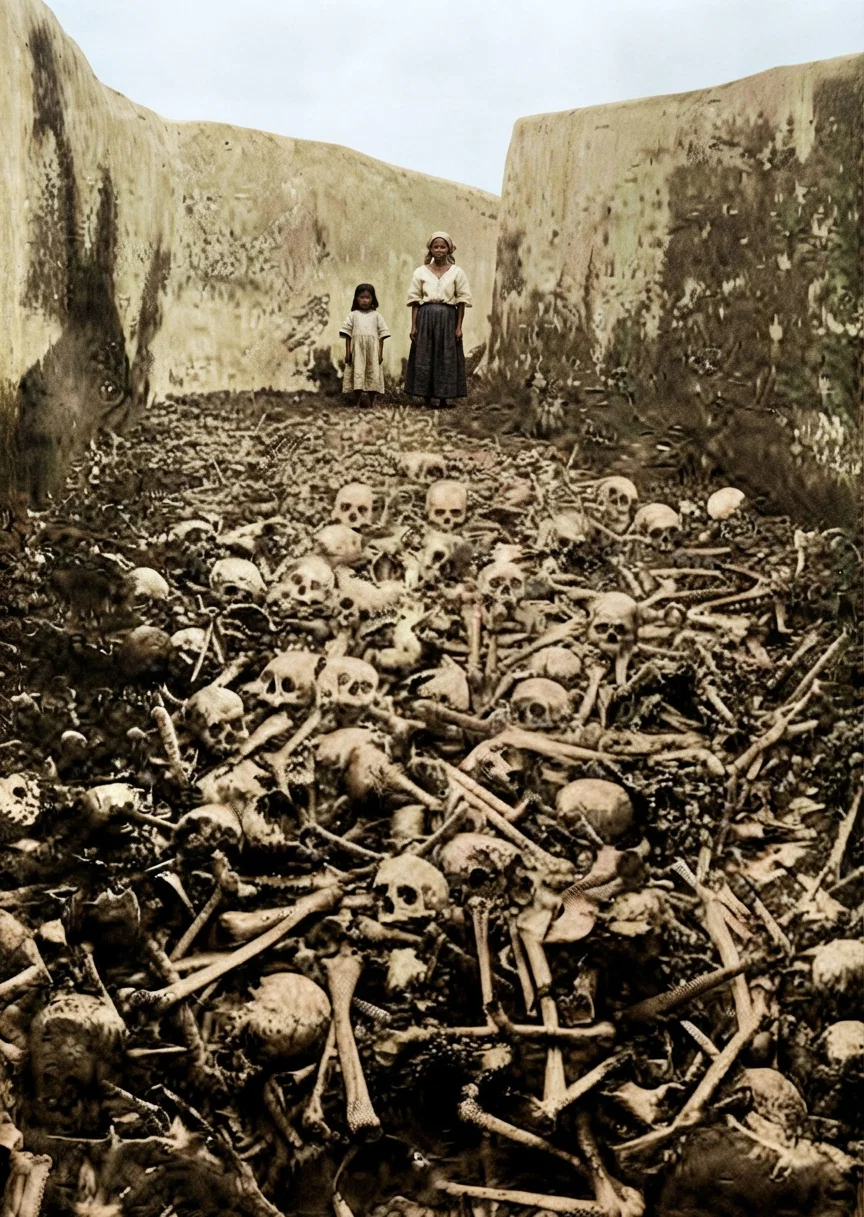
VERY gruesome indeed is the photographic reproduction of this old Spanish Catholic cemetery of Manila, yet it is said to be typical of many others in Spanish lands. It is, too, from a human view-point a hopeless picture. The bare bones, the eyeless sockets, the ghastly, gruesome mass, speak strongly of the extinction of all earthly hope.
IT is not a pleasant picture; yet it is but the uncovering of the ghastly, repulsive fact, of what this old world is to the majority of those who dwell here. Humanity does not naturally like to face the stern facts of sin and death. They cloak the sin in the garb of righteousness, or express it by such terms as "expediency" and "policy." They endeavor to make of death an angel of light, and to cover its repulsiveness with marble fanes, costly monuments, or expensive mausoleums. Science and art combine to cover and hide what they can not destroy.
NEVERTHELESS sin is here, and death, its finished fruit, is here, as sad, stern facts and conditions which can not always be hidden; and it will do the SIGNS readers no harm to look for a little time this week upon a picture of the true facts of this old charnel-house of sin, and see, each for himself, what is, so far as humanity alone is concerned, the end of human hopes.
BUT there is another side to the question. The picture is also suggestive to devout Bible-reading Christians. They recall the vision which the Lord gave the prophet when He brought him to "the valley of dry bones." It is such a view, the reproduction of which is placed before our eyes to-day. And with it comes the question, asked by God of the prophet, asked by God of us, "Son of man, can these bones live?" Eze. 37:3. God asked the question that He might give a hopeful answer to the despairing Israel of old, and also to the mourning and despairing and hopeless of all ages, who are bemoaning their lot, and are saying, "Our bones are dried up, and our hope is lost; we are clean cut off." Verse 11, R.V.
NOT Israel of old alone uttered the cry. Fathers and mothers by the multitude are saying it as they lay, oftentimes, their last child in the narrow house. Men who have lost all their temporal fortune are saying it. Women who are disappointed in marriage are echoing the sad refrain, and are seeing only the burned-out bones of desolated hopes. Wrecks of humanity on the great sea of life, souls who have made human effort unavailing to overcome evil habits, who have gone down in defeat till all earthly friends stand back in utter hopelessness, are saying in despair, "Our bones are dried up, and our hope is lost; we are clean cut off."
A Valley of Dry Bones.
O, LISTEN a moment to the question of God, "Can these bones live?" "No," you will be inclined to say; but rather answer with the prophet, "O Lord God, Thou knowest." And then listen further to hear His answer. But will He reply? Will He condescend to answer the inhabitant of the gruesome, ghastly valley?—Yea, He has already answered. He has given us a blessed lesson of the power of His Word. "Again He said unto me, Prophesy upon these bones, and say unto them, O ye dry bones, hear the word of the Lord.
Thus saith the Lord God unto these bones, Behold, I will cause breath to enter into you, and ye shall live; and I will lay sinews upon you, and will bring up flesh upon you, and cover you with skin, and put breath in you, and ye shall live; and ye shall know that I am the Lord. So I prophesied as I was commanded; and as I prophesied, there was a noise, and behold a shaking, and the bones came together, bone to his bone. And when I beheld, lo, the sinews and the flesh came up upon them, and the skin covered them above; but there was no breath in them. Then said He unto me, Prophesy unto the wind, prophesy, son of man, and say to the wind, Thus saith the Lord God: Come from the four winds, O breath, and breathe upon these slain, that they may live. So I prophesied as He commanded me, and the breath came into them, and they lived, and stood up upon their feet, an exceeding great army." Verses 4-10.
THIS is not merely the hope of a resurrection from the grave. It is God's pledge to every despairing soul. Our efforts in reform, in righteousness, in transformation of character, in human resolution, in various lines, may be valleys and hills of dry bones to our human vision; God is able to make them live, to put upon them flesh and blood, and to make the inert dead mass, vivified by His Word, "an exceeding great army."
MORE than this, unless we know the power of the resurrection here, we will not know it in the glad day of all Israel's redemption. "Sin, when it is finished, bringeth forth death." The power of death is resurrection power. The power over sin is the power over death, and that, too, must be resurrection power. This was the power Christ had. He died for our sins; but in Him was no sin; and therefore "it was not possible that He should be holden of it [death]." Acts 2:24. That resurrection declared Him "to be the Son of God." Rom. 1:4. And He longs to put upon us His righteousness and within us His resurrection power of a righteous, endless life, that we may be demonstrated to be "sons of God," and of the house of Israel in that day. For in our behalf His Spirit prays through the apostle that we "may know . . . what is the exceeding greatness of His power to uswardwho believe, according to the working of His mighty power, which He wrought in Christ, when He raised Him from the dead, and set Him at His own right hand in the heavenly places, far above all principality, and power, and might." Eph. 1: 18-21. "Beloved, now are we the sons of God, and it doth not yet appear what we shall be; but we know that, when He shall appear, we shall be like Him; for we shall see Him as He is. And every man that hath this hope in him purifieth himself, even as He is pure."
"SON of man, can these bones live?" Yea, they can live by the living word of God. "Thus saith the Lord God: Behold, O My people, I will open your graves, and cause you to come up out of your graves, and bring you into the land of Israel. And ye shall know that I am the Lord, when I have opened your graves, O My people, and brought you up out of your graves, and shall put My Spirit in you, and ye shall live." Eze. 37: 11-14. Above this earth's gloomy sepulchers burns and beacons everlasting hope and eternal life through Jesus Christ and His living Word.

Weekly Issue Masthead

"But as we were allowed of God to be put in trust with the Gospel even so we speak; not as pleasing men, but God, which trieth our hearts."
Volume 26. Number 29. OAKLAND, CALIFORNIA, JULY 18, 1900. Weekly, $1.00 per year. Single Copy, Five Cents.

WHY MARVEL YE AT THIS?

BEFORE the Lord can restore the gifts of healing to His servants to-day, they must reach the place in their experience where they will not get excited at the manifestation of signs and wonders which are wrought to confirm the Word. And the only man or woman who will be calm in the presence of miracles of healing is the man or woman who is in possession of the power of God to save from sinning. The reason for this is that he who is kept by the power of God unto salvation is perpetually in the presence of the crowning miracle of the Gospel. All other miracles are inferior to this miracle. All other miracles are the servants of this miracle. All the miraculous gifts of the Spirit will fail "when that which is perfect is come," but this miracle will never fail. 1 Cor. 13:1-10. This crowning miracle will be exhibited by our Lord to be admired by all the universe, in all "the ages to come," as the glorious manifestation of the exceeding riches of His grace.
"And you hath He quickened, who were dead in trespasses and sins; wherein in time past ye walked according to the course of this world, according to the prince of the power of the air, the spirit that now worketh in the children of disobedience; among whom also we all had our conversation in times past in the lusts of our flesh, fulfilling the desires of the flesh and of the mind; and were by nature the children of wrath, even as others. But God, who is rich in mercy, for His great love wherewith He loved us, even when we were dead in sins, hath quickened us together with Christ (by grace ye are saved); and hath raised us up together, and made us sit together in heavenly places in Christ Jesus; that in the ages to come He might show the exceeding riches of His grace in His kindness toward us through Christ Jesus." Eph. 2:1-7.
How can that man or that woman who is in possession of such an experience as this, who has thus been resurrected from the dead, and who is constantly kept alive by the "power of His resurrection,"—how can such an one who is constantly experiencing this miracle of all miracles, get excited at beholding another miracle which is only the handmaid of this one?
This point is sometimes made, to dodge the demand for the lesser miracles. But be assured it is not so made here. It is presented here to clear the King's highway for the manifestation of all the miracles and wonders and signs, which followed to confirm the Word in the apostolic days of purity and power.
This running away from the Gospel, which is the power of God unto salvation, after the less important signs and wonders, is a sad but certain witness that all who do it have not yet been anointed with the Holy Ghost, whereby they are able to rightly compare spiritual things with spiritual.
Before the day of Pentecost, the Lord sent out seventy disciples with the commission to "heal the sick, saying unto them, The kingdom of God is come nigh unto you." From the report which they gave when they returned, it was apparent that they were in danger of losing sight of the Gospel of the kingdom, and running away after miracles of less importance. They said nothing of the progress of the Gospel of the kingdom, but spake only of the miracles they were able to perform.
"And the seventy returned again with joy, saying, Lord, even the devils are subject unto us through Thy name."
To which the Lord answered in gentle reproof:—
"Behold, I give unto you power to tread on serpents and scorpions, and over all the power of the enemy; and nothing shall by any means hurt you. Notwithstanding in this rejoice not, that the spirits are subject unto you, but rather rejoice because your names are written in heaven." Luke 10:17-20.
The climax by which this crowning miracle is reached is presented thus by Jesus in the sign to John the Baptist, that Christ was "He that should come." "Go your way, and tell John what things ye have seen and heard; how that the blind see, the lame walk, the lepers are cleansed, the deaf hear, the dead are raised, to the poor the Gospel is preached." Luke 7:22.
After Pentecost, the apostles never failed to give to these miracles their proper importance. All the miracles of that day but opened the way for the cry, "Repent, and be baptized every one of you in the name of Jesus Christ for the remission of sins, and ye shall receive the gift of the Holy Ghost." Acts 2:38. And when the cripple was healed at the Beautiful Gate, and all the people were "amazed" and "ran together unto them, greatly wondering," Peter said: "Ye men of Israel, why marvel ye at this?" "Repent ye therefore, and be converted." Acts 3:1-19. And to the rulers he said: "Ye rulers of the people, and elders of Israel, if we this day be examined of the good deed done to the impotent man, by what means he is made whole; be it known unto you all, and to all the people of Israel, that by the name of Jesus Christ of Nazareth, whom ye crucified, whom God raised from the dead, even by Him doth this man stand before you whole. . . . Neither is there salvation in any other; for there is none other name under heaven given among men whereby we must be saved." Acts 4:8, 12.
Notwithstanding "God wrought special miracles by the hand of Paul," we do not find either in his Epistles or sermons as recorded in the Acts of the Apostles, any attempt to make prominent these miracles of healing. He did refer to them in a general way, but even then it was done largely to confirm his apostleship, which was questioned by certain "false brethren," and then he did it reluctantly. "Christ and Him crucified" was his message everywhere, to which he oft added, as his personal testimony, the story of the miracle of his conversion.
From all this it is clear that before God can work with us, confirming the word with signs following, we must experience the miracle of all miracles, salvation from sin and sinning, and hold that miracle in our hearts and in the hearing of the multitude, high above all the miracles which are granted to confirm this the chief of miracles. Then this great barrier to the coming of the confirming miracles will be cleared away.
To this I wish to bear personal witness by relating an experience which came under my observation. A young minister was associated with others in Gospel labor at a large religious gathering. A few sick people were healed in connection with the preaching of the Word. He had never seen it on this wise before, and he was much stirred by this manifestation of God's healing power. He preceded the other ministers to the next appointment, and immediately began to call attention to the miracles of healing which he had witnessed. Soon the great congregation was all absorbed with the theme of physical healing. At this point he visited a barber shop and contracted the barber's itch, which soon manifested itself in large sores on his neck, so located as to be in plain view. "How can I preach healing, and pray with the sick, while thus afflicted myself?" he reasoned. "Will not the people say, 'Physician, heal thyself'? I must be healed." Prayer was offered, and altho one person present was instantly healed, he was not. This was the situation when the other ministers arrived. The young man, with great concern, related this experience, and asked why he was not healed. Not being acquainted with the course he had pursued, they could not explain his disappointment. The next day he came to them, his face beaming with the light of a new truth which had dawned upon him. He said, in substance: "Now I understand. Now the Lord can heal. I made the mistake of calling the attention of the people to miracles of healing when they needed first to be healed of their sinning." Not only did he make this private acknowledgment of his error, but he made a voluntary public confession to the same effect. Prayer was again offered, and he was healed, and made happy with the truth thus emphasized, that the healing of the soul from sin is the first great miracle, which the Lord would have impressed upon His sinning people.
This grand truth, if experienced by ministers and people in the church of God, will not only clear the King's highway for the manifestation of the fulness of the promised power, but it will save all who believe it from being deceived by the "all power and signs and lying wonders" which are predicted, and which are already appearing to deceive, if it were possible, the very elect.
Who that reads these lines will yield himself to experience the miracle of God's saving and keeping power? and then in the joyful possession of this miracle, and with it an unquenchable longing to bear it to others, who will continue to pray for those "mighty signs and wonders, by the power of the Spirit of God," which were wrought in the early days of purity and power, "to make the Gentiles obedient" to the Gospel? Rom. 15:18, 19. To this end these lines are penned.
A. F. BALLENGER.

Influence of Personal Conduct

OTHERS are affected by what I am, and say, and do. And these others have also their sphere of influence. So that a single act of mine may spread in widening circles through a nation or humanity.—William Ellery Channing.

Keeping Peace

“FIRST keep thyself in peace, and then shalt thou be able to make peace among others.”

Profitably Spent Days

"Thou wilt always rejoice in the evening if thou hast spent the day profitably."

THE RIVER OF LIFE

THE FORCE OF THE FIGURE.

"If any man thirst, let him come unto Me, and drink. . . . This spake He of the Spirit, which they that believe on Him should receive." John 7:37-39.
In the preceding paper we tried to show the present meaning of the River of Life. Our study made it plain that the real sacrifice of Christ was an eternal sacrifice, the constant manifestation of His everlasting character, which is love. We learned, too, that the gift of the Spirit was in the gift of the Son; and so that Spirit has been bestowed for all who would receive it, ever since the Lamb was slain at the foundation of the world. The "living water," or the water of the River of Life, is a symbol of the Spirit. And just as the Israelites in the wilderness "drank of that spiritual Rock that followed them; and that Rock was Christ," so, ever since that Rock was smitten at the foundation of the world, God's children in this wilderness life have been free to partake of the spiritual river that flows from the throne. The invitation is, "Whosoever will, let him take the water of life freely." Now let us study more deeply the significance of this symbol, and if in the study we become thirsty, we will together seek the source of the water.

The Significance of the Symbol.

The Bible is the first edition of "Natural Law in the Spiritual World." Almost always its imagery is borrowed from nature, and it is constantly teaching us to lift our eyes from the study of the physical, to the contemplation of the spiritual. Here on earth, water is literally the water of life. The most desolate deserts are such simply for the want of water. The Great Sahara, properly irrigated, would be as fertile as the Nile Valley. By conducting the water from the mountains out upon the desert around Salt Lake, men have made the desert literally to blossom as the rose. Without water there could be absolutely no vegetable life and no animal life. The world would be a dead, rolling, mineral orb. An old Egyptian proverb says, "Egypt is the gift of the Nile." So all the beauty, bloom, fragrance, and fruitage of the world is the gift of the water.
Now just what the water is to the physical world, Christ, by His given Spirit, the living water, is to the spiritual world. After man sinned, had it not been for this river of spiritual life, "proceeding out of the throne of God and of the Lamb," the world would have become a moral desert; the image of God would have been speedily obliterated from every heart, and mankind have been totally depraved. All noble aspiration, all unselfish love, all self-sacrificing service, all the fragrance, bloom, and fruitage of the spiritual life, on earth to-day, are the gift of the spiritual water.
To some extent, this water beautifies every life. It "lighteneth every man that cometh into the world." But only those who yield themselves fully to its enfolding waves in that spiritual baptism of which the physical baptism is a beautiful symbol, can be wholly transformed, and wholly glorified thereby. Instead of remaining a moral desert, that heart becomes a garden of spices from which the fragrant breezes blow out. See Song of Solomon 4:12-16. The desert rejoices and blossoms as the rose, and "instead of the thorn shall come up the fir tree, and instead of the brier shall come up the myrtle tree." Wonderful are the transformations of the spiritual life. Their counterpart in nature—God's yearly proclamation of this Gospel—is the transformation of the earth from the death of winter to the fragrance and fruitage of the summer time.
Christ became incarnate to reveal God, and to show that He is Emmanuel, God-with-us. It was not merely during the incarnation that He was God-with-us, but He is that all the time. He was not a future Christ to the ancients, He is not a Christ of the past to us. He is ever present. There is no need to ascend into the heavens to bring Him down, or to descend into the deep to bring Him up; He "is nigh thee, even in thy mouth, and in thy heart." It is this ever-present Christ that makes salvation possible in every land wherever an honest soul fully opens the heart to the living water. It was this present Christ that saved in past ages. The people then were not saved by virtue of the future incarnation, but by virtue of the ever-present power which that incarnation revealed,—a power ever capable of making that divine life flesh in them and in us.
This eternal sacrifice of Christ,—the divine gift of the living water,—had been revealed in many ways before the incarnation. It was human blindness and hardness of heart that paganized every revelation that God made and left out of them the saving truth that the incarnation was necessary. "Last of all He sent His Son also," and now, "by a new and living way, which He hath consecrated for us, through the vail, that is to say, His flesh," we enter in by the same saving knowledge by which others, in other ways, had entered in before us. The very fact that Paul speaks of a "new-made way," shows that there were old ways. Still these old ways were only other revelations of the same everlasting Christ who is "The Way," and the only way.
By all this we see that the religious ceremonies of the past age were not simply types of a future Christ. The divine Spirit, foreknowing all, gave them in such a way that they were types; but primarily, they were glorious present proclamations of the everlasting Gospel. The promise to Adam meant, first of all, that if the children of that wicked woman Eve, who had sinned so grievously, would but yield themselves to it, the power would come into their lives to triumph over sin and bruise the head of the old serpent under their feet. This power was the living water already flowing from the throne.
What is it to confess Christ? It is a much greater thing than merely to testify in social meeting. It is to confess all the time, not only to others, but most of all to ourselves in our inmost souls, that all the good in us, all the spiritual bloom and beauty manifest in our lives, is not of us at all, but the gift of Christ, the living water. "Not unto us, O Lord, not unto us, but unto Thy name give glory." It is because we fail thus to confess Christ, and instead, often take the glory to ourselves, that Christ dare not supply us with the living water, as He gladly would, lest it minister to our self-righteousness, and so to our destruction. It is not that God is sparing of His blessings, but it is we who make it impossible for Him to bestow them as blessings.
There is no limit to what God can and will do for one who fully yields himself to the incoming tide of the spiritual life, and who at the same time ever acknowledges, above all to his own heart, that all the goodness manifest in his life is not of self, but of Christ. To him heaven's fulness is opened up, and all the spiritual blessings in heavenly places are freely bestowed. Only such know the meaning of the scripture: "In Him dwelleth all the fulness of the Godhead bodily. And ye are complete in Him."
It was such a confession of Christ as this that brought the Pentecostal shower of the living water. During the years of the ministry of Jesus, the disciples never really saw Christ. Far less did they truly confess Him. This was no fault of Christ's ministry, but only an evidence of their blindness. Their minds had been intent upon the glory of the earthly kingdom they expected soon would be set up. They were ambitious to share this glory with Jesus, and they supposed He was actuated by an ambition akin to their own. How could they then, for one moment even, catch a true glimpse of the real Christ, who was giving His life for His enemies, even with no thought of earthly reward? Jesus spoke sadly of this that last night in the upper room: "Have I been so long time with you, and yet hast thou not known Me, Philip?" In the beginning of His ministry, could they have known Him as He was, they would have denied Him rather than confessed Him. They were looking for a King, and they could not yet comprehend the kingliness of unambitious, self-sacrificing, serving love. But when Jesus was crucified upon the cross, every ambitious earthly hope they had built upon Him, perished. They, too, were crucified in Him. Arnold well says, "Ah, never yet lay Love so wingless, or Hope so quite forlorn, as on that dread day, on guilty Golgotha."
Then came the resurrection, and the ascension, and a restudy and a meditation on the Scriptures concerning the Christ. Then first they saw Him as He was. The glory of His divine self-sacrifice melted their hearts. They, too, were surrounded by those who sought their life, but they boldly confessed their faith in the crucified Christ, and rejoiced to have this fellowship with Him in His suffering. Self had perished in the flame of trial, and Christ was all and in all. Then came that mighty baptism of the Spirit which started the infant church on its triumphs.
It was when the church grew self-conscious once more, and denied Christ by seeking worldly power, that the dearth began that transformed God's fair garden into a desert. With this dearth came those who lorded it over God's heritage,—the priests, and bishops, and archbishops, and popes,—that army of spiritual locusts and cankerworms that completed the destruction. But, praise the Lord, there is to be a latter rain, a new and greater Pentecostal shower of the living water. As by persecution we are brought nearer together and become more brotherly; as we are crucified with Christ, and rejoice in the fellowship of His sufferings; as we confess Christ fully in our hearts and in our lives, so that God can bestow His blessing fully, the rain will fall,"And there shall be showers of blessings."
Says the Lord: "I will restore to you the years that the locust hath eaten, the cankerworm, and the caterpillar, and the palmerworm, My great army which I sent among you. And ye shall eat in plenty, and be satisfied, and praise the name of the Lord your God, that hath dealt wondrously with you; and My people shall never be ashamed."
In its glorious consummation, the Gospel will be as tho there had never been an apostasy, but as tho instead, the truth had gone on and on from that Pentecostal beginning, with ever accelerating majesty of motion, and with cumulative power and glory. Yea, the earth shall be "lightened with His glory." This is the divine promise. Who will confess Christ fully, and so receive the baptism of this living water?
That living water is the "Spirit of Truth," given to "guide us into all truth." Those who truly receive it will not be deterred by any creed from yielding their hearts and lives fully to the dawning light of truth. They will not be defiled by the woman (the apostate church), but will "follow the Lamb whithersoever He goeth." "For the Lamb which is in the midst of the throne shall feed them, and shall lead them unto living fountains of waters; and God shall wipe away all tears from their eyes."

"MY WITNESSES." NO. 1.

AND Jesus went about all the cities and villages, teaching in their synagogs, and preaching the Gospel of the kingdom, and healing every sickness and every disease among the people. But when He saw the multitudes, He was moved with compassion on them, because they fainted, and were scattered abroad, as sheep having no shepherd. Then saith He unto His disciples, The harvest truly is plenteous, but the laborers are few; pray ye therefore the Lord of the harvest, that He will send forth laborers into His harvest."
In His work Christ met those who were longing for a better way, those who were hungering and thirsting for the bread of life and the water of salvation. The world was dark, and full of sin and sorrow; surely there was need of light from heaven. The Redeemer saw that the time had come to set men apart to go forth to labor for the people. He knew that those who were to do this work must obtain an individual experience while He was yet with them to instruct them, and correct any errors they might reveal in their manner of working.
The Saviour called to Him the twelve disciples who since the beginning of His public ministry had been with Him, hearing His words of instruction and warning, witnessing His deeds of mercy and compassion. With solemn reverential awe the disciples came to receive their commission, to be honored by being made laborers together with their Lord and Master. They were to be imbued with the Spirit of Christ. This was to fit them to engage in the great and solemn work, of bearing to men the message of salvation. They were to work as Christ worked, to shine as lights amid the moral darkness that had enveloped the world.
Look upon the touching scene! Behold the Majesty of heaven, the King of glory, surrounded by the twelve whom He had chosen, not men learned in the schools of the rabbis, but men who had been learning of the greatest Teacher the world had ever known, simple, humble, true-hearted men, needing to be instructed in patience and tenderness in order to be fitted for the trust placed upon them.
Christ is about to ordain His disciples for their work. By these feeble agencies, through His Word and Spirit, He designs to place salvation within the reach of all.
God and the holy angels beheld this scene with interest and with great gladness. The Father knew that from these men divine light would shine forth, that the words spoken by them as they witnessed for the truth would echo from generation to generation.
Christ gave His disciples "power against unclean spirits, to cast them out, and to heal all manner of sickness and all manner of disease." And He commanded them: "Go not into the way of the Gentiles, and into any city of the Samaritans enter ye not; but go rather to the lost sheep of the house of Israel. And as ye go, preach, saying, The kingdom of heaven is at hand. Heal the sick, cleanse the lepers, raise the dead, cast out devils; freely ye have received, freely give. Provide neither gold, nor silver, nor brass in your purses, nor scrip for your journey, neither two coats, neither shoes, nor yet staves; for the workman is worthy of his meat."
"Go not into the way of the Gentiles, and into any city of the Samaritans enter ye not." Christ knew that, should the disciples make a specialty of laboring for the Samaritans or the Gentiles, they would prejudice the Pharisees against them, and their way would be hedged up at its very commencement. They would be involved in controversy and would become discouraged; for more than human wisdom would be required to meet the arguments of the men who would not receive any evidence, however clear and forcible, that did not coincide with their ideas. The scribes and Pharisees believed that God was a God of the Jews only, and not of the Gentiles. In their blindness they had built up a barrier between themselves and every other nation.
It was the Saviour's design to show His disciples that God is a God of Jew and Gentile, rich and poor, free and bond. But the disciples received slowly the truth that all nations, tongues, and peoples were to receive the Gospel. Until they had a clearer perception of God's plan, they were not to labor for the Gentiles or for the Samaritans.
The Redeemer was sorely tried by the traditions that clung to His chosen disciples. When Jesus was with them, they were not made afraid by the caviling of the priests and rulers. They saw the effect of His words upon the people. They saw how easily He thwarted His enemies when they tried to confuse and perplex Him. Jewish doctrine and maxims could have little influence over them when the Saviour was by their side, for He would always present them the truth just as it reads in the Old Testament Scriptures. But when separated from their Master, they were perplexed and unsettled by the arguments of the priests, who talked to the disciples as they never dared talk to Christ.
This weakness on the part of the disciples made it necessary for Christ to reprove them. At times, dull of comprehension, they failed to understand His words. How tenderly He worked with them as He tried to teach them! If, unable to grasp the full import of His words, they came to Him for help, He at once rolled away the cloud, and made His meaning so clear that they could not but see it. He rejoiced when He could lead their minds, step by step, to comprehend the spiritual lessons He sought to teach them.
For many months the men who received the Gospel commission had been beside the Saviour. They must now be separated from Him for a short time; for there were lessons they needed to learn in regard to meeting opposition. They must begin to understand what they would have to meet when Christ was no longer by their side in human form.
Christ knew that as the disciples went forth in the power of the Spirit, to withstand the agencies working against the truth, they would gain strength and courage. He would follow them at every step, and in time of need His Spirit would bring His words to their remembrance. By living the truth before them He had trained them for service more effectually than He could have done had He been continually dwelling upon doctrine. He knew that when they were separated from Him, the words He had spoken to them would flash into their minds when they were in conflict with the powers of darkness.
MRS. E. G. WHITE.

POWER TO SAVE.

[W. S. Sadler, in Life Boat.]
MEN sometimes, by the power of their own resolution, coupled with favorable circumstances and surroundings, are able to temporarily reform. They are free for a season. But the blessedness of salvation's freedom is that it is not for a season, nor yet for time, but for eternity. Jesus is able to save to the uttermost. He is willing to break asunder the bands of habit that bind the sinner. Those who "sit in darkness and in the shadow of death, being bound in affliction and iron. . . .
"Then they cried unto the Lord in their trouble, and He saved them out of their distresses. He brought them out of darkness and the shadow of death, and brake their bands in sunder." Ps. 107:10-14.
The power that can deliver from the slavery of habit to-day, thank God, is also the power that can keep you from the evils of to-morrow, for this is the promise that God has made to the one who puts his trust in Jesus: "Now unto Him that is able to keep you from falling, and to present you faultless before the presence of His glory with exceeding joy." Jude 24.
We can not of ourselves give up our evil habits, but God is able, if we are only willing, to take them away from us: "For if there be first a willing mind, it is accepted according to that a man hath, and not according to that he hath not." 2 Cor. 8:12.

THINGS THAT NEVER DIE.

THE pure, the bright, the beautiful, That stirred our hearts in youth, The impulses to wordless prayer, The dreams of love and truth; The longings after something lost, The spirit's yearning cry, The strivings after better hopes— These things can never die.
The timid hand stretched forth to aid A brother in his need; A kindly word in grief's dark hour That proves a friend indeed; The plea for mercy softly breathed, When justice threatens high; The sorrow of a contrite heart— These things shall never die.
The cruel and the bitter word, That wounded as it fell; The chilling want of sympathy We feel but never tell; The hard repulse that chills the heart Whose hopes were bounding high, In an unfading record kept— These things shall never die.
Let nothing pass, for every hand Must find some work to do; Lose not a chance to waken love— Be firm, and just, and true; So shall a light that can not fade Beam on thee from on high, And angel voices say to thee— These things shall never die. —Anon.
Continue reading: HOW THE PAPACY WAS FORMED