Your ShelfYour Projects

Signs of the Times, Vol. 26, No. 45.

OF WHOM SPEAKETH THE PROPHET?

Signs of the Times

Nov 7, 1900

Pacific Press Publishing Company · OAKLAND, CALIFORNIA · Nov 7, 1900

OF WHOM SPEAKETH THE PROPHET?
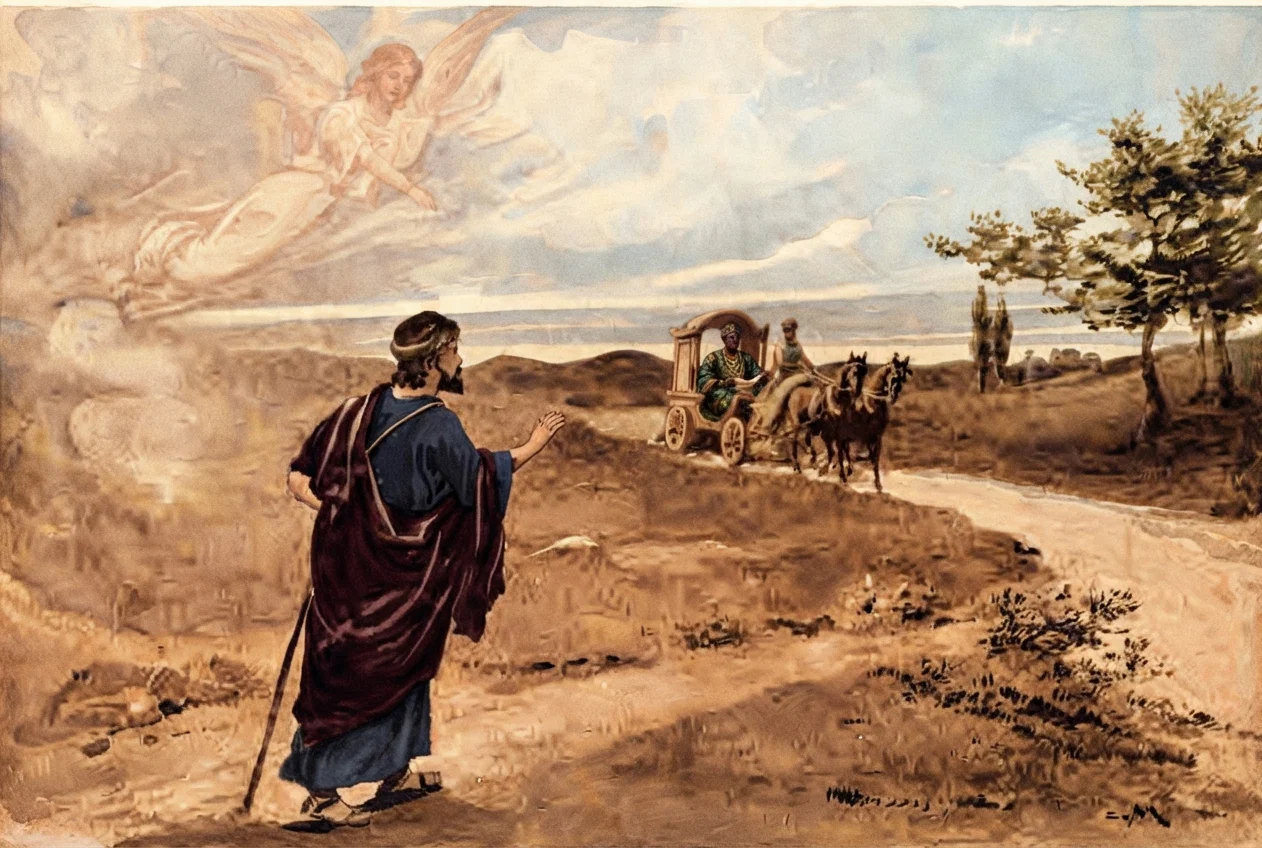
"He was led as a sheep to the slaughter; And like a lamb dumb before his shearer, So opened He not His mouth; In His humiliation His judgment was taken away; And who shall declare His generation? For His life is taken from the earth."
"Of whom speaketh the prophet this?" was the question of the eunuch to Philip. And the question has gone on from mouth to mouth, from land to land, from "the way which goeth down from Jerusalem to Gaza, which is desert," to the smiling isles that wait for His law; from the days when a great light shined in the world to the days when the gates are about to swing back before the onrushing glory of the second coming.
Go over into Egypt, and ask her Pharaohs and her magicians for information concerning the One of whom the prophet speaks. Go down into the great desert, and into the regions beyond, and ask the weather-beaten Arab and the dark dweller in a darker land if ever there dwelt such an One among them. Visit the Acropolis and the Forum, and ask the philosophers and sages and senators to point to the shrine or tablet that commemorates the One of whom this remarkable language is spoken. Call again from the shifting dust of ages the glory and the learning of the far East,—Assyria, and Babylonia, and Media, and Persia, and Ind,—and the ancients of the land of Sinim. Surely they can tell you if the prophet spoke of One of peculiar repute who had once lived among them, of whom this language and the accompanying words were true.
Do they listen curiously and wonderingly to your question? Perhaps they would wish to know more about this One upon whom was heaped such evident indignities. The prophet can give them further information:—
"But He was wounded for our transgressions, He was bruised for our iniquities; The chastisement of our peace was upon Him; And with His stripes we are healed. All we like sheep have gone astray; We have turned every one to his own way; And the Lord hath made the iniquity of us all to meet on Him.
Because He had done no violence, Neither was any deceit in His mouth.
  • *
And He bare the sin of many, And made intercession for the transgressors." "So shall He sprinkle many nations."
No, they do not know Him. This Man, they say, is more than human; His character is divine. Since the beginning of the world, they admit, no man like this had appeared. No, search the world through and through, and in all its generations there is the one onlyMan. Not in royal courts do we look for Him; not in the seat of the philosopher or sage or learned of any age, who are reputed wise. And yet He is the wisest of the wise, the source of the true science and philosophy. Should not, then, all men be attracted unto Him?—Yes, without question. But here is an astonishing thing: the wisdom and the science that proceed from Him are to the wise ones of earth foolishness. Why?—Because their own wisdom and righteousness of self have blinded their perception of the true. When they saw Him, they saw no outward glory. And so in their eyes He had no "comeliness," and there was no beauty that they should desire Him.
THE "righteous servant," the bearer of iniquities, the justifier of many, the intercessor for transgressors! A day is coming when the chiefest object before all eyes will be a great white throne and One who sits upon it. Before Him will be gathered all nations. The wisdom of the East and the West will be there, and the giant intellects of every age. Kings of the earth, and princes, and nobles, and priests, and magicians, and astrologers, and soothsayers, and necromancers, and every idolater, will stand among the vast throng. The rich and the poor, the refined and the base, the scientist, the scholar, the atheist, the agnostic and the gnostic, the infidel and the professor, and of others an unnumbered multitude, will be there. And as they look upon Him who is the source of their being, the source of truth and wisdom and righteousness and purity, sin will be unmasked, the vail will be torn from all eyes, the mists and the fogs of error will flee away, and a great light will illumine every mind. Then will the wisdom of the world, and the false philosophies and sciences, and the pernicious learning, and the pride and pomp and glory and riches and poverty of the world, appear in their true measure, and inexpressibly little will they appear. At that time the things of time and earth, the things of sense, and the purely intellectual without God, will assume their proper proportions, when face to face with eternity. And then, with the intense keenness of remorse over a priceless treasure lost through neglect, will be realized the beauty and loveliness and desirability of the spiritual life and the things that endure. And more than tongue or pen can tell will flood the souls that stand before the One of whom the prophet speaks, at that day.
OF whom speaketh the prophet?—Of the One who is the world’s hope and salvation, of the chiefest among ten thousand. Altho He is "despised and rejected of men" because He does not meet their standard of pomp and glitter, and even "we hid as it were our faces from Him; . . . and we esteemed Him not," yet through His holy life, and suffering, and death, an infinite power came among men, and is drawing here one, there one to His great heart of love. Now is the time, not hereafter, to consider eternal things and their relative worth as compared with things of time. The world is spiritually asleep—dead—and realizes not, unless it be awakened, that it needs a Saviour. Concerning the eunuch, Philip "preached unto him Jesus." Concerning the great, needy world, let there be preached unto them Jesus.
IN the midst of the bustle and clang of earth’s occupations and pursuits, and the unrest of nations, there is a quiet spot, a place of a great calm. It is in the kingdom of the soul, the eternal and spiritual kingdom of Him of whom the prophet speaks. There dwell they who have been washed and made clean. Do you see aught in His character that attracts you? Have you felt the drawing of His matchless love? Then enter the fuller life, the life with a boundless horizon.
L. A. PHIPPENY.

IN THE MASTER’S SERVICE.

THESE twelve Jesus sent forth, and commanded them, saying, Go not into the way of the Gentiles, and into any city of the Samaritans enter ye not. But go rather to the lost sheep of the house of Israel.”
If the disciples had now preached the Gospel to the Gentiles or the Samaritans, they would have lost their influence with the Jews. By exciting the prejudice of the Pharisees, they would have involved themselves in controversy, which would have discouraged them at the outset. Even the disciples were slow to understand that the Gospel was to be carried to all nations. Until they themselves could grasp this truth, they were not prepared to labor for the Gentiles. If the Jews would receive the Gospel, God purposed to make them His messengers to the Gentiles. Therefore they were first to hear the message.
The Saviour continued: “And as ye go, preach, saying, The kingdom of heaven is at hand. Heal the sick, cleanse the lepers, raise the dead, cast out devils; freely ye have received, freely give. Provide neither gold, nor silver, nor brass in your purses; nor scrip for your journey, neither two coats, neither shoes, nor yet staves; for the workman is worthy of his meat. And into whatsoever city or town ye shall enter, inquire who in it is worthy; and there abide till ye go hence. And when ye come into a house, salute it. And if the house be worthy, let your peace come upon it; but if it be not worthy, let your peace return to you. And whosoever shall not receive you, nor hear your words, when ye depart out of that house or city, shake off the dust of your feet. Verily I say unto you, It shall be more tolerable for the land of Sodom and Gomorrah in the day of judgment, than for that city. Behold, I send you forth as sheep in the midst of wolves; be ye therefore wise as serpents and harmless as doves.”
The Saviour portrayed before His delegated messengers the treatment they would receive as they bore testimony for Him. He would not allow them to enter upon their work as His messengers without telling them what they would meet. He had a complete knowledge of the struggles they would encounter. He showed them the plan of the battle, pointing out the dangers before them. They were not to go into the work blindfold, but were to count the cost of every trial.
“Beware of men,” Christ said; “for they will deliver you up to the councils, and they will scourge you in their synagogs; and ye shall be brought before governors and kings for My sake; for a testimony against them and the Gentiles.”
Christ did not wish His disciples to engage in the warfare in their own strength, thinking that they could break down every opposing influence; for then they would be taken unawares by the enemy. He told them what they might expect. He told them that they must count the cost. At the same time He assured them that help from on high would be given them. They were fighting the good fight of faith, and they would not be left alone. Heavenly angels would fight in their ranks, and the mighty General of heaven would lead the way. They might fear that their sinfulness would make them powerless. They might feel that they could not stand against the enemy. They were to remember that Omnipotence could make them more than conquerors if they would go forward in faith, refusing to fail or be discouraged.
The Holy Spirit will supply with grace those who feel their inefficiency. Those who trust in the Lord will be surrounded with a wall of light and holiness. Christ says to His soldiers to-day: “Be of good cheer; I have overcome the world.” “Put on the whole armor of God, that ye may be able to stand against the wiles of the devil. For we wrestle not against flesh and blood, but against principalities, against powers, against the rulers of the darkness of this world, against spiritual wickedness in high places.”
This spiritual wickedness will develop as time goes on. Laws will be made to compel men to worship God in accordance with human opinions. “Wherefore take unto you the whole armor of God, that ye may be able to withstand in the evil day, and having done all, to stand. Stand therefore, having your loins girt about with truth, and having on the breastplate of righteousness; and your feet shod with the preparation of the Gospel of peace; above all, taking the shield of faith, wherewith ye shall be able to quench all the fiery darts of the wicked. And take the helmet of salvation, and the sword of the Spirit, which is the Word of God.”
The powers of this earth will unite with the powers from beneath to oppress God’s people. In the Revelation, John writes: “I beheld another beast coming up out of the earth; and he had two horns like a lamb, and he spake as a dragon. And he exerciseth all the power of the first beast before him, and causeth the earth and them which dwell therein to worship the first beast, whose deadly wound was healed. And he doeth great wonders, so that he maketh fire come down from heaven on the earth in the sight of men, and deceiveth them that dwell on the earth by the means of those miracles which he had power to do in the sight of the beast, saying to them that dwell on the earth, that they should make an image to the beast, which had the wound by the sword, and did live. And he had power to give life unto the image of the beast, that theimage of the beast should both speak, and cause that as many as would not worship the image of the beast should be killed. And he causeth all, both small and great, rich and poor, free and bond, to receive a mark in their right hand, or in their foreheads; and that no man might buy or sell, save he that had the mark, or the name of the beast, or the number of his name.”
When Satanic agencies shall unite with the professed Christian world in opposing God, these words of the prophet will be fulfilled. In blind zeal “the brother shall deliver up the brother to death, and the father the child; and the children shall rise up against their parents, and cause them to be put to death. And ye shall be hated of all men for My name’s sake; but he that endureth to the end shall be saved.”
God desires His servants to remember the instruction here given, that they may not be deceived in regard to what is coming upon the world. Of ourselves we can do nothing. Without the Spirit of God we are utterly helpless. Our strength lies in hiding in Jesus. God can do more in one moment to convict people than we can do in a lifetime. Therefore let us hold fast to the arm of Omnipotence. Let us lean upon Jesus. Thus we shall grow strong to do His will. The Lord is our helper. He will not leave or forsake us. MRS. E. G. WHITE.

BE STILL.

O HEART of mine, be calm and still, And ever trustful be; Learn thou that God's almighty will Is right and best for thee, Tho from the shore There stretch before The raging billows of the sea.
And dost thou deem that He whose hand Did first the sea outpour, Who bade it sweep the shining strand, With thunder in its roar, Hath not the power To make it cower And tremble to the very core?
He brought thee, in His wisdom, here Upon its verge to stand, With rumbling chariots in the rear, And hills on every hand, Thy faith to test; Then be at rest, For this is God's benign command.
Behold! the winds are beating back The sullen, angry sea; The billows fly and leave a track That leads to liberty; So, heart, be still, A higher will Shall ever choose the best for thee. —Selected.

THE SABBATH OF THE SAVIOUR.

AND He said unto them, "The Sabbath was made for man, and not man for the Sabbath; therefore the Son of man is Lord also of the Sabbath." Mark 2:27, 28. We read of the Saviour in John 1:1-3; Heb. 1:1, 2, and Col. 1:16 that "by Him were all things created," and that "without Him was not anything made that was made." The Sabbath being one of the things which were made, it is clear that it was made by the Saviour when He rested at the close of the week of creation. Hence it was fitting that He should call Himself Lord of the Sabbath. No one will deny that it was the seventh day of the week that He called the Sabbath on this occasion. If He is "Lord of the Sabbath,"—the seventh day of the week,—then the seventh day of the week must be the "Sabbath of the Lord," or "the Lord's day." Compare Ex. 20:10; Isa. 58:13, 14; Rev. 1:10.
The Pharisees accused Christ's disciples of breaking the fourth commandment when they plucked a little grain to satisfy their hunger on the Sabbath. He who made both man and the Sabbath answered that "the Sabbath was made for man," not against him. The Sabbath is not a Moloch to which man must be sacrificed; neither is it a toy to be used or abused to satisfy every whim of man. It is a benign institution, ordained for man's highest good; and the Sabbath law runs, not crosswise, but parallel with every other law of divine origin.
When Jesus healed the withered hand on the Sabbath, the Pharisees questioned whether it was lawful to heal on the Sabbath. When He answered that it was "lawful to do well on the Sabbath," He recognized the validity of the Sabbath precept, which the Pharisees professed to keep so strictly, and at the same time passed sentence on their narrow ideas of its observance as being subversive of the spirit of the law. Matt. 12:10-13.
In answer to the lawyer's question, "Which is the great commandment in the law?" Jesus said: "Thou shalt love the Lord thy God with all thy heart, and with all thy soul, and with all thy mind. This is the first and great commandment. And the second is like unto it, Thou shalt love thy neighbor as thyself. On these two commandments hang all the law and the prophets." Matt. 22:36-40.
The great universal law of love embraces the two great principles of love to God and love to our neighbor. The first four precepts of the Decalogue, when rightly observed, show our love to God, and the last six, our love to our neighbor. These two great principles, and all the precepts which grow out of them, can never interfere with each other, but must always work together in perfect unison. Any seeming jar is always the result of a misconception on our part.
The Saviour's life is the only perfect illustration of the harmonious fulfilment of all the requirements of the law of love. Love to God, the first and great commandment, was perfectly revealed in Him; and love to His neighbors, the second great commandment, instead of being less important than the first, was "like unto it" with Him.
"In Thy life the law appears, Drawn out in living characters."
In 1 John 4:20 we read, "If a man say, I love God, and hateth [loveth less, or persecuteth] his brother, he is a liar." Our protestations of love to God amount to nothing unless they are interwoven with actual manifestations of love to all God's children.
All these scriptures show that the two great principles of love to God and love to our neighbor are co-operative, and that when they are evenly inwrought in our hearts as they were in Jesus, we, like Him, will fulfil "all the law." We shall keep the same Sabbath which He kept, and just as He kept it. Our lives will be the harmonious fulfilling of all the precepts which grow out of the two great generic principles of love. Jesus kept the Sabbath in the flesh when He was on earth, and He will surely keep the same Sabbath in our flesh to-day, if we will only let Him; for He is "the same yesterday, and to-day, and forever."
GEO. A. SNYDER.

A TERRIBLE EXAMPLE.

SIN is a terrible thing. On every hand we see our fellow-mortals enslaved by it, bound with shackles no human power can break. But the blessed Jesus is by their side, ready to deliver them as He did the lunatic in the country of the Gadarenes. Mark 5: 1-20. Pardon and deliverance are offered on condition that we repent.
But to the gentle entreaty of the blessed Gospel of peace many are turning a deaf ear. The pleasures of sin for a season look desirable, and the day of repentance is put off. The road to destruction is crowded; many walk therein.
What a fearful blunder! With vain regrets it will be deplored at last. The only thing to which the unrepentant sinner can look forward is death, eternal death. Listen! "The wages of sin is death." Rom. 6:23. The "wages" of sin! Have you ever worked for wages? Wages is the reward of labor; and when pay day comes, we are glad. See the employees of a factory, a mill, or a railroad, on pay day; they are generally cheerful when they receive their check for the week or the month. The writer was once for a short time employed in railroading, and can testify that with the rest of the employees he was always pleased to see the pay-car.
Now the Lord is a sure paymaster. He will surely give us the wages for which we have worked; for this is just and right. And the "wages of sin is death." If you are out of Christ, allow me to propound these questions: How many who are reading this article desire their wages just now? How many would feel glad to see the pay-car of sin roll in, and the Lord hand you your wages at this very hour? Hands up! Not one, I am sure, desires this. Then why work for wages we do not want? Jesus has borne the penalty of sin,—death,—and we can go free if we will but turn to Him.
An example of the terrible retribution of sin is placed before us in God's Word. The Lord took Sodom and Gomorrah, sunken in vice and moral depravity so low that all desire for repentance was eradicated, and placed them before us as an awful warning of the consequences following upon the transgression of God's law. "Even as Sodom and Gomorrah, and the cities about them in like manner, giving themselves over to fornication, and going after strange flesh, are set forth for an example, suffering the vengeance of eternal fire." Jude 7. "And turning the cities of Sodom and Gomorrah into ashes condemned them with an overthrow, making them an ensample unto those that after should live ungodly." 2 Peter 2:6.
These cities are not still burning. They are not always burning yet never consumed. No more will the wicked be. As cities they were annihilated, burned up, consumed, reduced to "ashes." So with the wicked. "For, behold, the day cometh, that shall burn as an oven; and all the proud, yea, and all that do wickedly, shall be stubble; and the day that cometh shall burn them up, saith the Lord of hosts, that it shall leave them neither root nor branch." "And ye shall tread down the wicked; for they shall be ashes under the soles of your feet in the day that I shall do this, saith the Lord of hosts." Mal. 4: 1, 3.
Sodom and Gomorrah suffered the vengeance of "eternal fire," not a fire eternally burning, but a fire which was eternal in its consequences. It destroyed these cities eternally; as cities they will appear upon this earth no more forever. The wicked likewise "go away into everlasting punishment" (Matt. 25:46)—not everlasting torment, or exquisite torture, where, amid wails of agony, they burn, and curse their Creator through all the eternal ages to come.
They go away into "everlasting punishment;" that is certain. But what is the punishment?—"The wages of sin is death." Being without Christ, they have no life (John 3:36; 1 John 5:12); and having no life, they are dead. And having no life, or no Christ, through eternity they will remain everlastingly dead. They "go away" into a death from which they will never be resurrected. Consumed like stubble, dry and dead, they cease to be as completely as did Sodom and Gomorrah. "For yet a little while, and the wicked shall not be; yea, thou shalt diligently consider his place, and it shall not be." "The wicked shall perish, and the enemies of the Lord shall be as the fat of lambs; they shall consume; into smoke shall they consume away." Ps. 37:10, 20.
Reader, it is a terrible thing to be without Christ. To be found at last without a Life-giver will be to have made a failure of life. It will mean to lose all; for when life is gone, all is gone. But, bless God, He still knocks at the heart's door. Will you not open to Him, and receive the proffered gift of eternal life?
G. B. THOMPSON.
Rome, N. Y.

Guard the Door of Your Lips

"A WORD once sent abroad will never return; so be on thy guard, and keep the door of thy lips."

LESSONS FROM MATTHEW 24

"GET READY, GET READY, GET READY!"

THE world is now in the time when "all these things" which Jesus mentioned as signs of His coming and of the end of the world, can be seen, and when all may "know that it is near, even at the doors." Accordingly it should be expected that all would be most interestedly observing all these things, and getting ready to meet Him "in peace without spot and blameless," and with the joyful greeting, "Lo, this is our God; we have waited for Him, and He will save us; this is the Lord; we have waited for Him, we will be glad and rejoice in His salvation." Isa. 25:9.
It is in order that all may be thus ready and waiting to meet Him and greet Him, that the Lord has given all this instruction about His coming. He would not have a single soul taken unawares. The more forcibly to impress this upon all, he spake a parable, saying, "Behold, the fig tree and all the trees; when her branch is now become tender, and putting forth its leaves, ye see it, and know of your own selves that the summer is now nigh. Even so ye also, when ye see all these things coming to pass, know ye that the kingdom of God is nigh, even at the doors. Verily I say unto you, This generation shall not pass away, until all these things shall be accomplished. Heaven and earth shall pass away; but My words shall not pass away." As certainly and as easily as the people of the world know that summer is nigh when the trees put forth leaves, so certainly and so easily may the people of this world know that the coming of the Lord and the end of the world is now nigh, and that this generation shall not pass away till these joint events shall be accomplished, and the kingdom of God be come in all its glory.
Accordingly Jesus urges upon all people in this time: "Watch therefore; for ye know not on what day your Lord cometh." "Therefore be ye also ready; for in an hour that ye think not, the Son of man cometh." "Take heed to yourselves, lest haply your hearts be overcharged with surfeiting and drunkenness, and cares of this life, and that day come on you suddenly as a snare." "But watch ye at every season, making supplication, that ye may prevail to escape all these things that shall come to pass, and to stand before the Son of man."
"Take ye heed, WATCH and pray; for ye know not when the time is. It is as when a man, sojourning in another country, having left his house, and given authority to his servants, to each one his work, commanded also the porter to watch. WATCH THEREFORE; for ye know not when the lord of the house cometh, whether at even, or at midnight, or at cockcrowing, or in the morning; lest coming suddenly he find you sleeping. And what I say unto you I say unto all, WATCH."
And yet for all this instruction, all this warning, and all this exhortation, to know, to be ready, and to watch, only a few will do so. The great mass of the world's people will refuse the instruction, despise the warning, and resist the exhortation, and will follow the way of the world, even to ruin. So fully is this true that only the days of Noah and the days of Lot can supply a fitting parallel.
And thus the Lord says: "As were the days of Noah, so shall be the coming of the Son of man. For as in those days which were before the flood they were eating and drinking, marrying and giving in marriage, until the day that Noah entered into the ark, and they knew not until the flood came, and took them all away; so shall be the coming of the Son of man."
"Likewise also as it was in the days of Lot: they did eat, they drank, they bought, they sold, they planted, they builded; but the same day that Lot went out of Sodom, it rained fire and brimstone from heaven, and destroyed them all. Even thus shall it be in the day when the Son of man is revealed."
Both in the days of Noah and in the days of Lot, all the people could have known as really as Noah and Lot knew what was coming, and so could all have escaped instead of all being destroyed. They did not know, simply because they would not know. They were instructed, they were warned, they were exhorted concerning the coming flood, and also concerning the impending destruction of Sodom; but they would not believe the word. They could have known all, simply by believing the word; but they would not believe, and therefore did not and could not know.
Even so it is now. The word is ample; the message is distinct; the instruction is definite; the warning is faithful; the exhortation is sufficient; but the great mass of the people will not believe, and therefore can not know. Every soul can know all, and so can be delivered from the coming destruction, and saved with the Lord's full salvation, if he will only simply believe the Word.
But they will not believe. Instead, they actually turn "scoffers, walking after their own lusts; and saying, Where is the promise of His coming? for since the fathers fell asleep, all things continue as they were from the beginning of creation. For this they willingly are ignorant of, that by the word of God the heavens were of old, and the earth standing out of the water and in the water; whereby the world that then was, being overflowed with water, perished; but the heavens and the earth, which are now, by the same word are kept in store, reserved unto fire against the day of judgment and perdition of ungodly men." 2 Peter 3:3-7.
Indeed, these scoffers are found even among the professed servants of the true Master. But they are evil servants; as saith the Master Himself, "If that evil servant shall say in his heart, My Lord delayeth His coming; and shall begin to smite his fellow-servants, and to eat and drink with the drunken, the Lord of that servant shall come in a day when he looketh not for Him, and in an hour that he is not aware of; and shall cut him asunder, and shall appoint him his portion with the hypocrites."
From this it is evident that in these times there will be found among the professed servants of the Lord, unfaithfulness to Christian truth, and only pretensions to piety. Even so it is written: "This know also, that in the last days perilous times shall come. For men shall be lovers of their own selves, covetous, boasters, proud, blasphemers, disobedient to parents, unthankful, unholy, without natural affection, truce-breakers, false accusers, incontinent, fierce, despisers of those that are good, traitors, heady, high-minded, lovers of pleasures more than lovers of God; having a form of godliness, but denying the power thereof; from such turn away." 2 Tim. 3:1-5. So much is this so that Jesus was forced to exclaim, "When the Son of man cometh, shall He find faith on the earth?"
Nevertheless, there are some who will believe, who, like Noah, in spite of the evil tide drawing away from God, will set themselves to walk with God. These also, as Noah, will cease not to proclaim the truth of God for the time, and will warn the world that the Lord is coming, that the end is near, that destruction hastens, and that men must escape for their lives.
Therefore, and of these, the Lord says: "Who then is the faithful and wise servant, whom his Lord hath set over His household, to give them their food in due season? Blessed is that servant, whom his Lord when He cometh, shall find so doing. Verily I say unto you, that He will set him over all that He hath."
All these will gladly see the Lord come. And they will see Him coming in the clouds of heaven with power and great glory. For soon "the powers of the heavens shall be shaken; and there shall appear the sign of the Son of man in heaven; and then shall all the tribes of the earth mourn, and they shall see the Son of man coming in the clouds of heaven with power and great glory. And He shall send His angels with a great sound of a trumpet, and they shall gather together His elect from the four winds, from one end of heaven to the other." "For the Lord Himself shall descend from heaven with a shout, and with the voice of the Archangel, and with the trump of God; and the dead in Christ shall rise first; then we which are alive and remain shall be caught up together with them in the clouds, to meet the Lord in the air; and SO shall we ever be with the Lord. Wherefore comfort one another with these words."
"In the resurrection morning we shall see the Saviour coming, And the sons of God a-shouting in the kingdom of the Lord. CHORUS. "We shall rise, we shall rise, When the mighty trumpet rends the azure skies; We shall rise, we shall rise, In the resurrection morning we shall rise. "We feel the advent glory; while the vision seems to tarry, We will comfort one another with the words of Holy Writ. "By faith we can discover that our warfare'll soon be over, And we'll shortly hail each other, on fair Canaan's happy shore. "We will tell the pleasing story, when we meet our friends in glory, And we'll keep ourselves all ready for to hail the heavenly King."

"NOT UNTO US."

"Not unto us, O Lord, not unto us, But unto Thy name give glory, For Thy mercy, and for Thy truth's sake. Wherefore should the heathen say, Where is now their God?"
Thus opens the glorious one hundred fifteenth psalm, contrasting the true God with all false ones. When men take glory unto themselves, they are in that very place where the heathen will say, "Where is now their God?" Man worships that which he glorifies.
But he who glorifies self, has no god worthy of the name. He is man, whatever his profession, and the heathen know him only as man.
There is but one way by which to be saved from the reproach of the heathen, and that is to give all glory to God, counting selfwithout Him as nothing. He can then boast in the Lord, who made the heavens and the earth. All the good we can do is of God. Give to Him all the glory.
Continue reading: THE TEMPERATE MAN