Review and Herald, Vol. 92, No. 7.

God Knows the Best

Review and Herald

Feb 8, 1915

Review and Herald Publishing Association · Takoma Park, Washington, D. C. · Feb 8, 1915
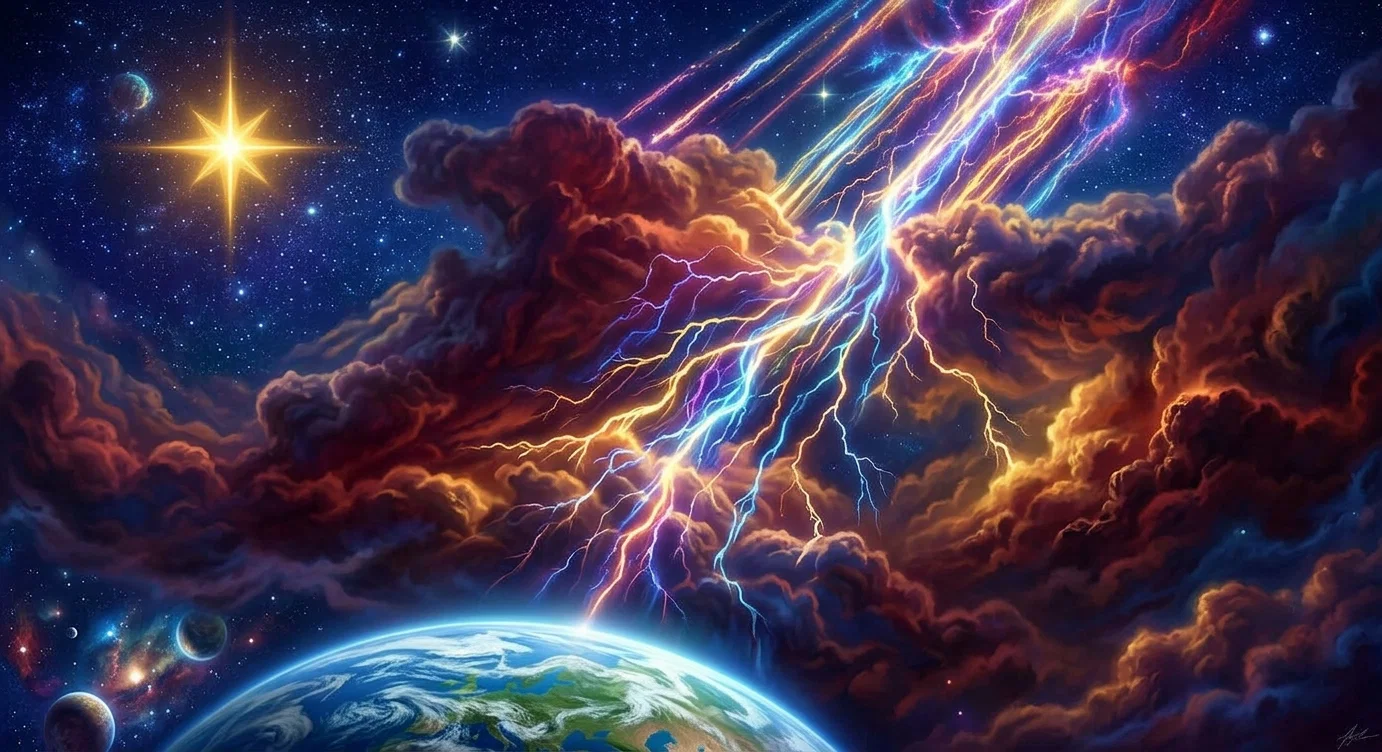
I SAW SATAN, AS LIGHTNING, FALL FROM HEAVEN

God Knows the Best

SOMETIME, when all life's lessons have been learned And sun and stars forevermore have set, The things which our weak judgments here have spurned, The things o'er which we grieved with lashes wet, Will flash before us out of life's dark night, As stars shine most in deeper tints of blue; And we shall see how all God's plans were right, And how what seemed reproof was love most true.
And we shall see how, while we frown and sigh, God's plans go on as best for you and me; How, when we called, he heeded not our cry, Because his wisdom to the end could see. And even as prudent parents disallow Too much of sweet to craving babyhood, So God, perhaps, is keeping from us now Life's sweetest things, because it seemeth good.
And if sometimes, commingled with life's wine, We find the wormwood, and rebel and shrink, Be sure a wiser hand than yours or mine Pours out this potion for our lips to drink. If we could push ajar the gates of life, And stand within, and all God's workings see, We could interpret all this doubt and strife And for each mystery could find a key.
But not today. Then be content, poor heart! God's plans, like lilies pure and white, unfold; We must not tear the close-shut leaves apart, Time will reveal the chalice of gold. And if through patient toil we reach the land Where tired feet with sandals loose may rest, When we shall clearly know and understand, I think that we will say, "God knew the best." —Selected.

The Fall of Satan

By Mrs. E. G. White
SATAN in heaven, before his rebellion, was a high and exalted angel, next in honor to God's dear Son. His countenance, like those of the other angels, was mild and expressive of happiness. His forehead was high and broad, showing a powerful intellect. His form was perfect; his bearing noble and majestic. A special light beamed in his countenance, and shone around him brighter and more beautiful than around the other angels; yet Jesus, God's dear Son, had the pre-eminence over all the angelic host. He was one with the Father before the angels were created. Satan was envious of Christ, and gradually assumed command which devolved on Christ alone.

God Honors the Son

The great Creator assembled the heavenly host, that he might in the presence of all the angels confer special honor upon his Son. The Son was seated on the throne with the Father, and the heavenly throng of holy angels was gathered around them. The Father then made known that it was ordained by himself that Christ, his Son, should be equal with himself; so that wherever was the presence of his Son, it was as his own presence. The word of the Son was to be obeyed as readily as the word of the Father. His Son he had invested with authority to command the heavenly host. Especially was his Son to work in union with himself in the anticipated creation of the earth and every living thing that should exist upon the earth. His Son would carry out his will and his purposes, but would do nothing of himself alone. The Father's will would be fulfilled in him.

The Envy of Satan

Satan was envious and jealous of Jesus Christ. Yet when all the angels bowed to Jesus to acknowledge his supremacy and high authority and rightful rule, Satan bowed with them; but his heart was filled with envy and hatred. Christ had been taken into the special counsel of God in regard to his plans, while Satan was unacquainted with them. He did not understand, neither was he permitted to know, the purposes of God. But Christ was acknowledged sovereign of heaven, his power and authority to be the same as that of God himself. Satan thought that he was himself a favorite in heaven among the angels. He had been highly exalted; but this did not call forth from him gratitude and praise to his Creator. He aspired to the height of God himself. He gloried in his loftiness. He knew that he was honored by the angels. He had a special mission to execute. He had been near the great Creator, and the ceaseless beams of glorious light enshrouding the eternal God, had shone especially upon him. Satan thought how angels had obeyed his command with pleasurable alacrity. Were not his garments light and beautiful? Why should Christ thus be honored before himself?

The Development of the Seeds of Rebellion

He left the immediate presence of the Father, dissatisfied, and filled with envy against Jesus Christ. Concealing his real purposes, he assembled the angels' host. He introduced his subject, which was himself. As one aggrieved, he related the preference God had given Jesus to the neglect of himself. He told them that henceforth all the sweet liberty the angels had enjoyed was at an end. For had not a ruler been appointed over them, to whom they from henceforth must yield servile honor? He stated to them that he had called them together to assure them that he no longer would submit to this invasion of his rights and authority; that never would he again bow down to Christ; that he would take the honor upon himself which should have been conferred upon him and would be the commander of all who would submit to follow him and obey his voice. There was contention among the angels. Satan and his sympathizers were striving to reform the government of God. They were discontented and unhappy because they could not look into his unsearchable wisdom and ascertain his purposes in exalting his Son Jesus, and endowing him with such unlimited power and command. They rebelled against the authority of the Son.

Efforts to Bring About Reconciliation

Angels that were loyal and true sought to reconcile this mighty, rebellious angel to the will of his Creator. They justified the act of God in conferring honor upon Jesus Christ, and with forcible reasoning sought to convince Satan that no less honor was his now than before the Father had proclaimed the honor which he had conferred upon his Son. They clearly set forth that Jesus was the Son of God, existing with him before the angels were created, and that he had ever stood at the right hand of God, and his mild, loving authority had not heretofore been questioned; and that he had given no commands but what it was joy for the heavenly host to execute. They urged that Christ's receiving special honor from the Father in the presence of the angels did not detract from the honor that Satan had heretofore received. The angels wept. They anxiously sought to move Satan to renounce his wicked design and yield submission to their Creator; for all had heretofore been peace and harmony, and what could occasion this dissenting, rebellious voice?

Warnings Unheeded

Satan refused to listen. And then he turned from the loyal and true angels, denouncing them as slaves. These angels, true to God, stood in amazement as they saw that Satan was successful in his effort to excite rebellion. He promised them a new and better government than they then had, in which all would be freedom. Great numbers signified their purpose to accept Satan as their leader and chief commander. As he saw that his advances met with success, he flattered himself that he should yet have all the angels on his side, and that he would be equal with God himself, and his voice of authority would be heard in commanding the entire host of heaven. Again the loyal angels warned Satan, and assured him what must be the consequence if he persisted; that He who could create the angels, could by his power overturn all their authority, and in some signal manner punish their audacity and terrible rebellion. To think that an angel should resist the law of God, which was as sacred as himself! They warned the rebellious to close their ears to Satan's deceptive reasonings, and advised Satan, and all who had been affected by him, to go to God and confess their wrong for even admitting a thought of questioning his authority. Many of Satan's sympathizers were inclined to heed the counsel of the loyal angels, and repent of their dissatisfaction, and be again received into the confidence of the Father and his dear Son. The mighty revolter then declared that he was acquainted with God's law, and if he should submit to servile obedience, his honor would be taken from him. No more would he be intrusted with his exalted mission. He told them that himself and they also had now gone too far to go back, and he would brave the consequences, for to bow in servile worship to the Son of God he never would; that God would not forgive, and now they must assert their liberty and gain by force the position and authority which were not willingly accorded to them.

The Father and the Son in Council

The loyal angels hasten speedily to the Son of God, and acquaint him with what is taking place among the angels. They find the Father in conference with his beloved Son, to determine the means by which, for the best good of the loyal angels, the assumed authority of Satan can be forever put down. The great God could at once have hurled this archdeceiver from heaven; but this was not his purpose. He would give the rebellious an equal chance to measure strength and might with his own Son and his loyal angels. In this battle every angel would choose his own side, which would be evident to all. It would not have been safe to suffer any who united with Satan in his rebellion to continue to occupy heaven. They had learned the lesson of genuine rebellion against the unchangeable law of God; and this is incurable. If God had exercised his power to punish this chief rebel, it would not have been made manifest who were the disaffected angels; hence God took another course; for he would make manifest distinctly to all the heavenly host his justice and his judgment.

Against the Law and Government of God

It was the highest crime to rebel against the government of God. All heaven seemed in commotion. The angels were marshaled in companies, each division with a higher commanding angel at their head. Satan was warring against the law of God, because ambitious to exalt himself, and unwilling to submit to the authority of God's Son, heaven's great commander. All the heavenly host were summoned to appear before the Father, to have each case determined. Satan unblushingly made known his dissatisfaction that Christ should be preferred before him. He stood up proudly and urged that he should be equal with God, and should be taken into conference with the Father and understand his purposes. God informed Satan that to his Son alone he would reveal his secret purposes, and he required all the family in heaven, even Satan, to yield him implicit, unquestioned obedience; but that he (Satan) had proved himself unworthy of a place in heaven. Then Satan exultingly pointed to his sympathizers, comprising nearly one half of all the angels, and exclaimed, “These are with me! Will you expel these also, and make such a void in heaven?” He then declared that he was prepared to resist the authority of Christ, and to defend his place in heaven by force of might, strength against strength.

Satan's Object to Abolish All Law

Good angels wept to hear the words of Satan, and his exulting boasts. God declared that the rebellious should remain in heaven no longer. Their high and happy state had been held upon condition of obedience to the law which God had given to govern the high order of intelligences. But no provision had been made to save those who should venture to transgress his law. Satan grew bold in his rebellion, and expressed his contempt of the Creator's law. This Satan could not bear. He claimed that angels needed no law, but should be left free to follow their own will, which would ever guide them right; that law was a restriction of their liberty, and that to abolish law was one great object of his standing as he did. The condition of the angels he thought needed improvement. This was not according to the mind of God, who had made them and exalted them equal to himself. The happiness of the angelic host consisted in their perfect obedience to law. Each had his special work assigned him; and until Satan rebelled, there had been perfect order and harmonious action in heaven.
SATAN ENTERING THE GARDEN OF EDEN

Cast Out of Heaven

Then there was war in heaven. The Son of God, the Prince of heaven, and his loyal angelsengaged in conflict with the archrebel and those who united with him. The Son of God and true, loyal angels prevailed; and Satan and his sympathizers were expelled from heaven. All the heavenly host acknowledged and adored the God of justice. Not a taint of rebellion was left in heaven. All was again peaceful and harmonious as before. Angels in heaven mourned the fate of those who had been their companions in happiness and bliss. Their loss was felt in heaven. The Father consulted Jesus in regard to carrying out at once their purpose to make man to inhabit the earth. He would place man upon probation to test his loyalty, before he could be rendered eternally secure. If he endured the test wherewith God saw fit to prove him, he should eventually be equal with the angels. He was to have the favor of God, and he was to converse with angels, and they with him. God did not see fit to place man beyond the power of disobedience.

A Lesson to the Universe

Even when he was cast out of heaven, Infinite Wisdom did not destroy Satan. Since only the service of love can be acceptable to God, the allegiance of his creatures must rest upon a conviction of his justice and benevolence. The inhabitants of heaven and of the worlds, being unprepared to comprehend the nature or consequences of sin, could not then have seen the justice of God in the destruction of Satan. Had he been immediately blotted out of existence, some would have served God from fear rather than from love. The influence of the deceiver would not have been fully destroyed, nor would the spirit of rebellion have been utterly eradicated. For the good of the entire universe through ceaseless ages, he must more fully develop his principles, that his charges against the divine government might be seen in their true light by all created beings, and that his justice and mercy and the immutability of his law might be forever placed beyond all question.
Satan's rebellion was to be a lesson to the universe through all coming ages—a perpetual testimony to the nature of sin and its terrible results. The working out of Satan's rule, its effects upon both men and angels, would show what must be the fruit of setting aside the divine authority. It would testify that with the existence of God's government is bound up the well-being of all the creatures he has made. Thus the history of this terrible experiment of rebellion was to be a perpetual safeguard to all holy beings, to prevent them from being deceived as to the nature of transgression, to save them from committing sin, and suffering its penalty.

Immanuel, God With Us

By coming to dwell with us, Jesus was to reveal God both to men and to angels. He was the Word of God,—God's thought made audible. . . .
The plan for our redemption was not an afterthought, a plan formulated after the fall of Adam. It was a revelation of "the mystery which hath been kept in silence through times eternal." It was an unfolding of the principles that from eternal ages have been the foundation of God's throne. From the beginning, God and Christ knew of the apostasy of Satan, and of the fall of man through the deceptive power of the apostate. God did not ordain that sin should exist, but he foresaw its existence, and made provision to meet the terrible emergency. So great was his love for the world, that he covenanted to give his only begotten Son, "that whosoever believeth in him should not perish, but have everlasting life."
This was a voluntary sacrifice. Jesus might have remained at the Father's side. He might have retained the glory of heaven, and the homage of the angels. But he chose to give back the scepter into the Father's hands, and to step down from the throne of the universe, that he might bring light to the benighted, and life to the perishing. . . .

"Tabernacled Among Us"

God commanded Moses for Israel, "Let them make me a sanctuary, that I may dwell among them," and he abode in the sanctuary, in the midst of his people. Through all their weary wandering in the desert, the symbol of his presence was with them. So Christ set up his tabernacle in the midst of our human encampment. He pitched his tent by the side of the tents of men, that he might dwell among us, and make us familiar with his divine character and life. "The Word became flesh, and tabernacled among us, and we beheld his glory, glory as of the only begotten from the Father, full of grace and truth."
Since Jesus came to dwell with us, we know that God is acquainted with our trials, and sympathizes with our grief. Every son and daughter of Adam may understand that our Creator is the friend of sinners. For in every doctrine of grace, every promise of joy, every deed of love, every divine attraction presented in the Saviour's life on earth, we see "God with us."
By his humanity, Christ touched humanity; by his divinity, he lays hold upon the throne of God. As the Son of man, he gave us an example of obedience; but as the Son of God, he gives us power to obey. It was Christ who from the bush on Mt. Horeb spoke to Moses, saying, "I AM THAT I AM. . . . Thus shalt thou say unto the children of Israel, I AM hath sent me unto you." This was the pledge of Israel's deliverance. So when he came "in the likeness of men," he declared himself the I AM. The Child of Bethlehem, the Saviour of the world, is God "manifest in the flesh." And to us he says, "I AM the Good Shepherd;" "I AM the Living Bread;" "I AM the Way, the Truth, and the Life." "All power is given unto me in heaven and in earth." "I AM the assurance of every promise." "I AM, be not afraid." "God with us" is the assurance of our deliverance from sin, the assurance of our power to obey the law of heaven. . . .

"Bound to Humanity"

Christ was treated as we deserve, that we might be treated as he deserves. He was condemned for our sins, in which he had no share, that we might be justified by his righteousness, in which we had no share. He suffered the death which was ours, that we might receive the life which was his. "With his stripes we are healed."
In taking our nature, the Saviour has bound himself to humanity by a tie that is never to be broken. Through the eternal ages he is linked with us. "God so loved the world, that he gave his only begotten Son." He gave him not only to bear our sins, and to die as our sacrifice; he gave him to the fallen race. To assure us of his immutable counsel of peace, God gave his only begotten Son to become one of the human family, forever to retain his human nature. This is the pledge that God will fulfill his word. "Unto us a child is born; unto us a son is given; and the government shall be upon his shoulder." "God has adopted human nature in the person of his Son, and has carried the same into the highest heaven. It is the "Son of man," who shares the throne of the universe. It is the "Son of man" whose name shall be called "Wonderful, Counsellor,the mighty God, the everlasting Father, the Prince of Peace." The I AM is the Daysman between God and humanity, laying his hand upon both. He who is "holy, harmless, undefiled, separate from sinners," is not ashamed to call us brethren. In Christ the family of earth and the family of heaven are bound together. Christ glorified is our brother. Heaven is enshrined in humanity, and humanity is enfolded in the bosom of Infinite Love.—"The Desire of Ages."

The Plan of Salvation

The Restoration of All Things in Christ

By C. M. Snow
“Behold the Lamb of God, which taketh away the sin of the world.” John 1:29. “For God so loved the world, that he gave his only begotten Son, that whosoever believeth in him should not perish, but have everlasting life.” John 3:16. “And thou, O tower of the flock, the stronghold of the daughter of Zion, unto thee shall it come, even the first dominion; the kingdom shall come to the daughter of Jerusalem.” Micah 4:8. John was baptizing in Jordan, and multitudes under his preaching were confessing their sins, dying to this world, and rising from the watery grave to walk in newness of life.

Behold the Lamb of God

One day there came to John One who had no sins to confess; and John, looking upon him, said: “Behold the Lamb of God, which taketh away the sin of the world.” Then were the heavens opened unto him, and he saw the Spirit of God descending like a dove, and lighting upon him; and a voice from heaven, saying, This is my beloved Son, in whom I am well pleased.” Matt. 3:15, 17. “And John bare record, saying, I saw the Spirit descending from heaven like a dove, and it abode upon him. And I knew him not: but he that sent me to baptize with water, the same said unto me, Upon whom thou shalt see the Spirit descending, and remaining on him, this same is he which baptizeth with the Holy Ghost. And I saw, and bare record that this is the Son of God.” John 1:32-34.

A Call to Repentance

The report of the wonderful preaching of this prophet of the wilderness had spread throughout Palestine. Hearts had been deeply touched; wrongs had been made right; sins had been repented of and forsaken. Even from Jerusalem men had journeyed to Bethabara to hear the voice that testified against unrighteousness and warned men to flee from the wrath to come. Judah was stirred, and even the great ones were asking, What do these things mean? and, Is this the Christ that was to come?

What Did It Mean?

But John declared, I am not the Christ; I am not that prophet; the latchet of his shoes I am not worthy to unloose; “I am the voice of one crying in the wilderness, Make straight the way of the Lord.”
What signifies this “Lamb of God”? What means this “baptism unto repentance”? What means this agitation of the people by a man from the wilderness, uncouth, unlettered, and unauthorized by the Sanhedrin or by any school of the prophets? The hour had struck for a new epoch in the history of man and of the world. Shadows were giving place to substance; types were melting into antitype; the Desire of Ages had come; and John was tilling the fields of Israel for the sowing of the good seed of the kingdom.

The Long-Looked-For Messiah Had Come

But what means this “Lamb of God” appearing in the scene just when the people were flocking to John, confessing their sins and being baptized for the remission of sin? He who alone could make the forgiveness of sin possible was the long-promised Messiah, the Anointed One, the Christ. Toward his coming Adam looked through the telescope of God’s promise—the Seed of the woman shall bruise the serpent’s head. Abel saw him in the lamb whose blood he shed and whose body was consumed on the altar of sacrifice. Enoch looked forward to his day, and prophesied of his coming, “with ten thousand of his saints, to execute judgment upon all.” Jude 14, 15. David saw him as the Lord’s anointed, the inheritor of the worlds who was to rule the nations with a rod of iron, the Lord of hosts, the King of glory, but the smitten and bruised One hanging upon the cross.
Isaiah saw him as that promised child upon whose shoulders the government was to rest, whose name is Wonderful, Counselor, The mighty God, The everlasting Father, the Prince of Peace, and yet the One who would be despised and rejected of men; a man of sorrows and acquainted with grief, wounded for our transgressions, bruised for our iniquities, chastised for our peace, by whose stripes we are healed, the One upon whom the Lord had laid “the iniquity of us all,” pouring out his soul unto death, numbered with the transgressors, bearing the sin of many, and making intercession for the transgressors.
Micah saw him as the “Tower of the flock, the Stronghold of the daughter of Zion,” the retriever of the lost dominion. Zechariah knew him as the Branch who was to reconstruct in this earth the ruined edifice of Jehovah’s worship, the King of the daughter of Jerusalem; while to Malachi he was “the messenger of the covenant” and “the Sun of Righteousness,” with healing in his wings. And this being, upon whom was focused the eyes of angels, of patriarchs, and of prophets, was Immanuel, God with us, Christ the anointed, Jesus the Saviour from sin. So when John said, “Behold the Lamb of God, which taketh away the sin of the world,” he focused the gaze of ages on that sinless form standing upon the banks of Jordan, and declared him the One who was to be the victim of the cross.

Why This Sacrifice for Sin?

Why was it necessary that the Son of God should die for man? What profit would it be to heaven? How could it help man?
Sin put a gulf between earth and heaven. Man’s obedience to the dictates of Satan, and his disobedience to his Maker, put the race in rebellion against the government of heaven, and made Satan the “prince” of this world. The prophet says:— “Behold, Jehovah’s hand is not shortened, that it cannot save; neither his ear heavy, that it cannot hear; but your iniquities have separated between you and your God, and your sins have hid his face from you.” Isa. 59:1, 2.

Man Lost Through Disobedience

When man broke the command of God, he became a rebel, and his home became the house of rebellion. So there went forth that decree: “Dust thou art, and unto dust shalt thou return;” and, “Cursed is the ground for thy sake.” But that plague upon sin and disloyalty could not remain in the universe of God forever. Either man and the home of man must be blotted out, or a remedy must be found. The decree goes forth; but the sinless Son of the Almighty steps under the falling judgment, and the hand of execution is stayed.

Christ the Remedy

Man had broken the law; but the Son of God offers to become man, and keep the law, and satisfy its claims for man. So he says:— “Lo, I am come; in the roll of the book it is written of me: I delight to do thy will, O my God; yea, thy law is within my heart.” Ps. 40:7.
And when he had become man, we hear him declaring to his Father:— “I am come down from heaven, not to do mine own will, but the will of him that sent me.” John 6:38.
In the garden of Gethsemane, with the weight of the world’s sin crushing his soul, and the agonies of the cross staring him in the face, we hear him declaring, “Nevertheless not my will, but thine, be done.” Luke 22:42. In that attitude he went to the cross; in that attitude he hung upon the cross, between earth and heaven, a self-given sacrifice for a race in sin; and, while hanging there, could still plead with the Father in man’s behalf, “Father, forgive them; for they know not what they do.”

“Jesus Paid It All”

As man, he died, and in his death paid the penalty of the broken law. As the sinless Son of God, death could not hold him; for death is the penalty of transgression, and he had not transgressed. He died because he had volunteered to take the stroke that was man’s due; and doing that, placed within man’s reach again that life eternal which man had forfeited through sin. He bore our sins in his own body on the tree, that we might not have to bear the fearful penalty of our own transgression, which is death eternal. “He was wounded for our transgressions, he was bruised for our iniquities: the chastisement of our peace was upon him, and with his stripes we are healed.” Isa. 53:5.

The Gulf Is Bridged

That bridges the gulf which sin had made between earth and heaven, and makes it possible for man one day to see his Maker’s face, now hidden from us by the veil of sin. Being tempted in all points like as we are, he is able to succor them that are tempted, to strengthen them for every trial, to make them fit for every circumstance; and then he leaves them to walk in this gracious promise: “To him that overcometh will I grant to sit with me in my throne, even as I also overcame, and am set down with my Father in his throne.” Rev. 3:21.
His righteousness is imputed to those who, fleeing from sin, seek the shelter of his grace; “for as through the one man’s disobedience the many were made sinners, even so through the obedience of the one shall the many be made righteous.” Rom. 5:19. Again: “If, while we were enemies, we were reconciled to God through the death of his Son, much more, being reconciled, shall we be saved by his life.” Rom. 5:10. “All things are of God, who reconciled us to himself through Christ, and gave unto us the ministry of reconciliation. . . . We beseech you on behalf of Christ, be ye reconciled to God.” 2 Cor. 5:18-20.

The Lost Dominion Restored by Promise

Having accomplished that reconciliation, he has a right to the title given him by the prophet Micah, the “Tower of the flock, the Stronghold of the daughter of Zion.” And of that one, inspiration says, “Unto thee shall it come, yea, the former dominion shall come, the kingdom of the daughter of Jerusalem.” Micah 4:8. That “former dominion” is the dominion lost to our race through sin. Christ wins it back through righteousness, and by his own blood purchases man’s release from the demands of that broken law, that he may live to enjoy the restored inheritance. Again and again did Satan tempt Christ to break God’s law. Said he, Fall down and worship me, and I will give you the dominion you seek. To have done so, would have meant ruin to the plan of salvation and destruction and oblivion to the race. But Christ did not fail. Humanity and divinity met in him. One hand clasped the human hand, the other the hand of God. “We are complete in him.” The offender and the offended are reconciled; and, that accomplished, God will make all things new. In that reconciliation and re-creation this scripture finds fulfillment.
“Fear not; for thou shalt not be ashamed. . . . For thy Maker is thy husband; Jehovah of hosts is his name; and the Holy One of Israel is thy Redeemer; the God of the whole earth shall he be called. . . . For a small moment have I forsaken thee; but with great mercies will I gather thee. In overflowing wrath I hid my face from thee for a moment; but with everlasting loving-kindness will I have mercy on thee, saith Jehovah thy Redeemer.” Isa. 54:4-8.

“Victory Through Our Lord Jesus Christ”

“Then shall come to pass the saying that is written, Death is swallowed up in victory. O death, where is thy victory? O death, where is thy sting? The sting of death is sin; and the power of sin is the law: but thanks be to God, who giveth us the victory through our Lord Jesus Christ.” 1 Cor. 15:54-57.
“And I saw a new heaven and a new earth: for the first heaven and the first earth are passed away; and the sea is no more. . . . And I heard a great voice out of the throne saying, Behold, the tabernacle of God is with men, and he shall dwell with them, and they shall be his peoples, and God himself shall be with them, and be their God: and he shall wipe away every tear from their eyes; and death shall be no more; neither shall there be mourning, nor crying, nor pain, any more: the first things are passed away. And he that sitteth on the throne said, Behold, I make all things new.” Rev. 21:1-5.
In that restoration and reconciliation and redemption every son and daughter of Adam may have a part.

Immortal Love

“Immortal love, forever full, Forever flowing free, Forever shared, forever whole, A never-ebbing sea.
“We may not climb the heavenly steeps, To bring the Lord Christ down; In vain we seek the lowest deeps, For him no depths can drown.
“But warm, sweet, tender, even yet A present help is he; And faith has yet its Olivet, And love its Galilee.
“The healing of the seamless dress Is by our deeds of pain; We touch him in life's throng and press, And we are whole again.”
Continue reading: The Origin of Evil and Its Remedy