Review and Herald, Vol. 16, Nos. 1 & 2.

PROPHECY

Review and Herald

May 29, 1860

Publishing Committee · Battle Creek, Mich. · May 29, 1860

PROPHECY.
WHAT can be more natural than for man, as he looks forth upon a world where evil is everywhere present, and the marks of disorder and decay everywhere visible, to inquire whether or not this state of things shall always continue? and what inquiry can be of more interest and importance to the race than that which has respect to the age of the world in which we live? It would therefore be unreasonable to suppose that God would give a revelation to man and yet leave him uninformed in respect to subjects of such absorbing interest.
The declaration of the scripture is therefore in strict accordance with an enlightened reason, when it says, "Surely the Lord God will do nothing, but he revealeth his secret unto his servants the prophets." Amos iii, 7. The object of prophecy is to forewarn the world of things to come, in time for the requisite preparation, and to inspire the people of God with fresh courage as they see the time for the full fruition of their hope drawing nigh. No judgment has ever come upon the world unheralded; and none have ever fallen therein unwarned. And if from the uniform dealings of an unchangeable God with our world in the past, we may judge of the future, then may we confidently conclude that of the events yet to transpire, and above all the great event in which earth's drama shall close—the ushering in of the great day of the Lord, and the coming of the Son of man, something will be known, and the world be faithfully warned thereof, ere they shall take place.
In calling attention to these things we are accused of prying into the secrets of the Almighty. From this charge we want no better vindication than the language of Moses in Deut. xxix, 29: "The secret things belong unto the Lord our God, but those things which are revealed, belong unto us and to our children forever." Prophecy belongs to that portion of the Bible which may properly be denominated a revelation. It is designed to reveal to us things of which we could not in any other way gain information.
Again, we are met with the plea that the prophecies cannot be understood. But says the Saviour, referring directly to the prophecy of Daniel, "Whoso readeth let him understand." Matt. xxiv, 15. With this endorsement by our Saviour of our efforts to understand, with the declaration that the wise shall understand [Dan. xii, 10], and with the promise that if any man lack wisdom God will give liberally and upbraid not, if he will only ask of him, we are certain that the way is open for an understanding of these things before all those who are humble and teachable enough to ask and receive instruction of him through the medium of his word, and the agency of his Holy Spirit. To deny that the prophecies can be understood, is to deny that a part of God's word is a revelation, which is, so far, infidelity.
That the Bible reveals the day or hour of Christ's coming we do not pretend. But there are certain prophecies given and signs foretold which are to show us when the great day is at hand; and we are commanded, when we see these things come to pass, to know that it [margin, he, Christ] is near, even at the doors. Matt. xxiv, 33. And Paul gives assurance that Christians will possess a knowledge of these things when he says, "But ye brethren are not in darkness that that day should overtake you as a thief." 1 Thess. v, 4.
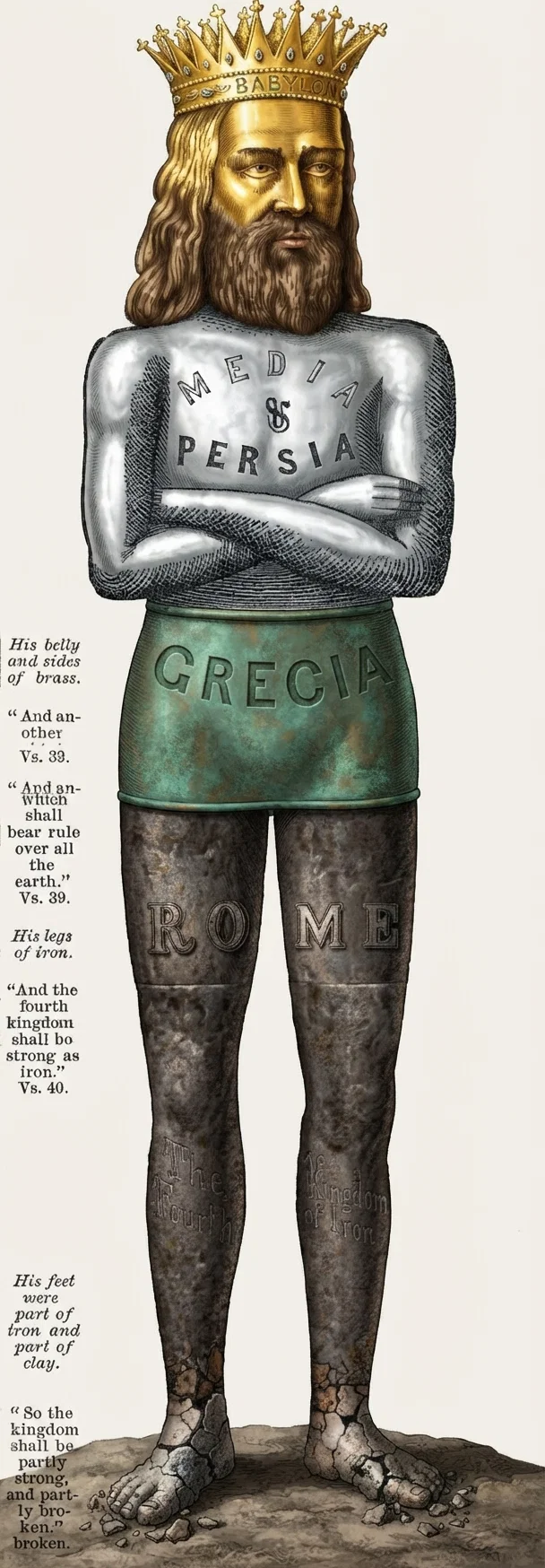
With these remarks we call the attention of the reader to the events and predictions recorded in Daniel ii. The scene opens with the kingdom of Babylon or Chaldea at the summit of its greatness and glory, b. c. 603. Nebuchadnezzar the Chaldean monarch, as it is natural for man to do, had been anxiously looking into the future, and pondering what should come to pass thereafter. Verse 29. Instead of rebuking or discouraging this spirit of inquiry in man, God takes occasion to grant to the king, and through him to the world, the information which he sought. Under the symbol of a great image he presents before him the most impressive and succinct history of the world from that time on, that can anywhere be found. This image's head was of fine gold, symbolizing the kingdom of Babylon, then existing. In his interpretation of the vision, the prophet addressed himself to the king in the following words: "Thou art this head of gold." Verse 38. The breast and arms of silver represented Media and Persia, which shortly supplanted Babylon in the empire of the world. The belly and sides of brass prefigured Grecia, which, conquering its predecessors, enjoyed its period of universal dominion. And finally Rome, the legs of the image, bore its iron sway over all the earth. In development of the ten toes, said the prophet, "The kingdom shall be divided" [verse 41]; and so was Rome divided into ten kingdoms between the years A. D. 306 and 483. What next? The monarch beheld till a stone cut out of the mountain without hand smote the image upon its feet, ground its metallic parts to powder, became a great mountain and filled the whole earth. The inspired interpretation of this impressive scene is given thus: "In the days of these kings shall the God of heaven set up a kingdom which shall never be destroyed, . . . but it shall break in pieces and consume all these kingdoms, and it shall stand for ever." Verse 44.
The earthly governments symbolized in this vision are all in the past. Their rise and fall may be easily traced by every lover of history. On these we shall not therefore dwell, but only inquire concerning that portion of the prophecy which yet alone remains to be fulfilled, namely, the setting up of the everlasting kingdom of God. Far too many, we are aware, will be ready to meet us here with the view that this kingdom of God is a spiritual kingdom and was set up in the days of Christ and the apostles. Let us ask such, must not the fifth universal kingdom be physically like the four which precede it? Is it at all admissible to suppose that the scene would suddenly shift without the least intimation from literal kingdoms on this literal earth, to a spiritual kingdom in the hearts of men? Such a kingdom as this, if the term is allowable, might exist without interfering with earthly governments; but the kingdom of God in Dan. ii, dashes in pieces all earthly governments ere it succeeds to their rule and absorbs their territory.
Another consideration more fatal still to this unscriptural though popular view of the kingdom, is found in the following: It was not till "the days of these kings" that the God of heaven was to set up his kingdom. Dan. ii, 44. "These kings" can be no other than the ten which arose out of the Roman empire. Not till after this division of the empire, therefore, could the kingdom of God contemplated in this prophecy, be set up; and it is a fact that this division wasnot accomplished till the year A. D. 483.
Whatever may therefore be meant by the expression, kingdom of God, in other places, it is certain beyond the shadow of doubt, that his kingdom which is to destroy and succeed all earthly governments, was not set up by Christ or his apostles; neither is it yet set up; for earthly governments still exercise their authority over the world.
A thought may here occur and be a source of perplexity to some. Have not the ten kingdoms, of the Roman empire, in the days of which the God of heaven should set up his kingdom, passed away? and has not the prophecy failed, if that kingdom is still future? We answer, the days of those kingdoms still continue. It matters not that their boundaries may have been changed, and their identity, in some cases, almost lost: The kingdom is still divided. We have passed that point where ten divisions out of the Roman empire completed the development of the image. It is now only waiting to be smitten upon the feet by the stone cut out of the mountain without hand.
Reader, are you ready for this destruction of all earthly governments? Have you an interest in the kingdom that is to be set up? Is your name enrolled among those highly privileged ones, who are to be its immortal subjects? Is your citizenship in heaven, from whence we look for the Lord and Saviour? Are you Christ's, and therefore an heir, according to the promise? Or are you, on the other hand, in that condition, that if the King should appear, to raise his people to their glorious and imperishable inheritance, you would covet, as the greatest blessing to be buried from his presence by rocks and mountains? Woful condition! Watch! lest coming suddenly he find you sleeping.

DANIEL CHAPTER VII.

It hath pleased the pen of inspiration, in imparting instruction to men, to give line upon line and precept upon precept. In Daniel vii, we have the same great outline of this world's history as symbolized by the image of chapter ii, again brought to view but in a different form. The prophet here saw four great beasts, explained in verse 17 to be four great kingdoms, corresponding respectively to the gold, silver, brass, and iron, of the great image.
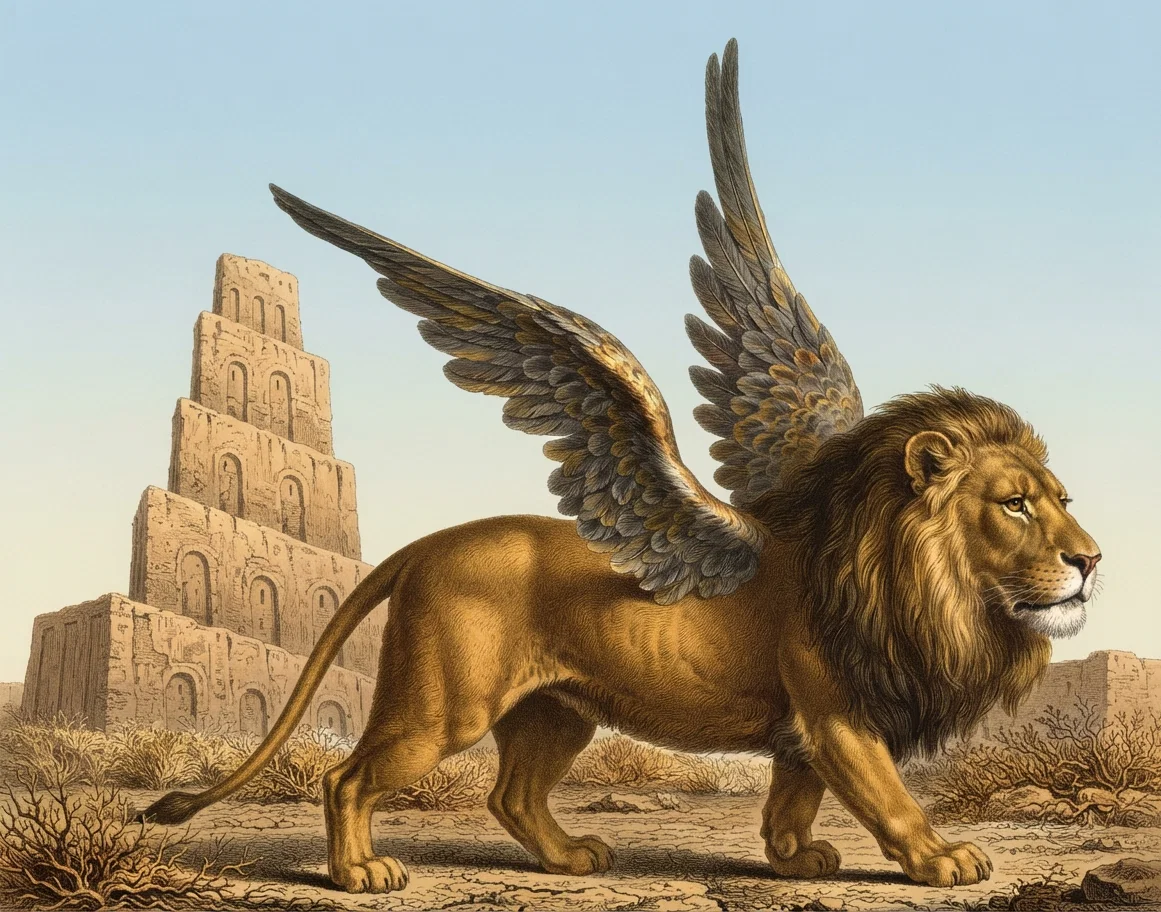
"The first was like a lion, and had eagles' wings." Verse 4.
The Chaldean empire, as advanced to its summit of prosperity under Nebuchadnezzar, was intended by this beast. Scott.
BABYLON, B. C. 677.
BABYLON, B. C. 677.
"The second like to a bear, and it raised itself up on one side and had three ribs in its mouth." Verse 5. A fit emblem of the character and conquest of the Persian nation which succeeded Babylon B. C. 538. Prideaux, Vol. I, p. 139.
MEDO-PERSIA, B. C. 538.
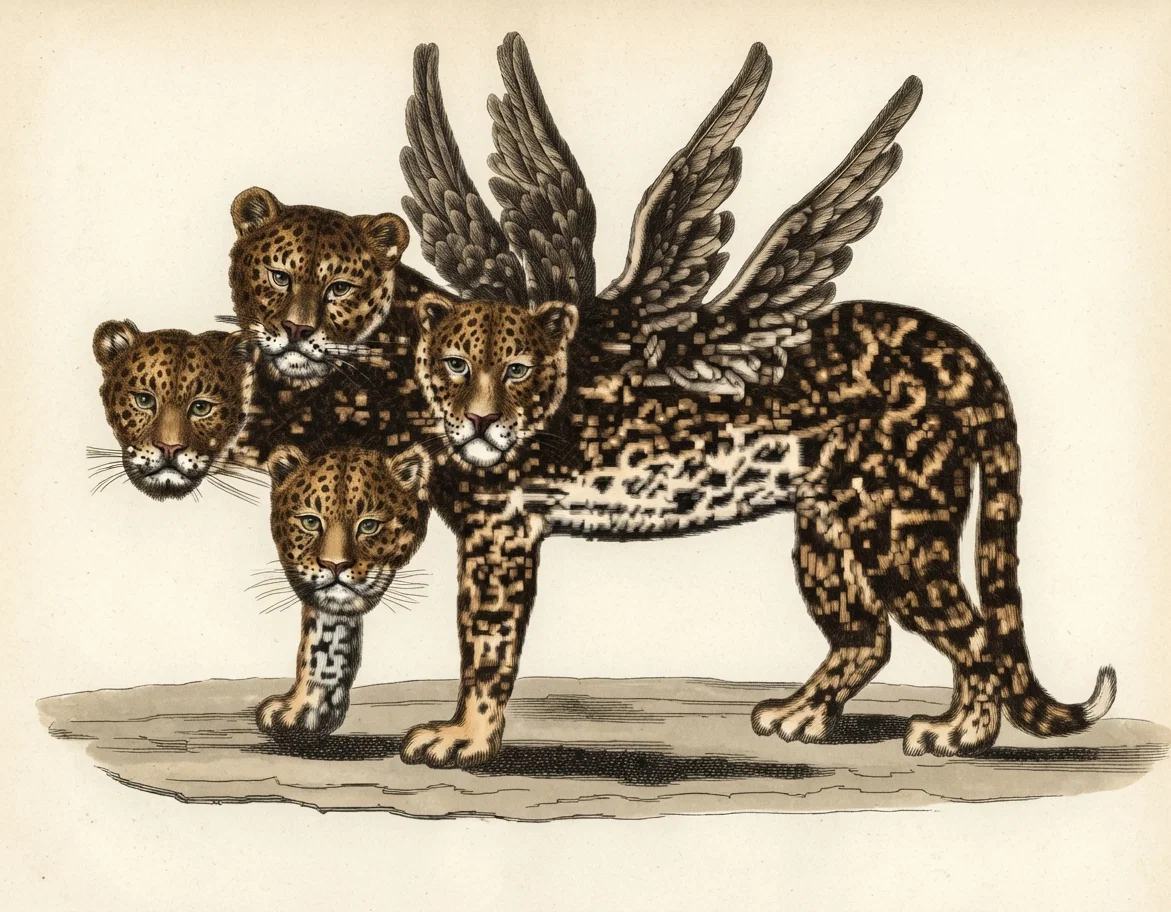
"And lo, another like a leopard, which had four wings and four heads." Verse 6. This was the emblem of the Grecian or Macedonian empire, which for the time was the most renowned in the world. It was erected by Alexander the Great on the ruins of the Persian monarchy, and it continued in four divisions under his successors. The leopard being exceedingly fierce and swift, represented the kingdom, and especially under Alexander its founder but the swiftness of the quadruped was not an adequate emblem of the rapidity with which he made his conquests; the leopard had therefore four wings of a fowl upon his back. Scott. Prideaux, Vol. I, p. 380. Rollin's Hist. of Alexander.
GRECIA, B. C. 331.
GRECIA, B. C. 331.
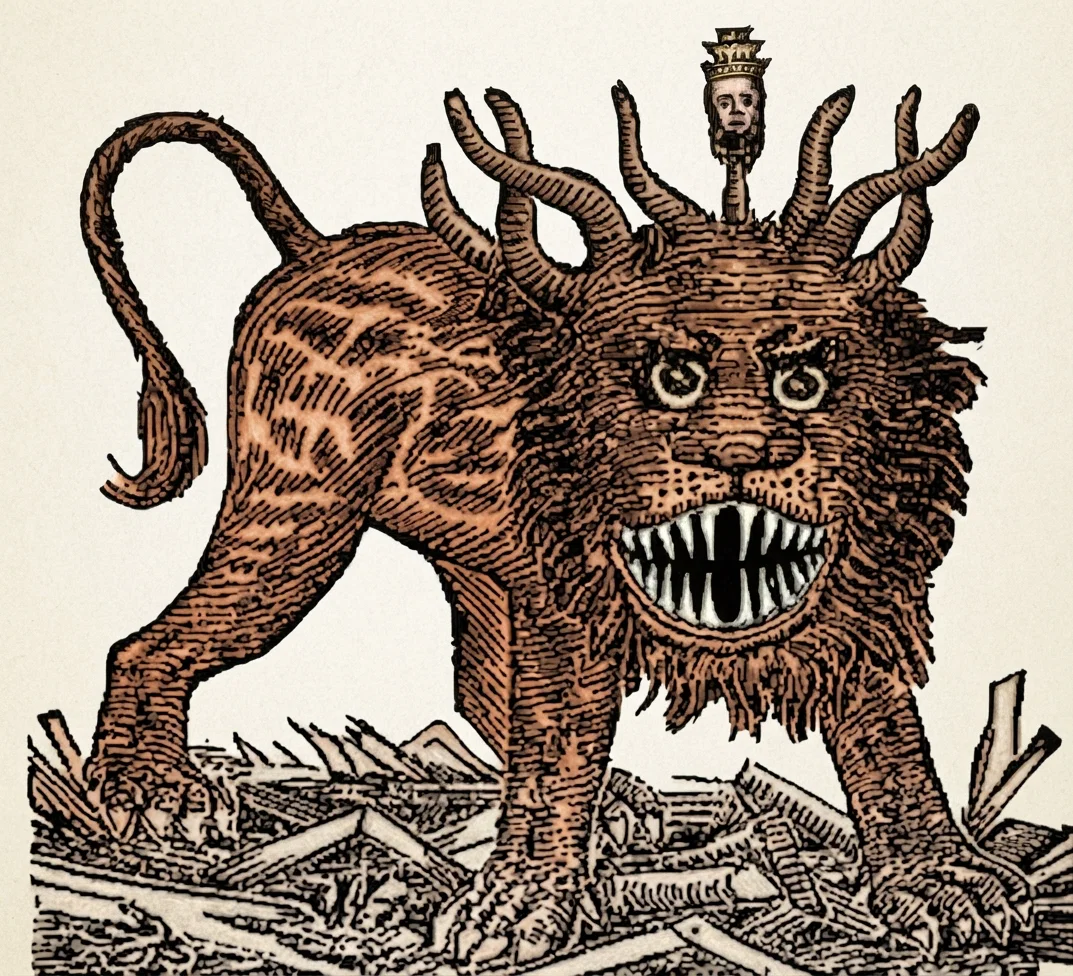
"And behold a fourth beast, dreadful and terrible, and strong exceedingly." Vs. 7. The kingdom that succeeded Greece was Rome, "the invincible fortitude, hardiness and force of which perhaps were never equaled." This beast had ten horns. These are declared in verse 24 to be ten kingdoms. The ten kingdoms are enumerated by Marchiaval, Bishop Lloyd, and Dr. Hales, as follows: 1. The Huns, A. D. 356. 2. The Ostrogoths, A. D. 377. 3. The Visgoths, A. D. 378. 4. The Franks, A. D. 407. 5. The Vandals, A. D. 407. 6. The Suevi, A. D. 407. 7. The Burgundians, A. D. 407. 8. The Heruli and Rugii, or Thuringi, A. D. 476. 9. The Anglo-Saxons, A. D. 476, and 10. The Lombards, A. D. 483. "It is certain that the Roman Empire was divided into ten kingdoms: and though they might be sometimes more and sometimes fewer, yet they were still known by the name of the ten kingdoms of the western empire." Scott.
ROME PAGAN, B. C. 161
"I considered the horns, and behold there came up among them another little horn, before whom there were three of the first horns plucked up by the roots. In this horn were eyes like the eyes of man, and a mouth speaking great things." Verse 8.
ROME PAPAL, A. D. 538.

ROME PAPAL, A. D. 538.

This little horn is by all Protestants acknowledged to be a symbol of the Papacy. Said the angel of this horn, He shall subdue three kings. Vs. 24. The three kingdoms that were plucked up to make way for the Papacy were, 1. The Heruli, in 493. 2. The Vandals, in 534, and 3. The Ostrogoths in 538. Gibbon's Decline and Fall. Into the hands of this power the saints, times and laws were to be given for a time, times and the dividing of time, (1260 years; see Rev. xii, 6, 14). From 538, when the Papacy was set up, 1260 years extend to 1798; and it is a notable fact of history, that on the 10th of February, 1798, Berthier, a general of Buonaparte's, at the head of the Republican army of France, entered Rome and took it. The Papal government was abolished, and the Pope died in exile in 1799. (See Croley on the Apocalypse, Their's History of the French Revolution, Clarke on Dan. vii, 25). The Papacy has never been restored to its former power. We are by this chain of prophecy brought down to within 62 years of the present time. The prophet does not see this beast gradually changing his wild and ferocious nature to the innocence and gentleness of the lamb to make way for a temporal millennium; but he looks only a step further, and says,
"I beheld even till the beast was slain, and his body destroyed, and given to the burning flame." Dan. vii 11.

DANIEL, CHAPTER VIII.

It is characteristic of the different chains of prophecy, that each succeeding one introduces particulars not furnished in any previously given. The seventh of Daniel, after covering the general field symbolized by the image of chap. ii, instructs us more particularly concerning the development of the little horn, or man of sin. In the eighth chapter we are again conducted over a portion of the world's great highway, with additional particulars concerning the mighty kingdoms that stand as waymarks along our journey. On the symbols of this chapter, the ram, he-goat, and horn which waxed exceeding great, the prophet received the following instruction:
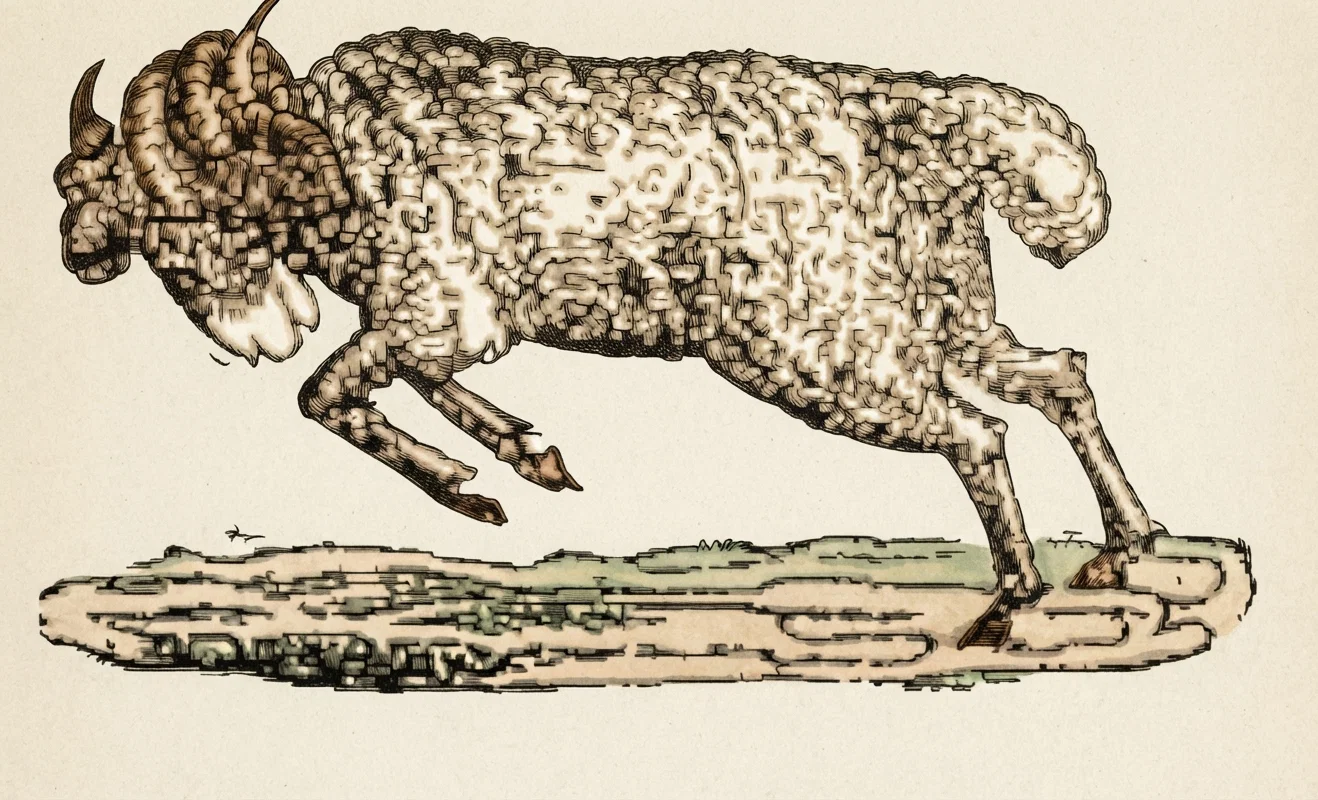
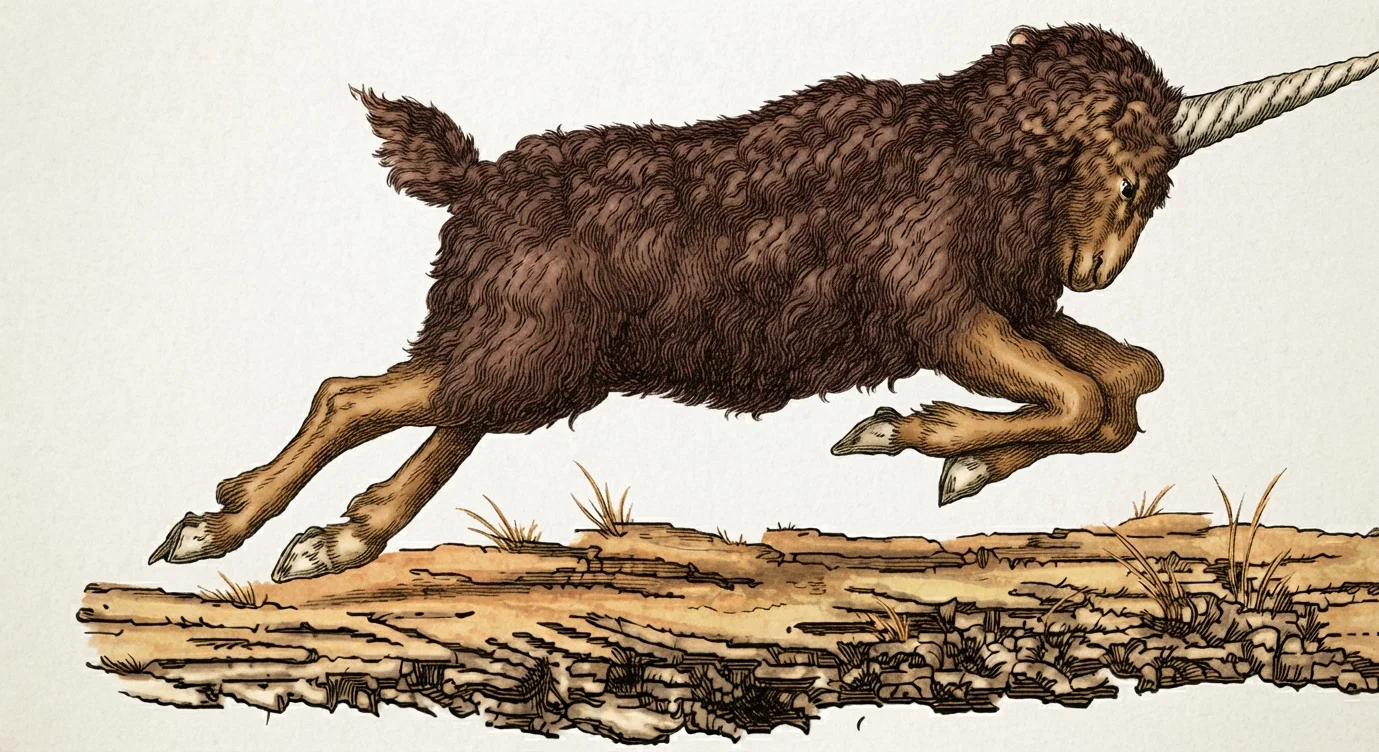
"The ram which thou sawest having two horns are the kings of Media and Persia." Verse 20. The Persian division of the empire was the highest and came up last. The ram with the two horns was the well-known emblem of the Medes and Persians.
"It was usual for the Persian kings to wear a diadem made like a ram's head of gold." Scott.
PERSIA.
PERSIA.
"And the rough goat is the king of Grecia; and the great horn that is between his eyes, is the first king." Verse 21.
This was Alexander, who was born B. C. 356, decided the fate of Persia at the battle of Arbela, B. C. 331, and died eight years thereafter in a drunken fit, at the age of 33, B. C. 323.
GRECIA.
GRECIA.
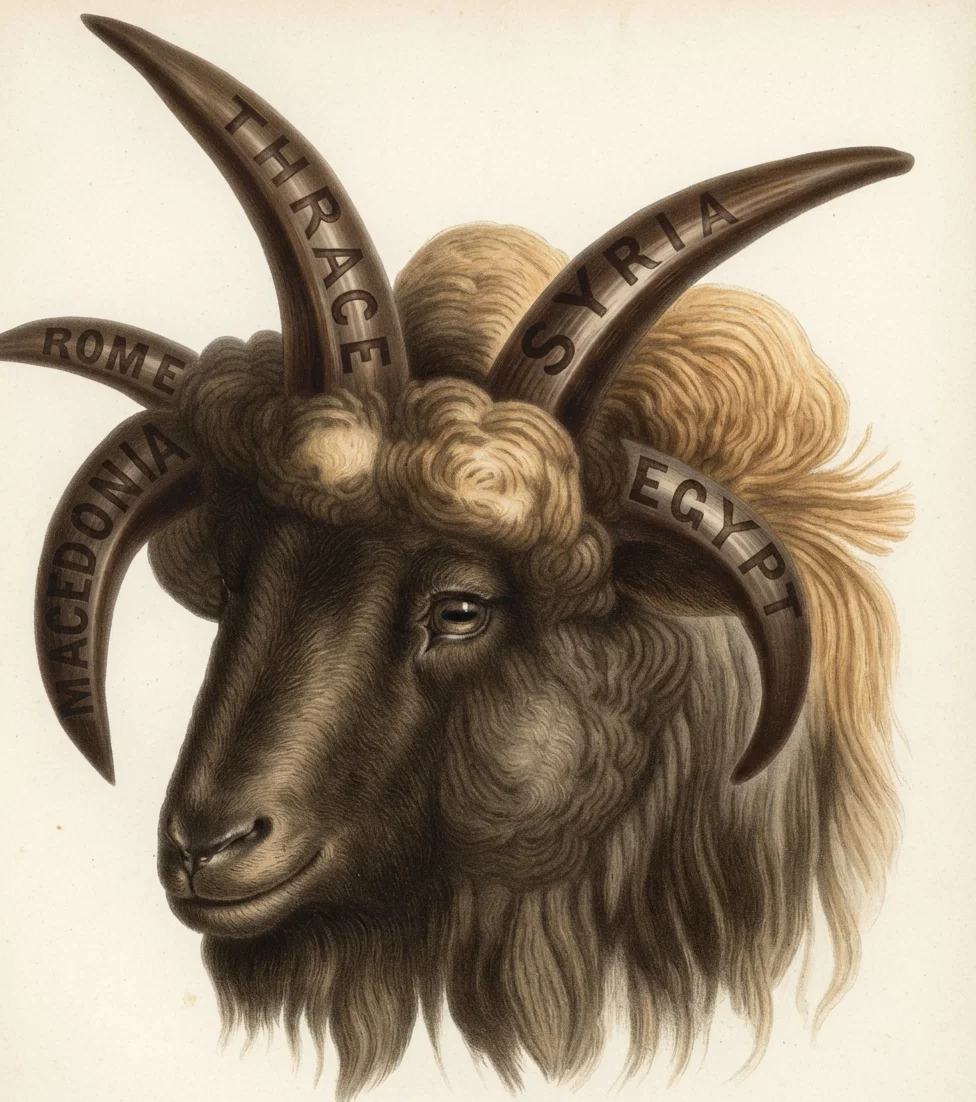
"And whereas the great horn being broken, four came up in its stead," "four kingdoms," said the angel, "shall stand up out of the nation." Verse 22.
THE FOUR HORNS.
THE FOUR HORNS.

THE FOUR HORNS.

These were Macedonia, Thrace, Syria and Egypt, into which the empire was divided shortly after Alexander's death, governed respectively by Cassander, Lysimachus, Seleucus and Ptolemy.
"And out of one of them came forth a little horn." Verses 9, 23-27.
Rome was not connected with the people of God, and hence is not introduced into prophecy, till after its conquest of Macedonia, one of the horns of the goat; hence it is represented as coming forth from one of those horns. That this little horn which waxed exceeding great was Rome, the following considerations prove:
1. It was to rise in the latter part of their kingdom, that is, of the four kingdoms. So did Rome, so far as its place in the prophecy is concerned. Its connection with the Jews commenced B. C. 161. 1 Mac. viii. Josephus' Antiq., B. xii, c. x, sec. 6. Prideaux, Vol. ii, p. 166.
2. It was little at first. So was Rome.
3. It waxed "exceeding great, towards the east and towards the south." So did Rome. It conquered Macedonia B. C. 168; Syria, &c., to the river Tigris, B. C. 65; Egypt, B. C. 30. "From this horn's increasing towards the south and east particularly, Sir Isaac Newton infers that it arose in the north-west corner of the goat's dominion, i. e., in Italy; which points directly to the Romans.
4. "It cast down some of the host and of the stars to the ground." So did Rome; persecuting the disciples and ministers of Jesus as no other power ever did.
5. "He magnified himself even to the Prince of the host." Thus did Rome, when both Herod and Pontius Pilate conspired against Jesus.
6. "He shall destroy wonderfully . . . the mighty and the holy people." Let from 50 to 100 millions of martyrs make good this charge against persecuting Rome. See Religious Encyclopedia.
7. It was the only power that succeeded the four kingdoms which waxed EXCEEDING GREAT.
8. In this vision Grecia succeeds Medo-Persia, just as it had been seen twice before; and it is absurd to suppose that the power which follows them in this vision is a different power from the one which twice before had been seen succeeding them, in chapters ii and vii; and that power was Rome.
9. "He shall be broken without hand." How clear a reference to the stone cut out without hand which smites the image upon its feet. Chap. ii, 34.
Continue reading: THE 2300 DAYS