Signs of the Times, Vol. 35, No. 13.

The Rich Young Ruler

Signs of the Times

Oct 28, 1908

Pacific Press Publishing Company · Mountain View, California · Oct 28, 1908

The Rich Young Ruler
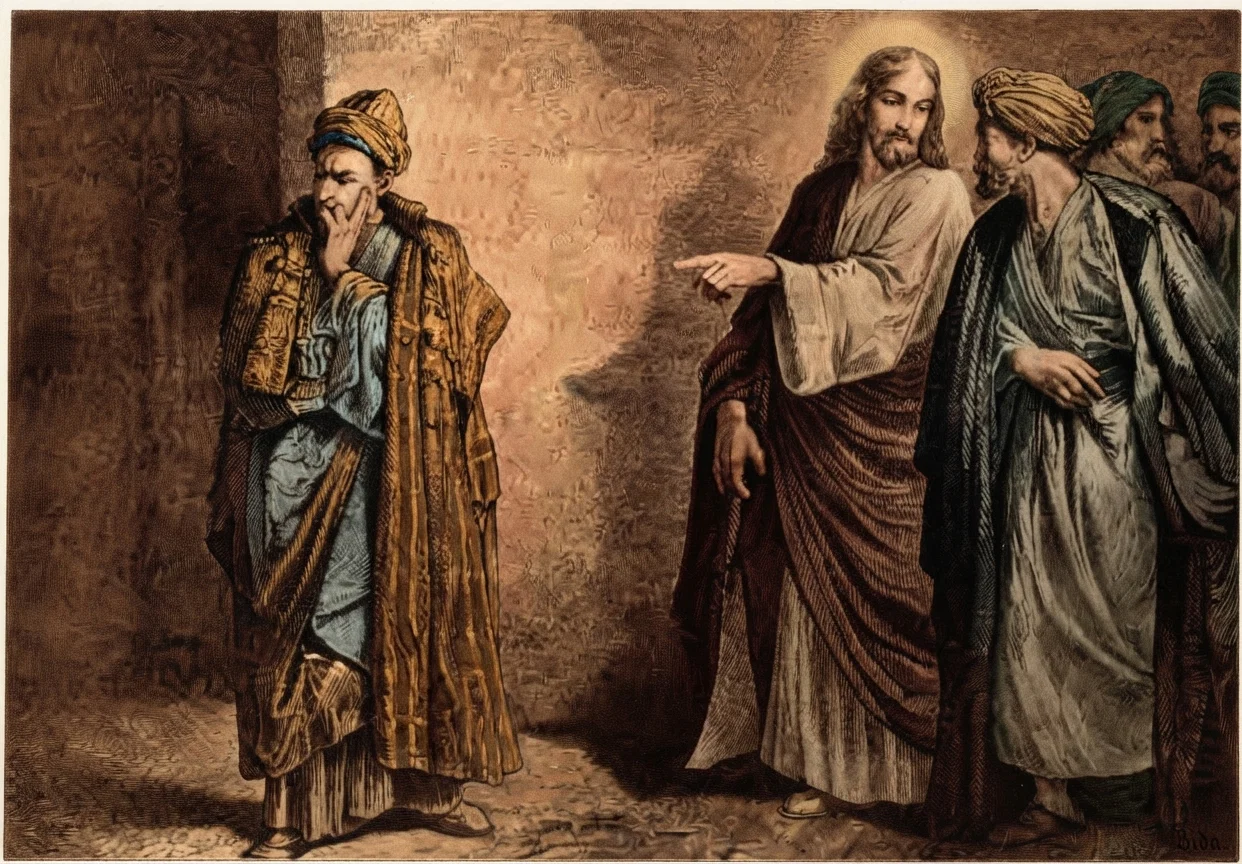
By Mrs. E. G. White
“One Thing Thou Lackest.”
"And when He was gone forth into the way, there came one running, and kneeled to Him, and asked Him, Good Master, what shall I do that I may inherit eternal life?"
THE young man who asked this question was a ruler. He had great possessions, and occupied a position of responsibility. He saw the love that Christ manifested toward the children brought to Him; he saw how tenderly He received them, and took them up in His arms, and his heart kindled with love for the Saviour.
He felt a desire to be His disciple. He was so deeply moved that as Christ was going on His way, he ran after Him, and kneeling at His feet, asked with sincerity and earnestness the question so important to his soul and to the soul of every human being, "Good Master, what shall I do that I may inherit eternal life?"
"Why callest thou Me good?" said Christ, "there is none good but One, that is, God." Jesus desired to test the ruler's sincerity, and to draw from him the way in which he regarded Him as good. Did he realize that the One to whom he was speaking was the Son of God? What was the true sentiment of his heart?
This ruler had a high estimate of his own righteousness. He did not really suppose that he was defective in anything, yet he was not altogether satisfied. He felt the want of something that he did not possess. Could not Jesus bless him as He blessed the little children, and satisfy his soul-want?

Obedience Necessary.

In reply to this question, Jesus told him that obedience to the commandments of God was necessary if he would obtain eternal life; and He quoted several of the commandments which show man's duty to his fellow man. The ruler's answer was positive, "All these things have I kept from my youth up. What lack I yet?"
Christ looked into the face of the young man, as if reading his life and searching his character. He loved him, and He hungered to give him that peace and grace and joy which would materially change his character. "One thing thou lackest," He said, "Go thy way, sell whatsoever thou hast, and give to the poor, and thou shalt have treasure in heaven; and come, take up the cross, and follow Me."
Christ was drawn to this young man. He knew him to be sincere in his assertion, "All these things have I kept from my youth." The Redeemer longed to create in him that discernment which would enable him to see the necessity of heart devotion and Christian goodness. He longed to see in him a humble and contrite heart, conscious of the supreme love to be given to God, and hiding its lack in the perfection of Christ.

A Vital Principle.

"One thing thou lackest," Jesus said. "If thou wilt be perfect, go and sell that thou hast, and give to the poor, and thou shalt have treasure in heaven; and come and follow Me." Christ read the ruler's heart. Only one thing he lacked, but that was a vital principle. He needed the love of God in the soul. This lack, unless supplied, would prove fatal to him; his whole nature would become corrupted. By indulgence, selfishness would strengthen. That he might receive the love of God, his supreme love of self must be surrendered.
Christ gave this man a test. He called upon him to choose between the heavenly treasure and worldly greatness. The heavenly treasure was assured him if he would follow Christ. But self must yield; his will must be given into Christ's control. The very holiness of God was offered to the young ruler. He had the privilege of becoming a son of God and a coheir with Christ to the heavenly treasure. But he must take up the cross and follow the Saviour in the path of self-denial.
Christ's words were verily to the ruler the invitation, "Choose ye this day whom ye will serve." The choice was left with him. Jesus was yearning for his conversion. He had shown him the plague-spot in his character, and with what deep interest He watched the issue as the young man weighed the question. If he decided to follow Christ, he must obey His words in everything. He must turn from his ambitious projects. With what earnest, anxious longing, what soul-hunger, did the Saviour look at the young man, hoping that he would yield to the invitation of the Spirit of God.
Christ made the only terms which could place the ruler where he would perfect a Christian character. His words were words of wisdom, tho they appeared severe and exacting. In accepting and obeying them was the ruler's only hope of salvation. His exalted position and his possessions were exerting a subtle influence for evil upon his character. If cherished, they would supplant God in his affections. To keep back little or much from God was to retain that which would lessen his moral strength and efficiency; for if the things of the world are cherished, however uncertain and unworthythey may be, they will become all-absorbing.
The ruler was quick to discern all that the Saviour's words involved, and he became sad. If he had realized the value of the offered gift, quickly would he have enrolled himself as one of Christ's followers. He was a member of the honored council of the Jews, and Satan was tempting him with flattering prospects of the future. He wanted the heavenly treasure, but he wanted also the temporal advantages his riches would bring him. He was sorry that such conditions existed; he desired eternal life, but he was not willing to make the sacrifice. The cost of eternal life seemed too great, and he went away sorrowful, "for he had great possessions."

The Real Test.

His claim that he had kept the law of God was a deception. He showed that riches were his idol. He could not keep the commandments of God while the world was first in his affections. He loved the gifts of God more than he loved the Giver. Christ had offered the young man fellowship with Himself. "Follow Me," He said. But the Saviour was not so much to him as his own name among men, or his possessions. To give up his earthly treasure, that was seen, for the heavenly treasure, that was unseen, was too great a risk. He refused the offer of eternal life, and went away, and ever after the world was to receive his worship.
Thousands are passing through this ordeal, weighing Christ against the world; and many choose the world. Like the young ruler, they turn from the Saviour, saying in their hearts, I will not have this man as my leader.
The ruler's possessions were entrusted to him that he might prove himself a faithful steward; he was to dispense these goods for the blessing of those in need. So God now entrusts men with means, with talents and opportunities, that they may be His agents in helping the poor and the suffering. He who uses his entrusted gifts as God designs becomes a coworker with the Saviour. He wins souls to Christ, because he is a representative of His character.
To those who, like the young ruler, are in high positions of trust, and have great possessions, it may seem too great a sacrifice to give up all in order to follow Christ. But this is the rule of conduct for all who would become His disciples. Nothing short of obedience can be accepted. Self-surrender is the substance of the teachings of Christ. Often it is presented and enjoined in language that seems authoritative, because there is no other way to save man than to cut away those things which, if entertained, will demoralize the whole being.
When Christ's followers give back to the Lord His own, they are accumulating treasure which will be given to them when they shall hear the words, "Well done, good and faithful servant; . . . enter thou into the joy of thy Lord," "who for the joy that was set before Him, endured the cross, despising the shame, and is set down at the right hand of the throne of God." The joy of seeing souls redeemed, souls eternally saved, is the reward of all that put their feet in the footprints of Him who said, "Follow Me."

God's Law a Witness of His Own Attributes

By J. O. Corliss
WHO is the God of the Bible? This question has been asked many times by those whom we have no reason to suspect of duplicity. Having never seen Him nor heard His voice, they have seemed unable to identify Him, or to declare His power. Indeed, "no man hath seen God at any time" (John 1:18), from the remotest age. This being true, how could God consistently ask men to recognize His claims upon them without giving them some means by which to know Him? There was some reason for the position taken by the absolute monarch of all Egypt when word was sent him that God would have the Israelites released from bondage. Said this haughty king: "Who is the Lord [Jehovah], that I should obey His voice to let Israel go? I know not the Lord, neither will I let Israel go." Ex. 5:2. Considering his earthly sway and his ignorance of a heavenly Ruler, who can say that Pharaoh was unreasonable in the attitude he assumed?
How can any man be expected to render obedience to some invisible, mysterious Being, who has not condescended to reveal His attributes? How could responsibility possibly be imputed for refusal to recognize the voice of one whose identity is undiscoverable? It scarcely can be thought possible that Jehovah, tho dwelling in the secret recesses of the vast universe, has failed to give a standard by which His character and purpose may be made known.
But where is this criterion, and in what does it consist? One thing must appear certain to all; God, being perfect, can not possibly reveal His attributes in a perfect manner through an imperfect medium. Had man retained the image of God in which he was created, he would himself have stood as God's representative on earth. But having been alienated from the life of God through sin, man's heart became darkened, and his perceptions blunted to spiritual things. Eph. 4:18. In this condition, a precept, tho perfect, is not enough to convey to human minds a knowledge of divine character. Infinite love must be learned by a revelation of intense self-denial, constituting love-action, rather than by some mere wordy definition of love.
Certain facts may be made the drapery of love, but man needed a revelation of living love — real generative essence — in order to make known to him a God of love. A living being was therefore necessary to manifest living love to man. That being, too, must be one in whom the Infinite is seen to dwell and act, in behalf of the finite. This infinite power and wisdom united in the flesh would be a union of the divine and the human in one person. Thus through perfect humanity, Divinity would be seen elevated above humanity, yet in conjunction with it. In this way divine love would be exhibited in and through humanity for its exaltation.

That Man Might Know God.

In such a being the divine prerogative could be exercised through humanity, while the distinction between the human and the divine was clearly exhibited. In other words, this would be a revelation of "God in the flesh"—the indwelling of "all the fulness of the Godhead bodily." Col. 2:9. So "the Word became flesh" and dwelt among men, that they might receive the "light of the knowledge of the glory of God in the face of Jesus Christ." John 1:14; 2 Cor. 4:6.
Thus in the order of Heaven, Christ was made the second Adam, formed in the image of Jehovah. It was therefore necessary that, like the first Adam, His humanity be created directly by divine energy, that He might set forth not only the attributes of Jehovah, but also "gather together in one the children of God that were scattered abroad" (John 11:52), and so become what the first Adam was designed to be, the universal father of the people of God.
The Holy Spirit having "overshadowed" the virgin Mary, Christ was conceived, as the union of the divine and the human. So both the human and the divine were recognized in Christ's person when He was here in the flesh. He ate and drank as man, yet created food for others as God. He wept as man at the death of Lazarus, yet called him forth to life as God. On the cross His agony witnessed the human, while nature's agony witnessed the human, while nature's earthly ministry, however, love, and privilege, of both the human and divine, were displayed through that wonderful Being divinely appointed to be "God with us."
How plainly evident that "God was in Christ, reconciling the world unto Himself" (2 Cor. 5:19); that is, bringing man into harmony with Jehovah's government. We may therefore comprehend how that, while "no man hath seen God at any time," God did not leave the world without a witness of Himself, but by "the only-begotten Son, which is in the bosom of the Father," God has declared His own attitude toward the world. John 1:18. For this reason no one may know the Father "save the Son, and he to whomsoever the Son will reveal Him." Matt. 11:27. Being alienated from God's life, through sin, man has no way to know God of himself, because his mind is "fleshly," or "carnal." There is but one appointed way to know God since man transgressed the law of His government, and that is through Jesus Christ.
Had man never sinned, he could not have died, so would not have needed a Saviourto give him eternal life. Christ came that man might have life, and that more abundantly. John 10:10; 3:16. He came to "seek and to save that which was lost." Luke 19:10. Through sin, which is the transgression of God's law (1 John 3:4), man separated himself from the life of God, and so from the knowledge of God, which resulted in death. Rom. 5:12; Eph. 4:18. To regain the knowledge of God through Christ is eternal life. John 17:3.

The Design of the Law.

Adam came from the hand of God a perfect image of his Maker, in mind as well as in body. His knowledge of God and His ways was therefore complete, because the life of God animated every impulse of his being. When separated from that life by the transgression of God's will, his heart became so darkened that he lost the knowledge of the divine. Had he not violated the law of God's government, the original life of God would have remained in him, and so knowledge of God's attributes would have been maintained. Thus Paul says: "The commandment, which was ordained to life, I found to be unto death." Rom. 7:10. Thus we learn that the original design of the law was to maintain the knowledge of God in man, and so continue him in life. But when that law was once transgressed, spiritual insight was darkened and the knowledge of God declined, until among some people, spiritual knowledge is an unknown thing, and no word of their vocabulary can express a single attribute of God's character. When once transgressed, the law has no power to restore man's moral sight and knowledge. So "what the law could not do, in that it was weak through the flesh, God sending His own Son in the likeness of sinful flesh, and for sin, condemned sin in the flesh; that the righteousness of the law might be fulfilled in us, who walk not after the flesh, but after the Spirit." Rom. 8:3, 4.

Christ the Example.

Notice that Christ came to place us where we might carry out the righteousness of the law by walking according to the Spirit. Then to know God and the guidance of His Spirit, is to walk in the way of His commandments. This thought is well expressed by the apostle in Rom. 10:4, when after showing the failure of the Jews to be benefited by the law, not seeing in it the righteousness of God, he says: "For Christ is the end of the law for righteousness to every one that believeth." The word "end" as here used has the same significance as in James 5:11, where the apostle says we have "seen the end of the Lord" in afflicting Job. It means design, or purpose, and would therefore convey the thought that Christ is the design of the law; that is, He, in His life, revealed God's righteousness, just the same as the law would have done for man, had he not darkened his mind through transgressing that law.

The Royal Interceding Priesthood

By William Covert
IN creation man was made in God's image and given dominion as managing head of affairs in this world. But sin has marred the likeness and disturbed the rule; nevertheless access to God's throne is maintained through the medium of prayer. The Father has given us Christ instead of Adam, and prayer in the place of a crown. Tho man does not rule now as Adam did before the fall, yet the Christian can ask of God and obtain great things, both for himself and for others. And indeed his requests should relate more to the sinner's need than to his own, for he has full provision made for himself in Christ. The child of the great King should know his high privilege in asking for favors from heaven to be given the inhabitants of this world. Indeed the Lord will expect intercessions from His people in behalf of sinners, for He "hath made us kings and priests unto God." "Ye are a chosen generation, a royal priesthood." Rev. 1:6; 1 Peter 2:9. And since men are made priests, it becomes their business as priests to intercede for men, "for every high priest taken from among men is ordained for men in things pertaining to God." "I exhort therefore, that, first of all, supplications, prayers, intercessions, and giving of thanks, be made for all men; for kings, and for all that are in authority; that we may lead a quiet and peaceable life in all godliness and honesty. For this is good and acceptable in the sight of God our Saviour, who will have all men to be saved, and to come to the knowledge of the truth." Heb. 5:1; 1 Tim. 2:1-4.
It is not God's pleasure that any person be lost; and so He has made ample provision for the salvation of all, to the end that He may "save them to the uttermost that come unto God by Him." Heb. 7:25. The Intercessor, in His pleadings for the sinner, and with the sinner, earnestly calls out to "every one that thirsteth, come ye to the waters, and he that hath no money; come ye, buy, and eat." "Incline your ear, and come unto Me: hear, and your soul shall live." Isa. 55:1, 3.
It may be that some will say that these scriptures refer to the intercessions of Christ in heaven for man, and possibly they do in part; but suppose they do; He appears in heaven for us to pass our prayers on to the Father that we may have an answer to them. Does He not work through us to save men? And are we not "laborers together with God"? And we, being royal priests with Christ our High Priest, are engaged in the same work that He is engaged in doing, and are endeavoring in Him and with Him to build up the same kingdom. Our interests are so fully united with Christ that we are accounted as one with Him.
Through the Spirit He inspires us to pray in union with His own mind and His own intercession. His mind is what it ever has been, to seek and to save the lost, and so He engages us with Himself to do this same work. As Christ is at the right hand of the Father, so He is when He dwells in us. We can not live with Him without prayer, nor can He live in us without praying for sinners. His words and His life in us are spirit and life incarnate with power to lead unto holiness.
Those children of men who study His word and yield to His will are joined with the Lord in His burden for the welfare of the earth. These are they who are His kings and priests, who with Him are interceding for all men, and as princes, like Jacob, have power to prevail with God and with men. See Gen. 32:28 and context. These are children of the King and do prevail with God. They pray, and their prayer in supplication and intercession prevails for man. God does hear, and does answer their prayers. They are the salt of the earth, for through them under God the people of earth are preserved, and the work of saving is perpetually advanced. These have power on earth and for things of the earth to prevail with God. With the work which God has given His people to do in the earth at this time, there should be more prayer and deeper faith in prayer than is now seen and experienced. When there comes into the lives of God's people a consecration that reserves nothing for self, and a faith that trusts all to God, a glorious work will be accomplished. God is willing now to work with and through His people, and He does work as far as their condition will allow. What we need to do is to get acquainted with His thoughts and plans for us and then yield all interests into His hands.
Think of some one and pray for that one. Get out of self and plead for others. Do as Paul advises, "Let no man seek his own, but every man another's wealth;" "even as I please all men in all things, not seeking mine own profit, but the profit of many, that they may be saved." 1 Cor. 10:24, 33.
Be as the soldier who gives himself to his country that others may be protected, or as the seed planted in the ground, which tho it seems to die, yet is multiplied many times. It is by dying to self that we really begin to live unto God and so get the real benefit of life. And by intercessory prayer we live for others and thus we live unto God.

Only.

It was only a little blossom, Just the merest bit of bloom, But it brought a glimpse of summer To the little darkened room.
It was only a glad "good morning," As she passed along the way; But it spread the morning's glory Over the livelong day.
Only a song; but the music, Tho simply pure and sweet, Brought back to better pathways The reckless roving feet.
"Only," in our blinded wisdom, How dare we say at all? Since the ages alone can tell us Which is the great or small. —Anon.

Memory at the Grave

"MEMORY sings her sweetest, saddest song at the grave of dead affections and departed joys."

The Christian's Position.

WE are Christians. The SIGNS OF THE TIMES is a Christian paper. We belong to Christ, to His kingdom, and to His service. "We are ambassadors for Christ, as tho God did beseech you by us; we pray you in Christ's stead, be ye reconciled to God." 2 Cor. 5: 20.
To His servants He has committed the Gospel message of teaching men the way of life and salvation, of warning them of the certain ruin which follows transgression, of proclaiming, declaring, the sure refuge and remedy in Jesus Christ, and of exhorting, beseeching, persuading, men to turn to Christ and live. It is all summed up in "Repent ye, and believe the Gospel." Mark 1: 15. And to His watchman God says: "If thou dost not speak to warn the wicked from his way, that wicked man shall die in his iniquity; but his blood will I require at thine hand." Read Eze. 33: 1-11.
This blessed Gospel of instruction, of faith, of warning, of proclamation of good news, of exhortation, is to be preached to all, high and low, rich and poor, master and servant, ruler and subject, freeman and slave. "Preach the Gospel to every creature," is the command of Christ. Set forth the divine principles of life before all men.
The Gospel is to be preached to persons not in the private walks of life alone, but in public life as well. It touches a man's conduct everywhere. God desires to save men wherever they are. He desires the politician to be a Christian as truly as He does the planter. He longs to save the congressman as truly as He does the carpenter. He wishes to deliver from the bondage of sin the statesman as truly as He does the lowest stoker. Principles of life inwrought by grace into the heart of the governor are as precious in God's sight as in the heart of the gardener. Politician or planter, congressman or carpenter, statesman or stoker, governor or gardener, all are men, and for all Christ died. If astray, all need faithful warning of the inevitable destruction which follows the violation of the principles of righteousness and justice.
The mission of the ambassadors of Christ is, therefore, to rulers and those who shape the state and nation, as well as to the men in the common walks of life. Jesus also said, "Teach all nations." He told His servant of old: "See, I have this day set thee over the nations and over the kingdoms, to root out, and to pull down, and to destroy, and to throw down, to build, and to plant." Jer. 1: 10. Jeremiah did this by declaring the principles upon which a nation could exist, and which, if violated, would bring destruction; for thus saith the Lord: "At what instant I shall speak concerning a nation, and concerning a kingdom, to pluck up, and to pull down, and to destroy it; if that nation, against whom I have pronounced, turn from their evil, I will repent of the evil that I thought to do unto them. And at what instant I shall speak concerning a nation, and concerning a kingdom, to build and to plant it; if it do evil in My sight, that it obey not My voice, then I will repent of the good, wherewith I said I would benefit them." Jer. 18: 7-10. And so we learn by chapter 25 that Jeremiah's message went to "all the kings of the north, far and near, one with another, and all the kingdoms of the world, which are upon the face of the earth."
Jonah was sent to Nineveh with a message for every soul, from the proud king upon his throne to the lowest scullion in his kitchen. "Shall there be evil in a city, and shall not the Lord do somewhat? Surely the Lord will do nothing, but He revealeth His secret to His servants the prophets." Amos. 3: 7, margin.
Daniel taught the proud rulers of Babylon that "the Most High ruleth in the kingdom of men and giveth it to whomsoever He will." He warned them of the inevitable ruin which would follow if the government persisted in its rebellion against God. He pointed out the sure refuge, to "break off thy sins by righteousness, and thine iniquities by showing mercy to the poor." He pronounced at last, in the final hours of that proud empire, her doom. "Mene; God hath numbered thy kingdom, and finished it. Tekel; Thou art weighed in the balances, and art found wanting."
Elijah faithfully preached before the apostate Ahab and his more wicked wife Jezebel. He was called a troubler in Israel, and was doubtless counted against the administration; but there was no man so strongly for Israel's salvation. And when the people, with the king at the head, refused to hear the warning cry, "How long halt ye between two opinions? if Jehovah be God, follow him; but if Baal, then follow him;" and then the king in the face of God's manifest working, remained obdurate, the heart of the great prophet nearly broke with sorrow and disappointment. But standing in the presence of God, he gave his message.
John the Baptist gave his message to publican and Pharisee, to the priest and prince; and was beheaded because of his faithfulness.
Jesus Christ proclaimed the same blessed Gospel—designed always to do earth and its people good and not evil—to all classes, from the poor outcast woman to the high priest, from the civil tax-gatherer to the Roman governor. He was, as a result of his faithfulness, condemned by the ecclesiastical tribunal as a blasphemer, and by the civil ruler as guilty of treason, or sedition.
"All these things happened unto them for ensamples; and they are written for our admonition, upon whom the ends of the world are come." Elijah the prophet and John the Baptist are types of God's faithful servants of these days. Idolatrous Jezebel and weak, yielding Ahab are types of a backslidden church and a weak, yielding state.
Our nation was founded on righteous principles. It grew and prospered. The Christian church was founded on righteous principles. It grew and prospered, notwithstanding the fiercest persecutions. The Reformation churches—the Protestant—started out on right principles, and they prospered despite all the power of the Papacy.
But the church is departing from the true, vital principles of Protestantism, or Christianity. The nation is becoming blinded and proving false to the very principles which constituted its life, and which must be perpetuated in practise if its existence long continues.
God has forewarned us concerning these very things in His word. He has pointed it out in general and in detail. In His goodness He has brought it to us. Shall we listlessly fold our hands, close our ears, eyes, and mouth, and say nothing? or shall we, as Christian men who see the sword coming, give faithful warning of the dangers which beset before and behind this as grand a nation as this sinful world ever knew? Shall we hold back our message for fear of being misunderstood?
We love this great, grand country in which we were born; we love "its rocks and rills, its woods and templed hills;" we love its people, the purchase of Christ's blood.
But men die here. The silent grave and marble headstone are the end of earth life and fame. "The true gain is the long gain." We desire that all shall know the long gain, the life eternal, the better country, even the heavenly; the blessings and the privileges of citizenship in Christ Jesus; and therefore we proclaim the Gospel, the whole Gospel.

The Dangers of Modern Witchcraft.

WITH the above for a heading, a recent issue of the New York World gives the following statement from Dr. Charles L. Dana:
"Except when hypnotism is used by a responsible physician, there is extreme danger. Even the most innocent forms are perilous, and its general use by traveling Svengalis and by amateurs as a parlor entertainment should be prohibited by law.
"Of course such a law could not always be enforced against hypnotism in private, but as it would tend to abolish charlatans, the spread of the habit would not be so rapid as at present, and it would become known among people who think hypnotism so harmless, that it is the cause of many a shattered mind.
"The more often a person is placed under hypnotic influence, the weaker his will becomes and the less his power of resistance. This would suggest a terrible opportunity to one who might be criminally inclined."
People who will think seriously and keenly in regard to the foregoing statements by Dr. Dana ought to be convinced that hypnotism is not only a dangerous thing for the traveling "Svengalis," but it is just as dangerous for the regular medical practitioner. The medical profession, as well as all of the other useful professions, is, and always has been, handicapped by a great army of "quacks" who have but very little knowledge of thehealing art, and no true principles to govern what little knowledge they do have. And in the hands of such quackish impostors there is no telling the evil that may be accomplished through hypnotism. But even if all of the doctors of the land were perfectly capable and thoroughly honest and reliable, still hypnotism should never be brought into the medical practise, nor used in any other way.
The statement that Dr. Dana makes that "the more often a person is placed under hypnotic influence, the weaker his will becomes and the less his power of resistance," is enough to forever show the character of hypnotism. Even doctors themselves claim that they do not understand it; but they do know that it breaks down the will and weakens the individual upon whom it is practised. There are no exceptions to this rule. An individual must submit his will to another before he can be hypnotized. God Himself with all of His righteous power does not ask an individual to throw away his will. He strengthens the will rather than breaks it down.
Hypnotism is nothing more nor less than one of the parts of the many-sided Spiritualism, and we may seek to dignify it by placing it in the catalog of the sciences and by using it in the medical profession, but its character remains just the same, and there is not anything practised in all the world today that tends more strongly to break down the will. No person should ever submit to it, much less think of practising it.
Continue reading: Notes by the Way