Your ShelfYour Projects

Signs of the Times, Vol. 30, No. 32.

WHAT THE WORLD NEEDS NOW
Earlier text: Question Corner

THE BEGGAR BOY.

In the following story the power of kindness is beautifully illustrated:—
“Go away from there, you old beggar boy! You have no right to be looking at our flowers,” shouted a little fellow from the garden.
The poor boy, who was pale, dirty, and ragged, was leaning against the fence, admiring the splendid show of roses and tulips within. His face reddened with anger at the rude language, and he was about to answer defiantly when a little girl sprang out from an arbor near, and, looking at both, said to her brother: “How could you speak so, Herbert? I’m sure his looking at the flowers doesn’t hurt us.” And then, to soothe the wounded feelings of the stranger, she added: “Little boy, I’ll pluck you some flowers if you’ll wait a moment;” and she gathered a pretty bouquet and handed it through the fence.
His face brightened with surprise and pleasure, and he earnestly thanked her.
Twelve years after this occurrence, the girl had grown to a woman. One bright afternoon she was walking with her husband in the garden when she observed a young man in workman’s dress leaning over the fence, and looking attentively at her and the flowers. Turning to her husband, she said: “It does me good to see people admiring the garden; I’ll give that young man some of the flowers.” And approaching him she said: “Are you fond of flowers, sir? It will give me great pleasure to gather you some.”
The young workman looked a moment into her fair face, and then said, in a voice tremulous with feeling: “Twelve years ago I stood here a ragged little beggar boy, and you showed me the same kindness. The bright flowers and your pleasant words made a new boy of me; aye, and they made a man of me, too. Your face, madam, has been a light to me in my dark hours of life; and now, thank God, tho that boy is still a humble, hard-working man, he is an honest and grateful one.”
Tears stood in the eyes of the lady as, turning to her husband she said, “God put it into my young heart to do that little act of kindness, and see how great a reward it has brought!”—Free Church of Scotland Monthly.

THE TOBACCO-USING PREACHER.

A COUNTRY minister, being invited to preach the weekly lecture to a congregation in the City of New York, after dismissing the people, took out his tobacco and began to chew the filthy weed. A member of the church remonstrated with him on the sinfulness of the practise and stated that he could not expect that impenitent sinners under his instructions, would give up their sins while he indulged in a sin himself.
“I know it is wrong,” said the minister. “I have often resolved to give up the habit, but I have not resolved enough to persevere.”
“Why,” said the other, “that is the very excuse impenitent sinners give for not forsaking their sins.”
“Well, I’ll think it over as I go home,” observed the minister, “and perhaps I will give it up.”
“That will not do,” replied the church member, “for we never allow this, if we can help it; we expect the impenitent to repent on the spot; we never allow them to go home and repent, nor do we pray that they may repent when they reach home.”
“I see,” said the minister, “I can not get away so therefore I will try to give up chewing.”
“But,” remarked the other, “that will not do either. We never urge sinners to try to give up their sins—do you?”
“Why, no; I think it wrong to intimate that they can not do it at once.”
“Will you act then as you preach, or let your conduct give the lie to your preaching?”
“With the help of God,” said the minister, “I will leave off the practise from this moment.”
A member of the church where this conversation took place, who was in the practise of chewing tobacco, was so impressed with what had taken place, that he solemnly promised to abjure the filthy habit without delay.—Selected.

THE STORK'S RAPID FLIGHT.

No LIVING thing, not even a scared jack-rabbit, can travel with the speed displayed by such birds as the stork and the northern blue-throat. Not only do these birds fly with a speed which can hardly be conceived, but they keep up their rapid flight for one or two thousand miles at a stretch without apparently tiring. Evidence has been collected recently which shows that the blue-throat flies from Central Africa to the shores of the North Sea, a distance of one thousand miles, in less than a day and a night, and making it, moreover, in one uninterrupted flight. The storks, which spend their summers in Austria-Hungary and their winters in India and Central Africa, are most marvelous travelers, and make their journeys twice a year in one unbroken flight each time. From Budapest in Hungary, to Lahore, in India, is about 2,400 miles in an air line, and the storks make the journey in twenty-four hours, thus traveling at the rate of 100 miles an hour for the whole distance. The storks which spend their summer in Central Europe and the winter in Central Africa travel with the same rapidity.
Slatin Pasha, an Austrian in the service of the khedive, and now governor of the Central African province of Darfur, was for many years a captive in the hands of the Mahdi and the Khalifa when the dervishes killed Gordon and established their empire, now overthrown, in the Soudan. One day, at Omdurman, he saw a stork with a metal band attached to one of its legs. He caught the bird and found engraved upon the band the name of an old friend in Austria.
He wrote a note to his friend and tied it to the metal band. When the stork returned to Austria for the summer, the friend saw the letter, caught the stork and read the message, which was the first certain assurance that the outside world received that Slatin was still alive. This stork, as was proved by the dates, made the journey from Omdurman to the Austrian country place, a distance of nearly 3,000 miles, at a speed of more than 100 miles an hour.
—Selected.

A DOUBLE KNOCK.

“It's knocking down his wife the man knocked me out of the liquor trade.” In these words Mr. F. N. Charrington, so well known in connection with religious and temperance work in East London, begins his account of the way in which he was led to sever his connection with the great brewing firm of Charrington, Head & Co., of which he was a partner. The man in question was drinking in a public-house which Mr. Charrington happened to be passing. His wife just at that moment pushed open the door, and appealed to her husband for money to buy bread to feed their starving children. By way of answer her husband felled her to the ground. Mr. Charrington noticed that the signboard bore the name of his firm. He reflected that this particular house probably furnished many such cases, and that the same was true of hundreds of other houses owned by the company. The responsibility was more than he could bear, and from that hour he resolved to give up his partnership, worth about £30,000 a year.—Selected.

“I HAVE CALLED YOU FRIENDS!”

The friends of Christ! O honor far too great For wavering weaklings, tossed by care and sin! What if He came in our degraded state And asked our inmost hearts to contemplate, What would He find if He should enter in?
He would find much of selfishness and greed, He would find much of lust and love of ease, He would find blindness to a brother's need, And most religion but an empty creed, With scarce a thought how each his God should please.
But He would find in many an aching heart, Sad spots made sore by failure and by pride, By disappointment's keen and deadly dart. Ah! each has much to make his memory smart, And more his vanity would love to hide!
For many, friends have had—but friends in name, Who forced their confidence, but to betray; And many suffer for another's shame, Bearing the obloquy and bitter blame, The cold world casts on those who go astray.
But Thou, O Christ! wouldst find some saving grace, Some slight desire to walk the upward way, Some gentle thoughts in us do find a place, Some tendencies not altogether base, Some longing to grow like Thee, day by day.
And Thou, O blessed thought! wilt sympathize, For with our weaknesses and with our sin, We are Thy friends, tho neither pure nor wise. With Thee we need attempt no vain disguise, Our hearts are open, and Thou hast entered in! —Rhetta L. Long.

SELF-RELIANCE IS A GOOD TEACHER.

[Orison Sweet Marden, in Success.]
We often find that boys who have educated themselves in the country, almost without schooling or teachers, make the most vigorous thinkers. They may not be quite so polished or cultivated, in some ways, but they have something better than polish, and that is mental vigor, originality of method, and independence. They do not lean upon their schooling, or depend upon their diplomas; necessity has been their teacher, and they have been forced to act for themselves and be practical; they know little of theories, but they know what will work. They have gained power by solving their own problems. Such self-educated, self-made men carry weight in their communities because they are men of power and think vigorously and strongly; they have learned to concentrate the mind.
Self-help is the only help that will make strong, vigorous lives. Self-reliance is a great educator and early poverty a good teacher. Necessity has ever been the priceless spur which has called man out of himself and spurred him on to his goal.
Grit is more than a match for almost any handicap. It overcomes obstacles and abolishes difficulties. It is the man who makes an opportunity and does not wait for it—the man who helps himself and does not wait to be helped—that makes the strong thinker and vigorous operator.
It is he who dares to be himself and to work by his own program, without imitating others, who wins.

Drowning Sorrow in Drink

DON’T attempt to drown sorrow in drink; you will only discover that sorrow is an expert swimmer.

A Clear Complexion

Pure sulphur, as compounded in Glenn’s Sulphur Soap, will clear the complexion of pimples, liver spots, dry scaling and other defects. Glenn’s is the only fine toilet soap that contains enough pure sulphur to make it a specific for skin diseases.

Use Glenn’s Sulphur Soap

25c. a cake at all drug stores or mailed for 30c. by The Charles N. Crittenton Co., 115 Fulton Street, New York.

THE NORTH-WESTERN LINE RUSSIA-JAPAN ATLAS.

Send ten cents in stamps to R. R. Ritchie, No. 617 Market Street, San Francisco, for Russo-Japanese War Atlas, issued by the Chicago & North-Western Railway, three fine colored maps each 14x20, bound in convenient form for reference. The Eastern Situation shown in detail with tables showing relative military and naval strength and financial resources of Russia and Japan.

THE RELIGIOUS SITUATION IN JAPAN.

BY K. DOI.
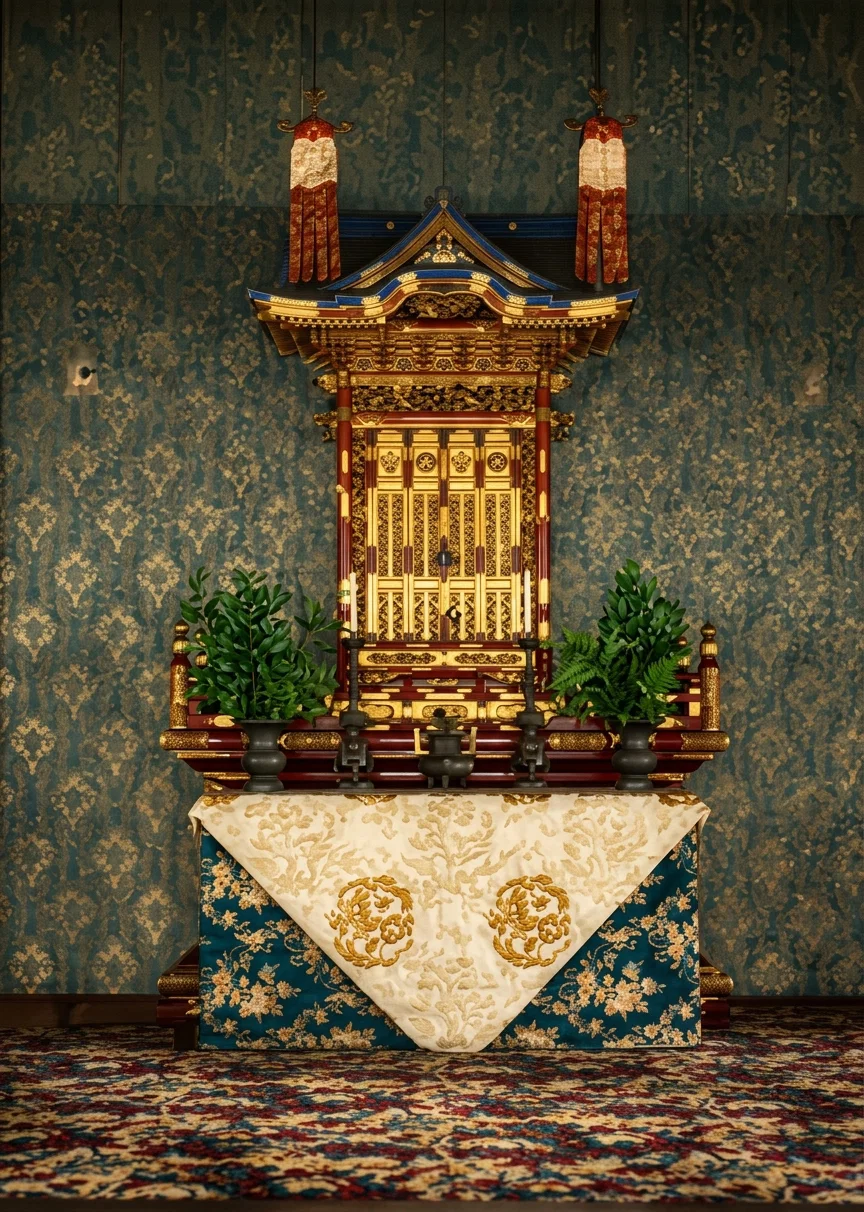
JAPAN is now confused by the multiplicity of its advisers in regard to a moral base for her people. One says, “You must have this,” while another says, “You ought to have that;” but after all, no one can offer any real enlightenment save only on the basis of Christianity. I Cor. 3:11. The Japanese are now conscious of their moral degeneration, and the danger to their national morality without a substantial faith. In Japan there is no fixed religion, hence, no fixed moral standing. What she most seriously needs is the new light, the new life; that will save her by reconstruction from the very foundation.
Her original religion, Shintoism, is merely preserved as a rite. Buddhism only exists among aged persons. The agnostic Confucianism no longer has influence, and the numerous other religions and doctrines have all lost the confidence of the people.
“What are the current remedies?” “What is the religion of the new age?” “What can Buddhism or Shintoism do for the generation?” “What can Christianity accomplish?” Such are the subjects often discussed, and still unsolved. These questions are treated in a rather academic way, by prominent scholars and writers.
The most of the philosophists in Japan, as of many other countries to-day, declare that the religion of the future must be based on ethical principles. This opinion is advocated by the majority of eminent men. While on the other hand there are the declarations that Shintoism should be improved and preserved as a national religion, since it is their original religion, while some urge that Buddhism should be encouraged; and still another, that the Bushido should be the base of their national morality.
Thus are presented many different views, each treated in the various ways, and the conflict still goes on.
Shrine in a Buddhist Temple.
This is not, however, a matter of surprise; for the time when Christianity was first introduced was one of transition and conflict. Everything was in confusion and one could hardly have a chance to think soberly of the deep questions of life. Men simply wanted to know something about new things—new civilization and new political and material life, of which they were full of admiration. To know was all that was desired, and the idea of thinking was almost entirely put aside; they were too busy acquiring and adopting the new things. In this way the Japanese acquired the occidental civilization wonderfully fast, but paying slight attention to its more profound theories of life.
But the time has come when they ought to think and decide these questions. When Japan imported the Chinese civilization many centuries ago, the religious civilization was imported at the same time; but it seems that the practical religion of the West was left behind the rushing tide of western civilization. Perhaps Japan’s leaders think they have a national ideal and moral code even better and broader and more consistent than that of the West, because based upon a clearer perception of truth than the Westerners have yet reached. Perhaps they think they have a better religion, and are not anxious to adopt any other. They might acquire and adopt a new civilization without Christianity—the real religion of man—but there would still be lack of moral base.
I have described her religious situation rather as in a serious conflict, which many Japanese would not admit; but it is really the most serious defect of her present condition.
Yet, God’s grace is abundant there as everywhere, and many souls have found and accepted the true basis of morality. We sincerely appreciate the faithful efforts of our brothers of America which have been to this end. As the fruits of their work, there are now many Christian schools and institutions that shed forth the light of God. There are many indications that the fruit will be abundant.
Recent good tidings from Japan say, “Our work is making steady progress, altho it is only an acorn that has begun to grow. . . . We ask for your prayers that we may accomplish the work of God in due time.”

A BEDOUIN MISSION.

An effort is being made in England to establish a mission with the object of reaching the neglected seed of Ishmael. Only lately has it been found possible to carry the Gospel to them. Mr. Archibald Forder recently penetrated 750 miles into Arabia, and went from tent to tent, and from town to town, in those unknown and mysterious lands, unfolding the story of Jesus and His love, speaking and reading to the people in their own tongue. Tho frequently in danger, and with no apparent way of escape open to him, Mr. Forder’s faith never wavered. The mission now being formed, with Jerusalem as its base and headquarters, will reach the neglected poor of the Holy City and the Bedouin of Northern Arabia, Eastern Palestine, and the Sinai Peninsula, and will also keep in constant touch with the ever-flowing streams of Arabs who visit Jerusalem. The Arabs come immense distances to sell and buy in Jerusalem, and they are obliged to stay there a few days, during which, very often, they get robbed.—The Christian.

TIBET AND ITS BORDERLAND.

[Sarah Douglass McMahon, in The Independent.]
(Concluded.)
WHILE living for several years in the district of Kumaon, on the northern border of India, I had frequent opportunity of meeting the Tibetans. Altho the white man is rigidly excluded from the Forbidden Land, the Tibetans themselves and the hill tribes or Bhotiyas of India freely pass and repass over the frontier. Probably it was this spectacle which induced my missionary friends, Dr. Martha A. Sheldon and Miss E. C. Browne, of the Methodist Mission, to disguise themselves as Bhotya women and take a daring excursion over the frontier to Taklakot, an important Tibetan trading-post.
It is agreed by those who know the Tibetans that they are far from unintelligent, altho debased by superstition and vice. In many respects they are allied to our own Bhotiyas, and the two races do not find much difficulty in making themselves understood. Dr. Sheldon first came to Bhot, the British outland, with Tibet on the north and Nepal on the east, in the capacity of a medical missionary. If ever a region needed medical and surgical expert attendance for its wretched inhabitants it was Kumaon. Bleeding and burning were the favorite remedies employed by the native doctors. The spirits were invoked and placated to prevent disease. “Holy men” who came down from Tibet were welcomed with open arms if haply their prayers and incantations might ward off the demons bringing leprosy, smallpox, and other scourges. Easily and naturally Dr. Sheldon displaced the native fakirs and became physician-in-chief of the Land of Bhot.
In summer the doctor and her assistant, Miss Browne, live in their bungalow at Chaudas, 8,750 feet above sea-level. In winter they go down to Dharchula, a more sheltered station only 3,200 feet in altitude. It is their custom to itinerate over their entire district in journeys thirty and forty days’ length at a time. On these excursions, beside the medical treatment, a great deal of religious work is done. Her first task in uplifting the inhabitants was to translate the Bible into the Bhotiya or hill country language, and next came the ambition to put the Scriptures into Tibetan. Here was a great difficulty. It is high treason for an inhabitant of Tibet to communicate the sacred language to foreigners. At last the ladies found a Tibetan pundit (by name Karma, a star) who did not expect to return to his native land; and who taught them the written characters.
Over the high mountain passes between Kumaon and Tibet there flows during the summer months a busy stream of traffic and pilgrimage. In the coming and passing throngs are hill people on their way to trade in Tibet; venerable friars from the Buddhist monasteries; flocks of girls traveling in companies to make merry at a border village; kidnapping expeditions of young men seeking brides by violence, according to the ancient custom of the country; chowkidars or frontier guards of the Tibetan Government; outcasts and beggars, who have traveled as far as Delhi, making a scanty livelihood by precarious street fakery. The passes range in altitude from 17,000 to 21,000 feet. Of travelers, the incautious, missing their footing, are dashed down deep crevices and ravines to death. The faint and weak-hearted fail in the terrible ascent, and some literally perish of heart failure in the extremely rarefied atmosphere.
Miss Sheldon and her assistant, Miss Browne, were uncompromisingly turned back by the chowkidarsin their earlier attempts to penetrate Tibet. During five years of such efforts they never succeeded in getting more than seven miles beyond the border. In the summer of 1902 they decided to make a fresh attempt. The objective point was Taklakot, a trading center and seat of the local raja, ten miles from the border. The brave women thought they might obtain an escort in the person of an influential Bhotya, but they found not a single villager from the border towns would accompany them. The British subjects of Bhot knew too well the punishment meted out to those who smuggle foreigners over the line. Mutilation and flogging are common punishments in Tibet.
Not the least difficult of the problems was getting the native clothes. “The garments,” says Miss Browne, “are not many, but complex, but the way in which they are held up and draped is a secret. The skirt has no band and is held up under a sheet tied round the waist—altogether an uncertain way of fastening one’s skirt, especially in the hands of a novice. The surplus ends of the sheet hang in front of the person. The upper garment is a long, wide piece of woolen cloth, with an opening in the middle large enough only to allow of passing the head through. The head-dress is made in the form of a bag sewn at the two sides.” The outfit is completed by a pair of stout native boots for mountain climbing, and a wicker basket carried on the back.
Dr. Sheldon’s hope of getting through unobserved was through wearing the odd Bhotiya costume and keeping the head covering closed after the manner of women in India. A native girl taught the missionaries to step like Bhotiya women, and, accompanied by a few of their servants and coolies bearing food, necessaries, and a tent, they started out. Fuel had to be carried, and a small goat was killed and cut up for the itinerant table d’hote. Ahead marched Gangwa, the faithful servant; the two pseudo-hill women followed, Indian file. The man had a pack on his back and a formidable-looking bamboo rod in his hand. He waved it unceremoniously at natives who stopped and asked questions. Going through the villages on the way to Taklakot the women had many narrow escapes from being identified and turned back. The coolies were persuaded not to walk with them (which might attract undue attention), but to carry the baggage a considerable distance in the rear. Down, down the mountain-side came the party to the river which flows by the foot of the Tibetan city of Taklakot. Crossing the bridge, they found themselves among a crowd of Tibetans; but, going up the hill boldly, they landed among a colony of traveling Bhotiyas, and found a welcome resting-place in a roofless hut, over which a tent was about to be stretched. This was the limit of the journey, and here Miss Sheldon said: “Send for the raja and let him know that feringi [foreigners] have come.”
The arrival of the female travelers, who here threw off their disguise, was a nine days’ wonder to the Tibetans. Miss Sheldon and her assistant had time to hold a Gospel meeting, to sing and pray, and to relieve the sick, before officials arrived on the scene and demanded their return to British soil. One of the patients was the raja’s son, suffering of stomachache, which was relieved by Miss Sheldon’s ministrations. Whatever the reasons for clemency—or kindness to the scion of royalty, or the fact they were women—the Tibetans offered their unwelcome visitors no rough usage, and even allowed them to stay over night in Taklakot, tho annoyingly guarded by a couple of Tibetans, who occasionally poked their heads over the walls. The next day was Sunday, when they were obliged by the guards to commence their return march, which was uneventfully accomplished in the midst of a blinding snowstorm.
When Miss Sheldon’s three-day twenty-mile journey into Southern Tibet and back is compared with Miss Annie Taylor’s wonderful achievement some years previously in penetrating into the country from the Chinese border to within three day’s journey of Lassa it does not seem very significant. But Miss Taylor went through a sparsely-settled land, where the vigilance against foreigners was not very keen. Miss Sheldon, on the other hand, eluded the watchmen, spies, and emissaries of the monks guarding the southern passes against the advance of the British. Both missionary zeal and commercial enterprise anxiously await the entry through those passes of European civilization. That is why General Younghusband’s expedition, which aims to compel the Tibetans to carry out their commercial conventions with his Imperial Majesty’s British Government, and may, indeed, open up the entire country as Perry opened Japan, has the hearty good wishes of both English and Americans living in India.

THE BATTLEFIELD.

A desert place where grew no kindly herb; A waste of sand where splintered rocks lay dead, Where rivulets flowed not, nor flowers swayed— And smiting rays fell from the sun o'erhead.
One lonely figure robed in ashen gray, Whose patient eyes saw nothing, seeing all; Nor marked the shadows' slow-revolving course, The flush of dawn, the purple darkness' fall.
There rode no hosts led on by warrior kings; No trumpets sang; there waved no banners gay; No fierce assaults routed quick retreats, But silent hours wore out the night, the day.
Alone against a world the Leader stood— Alone where ages met the parting ways, To guide aright whoever seeks the light, To shame from wrong with level, loving gaze.
There was the battle waged, the victory won, That conquered conquerors, that high above All greatness, glory, power, and all law Forever fixed the empery of love.
There triumphed He, our Conqueror and King, Who won for us, and made all earth His prize; Who gave His life for victory over death, Who fell that mankind evermore should rise.
—The Century.

Our Work and Workers.

A new house of worship is being erected at Belleville, Mich.
Nine persons were baptized at the Crawford, Neb., camp-meeting.
From Oconto, Neb., comes the word that six more are ready for baptism.
At the camp-meeting held recently at Thief River Falls, Minn., seven persons were baptized.
A church of seven members was recently organized at Encampment, Wyo., by Brother J. H. Wheeler.
At the recent quarterly-meeting at Ann Arbor, Mich., three candidates were baptized by Brother L. G. Moore.
The camp-meeting that was appointed for North Yakima, Wash., July 19–24, has been postponed until October.
The Pacific Press Branch office in Portland, Ore., and the office of Western Oregon Conference are now permanently located at 285 Salmon Street, Portland.
The California Tract Society turned its business over to the Pacific Press Publishing Association, July 15, and the Montana Tract Society did likewise on August 1.
Having been invited to engage in mission work in far-away India, Brother John C. Little, of Upper Columbia Conference, expects to leave at an early day for his new field of labor.
In the Indiana Reporter, Brother W. J. Stone notes the beginning of sanitarium work at Connersville, by Dr. McDougal. He also notes the erection of a house of worship in that place, toward which the business men of the city contributed $1,700.
In the Pacific Union Recorder we find this item: “A two-story building for the industrial school at Vancouver, Wash., is almost finished. On the tract of land for the industrial school at Mount Vernon, Wash., a well is being dug. When this is finished, the construction of the school building will be begun.”
Under date of Danville, Ill., July 19, Brother Charles Thompson writes that Brother P. G. Stanley and himself have been holding tent-meetings for several weeks in that city with good success. Eighteen persons had accepted the faith, and signed the covenant to keep all the commandments of God. Others were expected to take the same step in a short time.
The Calendar of Union College for 1904–05 is a neat and comprehensive pamphlet of 105 pages, containing full information concerning the object, scope, and workings of the institution. It is illustrated with views of different buildings, together with a general view of the town of College View. For copy of calendar, or other information, address the president, Prof. C. C. Lewis, College View, Neb.
The Nebraska Reporter says: “The Lord has opened the way in a remarkable manner, in the matter of securing a good location for the tent-meetings, and also for the camp-meeting in Omaha. Both grounds, controlled by one of Omaha’s wealthy men, are placed at our disposal free of charge.” The camp-meeting will be held September 1–11. The annual session of the state conference will be held at the same time.
In the Dakota Worker, Brother C. A. Burman gives an interesting report of the recent camp-meeting held at Canton, S. D. Sixty-four persons were baptized; Brother R. E. Harter was ordained to the Gospel ministry; and when the wants of the cause were presented, the cash contributions and pledges to various interests amounted to $1,481. The report says, “This was a grand meeting, the influence of which will be felt in this conference until the Saviour shall come to take His children home.”
The meetings conducted by Brother Wm. Simpson in Los Angeles, Cal., for several weeks have attracted unusual attention. The first service was held in a large hall which has a seating capacity of 2,000, but many were unable to gain admittance. At the close of this service the people were invited to attend meetings to be held in the large campground tent which had been pitched in the heart of the city. But the ordinary seating capacity was far short of the demand, and accommodation was provided for three hundred more. Yet even this proved insufficient to seat the people who came before the services were commenced. This has been a most remarkable instance of a desire on the part of the people to hear the Gospel of the kingdom. The real point, however, is, Will they heed the message of preparation? In the midst of a very popular and enthusiastic series of meetings, in which the greatest of all preachers was the chief attraction, the real testing truth in His message was met with the response, “This is a hard saying, who can hear it?” It is always encouraging to witness an anxiety on the part of the people to hear the truth, but there is with it the sad reflection that, for the larger part of them, it will be only a witness against them in the judgment—because they will not receive it in a practical way. However, it must be proclaimed to them, whether they accept it or not; so let us pray that hearts may be opened to receive, as well as ears to hear.

THE SUSTAINING POWER OF THE WORD.

“Sanctify them through Thy truth; Thy Word is truth,” contains an enduring principle. The Word of God is not only the means of conveying the Gospel of salvation to sinners, but it is a means of preserving the character and influence of those who accept it. We give the following items, taken from an article in The Christian, by a French missionary:—
The Portuguese founded a mission on the Kongo in 1491, which was attended with great apparent success. A native Christian monarchy was founded, of which we read that “great cathedrals lifted their spires toward heaven, the African sun shone on sumptuous episcopal ornaments in the processions which marched through the streets of the capital, and above their ranks floated standards of white and gold blessed by the pope.” One of these standards, still treasured by the present titular king of the Kongo, “a few crucifixes, some pictures of saints regarded as fetishes, and an empty title—that is all that remains of the Kongo Mission so loudly vaunted by the Portuguese Dominicans and the Italian Franciscans of the sixteenth century.” They had not given the people the Bible!
It is only needful to set against this Scriptureless mission, which disappeared under the storm of persecution, the memorable example of the martyr church in Madagascar. The missionaries of the London Missionary Society, just before their banishment in 1835, had succeeded in printing the complete Bible. They had gained some precious months of time through the knowledge of soap-making possessed by an artisan missionary, and Queen Ranavolona’s desire that this art should be taught to her people. When, twenty-six years afterwards, they were able to return, on the death of this cruel persecutor, they found that the few hundreds of native Christians whom they left had grown, notwithstanding many martyrdoms, to several thousands. The precious promises of the Bible had been the secret oil cast upon the fire of Christian faith and love, to keep it burning, in spite of the floods of persecution by which it had been sought to be extinguished.

THE ABYSSINIAN EMPEROR AND PROHIBITION.

The Emperor Menelik, of Abyssinia, has issued an edict prohibiting the importation of alcoholic drinks into his empire. French wines and German beer have, he says, found their way to his court. He has watched their effects, and has come to the conclusion that, if he does not put a stop to the drinking that is going on, his empire will soon fall a prey to other nations. The emperor has no objection to European arts and sciences, but he sets his face against European poison, and declares that he will punish importers of alcoholic liquors by forcing the liquor down their throats until they die. In the preamble to his edict he says that drunkenness is pernicious, enfeebles a race, and destroys the body and mind. He desires that his people remain strong, healthy, independent, and, as a means to that end, prohibits alcoholic drinks in every part of his domains.—Selected.

WANTED FOR MISSIONARY WORK.

(Always prepay postage.)
ANY of our publications, especially the SIGNS. Address, H. Alamogordo, N. M.

LESSON VIII.—BABYLON.

(Study for Sabbath, August 26.)
Note.—“Revelation 18 points to the time when, as a result of rejecting the threefold warning of Rev. 14:6-12, the church will have fully reached the condition foretold by the second angel, and the people of God, still in Babylon, will be called upon to separate from her communion. This message is the last that will ever be given to the world; and it will accomplish its work. When those that ‘believed not the truth, but had pleasure in unrighteousness,’ shall be left to receive strong delusion, and to believe a lie, then the light of truth will shine upon all whose hearts are open to receive it, and all the children of the Lord that remain in Babylon will heed the call, ‘Come out of her, My people.’”—Great Controversy.

QUESTIONS.

1. Who appeared to John to talk with him? Rev. 17:1, 2.
2. What did the angel show him? Verses 3, 4.
3. What was the name of this woman? Verse 5. Note .
4. Through rejecting the judgment message, what did Babylon experience? Rev. 14:8.
5. What is the inevitable result of rejecting light? John 12:35.
6. How dark does the apostasy become? Rev. 18:2, 5, 24.
7. Is there a remnant left? Rev. 18:4.
8. What are they bidden to do by the voice from heaven? Verse 4. Why are they exhorted to leave this apostate body? Note .
9. Upon what will those who come out of Babylon be united? Rev. 14:12; 12:17.
10. How will Babylon be rewarded? Rev. 18:6, 8. See also Isa. 47:1-15.
11. Is Babylon conscious of her danger? Rev. 18:7.
12. What striking illustration is given of her overthrow? Rev. 18:21. Will her destruction be final?
13. What does the merchandise of this figurative city include? Rev. 18:12-14.
14. How will her destruction affect the kings of the earth? Verses 9-11.
15. What are those who have dealt in her merchandise represented as doing? Verses 15, 16.
16. Is ocean commerce affected? Verses 17-19. Note .
17. In contrast with the lamentations of the wicked, what emotions of joy do the righteous express? Verse 20.
Continue reading: LESSON 8.—AUGUST 21.—ELIJAH ON MOUNT CARMEL