Signs of the Times, Vol. 22, No. 37.

The Word of God

Signs of the Times

Sep 17, 1896

Pacific Press Publishing Company · Oakland, California · Sep 17, 1896

The Word of God

Pre-eminently Christ Jesus is the Word of God, the Eternal Logos, of whom it is said: “In the beginning was the Word, and the Word was with God, and the Word was God. The same was in the beginning with God.” (John 1:1, 2.) He is called the Word because through him all the word of God was spoken to men. Angelic messenger and prophet spoke by his Spirit. “Without him was not anything made that was made.”

“The Word Was Made Flesh.”

So writes, by the Spirit of God, the beloved apostle. God prepared that Eternal Logos a body (Heb. 10:5), and the Logos became the Man, Jesus of Nazareth, a brother to every other man, and yet the Word of God. He was God incarnate, which means God made flesh. He was righteousness incarnate, or righteousness supremely dominant in the flesh over all fleshly lusts, infirmities, and passions. He won and held eternal victory in the flesh, and so exalted humanity to the very throne of God.

“He Hath No Form Nor Comeliness.”

Such are the words of the prophet concerning the Word while he sojourned here upon the earth. He continues: “And when we shall see him, there is no beauty that we should desire him.” (Isa. 53:2.) And yet, tho blind unbelief could see no beauty or comeliness or anything else to be desired, he was still the Word of God, the Eternal Logos. Some saw in him simply a carpenter of Nazareth. Others, an agitator, a stirrer-up of the people. Still others saw in him a wise teacher, a prophet of God; while others still, with hearts open Godward, with eyes heavenly anointed, saw in him the Christ, the Son of the living God, the power of God and the wisdom of God. He was all these, whether in sorrowful prayer or transfigured on the mountain top; for is he not “the same yesterday, and to-day, and forever”?

The Word of God

The Divine Word, the Eternal Logos, is not here personally present now. But he has left us his representative in his holy word. As the Second Adam was and is a “quickening Spirit” (1 Cor. 15:45), a Spiritual Being in whom is life, so also the words which he speaks or his Spirit inspires are spirit and life (John 6:63). It was by the Eternal Spirit of God that he wrought his miracles (Matt. 12:28); and it is by the same Spirit that God sung through David the Psalms of such varied human experiences and divine help (2 Sam. 23:2); that spake through the prophets their wondrous messages (1 Peter 1:11; 2 Peter 1:21); that breathed through the apostles the Epistles and Gospels (1 Cor. 2:10, 13). It is the Eternal Word or his Spirit that has given us the Scriptures, and they are therefore the word of God to men.

“The Mystery of Incarnation.”

Such was Jesus Christ to the world. Such is the written word of God to the world. As unbelief saw in Christ only the mere man, so unbelief sees in the written word, in the Bible, only a mere book. But as the child of simple faith saw in Jesus of Nazareth the Christ of the living God, the Saviour of the world, so the child of faith sees in the Bible the word and power of God, the book of light and life. The mystery of the incarnation is manifest alike in the Eternal Logos and in the written word. As the Eternal Logos became incarnate,—embodied in flesh,—so the word which his Spirit breathed through the holy men who wrote became inbreathed, inbooked, or embodied in a book. As among children he was the “Holy Child,” so among writings the word of God is the “Holy Writings.” If the Logos had been revealed in the fulness of his glory, faith would have been compelled or sinful man would have perished in the unearthly splendor. So with the written word. Both came to us vailed in the fashion of man, that man might gaze thereon unterrified, and embrace them, not through fear, but love.

The Ground of Our Faith

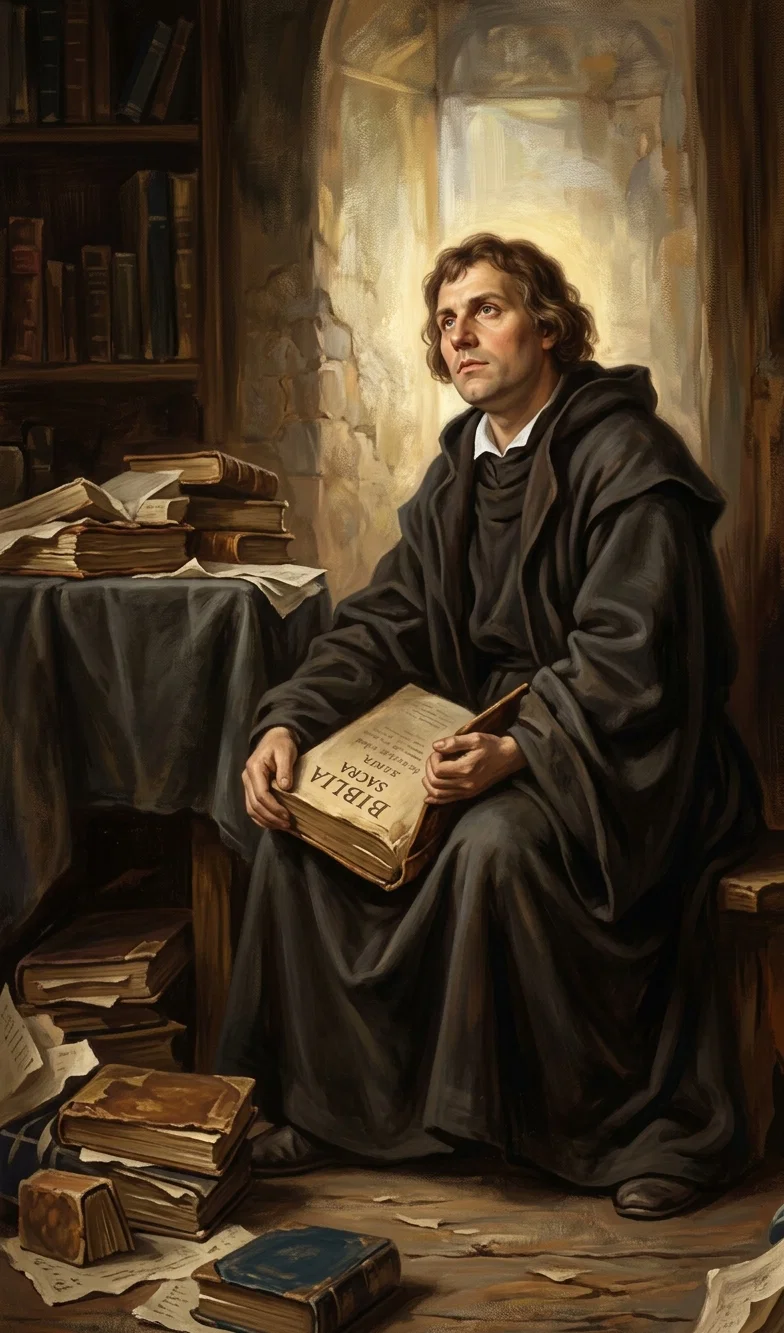
Knowing this living word, was the basis of John’s message to the church. “That which was from the beginning, which we have heard, which we have seen with our eyes, which we have looked upon, and our hands have handled, of the Word of life.” (1 John 1:1.) John knew the Word. With ears, eyes, hands, he knew it. In life and power he experienced it. Where other men saw only a mere man, John saw the Eternal Word. So we may say of God’s word now. True, we may not have looked upon the person of our Lord Jesus Christ; but we have seen his word. It lies before us. We have heard it read. It has entered into our ears. We see it with our eyes. We look upon it; our hands have handled it. While others see it to be a mere book of paper, leaves, printers’ ink, words, our eyes, praise God, read in it the sweet old story, ever new, of God’s wondrous love. Faith sees in it the righteousness and power of Christ Jesus. It experiences its blessings and life. Many of the monks in the convent at Erfurt saw in the Bible a theological treatise at the best, but Martin Luther saw it and learned to know it as the word and power of God. But this is not all. That word enables us to see God’s word written elsewhere. We see the same message of love written on sea and earth, unobliterated by sin; on mountain and plain and tree and flower, on cloud and sky. We hear, we look upon, our eyes see, our hands handle, often unthinkingly, the precious word of life. But more precious thanall, we see that word written in redeemed and regenerated humanity, in souls born into the kingdom of God, in men and women set free from sin, growing up into Christ. We see and know it in ourselves that it is the wisdom and power of our blessed Lord. And because of all this, reader, we tell the glad message to you. You may see that word, know that word, and find eternal life, peace, and joy in believing that word. Will you not do it?

OBJECTS OF CIVIL GOVERNMENT.

There are many erroneous ideas concerning the objects of civil government, and as a general thing the present ideas are a long way off from those of the founders of this nation. In view of this it is good to get a restatement of them so clearly and tersely put as the following from one of late so prominently before the public, the Hon. William J. Bryan. In a speech in Chicago, the 7th inst., he said:—
Let me dwell for a moment upon the object of government. In this land it is our boast that our government derives its just powers from the consent of the governed. What kind of government will the people consent to when they are free to consent? There is one kind of government above all other kinds that they love. A government which knows no favoritism, a government in which every citizen stands on the same plane, and where the government treats them all alike without regard to position in society, or even without regard to wealth; a government which gives equal rights to all, but confers special privileges upon none. That is the kind of government that appeals to the affections of the common people.
There are two things to be considered in government. The first is that in the enactment of legislation you shall be careful to give no advantage to one person over another, if that advantage can be prevented; in other words, it is the duty of the government to avoid acts of affirmative injustice. But that is only part of the business of the government. Jefferson has stated the other half of it. He says: “Government must restrain men from injuring one another.” That is one of the important duties of government—to restrain men from injuring one another—and the government that fails to restrain the strongest arm that can be lifted from injuring the weakest citizen in all the land is a government which fails to do its whole duty.
Government was not instituted among men to confer special benefits to any. Government was instituted for the protection of all citizens, in order that they might enjoy the fruits of their own toil and the result of their own exertions.
If these principles were followed, there would never be any religious or class legislation, any legislation to promote morality or to foster religion, because civil government can, in the very nature of the case, do none of these things; and every attempt so to do always has resulted and always will result in more immorality and more irreligion (from a Bible view), and more injustice and oppression; it will result in the injury of the few and the weak, politically considered, and the exaltation of those who are granted special privileges which of nature and right do not belong to them. Civil governments do not nor can they make men better; they originated because of men's selfishness. If all men were unselfish, a civil government would never be needed. But civil government can not make man unselfish; it is designed to do what alone it can do, restrain open selfishness, or incivility, crime, and oppression. Mr. Bryan has stated this so clearly that we further quote:—
I was passing through Iowa some months ago and I got an idea from some hogs. . . . As I was riding about I noticed these hogs rooting in a field, and the first thought that came to me was that they were destroying a good deal of property, and that carried me back to the time when, as a boy, I lived on a farm, and I remembered that when we had hogs we used to put rings in the noses of the hogs, and then the thought came to me, “Why did we do it?” Not to keep the hogs from getting fat. We were more interested in their getting fat than they were. The sooner they got fat the sooner we killed them; the longer they were in getting fat, the longer they lived. But why were the rings put in the noses of these hogs? So that while they were getting fat they would not destroy more property than they were worth. And as I thought of that this thought came to me, that one of the duties of the government is the putting of rings in the noses of hogs.
Now, my friends, do not consider this a reflection on your neighbor. We are all hoggish. We are all selfish, my friends, and we must not apply this lesson simply to somebody else. If you tell me that you are not selfish, I can prove by your neighbor that you are, and if your neighbor denies that he is selfish, I can prove by you that he is. We are all selfish. The Creator did not make any class of people who were entirely unselfish; but I have faith in our form of government, because I believe that the people, in their better moments, will adopt laws which restrain themselves in hours of temptation, in order that their neighbors may also be restrained in hours of temptation.
We can not say that we believe wholly with Mr. Bryan in the last statement of what will be, but we do believe with him in what is and ever must be the true principles of every good civil government rightly administered; and we further believe such principles will commend themselves to every fair-minded person.

Some Historical Facts Worth Remembering

THE SABBATH AND THE SUNDAY. NO. 2.

Some Historical Facts Worth Remembering.

Last week we gave twenty-five important facts relative to the Sabbath and the Sunday, with approximate dates during the time covered by sacred history. In this list we wish to recall two great facts and continue the list during the Christian era. The facts which we wish our readers to recall are these: (1) At the time when our Lord came to earth all the faithful people of God were seventh-day Sabbath-keepers; (2) all the heathen world were sun-worshipers, honoring the sun and observing times and seasons connected with it.

The Sabbath.

26. Jesus instructed his disciples to regard the Sabbath as late as the destruction of Jerusalem. They were to pray that at that time they should not be forced to flee on the Sabbath day. Matt. 24:20. A.D. 70.
27. The apostle to the gentiles observed the Sabbath day. He “committed nothing against the people, or customs of our fathers.” Acts 28:17. A.D. 62.
28. The early Christians in Judea observed the seventh-day Sabbath.—Chambers’ Encyclopedia, Lippincott & Co., 1876, vol. 8, article “Sabbath,” p. 400.
29. This was true not only of Jewish but of Greek converts, who followed the customs of the Judean Christians. Acts 17:1-4; 1 Thes. 2:14. A.D. 54.
30. This was not strange, for in all the cities of the Roman Empire were Jews who observed the Sabbath. To these James refers when he gives instruction to gentile Christians. Acts 15:21. A.D. 52.
31. Irenæus, bishop of Lyons, an early “father,” asserts in his work on “Heresies” (book 4, chap. 15, sec. 1), that the Ten Commandments are “natural precepts, which from the beginning He [God] had implanted in mankind, . . . which if any one does not observe he has no salvation.” In the same book (chap. 16, sec. 4) he says that “the words of the Decalogue remain permanently with us, receiving, by means of His [Christ’s] advent in the flesh, extension and increase, but not abrogation.” This author lived A.D. 115–202.
32. Tertullian, another “father,” in his work De Anima (chapter 37), calls the Ten Commandments “the rules of our regenerate life.” In speaking of Christ’s regard of the Sabbath, the same author says in the same chapter, that Christ imparted to “the Sabbath day itself, which from the beginning had been consecrated by the benediction of the Father, an additional sanctity by his own beneficent action.” A.D. 200.
The same writer says of Christ: “He was called ‘Lord of the Sabbath,’ because he maintained the Sabbath as his own institution.” “Christ did not at all rescind the Sabbath; he kept the law thereof.”—Against Marcion, book 4, chapter 12. A.D. 200.
33. Origen, in Homily 23, condemns the Jewish or Pharisaical mode of Sabbath observance and declares how Christians should keep the Sabbath. “On the Sabbath day all worldly labor ought to be abstained from, . . . give yourself up to spiritual exercises, repairing to church, attending to sacred reading and instruction, thinking of celestial things, . . . looking to things . . . future and invisible; this is the observance of the Christian Sabbath.” This is the first instance where the expression “Christian Sabbath” is used, and that refers to a proper observance of the only day known as the Sabbath, the seventh day. About A.D. 250.
34. Archelaus, bishop of Carrha in Mesopotamia, in his “Disputation with Manes,” says: “Again, as to the assertion that the Sabbath has been abolished, we deny that He has abolished it plainly; for he was himself also Lord of the Sabbath.” A.D. 278.
35. The Apostolical Constitutions (book 2, sec. 4, par. 36) says: “Thou shalt observe the Sabbath, on account of Him who ceased from His work of creation, but ceased not from His work of providence; it is a rest for meditation of the law, not of idleness of the hands.” This shows that the Sabbath was then generally observed. The time covered by the Constitutions was from A.D. 200–350.
36. The learned Giesler (Eccl. History, vol. 1, chapter 2, sec. 30), says that “while the Jewish Christians of Palestine retained the whole Mosaic law, and consequently the Jewish festivals, the gentile Christians observed also the Sabbath and the Passover [See 1 Cor. 5:6–8], with reference to the last scenes of Jesus’ life, but without Jewish superstition.” This is in harmony with Origen’s instruction. See No. 33.
37. In speaking of the first day, Lyman Coleman (Ancient Christianity Exemplified, chap. 26, sec. 2) says: “During the early ages of the church it [the Sunday] was never entitled ‘the Sabbath,’ this word being confined to the seventh day of the week, the Jewish Sabbath, which, as we have already said, continued to be observed for several centuries [In the same section he says, ‘Down even to the fifth century.’], by the converts to Christianity.”
38. “The Sabbath of the seventh day . . . was religiously observed in the East church three hundred years and more after our Saviour’s passion. That church being the great part of Christendom, and having the apostles’ doctrine and example to instruct them, would have restrained it if it had been deadly.” Thus writes Prof. Edward Brerewood, of Gresham College, London, a member of the Church of England, in a work entitled, “Learned Treatise of the Sabbath,” p. 77, Oxford, 1631.
39. But the leaven of apostasy was rapidly corrupting the whole mass. It had proceeded so far that the Council of Laodicea (canon 29) pronounced a curse upon those who continued to rest on that day. “The Council of Laodicea,” says Prynne (Dissertation on the Lord’s day Sabbath, pp. 44, 1633), “prohibited the keeping of the Sabbath under an anathema.” This council was held in A.D. 364.
40. Says Peter Heylyn, D.D. (Hist. of the Sabbath, part 2, chap. 2, sec. 12, London, 1636): “The Saturday is called amongst them [the writers of the Christ-Church] by no other name than that which formerly it had, the Sabbath. So that whenever, for a thousand years and upwards, we meet with Sabbatum in any writer of what name soever, it must be understood of no day but Saturday.”
These testimonies show conclusively that the Sabbath was observed in the early church down to the fourth and fifth centuries. In our next we will give some historical facts with reference to Sunday and the apostasy.

THE LORD OUR STRENGTH.

BY MRS. E. G. WHITE.
“FINALLY, my brethren, be strong in the Lord, and in the power of his might. Put on the whole armor of God, that ye may be able to stand against the wiles of the devil. For we wrestle not against flesh and blood, but against principalities, against powers, against the rulers of the darkness of this world, against spiritual wickedness in high places. Wherefore take unto you the whole armor of God, that ye may be able to withstand in the evil day, and having done all, to stand. Stand therefore, having your loins girt about with truth, and having on the breastplate of righteousness; and your feet shod with the preparation of the Gospel of peace; above all, taking the shield of faith, wherewith ye shall be able to quench all the fiery darts of the wicked.”
Let every one who names the name of Christ read this scripture again and again, and then inquire, Am I clothed with the whole armor of God, that I may be a successful co-laborer with Christ? The more we know of ourselves, the more we probe our motives and desires, the more heartfelt will be our consciousness of our utter inability to fight the battle of the Lord in our own strength, and the more deeply we shall feel the need of having our loins “girt about with truth,” in order that we may have purity of purpose, and know that we are not serving ourselves, but the Lord Jesus Christ.
“Above all,” declares the inspired word, “taking the shield of faith, wherewith ye shall be able to quench all the fiery darts of the wicked.” Stablish your hearts in the belief that God knows of all the trials and difficulties you will encounter in the warfare against evil; for God is dishonored when any soul belittles his power by talking unbelief.
This world is God’s great field of labor; he has purchased those that dwell on it with the blood of his only-begotten Son, and he means that his message of mercy shall go to every one. Those who are commissioned to do this work will be tested and tried, but they are always to remember that God is near to strengthen and uphold them. He does not ask us to depend upon any broken reed. We are not to look for human aid.
God forbid that we should place man where God should be. He has promised to help us, and in the Lord Jehovah is “everlasting strength.”
A lesson of faith is given us in the experience of Christ with the disciples of John the Baptist. Imprisoned in the lonely dungeon, John had fallen into discouragement, and he sent his disciples to Jesus, asking, “Art thou he that should come, or do we look for another?” Christ knew on what errand these messengers had come, and by a mighty demonstration of his power he gave them unmistakable evidence of his divinity. Turning to the multitude, he spoke, and the deaf heard his voice. He spoke again, and the eyes of the blind were opened to behold the beauties of nature, and to look upon the face of their compassionate Restorer. He put forth his hand, and at his touch the fever left the afflicted ones. At his command demoniacs were healed, and falling at his feet, worshiped him. Then turning to the disciples of John, he said, “Go and show John again the things which ye do see and hear.”
That same Jesus who wrought those mighty works, is our Saviour to-day, and is as willing to manifest his power on our behalf as he was in the behalf of John the Baptist. When we are hedged about by adverse circumstances, surrounded by difficulties which it seems impossible for us to surmount, we are not to murmur, but to remember the past loving-kindnesses of the Lord. Looking unto Jesus, the Author and Finisher of our faith, we may endure as seeing him who is invisible, and this will keep our minds from being clouded by the shadow of unbelief.
Shortly before Christ’s ascension, Philip said to him, “Lord, show us the Father, and it sufficeth us.” Grieved at his unbelief, Christ turned to him, saying, “Have I been so long time with you, and yet hast thou not known me, Philip?” Is it possible that I have walked with you, and talked with you, and fed you by miracles, and yet you have not comprehended that I was the Sent of God, “the Way, the Truth, and the Life,” that I came from heaven to represent the Father? “Believest thou not that I am in the Father, and the Father in me? The words that I speak unto you I speak not of myself, but the Father that dwelleth in me, he doeth the works.” “He that hath seen me hath seen the Father;” for I am the brightness of his glory, and the express image of his person. “How sayest thou then, show me the Father.” “Believe me that I am in the Father, and the Father in me, or else believe me for the very work’s sake.”
Too often we grieve the heart of Jesus by our unbelief. Our faith is short-sighted, and we allow trials to bring out our inherited and cultivated tendencies to wrong. When brought into strait circumstances, we dishonor God by murmuring and complaining. Instead of this we should show that we have learned in the school of Christ, by helping those that are worse off than ourselves, those who are seeking for light, but are unable to find it. Such have a special claim upon our sympathy, but instead of trying to uplift them, we pass by on the other side, intent on our own interests or trials. If we do not show decided unbelief, we manifest a murmuring, complaining spirit.
“O thou of little faith, wherefore didst thou doubt?” Christ has already proved himself to be our ever-present Saviour. He knows all about our circumstances, and in the hour oftrial can we not pray that God will give us his Holy Spirit to bring to our minds his many manifestations of power in our behalf? Can we not believe that he is as willing to help us as on former occasions? His past dealings with his servants are not to fade from our minds, but the remembrance of them is ever to strengthen and uphold us.
No amount of tribulation can separate us from Christ. If he leads us to Rephidim, it is because he sees that it is for our good and for his name’s glory. If we will look to him in trusting faith, he will, in his own time, turn the bitterness of Marah into sweetness. He can open the flinty rock, and cause cooling streams to flow forth. Then shall we not lift our voices in praise and thanksgiving for past mercies, and go forward with full assurance that he is an ever-present help in time of trouble? He has been with us in our past experiences, and his word to us is, “Lo, I am with you alway, even unto the end of the world.”
“Therefore, brethren, stand fast, and hold the traditions which ye have been taught, whether by word, or our epistle. Now our Lord Jesus Christ himself, and God, even our Father, which hath loved us, and hath given us everlasting consolation and good hope through grace, comfort your hearts, and stablish you in every good word and work.”

The Witness of the Ages.

God's witness for all later ages is his written word. Primarily it is his voice sounded out from Sinai in his holy law, comprehending all morality, written by his own finger on tables of stone. This law is a test of all words, all doctrines, all creeds, all teachings, all voices, which come after it. Are the teachings of any one in harmony with that word?—accept them; it is simply truth's witness to truth. Does a new prophet arise?—and does his teaching lead man away from that law?—Then it is false, follow it not. But are his words in harmony with God's voice?—Then it is God's word confirming God's word. So when Christ walked the earth he said that in the closing of the days of persecution in the Dark Ages the sun should be darkened. Nearly eighteen centuries rolled away, and May 19, 1780, the phenomenon occurred just when the Lord said it would. What was that obscuration of the sun?—It was God's word in the sky confirming God's word given through Matthew and Mark. The standard was the written prophetic word, and when the sun was darkened, God's word was written again. We know it was God's word, because it confirmed the written word. It was not the main witness of truth, but a concurring witness, warning the world, and confirming the hope of the people of God.

RETURN UNTO THY REST.

BY JULIA H. DUFFIE.
“RETURN unto thy rest, O my soul; for the Lord hath dealt bountifully with thee.” Ps. 116:7.
Return, my soul, unto thy rest, As sparrow seeks its sheltering nest, For bountifully the Lord hath blest Thy humble trust; The simple ones he will preserve, And those brought low, if him they serve, May stay on him each trembling nerve, And find him just.
Gracious and merciful is he, And righteously will deal with thee; Then fear not man’s cold charity, But seek his breast; My soul from death he now doth stay, Tears from my eyes hath wiped away, My faltering feet kept in the way That leads to rest.

HOLDING UP CHURCH AND STATE EXAMPLES.

BY W. N. GLENN.
The combination comprising the Bureau of Reforms at Washington, which includes most of the evangelical reform associations of the country, who are just now pressing the matter of a religious amendment to the Constitution, insists that the design does not comprehend a union of church and state. It will be remembered, however, that the leading forces now laboring in behalf of the proposed amendment are the same that urged the Blair Educational Amendment resolution a few years ago. That resolution provided that the states should teach the principles of Christianity in the public schools, and that Congress should enforce the resolution by legislation. Therefore, under its provisions Congress would have had to decide what were the principles of Christianity, and that would have been a practical union of church and state.
The present proposed amendment does not call for quite as much as that in express terms, but that is not because such design is abandoned. The National Reformers are noted for their willingness to temporarily accept the “half loaf” as an “entering wedge.” It could not be expected that such a government as ours would suddenly jump to the extreme of the evil of church and state union; such a transition would of necessity be a gradual process. This government is fittingly represented by the two-horned beast of Revelation 13, which is described as having “two horns like a lamb,” but “spake as a dragon.” We would not expect such a contrast in character to take place at once.
The leading advocates of this so-called “reform” have long been wont to theoretically oppose a union of church and state, while zealously advocating conditions that could not exist without such union—conditions that could be established only as a result of such a union. Sunday laws originated in the church and state government of Rome. They have been perpetuated in the professed Protestant church and state governments of Europe. Thence they were transmitted to North America and implanted in the colonial governments. Thence they crept into the ship of state of the American Union as “stow-a-ways” among the baggage of the original thirteen states. From these they were imitated by other states, but were comparatively harmless, for want of a sentiment to enforce them, until the dragon voice should be gradually awakened here and there.
Years ago the advocates of the religious amendment theory voiced their sentiments by referring approvingly to features of the Old World governments which are the natural outgrowth of church and state union. In an address before a “National Convention to Secure a Religious Amendment to the Constitution of the United States,” held in New York, Feb. 26 and 27, 1873, Rev. H. H. George quoted approvingly from a report of Dr. Stowe to the Ohio Legislature concerning Old World policy, as follows:—
“In Germany the school system embraces a course of eight years, making four divisions of two years each.” And after summing up the branches taught in these respective divisions, he adds: “In the first is given religious instruction and the singing of hymns; in the second is religious instruction in select Bible narratives; in the third is religious instruction in the connected Bible history; in the fourth division, including children from ten to sixteen years old, is given religious instruction on the religious observation of nature, the life and discourses of Jesus Christ, the history of the Christian religion in connection with the contemporary civil history, the doctrines of Christianity.”
Barnard, in treating of the subjects and methods of instruction in Prussia, says “that every complete elementary school in that country gives instruction in religion and morality, established on the positive truths of Christianity.”
“In the public schools of Berlin instruction is given in the Bible, the catechism, the positive truths of Christianity.”
“In Switzerland a teacher must have a certificate from the clergyman of his own church that he is fitted, both by character and education, to conduct the religious instruction in the school for which he is designed.”
“In Russia it is assumed that religious teaching constitutes the only solid foundation of all useful instruction.”
But he goes even further for illustration to prove the righteousness of the National-Reform-Religious-Amendment cause. It is right because it is a Mormon principle; yes, because it is Mohammedan, and because it is pagan. Hear these words from the same address:—
But let me here remind the advocates for an education divorced from all morals and religion, that their demands are not only absurd but an absolute impossibility. . . . If it be a Mormon country, the government and all its institutions are founded on the basis, and administered according to the standard, of a Mormon morality. Even its trade, its manufactories, its improvements, its trials before courts of justice, its pains and penalties, all, all are in accordance with Mormon right. If it teaches its children at all, it must teach them according to the standard of Mormon morals. . . . It is precisely so in Mohammedan countries, and in all pagan countries, and can it be less so in a Christian land?—Verily not. To attempt a system of education in any country, wholly divorced from the morality and religion of that country, is not only unphilosophical, but it is irrational.
Will they still claim that they do not aim for a union of church and state? Of course they will, as long as there is a public prejudice against that particular expression. But can they reasonably deny that such a union is the logical outcome of the principles they are urging upon the people? Surely they can not. The examples they cite are positive proofs that their claim in this regard is groundless.
Continue reading: The Victory of Faith