Your ShelfYour Projects

Signs of the Times, Vol. 41, No. 8.

Health Principles or Health Fads

Signs of the Times

Mar 3, 1914

Pacific Press Publishing Association · Mountain View, California · Mar 3, 1914

Health Principles or Health Fads

Ignoring Big Things While Busy with Insignificant Ones — More Lunatics than College Students — Have Some Real Excuse for Living — Some Articles of Food Suggested

By DAVID PAULSON, M.D. Superintendent Medical and Surgical Sanitarium, Hinsdale, Illinois
If you commence reading this article, you will not be likely to stop till you have finished it. The article is written in a manner to entertain, and at the same time you will appreciate its good sense. Dr. Paulson is one of those regular medical practitioners who have been in demand for many years as lecturers on health and temperance topics at Chautauquan and other large gatherings. He is also well known as a writer on topics allied with his profession. As you will see by this article, he believes that common sense is more beneficial than fads.
EDITOR.
It is far more important to have a healthy vision than it is to have a healthy body. Who has not seen husky, broad-shouldered, deep-chested men who were only employing their splendid strength to build up the devil's business? On the other hand, we may see men and women with frail and sickly bodies who are accomplishing marvelous things for God. This shows that while good health is a tremendous advantage, it is not absolutely essential to a useful career.
There is a vast difference between adopting health principles and being swept off our feet by health fads. But it seems to be much easier for the average human mind to become enthusiastic over some small thing than it is to accept conscientiously a great principle.
There was a people once who would count out nine insignificant garden seeds, and then lay aside the tenth one for the Lord. That is, they were tithing "mint and anise and cummin" with scientific accuracy but omitted "judgment, mercy, and faith." Matt. 23:23. In other words, they had forgotten the "weightier matters"; and while they were so particular that the Lord should receive one tenth of these almost microscopic seeds, they did not hesitate to crucify His own Son.
This attitude was typical of that age. People are still inclined to do the same thing. There is nothing so unfashionable to-day as sound sense, while some foolish fad will draw people as honey attracts flies. This should impress upon us the truth of the striking statement, "That which is highly esteemed among men is abomination in the sight of God." Luke 16:15.

MORE LUNATICS THAN COLLEGE STUDENTS

People who think, and even some people who do not think, are compelled to recognize that we are facing a desperate situation. For example, there are more insane people to-day in our lunatic asylums than there are students in all our colleges, universities, and other higher institutions of learning. Furthermore, we have more than a million degenerates and criminals in this country. To any one whose eyes have been half opened, it is evident that we are traveling over the same road as did ancient Rome. We are confronted with many of the same desperate problems.
Whenever flowers begin to degenerate, they need to be fertilized with fresh pollen from other flowers. The bee generally performs this useful office of carrying pollen from one flower to another. Degeneration has set in among humanity, and they need to be regenerated. Whence shall they derive the necessary pollen to fertilize them?

ENGLAND SAVED FROM SOCIAL CRISIS

More than one hundred and fifty years ago, England was facing a great moral and social crisis. The different strata of society were arrayed against each other, and a revolution such as shook France to its very bottom seemed imminent. Degenerating forces were rapidly producing their baneful harvest. The bee that brought fertilizing pollenfrom a higher source was John Wesley. His message literally regenerated England. Chapels and schools, Bible societies, foreign missionary societies, were organized; and even the conservative Church of England, that refused to accept this Heaven-inspired movement, was indirectly blessed and re-animated by it.
To-day multitudes, instead of looking hopefully toward Heaven for an uplifting influence, are trying to save themselves by trivial human schemes. For instance, the eugenic fad is now on the very crest of the popular wave. We smile when we see a child trying to lift itself up by tugging away at its shoe-strings, but it is just as useless for humanity to try to lift itself by merely human resources.

THE COMMON DRINKING CUP VERSUS THE UNIVERSAL WINE CUP

Many of our great states have been swept by an agitation that has outlawed the common drinking cup. But the amazing thing is that these same lawmakers could not get their eyes wide enough opened to see the much greater harm that comes from the almost universal wine cup. It is absolutely certain that for every person who ever caught anything besides water from the common drinking cup, there are ten thousand persons who have caught mental, moral, and physical damnation for this world and the world to come, from the wine cup.

DRANK A BATH TUB FULL OF WHISKY

Last year we consumed in this country twenty-five gallons of liquor for every man, woman, and child in the land. As I did not drink my portion, the man who had my share as well as his own drank fifty gallons. That is more than enough to fill an ordinary bath tub. Think what human wreckage that means. Think of the enormous financial loss.

JAILS, POORHOUSES, AND LUNATIC ASYLUMS DEPOPULATED

Kansas furnishes us an object-lesson, on a large scale, of what it would mean to us if the legislature would outlaw the wine cup as it has the common drinking cup. Dr. L. Mervin Maus, department surgeon of the United States army, in an article on "Alcohol and Racial Degeneracy" in the New York Medical Record, says:
"During the drought in the West, when asked whether they wanted assistance, the governor replied that Kansas, with a tidy bank-account of $200,000,000, could weather worse storms than the drought of last summer without hardship. In 97 of 105 counties there were no insane. In 54 of these counties no feeble-minded; 96 counties with no inebriates; 38 county poorhouses were empty; the jails in 53 counties, empty; and 65 counties had no prisoners serving time in penitentiaries. Some counties have called no juries to try criminal cases for ten years."
Kansas has been so long under state-wide prohibition that there are hundreds of men in the state old enough to vote who have never seen an open saloon.

CHILD LABOR VERSUS CIGARETTE SMOKING

In recent years there has been a tremendous agitation, all over this country, in favor of such child labor legislation as would practically prevent children from working until after sixteen years of age. Viewed from one angle, that is a beautiful thing, although there is a question as to whether some children, if they do not learn to work before they are sixteen, will ever work afterward unless compelled to do so in the workhouse.
The average successful men and women had a reasonable amount of hardship in their early life. In fact, hardship seems to be an ingredient that God invariably mixes with the clay early, before it is fully set, if He wants to make out of it a really beautiful and useful vessel.

BURNING OUT THEIR BRAINS

But I hear some say the object of child labor laws is to prevent the unmerciful starving of young minds and the stunting of the young bodies in ill-ventilated factories; to which I reply, "This ought ye to have done," and not left something else undone. What is it that ought not to have been left undone? Let me say that for every boy who has been stunted by being put to work before he was sixteen, there are a thousand boys who have burned out their brains, ruined their souls, and wrecked their bodies, by cigarette smoking. Yet I have seen Lucy Page Gaston, the anti-cigarette apostle, with tears in her eyes, pleading with legislators to pass a law to fine the men who sell cigarettes to these boys; still these very same lawmakers turned around and made a law fining men if they should give honest employment to these boys, but left them with their cigarettes. I ask the reader to decide whether it is not easier even to-day to tithe mint, anise, and cummin, than it is to recognize the weightier matters of the law,—judgment, mercy, and faith.

COOKERY AND HEALTH CERTIFICATE

In Wisconsin they recently passed a law that no couple could be married until they had procured health certificates. I think no one can offer any serious objection to this arrangement. Yet, for the future good of the race, it would be a thousand times more important that the wife should secure a certificate that she can cook food that will not give her husband Bright's disease, nervous prostration, or high blood pressure before they have been married ten years.
Before a man can run an automobile, he has to pass an examination and secure a license. So must the barber who trims my hair. But any woman, without a license, can step into a kitchen and prepare for fifty boarders food that is gradually undermining their health and strength and laying a foundation for serious diseases.
The reader will readily call to mind a dozen other similar illustrations where frantic efforts are made to destroy the noxious tree by picking its leaves instead of laying the ax at its root. God wants us to deal with fundamental principles. If the devil can not keep us from doing something good, he will try to absorb our minds and energies in trivial and superficial remedial measures.

HAVE A GOOD EXCUSE FOR LIVING

First and foremost, discover a good excuse for wanting to live. There is nothing that is half so important as to have a really good excuse for being alive. The chief reason why some people do not get well is because they have no strong incentives for doing so. They have merely selfish reasons. Do you want to be well because you know God has something for you to do that you can do better than any one else, and you need health in order to do it? Too many people are just floating around in this world like a chip on the wave.

HELPS YOUR LIVER AND STOMACH AS WELL AS YOUR LUNGS

The next most important thing is to breathe day and night as much outdoor air as possible. Think of the consumptives cured to-day that would have been buried a generation ago; and then remember that it is not fresh air that heals their lungs, but the improved blood. It must be clear to all that the kind of blood that can heal a diseased lung can just as easily heal a sick stomach, diseased nerves, or a bad liver. So fresh air is now one of our most important remedies.
Go into the most up-to-date hospitals, and you will find the pneumonia patients up on the flat roof making marvelous recoveries, simply because they are having a chance to breathe the fresh air that was formerly denied them.

THE MAGNATE'S COAL AND HIS COOK

The best physicians know that three fourths of our chronic diseases are born at the dinner-table, the breakfast-table, and the supper-table. From personal observation, I know that the food served in the mansions of the rich is frequently as unwholesome as what the poor eat in the slums.
Men who control great industries hire experts to determine just how much heat and energy they can expect to derive from the coal they purchase; but any ignorant woman, without any definite idea as to whether the food she is preparing will make blood in the body or will make poisons in the alimentary canal to destroy the blood, if she can flavor what she makes so it will tickle the palate, is considered an elegant cook by this same wise industrial magnate.
The food should not only nourish the system, but it should also contain sufficient bulk to stimulate the elimination of its own waste products. The useful alkaline salts found in lettuce, spinach, raw chopped cabbage, and other green garden truck, will cleanse the blood, while their bulk will at the same time cleanse the alimentary canal. There are multitudes of sedentary people who, if they should induce two bowel movements a day instead of one, would be surprised to discover that their efficiency would speedily be increased from fifty to one hundred per cent.

WASH THE INSIDE AND BATHE THE OUTSIDE

We should drink from principle. There are poisons in the system that are not properly eliminated unless they have abundant fluid to dissolve them. When I hear people say that they have not drunk any water for weeks, I feel that instead of being proud of this, they should be ashamed of it; for from a health standpoint, it is vastly more important to wash the inside of the body than it is to cleanse the outside, although neither should be neglected.

Sound Sense and Healthy Living

THERE is nothing so unfashionable to-day as sound sense, while some foolish fad will draw people as honey attracts flies.
FROM personal observation, I know that the food served in the mansions of the rich is frequently as unwholesome as what the poor eat in the slums.
FROM a health standpoint, it is vastly more important to wash the inside of the body than it is to cleanse the outside, although neither should be neglected.
LET me say that for every boy who has been stunted by being put to work before he was sixteen, there are a thousand boys who have burned out their brains, ruined their souls, and wrecked their bodies, by cigarette smoking.
IT is absolutely certain that for every person who ever caught anything besides water from the common drinking cup, there are ten thousand persons who have caught mental, moral, and physical damnation for this world and the world to come, from the wine cup.

The Wages of Noble Work

"The wages of every noble work do yet lie in heaven or else nowhere. As in battle or the shock of war, thou shalt fear no pain or death, shalt love no ease or life. Thy work, like Dante's, shall 'make thee lean for many years.' My brother, the brave man has to give his life away."

THE FIRST MARTYR FOR CHRIST

Eloquent Defense Before Enraged Tribunal—Convinced by the Power of the Presentation of Truth—

The Message Rejected and Messenger Stoned to Death—Paul a Participant, but

Deeply Convicted of the Wrong That Was Done

By MRS. E. G. WHITE
STEPHEN, the foremost of the seven deacons, was a man of deep piety and broad faith. Though a Jew by birth, he spoke the Greek language, and was familiar with the customs and manners of the Greeks. He therefore found opportunity to preach the gospel in the synagogues of the Greek Jews. He was very active in the cause of Christ, and boldly proclaimed his faith. Learned rabbis and doctors of the law engaged in public discussion with him, confidently expecting an easy victory. But "they were not able to resist the wisdom and the spirit by which he spake."
As the priests and rulers saw the power that attended the preaching of Stephen, they were filled with bitter hatred. Instead of yielding to the evidence that he presented, they determined to silence his voice. Therefore they brought him before the Sanhedrin council for trial.

THE TALENT OF SURROUNDING COUNTRIES BROUGHT AGAINST HIM

Learned Jews from the surrounding countries were summoned for the purpose of refuting the arguments of the prisoner. Saul of Tarsus was present, and took a leading part against Stephen. He brought the weight of eloquence and the logic of the rabbis to bear upon the case, to convince the people that Stephen was preaching delusive and dangerous doctrines; but in Stephen he met one who had a full understanding of the purpose of God in the spreading of the gospel to other nations.
Because the priests and rulers could not prevail against the clear, calm wisdom of Stephen, they determined to make an example of him; and while thus satisfying their revengeful hatred, they would prevent others, through fear, from adopting his belief. Witnesses were hired to bear false testimony that they had heard him speak blasphemous words against the temple and the law. "We have heard him say," these witnesses declared, "that this Jesus of Nazareth shall destroy this place, and shall change the customs which Moses delivered us."

THE RADIANCE OF HEAVEN IN HIS FACE

As Stephen stood face to face with his judges to answer to the charge of blasphemy, a holy radiance shone upon his countenance, and "all that sat in the council, looking steadfastly on him, saw his face as it had been the face of an angel." Many who beheld this light trembled and veiled their faces, but the stubborn unbelief and prejudice of the rulers did not waver.
When Stephen was questioned as to the truth of the charges against him, he began his defense in a clear, thrilling voice, which rang through the council hall. In words that held the assembly spellbound, he proceeded to rehearse the history of the chosen people of God. He showed a thorough knowledge of the Jewish economy, and the spiritual interpretation of it, now made manifest through Christ. He made plain his own loyalty to God and to the Jewish faith, while he showed that the law in which the Jews trusted for salvation had not been able to save Israel from idolatry. He connected Jesus Christ with all the Jewish history. He referred to the building of the temple of Solomon, and to the words of both Solomon and Isaiah: "Howbeit the Most High dwelleth not in temples made with hands; as saith the prophet, Heaven is My throne, and earth is My footstool: what house will ye build Me? saith the Lord: or what is the place of My rest? Hath not My hand made all these things?"

KNEW HIS END HAD COME

When Stephen reached this point, there was a tumult among the people. When he connected Christ with the prophecies, and spoke as he did of the temple, the priest, pretending to be horror-stricken, rent his robe. To Stephen, this act was a signal that his voice would soon be silenced forever. He knew that he was giving his last testimony. Although in the midst of his sermon, he abruptly concluded it.
Suddenly breaking away from the train of history that he was following, and turning upon his infuriated judges, he cried: "Ye stiff-necked and uncircumcised in heart and ears, ye do always resist the Holy Ghost: as your fathers did, so do ye. Which of the prophets have not your fathers persecuted? and they have slain them which showed before of the coming of the Just One; of whom ye have been now the betrayers and murderers: who have received the law by the disposition of angels, and have not kept it."

LIKE BEASTS OF PREY THEY RUSH UPON HIM

At this, priests and rulers were beside themselves with anger. Acting more like beasts of prey than human beings, they rushed upon Stephen, gnashing their teeth. In the cruel faces about him the prisoner read his fate, but he did not waver. For him the fear of death was gone. For him the enraged priests and the excited mob had no terror. The scene before him faded from his vision. To him the gates of heaven were ajar, and looking in, he saw the glory of the courts of God, and Christ, as if just risen from His throne, standing ready to sustain His servant. In words of triumph, Stephen exclaimed, "Behold, I see the heavens opened, and the Son of man standing on the right hand of God."
As he described the glorious scene upon which his eyes were gazing, it was more than his persecutors could endure. Stopping their ears, that they might not hear his words, and uttering loud cries, they ran furiously upon him with one accord, "and cast him out of the city." "And they stoned Stephen, calling upon God, and saying, Lord Jesus, receive my spirit. And he kneeled down, and cried with a loud voice, Lord, lay not this sin to their charge. And when he had said this, he fell asleep."
No legal sentence had been passed upon Stephen, but the Roman authorities were bribed by large sums of money to make no investigation into the case.

RESULTED IN SAUL'S CONVICTION

The martyrdom of Stephen made a deep impression upon all who witnessed it. The memory of the signet of God upon his face, and his words, which touched the very souls of those who heard them, remained in the minds of the beholders, and testified to the truth of that which he had proclaimed. His death was a sore trial to the church, but it resulted in the conviction of Saul, who could not efface from his memory the faith and constancy of the martyr, and the glory that had rested on his countenance.
At the scene of Stephen's trial and death, Saul had seemed to be imbued with a frenzied zeal. Afterward he was angered by his own secret conviction that Stephen had been honored by God at the very time when he was dishonored by men. Saul continued to persecute the church of God, hunting them down, seizing them in their houses, and delivering them up to the priests and rulers for imprisonment and death. His zeal in carrying forward this persecution brought terror to the Christians at Jerusalem. The Roman authorities made no special effort to stay the cruel work, and secretly aided the Jews, in order to conciliate them, and to secure their favor.

A MIGHTIER ONE HAD CHOSEN SAUL

After the death of Stephen, Saul was elected a member of the Sanhedrin council, in consideration of the part he had acted on that occasion. For a time he was a mighty instrument in the hands of Satan to carry out his rebellion against the Son of God. But soon this relentless persecutor was to be employed in building up the church that he was now tearing down. A mightier than Satan had chosen Saul to take the place of the martyred Stephen, to preach and suffer for His name, and to spread far and wide the tidings of salvation through His blood.
The persecution that came upon the church in Jerusalem resulted in giving a great impetus to the work of the gospel. Driven from Jerusalem, the believers "went everywhere preaching the Word."

MANY FROM HUMBLER WALKS

Among those to whom the Saviour had given the commission, "Go ye therefore, and teach all nations," were many from the humbler walks of life,—men and women who had learned to love their Lord, and who had determined to follow His example of unselfish service. To these lowly ones, as well as to the disciples who had been with the Saviour during His earthly ministry, had been given a precious trust. They were to carry to the world the glad tidings of salvation through Christ.
When they were scattered by persecution, they went forth filled with missionary zeal. They realized the responsibility of their mission. They knew that they held in their hands the bread of life for a famishing world; and they were constrained by the love of Christ to break this bread to all who were in need. The Lord wrought through them. Wherever they went, the sick were healed, and the poor had the gospel preached unto them.

TO THE UTTERMOST PART OF THE EARTH

Philip, one of the seven deacons, was among those driven from Jerusalem. He "went down to the city of Samaria, and preached Christ unto them. And the people with one accord gave heed unto those things which Philip spake." Thus encouraged, he sent to Jerusalem for help. The apostles now perceived more fully the meaning of the words of Christ, "Ye shall be witnesses unto Me both in Jerusalem, and in all Judea, and in Samaria, and unto the uttermost part of the earth."
In the trust given to the first disciples, believers in every age have shared. Every one who has received the gospel has been given sacred truth to impart to the world. God's faithful people have always been aggressive missionaries, consecrating their resources to the honor of His name, and wisely using their talents in His service.

AN OBJECT-LESSON AND AN INSPIRATION

The unselfish labor of Christians in the past should be to us an object-lesson and an inspiration. The members of God's church are to be zealous of good works, separating from worldly ambition, and walking in the footsteps of Him who went about doing good. With hearts filled with sympathy and compassion, they are to minister to those in need of help, bringing to sinners a knowledge of the Saviour's love. Such work calls for laborious effort, but it brings a rich reward. Those who engage in it with sincerity of purpose will see souls won to the Saviour; for the influence that attends the carrying out of the divine commission is irresistible.

The Priceless Gift on Calvary

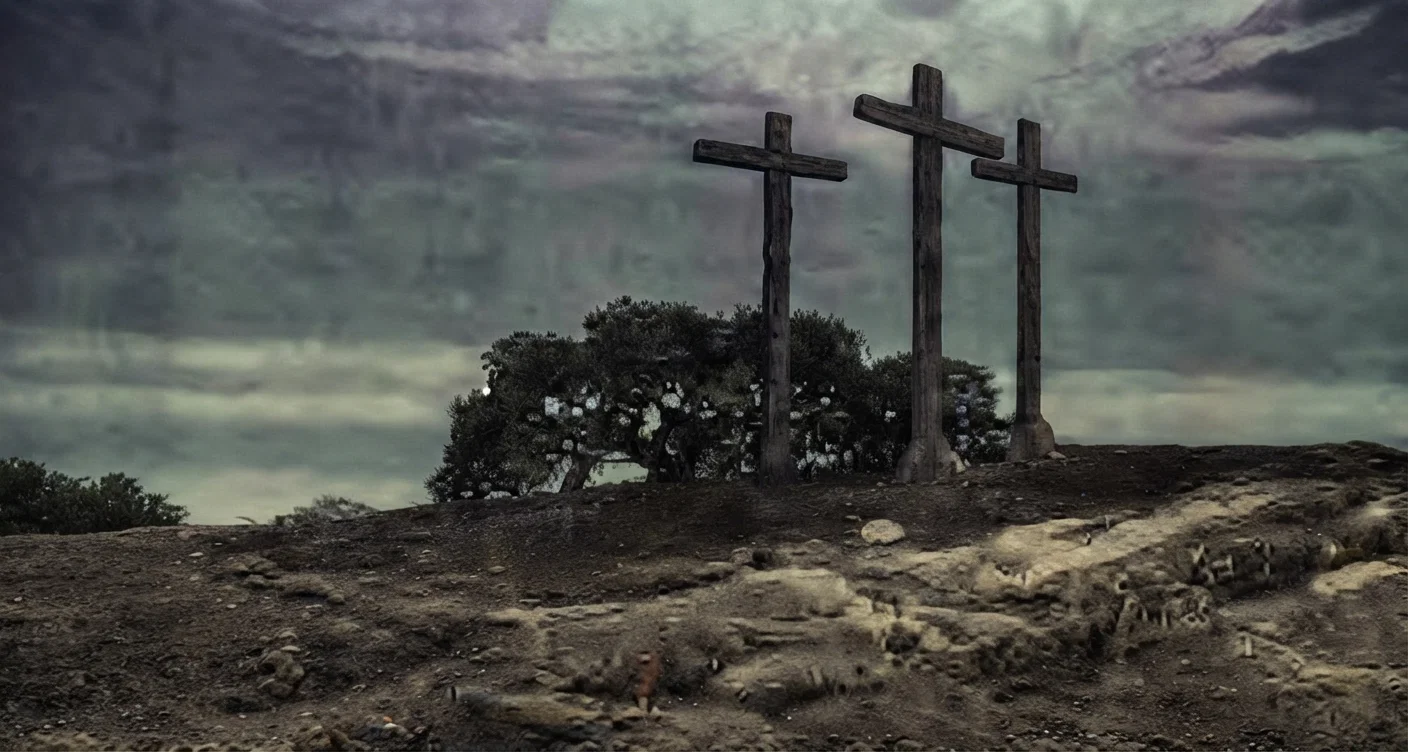
O Calvary, immortalized by death Of Him who as our Maker granted breath To mortals here! Upon the cursed tree, Grief-stricken, with the dreadful agony Of awful wo, the Prince once glorified, Adored by heaven, in ignominy died. Undone, we fall before the majesty Of Heaven's gift, that sinners might be free. Our hearts, amazed, extol the mighty cost The Father gave to justify the lost— The love that finite mind can never know, Which yielded all, His mercy to bestow.
O for a soul imbued with Calvary, Compassionate with tender sympathy, That spurns no cross, nor shuns the darkest hour, When evil hosts are marshaled in their power; Firm by the strength of Christ, the Man who died, Urged by the Spirit of the Glorified, Strong in the love that counts no gift as loss, Blessed by a daily vision of His cross!
WORTHIE HARRIS HOLDEN.

The Coming of Our Lord

He Tells of Signs That Will Precede His Coming—He Also Predicted the Complete Destruction of the Temple in Jerusalem—No One Sign Alone to Be Taken as Conclusive Evidence

By EUGENE W. FARNSWORTH
IN this article, I shall try to give a few Bible reasons which show that the second advent of Christ is near at hand. This doctrine is not the belief of one class or denomination only, but there are a great many of God's people throughout all churches and denominations who believe that "the coming of the Lord draweth nigh."
The fact is, if a man really and sincerely believes that Jesus is coming soon, that great truth will color every plan of his life, and will affect all his actions. The man who thoroughly believes that Christ will come in a little while will be less inclined to build an expensive house, and greatly enlarge his bank-account, than he would if he expected to live here many years.

SOME SIGNS TO PRECEDE HIS COMING

God has made known through His word some of the signs that will precede Christ's second coming. These are described in the twenty-fourth chapter of Matthew, the thirteenth chapter of Mark, and the twenty-first chapter of Luke.
In the last verses of the twenty-third chapter of Matthew, the Saviour ends His discourse this way: "O Jerusalem, Jerusalem, thou that killest the prophets, and stonest them which are sent unto thee, how often would I have gathered thy children together, even as a hen gathereth her chickens under her wings, and ye would not! Behold, your house is left unto you desolate. For I say unto you, Ye shall not see Me henceforth, till ye shall say, Blessed is He that cometh in the name of the Lord." Verses 37-39.
Those were the last words of the Saviour in the temple as a teacher. He spoke a few words when on trial; but as the great Teacher of the people, these were the last words He uttered,—"Your house is left unto you desolate." When He left the temple that day,
He left it forever, and any temple without a Saviour is a desolate place.

THEY ASK A FULLER EXPLANATION

Proceeding to the Mount of Olives, east of Jerusalem and overlooking the city, the disciples came to Jesus, and asked Him to explain more particularly the meaning of His words. "And Jesus said unto them, See ye not all these things? verily I say unto you, There shall not be left here one stone upon another, that shall not be thrown down." Matt. 24:2.
Apparently they thought His explanation harder to be understood than His previous statement. It seemed to them incredible. As they looked at the massive stones that formed the foundation of the temple, it seemed an impossibility for these to be overthrown; so they tried to convince Jesus that He had made a mistake. "And as He sat upon the Mount of Olives, the disciples came unto Him privately, saying, Tell us, when shall these things be? and what shall be the sign of Thy coming, and of the end of the world?" Verse 3.
They really asked two distinct questions: Tell us when the temple and the city shall be overthrown. When will it come to pass that one stone shall not be left upon another? And, further, what shall be the sign of Thy coming, and of the end of the world? One question relates to the destruction of Jerusalem, the other to the destruction of the world at the end of the Christian age.

HE ANSWERED BOTH QUESTIONS

It seems reasonable that both these questions were answered by the Saviour. Christ told them when the city would be overthrown, and He also told them when they might expect the return of their Lord.In answer to their inquiries, in the following verses Christ first took a survey of the whole Christian dispensation, and told them what was to take place in a general way. After that He took up the destruction of Jerusalem, and then the signs of His second coming. "And Jesus answered and said unto them, Take heed that no man deceive you. For many shall come in My name, saying, I am Christ; and shall deceive many." Verses 4, 5.

TWO DOZEN FALSE CHRISTS

Twenty-four persons professed to be the Messiah, within a few years after the crucifixion of Christ. The Saviour saw what would come, when He said, "Let no man deceive you." This prophecy was not confined to the years just after His return to heaven. Since that time, many have claimed that they were the Messiah, and that the second coming of the Lord was seen in them. It would seem that by this means the enemy designs to throw contempt on the idea that the Lord Himself will ever return. He wishes to deceive the people. That is his business. He would turn their minds from the true coming of the Messiah.

WAR, EARTHQUAKE, AND PESTILENCE ALONE ARE NOT SIGNS

"And ye shall hear of wars and rumors of wars: see that ye be not troubled: for all these things must come to pass, but the end is not yet." Verse 6. All through the Christian dispensation, there would be wars and rumors of war. Strife and commotion have abounded, "but the end is not yet." The disciples were not to think, as soon as they heard of war, that it was a sign of Christ's second coming. "The end is not by and by," according to Luke. Notwithstanding war, earthquake, or pestilence, Christians were not to think from these alone that Christ's coming was near at hand.
"For nation shall rise against nation, and kingdom against kingdom: and there shall be famines, and pestilences, and earthquakes, in divers places. All these are the beginning of sorrows. Then shall they deliver you up to be afflicted, and shall kill you: and ye shall be hated of all nations for My name's sake. And then shall many be offended, and shall betray one another, and shall hate one another." Verses 7-10. Not a very encouraging picture! Yet that would be the end of His people down through the ages.

MANY FALSE PROPHETS

"And many false prophets shall rise, and shall deceive many. And because iniquity shall abound, the love of many shall wax cold. But he that shall endure unto the end, the same shall be saved. And this gospel of the kingdom shall be preached in all the world for a witness unto all nations; and then shall the end come." Verses 11-14. In these scriptures we have a general survey, a panoramic picture, of prevailing conditions down to the end of time. Having given a general idea of what we might expect, Christ then took up the first question, concerning the destruction of Jerusalem, and answered that very clearly.
This question will be considered next week.

He Will Come Suddenly

Men Are Looking for Some Great, Decisive Event—The Gospel to Be a Witness in All the World—When the World Is Saying, "Peace and Safety," Sudden Destruction Comes

By H. G. THURSTON
THE prophet Malachi wrote of the coming of our Lord: "Behold, I will send My messenger, and he shall prepare the way before Me: and the Lord, whom ye seek, shall suddenly come to His temple, even the Messenger of the covenant, whom ye delight in: behold, He shall come, saith the Lord of hosts. But who may abide the day of His coming? and who shall stand when He appeareth? for He is like a refiner's fire, and like fullers' soap: and He shall sit as a refiner and purifier of silver: and He shall purify the sons of Levi, and purge them as gold and silver, that they may offer unto the Lord an offering in righteousness. Then shall the offering of Judah and Jerusalem be pleasant unto the Lord, as in the days of old, and as in former years. And I will come near to you to judgment; and I will be a swift witness against the sorcerers, and against the adulterers, and against false swearers, and against those that oppress the hireling in his wages, the widow, and the fatherless, and that turn aside the stranger from his right, and fear not Me, saith the Lord of hosts. For I am the Lord, I change not; therefore ye sons of Jacob are not consumed." Mal. 3: 1-6. If this scripture may be applied to Christ's first advent, it must be applied to His second coming, as in it the time of final judgment and the overthrow of sinners is clearly taught. The proclamation of "the day of vengeance of our God" was not the message due nineteen centuries ago.

NO MORE DEFINITE THAN THIS GENERATION

Of the time when the Lord is to appear, the prophet says He will "suddenly come." The very year of Christ's baptism is revealed in Dan. 8: 14 and 9: 24-27, but nothing more definite than "this generation" is found concerning His second coming.
The mighty power of Pentecost sent the gospel everywhere in a few brief years. Yet in the midst of Heaven's blazing light, men, professing Christ's name, taught "perverse things," which gathered a selfish following (Acts 20: 30) and finally developed the "man of sin" (2 Thess. 2: 1-8). "The son of perdition" exalted himself, claiming power over men's bodies and souls. Twelve hundred and sixty dismal years of oppression and death, written in blood, testify to the efforts of "Antichrist" in binding the consciences of men. During this awful reign, the Reformation began to bring light and relief. Just before 1798, when the "deadly wound" would be laid upon the head of this pretentious power, the sun was darkened, and the moon did "not give her light." Matt. 24: 29. The stars were to fall as a fig-tree casts its green figs during a tempest. Rev. 6: 12, 13. These startling signs appeared May 19, 1780, and November 13, 1833.

BROUGHT TO THE PROPHETIC GENERATION

These events bring us to the last generation. Luke 21: 32. Many and most remarkable tokens of the approaching end are now seen and felt everywhere.
The world's great missionary conference of 1910 uttered words almost prophetic regarding an impending change. The most noted religious authority of England used similar language when speaking of the time when our Lord shall be seen coming.

MESSAGE PROCLAIMING THE GREAT DAY

Following the great star shower of 1833, the message of the approaching "day of vengeance of our God" began to be sounded, and rapidly developed in the advent movement of 1844. Amid scorn, poverty, and bitter opposition, a few people have been praying and laboring for the full consolation of Israel in the literal return of the Glorious One who was slain upon Calvary. This same little people have given more than $17,000,000 in less than ten years to extend "this gospel of the kingdom," which must be preached "for a witness unto all nations."
It is neither stated nor implied in the prophecy, that all nations will accept this gospel of the kingdom. Jesus says it shall be preached for a "witness."

HEARD IN MANY TONGUES

Thousands, by voice and pen, are now teaching this message. In nearly one hundred tongues it is heard, and the whole world is being lightened.
We can now hear the "peace and safety" notes in every civilized land. This popular lullaby of security must be accepted among the "people" (Isa. 2: 2-4) and by "many nations" (Micah 4: 1-7) just as "sudden destruction" comes. 1 Thess. 5: 2, 3.
Were the calamity of an ordinary kind, escape might be made; but the "sudden destruction" leaves no room for escape of deceiver or deceived. The world will be caught in the snare, and deluged in ruin.

"LEST COMING SUDDENLY"

When the Lord spoke of the suddenness of His return, He said, "Lest coming suddenly He find you sleeping." Mark 13: 36. Taken in the light of the entire chapter, and other scriptures, this becomes a positive assertion that Christ will come "suddenly."
Not one of God's plans can be changed. The arrangement as outlined in the Guidebook will be exactly carried out.
Why this plan to close up the gospel work quickly, it is not for us to say; but it is ours to believe and proclaim the great truths that our Lord will come, that we have reached the last years of "this generation," and that His coming will be "sudden and unexpected." Who can know how soon He will say, "It is finished"?

PLANS NEVER EXECUTED

Without doubt even those who are heralding the message of the rapidly approaching end will have many plans, for the extension of the work, that will never be fully carried out. "The Lord knoweth them that are His," and will "suddenly" bring His sealing work to a surprising but successful close. "Be ye also ready."

Religion Depends on the Heart

"The amount of a man's religion does not depend upon the amount of his brains, but on his heart, hands, and legs."
Continue reading: Our Eternal Abode Most Glorious