Your ShelfYour Projects

Signs of the Times, Vol. 42, No. 19.

Called to Be Triumphant

Signs of the Times

May 11, 1915

Pacific Press Publishing Association · Mountain View, California · May 11, 1915

Called to Be Triumphant

Freedom from Sin May Be Attained—Power Provided for the Purpose
Even the Memory of Sin to Be Effaced
By George B. Thompson
(Sermon delivered at Battle Creek, Michigan)
My text is Isa. 43:25: “I, even I, am He that blotteth out thy transgressions for Mine own sake, and will not remember thy sins.”
Here is certainly a most precious promise. The Lord tells us, He is: “I . . . am He that blotteth out thy transgressions for Mine own sake, and will not remember thy sins.”
If you should go to a jeweler to buy some precious stones, he would very likely lay down a dark cloth to put them on, for two reasons—to protect them, and to give a brilliancy and luster to the gems. That is about the way this promise of God stands out when you notice the verses preceding it: “This people have I formed for Myself; they shall show forth My praise. But thou hast not called upon Me, O Jacob; but thou hast been weary of Me, O Israel. Thou hast not brought Me the small cattle; . . . neither hast thou honored Me with the sacrifices. I have not caused thee to serve with an offering, nor wearied thee with incense. Thou hast bought Me no sweet cane with money, neither hast thou filled Me with the fat of thy sacrifices: but thou hast made Me to serve with thy sins, thou hast wearied Me with thine iniquities.”
That is a dark picture, is it not? Men were created for the praise and glory of God; yet they brought no sacrifices, but made God weary with their sins, and did everything they ought not to have done.

All to Be Blotted

Then He puts in this glorious promise: “I, even I, am He that blotteth out thy transgressions for Mine own sake, and will not remember thy sins.”
I am thankful for this promise. Notwithstanding our mistakes, the great God stands ready to forgive and blot out our transgressions, and to remember them no more.
Sin is an awful thing, and our greatest need is to be delivered from its bondage. There is no language we can use that can describe sin’s hideousness or all the evil it has accomplished in this world. All the sorrow, wretchedness, misery, woe, bloodshed, and heartaches, have been caused by sin. It is the sexton that digs your grave and mine. One writer has said that sin prefaces the Ten Commandments with the words, “I am the Lord thy God.” It sits as a king. It wants to rule and control us all. Sin reached up into heaven, and took the Son of God from the throne of universal power, and dragged Him down to this earth, persecuted Him, and hanged Him on a tree.

Strange That We Should Want It

We ought to cease anything like that. Is it not strange that we should in any way hanker after it and foster it in our hearts? What we need is not simply to refrain from sin, but to have a hatred of it. The great trouble is, we do not hate sin as we should.
That was the secret of Christ’s righteousness. He loved righteousness, and hated iniquity. The apostle Paul admonishes us to “abhor that which is evil.” And we must reach the point in our experience that, no matter how controlling a sin may be, we must part with it. As the Saviour expressed it in the Sermon on the Mount: “If thy right hand offend thee, cut it off.” “If thy right eye offend thee, pluck it out.” I do not understand that this means to cut off a limb, or pluck out an eye, but rather, that if anything which is as closely related to us as an eye or a limb, causes us to sin, we must separate from it.

Your Sins Will Find You Out

We cannot cover up sin all the time. We may for a while, but sometime it will come to light. You remember the text in Num. 32:23, which says, “Behold, ye have sinned against the Lord; and be sure your sin will find you out.” Sometime sin will find out the sinner. It comes back and haunts him. It is a terrible thing.
The wise man says that “sin is a reproach to any people.” Nothing to be proud of, is it? How many have had to hang their heads because of the consciousness of sin! Many have been made outcasts and disgraced by sin.

The Remedy Provided

But I am glad there is a remedy for this awful thing. I am glad we can apply the remedy. That is what the text says. There is a way in which it can be forever blotted out, and separatedfrom us. We should pray that the Lord will create in us all a hatred for sin, that every dark corner of the heart may be searched, and that the Lord will turn on the light in those corners of the soul where the cobwebs of sin are lurking.
In order to get rid of sin, we must repent of it. One of the great signs of these last days, is the fact that the conviction of sin is not in the world as formerly. Men do wrong, and do not seem to care particularly.
The Laodicean message speaks of the lukewarm, self-satisfied position of the church. There are many people in that condition. They are well satisfied. They do not think they need anything especially. They have light, and pity others who they think are not well off spiritually.
What is needed? The Lord says: “As many as I love, I rebuke and chasten: be zealous therefore, and repent.” Before we can be delivered from this condition of things in our own hearts, there must be genuine repentance for sin. We cannot smooth it over. We must thoroughly repent.

Repentance Must Precede

Take another text, Acts 3:19: “Repent ye therefore, and be converted, that your sins may be blotted out, when the times of refreshing shall come from the presence of the Lord.” Repentance precedes conversion. Before we can be really born again, there must be a repenting of sin. There are many similar texts in the Scriptures. You probably have heard about the old minister who went before his church, and preached on repentance. The next week, he preached on repentance; and he continued to preach on repentance. Finally an old deacon came to him and asked how long he intended to preach on that subject. He said, “Until you all repent.”

Fell, but Rose Again

Peter and Judas both were apostles. Both were chosen by the Lord, and called into service, and both of them sinned. Peter, in a moment of weakness, denied his Lord, and cursed and swore. But we read that “he went out, and wept bitterly.” There was genuine repentance with Peter.
In the agony of his soul, he repented of his sins. And the Lord forgave him. After Jesus had arisen, the angel that appeared to the women at His tomb, said to them, “Tell His disciples and Peter.” Because he repented, Peter became one of the greatest preachers the Christian church has ever had.

Failed Through Lack of Repentance

Judas sinned. He had in him an evil and covetous disposition. He might have gained the victory over it, however. By association with Christ, he might have gained complete mastery of that wicked thing. But he did not. He allowed himself to go on and on, cherishing his sin. He kept it in his bosom, he hugged it to his heart. Finally it ruined him. And we find him going out from the sacramental supper, with the taste of the wine still in his mouth, telling the high priest where Christ could be found. He sold his Lord for a few dollars. Judas is not the only believer that has sold his Lord for money.
He went to Him in the garden, and when the Saviour’s face was stained with blood sweat, he gave Him a traitor kiss. Then a little while after, filled with remorse, he threw down the money, and said, “I have betrayed innocent blood.” But he had no genuine repentance for sin. He went out, got a rope, and hanged himself.
I am glad the text holds out hope for us. We all have a dark record; but if we repent, the blood of Jesus Christ will cleanse us from all sin.

Calls Us to Stop It

It is not only necessary to repent of sin, but God calls upon us as Christians to stop sinning. Do you believe that? Are we to join the church and then taper off a little, and not be so bad as we used to be?
Sometimes we have rather settled down to this: “I am born with weaknesses, I have cultivated certain characteristics, and I cannot quit them. The Lord will have to save me sin and all, if I am ever saved.” Let me read a text here in John 5:14. It speaks of an impotent man who was healed by the Lord: “Afterward Jesus findeth him in the temple, and said unto him, Behold, thou art made whole: sin no more, lest a worse thing come unto thee.” What did the Saviour mean when He said to the man, “Sin no more”? Did He mean to “taper off a little,” or to stop sinning? When He said, “Sin no more,” did He require of that man something that was impossible?

Go, and Sin No More

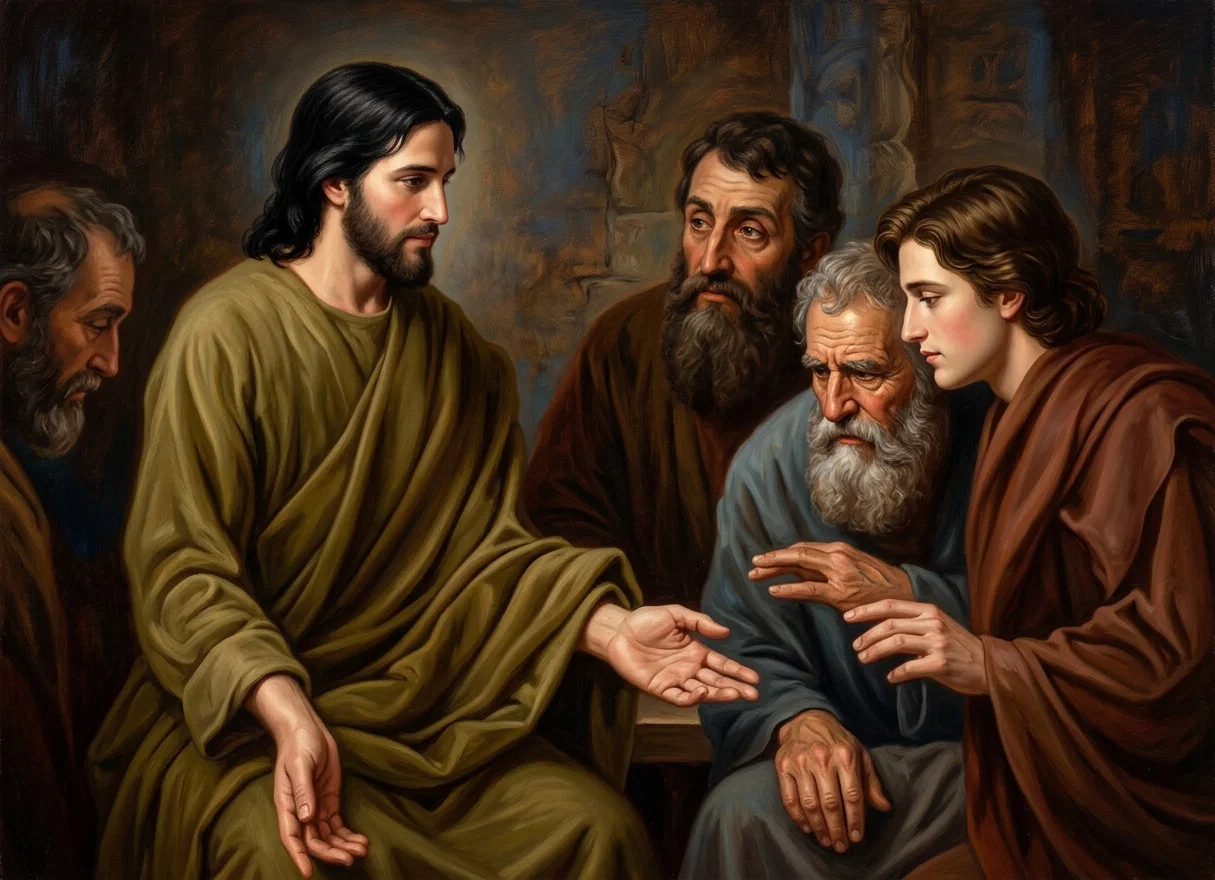
Let us take another text, John 8:4. A woman was brought to Jesus for violating the seventh commandment. You know the history. The Pharisees were there to accuse her. After Christ had written their sins in the sand, and they had departed conscience-stricken, He turned to the woman, and said: “Where are those thine accusers? hath no man condemned thee?” She said, “No man, Lord.” Then He said to her, “Neither do I condemn thee: go, and sin no more.”
What did the Saviour mean when He told the woman to “sin no more”? If language means anything, He told that woman to stop that sin, did He not? What sin is there that we can excuse and say we cannot overcome? Surely we must come to the place where we will stop excusing sin.
Another text, 1 John 2:1: “My little children, these things write I unto you, that ye sin not.” What was the use of saying that, if it was impossible to stop sinning?

Power of the New Birth

1 John 3:6: “Whosoever abideth in Him sinneth not.” The man that abides in Christ does not sin. “Whosoever is born of God doth not commit sin,” Verse 9. So if a man has actually been born of the Holy Ghost, he stops sinning, “for His seed remaineth in him: and he cannot sin, because he is born of God.” I sometimes fear we are afraid to read those texts.
Let us read another, 1 John 5:18: “We know that whosoever is born of God sinneth not; but he that is begotten of God keepeth himself, and that wicked one toucheth him not.”

Could Not, but He Did

It is like the man mentioned in the eleventh chapter of Luke who was asleep, and a friend came at midnight and asked him for breadbecause of a friend that had come in late. The man said he could not arise, but he did. So a man who is born of God cannot sin, and yet he can. You are a Christian. Let a man come to you to-night and say, “I have the combination of a safe down on Main Street; let us go down and help ourselves.” What would you say? Doubtless you would say, “I am born of God; I cannot go.” I understand it is like that with every sin. I am talking about sins that you know, not sins that you are in ignorance of. If I understand the Bible aright, it says that we are to stop doing the things we know are wrong.
You bring the gospel of Jesus Christ to a man who has been a drunkard for forty years, and he becomes converted. Is that possible?—Surely; men like this have been soundly converted. He begins to keep the Sabbath, and he wants to join the church. Will you take in a man like that—a man that is soundly converted?—O, yes. But what will you tell him to do? His nerves are all wrecked with forty years of dissipation. Would you say, “You must taper off drinking, and not drink so much”?—No; you would say, “You must stop drinking now.” When?—“Right now—not take another drink,” you would say; “for the Lord is able to deliver you right now.” Brethren, I am glad that God can deliver an old toper from that awful condition, so that he will not need to go on drinking.

His Drink and My Temper

But if we require that of an old toper, you and I ought to stop sinning. It is not right to ask him to stop drinking, and then say: “I have a bad temper. I have tried to overcome it, but I can’t.” You ask the brethren to pray for you that you may have the victory over it. But why do we not quit losing our tempers? Do you think there is power enough in God to deliver a man from a bad temper? People that require an old toper to quit drinking, ought to have deliverance from their own sins.

Delivered from Morphine

For example, here is a morphine fiend. His system cries out for the terrible drug. He must have deliverance. And I have seen such persons delivered. I have seen those souls go to praying; and God has delivered them, so that they never took another morphine tablet or hypodermic again. If God can do that, He can deliver us from everything that is wrong.

“I Cannot Lose My Temper”

I do not believe in a Christian experience where we go on year after year conquered by the same old sins. I believe God wants to set us free from these things—impure thoughts, and all other wrong things. The Lord Jesus Christ can set us free. And I believe that by the grace of God, we ought to quit doing what is wrong. That is what I understand these texts to mean.
Satan comes, and I am tempted to lose my temper. I am tempted to become angry. But I say, “I cannot lose my temper, for I am born of God.” The trouble is, we excuse ourselves, and say, “I cannot do any better, and the Lord will have to save meas I am.” Brethren, He will not save us as we are, but He will deliver us from these things.

All Heaven’s Power to Be Had

What is our hope of salvation? Sometimes we look ahead, and hope that sometime in the future we will be delivered from our sins. But there will never be any more power to deliver a man from his sins than is at his command to-day. All the power of heaven is at our command now. I would to God we might take hold of it by faith, and believe the Lord can deliver us from the things that curse our lives.
The seventh chapter of Romans tells the story of the slave to sin: “What I would, that do I not; but what I hate, that I do.” Why?—Because we are brought into subjection by a person stronger than we are. I believe we ought, by faith in God, to lay hold of the power that will deliver us from these things, so that we will no longer be slaves. Abraham’s children are free. The Saviour is a complete Redeemer.

Deliverance Right Now

It is not a question of how many times we have been conquered by sin. There is salvation to-day for every one. We ought to take our bad tempers to the Lord, and say, “Lord, I will have deliverance from that thing,” and then stop losing our temper. Do you not think the Lord could deliver a man now from his bad temper, and from impatience, and from hatred he has carried around with him? O, yes, He can deliver us.
So long as we think there is no deliverance, so long as we think that we cannot gain the victory, just so long we never will. But when our faith lays hold upon the promise of God, when we believe that He has promised deliverance from evil habits, from hard-heartedness, from hasty temper, from covetousness,—when we believe that, there is hope that we shall gain the victory.

Blots Out and Forgets

It is the hand of God that blots out the sin. The hand that recorded the sin in the books of heaven is the hand that blots it out. The hand that wrote the Ten Commandments is the hand that blots out our sins. The hand that upholds the starry heavens is the hand that blots out our iniquities.
God says, “For Mine own sake, will I do it.” God is on trial. When the records are looked over at last, if it could be seen that a single sin that was confessed was not forgiven, the Lord would stand condemned. So He blots out sin for His own sake. And then He says He blots it out of His memory. He will remember our sins no more.
I often hear people say, “Yes, I forgive you, but I can’t forget.” That is no forgiveness at all. God forgives, and He forgets. He blots our sins out of His memory. He remembers them no more. I am glad to know that the Lord can look on us and forget that we are sinners; for He looks on us through Christ’s righteousness, and forgets everything that is wrong in us.
If we will but repent of our sins, the blood of the Son of God will forgive and cleanse them all. The blessed Lord will forgive and forget all about them. Then He will strengthen us and help us. “I will uphold thee with the right hand of My righteousness.” This is righteousness by faith, is it not—just laying hold of God’s promise? It is by faith that we receive all these great and precious promises.

It Was Not the Hands

I heard of a man whose clock would not keep good time, and so he took the two hands to the jeweler for repair. But what the clock needed was cleansing on the inside and have our sins all washed away by the blood of Christ.
Let us lay hold anew upon the precious promises of God, and ask Him for deliverance, and put away, by confession, everything in our lives that is wrong, and live a triumphant Christian experience.
© Underwood & Underwood, N. Y.

God Forgives and Forgets

“God says, ‘For Mine own sake will I do it.’ God is on trial. When the records are looked over at last, if it could be seen that a single sin that was confessed was not forgiven, the Lord would stand condemned. So He blots out sin for His own sake. And then He says He blots it out of His memory. He will remember our sins no more.
“I often hear people say, ‘Yes, I forgive you, but I can’t forget.’ That is no forgiveness at all. God forgives, and He forgets. He blots our sins out of His memory. He remembers them no more. I am glad to know that the Lord can look on us and forget that we are sinners; for He looks on us through Christ’s righteousness, and forgets everything that is wrong in us.”

The Boy's Prayer

By Roderick S. Owen
Above the side of his little bed, I see the top of his curly head. He's kneeling there for his evening prayer To the Father above, whose name is Love. The prayer is broken, the words are few, Seem scarcely begun till the prayer is through. Then into his bed, with a bounding leap, And with arms outstretched, and my boy's asleep. And I asked myself, as I wondering sat, “Will the God of heaven hear a prayer like that?”
So I silently walked to the side of his bed, And I lovingly looked at that curly head, Sleeping there after his prayer, Without one thought of care; And to myself I said:
“His prayer did not end at the side of his bed, For the confiding sleep embracing him there Is the sweet aftermath of his short, terse prayer. He meant what he said, and he said what he meant, And his heart was filled with sweet content.”
Then I thought of myself as I kneel to pray By the side of my bed at the close of the day— How the lack of faith with my own request Makes me go to bed with a sad unrest, And toss and turn the long hours through As the day pass by in the night's review. O, the things I did or left undone Since the early light of the morning sun! O, the choices I made, in having my way— How they crossed and recrossed the right path of the day!
Then the future comes trooping before me to keep My spirit from grasping my God-given sleep. While still I am wondering, the sweet words are given, “Except as a child, ye cannot reach heaven.” Then, looking to God, I offer one prayer: “Lord, help me to pray like my boy sleeping there.”

HOW SHALL WE FORGIVE?

Himself Forgiven, but Refused Others—Seeks to Develop the Spirit of Forgiveness
Wrongdoing and Worthlessness to Be Considered—God’s Compassion and Man’s Hard-Heartedness
By Mrs. E. G. White
Peter had come to Christ with the question, “How oft shall my brother sin against me, and I forgive him? till seven times?” The rabbis limited the exercise of forgiveness to three offenses. Peter, carrying out, as he supposed, the teaching of Christ, thought to extend it to seven, the number signifying perfection. But Christ taught that we are never to become weary of forgiving. Not, “Until seven times,” He said, “but, Until seventy times seven.” Matt. 18:21, 22.

The True Ground of Forgiveness

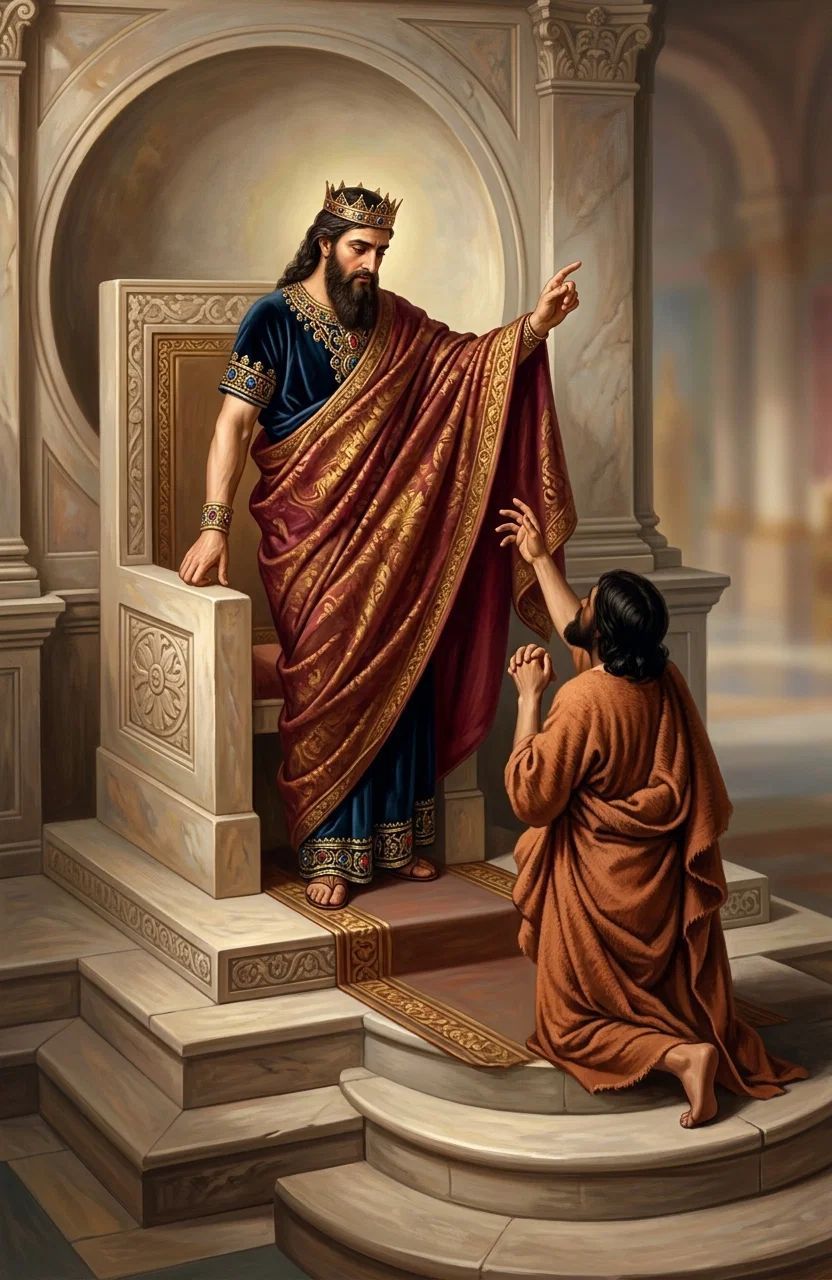
Then He showed the true ground upon which forgiveness is to be granted, and the danger of cherishing an unforgiving spirit. In a parable, He told of a king’s dealing with the officers who administered the affairs of his government. Some of these officers were in receipt of vast sums of money belonging to the state. As the king investigated their administration of this trust, there was brought before him one man whose account showed a debt to his lord for the immense sum of ten thousand talents. He had nothing to pay, and according to the custom, the king ordered him to be sold, with all he had, that payment might be made. But the terrified man fell at his feet and besought him, saying, “Have patience with me, and I will pay thee all.” Then the lord of that servant was moved with compassion, and loosed him, and forgave him the debt.
“But the same servant went out, and found one of his fellow servants, which owed him an hundred pence: and he laid hands on him, and took him by the throat, saying, Pay me that thou owest. And his fellow servant fell down at his feet, and besought him, saying, Have patience with me, and I will pay thee all. And he would not: but went and cast him into prison, till he should pay the debt. So when his fellow servants saw what was done, they were very sorry, and came and told unto their lord all that was done. Then his lord, after that he had called him, said unto him, O thou wicked servant, I forgave thee all that debt, because thou desiredst me: shouldest not thou also have had compassion on thy fellow servant, even as I had pity on thee? And his lord was wroth, and delivered him to the tormentors, till he should pay all that was due unto him.” Matt. 18:23–35.
“Then the lord of that servant was moved with compassion, and loosed him, and forgave him the debt.”

Keep the Central Theme in Mind

This parable presents details which are needed for the filling out of the picture, but which have no counterpart in its spiritual significance. The attention should not be diverted to them. Certain great truths are illustrated, and to these our thought should be given.
The pardon granted by this king represents a divine forgiveness of all sin. Christ is represented by the king, who, moved with compassion, forgave the debt of his servant. Man was under the condemnation of the broken law. He could not save himself, and for this reason Christ came to this world, clothed His divinity with humanity, and gave His life, the just for the unjust. He gave Himself for our sins, and to every soul He freely offers the blood-bought pardon. “With the Lord there is mercy, and with Him is plenteous redemption.” Ps. 130:7.
Here is the ground upon which we should exercise compassion toward our fellow sinners. “If God so loved us, we ought also to love one another.” “Freely ye have received,” Christ says, “freely give.” 1 John 4:11; Matt. 10:8.

“Have Patience with Me”

In the parable, when the debtor pleaded for delay, with the promise, “Have patience with me, and I will pay thee all,” the sentence was revoked. The whole debt was canceled. And he was soon given an opportunity to follow the example of the master who had forgiven him. Going out, he met a fellow servant who owed him a small sum. He had been forgiven ten thousand talents; the debtor owed him a hundred pence.
But he who had been so mercifully treated, dealt with his fellow laborer in an altogether different manner. His debtor made an appeal similar to that which he himself had made to the king, but without a similar result. He who had so recently been forgiven was not tender-hearted and pitiful. The mercy shown him he did not exercise in dealing with his fellow servant. He heeded not the request to be patient. The small sum owed to him was all that the ungrateful servant would keep in mind. He demanded all that he thought his due, and carried into effect a sentence similar to that which had been so graciously revoked for him.

No True Sense of the Debt

How many are to-day manifesting the same spirit! When the debtor pleaded with his lord for mercy, he had no true sense of the greatness of his debt. He did not realize his helplessness. He hoped to deliver himself. “Have patience with me,” he said, “and I will pay thee all.” So there are many who hope by their own works to merit God’s favor. They do not realize their helplessness. They do not accept the grace of God as a free gift, but are trying to build themselves up in self-righteousness. Their own hearts are not broken and humbled on account of sin, and they are exacting and unforgiving toward others. Their own sins against God, compared with their brothers’ sins against them, are as ten thousand talents to one hundred pence,—nearly one million to one; yet they dare to be unforgiving.
In the parable the lord summoned the unmerciful debtor, and “said unto him, O thou wicked servant, I forgave thee all that debt, because thou desiredst me: shouldest not thou also have had compassion on thy fellow servant, even as I had pity on thee? And his lord was wroth, and delivered him to the tormentors, till he should pay all that was due unto him.” “So likewise,” said Jesus, “shall My heavenly Father do also unto you, if ye from your hearts forgive not every one his brother their trespasses.” He who refuses to forgive, is thereby casting away his own hope of pardon.

Just Obligation Must Be Recognized

But the teaching of this parable should not be misapplied. God’s forgiveness toward us lessens in no wise our duty to obey Him. So the spirit of forgiveness toward our fellow men does not lessen the claim of just obligation.
In the prayer which Christ taught His disciples He said, “Forgive us our debts, as we forgive our debtors.” Matt. 6:12. Bythis He did not mean that in order to be forgiven our sins we must not require our just dues from our debtors. If they cannot pay, even though this may be the result of unwise management, they are not to be cast into prison, oppressed, or even treated harshly; but the parable does not teach us to encourage indolence. The word of God declares that if a man will not work, neither shall he eat. 2 Thess. 3:10.

Industry Must Not Support Idleness

The Lord does not require the hard-working man to support others in idleness. With many there is a waste of time, a lack of effort, which brings to poverty and want. If these faults are not corrected by those who indulge them, all that might be done in their behalf would be like putting treasure into a bag with holes. Yet there is an unavoidable poverty, and we are to manifest tenderness and compassion toward those who are unfortunate. We should treat others just as we ourselves, in like circumstances, would wish to be treated.
Too often when wrongs are committed again and again, and the wrongdoer confesses his fault, the injured one becomes weary, and thinks he has forgiven quite enough. But the Saviour has plainly told us how to deal with the erring: “If thy brother trespass against thee, rebuke him; and if he repent, forgive him.” Luke 17:3. Do not hold him off as unworthy of your confidence. Consider “thyself, lest thou also be tempted.” Gal. 6:1.

Not Judges of Humility

If your brethren err, you are to forgive them. When they come to you with confession, you should not say: “I do not think they are humble enough. I do not think they feel their confession.” What right have you to judge them, as if you could read the heart? The word of God says: “If he repent, forgive him. And if he trespass against thee seven times in a day, and seven times in a day turn again to thee, saying, I repent; thou shalt forgive him.” Luke 17:3. And not only seven times, but seventy times seven,—just as often as God forgives you.
We ourselves owe everything to God’s free grace. Grace in the covenant ordained our adoption. Grace in the Saviour effected our redemption, our regeneration, and our exaltation to heirship with Christ. Let this grace be revealed to others.

God’s Compassion and Man’s Hard-Heartedness

But the great lesson of the parable lies in the contrast between God’s compassion and man’s hard-heartedness; in the fact that God’s forgiving mercy is to be the measure of our own. “Shouldest not thou also have had compassion on thy fellow servant, even as I had pity on thee?”
We are not forgiven because we forgive, but as we forgive. The ground of all forgiveness is found in the unmerited love of God; but by our attitude toward others, we show whether we have made that love our own. Wherefore Christ says, “With what judgment ye judge, ye shall be judged: and with what measure ye mete, it shall be measured to you again.” Matt. 7:2.
Continue reading: A Definite Sign and the Climax