Signs of the Times, Vol. 41, No. 27.

The Nations Arming for War

Signs of the Times

Jul 14, 1914

Pacific Press Publishing Association · Mountain View, California · Jul 14, 1914

The Nations Arming for War
Vast Sums Expended in Preparation to Kill Men—New Countries like Australia Taxed to the Limit
What Does It Mean?
By JOHN E. FULTON
Special Australian Correspondent
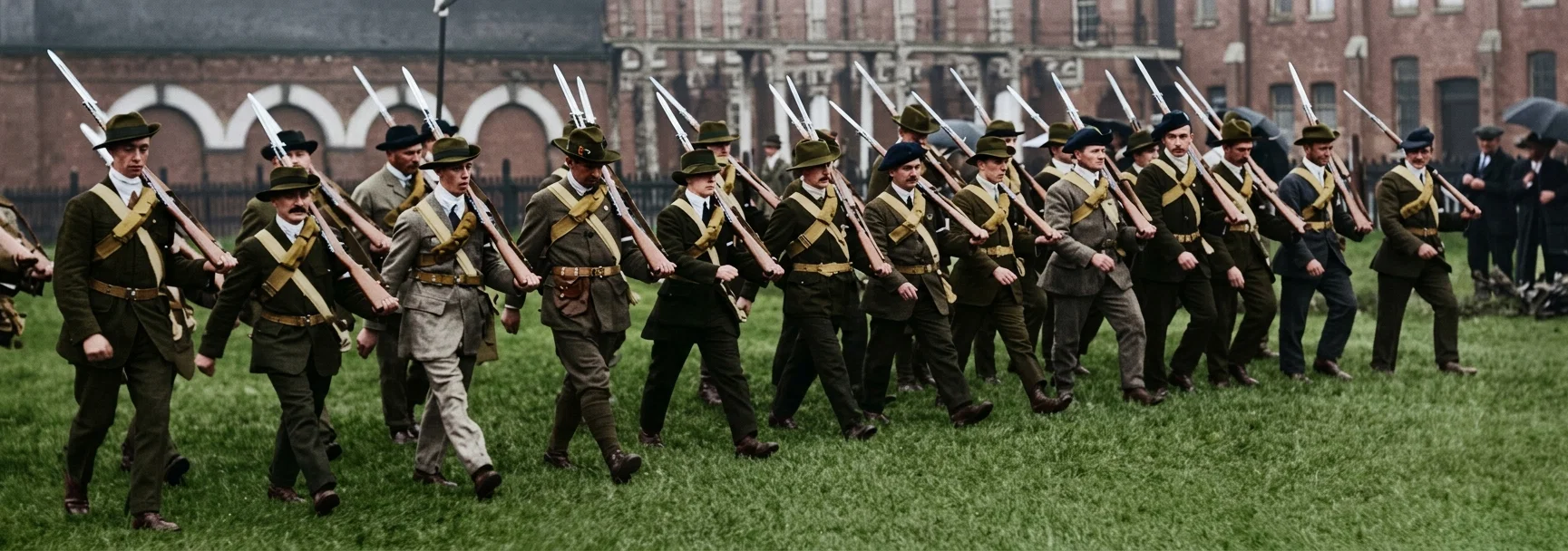
LONDON ULSTER VOLUNTEER CORPS Photo by Paul Thompson

“WITHOUT ANY TANGIBLE REASON”

THE war spirit is in the air. It is born and bred in the race. The schoolboy drills, commands, and leads forth to an imaginary onslaught an imaginary army, or plays with a navy of rival toy Dreadnoughts. The military spirit is thus confirmed.
The world is a vast army camp. The sea bristles with powerful navies. The air is filling with airships for war purposes. Millions of trained warriors are waiting for the summons to battle. “Wars and rumors of war” is the Scriptural phrase descriptive of the days in which we live—“men’s hearts failing them for fear, and for looking after those things which are coming on the earth.”
Statesmen view with apprehension the strained relations of the great nations of the day and their warlike preparations. Lord Roseberry, in a speech on the military situation in Europe, said: “Without any tangible reason we see the nations preparing new armaments. They can not arm any more men on the land, so they have to seek new armaments on the sea, piling up these enormous preparations, as if for some great Armageddon.”
And here in young Australia, far removed from other nations of the Old and the New World, we are not to be out of fashion in respect to militarism. A military defense scheme has been adopted, which even at this early stage is costing nearly $30,000,000 annually, and Australia has scarcely a population of 4,500,000.
Says the Britannica Year Book for 1913: “The cost of this great naval and military preparation is shown in the growth of the Australian defense votes. In 1905-6 the commonwealth devoted £970,345 to defense, in 1906-7 £1,035,795, in 1907-8 £1,334,744, in 1908-9 £1,050,590, 1909-10 £1,534,881, in 1910-11 £3,008,705. The estimates for 1911-12 provide for an expenditure of £4,775,136.” This is over five dollars per capita, more proportionally than is expended by Germany on her army and navy.
Says the editor of the Australian Review of Reviews: “Next year there will be a deficit of four or five million pounds to meet. Under these circumstances, is Australia justified in permitting this huge additional expenditure beyond what she originally bargained for? Ought she, in the attempt to secure 80,000 trained men demanded by the Kitchener program, to cripple herself by paying more per head on armaments than any other country inthe world? Every unprejudiced man can not but come to the conclusion that she ought to cut her coat according to her cloth.”

CHILD CONSCRIPTION

ONE HUNDRED YEARS OF PEACE
And not only so, but child conscription has been adopted in this new country. Boys at a tender age are snatched from their home and cast into military camps to learn the art of killing men. Certainly the spirit of the age is not foreign to Australia.
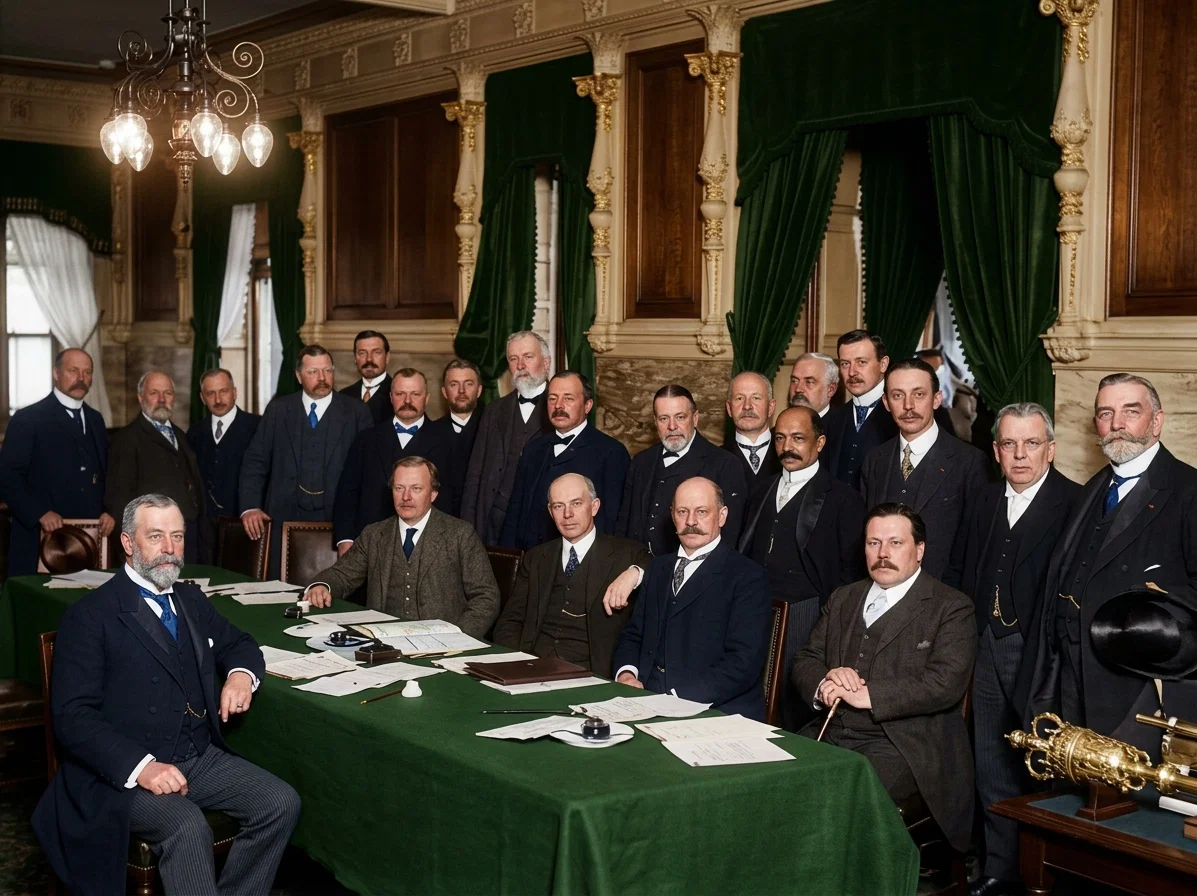
What an awful outlook! Mad preparations for Armageddon, and yet men are preaching peace, when men will learn war no more! But what follows? A limitation of armaments, a conversion of “swords into pruning-hooks,” and a millennium of peace? Far from it. Peace conferences have been frequent, but it must be confessed that they have not been prolific in results tending to peaceful relations. Instead, we have called to us records of wars and of warlike preparations. “Peace congresses” and “limitations of armaments” seem to be but expressions to conjure with. While men talk of peace, the actions belie their utterances.

“PEACE AND SAFETY”

Says the Scripture, “For when they shall say, Peace and safety; then sudden destruction cometh upon them, as travail upon a woman with child; and they shall not escape.” 1 Thess. 5:3. And says the prophet: “I am pained at my very heart; my heart maketh a noise in me; I can not hold my peace, because thou hast heard, O my soul, the sound of the trumpet, the alarm of war. Destruction upon destruction is cried; for the whole land is spoiled.” Jer. 4:19, 20.

NATIONAL AND RACE FEELING NEVER STRONGER

From the Literary Digest we take the following pertinent paragraphs:
“Never was national and racial feeling stronger upon the earth than it is now. Never was preparation for war so tremendous and so sustained. Never was striking power so swift and so terribly formidable. What is manifest now is that the Anglo-Saxon world, with all its appurtenant provinces and states, is in the most direct danger of overthrow final and complete, owing to the decay of its military virtue, and of the noble qualities upon which all military virtue is built. . . .
“The shadow of conflict and of displacement greater than that which mankind has known since Attila and his Huns were stayed at Chalons is visibly impending over the world: Almost can the ear of imagination hear the gathering of the legions for the fiery trial of peoples, a sound vast as the trumpet of the Lord of hosts.”
With these words agree the prophecy of Isaiah: “The noise of a multitude in the mountains, like as of a great people; a tumultuous noise of the kingdoms of nations gathered together; the Lord of hosts mustereth the host of the battle. They come from a far country, from the end of heaven, even the Lord, and the weapons of His indignation, to destroy the whole land. Howl ye; for the day of the Lord is at hand; it shall come as a destruction from the Almighty.” Isa. 13:4-6.
The revelator, referring to the last days, says, “The nations are angry.” This is the truth. Greed is universal with the nations, and all are jealous lest some advantage be gained by one above another. Some have old scores to settle, and are arming to the teeth, ready for battle.

THREE FOURTHS GOES FOR WAR

What immense sums are expended for war purposes! Fully seventy-five per cent of all revenues of the leading nations goes for armies and navies. Napoleon fought at Waterloo with about 75,000 men, while to-day the five continental powers have a standing army of about 1,000,000 men each. The smaller nations have armies proportionately large, and their revenues are just as largely used for war preparation.
“Let the weak say, I am strong,” says the prophet Joel, in speaking of the last days. How the world has been taken by surprise by the warlike preparations of Japan! Only a few years ago she was unknown as a military power, was “weak.” To-day she is to be reckoned with.

THE YELLOW PERIL

Under the influence and tutelage of Japan, China is making wonderful strides as a military power. And considering the vast millions composing the yellow races, what a menace to Europe it must be for these nations to be thoroughly armed! Well may the statesmen speak of the “yellow peril.”
The rapidly occurring events of current history fulfil the prediction made twenty-seven centuries ago by the prophet Joel: “Proclaim ye this among the nations; prepare war; stir up the mighty men; let all the men of war draw near, let them come up. . . . Let the nations bestir themselves, and come up to the Valley of Jehoshaphat; for there will I sit to judge all the nations round about. . . . Multitudes, multitudes in the valley of decision! for the day of Jehovah is near in the valley of decision.” Joel 3:9, 12, 14, A. R. V.

That Blessed Hope

THE hope of Jesus’ coming has cheered the hearts of God’s people since the days of the prophets. These seers of old looked forward to the glorious dawning that is now so soon to break upon the world, and they have shed upon the pathway of God’s people in every age the light in their messages concerning this greatest of all events.
This accumulated light from the cheering words of the prophets is filling the earth like a flood, and the day-star of hope has risen in full strength in the hearts of thousands of waiting believers. Soon the light of eternal day will be blended with the full light of the gospel of the kingdom, and the darkness that has so long wrapped the earth like a shroud will be forever dispelled.
The coming of our Lord is a “blessed hope” not for the reason merely that we expect then to enter into a life that will never end, and receive a crown of fadeless glory, and that title to a home in Abraham’s estate will be given us; but, as the apostle has expressed it, we shall see Him “who gave Himself for us.” Titus 2:13, 14.
May our vision of His great love be more and more extended, until the constraint to hasten His appearing by doing the work which still remains has full control of our lives.
Francis M. Burg.

A Difference for All Eternity

HOW true and yet how little appreciated are the words of James Freeman Clark, “It may make a difference through all eternity whether I do right or wrong to-day”!
Something little in man’s estimation, may turn the scales of God’s judgment in favor of or against even a professed Christian. In God’s view, however, nothing is trivial. Everything is of eternal consequence. Let us not deceive ourselves by thinking or saying that God will adopt our views of His justice. “Judgment also will I lay to the line, and righteousness to the plummet.”
J. W. Rich.

Threat of Church Federation Tendencies

Thirty Churches Now Not So Powerful as One Then — They Are Surrendering Principle — Would Seek to Restrain Competition and Become a Monopoly — Will They Call on the State? — Were These Conditions Foretold?
By B. G. WILKINSON, PH. D.
“It was during the epoch when there were sects and heresies that Christianity made the conquest of the world.” — The Hon. Camille Pelletan, French statesman.
In the past articles, we have considered the purposes of church federation, and also its methods. We have inquired into the purposes of this new movement, this Federated Council of the Churches of Christ in North America, to see whether the objects of the organization are good or evil. Unquestionably, the majority of them sound good. Further, we have inquired into its methods, to see whether they are practical or impractical; because the declared purposes of a person or of an organization might be ideal in the highest degree, yet the methods adopted for carrying out these ideals might not only frustrate them, but produce the opposite results.

What Are the Tendencies of Federation?
We purpose, in the present article, to inquire into the tendencies of church federation; for we might find that while it was apparently good, yet the very first manifestations of its activities would reveal to us hitherto unsuspected undercurrents. And these undercurrents might be such as to lead us at once to see that the whole tendency of the federation, notwithstanding its declared purposes and methods, would be unfortunate to all concerned.
Moreover, we are not seeking to treat the subject of church federation simply from an academic standpoint. We have within our midst great combinations and organizations, such as the labor-unions, political parties, corporations of wealth, and the great Catholic Church. Experiences in history have shown how much these can mean to mankind for weal or woe. And now in these last days we might as well get the prophetic bearings of this new organization by a candid and careful investigation.
© by Harris and Ewing
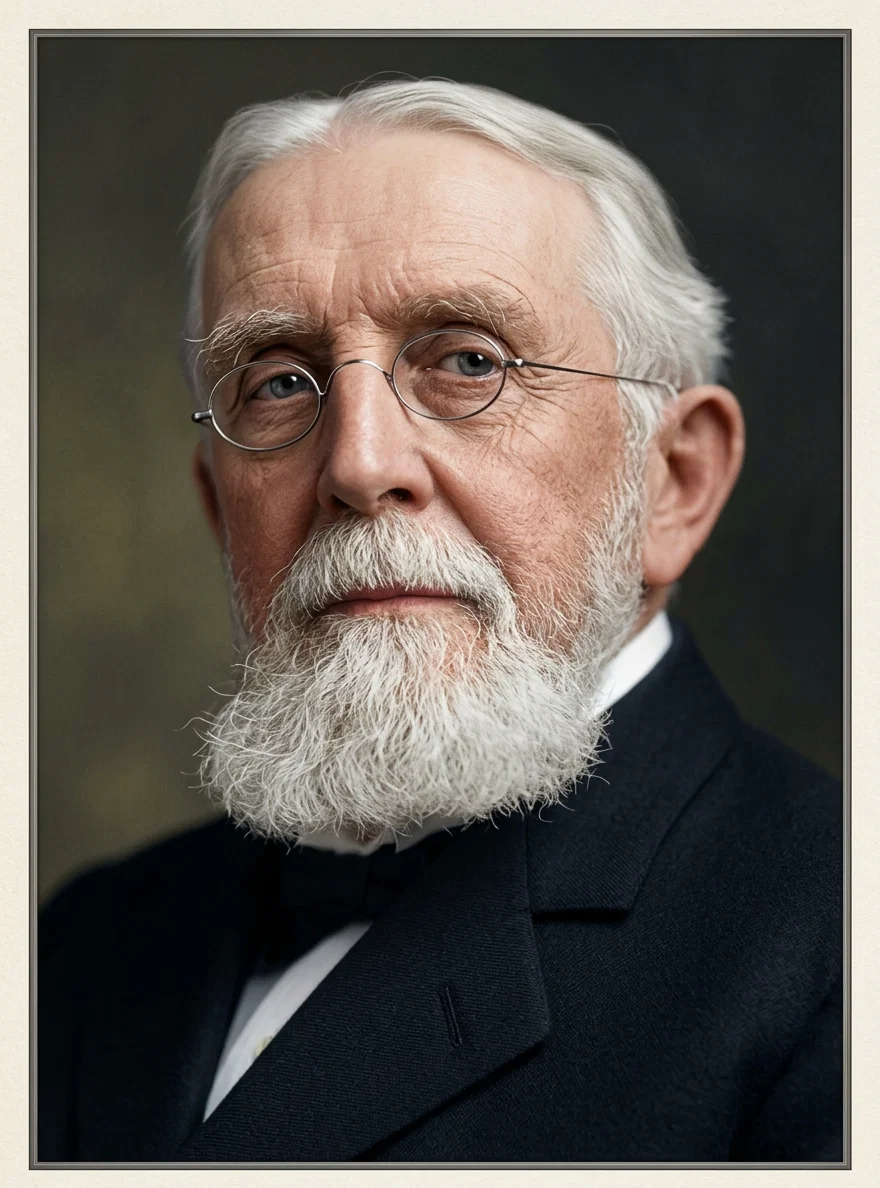
THE HON. ANDREW D. WHITE, LL. D.
© by Harris and Ewing THE HON. ANDREW D. WHITE, LL. D.

They Sound Alarming

At the outset, some of the first utterances of the federation sound alarming. The large quadrennial council held in Chicago, December, 1912, though all the participating denominations were Protestant, decided to cast out from their title the only one good name under which these churches could group themselves, namely, the word “Protestant.”
The Rev. Bishop McDowell, of the Methodist Church, in his speech December 4, 1913, in the Methodist Episcopal church at Baltimore, Maryland, before a large audience and in the presence of the executive committee of the Federal Council, declared it to be one of the most splendid signs of the times when the quadrennial council drew its pen through the word “Protestant.”
“There were three reasons,” the bishop said, “for doing this: in the first place, because the word ‘Protestant’ smacked of the unhappy controversies of the sixteenth century; in the second place, because there were constituent members of the Federal Council who were growing to dislike the word; and thirdly, because the word ‘Protestant’ was offensive to the brethren in the Catholic fold.”
It seems remarkable, when we think that only one denomination, led by Martin Luther, under the name of “Protestant,” shook Europe from center to circumference, that now thirty-two Protestant denominations, getting together in an organization that represents a combined membership of eighteen million, should feel ashamed of the word “Protestant.” Suppose the forty-eight states now composing the American republic should feel ashamed of the light they set up in 1776, and vote to drop the word “America” from all our titles and organizations.
How can any organization, settled and grounded by the truths that gave it birth, expect to guide its course aright when it extinguishes the light that it set up at the beginning of its pathway? Have the doctrines for which Protestants stood, and which so profoundly affected the history of European and American civilizations, lost their value?
Peter denied his Lord three times, and cursed and swore because of being charged with the doctrines that gave birth to Christianity; but he soon discovered miserable failure ahead of him unless he returned to the truth.

Because They Are Surrendering

If the individual Protestant denomination, in order to enter the door of church federation, is compelled to surrender the doctrine which it felt it was divinely begotten to carry into all the world, and if these thirty-two denominations, forming a thirty-third, feel that success can only come to it by a surrender of its title to Protestantism, then the future looks ominous.
The program announced seems to mean victory by surrender. There is a sound of the lowering of standards, and the world may be astonished to discover that it is to be confronted by church federation endeavoring to make it feel good, rather than to do it good.

Desire to Restrain Competition

Let us note another startling tendency of church federation. “In the field of the churches, the cutthroat competition of to-day ought to be restrained.” (Outlook, December 2, 1912.) Such is the enthusiastic commentary of the Outlook upon the appearance of church federation. And that writer is simply voicing the sentiments of many advocates of federation who declare that the great result of the movement is to mean the abolition of competition between the churches.
Who is to say that abolition of competition between the churches is a result to be desired? And who is to say where this abolition of competition will end? If the individual Protestant denominations have ceased to lay emphasis upon certain fundamental doctrines in order to join church federation, and if the Federal Council itself, with a stroke of the pen, has blotted out the word “Protestant” in order to abolish competition between Protestantism and Catholicism, why not go a step further, and abolish competition between Christianity and Mohammedanism? We must draw a line somewhere in our enthusiasm to abolish competition, else we will be saying, “Good Lord, good devil.”

The Yellow Dog and the Wolf

Moreover, every one knows the story of the little yellow dog that was kicked and knocked all around the neighborhood until he became the abject example of cowardice.But the neighborhood began to be troubled by a massive wolf, that was carrying off his prey from the stable and the barn-yard. The best dogs in town were set after the mighty intruder, but all to no avail. Finally the inhabitants baited a trap, and set the powerful trap in a place where it might catch the prowling devastator. The next morning, the citizens went out to find the wolf dead near the trap, but not in the trap. Near the wolf, they found the little yellow dog, covered with wounds and nearly dead. He had been caught by the wolf and obliged to fight for his life. In gaining the victory, he taught us all a lesson of how much a man can do when he is driven into a corner and obliged to fight for his life.
What the world rather needs in this evil hour is greater emphasis on how, through God, to make the impossible become possible. We need to be, as Paul says, “strengthened with might by His Spirit in the inner man.”

Numbers Not Necessary for Victory

The greatest victories ever gained in this world were those obtained not by numbers, but under the leadership of an idea. New ideas are new germs that act like a ferment upon human thought, stirring up humanity to greater achievements. Let it never be forgotten that the greatest leadership has always been the leadership of an idea. It is the little empowered to do the mighty.
It is disastrous to the progress of the human race to smother the concept in the individual. Here is a sculptor. He starts toward a massive stone, chisel and mallet in his hands. He brings a beautiful angel out of the rough stone. But that angel existed in his mind before he put it into the stone. That is what we call the concept.
Now suppose there were some great organization to interpose itself between the sculptor and the stone. How many diamonds in the rough would remain undiscovered, that might have been polished and made valuable at the hands of a divinely commissioned messenger had he not been checked in his mission by some organization strapped down to the past!

Individual Efficiency Is the Need

There is something in a true man which drives him to bring order out of disorder. Individual efficiency is the great end to be sought. When the third assistant postmaster-general was addressing the assembled mail carriers of Baltimore, Maryland, he said that the great postal system of the United States could be a success only by improving the individual efficiency of every laborer. Alexander, at the head of a little handful of Greeks, was mightier than the confederated armies of the Persian empire.
The man whose heart is strong and whose arm is powerful, fired by an idea and illumined by the vision of the great message, can cause great organizations to go to dust. Under the blessing of God, man is always pushing toward the ideal. It is a sorry omen for the future when that ideal is considered to be the abolition of competition. It means oppression somewhere. It means worse. It means suppression everywhere.

Will the State Restrain It?

“In the field of the churches, the cutthroat competition of to-day ought to be restrained.” But who is going to restrain it? The state should not do it. The moment an appeal is made to the state by law or by police force to restrain competition among the churches, we are back to the terrible days of the union of church and state. Shall we ask the individual churches to do it? Shall we say to the individual denominations, that the price they pay for entering the Federal Council of the Churches is that they shall lay down competition? Such a surrender could mean nothing unless it meant everything. In spite of all, there would be competition, unless step by step there was the submerging of all into one. And even then there would never be an abolition of competition.
It was the great evangelist Moody who said, “God never repeats Himself.” And that is true. The monopoly in general has been tried too long and too often for any one really to believe that any good can come from such a plan. It is true, no doubt, that the advocates of church federation will enthusiastically deny any purpose to secure a monopoly in general. But we are compelled to take notice of the tendencies of the organization as expressed in the plans and resolutions of the council and in the program utterances of the leaders. No one can deny that one of the fundamental objects of church federation is, in the field of the churches, restraint of competition.

Baneful Effects of Monopoly

The offspring of order is peace and happiness; of disorder, strife and misery. And as to the baneful effects of monopoly, let me quote a few words from an editorial in the Washington Times of May 15, 1914, as follows: “The New Haven wanted to perfect a monopoly of New England transportation, and crooked politicians knew it. They got themselves in a position of vantage, from which they could hold up the railroad company and extort their own terms; otherwise, they could block its monopoly plans. On neither side was there any serious consideration for the fact that the spirit and letter of the laws opposed the monopoly scheme. Neither the crooks of finance nor the crooks of railroad management nor the crooks of politics care about that. . . . It is a fine illustration of the price that too often is paid for monopoly; paid in debauchery, in blackmail, in bribery, in hold-ups, in ruin of men’s reputations, and in the wreck of great properties. At the end, the monopoly is a failure. It does not even hold together, and the bills incurred by its overreaching builders are bequeathed to their successors to be paid, with the public, of course, or the innocent investor, or both.”

Organization and Civil Law Necessary

Yet we wish it plainly understood that we believe in organization. We believe one of the greatest graces given to man is the grace of cooperation. Many men who have been gifted by God with great abilities and great talents, lack the greatest of all ability, “the grace of cooperation.” They never could flock together. They always wanted to get off in a corner and flock by themselves. If they could not run an organization, they would ruin it.
We wish it distinctly understood that we believe what the apostle Paul says in Rom. 13:1: “Let every soul be subject unto the higher powers. For there is no power but of God: the powers that be are ordained of God.” There is organization in the church as there is in the state. And such organizations, when properly conducted, are of God. “For,” says the apostle, “rulers are not a terror to good works, but to the evil.” Thus we see that rulers are ordained, not to be a terror to good works, but to evil. Or, giving the divine definition of a ruler, he is one who is not a terror to good works.
When, therefore, any organization or power that calls itself or is called a ruler becomes a terror to good works, it is no longer a ruler. It is no longer one of “the powers that be.” It has moved away from the purpose for which God ordained it. For “a power that be” is a combination of might and right. Therefore when might moves away from right, it is no longer one of “the powers that be.” It has ceased to be a ruler.

Revolution Is Justified

Revolution constitutionally carried on is then justified. In this statement you will note two things. First, the revolutionists still adhere to the right from which the nominally constituted might has moved away; and secondly, the revolution is constitutionally conducted. Every proper constitution provides either expressly or by implication for the correction of abuses in an administration. But it will never be any justification to those who know those abuses, to deny the organization, or to carry on their revolution by guerrilla warfare, or by childish undermining.

Organization, but Not Domination

We therefore do not believe in disorganization. We believe in organization. But we do not believe in domination. And when organization becomes a monopoly; when “the powers that be,” though ordained of God, become a terror to good works,—then they are no longer “the powers that be.” They are dangerous. It is time to take alarm.
We close with a prophecy of Isaiah: “Forasmuch as this people refuseth the waters of Shiloah that go softly, and rejoice in Rezin and Remaliah’s son; now therefore, behold, the Lord bringeth up upon them the waters of the river, strong and many, even the king of Assyria, and all his glory.” Isa. 8:6, 7.
The children of Israel, refusing to rely alone upon the inspirations of the Lord, were confederating with their old associates, the apostate Israel of the north. So what does God say? —“Say ye not, A confederacy, to all them to whom this people shall say, A confederacy.” “Associate yourselves, O ye people, and ye shall be broken in pieces. . . . Take counsel together, and it shall come to naught.” Verses 12, 9, 10.

These Tendencies Foretold

The divine Word foretells that the tendencies of the latter days would be toward associations, unions, monopolies, and federations. In Matthew 13, verses 39 and 30, we read: “The harvest is the end of the world; and the reapers are the angels.” “Let both grow together until the harvest: and in the time of harvest I will say to the reapers, Gather ye together first the tares, and bind them in bundles to burn them: but gather the wheat into my barn.” All eyes are turning toward the soon coming of our Lord and Saviour Jesus Christ. Confederations, unions, and orders were to be a sign of the times. Church federation is also one of these signs.

A Soul Set Free—Her Exultant Joy

The Hypocritical and Self-Righteous — They Drag a Woman in Terror Before the Master — In Condemning Her, They Set a Trap They Withdraw in Shame — The Accused Woman Pardoned and Cleansed
By MRS. E. G. WHITE
NEITHER DO I CONDEMN THEE: GO, AND SIN NO MORE
The feast of Tabernacles had just ended. The priests and rabbis at Jerusalem had been defeated in their plottings against Jesus, and as evening fell, “every man went unto his own house. Jesus went unto the mount of Olives.” John 7: 53; 8: 1.
From the excitement and confusion of the city, from the eager crowds and the treacherous rabbis, Jesus turned away to the quiet of the olive groves, where He could be alone with God. But in the early morning He returned to the temple; and as the people gathered about Him, He sat down and taught them.

Dragged a Terror-Stricken Woman Before Him

He was soon interrupted. A group of Pharisees and scribes approached Him, dragging with them a terror-stricken woman, whom with hard, eager voices they accused of having violated the seventh commandment. Pushing her into the presence of Jesus, they said, with a hypocritical display of respect, “Master, this woman was taken in adultery, in the very act. Now Moses in the law commanded us, that such should be stoned: but what sayest Thou?”

A Deep-Laid Plot

Their pretended reverence veiled a deep-laid plot for His ruin. Should Jesus acquit the woman, He might be charged with despising the law of Moses. Should He declare her worthy of death, He could be accused to the Romans as one who assumed authority belonging only to them.
Jesus looked upon the scene,—the trembling victim in her shame, the hard-faced dignitaries, devoid of even human pity. His spirit of stainless purity shrank from the spectacle. Giving no sign that He had heard the question, He stooped, and fixing His eyes upon the ground, began to write in the dust.

The Guilty Secrets of Their Own Lives

Impatient at His delay and apparent indifference, the accusers drew nearer, urging the matter upon His attention. But as their eyes, following those of Jesus, fell upon the pavement at His feet, their voices were silenced. There, traced before them, were the guilty secrets of their own lives.
Rising, and fixing His eyes upon the plotting elders, Jesus said, “He that is without sin among you, let him first cast a stone at her.” And stooping down, He continued writing.

Pretended Holiness Torn Away

He had not set aside the Mosaic law, nor infringed upon the authority of Rome. The accusers were defeated. Now, their robes of pretended holiness torn from them, they stood, guilty and condemned, in the presence of infinite purity. Trembling lest the hidden iniquity of their lives should be laid open to the multitude, with bowed heads and downcast eyes they stole away, leaving their victim with the pitying Saviour.

“Go, and Sin No More”

Jesus arose, and looking upon the woman, said: “Where are those thine accusers? hath no man condemned thee? She said, No man, Lord. And Jesus said unto her, Neither do I condemn thee: go, and sin no more.”
The woman had stood before Jesus, cowering with fear. His words, “He that is without sin among you, let him first cast a stone,” had come to her as a death sentence. She dared not lift her eyes to the Saviour’s face, but silently awaited her doom. In astonishment she saw her accusers depart speechless and confounded; then those words of hope fell upon her ear, “Neither do I condemn thee: go, and sin no more.” Her heart was melted, and casting herself at the feet of Jesus, she sobbed out her grateful love, and with bitter tears confessed her sins.
This was to her the beginning of a new life, a life of purity and peace, devoted to God. In the uplifting of this fallen soul, Jesus performed a greater miracle than in healing the most grievous physical disease; He cured the spiritual malady which is unto death everlasting. This penitent woman became one of His most steadfast followers. With self-sacrificing love and devotion, she showed her gratitude for His forgiving mercy. For this erring woman the world had only contempt and scorn; but the Sinless One pitied her weakness, and reached to her a helping hand. While the hypocritical Pharisees denounced, Jesus bade her, “Go, and sin no more.”
Jesus knows the circumstances of every soul. The greater the sinner’s guilt, the more he needs the Saviour. His heart of divine love and sympathy is drawn out most of all for the one who is the most hopelessly entangled in the snares of the enemy. With His own blood He has signed the emancipation papers of the race.

Turns No Contrite One Away

Jesus does not desire those who have been purchased at such a cost to become the sport of the enemy’s temptations. He does not desire us to be overcome and perish. He who curbed the lions in their den, and walked with His faithful witnesses amid the fiery flames, is just as ready to work in our behalf, to subdue every evil in our nature. To-day He is standing at the altar of mercy, presenting before God the prayers of those who desire His help. He turns no weeping, contrite one away. Freely will He pardon all who come to Him for forgiveness and restoration. He does not tell to any all that He might reveal, but He bids every trembling soul take courage. Whosoever will, may take hold of God’s strength, and make peace with Him, and He will make peace.
The souls that turn to Him for refuge, Jesus lifts above the accusing and the strife of tongues. No man or evil angel can impeach these souls. Christ unites them to His own divine-human nature. They stand beside the great Sin-bearer, in the light proceeding from the throne of God.
The blood of Jesus Christ cleanses “from all sin.”
“Who shall lay anything to the charge of God’s elect? It is God that justifieth. Who is he that condemneth? It is Christ that died, yea rather, that is risen again, who is even at the right hand of God, who also maketh intercession for us.” Rom. 8: 33, 34.

The Sure Foundation

“THEREFORE thus saith the Lord God, Behold, I lay in Zion for a foundation a stone, a tried stone, a precious corner-stone, a sure foundation; he that believeth shall not make haste.” Isa. 28: 16. Have you found for yourself this “sure foundation”? Can you not see that the world is plunging headlong into revolution and ruin? You should be sure that the building of your faith rests upon the “precious corner-stone.”
Continue reading: The Imminent Eternal Kingdom