Heaven’s Court in Session—Great Words Spoken—The King of Kings, and Lord of Lords; The Day Is at Hand
By JEAN VUILLEUMIER
THIS is the third and concluding study of Elder Vuilleumier on the seventh chapter of the book of Daniel. In previous articles, he has called attention to the four world monarchies that the prophet foresaw; he has spoken of the ten kingdoms into which the prophecy said the fourth or Roman Empire would be broken; he has dwelt upon the prediction that these kingdoms into which Rome was to be broken would never be united again; he has spoken of the ecclesiastical power that Daniel told us would arise among the ten kingdoms and subdue or pluck up three of them.
This week the main thought is the eternal kingdom that is soon to succeed all this earthly rulership.
EDITOR.
The great moving-picture film of prophetic history, twenty-four centuries long, has been rapidly passing before our wondering eyes. Now the inspired dream unveils to us both heavenly scenes transpiring now, and earthly scenes to transpire in the near future and onward through ceaseless ages. While still gazing at the downfall of papal supremacy, Daniel is suddenly called to behold a scene of surpassing grandeur.
THE HEAVENLY COURT IN OPEN SESSION
“I beheld till thrones were placed, and One that was ancient of days did sit: His raiment was white as snow, and the hair of His head like pure wool; His throne was fiery flames, and the wheels thereof burning fire. A fiery stream issued and came forth from before Him: thousands of thousands ministered unto Him, and ten thousand times ten thousand stood before Him: the Judgment was set, and the books were opened.” Dan. 7:9, 10.
Unknown to the inhabitants of the earth, the Judgment begins “at the house of God.” 1 Peter 4:17. The list is being made up of the loyal subjects of the Son of man, whose kingdom is soon to be ushered in. But while this solemn assembly is sitting in heaven, the prophet again hears the voice of the mysterious horn.
GREAT WORDS THAT THE HORN SPOKE
“I beheld at that time because of the voice of the great words which the horn spake.” Dan. 7:11. Yes, instead of repenting, of humbling herself, of renouncing her past, the papacy goes farther and farther in her guilty course. In 1870, at the Vatican Council, the pope is declared infallible, notwithstanding the indignant protest of history voiced by some of the most learned and distinguished members of the council.
Still more, regaining some of its lost prestige, the papacy again seeks to use it for the suppression of the saints. “I beheld, and the same horn made war with the saints, and prevailed against them; until the Ancient of Days came, and judgment was given for [or “in favor of”] the saints of the Most High, and the time came that the saints possessed the kingdom.” Verses 21, 22, A. R. V., margin.
Now the climax has been reached. It only remains for God to take part in the conflict in favor of His downtrodden people and truth.
“I saw in the night visions, and, behold, there came with the clouds of heaven One like unto a son of man, and He came even to the Ancient of Days, and they brought Him near before Him. And there was given Him dominion, and glory, and a kingdom, that all the peoples, nations, and languages should serve Him: His dominion is an everlasting dominion, which shall not pass away, and His kingdom that which shall not be destroyed.” Verses 13, 14.
Again referring to the apostate power, the prophet says: “But the Judgment shall be set, and they shall take away his dominion, to consume and to destroy it unto the end. And the kingdom and the dominion, and the greatness of the kingdoms under the whole heaven, shall be given to the people of the saints of the Most High: His kingdom is an everlasting kingdom, and all dominions shall serve and obey Him.” Verses 26, 27.
BUT LITTLE REMAINS
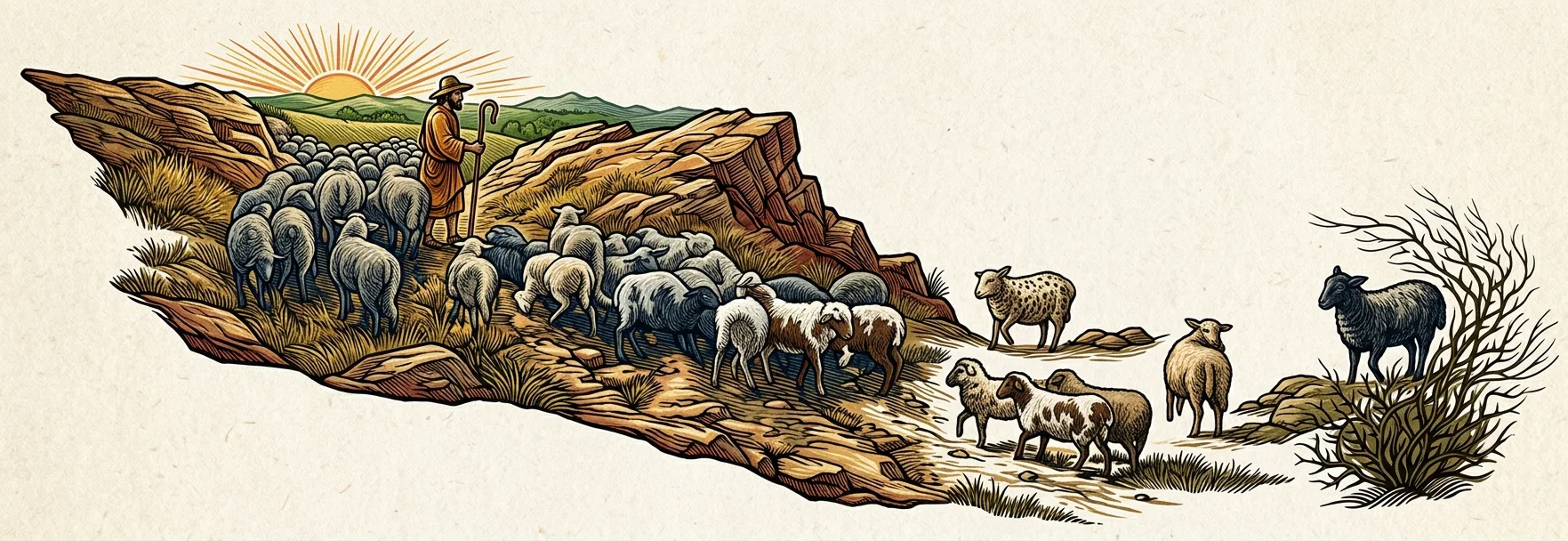
The four kingdoms have come and gone. The ten kings and the royal pontiff have appeared and have followed in their allotted course. So far, all has been fulfilled to the very letter. Little more remains but for the “saints of the Most High” to receive the kingdom,—a kingdom that is to endure “forever, even forever and ever.” Hence Jesus Christ, the blessed Son of God, the Prince of this glorious realm, is soon to appear. His coming is at hand.
THE INVITATION
Dear reader, have you, by faith in Jesus Christ, become a subject of this kingdom? If not, will you not receive Him “who gave Himself for us, that He might redeem us from all iniquity, and purify unto Himself a people for His own possession,” “to the intent that . . . we should live soberly and righteously and godly in this present world; looking for the blessed hope and appearing of the glory of the great God and our Saviour Jesus Christ”?
The Eternity of God's Law
By M. C. Israel
It Antedates the Creation of Angels and Men—A Test of Character from the Days of Eternity—It Will Eternally Endure
By M. C. ISRAEL
“The law of the Lord is perfect, converting the soul.” Ps. 19:7. The two great commandments, upon which hang all the law and the prophets,—to love God supremely, and to love one's neighbors as oneself,—are “the end of all perfection.” They represent the character of God as manifested in the life of Christ, which was a living representation, in human form, of that perfect law (John 15:10), and an example to all His followers. This perfect law represents the perfect character of God, who created angels and man to represent that character.
The First Violator
The first created being to violate these principles is described in Eze. 28:13-19: “Thou hast been in Eden the garden of God. . . . Thou art the anointed cherub that covereth; and I have set thee so. . . . Thou wast perfect in thy ways from the day that thou wast created, till iniquity [lawlessness, sin] was found in thee.”
The prophet Isaiah further describes this character (14:12-17) as Lucifer (margin, day-star): “How art thou fallen from heaven, O Lucifer, son of the morning! . . . For thou hast said in thine heart, I will ascend into heaven, I will exalt my throne above the stars of God: . . . I will be like the Most High.”
Christ also is called the day-star, or morning star. Rev. 22:16. The conflict was between Michael—Christ—and Satan. Rev. 12:7, 8. Christ says, “I beheld Satan as lightning fall from heaven.” Luke 10:18.
He Was Perfect When Created
Here we find that iniquity—sin, lawlessness, the transgression of God's law—originated with a being who was created perfect,423and who was one of the cherubs that covered the throne of God in heaven; who, after his rebellion, carried one third of the heavenly host of angels with him. They also were cast out of heaven for a violation of God's law—sin. 2 Peter 2:4-6. In this same scripture, Peter classes the antediluvians and the Sodomites with the fallen angels, and says that Noah was a preacher of righteousness—God's law (Ps. 119:172)—all of God's law, proving to them their sinful condition; for which God “condemned them with an overthrow, making them an ensample unto those that after should live ungodly.”
What do these statements prove?—They prove that the perfect law of God was coexistent with the kingdom of God in heaven, and that it condemned the angels who sinned, and also earth's inhabitants the first 2,500 years of its history, and all those who “after should live ungodly.”
Paul's Argument That God's Law Antedates Sin
“Where no law is, there is no transgression.” “Sin is not imputed when there is no law.” “Without the law sin was dead.” Rom. 4:15; 5:13; 7:8.
Sin was imputed to Satan and his angels; for 2 Peter 2:4 states that they sinned, and were cast out of heaven. And “the men of Sodom were wicked and sinners before the Lord exceedingly.” Gen. 13:13. And Peter says they were “condemned . . . with an overthrow,” as “an ensample unto those that after should live ungodly.”
This proves, without a chance for a quibble, that the law of God antedated sin. This is surely a complete refutation of the statement that the law of God was not understood until it was published at Mount Sinai, 1491 B. C.
“Do All to the Glory of God”
By Flora E. Warren
“Whatsoever ye do, do all to the glory of God.”
1 Cor. 10:31.
Do you seek joy, and peace, and sweet assurance,
O troubled heart, along time’s rocky shore?
A highway leads to these. Who wills, may find it.
Lo, Jesus, Prince of peace, walked there before.
Look now to Calv’ry’s hill. He suffered there
With joy, to clear the way, that all might share
These joys with Him, to-day and evermore.
“The Glory of the Lord”—so reads each sign-board.
On Calv’ry’s cross, in living streams ’twas plain.
The way is steep, but by your side is Jesus.
He is your strength. His blood clears every stain.
Each step is peace, with Him to guide, each day,
Where’er the sign-boards point. Tho’ dark the way,
He holds your hand, and heights of joy you gain.
“Glory to God” is angels’ joy and glory.
Love’s sweetest joys are there to-day, as when
O’er Judah’s hills first rang the joyful story,
Redemption’s way of “peace, good will to men.”
You who are sad, walk in this peaceful way,
“Glory to God,” in all you do and say.
Tell others of this way of peace, and then,
O, tell each soul of Calv’ry’s healing fountain,
For there may sinners wash with joy to-day.
“Good will to men” yet rings o’er vale and mountain.
On earth is peace, for all who find the way.
Delight to do God’s will, with Christ, each day;
And now, and at the journey’s end, you’ll say
’Tis joy “the glory of the Lord” to win.
FLORA E. WARREN.
Satan’s Masterpiece
By Le Roy E. Froom
SPIRITUALISM is as ancient as the human race, for the first medium was the serpent in the garden of Eden. His purpose was to deceive, and that purpose has never changed. Down through the ages is seen his trail, and in his path are strewn the millions who paused to listen to the talking serpent.
Spiritualism has proved to be one of Satan’s most successful soul traps. It is his masterpiece of deception. It claims to be the golden gate of the golden age. Instead, it opens the gate to infidelity, insanity, and immorality. It promises to bless. Instead, we hear the serpent’s hiss.
Taking advantage of that sad void made by the death of a loved one, the personating demons come to whisper consoling lies. But the confidence once gained, mind, soul, and body are polluted by the unclean character of these seducing spirits, and the end is often tragic death or the madhouse.
The actors in this masterful deception are fallen angels. Those who “kept not their first estate,” “the angels that sinned,” have had six thousand years’ experience in this unholy art. They can read human character, and they know human history. They are expert actors, and can cleverly personate our loved ones. They will deceive, if possible, the very elect.
Let us not turn to the darkness of Spiritualism for the water of life, but let us seek Jesus of Nazareth, who alone can give us the “living water.”
LE ROY E. FROOM.
Creation and Conversion
By A. E. Place
The Sabbath a Sign of Both — The Same Power Displayed in Each — Conversion a New Creation
By A. E. PLACE
I GAVE them My Sabbaths, to be a sign between Me and them, that they might know that I am the Lord that sanctify them.” Eze. 20:12.
The Sabbath of the Bible is the Sabbath of the fourth commandment of God’s immutable, eternal ten.
The Sabbath of the Bible is “the Sabbath of the Lord thy God.” Ex. 20:10. It must therefore be “the Lord’s day.”
The Sabbath of the Bible is the seventh day, not the first. “The seventh day is the Sabbath.” Ex. 20:10.
It Commemorates Creation
The Sabbath of the Bible is a memorial of God’s work of creation. “For in six days the Lord made heaven and earth, . . . and rested the seventh day.” Ex. 20:11. The Sabbath is therefore a sign of God’s creative power.
Creative Power in the Gospel
God’s power manifested in the gospel is also creative power, for “if any man is in Christ, there is a new creation.” 2 Cor. 5:17. “Created in Christ Jesus unto good works [obedience].” Eph. 2:10. “I am not ashamed of the gospel of Christ, for it is the power of God unto salvation.” Rom. 1:16. “Create in me a clean heart, O God.” Ps. 51:10; etc.
It took creative power to make the worlds. It requires creative power to take a vile sinner and make him a saint.
Christ as Creator
Jesus Christ was the active agent associated with the Father in the creation of the worlds. John 1:1-3; Heb. 1:1, 2. He was the only one by whom He could redeem the fallen world or the fallen race. Redemption is re-creation. Christ is Redeemer because He is Creator. Were He not Creator, He could not redeem.
The Sabbath in Sanctification
The Sabbath was sanctified at the close of creation’s week. It is therefore a sign of all the creative and sanctifying power of God, and hence of the sanctifying power of God in the gospel. “I gave them My Sabbaths, to be a sign between Me and them, that they might know that I am the Lord that sanctify them.” Eze. 20:12.
As God sanctified the Bible Sabbath, the seventh day, so He will sanctify His people. But Jesus Christ is the Sanctifier of His people. Sanctification comes only through Him. 1 Cor. 1:30; Acts 4:12. Therefore the Edenic Sabbath stands as a sign, seal, token, or pledge, of sanctification through Jesus Christ in the gospel.
God wants His people everywhere to know that the sanctification of the Sabbath, and the sanctification of the sinner who turns to God with all his heart, are the same, and that the one who sanctifies the sinner is the one who, under the almighty Father, sanctified the original and only genuine Sabbath this old world has known, or ever will know, “the Sabbath of the Lord thy God.”
Therefore let us paraphrase our text: “The Sabbath is a sign between Me and My people, that they may know that as I sanctified the Sabbath, so I will sanctify all who will give themselves to Me.”
We believe, then, it is not too much to claim that the Edenic seventh-day Sabbath stands for or embraces all that is given to the world through the gospel of Jesus Christ.
Pertinent Comparisons
As evidence, let us consider a few comparisons between the making of the Sabbath and the making of the Christian.
1. It is but reasonable to believe that from the beginning of God’s week of creation, He had in mind the sanctification of the Sabbath day. So from the beginning of God’s work for the sinner, He has in mind the sinner’s sanctification.
2. God’s first act toward the making of the Sabbath was His choice of the day—“the seventh day.” So God’s first act in making a new man is His choice of the man—“whosoever will,” “if ye will hear His voice.”
3. God entered into His chosen day. So He enters into His chosen people. 2 Cor. 6:16; Col. 1:27.
4. God rested in the day. He gave to the seventh day His sacred rest. So He enters the weary, troubled heart of the repentant sinner, and gives to that heart His sacred rest. “Come unto Me, all ye that labor and are heavy-laden, and I will give you rest.” Matt. 11:28. “For we which have believed do enter into rest”—His rest. Heb. 4:3.
5. After resting in the day, He blessed it, “because that in it He had rested.” Gen. 2:3. So He blesses, with His holy blessing, all who accept His holy rest. Isa. 56:2; 58:13, 14; Rev. 22:14.
6. God’s closing act for the Sabbath was its sanctification. “God blessed the seventh day, and sanctified it.” Gen. 2:3. To sanctify is to “set apart to a sacred use.” God sent His holy, blessed, sanctified Sabbath day on its mission around the world, and that mission was to bring holiness, blessing, and sanctification, to men and women in all the world. So God sets apart His true Sabbath-keeping people, and sends them to all the world (“Go ye into all the world.” Mark 16:15), that they may take to all men the rest, the blessing, and the sanctification that the divine Saviour gave to the Edenic Sabbath day; and that His people may, in their Sabbath-keeping, be the sign of that sanctifying power manifested by Him in the making of His Sabbath day—“the Sabbath of the Lord thy God.”
“ONLY by the aid of that Spirit who in the beginning ‘was brooding upon the face of the waters,’ of that Word by whom ‘all things were made,’ of that ‘true Light, which lighteth every man that cometh into the world,’ can the testimony of science be rightly interpreted. Only by their guidance can its deepest truths be discerned. Only under the direction of the Omniscient One shall we, in the study of His works, be enabled to think His thoughts after Him.”
A Religious Comedy
By T. E. Bowen
Did a Business in Burglary, Yet Particular to Keep Sunday, and Would Not Pawn a Cross—Other Inconsistencies Quite as Gross
By T. E. BOWEN
The following editorial note appeared in the Independent of April 20:
“Religion has its comedies. One of these made its appearance in a police arrest in this city [New York] last week, when two brothers of the ages of twenty-one and eighteen confessed to one hundred burglaries. Burglary was their business; but they would not pawn a religious emblem, like a cross, but threw it away; and kept the sabbath day holy, and went to a Lutheran church, ‘working’ the other six days of the week. Thus religion has its pick of the commandments; it values the fourth, but gives over the eighth to the higher criticism.”
They Picked Their Commandments
This certainly does present a religious “comedy,” and reveals again that “religion has its pick of the commandments.” While the two burglar boys naturally would not take to the eighth commandment, leaving that open for dissection by “higher criticism,” the comedy part of it is that most of the religionists shy around the fourth, being quite willing that it, too,—the most important of all the ten,—shall be given over to the “higher criticism”; that is, let people interpret it about as they please, and that too in the face of precisely as explicit language as is contained in the eighth commandment.
This latter reads, “Thou shalt not steal”—four simple words any schoolboy can understand if he reads them at all. These four words make it sin in the sight of God to take from another that which does not belong to one. This commandment shows burglars to be sinners, no matter how many churches they may attend or how many golden crosses they throw away; for stealing is sin.
Can Be No Distinction
Now notice that fourth commandment. It says: “Remember the Sabbath day, to keep it holy. Six days shalt thou labor, and do all thy work: but the seventh day is the Sabbath of the Lord thy God: in it thou shalt not do any work.”
There is only one seventh day. That is the last day of the week, now commonly called Saturday. No one therefore can keep God’s Sabbath—and there is no other Sabbath than His—without resting from all his work on this particular day, the seventh day of the week. The same rule holds good regarding the breaking of this commandment as in transgressing the eighth. A person is not a law keeper if he breaks the eighth, neither is he if he breaks the fourth.
Breaking One and Guilty of All
This the apostle James makes very clear when he says: “Whosoever shall keep the whole law, and yet offend in one point [one commandment], he is guilty of all. For He that said, Do not commit adultery, said also, Do not kill. Now if thou commit no adultery, yet if thou kill, thou art become a transgressor of the law.” James 2:10, 11. He that said, “Thou shalt not steal,” said also, “Six days shalt thou labor, and do all thy work: but the seventh day is the Sabbath of the Lord thy God: in it thou shalt not do any work.”
Strange Reasoning
Strange reasoning that instead of obeying the Lord Jesus Christ, who on Mount Sinai gave to men all these commandments, and has sworn not to alter the words that have gone from His lips, men go to church, perform various religious acts, and at the same time disregard ruthlessly this sacred command. Yet they persuade themselves into believing that God will accept for service this religious “comedy.” It certainly seems quite out of place for such to regard with very much surprise the course of the two New York boys going on with their religious “comedy” by attending church regularly and casting away gold crosses while making a business of burglary. For who is able to judge which is the more offensive in the sight of God, the breaking of the eighth commandment every week, or the breaking of the fourth?
The Bible defines either and both: “Whosoever committeth sin transgresseth also the law: for sin is the transgression of the law.” 1 John 3:4.
The One Remedy
And there is only one remedy, one way out of all this difficulty. “And ye know that He [Christ Jesus] was manifested to take away our sins; and in Him is no sin.” Jesus kept all of His Father’s commandments, and hence did no sin. He calls us, in Him, to do likewise.
Then there will be no religious comedies, the profession of one thing and the doing of another. Genuine Christianity sets aside none of God’s holy commandments, nor turns them over for “higher criticism” to make sport of because of inconsistencies seen in the believers; but by a well-ordered life, it gives no occasion to blaspheme that holy name by which the Christian is called. Peace and joy come alone through obedience to God’s revealed will expressed to us in the Ten Commandments. And in the keeping of them is life.
The Mighty Power to Overcome Temptation—Victory Assured
By G. W. Reaser
The strength of temptation is in exact ratio to the susceptibility of the individual to be tempted. “Every man is tempted, when he is drawn away of his own lust, and enticed.”
There is a point in Christian experience where the individual may say, “The prince of this world cometh, and hath nothing in me.” “He that is dead [to temptation] is freed from sin.”
The Means of Victory
Victory in the hour of temptation is a distinct triumph of the indwelling Christ over the lusts of the flesh. “For this purpose the Son of God was manifested, that He might destroy the works of the devil.”
The most potent declaration of the Sonship of Christ with the eternal God, was in the resurrection from the dead, as it is written, “Declared to be the Son of God with power, according to the spirit of holiness, by the resurrection from the dead.” So also the most potent declaration of our sonship with the living God is in the act of appropriating, by faith, that degree of resurrection power vouchsafed to us in the gift of the ever-present, resurrected Saviour. By this faith and power we triumph over sin and live lives of holiness to the Lord. As it is declared, “If any man be in Christ, he is a new creature.”
G. W. Reaser.
“He Shall Do Well”
By Adelaide D. Wellman
ONE whose every word has significance, said by way of announcing the death of His friend of Bethany, “Lazarus sleepeth.” Those who heard that statement, replied, “If he sleep, he shall do well.” They had not comprehended the import of the word “sleep” as used in that instance, and simply meant to state that if their sick friend was able to sleep, the indication was favorable for improvement. Then the Master declared “plainly” that Lazarus was dead.
We mortals are not wont to think it is well for our friends to die. Even though life imply much of suffering, and death be depicted as only a transition to a higher life,
“Yet, half I hear the fainting spirit sigh,
‘It is a dread and awful thing to die.’”
Disagreeable facts are not most effectively met by denial, but by acknowledgment. And death is a fact. The evidence is world-wide and all-pervading, not only among mankind, but in the lower creation also, both animal and plant.
One may assert that only the body of man dies; but Holy Writ bears record invariably to the death of the person, not merely his body.
The thought is doubtless repellent. Death is no part of the perfect plan of the Creator. It is a result of sin. And sin is hideous. Hence death is not in itself lovely.
Yet He who makes evil accomplish good, says of His own who sleep in death, what the friends of Lazarus said when they thought he was taking ordinary sleep,—“Blessed are the dead which die in the Lord, . . . that they may rest from their labors.”
When the Lifegiver waken them to a new life, immeasurably superior to the present, the period of sleep—as in the case of sound natural sleep even—will seem to have been scarcely a moment.
The time is near when He who restored Lazarus to life, shall return to earth, to waken “them that sleep in the dust of the earth.”
ADELAIDE D. WELLMAN.
Proper Use of the Vocal Organs
“THE proper use of the vocal organs will bring benefit to the physical health, and increase the usefulness and influence. It is through falling into bad habits of speech that people become tedious readers and speakers; but those who are looked upon as intelligent enough to become missionary workers or to transact business, ought to have intelligence enough to reform in their manner of speaking. By judicious exercise they may expand the chest and strengthen the muscles. By giving heed to proper instruction, by following health principles in regard to the expansion of the lungs and the culture of the voice, our young men and women may become speakers who can be heard; and the exercise necessary for this accomplishment will prolong life.”
Where the Waters Broke Forth in the Wilderness
By W. A. S.
Great Bible Scholar at Kadesh-Barnea—In the Presence of the Mighty Deeds of That Place—The Eternal Canaan Just Ahead
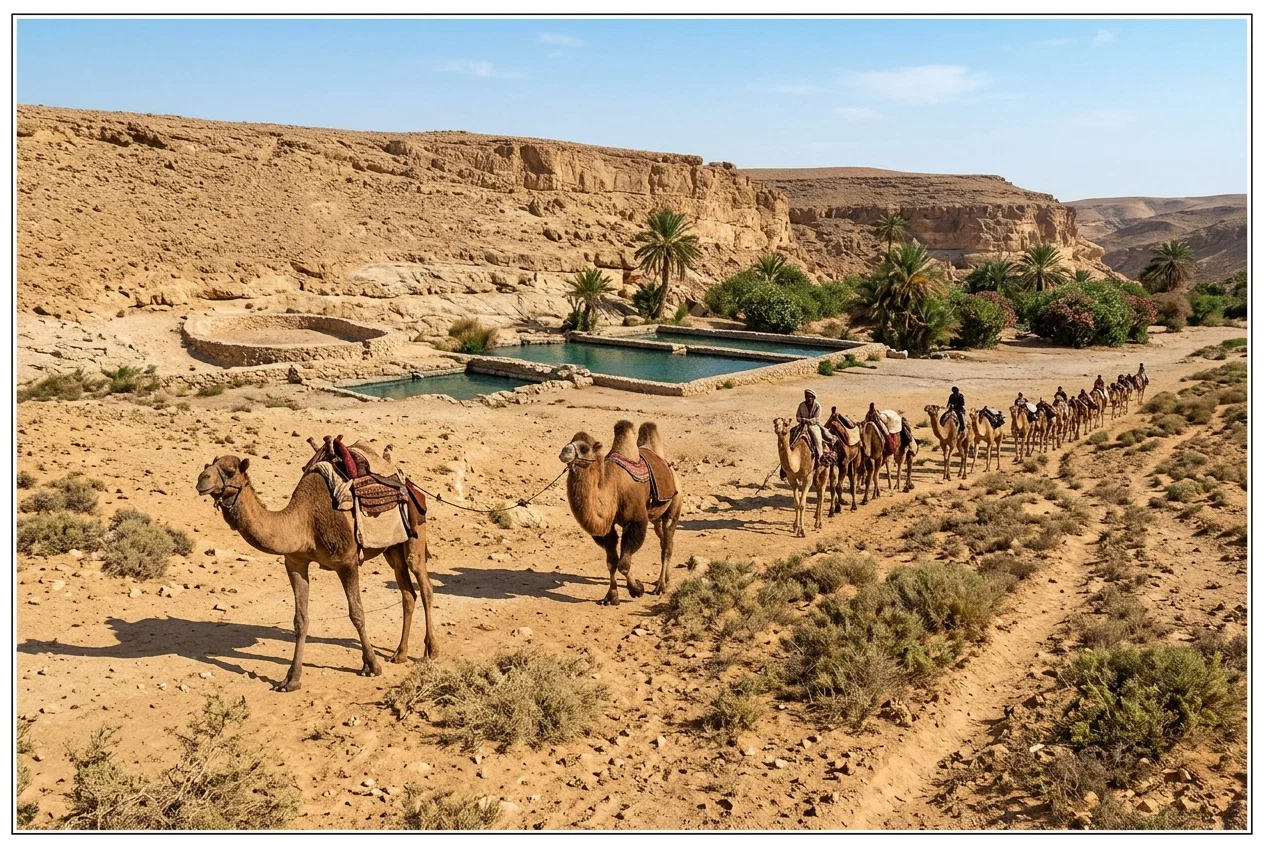
In the Homiletic Review for May, Prof. Camden M. Cobern, a recognized authority on the archeology of Bible lands, tells in a most interesting way of a flying trip made to the regions of Kadesh-Barnea, that point from which Israel turned again into the wilderness for the long wandering, and to which they came again just before making the journey around Edom into the promised land. It lies about five days’ journey south of Jerusalem by quick Arab horses.
His Findings and Impressions
The region is mostly desert, and still dangerous because of marauding bands of Bedouins, the desert Arabs who live by plunder. The following paragraphs from Professor Cobern’s description of his findings and his impressions at the famous spot give surely a modern setting to the inspired history:
“There are really three springs, with ten other places from which water bubbles out of the earth, though the latter probably all center in the head springs. What separates this from almost every other water-supply in the Sinaitic peninsula and makes it seem to the Arabs a magical or divine creation is that these are living fountains, not wells. They are near the surface, and are of perpetual strength. . . .”
The Original Fountain
“The two most prominent springs were six feet deep and stoned up from the bottom with time-worn rocks, but the one nearest the cliff was dry. The suggestion was forced upon me on the spot that this upper dry spring, which even yet sometimes contains water, as was proved by Professor Robinson, was the original fountain the drying up of which caused the assembled hosts to become crazed with thirst and cry out against Moses and Jehovah. In that case these other two springs would have been brought to light when Moses struck the rock twice. Ex. 17:1-7; Num. 20:7-13. At any rate, there can be no doubt, this being Kadesh-Barnea, as Bible scholars generally concede, . . . that one of these is the En-Mishpat, ‘spring of judgment’ (Gen. 14:7), by the side of which Moses administered justice.”
“I SAT ALONE AT NOON UNDER THE SHADE OF THE TWO FIG-TREES, . . . LOOKED ABOUT ME, AND DREAMED OF THE GREAT EVENTS WHICH HAD TRANSPIRED HERE.”
The Ghosts of the Centuries about Him
“I sat alone at noon under the shade of the two fig-trees which my Arab said no man had ever planted; and while the Syrian dragoman slept, I looked about me, and dreamed of the great events which had transpired here in the mystic, mighty past. And as I sat there, I may have fallen asleep, for it seemed that the ghosts of the centuries rose up about me. I smelled Oriental incense, and saw blood sacrifices, and heard weird chants, and beheld passing over the sands a strange procession of priests in white robes, and brave warriors with sharp weapons, and Arab sheiks riding on prancing chargers and lazy camels, and the ark of God was in the midst, and Moses and Aaron doing great acts and speaking great words, for which the people may have cared little then, but which the world has never been able to forget.”
“I heard the sound of Miriam’s timbrel, and later the wailings of the congregation as they carried this first sweet singer of Israel to her tomb. I saw the new ritual of worship established, and the daily drill by the ‘captains of hundreds and of fifties’; and I heard the groaning of camels, and the shrill whistle of goatherds, and the confusion and babel of the camp, when at last, after long, hard years of waiting, the order was given to once more take up the march toward the longed-for ‘land of milk and honey.’ Num. 20:14-24.”
“And just then I awoke, and the tumult was a dream, and all about me was the silence of peace; yet what I saw was even more wonderful than what I had dreamed.”
Like a Fairy-Land in the Desert
“The oasis is like a fairy-land. The sight of waving grass and gurgling water and the odor of flowers and hum of bees and flutter of birds seem impossible in this desolation. Yonder is a jagged chasm torn in the earth which may have been rift when Korah and his band were swallowed up as by the explosion of some subterranean mine. Numbers 16. . . .”
“It is no dream, but a certainty, that under the shadow of these hills mighty acts were performed and mighty words spoken that the world can never forget.”
It Is No Dream
Truly it is no dream, the deliverance from bondage in Egypt, the giving of the holy law, the wanderings until at last the Lord426led the people of Israel into the earthly Canaan, promised to their fathers. And just as truly as all these things took place in the development of God’s purpose in the plan of salvation, just so surely the Lord is leading a people out from the bondage of sin to-day. He is calling His children again to keep His commandments, and to prepare to enter the land of promise, this time the eternal Canaan, for which all the saints have looked through all the ages. With Christ’s glorious coming “even at the door,” we are on the borders of the promised land. The Lord is setting His hand “again the second time to recover the remnant of His people.” Isa. 11:11. Happy those who follow with that commandment-keeping remnant in the way of faith and righteousness.
W. A. S.
Signs of the Times
Published weekly by the Pacific Press Publishing Association, a corporation of the Seventh-day Adventist denomination.
(Entered Sept. 15, 1904, as second-class matter at the Mountain View, Cal., post-office, under Act of Congress of March 3, 1879.)
A. O. TAIT, EDITOR
L. A. REED, ASSOCIATE
EDITORIAL CONTRIBUTORS
A. G. DANIELLS W. A. SPICER W. T. KNOX
I. H. EVANS G. B. THOMPSON R. C. PORTER
H. R. SALISBURY E. E. ANDROSS J. O. CORLISS
Manuscripts should be addressed to the editor. Address all business and make all money-orders, etc., payable to the SIGNS OF THE TIMES, Mountain View, California.