Your ShelfYour Projects

Signs of the Times, Vol. 27, No. 13.

WATER

Signs of the Times

Mar 27, 1901

Pacific Press Publishing Company · Oakland, California · Mar 27, 1901

WATER
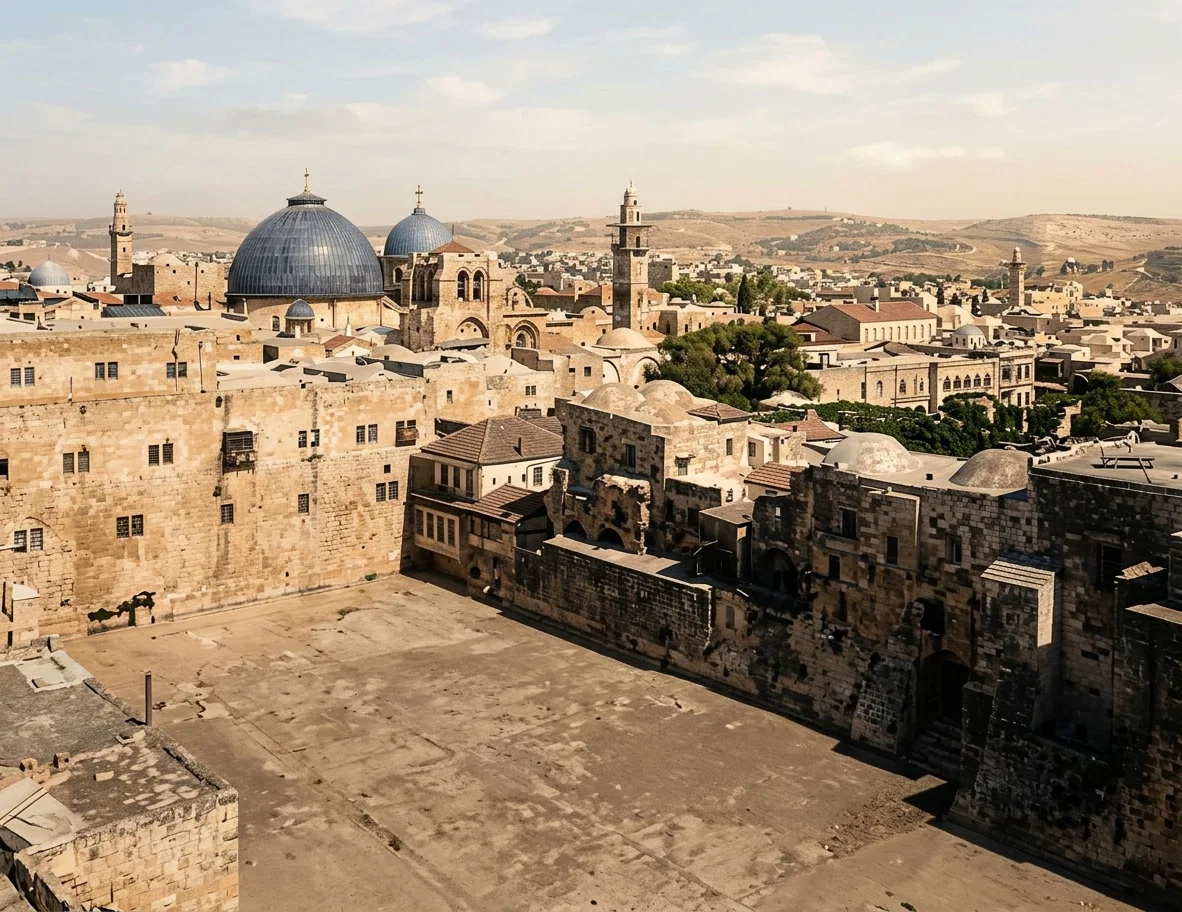
ONE of the most important elements of our planet is water. It enters so largely into the composition of the earth, and of every living thing upon the earth, that the constant need of its life-sustaining virtues, and its supply at all times, are matters of much concern. The supplying of large cities with water is often a serious consideration, involving not only great labor and expense, but frequently no little political controversy.
JERUSALEM—POOL OF HEZEKIAH.
ONE would naturally suppose that a city located upon mountain tops would be exceedingly difficult to supply with water. Such is the situation of Jerusalem. Of this city, the “Encyclopædia of Religious Knowledge” says: “Since Jerusalem lies in a rocky limestone region, it is to be expected that it would be destitute of springs; but this natural lack was formerly supplied by an extensive system of aqueducts, pools, and cisterns; so that in no one of her numerous sieges do we read of any suffering for water on the part of the inhabitants, while the besiegers have often suffered severely. At the present day rain-water is exclusively used; and the better class of houses have three or four cisterns, from five to thirty feet long by the same in breadth, and ten to twenty feet deep. . . . But formerly there were aqueducts from the north, west, and especially from the south.”
SOLOMON did a great work in supplying the city with water. He constructed three large pools about three miles from Bethlehem, where he had extensive gardens, and built a large conduit to convey water to Jerusalem. Speaking of the things he did in order to conduce to his temporal pleasure, he says: “I made me gardens and orchards, and I planted trees in them of all kind of fruits; I made me pools of water, to water therewith the wood that bringeth forth trees.” Eccl. 2:5, 6. There are traces of two conduits by different routes from the south, but it is not certain whether Solomon built them both. It is said that one was repaired and used from 1856 to 1860, but was afterward stopped up by the Bethlehemites.
IN a work entitled, “City of the Great King,” by Dr. Barclay, there occurs this passage: “The artificial provision for supply of water in Jerusalem in ancient times was perhaps the most complete and extensive ever undertaken for a city. The aqueduct of Solomon (winding along for twelve and a quarter miles) poured the waters of the three immense pools into the enormous temple wells, cut out like caverns in the rock; and the pools which surrounded the city in all directions, supplied to a great extent the want of a river or lake.”
HEZEKIAH, who is accredited with much enterprise in the line ofpublic improvements, has this Scripture record: “This same Hezekiah also stopped the upper watercourse of Gihon, and brought it straight down to the west side of the city of David.” And one of the pools now existing in the city is called the Pool of Hezekiah. It is located near the present Jaffa (Joppa) Gate, on the west side of the city.
WATER is used as an emblem of purification and of life. 1 Cor. 10:4; Eph. 5:26; 1 Peter 3:18-22. Its practical uses are to cleanse and to revive. When the Lord planted a garden in Eden, and caused to grow therein every tree that is pleasant to the sight and good for food, a river went out of Eden to water the garden. Gen. 2:8-10. Water is also an element of destruction, as in the case of the destruction of the antediluvians by the deluge, and of the Egyptians in the Red Sea. Like Paul’s experience with the law of God, that which was “ordained to life” they “found to be unto death.” Rom. 7:10.
IN Isaiah’s prophecy against apostate Judah, water is used as an emblem of both mercy and wrath: “Forasmuch as this people refuseth the waters of Shiloah that go softly, and rejoice in Rezin and Remaliah’s son; now therefore, behold, the Lord bringeth upon them the waters of the river, strong and many, even the king of Assyria, and all his glory; and he shall come up over all his channels, and go over all his banks; and he shall pass thru Judah; he shall overflow and go over, he shall reach even to the neck; and the stretching out of his wings shall fill the breadth of Thy land, O Immanuel.” Isa. 8:6-8.
THE prophet David says, “There is a river, the streams whereof shall make glad the city of God, the holy place of the tabernacles of the Most High.” Ps. 46:4. Here reference is had to the New Jerusalem, whose water-supply is a very prominent feature of the many blessings provided for its inhabitants. In John’s description of the “holy Jerusalem” which in vision he saw “descending out of heaven from God,” we note this item: “And he [the angel] showed me a pure river of water of life, clear as crystal, proceeding out of the throne of God and of the Lamb. In the midst of the street of it, and on either side of the river, was there the tree of life, which bare twelve manner of fruits, and yielded her fruit every month.” Rev. 22:1, 2.
AFTER describing the New Jerusalem, the “Revelation of Jesus Christ” makes this earnest appeal to sinners: “The Spirit and the bride say, Come. And let him that heareth say, Come. And let him that is athirst come. And whosoever will, let him take the water of life freely.” Verse 17. Come, “now is the accepted time; behold, now is the day of salvation.” 2 Cor. 6:2. G.

THE ORIGIN OF GOVERNMENT.

The necessity for government is inherent in the very nature of things. “Order is heaven’s first law.” These words are not Scripture, but the truth they express is scriptural, as all things testify.
Order implies law—it is the result of law—and law implies government. Indeed, government is only law in operation. Nor do we distinguish wisely between moral and natural law. For instance, we speak of the “law of nature” and of the “law of God.” But the Scriptures teach that the law of nature is the law of God.
“The heavens declare the glory of God; and the firmament showeth His handiwork. Day unto day uttereth speech, and night unto night showeth knowledge. There is no speech nor language, where their voice is not heard. Their line is gone out thru all the earth, and their words to the end of the world. In them hath He set a tabernacle for the sun, which is as a bridegroom coming out of his chamber, and rejoiceth as a strong man to run a race. His going forth is from the end of the heaven, and His circuit unto the ends of it; and there is nothing hid from the heat thereof. The law of the Lord is perfect, converting the soul.” Ps. 19: 1-7.
What started such a chain of thought in the mind of the psalmist? What was used by the Spirit of God to uplift the soul of the prophet, to indite his words, to “wake to ecstasy” his harp, ever attuned to the praises of the Creator? Was it not the matchless beauty of the star-gemmed sky, the glory of the sun shining in his strength, the evidence of divine wisdom and power everywhere?—Yea, verily, and, transported by these thoughts, “the sweet singer of Israel” exclaims, “The law of the Lord is perfect.”
The psalmist was right, yea, is right; for there is but one law—“the law of the Lord.” Therefore, as government is the reign of law, it had its origin in the bosom of the Divine Being. “There is no power but of God; the powers that be are ordained of God.” Rom. 13:1.

Sin Is Only Perverted Good.

Had man a single power, a single faculty, not derived from the Creator, had he anything not a gift from heaven, he might innocently use it as he would. But all man’s powers are God-given, and he is under sacred obligation to use them all to God’s glory.
The Creator, being the God of life, of order, of justice, implanted in man a love of these things: of life, that he might retain and enjoy it; of order, that he might be in harmony with the laws of his own being and of the universe; of justice, that he might take pleasure in this attribute of the divine character and be himself just.
In a state of innocency these attributes would make it a joy to man to live in harmony with the divine law. Separated from God, the same qualities,—love of life, of order, and of justice,—would lead men to organize themselves into civil society, the better to secure these ends,—self-preservation, order, and justice.
In other words, God is never taken by surprise; He is never confronted by any emergency for which He has made no provision. As civil order would be essential to a race of sinners, man was given such a nature that, separated from God, he would be drawn naturally into civil society. (But civil society does not necessarily take the form of a state or nation.) It is in this sense—in the sense of being naturally drawn into civil society—that government is ordained of God, and not in the sense that any particular form of government is of divine origin, or that God makes choice of certain individuals, and commissions them to rule over their fellow-men. The Bible teaches, not the divine right of kings, but the divine rights of the individual. “It is not particular sovereigns whose power is ordained of God, nor any particular form of government; it is the genius of government itself.”

The Ideal Government.

In the very nature of things, the ideal government is self-government—self-control. This faculty was lost in large measure in the fall. It is restored in the Gospel. In Jesus Christ every man may, by the grace of God, do those things, and only those things, that his conscience, instructed by the law and Spirit of God, tells him are right. Out of Christ every man’s experience is expressed in Rom. 7:15: “For that which I do I allow not; for what I would, that do I not; but what I hate, that do I.” Well may the soul in such a condition of vassalage to sin cry out in anguish of heart, “O wretched man that I am! who shall deliver me from the body of this death?” But there is deliverance—restoration of the power of self-government—in Jesus Christ. “For the law of the Spirit of life in Christ Jesus hath made me free from the law of sin and death. For what the law could not do, in that it was weak thru the flesh, God sending His own Son in the likeness of sinful flesh, and for sin, condemned sin in the flesh; that the righteousness of the law might be fulfilled in us, who walk not after the flesh, but after the Spirit.” Rom. 8:2-4.
Naturally, the first human government was family government; and in the Christian family—the Christian home—we still find the nearest approach to God’s ideal government—voluntary co-operation to secure the common good. In the Christian home love moves to obedience, and each act of filial affection jewels with a new joy the life both of the parent and of the child. What parents so happy as those who have obedient children? What children so blest as those who find their chief joy in willing service to loving parents?
But this is a digression. Let us return to the development of human government. First was the family, then the tribe, and finally the nation, with its king. The world was getting farther and farther from God and from His ideal of government,—self-control, or, in other words, the reign of conscience.

The Origin of the State.

So far as history records, Nimrod was the first to assume the dignity and title of king. Prior to his time all the rulers of Babylon were merely viceroys. Their god, Nimridu, was king. “This,” says “Empires of the Bible,” “points clearly to a time when God was recognized as the only King and the only Ruler. And when false gods were put in the place of the true God, they were recognized as the real kings, and men in places of authority were but mere substitutes. This change was so recent, too, that rulers were not bold enough to take to themselves the title of king. It was not much longer, however, before this step was taken. One arose bold enough to do this and all that it involved.”
This man was Nimrod, and his name, according to Gesenius, means “the extremely impious rebel.” In assuming to rule othersby his own right and in his own name, he put himself in the place of God. From henceforth men were expected not to ask, What is the will of God? but, What says the king?
“With the setting up of Nimrod’s kingdom,” says the author of “Buried Cities of the East,” “the entire ancient world entered a new historical phase. The Oriental tradition which makes that warrior the first man who wore a kingly crown, points to a fact more significant than the assumption of a new ornament of dress, or even the conquest of a province. His reign introduced into the world a new system of relation between the governor and the governed. The authority of former rulers had rested upon the feeling of kindred, and the ascendancy of the chief was an image of parental control. Nimrod, on the contrary, was a sovereign of territory, and of men just so far as they were its inhabitants, and irrespective of personal ties. Hitherto there had been tribes—enlarged families—society; now there was a nation, a political community—the state.” And of that state Inspiration says, “The beginning of his kingdom was Babel”—confusion.

God’s Plan of Government

kept the ruler close to the people. Being the father of the family, the patriarch of the tribe, he was one of the people. Their interests were his interests; their happiness, his joy. But fallen man, as we have seen, soon developed a widely different scheme, one that separated the ruler as widely as possible from his people.
To the king, his subjects were no more than so many cattle. He esteemed them as of value only for the service they could render him, the tribute they could pay. They were known to him only in the mass. They were so many hundreds or so many thousands of men, women, and children, capable of contributing so much to the royal revenues. They had only such rights as he, their sovereign, saw fit to grant. To him their highest allegiance was due—in short, he was their god. The individual was merged into the state, and the state was embodied in the king, whose idea of right and wrong, of moral obligation and human duty, constituted the “national conscience,” by which all were to be governed. A sad condition surely!
But why, it may be asked, did God permit this? Simply because He could not do otherwise without destroying man’s free agency. It is true that the scheme of government here described greatly restricted freedom of conscience, but only God could take away that freedom; and He could do it only by destroying man’s will-power. But without will-power moral character is impossible. Such character is formed by choosing the good and refusing the evil. And God never ordained any system of government calculated to weaken in man the power of choice. Self-government is so essential to character-building that Jesus Christ came into this world to restore to men this faculty; therefore it is written, “He hath sent Me to bind up the broken-hearted, to proclaim liberty to the captives, and the opening of the prison to them that are bound.”
It is more than a coincidence that in those lands having the Gospel in its greatest purity the rights of conscience are most clearly seen and most fully guaranteed. The powers ordained of God are not wicked men, using their power to enslave the souls of their fellows, but the faculties or powers which they have perverted, which were originally given to enable each individual to govern himself to the glory of God. “He hath showed thee, O man, what is good; and what doth the Lord require of thee, but to do justly, and to love mercy, and to walk humbly with thy God?” Micah 6:8.
C. P. Bollman.

CHRIST'S PREPARATION FOR THE PRIESTHOOD.

THE infinite love of God gave His Son Jesus to die for the human race. John 3:16. After His death He was seen to ascend to heaven (Acts 1:9), where He went to fulfil, or complete, all things. Eph. 4:10. That is, He returned there to perform the work of restoring all things to the condition they were in before sin appeared to mar the handiwork of creation. This work required Him to assume the office of priest, in order that He might minister in behalf of sinners before the Ruler of the universe.
But to fill this place required the highest possible qualification, and it was therefore necessary for even Christ to pass thru a peculiar preparation before entering upon it. Whoever would occupy such a position must be perfect, so that he might not have to make an offering for himself, as tho he were a sinner. The qualification was, therefore, to be “holy, harmless, undefiled, separate from sinners, and made higher than the heavens.”
True, before coming to earth to show Himself man's Saviour, Jesus held a most exalted position. When the worlds were created, He was with Jehovah as one brought up with Him. Prov. 8:23-30. He was indeed called God, and was the very Word thru whom was accomplished the entire creation. John 1:1-3. Every throne, dominion, principality, and power, thruout the infinite realms of the whole universe were His by virtue of His act in creating them, so that He was truly above everything, and the upholder of them all. Col. 1:16, 17.
But all this perfect greatness, while being all that was possible to be as Creator and Upholder of material things, was not sufficient to meet the demands of sin. The guileless purity of heaven could not remain unsullied in contact with anything so vile, and therefore if man, infected by sin, was to be restored to the pure image of his Maker, he must be recovered by infinite power, yet in a way to preserve the immaculate innocence of that power. This could be done only by the Creative Power condescending to enter the fleshly condition of those who were to be drawn from the depths of degradation, and then as one of them, die in their stead, tho having no guilt of His own. 2 Cor. 5:21.
So the Word became flesh, and dwelt among men. John 1:14. The Lord did not take on a kind of flesh which was exempt from temptation, but He was born of a woman (Gal. 4:4), and made in the “likeness of sinful flesh.” Rom. 8:3. He who had been infinitely rich became extremely poor, that the poverty of the sinner might be exchanged for heavenly riches. 2 Cor. 8:9. He who had been in the form of God, and was Ruler of the universe, took the form of a servant, after the usage of men. In this garb He submitted to the common lot of men, and yielded up His life as one of the lowest, even as a malefactor. Phil. 2:6-8.
Inasmuch as the wages of sin is death, and Jesus was to suffer in the place of the sinner, it became necessary for Him to partake of the same nature as those who had incurred the penalty of death because of their sins. Otherwise He would not be able to die, and then be restored to life and power by heavenly energy, as necessary steps toward a preparation by which He might destroy the author of death. Heb. 2:14.
By thus taking a place in the human family, Christ allied Himself so closely to it that He was not ashamed to call its members “brethren.” Heb. 2:11. Not only did He not despise, or abhor, “the affliction of the afflicted” while with them in the flesh, but in His song of rejoicing, when the mighty throng of the saved shall appear before the throne of heaven, He will declare, in the midst of the assembled universe of men and angels, the name of Jehovah as a God of love. Verse 12. The marks of the crucifixion, which will forever remain on Christ's person as an everlasting reminder to the saved of His humility in behalf of their redemption, will also be a sign of the eternal retention of that humanity which He assumed for their salvation. Thus humanity, in its noblest and most perfect form, will be carried into the highest heaven, to remain there thruout the eternal ages.
So before He could minister as priest in behalf of those whom He would forever call brethren, Christ assumed their nature, in order that He might be tempted as they were, and learn by actual experience the suffering of humanity under the agony of sore trial, and thus be able to help every one, under all phases of human temptation. Heb. 2:10, 17, 18; 4:15. Not only was Christ tempted like man in meeting the contradiction of sinners against Himself, but in this He “resisted unto blood, striving against sin.” Heb. 12:3, 4. He went to the very depths of human suffering and sorrow. When His spirit was overwhelmed, He looked about to find some one who would recognizeHim and sympathize with Him, but no one cared for His welfare. Ps. 142:3, 4. At last, when the climax of His earthly work was about to be met, He called the three disciples who had formed the inner circle of His acquaintance, and asked them to watch with Him while He prayed in Gethsemane. But these could not, or did not, enter into His soul-trouble, but sought repose while He wrestled with the greatest temptation of His existence. While pleading in agony for strength to pass thru what He so much dreaded and feared (Heb. 5:7), bloody sweat issued from the pores of His flesh and fell to the ground. Luke 22:39-46.
But this was not the full extent of His abasement. Soon He was nailed to the cross, and there, without a pitying eye to give Him consolation, He was mocked and maltreated until the cruel reproach broke His saddened heart. Ps. 69:20. But this last scene was the final pledge of His sure exaltation. As it was necessary for Him, as high priest, to be provided with blood with which to perform the duties of His office, that necessity was supplied in the crowning act of His earthly pilgrimage. “The blood-drops of agony that from His wounded temples flowed down His face and beard, were the pledge of His anointing with the ‘oil of gladness,’ as our great High Priest.”—Desire of Ages, p. 734. J. O. CORLISS.

The Bible and Tradition

The great question at issue between Popery and Protestantism is this: Is the Bible only to be received as the rule of faith, or the Bible and tradition together? Is no doctrine to be received as matter of faith unless it is found in the Bible, or may a doctrine be received upon the mere authority of tradition, when it is confessedly not to be found in the sacred Scriptures? The whole Christian world, both nominal and real, are divided by this question into two great divisions: The consistent and true-hearted Protestant, standing upon this rock—“The Bible and the-Bible only,” can admit no doctrine upon the authority of tradition; the papist and the Puseyite place tradition side by side with the Bible, and listen to its dictates with a reverence equal to, or even greater than, that which they pay to the sacred Scriptures themselves; and he who receives a single doctrine upon mere authority of tradition, let him be called by what name he will, by so doing steps down from the Protestant rock, passes over the line which separates Protestantism from popery, and can give no valid reason why he should not receive all the earlier doctrines and ceremonies of Romanism upon the same authority.—Dowling’s Hist. Rom., book 2, ch. 1, sec. 4.

OUR SCHOOLMASTER.

  • (Concluded from last week.)*
But before faith came, we were kept under the law, shut up unto the faith which should afterwards be revealed. Wherefore the law was our schoolmaster to bring us unto Christ, that we might be justified by faith. But after that faith is come, we are no longer under a schoolmaster.” Gal. 3:23-25.
That Paul in this text under consideration reasons concerning the moral law, is scriptural; for the law of which he speaks is established by faith. It holds the sinner in prison on account of his transgressions, which could be done by no law except that which had been transgressed. It reveals Christ to the sinner, and by faith in Him he is justified. Justification means that sins are forgiven; and as no sin stands against the sinner, the law ceases to condemn him; and that he may not again fall under condemnation, he is made a doer of the law. This process establishes the claims of the law. “Do we then make void the law thru faith? God forbid; yea, we establish the law.” Rom. 3:31. Tho the law can not justify, Paul gives it its legitimate office in turning men from sin to God.
The schoolmaster of verse 24 and the added law of verse 19 are the same. The original word rendered added means put forth. The added law defines sin; for, logically, a law put forth because of transgressions could be no other than that which reveals sin in its true light. Compare with verse 19 John 15:22; Rom. 5:20; 7:7. Christ spoke from Sinai as well as in His incarnation. In verse 19 and Rom. 5:20 we have parallel expressions. “The law entered that the offense might abound.” “It was added because of transgressions.” It is the moral law that makes sin appear in all its hideous deformity, just as a light brought into a dark room would reveal the objects which before were invisible for want of light. The transgression of the law is sin, and the entering, or adding, of the law made sin to abound, or appear what it really is. The promulgation of the added law is temporal, limited by the coming of the “Seed,” which embraces all the comings necessary to the inheritance of the promise. Christ became the “Seed” at His first advent, and can never cease to be such. If He does, He can not inherit the promise; for it was made to the “Seed.” At His first advent He was the Seed incarnate; at His second coming He will be the same Seed glorified.
There is no way by which the coming of verse 19 can be confined to the first advent. Of necessity it includes both comings. To exclude the second advent would be to stop short of the full fruition of the promise and the complete confirmation of the fact that He is the Seed. In God’s plan for the fulfilment of the promise to Abraham, two comings of the Seed are necessary. The law also is of such a nature that one part of it relates to His first coming; and its promulgation was then to cease, for its specifications were met in Christ, and to worship any longer according to its forms would be a rejection of Him. But the other part of the law was not affected by the first advent, or did not relate to it, and is to be promulgated till the second coming, or the end of probation. This thought of the law is advanced in Matt. 5:17-19. Not a jot or a tittle of it could pass till all be fulfilled. Christ fulfilled every particular of the whole law in His incarnation. In fulfilling the ceremonial, its efficiency, so far as our obedience to it is concerned, ceased by limitation. In fulfilling the moral in the life which He lived, the law itself was not affected, but an example of a perfect life was set before the world, which men could safely follow. If the law was added because of transgressions, logically it cannot cease to be added until transgressions cease; but that reaches to the second advent. In the world to come, where no sin will exist, it will not be taught. In the complete fulfilment of the terms of the new covenant there is to come a time when the teaching of the law will cease,—a perfect state in which the principles of the law will be fixed in every heart, and in which the law can not exist in a form adapted to beings in an imperfect state, as we now have it.
The Word tells us that the law is perfect. God uses it as an instrument in conversion. It is to be the final standard in the Judgment. James 2:12. It must be, then, that the principles of the law, carried out practically, lead to all perfection. Satan, in his rebellion, had despised the law, and questioned its justice and mercy. But in the plan of salvation Christ undoes the work of Satan. He magnifies the law and makes it honorable. In reconciling sinners to God, He has magnified it both in His teachings and in His life. In Him the law is seen drawn out in living characters. The gospel is the perfection of the law exemplified to the world. All the law in the plan of salvation, except the moral, shines with a borrowed light; consequently whatever is predicated of the law in general must be predicated of the moral in particular. The light of the moon comes really from the sun; and so it was with the ceremonial system; it shone with a light borrowed from the moral law.
It has been said that the moral law points to no remedy for sin, gives no information in regard to Christ, or any means of escaping its condemnation. But this statement needs modifying. If we adhere to the plain statement of the Word, we shall learn that it can not justify, or impart to the sinner what he needs, but it does lead to One who can; which shows that the mercy of God’s character is inherent in His law. That there is anything inherent in it that leads to Christ is questioned by some critical minds; but all will admit that Satan has endeavored to darken the minds of God’s creatures concerning the law, and Christ’s work has been to remove that reproach, and show that the law is perfect. A part of His mission to earth was to magnify the law and make it honorable. If He had not done this, the law could not have been made to shine out in all its perfection as it now does. When the dark shadows of sin are removed from the heart, men will see infinite beauties in the law of God. Sin makes it impossible for us to see all its perfection now. The world is indebted to the divine principles of the law for salvation. Its love, exercised toward the erring, led Christ to the cross of Calvary to save the lost. If the law has no mercy in it, and does not lead to the salvation of repentant sinners, then there is a phase of God’s character which is not shown in the law, and it is imperfect, because it does not reveal the whole character of its Author. But the Bible refutes this idea; for it says that the law brings us to Christ that we might be justified by faith. Salvation is not in the law, but it is in the principles of the law as carried out by its Author. As magnified thru the plan of salvation, the fact is revealed that it is a perfect law for the government of sinless beings in heaven, and that it has inherent within it principles which cause it to triumph over rebellion and bear the strain of any emergency.
But hear what the Scripture says: “Love is the fulfilling of the law.” Rom. 13:10. “God so loved [fulfilled the law toward] the world, that He gave His only begotten Son, that whosoever believeth in Him should not perish, but have everlasting life.” John 3:16. God fulfilled His own law in the gift of His Son to the world. We are required to forgive our fellow-men when they repent; and if this is not done freely, we are not doers of the law. Then the principles of the law require forgiveness when the transgressor repents of his sin. God forgives, and we call this attribute of His character mercy. If the law is a transcript of God’s character, then mercy must be inherent in the law. But this very thought is found in the second commandment: “Showing mercy unto thousands of them that love Me, and keep My commandments.” This language is addressed to obedient men on earth, and not to angels in heaven; for the law is in a form adapted to our condition in this imperfect state. God is merciful in strict harmony with His law. See Ex. 34:5-7.
But the question may be asked, How does the law bring to Christ? 1. It reveals to men the perfect life of its Author, and thus places before them a perfect standard to be attained. 2. It names its own Author, and shows the extent of His jurisdiction. 3. It reveals Him to be merciful to those who are inclined to obedience. 4. Hence it shows Him to be the Author of the law, and the only source of authority to which to appeal for mercy; and so it does not leave therepentant sinner wholly in despair. But who is the Author of the law? From Col. 1:16 and Heb. 1:3 we learn that Christ created all things, and upholds them by the word of His power. From Exodus 20 we learn that the same Being who created all things spoke the law from Sinai. If Christ made all things, then He created man, and is the Author of man’s moral nature; and that makes Him Author of the law which governs that nature. This does not prove that it is not the Father’s law; for if He created all things by Jesus Christ, the law is His also. The oneness of the Father and Son could not exist if this is not true. These reasons are sufficient to show that the law brings to Christ in every essential sense; and that it constrains its Author to make provision to save the penitent transgressor.
As sin originated in an attempt to overthrow the moral government of heaven, in dealing with it that course would have to be taken which would cause the principles of the law to appear in their true light to the minds of all intelligent beings. The final results of the plan of redemption will reveal to the universe that the law is not only right in its principles, but that it manifests every phase of God’s character. It can not be shown that the offer of mercy thru Jesus Christ sprang from principles not contained in the law; for if it could, it would appear that there are elements in the character of God which are not manifested in His law, and that would prove the law to be imperfect and the Bible unreliable. The law itself attests the Lawgiver to be merciful. That He would in some way send help to the penitent could not reasonably be doubted. But the form in which that help would be rendered, the moral law does not reveal. That would have to be left to the wisdom of the Lawgiver. As the law is holy, and its Author is holy, the principles of whatever plan of salvation He devised would necessarily have to be consonant with the principles of the law.
In the plan which infinite wisdom devised, a Saviour was promised, to appear at a future time. Forms of worship were introduced of a nature to show the worshiper’s faith in this promise. This constituted what is known as the ceremonial law. From the very first this was promulgated in connection with the moral law; not so much to show that a Saviour would come, as to show the manner of His coming and the nature of His work.
When the law was systematized under Moses, Christ was the leader of His people. He, being Creator of all things, and the One in whom God was reconciling the world unto Himself, was the properly constituted Lawgiver. In giving the law thru Moses, He formulated it in such a way as to point to Himself as the only source of justification from sin. He was building in the light of infinite wisdom, not for an age and a single nation, but for the ages and all nations. Consequently Paul could tell the Galatians that the law was their schoolmaster to bring them to Christ, that they might be justified by faith. But people from all nations are to be brought to Christ, and it can be done only by the means which God has provided for that purpose. The law is the appointed means; hence we can say at the present time that the law was our schoolmaster to bring us to Christ. It would not be teaching the whole counsel of God to say that Paul meant the ceremonial law only. It will be absolutely safe for us to leave it just as Paul does, and say “the law,” without any qualifying terms either in the text or context; for it—both moral and ceremonial—brings to Christ, and that was the original design in its promulgation.
In this age men are not to worship God by the forms of the ceremonial law; but there was light in it for those who were to worship by its precepts, and there is light in it for us. It spoke to them with all the force of an unfulfilled prophecy, and it speaks to us with the greater force of a fulfilled prophecy. Tho it shines with a light borrowed from the moral, it is as beneficent for us as it was for them; and we should accept it as a part of the system which God has devised to bring sinners to Christ for justification from sin. “Whatsoever things were written aforetime were written for our learning.” The Word of God is living and powerful; for the Spirit gives it life and power. The law could not have less of this life and power than other portions of the Word. If there is life and power in it, then it can do what Paul predicates of it; and if sinners now will let it have free course in their hearts, they will find by experience that it will bring them to Christ to be justified by faith.
Walla Walla, Wash. T. H. STARBUCK.

THEY DO NOT DIE THAT WAY.

A devout colored preacher, whose heart was aglow with missionary zeal, gave notice to his congregation that in the evening an offertory would be taken for missions, and asked for liberal gifts. A selfish well-to-do man in his congregation said to him before the service: “Yer gwine to kill dis church if yer goes on saying, ‘Give! Give!’ No church can stan’ it. Yer gwine to kill it.” After the sermon the colored minister said to the people: “Brother Jones told me I was gwine to kill dis here church ef I keep a-asking yer to give; but, my brethren, churches doesn’t die dat way. Ef anybody knows of a church dat died ’cause of its givin’ too much to the Lord, I’ll be very much obliged ef my brother will tell me whar dat church is; for I’se gwine to visit it; and I’ll climb up on de walls of dat church, under de light of de moon, and cry, ‘Blessed am de dead dat die in de Lord.’”—Anon.
Continue reading: THOUGHTS FROM ISAIAH 9:6