O, LET us trust that love divine,
And in His arms secure,
In perfect trust our all resign,
Then our reward is sure.
Hast thou found life so passing fair
That thou wouldst dread to go,
The rest in Jesus’ arms to share,
That blessed rest to know?
Oh, no; this life is full of care,
Its sorrows we all know;
And all who stay here long, must share
The bitter draught of woe.
But Jesus grants that some may rest,
While plagues are pouring sore,
And wake to greet their Saviour blessed
When trials all are o’er.
Co-operation of Parents and Children
By Mrs. D. A. Fitch
MRS. D. A. FITCH
CHILDREN are what they are because of their likeness to their parents. There is need of restraining power in the home. Just as much family government exists now as ever, only it has passed into the hands of the children. Parents submit, sometimes under protest, sometimes from unwise love, and sometimes to gain present ease. In any case, sad results must follow. The Lord is desirous that the family relations perfectly represent his loving ones to the great world-family. In some families there is a good degree of the love and harmony which exists between God and his faithful, obedient children. Let us draw the veil on those homes where the opposite condition exists.
Parents should rise to their high privileges, thus granting to children theirs, the greatest of which is to be well trained. That child is truly left with a poor heritage, who, in mature years, yet by grace must battle to overcome a well-blossomed fault, which, had the parent done his duty, would have been nipped in the bud.
In family government there should be a co-operative system, which, because of self-control, will be unequaled elsewhere. A mother who realized her inability properly to restrain her children, gathered them around her, and plainly stated the fact. She told them the results of disobedience, and contrasted them with those of obedience. Then she said, “My dear children, I need help, and there are no others who can help me as you can. To obey from fear of punishment is not real obedience. Now if you will each one control yourself, a great load will be lifted from me.” They assented, and ever after were glad of a part in the governmental affairs of the family. Self-control is most important of all things. Prayer with and for the children places us in such relation to them and God that he can safely trust us with needed instruction.
Pride has kept many a parent from acknowledging his mistakes and lack of discretion. As a means of overcoming such pride, I made a practice of confessing to my children my sins of impatience, petulance, and the like, asking them to forgive me as God had done. Many times, when symptoms showed the rising of a storm, has it been said to me, in childish simplicity, “Now, mama, don’t get cross; for you know you will have to come and tell us you are sorry.” Only God and those who have had just this experience, know the conflicting emotions filling the mind at such a time. Impatience is born of pride, and pride never wishes to be humbled.
With hearts softened by love, let us turn to our children, and with all the power Jesus can give, work for their salvation, that when Jesus comes, we may say, “Here am I, and the children thou hast given me.”
Natural Food and Spiritual Life
By George C. Tenney
G. C. TENNEY
THE true object of eating is the glory of God and the nourishment of our spiritual powers. “Whether therefore ye eat, or drink, or whatsoever ye do, do all to the glory of God.” God is glorified when his own will and plans are carried out. The proper use of every mercy or blessing brings glory to its Giver. The improper use of God’s blessing reflects discredit upon his provision.
It will not be denied that the common criterion by which the diet is prescribed is taste, or appetite. Appearance goes with this to a certain extent, as indeed it must in any case; for no one can glorify God in the use of food prepared or served in a slovenly manner, no matter how good the food may be. Gust, or relish for food, is an essential consideration. No man can eat food to the glory of God simply from principle,12while every sense of his being rises in teouse protest against it. Eating from a sense of duty is a hard way to get a living. The man who finds himself pressed between physical necessity on one side and a goading conscience on the other, while across his only path lies the disagreeable task of eating what his soul loathes, is truly an object of pity. That is one extreme. The other is to live as though eating were solely a matter of gratifying taste, a gustatory function, over which the palate presides, and where sense and reason sit last and lowest at the board.
The name for this latter situation is gluttony, and, though I would say it gently, it may be said that we are a race of gluttons. The cook who most successfully panders to appetite gets his thousands, while he slays his tens of thousands. The man who advocates the claims of hygiene in diet is a setter forth of strange doctrines, one who wants to take from us all that is good.
Before we can make any progress in a right direction, we must get rid of the idea that it is a doleful path that we are called upon to tread. The reason why people make out so miserably in God’s service is that they never get near enough to know the sweetness of his approving smile. They lag so far behind that they catch all the reproach, and tumble over all the stumbling-blocks. They have no light, no joy; they would fain fill themselves with the husks that the swine about them are eating, and have naught to do but to grumble and complain because they cannot have anything. Poor souls! they don’t get much, to be sure.
We say that such persons need converting. So they do. They need to be renewed in the spirit of their minds. Their mental organization needs transforming. They need to get nearer God and the light. They need to feel the clasp of the divine hand, and to hear the cheering voice of Jesus. Then their Christian service becomes another thing.
Thus it is exactly in matters of diet. No man can please God while he is in the flesh, or eats after the flesh. The professed Christian who is eating after the flesh (appetite) is eating death and condemnation all the time—spiritually as well as physically. The man who tramples his conscience under foot, even occasionally, in eating or drinking, weakens his moral and spiritual powers as though he yielded to temptation on any other point.
But how can we bring our tastes into harmony with what we know to be right, so that we can enjoy the food “which God hath created to be received with thanksgiving of them which believe and know the truth”?—Just in the same way that a Christian learns to love what he once hated—by being converted by the grace of God. Let us place God and purity in the seat occupied by appetite, and see what a revolution will take place in our ideas of pleasant food. How disgusting the fumes of liquor and tobacco become! How hideous do the slaughterhouse and beastly morgues that line our streets become! In a little while we almost hold our noses at smells, and shut our eyes at sights that were once our delight. Now we glory in the beautiful displays of fruit, and think with delight of the manifold blessings of God, blessings which come to us all the way from Eden, blessings which await us in all their perfection in Eden restored.
The Bible advocates good living, not starvation. ‘Eat ye that which is good, and let your soul delight itself in fatness.’ We are apt to think a fat body is the sign of good living. Rather let us agree with God that it is the soul that wants fattening. Many a fat soul flourishes in a lean body, though food that is good for the soul is always best for body and spirit. Again: ‘The righteous eateth to the satisfying of his soul: but the belly [appetite] of the wicked shall want.’ Prov. 13:25. He who eats to gratify his appetite is never satisfied. We have all heard how the old Romans used to do in their vain endeavors to get enough. People do almost the same now, only it is a dose of pills instead of a slave with a feather. But they are not satisfied. One can never satisfy the craving of a sinful tendency by gratifying it. It only feeds it. But a Christian, eating to the glory of God, rises from his table with a thankful heart, with spirit refreshed, with a conscience void of offense. Not only is his body satisfied, his soul is also filled with delight. Of ancient Israel it was written that ‘He gave them their request; but sent leanness into their soul.’ The result of eating for appetite was then what it is now. Appetite needs sanctifying as much as any of our faculties, perhaps more. Then we shall eat our bread and fruit and all that is good with gladness and singleness of heart; and it will taste good, too.
The River of Life
It is a gracious prophecy in Ezekiel, “And everything shall live whither the river cometh.” What a beautiful thing to think about! The gospel of Jesus Christ is the river of life in this world. Nothing dead can be found along its banks; everything lives wheresoever the river flows. What beautiful illumination this thought gives to the saying of Jesus: “I am come that they might have life, and that they might have it more abundantly.” Death never prevailed in the presence of Jesus; he never attended a funeral without restoring the dead to life. Wheresoever the river flows, “everything shall live.” Is there a dead church, a dead community, a dead (?) Christian? You will not need to ponder the cause very long. The river does not flow through that church or community or professor.
Give the river a chance. Make a channel for it; let us prepare a way for it through every desert, every far-off land, every near-by town, every city, every life. All that this old world needs, in order to make it a heaven below, to blossom as the rose, is to let the river flow unceasingly. The gospel of Christ is the great irrigating stream to water the world’s deserts. Jesus is the water of life to every thirsty soul; “everything shall live whither the river cometh.”—Selected.
The Object of Comfort
PATIENCE works experience. If we wish experience, we must not shun suffering, nor refuse to bear burdens. No matter how great the tribulation, God has comfort enough to enable us to endure it. He comforts us in all our affliction and tribulation. Do not forget this; his comfort is inexhaustible. “My grace is sufficient for thee.” And why does he comfort us?—In order that we may be able to comfort those who are in any sort of tribulation, with the comfort wherewith we ourselves are comforted of God. We are to accept God’s comfort, and pass it along. God thus makes us sharers in his own work. The Holy Spirit properly takes us into copartnership, as it were. He makes us comforters.— Selected.
Hope Overmuch
“If to hope overmuch is an error,
’Tis one that the wise have preferred,
For how often have hearts been in terror
Over evils that never occurred!”
Looking Toward the Light
By Mrs. David W. Gates
I ASKED the roses as they grew
Richer and lovelier in their hue,
What made their tints so rich and bright.
They answered, “Looking toward the light.”
Ah, secret dear, said heart of mine,
God meant my life to be like thine—
Radiant with heavenly beauty bright
By simply looking toward the Light.
— Mrs. David W. Gates.
Practical Hydrotherapy
By GEO. THOMASON, M. D.
Lesson XI — Sedative Effects
The Relief of Pain
GEO. THOMASON, M. D.
(Continued from last week)
PAIN, although a very unpleasant symptom, nevertheless fills an important, and even a useful, place in connection with disease. It is one of the most constant symptoms accompanying diseases, both acute and chronic. There are comparatively few disease conditions in which it is absent.
Pain is one of nature's methods of calling attention to the fact that some of her laws have been or are being violated. It is a danger signal, giving notice that there must be a change, and that a different course of action must be pursued. Again, nature frequently uses this symptom as a protection. If a child places his hand against a hot stove, the pain immediately experienced compels the quick withdrawal of the hand in order to minimize the extent of the injury, and to protect the tissues from destruction. The severe pain of colic, following the ingestion of a liberal quantity of green apples, is nature's voice warning the child against a repetition of the indulgence. The painful corn is an appeal for a better-fitting shoe. The distressing toothache is simply a call to visit the dentist, and usually comes in season for the decaying tooth to be filled, and thus saved to continue its useful function. These and many more examples which might be given will help to impress the real value of pain; and while we say it is nature's method of addressing the body, we mean it is the voice of God, speaking in certain tones, calling for reforms in the life.
In the treatment of pain, the attention should be directed more particularly to the underlying cause of the pain than to the pain itself, although when once its voice is heard, and has directed attention to the seat of the disease, and has thus fulfilled its mission, it is at least conducive to the patient's feelings to apply means for relief.
Intuition frequently suggests a means of relieving pain. For an aching tooth, one involuntarily places the hand upon the cheek, experience teaching that the warmth of the hand mitigates the pain. It is a matter of common observation that when pain is present in the abdomen, the most comfortable position is lying down with the thighs drawn up upon the abdomen, their warmth relieving the pain. A monkey with colic likes to get in as close contact as possible with a warm steam pipe. A dog with the same symptoms will lie with his head close to the painful part. These observations suggest that heat is an excellent remedy for pain, which is a fact, in the majority of cases.
Pain is sometimes more successfully relieved by a combination of heat and cold; for example, pain due to a congested brain is best relieved by a hot foot bath or fomentations to the abdomen, while at the same time cold compresses are applied to the head or neck. The heat acts beneficially by withdrawing the blood into the extremities or the abdomen, while at the same time the cold further decongests the brain by contracting the blood vessels.
The pain of pleurisy or pneumonia is best relieved by very hot fomentations applied for fifteen minutes every two or three hours, more frequently if necessary, with a heating compress applied to the affected parts during the interval. The compress consists of a towel or several thicknesses of cheese cloth about eight inches in width, wrung rather dry from cold water, applied over the painful part, and covered with at least three thicknesses of flannel. Pain in the abdomen, as colic or other inflammation, may be treated as already suggested, by fomentations, followed by a heating compress.
Intestinal pain may frequently be relieved by a very hot enema, using water at as high a temperature as can be comfortably borne. The hot enema is also of great service in relieving pelvic pains of various sorts. Pelvic pain is also frequently successfully relieved by a hot sitz or sitting bath, which may be taken in a sitz-bath tub, or in an ordinary bath tub containing water at as high a temperature13as can well be tolerated, and of sufficient depth to cover the hips. It is possible to give this treatment in an ordinary wash tub, providing pains be taken to make the patient comfortable. Eight to ten minutes is sufficient time to continue the bath.
In giving the sitz bath, the feet should be placed in another vessel containing hot water; and when a high temperature is used for the bath, the head must be kept cool by frequently renewed cold applications. On rising from the sitz bath, several quarts of cold water should be dashed over the hips, or the parts rubbed vigorously with the hand dipped frequently in cold water.
Painful joints accompanying rheumatism may be relieved by fomentations to the affected parts, followed by the heating compress. It is well in applying the compress to the joints in this condition to add an impervious covering of some sort, such as oiled muslin, oilcloth, or even greased paper, next to the moist portion of the compress; also several layers of cotton before the flannel is applied. A compress to the joints, applied in this way, may be worn night and day when pain is severe, removing every four to six hours for the purpose of again applying the fomentations and renewing the moist compress.
For pain of sprains and bruises, very hot fomentations should be applied, followed by the heating compress as already described, renewing several times daily.
In treating painful affections of the eyes, both hot and cold applications are of value, according to the nature of the case. In making applications to the eyes, it should be borne in mind that the compresses should not be heavy. If the pain is due to inflammation of the eyelids, small cold compresses consisting of from six to eight thicknesses of cheese cloth about four inches square should be placed over the eyes, and kept cool by renewing every half minute; or they may remain longer in place if kept cool through hastening of evaporation by fanning or other means. If the pain is due to congestion of the eyeball, small hot compresses should be employed, preferably of cheese cloth of the size mentioned. They will need to be renewed every one to two minutes. The application must not be continued more than five to eight minutes, and may be interrupted two or three times by applying the compress wrung from cold water, for fifteen or twenty seconds, ending the treatment with the cold application.
The severe pain accompanying burns is most successfully relieved by cheese-cloth compresses kept moistened with cold water, and if necessary, hastening evaporation by fanning.
And I?
Is there some desert or some pathless
sea
Where thou, good God of angels, wilt at the
send me?
Some oak for me to rend? some sod,
Some rock, for me to break?
Some handful of thy corn to take
And scatter far a-field,
Till it in turn shall yield
Its hundredfold
Of grains of gold,
To feed the waiting children of my God?
— Christian Register.
South America
By J. W. Westphal
J. W. WESTPHAL
Throughout South America the footprints of the papacy are everywhere discernible. She received this as her inheritance in the New World, and as far as any outside interference is concerned, she has been left in peaceful possession ever since. Her principles, adopted in the Old World, have been faithfully carried out in the new. The marriage relation and the Sabbath, the two institutions that have been handed down to us from Eden, the great bulwarks of society and true religion, which have been struck at in Europe in making compulsory the celibacy of the clergy, even declaring that all who were legally married were living in adultery, and separating husbands and wives under pain of the church's highest displeasure, and in the system of superior holiness in the celibate lives of the monks and nuns, and the supplanting of the Sabbath of the Lord with Sunday, have reached their logical conclusion here. There is practically no rest day among the people. Business is carried on on Sunday almost as much as on other days of the week. Whatever cessation there may be in labor is more than made up in pleasure and drinking.
Until the governments took the power of celebrating the marriage ceremony out of the hands of the clergy, who had the complete monopoly of the rite up to that time, and made it a purely civil institution, the fees charged were so exorbitant that many could not afford to be legally married. It was a common thing to charge from fifty to one hundred and seventy-five dollars for a single ceremony. As a result thousands of men and women have lived together, legally unmarried, a large number of whom live so still, nothing being thought of it. Though legal marriage is now within the reach of all, the barriers are broken down, and the institution is lightly regarded.
The marriage institution has thus been lowered. Its sacredness has been lost sight of. And it is not to be wondered at that concubinage has crept in. It is now a common, and, in a sense, honored practice. It is frequently the case that a man supports openly one, two, or more women besides his legal wife (if he has one). The records of the number of illegitimate births are astounding.
The natives of these vast regions are not agriculturists. By many agriculture, a divinely ordained blessing for man, is looked upon as lowering. The ambitions of the early Spanish explorers for gold and glory are the ruling passions of the people. The frequent wars between the several countries, and the many revolutions, are an evidence of this. Official positions are much sought after, and to exercise authority seems to be a special delight. The people are inclined to engage in business of some kind, however small; and they are sharp in trade, not infrequently at the expense of honesty.
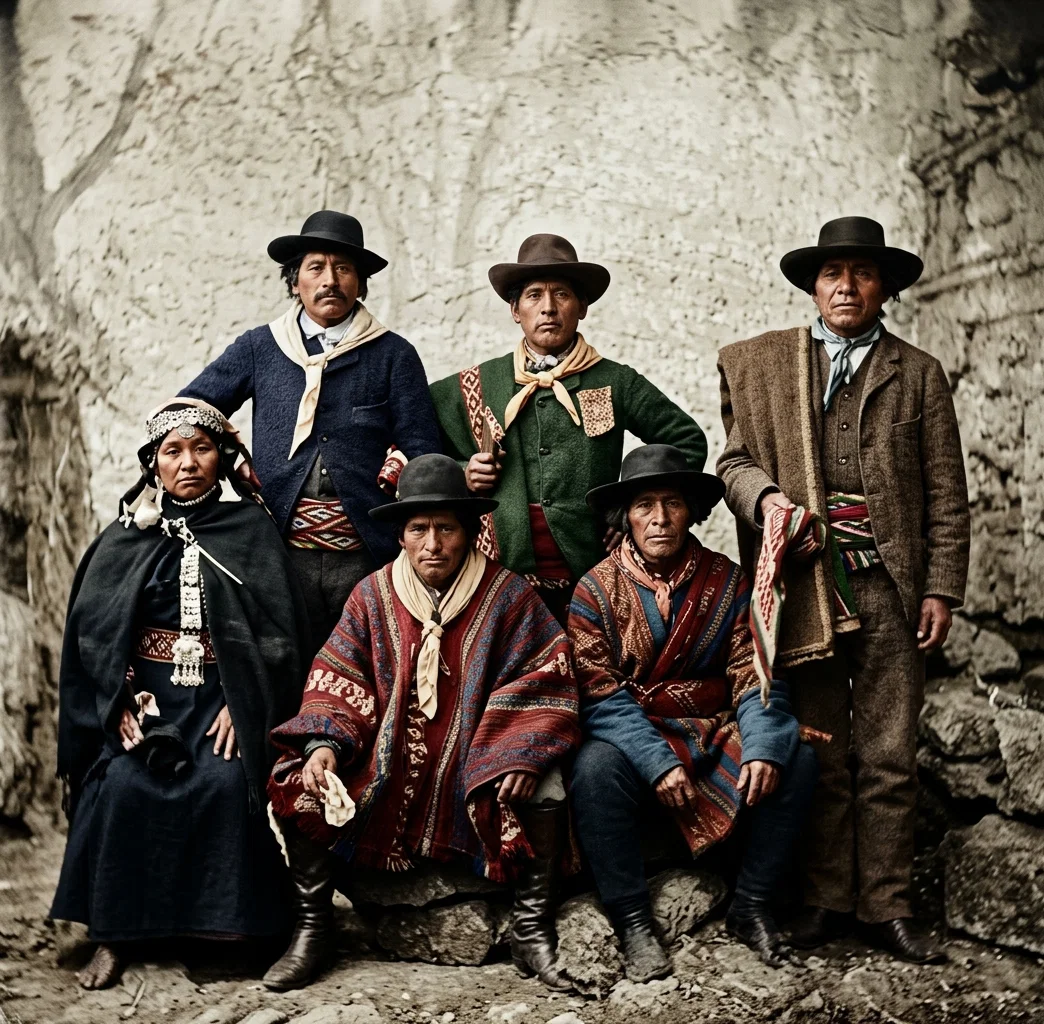
ARAUCANIAN INDIANS, CHILE
Their regard for the rights of others is not of the highest order. The following will serve as an illustration of this: Recently one of our brethren who was engaged in cattle raising, took a family into his home to look after his stock while he, with his family, attended a general meeting. On returning, he found that several calves had died. When he spoke to the servant about it, he replied, as unconcernedly as though it was the only proper and right thing to do, "Yes, but there are others here in their place. Wife and I saddled our horses and rode over the prairies searching for others to take their place." And they had just prepared their horses to make a second raid. All of this, of course, was at the expense of some other owner.
But things are not altogether bad here. One who has always lived in the States,14being accustomed to the ways and conditions that obtain there, is apt to look at the worst side of everything here. But as in other parts of the world, the Spirit of God is still striving with the people, endeavoring to lead them to a higher ideal of living. The wave of freedom, civil and religious liberty started in the Reformation, and set as a beacon light to all the world in the establishment of these principles in the United States government, has reached these shores.
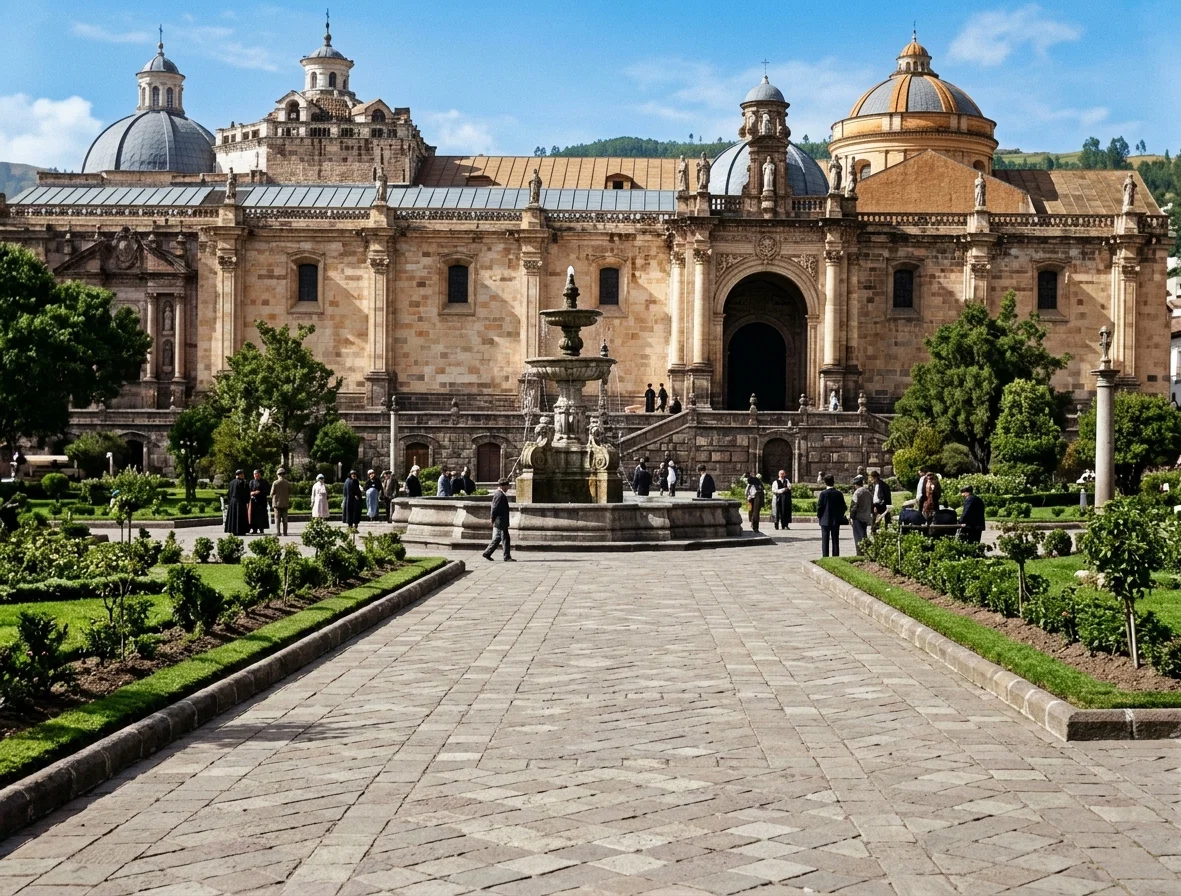
CATHEDRAL IN QUITO, ECUADOR
Where once dissenters were not tolerated, they are now bidden welcome. The medicines the papacy had so long administered to cure their ills, at last became nauseating to them. Without any missionary effort, but with the bright example of true Protestantism in civil government, as illustrated in the United States, all the South American republics have, one after the other, proclaimed liberty to their people. The gospel may be freely preached anywhere with comparatively little danger.
As the governments have opened their doors to better principles, many of the people are also opening their hearts to truth. Indeed, being republics, the recognition and acceptance of right principles indicate the sentiments of the people, and show that the Spirit of God has wrought a work upon their hearts. The field, as would be expected, is fully ripe for the gospel. There has been a general response to every missionary effort. Souls are hungering for the bread of life, longing for soul, as well as physical, liberty, and some are finding it. In the day of God many from this field will be found "purified, and made white, and tried."
Keeping Silent Under Provocation
By J. R. Miller
ONE step in the school of forbearance is the lesson of keeping silent under provocation. Many of the painful quarrels, and much of the bitterness of what we call so often “incompatibility of temper,” would never be known if we would learn to keep silent when others wrong us.—J. R. Miller.
"Out of Egypt Have I Called My Son"
By Louis Passebois
LOUIS PASSEBOIS
THESE words have often sounded in my ears since coming to this field, and have been a source of encouragement; for indeed I truly believe that the Lord has many sons and daughters in this land where Moses was born, and from which the Lord called his people Israel.
What a glorious privilege lies before us—to be instruments through whom he will call his sons and daughters to go out of Egypt into the New Jerusalem. This call is the work of the third angel's message, and its sound is now being heard in the land of the Pharaohs, but in a very faint voice in comparison with what it should be.
The field is ready for work, and never can we expect better conditions than exist in Egypt now. We have religious freedom, and many privileges not to be obtained in other Eastern countries. We expect soon to be able to travel all over Egypt at nearly one half of the regular fare. This is a privilege granted to all the missions in this country. So we can go from Alexandria to Assouan, or even above that place, for about two dollars and a half—a distance of more than a thousand miles.
Again, we hope soon to have the privilege of bringing goods from foreign countries without duty—a privilege enjoyed by the other missions here. Indeed, in every way the hand of the Lord may be seen working and preparing the way for us to work. But how slow we are in acting our part! O, where are the consecrated workers for Egypt?
Who will give his life to the work in this land? Maybe some one fears on account of the climate. We have been here two summers, and the Lord has marvelously protected us in every way, and for only a few days during the hottest weather, and while in the Upper Egypt, where the temperature rises higher, were we indisposed. If we do sometimes feel tired, the thought of the importance of our work makes us forget the hot days. We are glad to have a part in this glorious work.
There is a vast field before us, and it has scarcely been touched. How many will do something for Egypt, and even consecrate their all to save these poor souls who are perishing in their sins? Now is the time to work, while we can enjoy so many privileges, and the Lord is tracing the way before us. Gross darkness covers this land, and millions of souls are perishing in their sins. God is able to use any one who will consecrate himself entirely to him, to reach the souls of the people who are living in sin and wickedness.
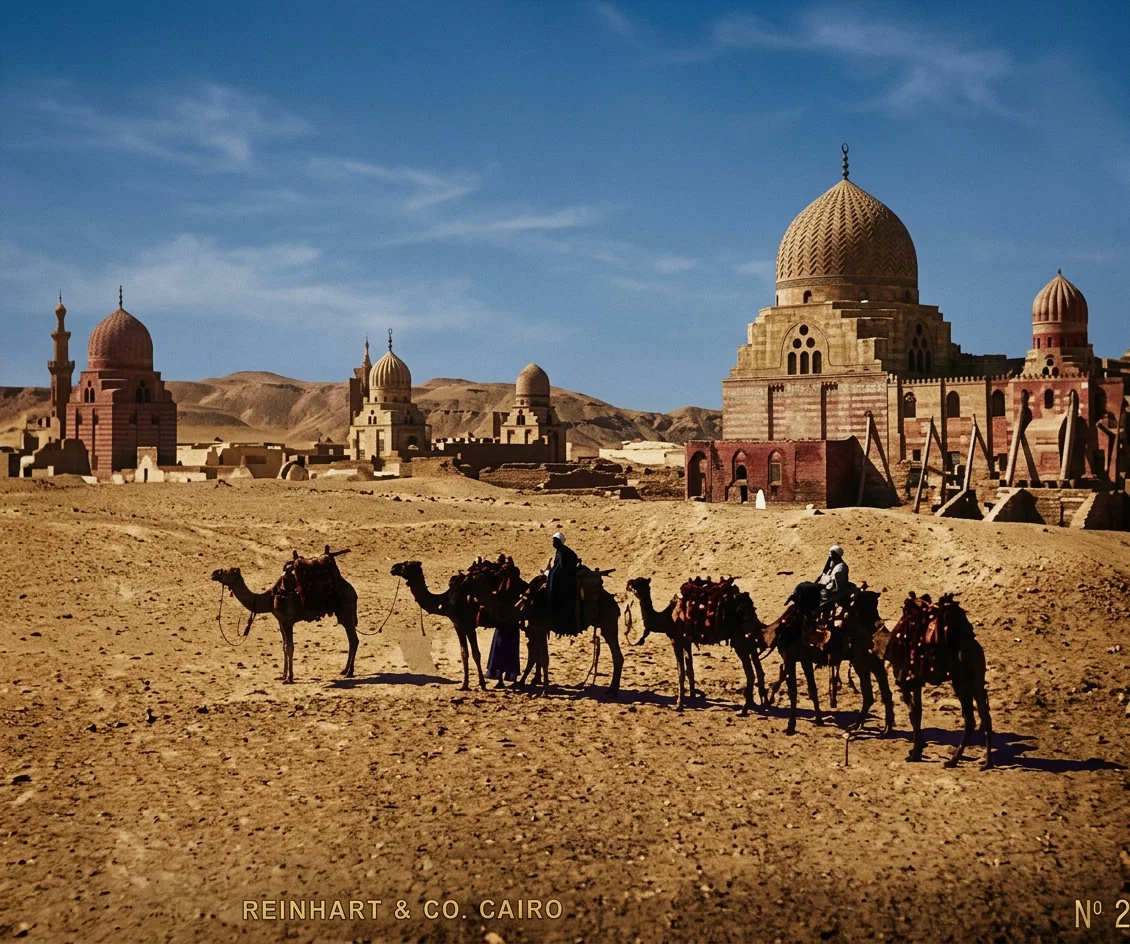
A SCENE IN EGYPT
We who have such precious light should ask ourselves, What can we do for those who are in darkness? how can we let our light shine upon them? Pray for the work, for laborers and means, and hold yourself in such an attitude that the Lord can answer your prayer by using you or sending you into the field if he chooses to do so. Pray for the laborers who are already here, that God may use them to the saving of many souls.
OUT OF EGYPT
What a glorious time it will be when, our work on this earth finished, we shall meet in the New Jerusalem with the sons and daughters whom God, working through us, will bring out of Egypt and every other land.
Eastern Maritime Provinces of Canada
By Geo. E. Langdon
Nova Scotia, New Brunswick, and Prince Edward Island
NOVA SCOTIA, which at first included what is now known as Nova Scotia, New Brunswick, and Prince Edward Island, was first discovered by Sebastian Cabot, in 1497, under Henry VII. Cabot touched Labrador, and sailed along the Atlantic coast to Delaware. This voyage became, subsequently, the basis of England's claim to North America.
The first settlement was made by the French (who also claimed Nova Scotia), under Des Monts, at Port Royal (now Annapolis), in 1604. This is the oldest settlement in North America north of the Gulf of Mexico. Des Monts named the country Acadia. This was changed to Nova Scotia in 1621, when James I, of England, granted the territory to Sir Wm. Alexander.
There was almost continual war between France and England over eastern Canada until, in 1763, the Treaty of Paris ceded all French claims east of the Mississippi River to England.
It was during this conflict in the summer of 1755 that the New England colonies, under General Winslow, took seven thousand Acadians (French) from their peaceful homes on the shores of the15Bay of Fundy, and scattered them along the Atlantic coast from New Hampshire to Georgia. Families were separated, never to be united. Colonial papers for years were filled with mournful advertisements of husbands and wives searching for lost companions, and parents for their missing children, and vice versa, but of all these inquiries, few were successful. From this cruel scheme, Longfellow composed his beautiful poem, “Evangeline,” a fair and solemn account of the “Tale of Acadie.”
THE TIDAL BORE AT MONCTON, N. B.
“There disorder prevailed, and tumult
and stir of embarking.
Busily plied the freighted boats; and high,
in the confusion
Wives were torn from their husbands,
and mothers, too late, saw their
children
Left on the land, extending their arms, and
with wildest entreaties.”
In 1770 Prince Edward Island became a separate province, and in 1784 New Brunswick separated from Nova Scotia. The term “Canada” was applied only to the provinces of Quebec and Ontario, until 1867, when the dominion was formed, incorporating Nova Scotia and New Brunswick. Prince Edward Island joined in 1873. The colony of Newfoundland, which embraces Labrador, is the only colony now outside of the dominion.
These provinces remained loyal to the crown during the American Revolution, and as a result thousands of the royalist refugees from the United States settled here during and after the war. With these, the inhabitants are English, Scotch, some Irish, and a few French. The population now numbers about one million, with fifty-one square miles of territory.
Ample facilities are provided for travel by well-equipped steamships by water and vestibule trains by land. The country is principally settled along the extensive seacoast, and in the rich river valleys. The soil is deep and fertile, well adapted to grazing, and produces luxuriant grains, fruits, and vegetables.
The land is for the most part undulating, the hills are covered with beach, birch, and maple, thickly interspersed with towering evergreens—fir, spruce, and pine.
Thousands of tourists from all parts of the world annually visit this country to view the wonders of nature, prominent among which are the tides of the Bay of Fundy, the highest in the world, often rising seventy feet, compelling rivers to change their course and flow upstream for forty miles, twice each day; the “reversing falls” in the river St. John, when at the turn of the tide, which is so rapid that the water actually falls over the reef upstream for several hours; the Petitcodiac Bore, or tidal wave, which rolls up the stream a foaming wall of water from two to eight feet high, twenty-five miles from the sea.
The climate is remarkably healthful. There are several people over one hundred years old. Mr. Ross, of St. Martins, New Brunswick, is one hundred and thirteen years old. He went into his field and mowed with the scythe last summer. The rigor of winter is modified by the insular character of the country and the influence of the Gulf Stream. Ninety-five degrees above zero is the warmest, and fifteen degrees below, the coldest, with the exception of New Brunswick, where, in the northern portion, it runs lower.
The Indian summers are very delightful. Winter begins about the middle of December, and lasts until about the middle of March. Some winters the snow has reached a depth of three feet.
The principal industries are fishing, lumbering, grazing, agriculture, manufacturing, and mining coal, gypsum, copper, and gold.
The people are very hospitable, reflective, and love truth. All denominations are found here, the Baptists predominating numerically. GEO. E. LANGDON.
They Might Not Need Me
By Emily Dickinson
THEY might not need me—
Yet they might;
I'll let my heart be
Just in sight;
A smile as small
As mine, might be
Precisely their
Necessity.
— Emily Dickinson.