A Great Prophetic Period

1%

Review and Herald Publishing Association · Takoma Park Station, Washington, D. C. · Oct 11, 1915

FromReview and Herald, Vol. 92, No. 50.

Read the full edition

A Great Prophetic Period

The 2300 Days

The Master Key of Prophecy: Its Lesson for Our Day
By C. P. Bollman
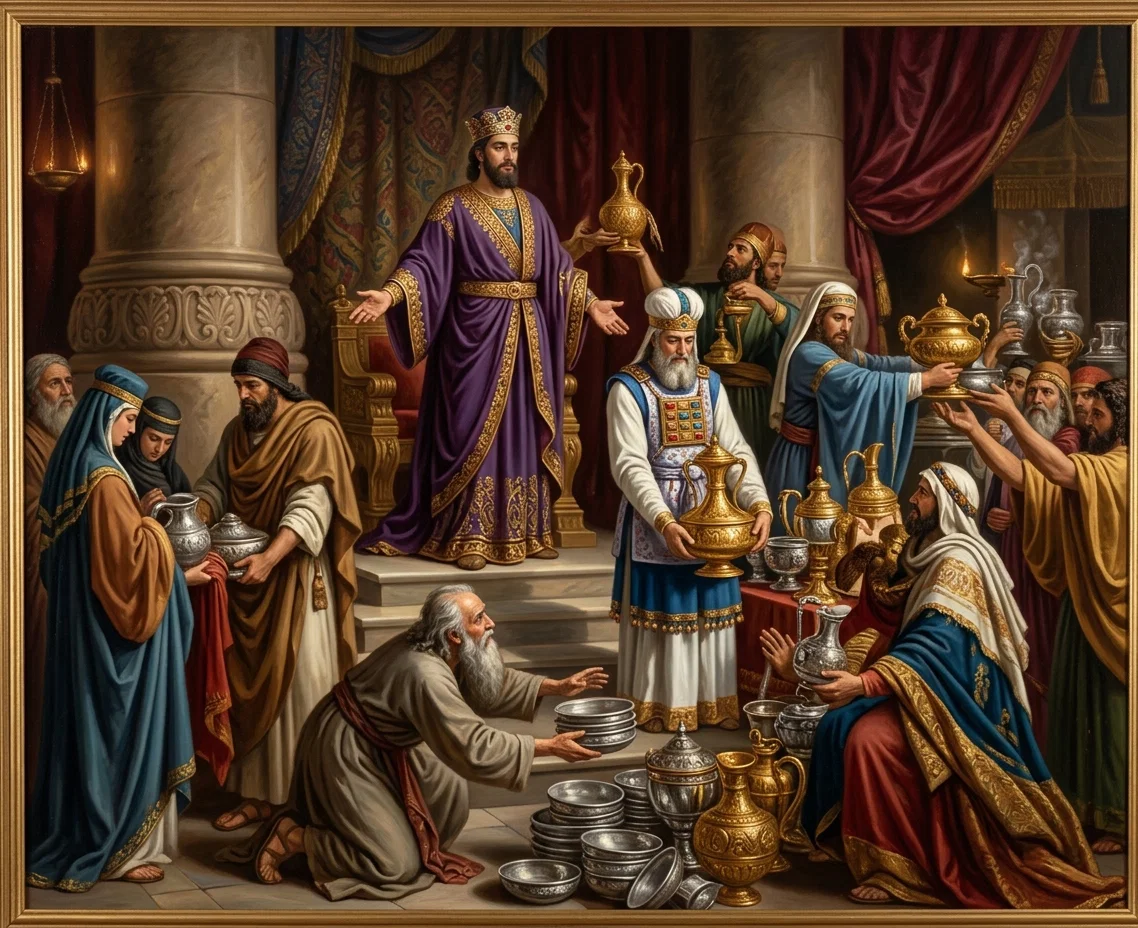
ARTAXERXES RESTORING TO THE JEWS THE VESSELS OF THE TEMPLE. EZRA 7:19
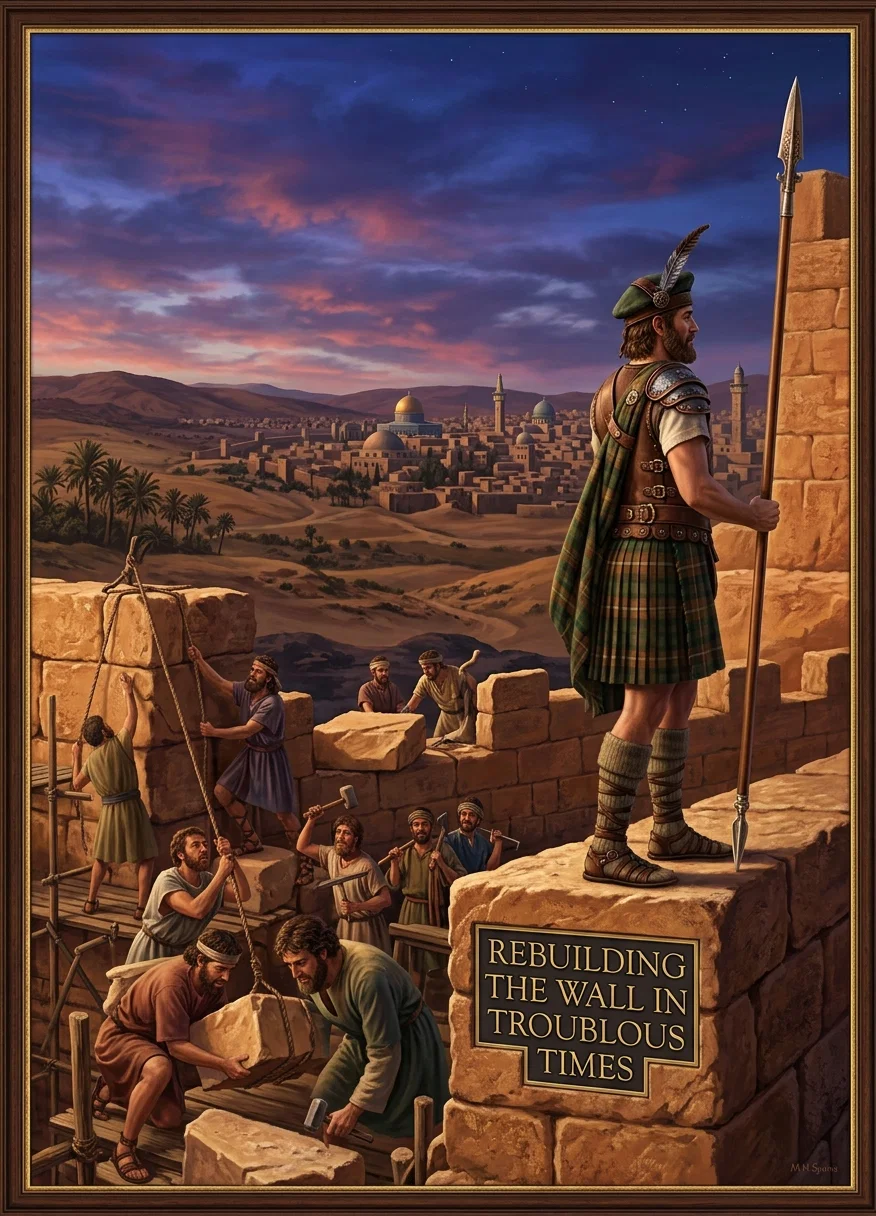
REBUILDING THE WALL IN TROUBLOUS TIMES. : DAN. 9:25
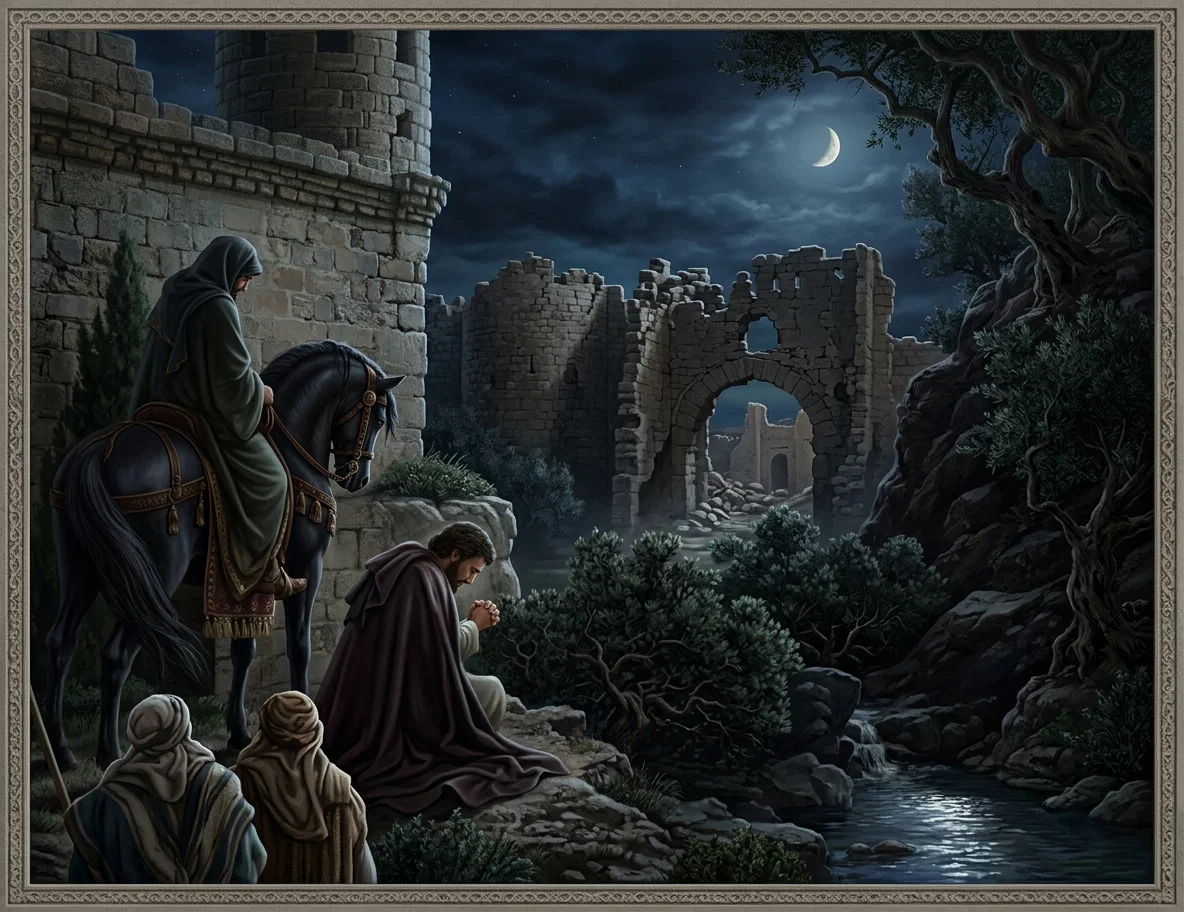
NEHEMIAH VIEWS THE RUINED WALLS OF JERUSALEM
NEH. 2:12-15
NEHEMIAH VIEWS THE RUINED WALLS OF JERUSALEM NEH. 2:12-15

The Captivity in Babylon Foretold

About six centuries before Christ, because of individual and national backsliding, God's chosen people were given into the hands of the Chaldeans, by whom they were carried to Babylon, where they remained in exile seventy years. Shortly before the expiration of their captivity the dynasty changed. The Chaldeans went down in defeat, and the Medes and Persians, younger and more sturdy peoples, bore rule in Babylon.
The prophet Jeremiah had not only foretold the captivity, but through him the Lord had made known its length. “This whole land,” wrote the prophet, “shall be a desolation, and an astonishment; and these nations shall serve the king of Babylon seventy years.” Jer. 25:11.
As the period of their captivity drew toward its close, the devout among the Jews began to prepare for the deliverance they understood was coming speedily. The Lord, too, was preparing by his providence for the return of his people to their own land. The change of empire would facilitate the promised restoration. The Medes and Persians, while not worshipers of the true God, were much less corrupt than the Babylonians; and the Lord made them at once the scourge of a people who had filled up the cup of their iniquity, and the instrument for the deliverance of Israel from bondage.

Cyrus in Prophecy and History

More than two centuries before Cyrus was born, the Lord foretold through the prophet Isaiah something of his reign and work:—
“Thus saith the Lord, thy Redeemer, and he that formed thee from the womb, I am the Lord that maketh all things; that stretcheth forth the heavens alone; that spreadeth abroad the earth by myself; that frustrateth the tokens of the liars, and maketh diviners mad; that turneth wise men backward, and maketh their knowledge foolish; that confirmeth the word of his servant, and performeth the counsel of his messengers; that saith to Jerusalem, Thou shalt be inhabited; and to the cities of Judah, Ye shall be built, and I will raise up the decayed places thereof: that saith to the deep, Be dry, and I will dry up thy rivers: that saith of Cyrus, He is my shepherd, and shall perform all my pleasure: even saying to Jerusalem, Thou shalt be built; and to the temple, Thy foundation shall be laid. Thus saith the Lord to his anointed, to Cyrus, whose right hand I have holden, to subdue nations before him; and I will loose the loins of kings, to open before him the two-leaved gates; and the gates shall not be shut.” Isa. 44:24-28; 45:1.
This prophecy was literally fulfilled, when, upon that fatal night of Belshazzar's impious feast, the gates were left open so that the army of Cyrus gained easy access to the beleaguered city, only weakly defended by its drunken soldiers and its overconfident and not less abandoned officers. It is probable, too, that a considerable part of Belshazzar's army held but slack allegiance to a ruler who seems to have lacked those qualities so essential to successful military leadership. Indeed, it is a volume might be written. But it seems necessary for the information of the reader who may be unfamiliar with the subject, to say briefly that by the sanctuary the Jew would understand primarily that part of the temple at Jerusalem answering to the most holy place in the tabernacle erected by the children of Israel in the wilderness.

The Sanctuary Service in Type and Antitype

It is not the purpose of this article to comment at length upon the cleansing of the sanctuary. That is something upon which a volume might be written. But it seems necessary for the information of the reader who may be unfamiliar with the subject, to say briefly that by the sanctuary the Jew would understand primarily that part of the temple at Jerusalem answering to the most holy place in the tabernacle erected by the children of Israel in the wilderness.
But inasmuch as the writer of the epistle to the Hebrews, a man thoroughly familiar with every detail of the Levitical law, tells us (Heb. 8:1-5) that the earthly sanctuary and its service were merely types, or shadows, of the real sanctuary and of its service in heaven, we must conclude that the intelligent Jewish worshiper understood the typical nature both of his offerings and of the service of the priests. It is evident from the book of Hebrews, especially from the eighth and ninth chapters, that the Jewish converts to Christianity so understood it; therefore we need not be surprised if, in studying the prophecy of the 2300 days, we find our minds carried away from the typical ministry of the Jewish priests to the subtypical ministry of our Lord Jesus Christ; away from the earthly sanctuary to the heavenly; away
from the blood of bulls and of goats to the blood of the Son of God shed upon the cross of Calvary, the blood “that speaketh better things than that of Abel.”

A Connecting Link

But leaving the subject of the sanctuary and its cleansing, let us trace briefly the 2300 days. This period, it may be observed, forms the connecting link between the shadow and the substance, between the typical sanctuary on earth and the true sanctuary in heaven, between the calling of God's ancient people from physical bondage in Chaldea and the final calling of the remnant church from the errors, the darkness, and the sins of spiritual Babylon. Babylon on the Euphrates, while fair to behold, was second only to Sodom in its unbridled wickedness and rebellion against God. Divine inspiration has chosen it as the prototype, the symbol, of the aggregation of all false systems of worship and all forms of apostasy. As in that former day God called his people out of the Babylon that then was, but which was shortly to perish, so in these latter days the Lord sends to his creed- and error-bound people, the message:—
“Babylon the great is fallen, is fallen, and is become the habitation of devils, and the hold of every foul spirit, and a cage of every unclean and hateful bird. For all nations have drunk of the wine of the wrath of her fornication, and the kings of the earth have committed fornication with her, and the merchants of the earth are waxed rich through the abundance of her delicacies. . . . Come out of her, my people, that ye be not partakers of her sins, and that ye receive not of her plagues.” Rev. 18:2-4.
Looking forward to the time of making final award, of deciding for eternity the destiny of souls; the time when the Lord returns to “discern,” or judge, “between the righteous and the wicked, between him that serveth God and him that serveth him not,” a celestial messenger said to the prophet, “Unto two thousand and three hundred days; then shall the sanctuary be cleansed.”
Those words are part of a prophecy recorded in verses 2-12 of the eighth chapter, an exposition of which is begun in verses 19-26, and is concluded in the latter part of the ninth chapter.

The Prophetic Symbols of Daniel 8

In the first part of the eighth chapter the prophet tells of seeing, first, a ram with two horns, one of which came up after the other one, and became higher than the first horn; then a “he goat,” with a single “notable horn between his eyes.”The goat was moved with anger against the ram “and smote the ram, and brake his two horns,” and “cast him down to the ground, and stamped upon him.”
Then the goat “waxed very great: and when he was strong, the great horn was broken; and for it came up four notable ones toward the four winds of heaven.” Out of one of these four horns there was seen to come forth “a little horn, which waxed exceeding great, toward the south, and toward the east, and toward the pleasant land.”
It is not necessary for us to go outside of the chapter itself to learn the meaning of these symbols. In verses 20-22, the prophet is told plainly: “The ram which thou sawest having two horns are the kings of Media and Persia. And the rough goat is the king of Grecia; and the great horn that is between his eyes is the first king. Now that being broken, whereas four stood up for it, four kingdoms shall stand up out of the nation, but not in his power.”
Alexander the Great was the first king of Grecia. He died suddenly, at the very zenith of his power. His kingdom was presently divided into four kingdoms, ruled by his four principal generals. Cassander had Greece and the surrounding territory; Lysimachus had Asia Minor; Seleucus had Syria and Babylon, including Palestine; Ptolemy had Egypt.

The Little Horn

Out of one of these divisions the prophet saw another power emerging, described as “a little horn.” Verse 9. This “little horn”
was seen to wax “exceeding great, toward the south (Egypt), and toward the east (Syria), and toward the pleasant land (Palestine).”
“And it waxed great, even to the host of heaven; and it cast down some of the host and of the stars to the ground, and stamped upon them. Yea, he magnified himself even to the prince of the host, and by him the daily sacrifice was taken away, and the place of his sanctuary was cast down. And an host was given him against the daily sacrifice by reason of transgression, and it cast down the truth to the ground; and it practiced, and prospered.” Dan. 8:10-12.
So terrible was the work of this little-horn power that the question is asked in verse 13, “How long shall be the vision?” That is, How long shall this wicked power hold sway, and be permitted to persecute God's people? Then comes the answer, “Unto two thousand and three hundred days; then shall the sanctuary be cleansed.” This refers not to the earthly, typical sanctuary, but to the real sanctuary, the finished cleansing of which will mean the end of the reign of sin.
From Num. 14:34 and Eze. 4:6, we learn that in symbolic prophecy a day stands for a year. “Two thousand three hundred” prophetic “days” would be, therefore, that number of literal years. But where do they begin? This is an important question; for without a starting point, some definite date or event from which this period of time may be reckoned, the prophecy would be without meaning.
As appears from Dan. 8:25, one of the great acts of wickedness of which this little horn was guilty was standing “up against the Prince of princes,” or, in other words, the crucifixion of the Son of God. Seeing this in vision was such a shock to the prophet that he “fainted, and was sick certain days.” Verse 27. As recorded in verse 16, Gabriel had been commanded to make the prophet “to understand the vision;” but because Daniel was unable to bear it, the explanation was not completed at that time.

Daniel Prays for Light on the Time Period of 2300 Days

Passing over, however, to the ninth chapter, we find the prophet praying for additional light upon this very question, and in verses 20-27 we learn that in answer to his prayer the interrupted explanation was completed shortly.
Until the first half of the nineteenth century, it was supposed that “Belshazzar” was only another name for “Nabonidus,” who became king of Babylon 555 B. C., and reigned seventeen years. Had this been true, Belshazzar's third year would have been 553 B. C., or fifteen years before the fall of Babylon. But the cuneiform inscriptions disclosed the fact that Belshazzar was the son of Nabonidus, and began to reign jointly with his father only the third year before the fall of Babylon; therefore his third year was his last; and probably only a short time elapsed between Daniel's vision of the eighth chapter of his prophecy and the supplementary vision of the ninth chapter.
In that part of the interpretation recorded in the eighth chapter, the meaning of the two beasts and of the horn had been made clear, but the time had not been explained. When, therefore, the angel returns to complete his unfinished work, he does not repeat what he had previously said, but, beginning just where he had left off, introduces the subject by the words, “Understand the matter, and consider the vision.” Verse 23.
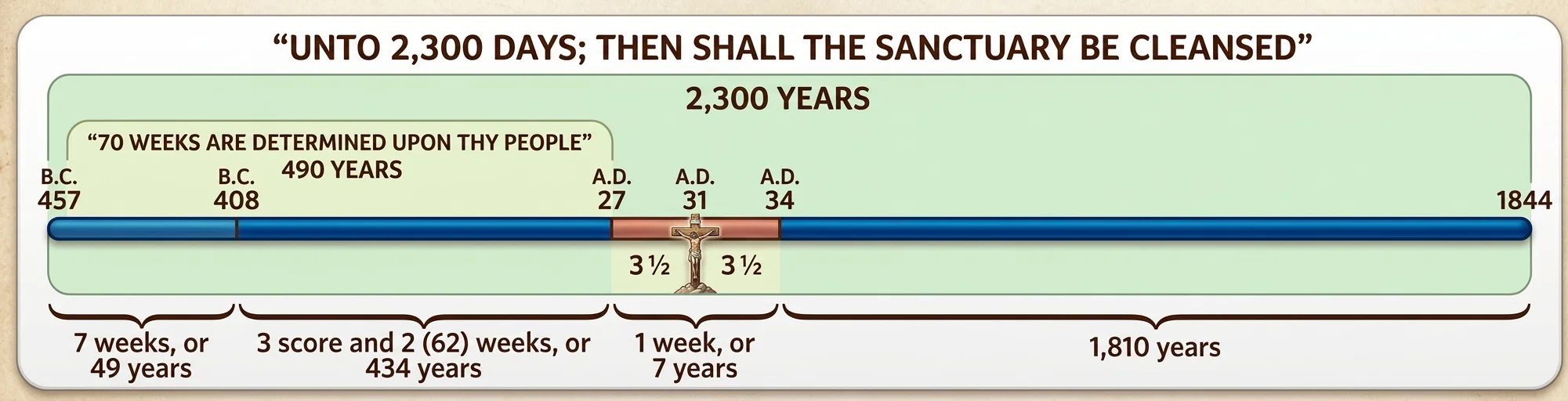
Having thus directed the mind of the prophet to the vision, the unexplained part of which is now to be made clear, the angel tells the prophet that of the 2300 days, or years, 70 weeks, or 490 years, are allotted to his people, that is, to the Jews.

Seventy Weeks “Cut Off” for the Jews

“Seventy weeks are determined upon thy people and upon thy holy city, to finish the transgression, and to make an end of sins, and to make reconciliation for iniquity, and to bring in everlasting righteousness, and to seal up the vision and prophecy, and to anoint the Most Holy.” Verse 24.
Strong's “Exhaustive Concordance” defines chathak, the Hebrew word rendered “determined” in the King James, and “decreed” in the Revised Version, as properly “to cut off,” “to decree.” We shall therefore get the real meaning of the text if we read, “Seventy weeks are cut off, or determined, upon thy people,” etc.
But from what were they to be determined, or cut off?—Evidently from the longer period, the “twenty-three hundred days” of the previous chapter. Then having summarized briefly the work to be accomplished during the 70 weeks, or 490 years allotted to the Jewish people, the angel gives in verse 25 an event from which the 70 weeks and consequently the 2300 days, or years, were to be reckoned.
“Know therefore and understand, that from the going forth of the commandment to restore and to build Jerusalem, unto the Messiah the Prince shall be seven weeks, and threescore and two weeks: the street shall be built again, and the wall, even in troublous times. And after threescore and two weeks shall Messiah be cut off, but not for himself; and the people of the prince that shall come shall destroy the city and the sanctuary; and the end thereof shall be with a flood, and unto the end of the war desolations are determined. And he shall confirm the covenant with many for one week: and in the midst of the week he shall cause the sacrifice and the oblation to cease, and for the overspreading of abominations he shall make it desolate, even until the consummation, and that determined shall be poured upon the desolate.” Verses 25-27.
Here we have the first 70 weeks, or 490 years, of the 2300 years fully accounted for, and a definite event to mark the beginning of both the 70 weeks and the longer period; for evidently both begin together, inasmuch as the shorter period is a part of the longer one.

The Beginning of the Period 457 B. C.

We have now only to learn the time of the going forth of “the commandment to restore and to build Jerusalem,” and we shall then have the date from which to reckon the 2300 days, or years, of this prophecy.
Turning for information to the book of Ezra, we find a record of three commandments, or decrees, concerning the return of the Jews to their own land, and the restoration of the city and temple and local government. The first of these was issued 536 B. C. It is recorded in Ezra 1:1-4, and was little more than royal permission to such as desired so to do to return and to build the house of God. Under this decree 1,754 of the exiles returned to Jerusalem, and soon began the work of restoration.
But the enemies of the Jews were alert, and sent accusations to the king, representing that the people were rebellious and were preparing sedition. Then the king wrote a letter saying, “Give ye now commandment to cause these men to cease, and that this city be not builded, until another commandment shall be given from me.” Ezra 4:21.
This was in 534 B. C., only two years after the first decree. Then, fifteen years later, that is, in 519 B. C., Darius Hystaspes, who had come to the throne in the meantime, issued a supplemental decree putting into effect again the original decree of Cyrus, under which building was resumed.
But for various reasons the work moved slowly. The enemies of the Jews were ever alert, and the Persian kings, ever suspicious. Little was accomplished, therefore, until the seventh year of Artaxerxes, when that king issued a third decree, 457 B. C., according to Usher's chronology. This decree is recorded in the seventh chapter of Ezra, and for several reasons is very generally held to be the completion of the threefold “commandment to restore and to build Jerusalem.”
The first and best reason for believing the date of the decree made by Artaxerxes in the seventh year of his reign, to be the time from which to reckon the 2300 days, or years, is that inspiration itself indicates this by these words recorded in Ezra 6:14: “They builded, and finished it [the temple], according to the commandment of the God of Israel, and according to the commandment of Cyrus, and Darius, and Artaxerxes king of Persia.”
Thus from both the divine and the human standpoint the three decrees are regarded as a single commandment, “the commandment to restore and to build Jerusalem.”

The Reliability of This Date, 457 B. C., Examined

The only element of uncertainty here is a discrepancy of one year in the date of the seventh year of Artaxerxes, some authorities putting it 457 B. C., and others making it one year earlier, 458 B. C.
It is shown by the canon of Ptolemy that the seventh year of Artaxerxes and 457 B. C. were coincident. Some have made the mistake of assuming that the seventh year of Artaxerxes was 458 B. C. Ptolemy begins his canon with the year of the accession of Nabonassar, 747 B. C. He dates the beginning of the reign of each of the kings in his canon from the 7th-6th, or Egyptian New Year, preceding his accession. In the case of Nabonassar this was February 26, according to the reckoning. Ptolemy places the first year of Artaxerxes on the two hundred and eighty-fourth year of the Era of Nabonassar. If the Egyptian year had been the same as ours, this would have made the first year of Artaxerxes begin Feb. 26, 464 B. C. But the Egyptian year had only 365 days, so that the 7th-6th moved back about one day every four years. Thus the two hundred and eighty-fourth year would find it falling on Dec. 17, 465 B. C. But as Ptolemy dated the reign of each king from the 7th-6th preceding his accession, this only means that Artaxerxes actually began to reign sometime between Dec. 17, 465 B. C., and Dec. 17, 464 B. C. Now we should remember that Ezra knew nothing of Ptolemy's canon (which was compiled in the first half of the second century of the Christian era), and of course reckoned Artaxerxes' reign from the time he actually became king, so that his seventh year according to Ezra, would not begin at the same time as his seventh year according to Ptolemy's reckoning.
Let us now find at what point between Dec. 17, 465 B. C., and Dec. 17, 464 B. C. Artaxerxes actually began to reign. An English writer on Greek history, W. W. Lloyd, in “The Age of Pericles,” Vol. I, page 356, says that “the date of the death of Xerxes is one of the most happily [satisfactorily] certified points in the chronology of those times, and supplies a limit for the dates of several events in Greek history proper. Diodorus assigns it to the archonship of Lysitheus (July, 465 B. C., to July, 464 B. C.).”
Somewhere, then, between these dates Xerxes was murdered by Artabanus, captain of the king's guard, who then reigned for seven months. Artaxerxes, the son of Xerxes, then took the throne. Adding seven months to even the earliest date for Xerxes' death would bring the beginning of Artaxerxes' reign into the early part of 464 B. C., thus making his seventh year begin in the early part of 457 B. C., the date assigned to it in Usher's chronology.
Ptolemy, who wrote in the second century of the Christian era, not only made a list of ancient kings, but also compiled “The Almagest,” a record of astronomical observations covering the same period of time. This has made it possible for modern astronomers to verify his record.
Touching Ptolemy and his work, Dr. H. Grattan Guinness (London), Fellow of the Royal Astronomical Society, quotes this from James B. Lindsay's “Chrono-Astrolabe”:—
“The ‘Syntaxis’ of Ptolemy contains an account of many historical events, and blended with them is a multitude of astronomical observations. The astronomic and historic observations cannot be separated, and they must both stand or fall together. The astronomic can be rigidly verified, and the truth of the historic is a legitimate deduction.”—“Creation Centered in Christ,” London, 1896, page 293.
Sir Isaac Newton, the great philosopher and Bible expositor, demonstrated mathematically that Artaxerxes' seventh year was 457 B. C., figuring by the Greek Olympiads. Thus, by two separate and distinct records, involving different chains of chronology, mathematicians have arrived at the same result in determining the seventh year of the reign of the king who issued the third and final decree for not only the restoration of Jerusalem, but for local self-government by the Jews, thus undoing as fully as possible that which had been done by Nebuchadnezzar nearly one hundred and fifty years before.
Observe, the angel did not say, From the end of the captivity, but, “From the going forth of the commandment to restore and to build Jerusalem.” The captivity began 606 B. C., with the fall of Jerusalem, and ended with the decree of Cyrus, 536 B. C.; while the complete restoration of the city, temple, and local government was rounded out and finished under the decree of Artaxerxes, issued in the seventh year of his reign, 457 B. C.

Sixty-Nine Weeks, or 483 Years, to Messiah

Having now definitely located the beginning of the 2300 days, or years, in 457 B. C., let us find if possible the event to which the “seven weeks, and threescore and two weeks,” of Dan. 9:25 were to bring us. “Seven weeks” plus “threescore and two weeks” make sixty-nine prophetic weeks, or 483 literal years. This period of time was to reach to “the Messiah the Prince.”
“Messiah” is the Hebrew equivalent of the “Christ,” a Greek word meaning “anointed,” and is so translated in some of our English versions. In Acts 10:38 Peter speaks of “how God anointed Jesus of Nazareth with the Holy Ghost and with power.” This anointing, which made Jesus the Anointed One, occurred on the banks of the Jordan, when “Jesus also being baptized, and praying, the heaven was opened, and the Holy Ghost descended in a bodily shape like a dove upon him, and a voice came from heaven, which said, Thou art my beloved Son; in thee I am well pleased.” Luke 3:21, 22. This was in A. D. 27.
But it may be asked, What is the significance of this date? Simply this: 483 full years from any point in 457 B. C. would bring us to the same time in A. D. 27. The 69 weeks, or 483 years, were to reach “to the Messiah the Prince,” and here at exactly the right time Jesus of Nazareth is not only anointed with the Holy Ghost, but is by a voice from heaven declared the Son of the everlasting King, and consequently himself “the Prince.”

The One Week Explained

But there still remains one week of the seventy which were cut off, or determined,upon Daniel's people, the Jews. What about the events of that week? Said the prophecy: “After threescore and two weeks shall Messiah be cut off, but not for himself. . . . And he shall confirm the covenant with many for one week; and in the midst of the week he shall cause the sacrifice and the oblation to cease.” Dan. 9:26, 27.
Christ's personal ministry, as all authorities now agree, covered a period of three and one-half years. He attended four Passovers, at the last of which he was crucified—“cut off,” in the midst of the last week of the seventy weeks of years, not for himself, but for others. “He was wounded for our transgressions, he was bruised for our iniquities: the chastisement of our peace was upon him; and with his stripes we are healed.” Isa. 53:5.
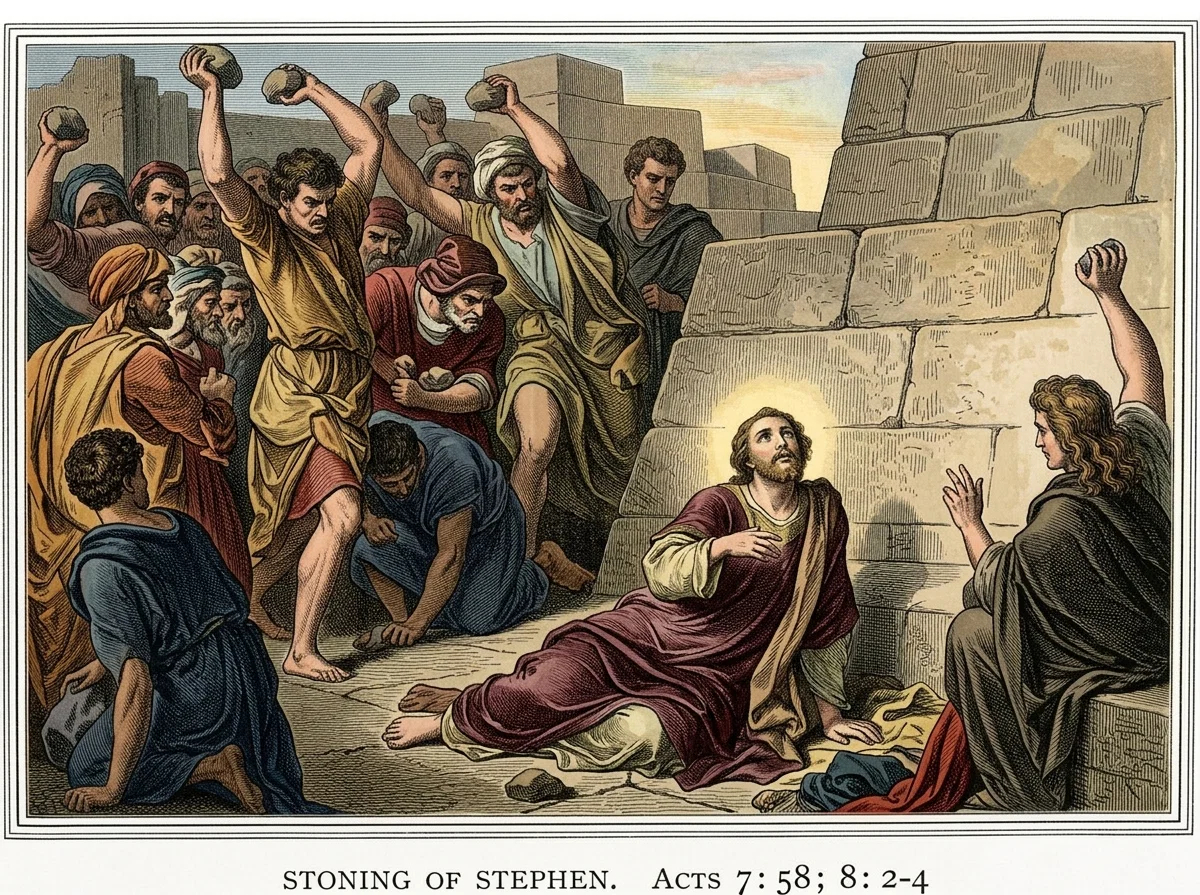
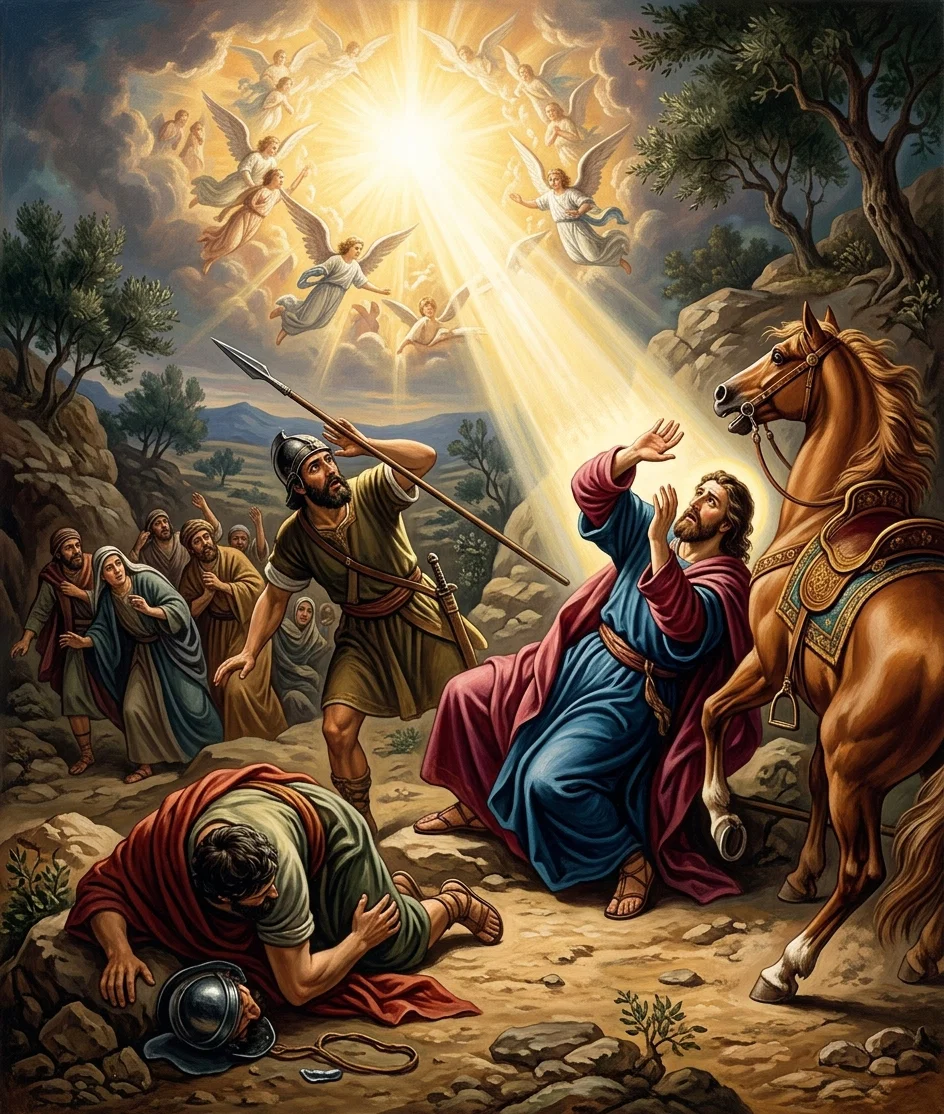
But if his personal ministry lasted only half of a prophetic week, or three and one-half years, what is the meaning of the week? “He shall confirm the covenant with many for one week.” The new covenant, like the old, was made “with the house of Israel, and with the house of Judah.” Jer. 31:31. Christ's personal labors were almost exclusively among his own people. By his ministry and death he confirmed the covenant with them, that is, with “the house of Israel, and with the house of Judah,” for three and one-half years. Then through his disciples and by his Spirit, that ministry was continued to the Jews another three and one-half years, thus completing the last week of the seventy. This brings us to A. D. 34, when occurred the martyrdom of Stephen, followed by the bitter persecution of the church at Jerusalem. It was at this time Saul made “havoc of the church, entering into every house, and haling men and women committed them to prison. Therefore they that were scattered abroad went everywhere preaching the word.” See Acts 7 and 8:1-14. It was at this time the exclusive work for the Jews ceased, and the gospel began to be preached to the Gentiles as it had not previously been preached to them.
STONING OF STEPHEN. ACTS 7:58; 8: 2-4
CONVERSION OF SAUL. ACTS 9: 3, 4
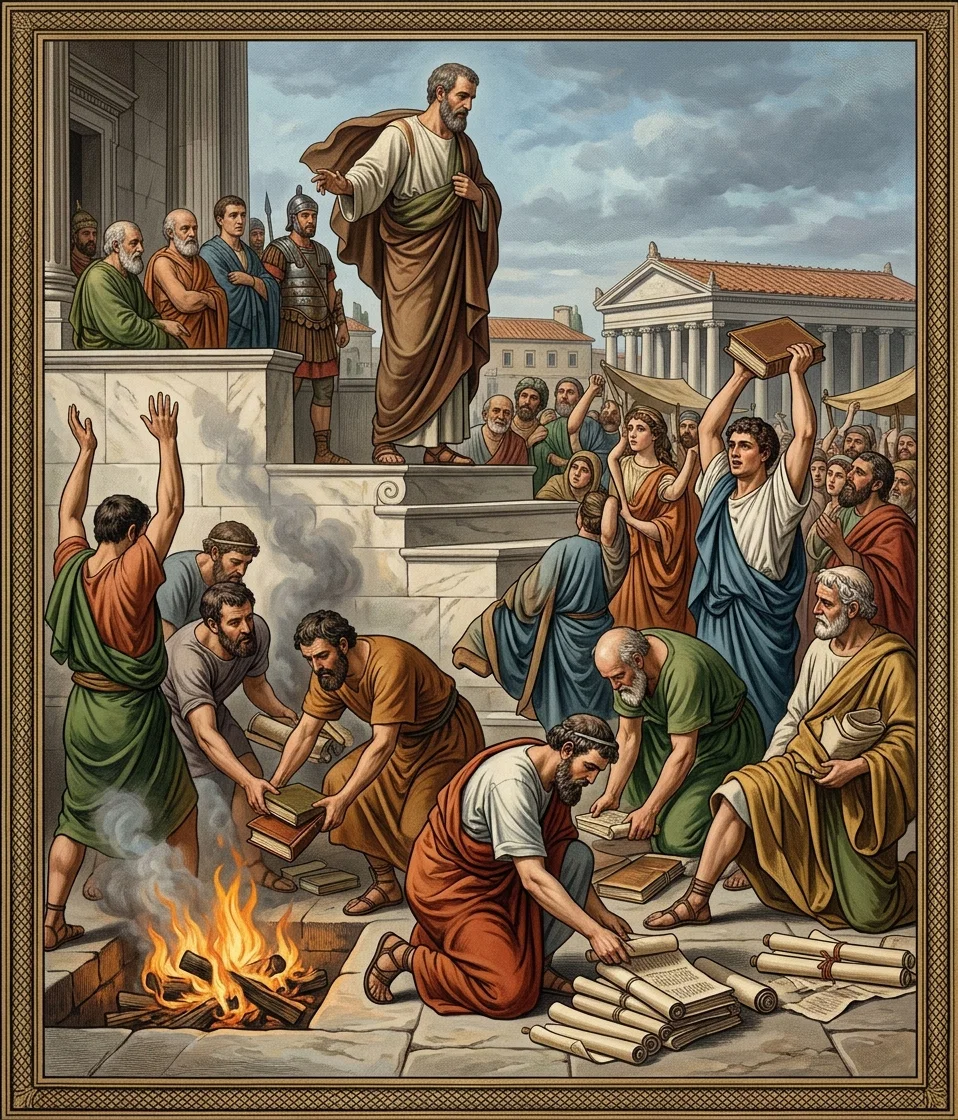
PAUL PREACHING AT EPHESUS. ACTS 19:19

The Great Advent Movement of 1844

We have found that from 457 B. C., 490 years brings us to A. D. 34. But these 490 years did not stand alone; they were cut off from the 2300 years; therefore we have still 1810 years, which, added to 34, brings us to A. D. 1844, the climax of the great advent movement which stirred so mightily not only the United States but also a large part of the Old World. In the United Kingdom alone the message, “Fear God, and give glory to him; for the hour of his judgment is come” (Rev. 14:7), was proclaimed by more than seven hundred ministers. The number of ministers giving the same message in this country was about three hundred and fifty. In printed form the proclamation was sent everywhere, so that it reached every mission station throughout the world. According to his own journal, Joseph Wolff, D. D., LL. D., the noted linguist, between the years 1821 and 1844, proclaimed to all denominations the Lord's speedy advent, preaching during that time in the United States, England, Scotland, Ireland, Holland, Tibet, Hindustan, Egypt, Palestine, Mesopotamia, the Crimea, Persia, Transcaucasia, throughout the Ottoman Empire, Greece, Austria, Afghanistan, and Kashmir, and along the shores of the Red Sea. Not a single country only, but the world was stirred by the message.

The Mistake and Disappointment

But it is said, The Lord did not come in 1844, nor has he yet come. It is true that the Lord did not come at the time and in the manner those who gave the message expected him to come, but neither did Jesus of Nazareth take the throne of David and reestablish the kingdom of Israel at his first advent as the whole nation expected the Messiah to do, and as his disciples believed he would do, even up to the very time of his ascension. When the joyous multitude escorted the Prophet of Nazareth into Jerusalem and to the temple with shouts of “Hosanna” and with the waving of palm branches, even carpeting the path before him with their garments, they thought they were escorting him to a throne; but he was on his way to the cross. The fact that men misunderstand and misapply a divine message does not prove that it is not of God.
The Lord did not come to earth at the end of the 2300 days, but he did come to that judgment described in Dan. 7:9, 10, the judgment that decides who from among the living shall be translated at his coming, and who from among the dead shall be raised to immortality and endless felicity.

The Disappointment Foretold in Prophecy

The work and disappointment of those who in all the churches expected the coming of the Lord about 1844 was foreshadowed in Hab. 2:1-4; Heb. 10:32-39; and Rev. 10:5-11. This is especially true of the latter scripture, which not only foretold their bitter disappointment, but clearly indicated also in the last verse a further world-wide work, saying, “Thou must prophesy again before many peoples, and nations, and tongues, and kings.” That work is now being done, and there is every reason to believe that it is well-nigh finished.

Hastening On to the End

We are now in “the time of the end” spoken of by the angel when he said to the prophet, “But thou, O Daniel, shut up the words, and seal the book, even to the time of the end: many shall run to and fro, and knowledge shall be increased.” Dan. 12:4. We are living in a far more wonderful age than the days of the Renaissance. The revival of learning, which began in the fourteenth century, and the Reformation of the sixteenth century which it made possible, prepared the way for what we see in our own day. Wonderful light has been shed upon the Scriptures as a whole, and especially upon the prophecies. Nothing is today done in a corner. Rapid transit and rapid means of communicating intelligence have made it possible to reach quickly and with comparative ease peoples altogether inaccessible a generation ago. Every man can now have the Scriptures in his own language. The church, formerly apathetic as to foreign missions, has within a score of years adopted as its slogan, “The gospel to all the world in this generation.”
Associate this fact with our Saviour's declaration, “This gospel of the kingdom shall be preached in all the world for a witness unto all nations; and then shall the end come,” and the effect is electrifying. Sententious truth! By it we are caused to stand face to face with the coming of the Lord and the end of the world. Mighty agencies are at work to bring about this grand consummation. For while the Son of God is doing his work in the heavenly sanctuary, he is by his Spirit and his providence stirring up the hearts of his people to finish speedily the work of warning the world of impending judgment.
The solemn situation is most strikingly and impressively described in Ezekiel 9, under the figure of six men, “every man with his destroying weapon in his hand. . . . And one man among them was clothed with linen, with a writer's inkhorn by his side; and they went in, and stood by the brazen altar.” Then the Lord said to the man with the writer's inkhorn, “Go through the midst of the city, through the midst of Jerusalem, and set a mark upon the foreheads of the men that sigh and that cry for all the abominations that be done in the midst thereof. And to the others he said in mine hearing, Go ye after him through the city, and smite: let not your eye spare, neither have ye pity: slay utterly old and young . . . but come not near any man upon whom is the mark.”
The same impressive lesson is taught by the figure of a royal wedding, in Matt. 22:2-13. Here a certain king is represented as making “a marriage for his son.” According to the ancient custom, each guest is provided with an appropriate wedding garment. But by and by, when the time comes for the king to go in to see the guests, he finds one without the wedding garment. “And he said unto him, Friend, how camest thou in hither not having a wedding garment?”
And he was speechless. Then said the king to the servants, Bind him hand and foot, and take him away, and cast him into outer darkness; there shall be weeping and gnashing of teeth. For many are called, but few chosen.
When the Lord comes, the righteous dead are raised to immortal life, and the righteous living are changed to immortality. Thus each case is decided either for life or for death before the Lord actually appears in the clouds of heaven. These decisions are made in the cleansing of the heavenly sanctuary. As in the cleansing of the earthly sanctuary all who did not have a part in it were cut off from among the people, so in the antitype all who are not found to have overcome will have their names blotted from the book of life, and they will be cut off from among God's people. Eternal issues are at stake. Is Christ your advocate?