Turkey and the War

1%

Review and Herald Publishing Association · Takoma Park Station, Washington, D.C. · Nov 16, 1914

FromReview and Herald, Vol. 91, No. 48 Extra

Read the full edition

Turkey and the War

THE EASTERN QUESTION IN PROPHECY

WHAT COMES WHEN TURKEY FALLS?

By W. A. Spicer
The certainty that a new element had been injected into the great war was conveyed to us in the press announcements of October 31:—
LONDON, Oct. 30.—A dispatch to the Exchange Telegraph Company from Rome says:— “It is reported from Constantinople that a battle between Turkish and Russian fleets is in progress off Odessa.”
There have been great manifestations in Damascus, in Asiatic Turkey, in favor of a war against Christians, and especially against Great Britain, according to a dispatch from Athens.
Turkey’s action seems to make it probable that the area of conflict may be greatly widened and the issues complicated. The English papers recognize that the addition of Turkey to the belligerent forces probably will prolong the war and increase its horrors.
Commenting on this news, the two great foreign papers of New York, diametrically opposed in their views of the European war, united in describing the entry of the leading Moslem power into the struggle as marking a crisis indeed in Turkish history:—

“Sick Man of Europe” Makes His Last Stand

It is the last defense of the “sick man of Europe” of his dominions. If it fails, Russia will have the Dardanelles and the Hellespont.—Staats-Zeitung (German), October 31.

Deluded, . . . Turks Rush to Suicide

Turkey is running to suicide, and the European war, already formidable, extending from neighbor to neighbor, will soon involve fourteen nations. . . . The worst calamity in the history of the world.—Courrier des Etats-Unis (French), October 31.
If it should prove to be really Turkey’s “last stand” in Europe, all must recognize that it means a long step toward the dissolution of the Ottoman Empire in Asia. And if events rush on to the annihilation of this power,—which the French paper declares now to be “running to suicide,”—what then? In the light of the “sure word of prophecy” it is clear that the end of the Ottoman Empire will mark the end of human probation, the gathering of the nations to the final Armageddon, and then the second advent of our Lord in power and glory.
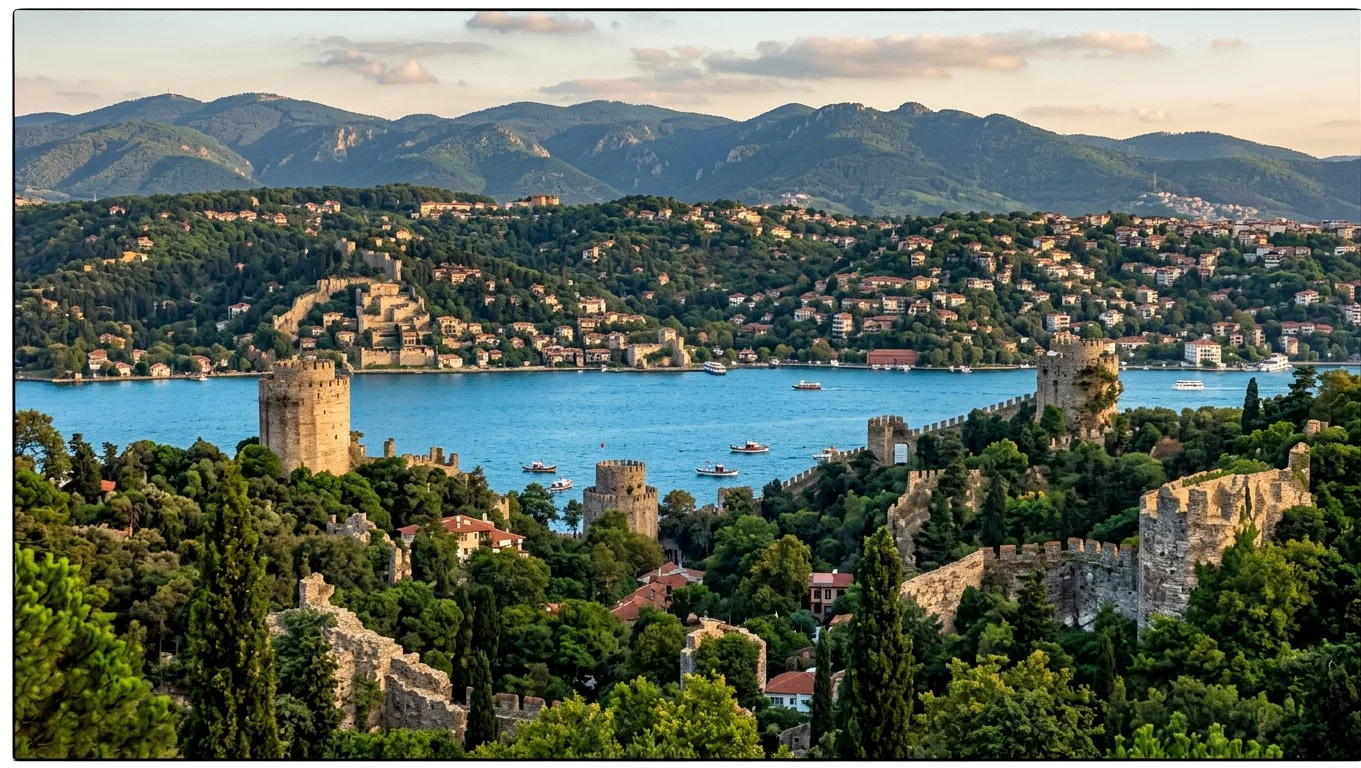
THE BOSPORUS, BY CONSTANTINOPLE

“Watch . . . for Ye Know Neither the Day nor the Hour”

There is to be no setting of dates for the end of this age or for the coming of the Lord. “Of that day and hour,” said Jesus, “knoweth no man, no, not the angels of heaven, but my Father only.” Matthew 24:36. This is not the time, nor is this the subject, for human speculation or predictions. Rather, let the clear outlines of the prophecy be placed alongside the plain facts of history. By the prophetic scriptures—“whereunto ye do well that ye take heed, as unto a light that shineth in a dark place”—we are to know the nearness of the time, and be watchful and ready, saved from every sin when probation closes just before Christ appears. The Lord expects us to study his Word and watch for the evidences of the near approach of the last day:—
“But of the times and the seasons, brethren, ye have no need that I write unto you. For yourselves know perfectly that the day of the Lord so cometh as a thief in the night. For when they shall say, Peace and safety; then sudden destruction cometh upon them, as travail upon a woman with child; and they shall not escape. But ye, brethren, are not in darkness, that that day should overtake you as a thief.” 1 Thessalonians 5:1-4.

Historic Prophecies That Deal With the Eastern Question
The Eastern Question, as everybody knows, involves the question of dominion or political supremacy in the regions of the Near East. International politics of Europe have largely revolved around this question for more than a century. This question of supremacy in Syria and Palestine and the whole region of the eastern Mediterranean was an ancient problem also. Maspero, historian of ancient civilizations, says:—
Some countries seem destined from their origin to become the battle fields of the contending nations. . . . The nations around are eager for the possession of a country thus situated. From remote antiquity Syria was in the condition just described. By its position it formed a kind of meeting place, where most of the military nations of the ancient world were bound sooner or later to come violently into collision.—“Struggle of the Nations,” chap. 1.
It is not strange therefore that one of the great outlines of historic prophecy should deal with events centering around this pivotal region. The prophecy of Daniel 11 does so, outlining the course of history from the ancient times to the final solution of the Eastern Question amidst the scenes of the end.
It was in the third year of Cyrus, king of Persia (Daniel 10:1), that the angel revealed the order of events to the prophet. Let us put prophecy and history together:—
PROPHECY.—“Now will I show thee the truth. Behold, there shall stand up yet three kings in Persia; and the fourth shall be far richer than they all; and by his strength through his riches he shall stir up all against the realm of Grecia.” Daniel 11:2.
HISTORY.—The three kings following Cyrus were (1) Cambyses, (2) Smerdis, (3) Darius; and the fourth, Xerxes, was “far richer than they all.” He had the treasures of his father, Darius, who was called the “merchant” or “hoarder” by his own people, and Xerxes gathered stores of wealth in addition; and by his wealth he was able to “stir up all,” an army of millions, to invade Grecia. The Greek poet, Æschylus, who himself fought against the Persians, wrote of Xerxes’ mighty host:— “And myriad-peopled Asia’s king, a battle-eager lord, From utmost east to utmost west, sped on his countless horde.” —“Persæ,” 80.
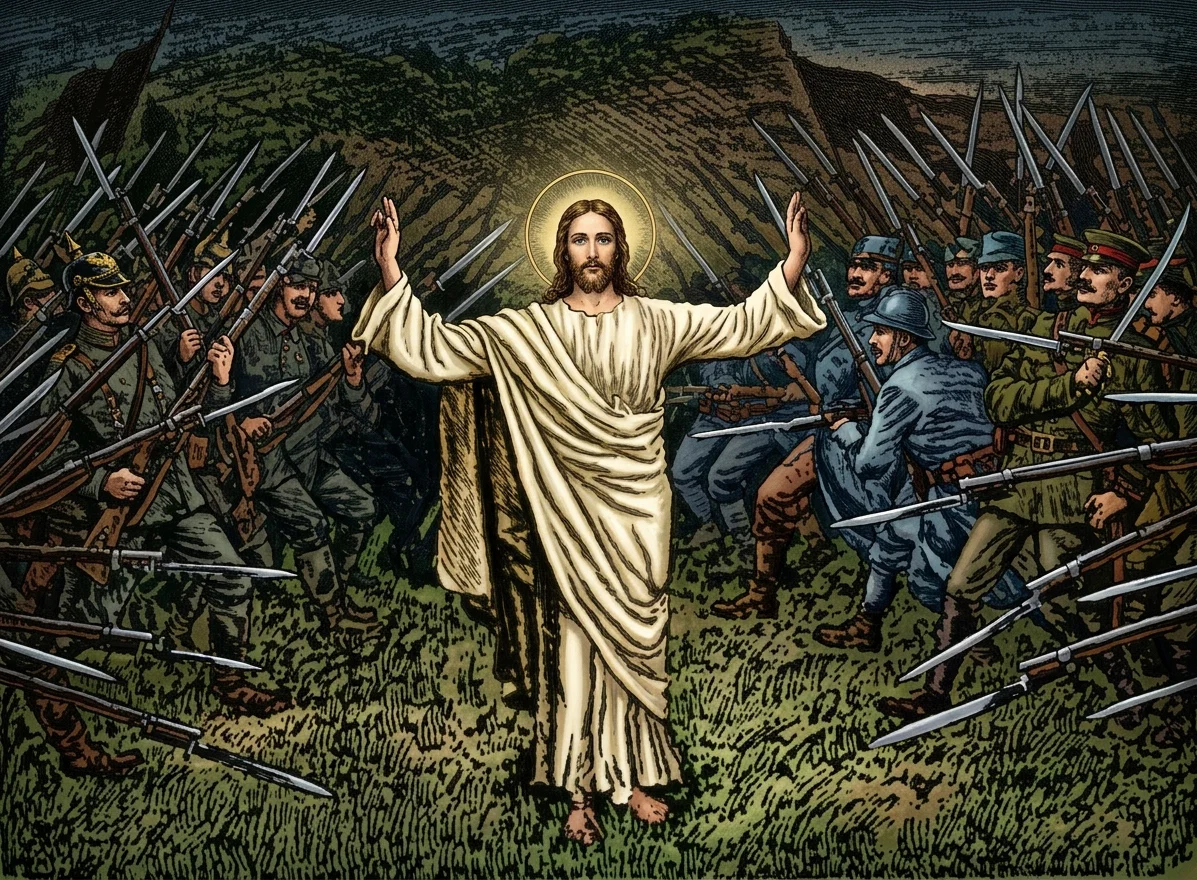
THE PRINCE OF PEACE—THE WORLD'S ONLY HOPE FOR PEACE
Xerxes failed; and the Persian invasion led the Greeks to determine to await their turn against Persia. The attack of Grecia upon Persia, led by Alexander the Great, being the next great world event, the prophecy passes next to Grecia:—
PROPHECY.—“And a mighty king shall stand up, that shall rule with great dominion, and do according to his will. And when he shall stand up, his kingdom shall be broken, and shall be divided toward the four winds of heaven; and not to his posterity.” Daniel 11:3, 4.
HISTORY.—Alexander the Great stood up and ruled with great dominion, over a kingdom stretching from India to Grecia, with kings yet farther west sending embassies to Babylon to make submission. But in the height of his power, as the prophecy suggests, he was suddenly cut down by death. All his posterity perished, and out of the struggles of his generals for supremacy came (301 B. C.) the division of the empire toward “the four winds,” as the prophecy had declared so long before. Rawlinson, the historian, says:—
“A quadripartite division of Alexander’s dominion was recognized, Macedonia [west], Egypt [south], Asia Minor [north], and Syria [stretching eastward beyond the Euphrates].”—“Sixth Monarchy,” chap. 3.
Next, a rearrangement of these powers is noted; and it is this that gives us the key to the study of the closing portion of the long prophetic outline dealing with events of our own day. The narrative continues:—
PROPHECY.—“And the king of the south shall be strong, and one of his princes . . . shall be strong above him: . . . his dominion shall be a great dominion.” Verse 5.
HISTORY.—The history testifies that the king of the south (Egypt) was strong, under the Ptolemies, but one of the four princes was “strong above him.” Seleucus, of Syria and the east, pushed his dominion northward, subduing most of Asia Minor and extending his boundary into Thrace, on the European side, just beyond the extent of Turkey in Europe today. Henceforward, as Mallory says: “There were three great kingdoms—Macedonia, Egypt, Syria—which lasted, each under its own dynasty, till Rome swallowed them up.”—“Alexander’s Empire,” page 80. Thus Seleucus took the territory of the north, and the Syrian power became king of the north, its empire stretching from Thrace, in Europe, through Asia Minor to Syria and the Euphrates. The seat of empire was re-
moved from the east, and Antioch, in northern Syria, became the famous capital, “once the third city of the world.”
The prophecy next foretold in remarkable detail the contests between these two strong powers, the king of the north and the king of the south. The conflict raged back and forth till the coming of the Romans. The Holy Land was the great meeting place of the contending armies. The Encyclopedia Britannica describes it:—
Palestine was as of old the battle field for the king of the north and the king of the south. . . . The history of these times is lost in its details.—Ninth edition, article “Macedonian Empire.”
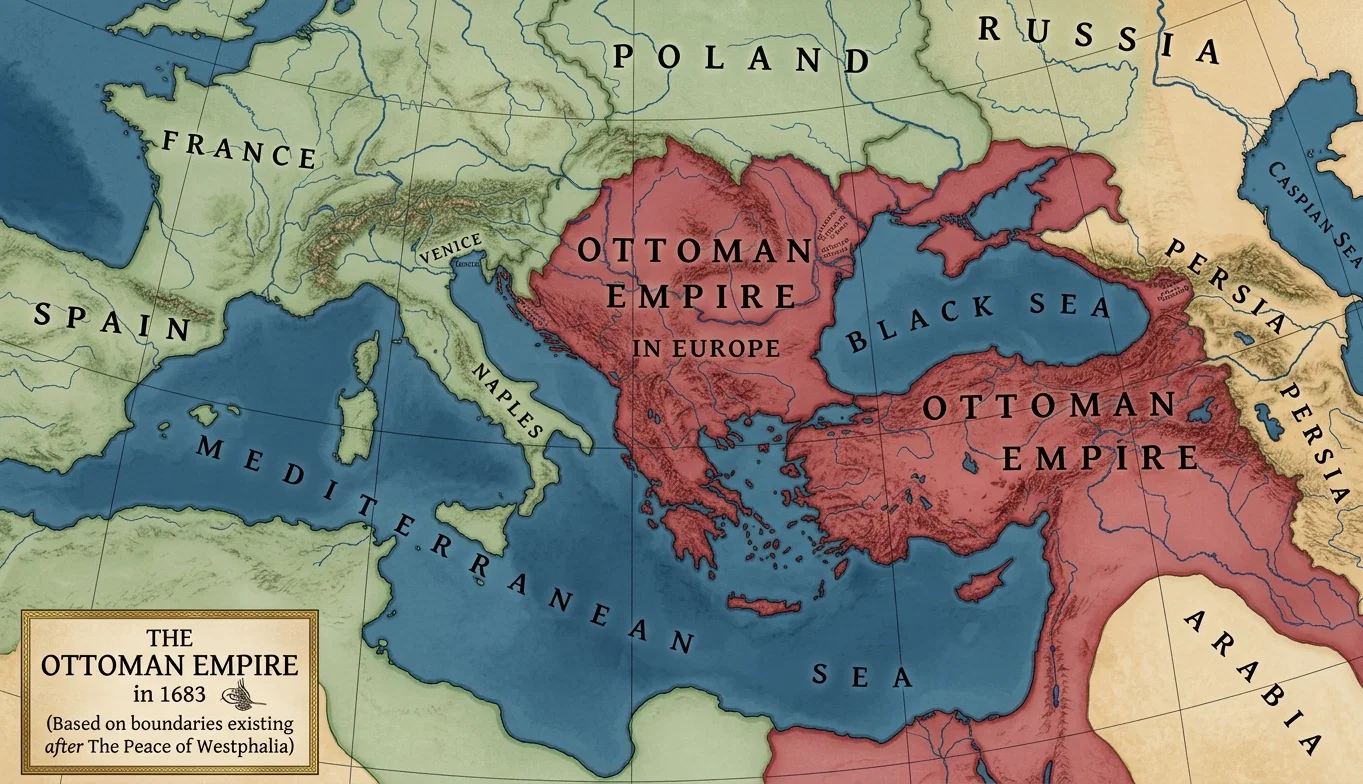
THE
OTTOMAN EMPIRE
IN 1683
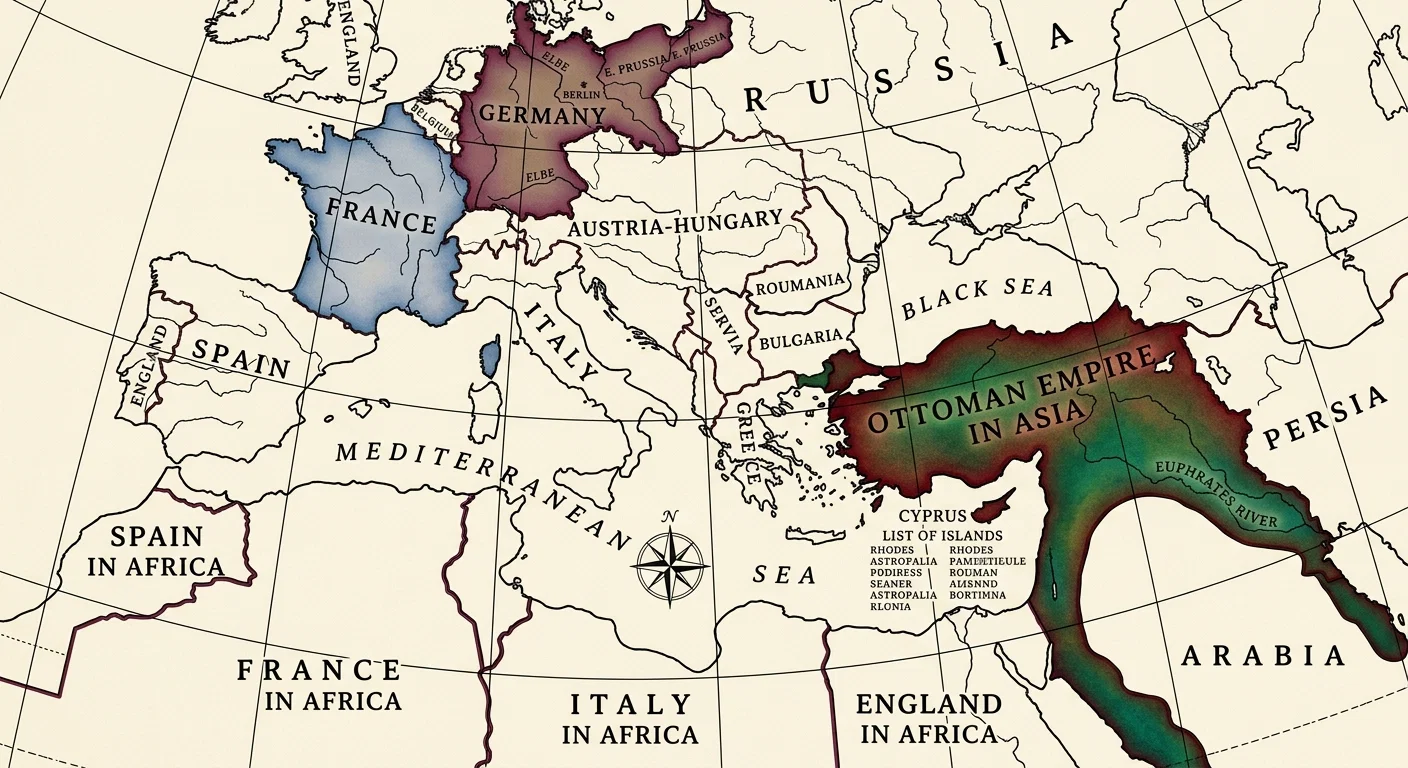
1914
The Peace of Westphalia
THE OTTOMAN EMPIRE IN 1683 1914 The Peace of Westphalia
Passing over these details, and all the history intervening, we must come at once to the closing portion of the prophecy, which deals with events of the latter days. Here we find the king of the north again a chief actor, “at the time of the end,” in this same region; and when that power comes to its end, as we shall read in a moment, it is the signal that the great day of God at last has come.

The World’s Crisis

Well may we ask, therefore, What power in these last days is the king of the north? Assuredly it must be the power that holds dominion in the regions of the ancient king of the north of the first part of the prophecy. The divine prophecy named the power by its geographical location. That is certain. When Seleucus, of Syria and the east, conquered Asia Minor and the north, he became king of the north. Through the story of two centuries this Syrian Empire—that stretched from the regions about Constantinople to the Euphrates—is called the king of the north in the prophecy. Whatever power holds dominion over this region of Asia Minor and Syria must be king of the north in the language of divine prophecy. And every reader knows that today Turkey, the Ottoman Empire, occupies this very region. Today, then, Turkey is the king of the north. Of the later history and end of the king of the north, the prophecy says:—
“Tidings out of the east and out of the north shall trouble him: therefore he shall go forth with great fury to destroy, and utterly to make away many. And he shall plant the tabernacles of his palace (evidently the seat of government) between the seas in the glorious holy mountain; yet he shall come to his end, and none shall help him. And at that time shall Michael stand up, the great prince which standeth for the children of thy people: and there shall be a time of trouble, such as never was since there was a nation even to that same time; and at that time thy people shall be delivered, every one that shall be found written in the book.” Daniel 11:44, 45; 12:1.
The opening verses graphically describe the later history of Turkey to this day. Disquietude has come by the “tidings out of the east and out of the north.” Piece by piece the eastern possessions in the Transcaucasus have been taken away. And province by province on the north, the Turkish Empire has been whittled away. “None shall help him” at the last, the prophecy says of the king of the north. It suggests that formerly this power has had help. For a century it has been a doctrine of the diplomacy of western Europe that Turkey must be maintained. Turkey has been helped in crises again and again, especially by Great Britain. The powers have feared that the dismemberment of Turkey would involve the whole world in war. In one of his last annual Mansion House speeches, as premier of Great Britain, the late Lord Salisbury said:—
Turkey is in that remarkable condition that it has now stood for half a century, mainly because the great powers of the world have resolved that for the peace of Christendom it is necessary that the Ottoman Empire should stand.
The veteran premier stated the fear of modern statesmen that the fall of Turkey would mean calamity involving all Christendom. And the ancient prophecy declares that when the king of the north comes to his end, it will mean “a time of trouble, such as never was since there was a nation.”
What modern statesmen have seen impending, and sought to prevent, the ancient prophecy declares will surely come. “He shall come to his end, and none shall help him.”

A New Testament Prophecy

This same time of trouble for the nations is dealt with in a New Testament prophecy; and the end of the Turkish power is stated to be the signal for the day of trouble, just as the end of the king of the north is the signal for it in this prophecy of Daniel 11. In the sixteenth of Revelation, the prophet describes the drying up of “the great river Euphrates,” “that the way of the kings of the East might be prepared.” Revelation 16:12. By the drying up of the power represented by the river Euphrates, the way is prepared for the next step—the gathering “of the whole world” to “the battle of that great day of God Almighty”—the Armageddon of the nations. Verses 14-16.
THE OTTOMAN EMPIRE IN 1914
As the Nile stood for Egypt, and the Tiber for Rome, so in all modern times the Euphrates has stood for Turkey and the Moslem empire. Through the centuries since the Turkish invasion of Europe reached its crest, that power has been dwindling and shrinking, until now but little remains to it in Europe. Some day, according to this prophecy of Revelation, it will be entirely “dried up,” just as the king of the north (of Daniel 11) will “come to his end;” and then, according to both prophecies, comes the great day of God.

A Storm Center Round About Jerusalem

In the process of the closing history, as described in the last verse of Daniel 11, the king of the north is to “plant the tabernacles of his palace between the seas in the glorious holy mountain.” This suggests the eventual transfer, before he comes to his end, of the seat of his government to Jerusalem, or Zion, which is called “the holy mountain.” Zechariah 8:3.
Significant indeed, in view of this prophecy, is the attitude of Mohammedans toward Jerusalem. It is to them a holy city. And it is the city, even above Mecca or Medina, around which the Mohammedans are to rally at the end of the world, according to oldest Mohammedan doctrine. Thus Hughes’s Dictionary of Islam says:—
In Surah 1:40 [of the Koran], one of the signs of the approach of the last day will be: “The crier [to prayer] shall cry from a near place” (that is, a place from which all men shall hear). Husain says this “near place” is the temple at Jerusalem.—Article “Jerusalem.”
One of the old commentators on the Koran, Jalalán, is thus summarized by Hughes:—
It was at Jerusalem that Jesus ascended to heaven; and it will be there that he will again descend. . . . In the last days there will be a general flight to Jerusalem.—Id.
Despite lack of space, may we add one more testimony to the importance attached by Islam to the holding of Jerusalem? It is from an old Arab commentator and geographer, Mokaddasi (A. D. 985):—
As to the excellence of the city. Why, is not this to be the place of marshaling on the day of judgment; where the gathering together and the appointment will take place? Verily Makkah (Mecca) and Al Madina have their superiority by reason of the Ka’bah and the Prophet,—the blessing of Allah be upon him and his family!—but, in truth, on the day of judgment both cities will come to Jerusalem, and the excellence of them all will then be united.—Le Strange, “Palestine Under the Moslems,” page 85.
Modern travelers in Turkey have long told of the feeling among thoughtful Turkish people that the crisis of their nation is at hand. Thus:—
The Turks themselves seem generally to be convinced that their final hour is approaching. . . . “It is kismet. We cannot resist destiny.” I heard words to this effect from many Turks, as well in Asia as in Europe.—Macfarlane’s “Kismet,” page 400.
Ancient prophecy and modern superstition alike point to the return of the Crescent into Asia as an event at hand. . . . The feeling of a coming catastrophe is so deeply rooted, and so universal [etc.]—Sir Wilfred Blunt, “Future of Islam,” page 95.
But a few years ago one of our Seventh-day Adventist missionaries in Constantinople wrote to our Mission Board:—
Within the past few months quite a company of people from the Transcaucasus district have come to Ismid,—old Nicomedia,—bringing all they possess with them. Some of them possess considerable wealth. When asked if they were going to settle in Ismid, they replied that they would settle nowhere permanently at present. They stated that they had come to be prepared to go with their leader when he left Constantinople to go to Jerusalem.
No man may foresee just exactly how events will turn in detail. But the great truth rings in our ears like a trumpet peal: the Eastern Question is hastening on to its final solution, and its solution brings the end of the world! The prophecy declares that the fall of the Turkish power ushers in the end. And everywhere the newspapers can see nothing but the hastening of Turkey’s end in the present struggle. Thus the Washington Times says, editorially:—
There is not the possible chance of Turkey ultimately gaining, however the war may go. If she allies herself with Germany, and Germany wins, what next? . . . Turkey will be pushed out of Europe, and presently out of existence. . . . On the other hand, what if the allies win? There will be no more of the weak-kneed British attitude that in the past has made Downing Street chief supporter of the Sick Man, lest his demise soon clear the way for Russia to Constantinople. If the allies win, it will mean not merely the end of Turkey in Europe, but of Turkey. The empire will be dismembered; perhaps not immediately, but in the processes of no great period.—Nov. 1, 1914.
Dispatches from Petrograd give us the Russian view as follows (November 2):—
The Bourse Gazette: “It is Russia’s opportunity. There is no general combination of powers such as several times saved Turkey from final destruction. . . . Russia accepts the challenge thrown down, and marches to the fulfillment of her destiny.”
The Novoe Vremya (of the day when Turkey entered the war): “That day was the day of the virtual death of the once glorious Ottoman Empire.”
Thus before our eyes today events are taking place of deepest eternal interest. The war in Europe means a time of trouble there that we can scarcely conceive of. But the prophecy forewarns us of the swift approach of that worldwide “time of trouble, such as never was since there was a nation.” No man may tell the day or the hour or the year, or the exact course of events in detail. Idle speculation or appeals merely to excitement are deplorable in these matters of eternal moment. But every outline of prophecy in all Holy Scripture cries to men now, echoing the Saviour’s warning: “Be ye also ready: for in such an hour as ye think not the Son of man cometh.”
Let not any soul say, “I will wait and see, and will believe and turn to God when Turkey comes to its end.” That means eternal loss; for it plainly appears from the prophecy of Revelation concerning the drying up or ending of this power, that when it comes to its end the day of human probation will already have passed forever. The end of the Turkish power (described in Revelation 16:12) comes after Christ’s work as mediator for sinners has ceased in the heavenly temple. Revelation 15:8. It will then be eternally too late. Then the solemn words will have been spoken:—
“He that is unjust, let him be unjust still: and he which is filthy, let him be filthy still: and he that is righteous, let him be righteous still; and he that is holy, let him be holy still. And, behold, I come quickly.” Revelation 22:11, 12.
“Now is the accepted time,” not then; “behold, now is the day of salvation.”