The Saints’ Inheritance

2%

Review and Herald Publishing Association · Takoma Park, Washington, D. C. · Jul 5, 1915

FromReview and Herald, Vol. 92, No. 33.

Read the full edition

BEHOLD, I MAKE ALL THINGS NEW

The Saints’ Inheritance

By M. C. Wilcox
#
EVERY normal person loves home; not the house merely, nor the land, nor the environment, but all these, and more; all these, with the associations which home means,—husband and wife, father and mother, son and daughter, brother and sister, loved ones with kindred aims, pursuits, objects, aspirations, sympathies, each delighting to serve the other. When health and average prosperity are present, earth knows no brighter spot, no holier benison, than such a home.

God’s Purpose and Plan

That is God’s plan for his children now; it has always been God’s plan. Let me tell you in simple language the story of the record of the Old Book. Over the mighty archway of its entrance stand the simple but sublime words, “In the Beginning God created the Heaven and the Earth.” Gen. 1:1. Surely the infinite God had an object in this.
“Not for sport of mind or force Hast thou made the universe, But as atmosphere and zone Of thy loving heart alone.”
Within that zone came this creature man, created “in the image of God,” “male and female created he them. And God blessed them, and God said unto them, Be fruitful, and multiply, and replenish the earth, and subdue it: and have dominion over the fish of the sea, and over the fowl of the air, and over every living thing that moveth upon the earth.” Gen. 1:27, 28. Such is the inspired record of man’s origin. How infinitely superior to all the theories, fancies, hypotheses, and guesses of humanity!
“In the image of God” implies not only physical form, but moral likeness and kinship; for in man’s restoration he is still God’s “workmanship, created in Christ Jesus unto good works,” “a new creature,” “the new man, which is renewed in knowledge after the image of him that created him.” Eph. 2:10; 2 Cor. 5:17; Col. 3:10.
The dominion given man extended over the earth and all upon it. That earth was to be his eternal home. “Thus saith the Lord, . . . I have made the earth, and created man upon it. . . . For thus saith the Lord that created the heavens; God himself that formed the earth and made it; he hath established it, he created it not in vain, he formed it to be inhabited: I am the Lord Jehovah; and there is none else.” Isa. 45:11-18.
In God’s eternal purpose a certain number would people the earth. When the fullness of the purpose met its fruition, there would not be an earth partly empty, nor too full. There would be neither desolation nor crowding.
In the purpose of God the definite number were of perfect character—God’s image. God “made man upright” (Eccl. 7:29), and his normal, active attitude was to be symbolic of his character—in God’s image. Character, holy character, is all that is of worth in God’s sight. His children “should be holy and without blame before him,” and therefore “in love” he “predestinated” them, or marked them out, to be “children by Jesus Christ to himself, according to the good pleasure of his will.” Eph. 1:4, 5. No other characters come into his purpose.
No others are part of his plan. They may seem to be, and may affect it by his permission temporarily, but they are without his plan; and being apart from him, perish, and help to demonstrate the greater glory of his purpose.
These characters are determined by test, by trial, by probation. Character can be formed in no other way. As man came from God, he was potentially righteous. Had he continued in the royal way of faith, he would have developed into one of the shining characters of God’s plan, destined to live forever: for “in the way of righteousness is life; and in the pathway thereof there is no death.” Prov. 12:28. And the names of the characters of this definite number were written in God’s book of life before the foundation of the world. Rev. 13:8; 17:8. For that number of characters worthy to live to all eternity, God created this earth, and, inspecting the finished planet, with divine precision he pronounced it all “very good.”
In that earth he planted a garden, a model for the race in all the ages to come. “Out of the ground made the Lord God to grow every tree that is pleasant to the sight, and good for food; the tree of life also in the midst of the garden, and the tree of knowledge of good and evil.” Gen. 2:9.
But one prohibition his Maker put upon him, as he had the right to do, as was for man’s highest good. Man must learn by faith in God’s teaching just what was good and what was evil, not by experience in evil. Thus learning by faith, man would have developed a strong, unselfish character, ever growing and developing in the moral image of God.

Traditions of That Time

To that glorious time, that past golden age, point the traditions of civilized peoples and barbarous tribes. The traditions are the perversions of the true Bible story.

The Tempter Came

Into that sinless Eden, filled with happy bird songs, with odor of sweet flowers and foods, and with the bliss of the innocent children of God, came the tempter, the “son of the morning,” who had as supreme love of self revolted against God. He came to deceive and to destroy. He tempted our first parents through appetite, through self-worship, through presumption, through unbelief, to sin against God.
God had said, “In the day that thou eatest thereof thou shalt surely die.” Gen. 2:17. The devil said, “Ye shall not surely die. . . . ye shall be as God.” Gen. 3:4, 5, A. R. V. And men have gone on foolishly believing the ancient lie ever since.

Loss by Sin

Man sinned, and lost life, lost innocence, and yielded his dominion over the earth to the devil, called by Jesus “the prince of this world” (John 12:31; 14:30), and by Paul “the god of this world,” “the prince of the power of the air, the spirit that now worketh in the children of disobedience” (2 Cor. 4:4; Eph. 2:2), the one who gives authority and power to the persecuting governments of earth (Rev. 13:2-4).

Awfulness of Sin

These sad results are with us still. For six long millenniums the earth has groaned under the curse of violated law, which God names sin.
This earth is not normal. Humanity is not normal. God’s universe is not normal. God suffers the abnormality that his intelligent creatures may know the infinite dissatisfaction of iniquity with God. Glimpses God gives of a better state, a better time; but the fruition of the promise cannot come while sin abides.

The Goodness of God

But God did not leave man to die in slavish service to Satan. “He gave his only begotten Son.” John 3:16. That Son gave himself for us that he might redeem us from all iniquity, and purify unto himself a peculiar people, zealous of good works.” Titus 2:14. The eternal purpose for man holds. No rebellion, no exigency, will defeat God’s purpose for humanity.
There was the promise; the giving followed in one constant outpouring till the Son of the eternal God died upon the cross, made sin for us, that we might be made the righteousness of God in him.” 2 Cor. 5:20.

The Battle Ground

The chief victory of the devil was in the human heart. Man, designed to be a temple of God’s life, yielded that temple to Satan, and sin became infleshed, and man’s dominant mind carnal, or fleshly. All evil likewise is the result of that defeat. The battle of victory must be fought there, in the flesh. There must come within the seed of the woman—humanity—a power from above to cast out sin, to cleanse and renew the heart and make it obedient, and to establish therein the law of God. Therefore the promise of victory, the promise of righteousness, the promise of the eternal inheritance in light, ever comes through the Seed promised of God. Let us very briefly trace some of the promises.

In the Seed

1. We are assured in Gen. 3:15 that there will come the time when the Seed born of the woman, though wounded by the serpent, shall bruise the serpent’s head, strike him in a vital part, and destroy both sin and its fruitage, death. And this promise is reflected in the New Testament thus: “The God of peace shall bruise Satan under your feet.” Rom. 16:20. “Forasmuch then as the children are partakers of flesh and blood, he also himself likewise took part of the same; that through death he might destroy him that had the power of death, that is, the devil; and deliver them who through fear of death were all their lifetime subject to bondage.” Heb. 2:14, 15.
2. Of Noah’s three sons, Shem, Ham, and Japheth, the Seed should come through Shem. Of the families which sprang from Shem, Abraham was chosen. God promised his faithful servant great things, and thus emphasized his promise: “And he brought him forth abroad, and said, Look now toward heaven, and tell the stars, if thou be able to number them: and he said unto him, So shall thy seed be. And he believed in the Lord; and he counted it to him for righteousness.” Gen. 15:5, 6. God confirmed this promise to his aged servant a little later by an oath, in which the very Godhead was pledged to its performance, that Abraham’s seed should be multiplied “as the stars of the heaven, and as the sand upon the seashore; and thy seed shall possess the gate of his enemies; and in thy seed shall all the nations of the earth be blessed.” Gen. 22:16-18.
3. Abraham had two sons, Ishmael and Isaac; but the Seed was to come through Isaac, the miraculous child of promise. Genesis 21. Isaac had two sons, Esau and Jacob. The Seed was to come through Jacob—“Israel,” the prevailer with God. Gen. 28:13; 32:28. Jacob had twelve sons; the promise was through Judah. Unto the Shiloh of his tribe should “the gathering of the people be.” Gen. 49:10.

Promise to David

4. But from Judah sprang many families. God chose one of these, Jesse, and of Jesse’s seven sons, David. And therefore by “the stem of Jesse” and “the root and the offspring of David,” comes, according to the flesh, our Saviour, the Lord Jesus Christ. Isa. 11:1; Rev. 22:16; Rom. 1:3, 4. To David, God made promise that to his seed he would “establish his kingdom. He shall build an house for my name, and I will establish the throne of his kingdom forever.” 2 Sam. 7:12, 13. This promise was not fulfilled in the kings of Judah. A few were faithful; most of them were apostates. At last the kingdom came to an end under the weak and wicked Zedekiah, taken captive by Babylon. And of him the prophet speaks: “And thou, profane wicked prince of Israel, whose day is come, when iniquity shall have an end, thus saith the Lord God; Remove the diadem, and take off the crown; this shall not be the same; exalt him that is low, and abase him that is high. I will overturn, overturn, overturn it; and it shall be no more, until he come whose right it is; and I will give it him.” Eze. 21:25-27. Three times now was the kingdom of the world to change hands—under Medo-Persia, Grecia, and Rome. In the last overturning came the promised Seed,
of whom the angel said: “Thou . . . shalt call his name Jesus. He shall be great, and shall be called the Son of the Highest; and the Lord God shall give unto him the throne of his father David; and he shall reign over the house of Jacob forever; and of his kingdom there shall be no end.” Luke 1:31-33. Then when shall sound the trump of God, the earthly reign of sin will have ended, and it shall be said in the courts of heaven, “The kingdom of the world is become the kingdom of our Lord, and of his Christ: and he shall reign forever and ever.”
The Lord is eternally triumphant. The promises to the Seed of the woman, like the red strand in the English cable, run like a golden cord from the beginning to the end of the Book of God; all center in Christ Jesus our Lord, all look forward to the glorious home of God’s redeemed.
5. But there is another point to this bright star of promises; namely, the many scattered assurances of the Word of God, direct to the pilgrims of the night, longing for home. Read a few from among the many: “The meek shall inherit the earth; and shall delight themselves in the abundance of peace.” Ps. 37:11. The meek do not inherit the earth now, but the arrogant, the oppressor. Now, too, there is abundance of war. The fulfillment of the promise yet waits. Our Lord echoes the same promise in the beatitudes: “Blessed are the meek: for they shall inherit the earth.” Matt. 5:5.
“And the kingdom and dominion, and the greatness of the kingdom under the whole heaven, shall be given to the people of the saints of the Most High, whose kingdom is an everlasting kingdom, and all dominions shall serve and obey him.” Dan. 7:27. This will be the continuance of God’s children when all the oppressive powers of earth are destroyed. Oppression is no more; all is life, liberty, glory forever.

When Experienced

Not until our Lord comes will the kingdom be given; for then, and not till then, will begin the eternal reign of the Son of God. “When the Son of man shall come in his glory, and all the holy angels with him, then shall he sit upon the throne of his glory. . . . Then shall the King say unto them on his right hand, Come, ye blessed of my Father, inherit the kingdom prepared for you from the foundation of the world.” Matt. 25:31-34. The long, cruel reign of sin will be over; the agonizing priesthood of our Lord will be finished. The sleeping saints of God will rise, clothed in immortality, never to die any more, the long reign of righteousness will dawn, and the eternal purpose of God will begin its endless round.

The Character of That Home

Not as now will be the homeland of God’s people. Here and now it is blasted and marred by sin. The house is in possession of thieves that come to kill and destroy. John 10:8, 10. The true King, the Life-giver, is coming. And all who are his will, at his voice, rise immortal. 1 Cor. 15:51-54. In the light of that ineffable glory of Christ, which they have rejected in his character of love, they perish. 2 Thess. 1:8, 9. They cannot endure the indescribable splendor of his presence. The very earth is broken down before it. Jer. 4:23-26. The voice and trumpet of God shakes the earth. Heb. 12:26-28. “The cities of the nations” fall. Rev. 16:17-20. Those who survive the world-wide war of the day of God, when the slain will be “from one end of the earth even unto the other end of the earth,” will perish when the Lord appears, and the earth will be left desolate. Jer. 25:32, 33; Rev. 19:20; Isa. 24:1-5. God’s children, “born from above” (John 3:3, margin), will ascend to the “Jerusalem that is above, which is our mother.” Gal. 4:26. That city, “whose builder and maker is God,” is the capital of the future kingdom. In that city above, God’s people abide for a thousand years, while the earth lies desolate. They are partakers in “the first resurrection,” the resurrection “out from among the dead,” the resurrection to life and immortality. Rev. 20:5; Phil. 3:10, 11; 1 Cor. 15:51-54. In them will he fulfilled the promise of Jesus, “I will come again, and receive you unto myself.” John 14:1-3.

New Heavens and New Earth

At the end of the thousand years takes place the final judgment of the wicked and their utter destruction. Electing to have no part in God’s plan and purpose, they meet the inevitable result—death, extinction of being. In the “cleansing fire of his presence they die.” Heb. 12:29; Rev. 20:9. The devil, who has led and fostered rebellion against God, will be devoured, and “nevermore have any being.” Eze. 28:18, 19; Heb. 2:14. God’s universe will be free from sin. By his power God’s children will be given immortality—God’s stamp of an incorruptible character. The same power that restored God’s image in man, will speak to the chaos of sin upon this earth, as it spoke to the chaos in its first formation. Gen. 1:2. The same God which brought cosmos—order, beauty, arrangement—out of the chaos of night in the birth of the world, will bring life, order, beauty to this old earth. Thus saith the prophet: “Behold, I create new heavens and a new earth; and the former shall not be remembered, nor come into mind. But be ye glad and rejoice forever in that which I create; for, behold, I create Jerusalem a rejoicing, and her people a joy.” Isa. 65:17, 18. This is repeated by an apostle. Speaking of the destruction which awaits this present order of things, he says, “Nevertheless we, according to his promise, look for new heavens and a new earth, wherein dwelleth righteousness.” 2 Peter 3:13. But this creation will be apart from this present world, any more than the converted and immortal man is apart from the converted man. “Behold,” says the Ruler of the universe, “I make all things new.” Rev. 21:5. What a kingdom that will be—the kingdom of a regenerated earth, peopled by a regenerated race! “And there shall be no more curse; but the throne of God and of the Lamb shall be in it.”
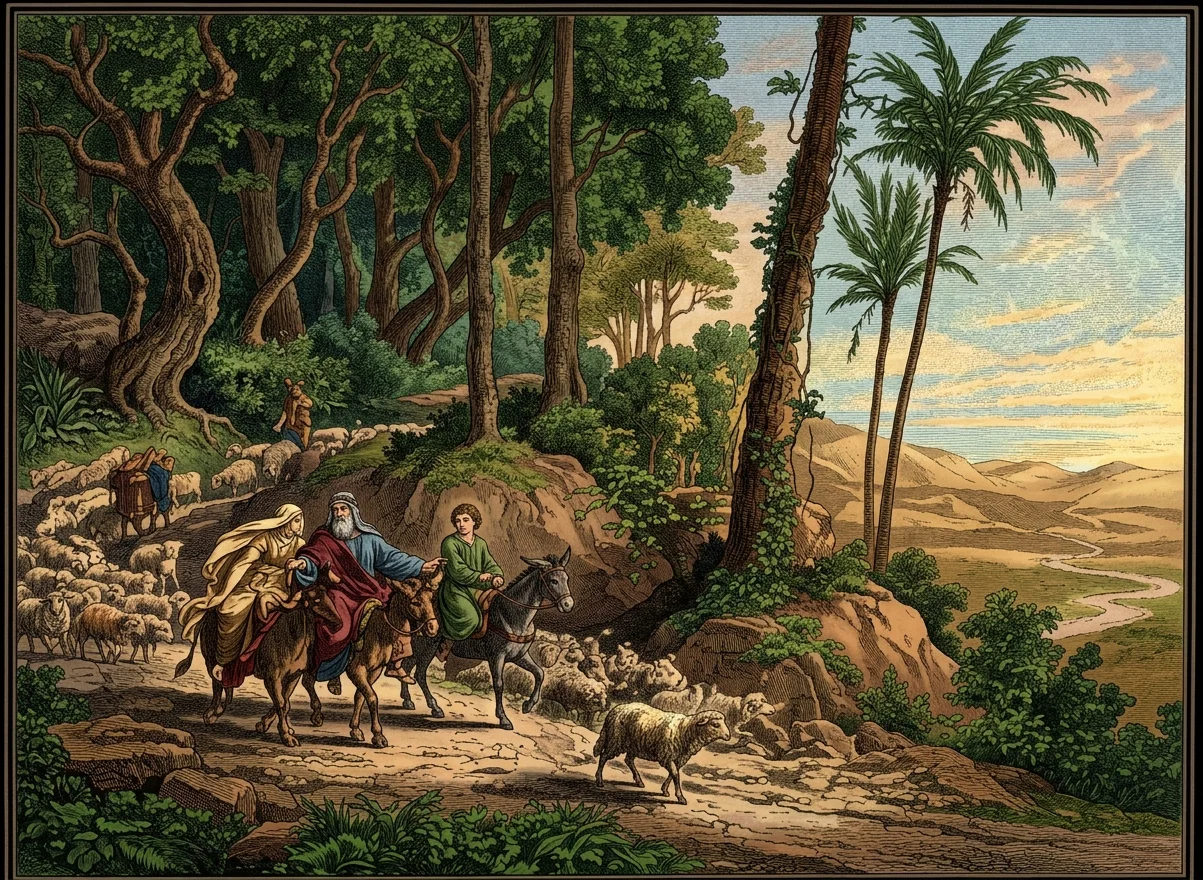
“BY FAITH ABRAHAM . . . SOJOURNED IN THE LAND OF PROMISE”

The King

The King of that realm is not ruler alone by divine right or by direct heirship; he is, by the fullest, freest choice, the ruler of all his people. All have first chosen him, each alone by himself; and the reason of this choice is that he alone possesses all the qualifications of the king. He is of the royal line, the Son of the eternal God, the Ruler of the universe. He has all power and wisdom and knowledge; for “in him dwelleth all the fullness of the Godhead bodily.” Col. 2:9. There is absolute accord between him and the Father; for “it pleased the Father that in him should all fullness dwell.” Col. 1:19. The Father, because of his holy, unselfish character, “hath highly exalted him, and given him a name which is above every name.” Phil. 2:5-11. He loves his people with such a love that he died to redeem them even while they were sinning against him. He set them free from the slavery of sin. He gave them new hearts, new life, new joy, everlasting peace. He is all in all to them, the King eternal.

The Subjects

He has made his subjects like himself. They are not cringing slaves, but willing, obedient sons; and they became sons before they reached the kingdom. “Behold, now are we the sons of God, and it doth not yet appear what we shall be: but we know that, when he shall appear, we shall be like him; for we shall see him as he is.” 1 John 3:2. There will be no want, no woe, no misery, no hatred, no strife, no sickness, no sorrow, no death, among the subjects of that kingdom. “And I heard a great voice out of heaven saying, Behold, the tabernacle of God is with men, and he will dwell with them, and they shall be his people, and God himself shall be with them, and be their God. And God shall wipe away all tears from their eyes; and there shall be no more death, neither sorrow, nor crying, neither shall there be any more pain; for the former things are passed away.” Rev. 21:3, 4. “Behold, a King shall reign in righteousness, and princes shall rule in judgment. And a man, Christ Jesus, shall be as an hiding place from the wind, and a covert from the tempest; as rivers of water in a dry place, as the shadow of a great rock in a weary land. And the eyes of them that see shall not be dim, and the ears of them that hear shall hearken.” Isa. 32:1-3. “And the inhabitant shall not say, I am sick: the people that dwell therein shall be forgiven their iniquity.” Isa. 33:24. “The people also shall be all righteous: they shall inherit the land forever, the branch of my planting, the work of my hands, that I may be glorified.” Isa. 60:21. “And the work of righteousness shall be peace; and the effect of righteousness quietness and assurance forever.” Isa. 32:17.
The capital city will in every way be worthy of the earth that has been touched of God. The description of its glory is found in Revelation 21 and 22 and elsewhere. It stands in “a very great valley,” and is a perfect square, three hundred and seventy-five miles on a side, its walls one hundred and forty-four feet high. There are twelve gates, three on each side. There are six great avenues passing from wall to wall, three each way, dividing the city into sixteen great squares. Of its numerous smaller streets we know nothing. But this we know, that that city, “whose builder and maker is God,” with its walls of jasper, its foundations garnished with all manner of precious stones, its gates of pearl, its streets of gold, its river of life, its light the glory of God, is incomparable in its beauty and splendor. The throne of the Eternal is in the midst of that city, and from him who sits upon it there shines a glory which eclipses the sun and moon, even though they are shining in sevenfold splendor. Isa. 24:23; 30:26; Rev. 22:3.
Yet the immortal eyes of God’s children shall be so strengthened that through the undimmed glory they shall see his face. Their eyes shall see their King in his beauty. From the throne wells up the river of life, sending forth its life-giving and fructifying streams to all parts of the new earth. On either side, reaching its living waters, grows the tree of life, bearing each month a different variety of life-giving fruit for the children of God. There are no foes; its gates are open night and day. All God’s children have access to the city, and all the people of the kingdom are God’s children. In the midst of that city is the throne of the Eternal. “And there shall be no more curse; and the throne of God and of the Lamb shall be in it. . . . And they shall see his face.” Rev. 22:3-5. Blessed privilege, to look into the kindest, most glorious, most loving face in all the universe, the face of our God, our Saviour, our Friend!
Reader, to that eternal home, the half of the glories of which can never be told by mortal tongue or pen, God invites YOU. All the wealth of the grace of Christ is pledged to your salvation. Will you not accept the invitation, and have a part in the real “inheritance of the saints in light,” a place in the homeland eternal? Read again: “I Jesus have sent mine angel to testify unto you these things in the churches. I am the root and the offspring of David, and the bright and morning star. And the Spirit and the bride say, Come. And let him that heareth say, Come. And let him that is athirst come. And whosoever will, let him take the water of life freely.” Rev. 22:16, 17.
You may not acquire a home here; do not miss the home eternal, where from month to month, and from Sabbath to Sabbath, you shall “see the King in his beauty,” and “be satisfied.” Isa. 66:22, 23.
Father, “Thy kingdom come.” Amen.
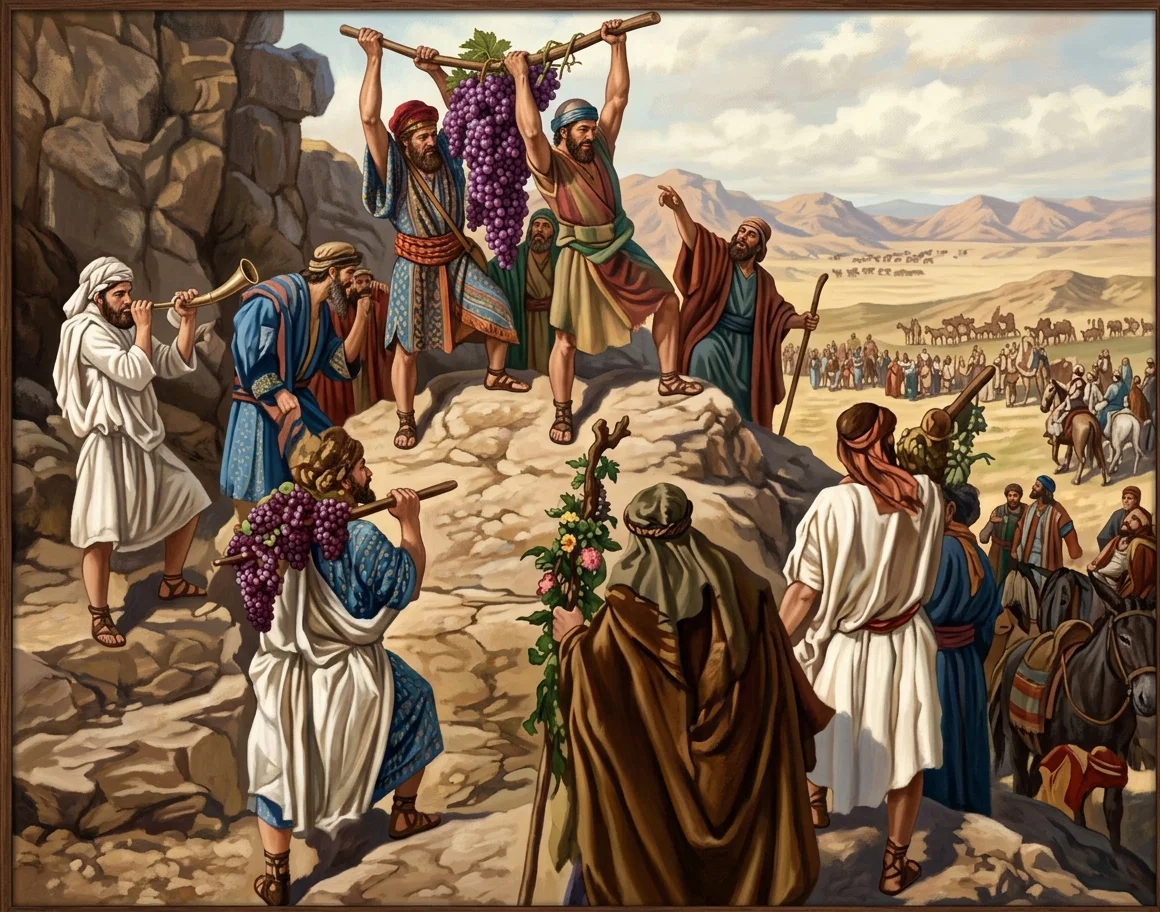
TOKENS OF THE GOODNESS OF THE BETTER COUNTRY