1. What does the Bible present as the object of a sign, or seal?
“Now, I, the king, establish the decree, and sign the writing, that it be not changed.” Dan. 6:8.
NOTE.—That is, affix the signature of royalty, that it may have the proper authority and thus be of force. Anciently it was customary for kings to use a ring, containing their name, initials, or monogram, for this purpose. Jezebel, the wife of Ahab, “wrote letters in Ahab’s name, and sealed them with his seal.” 1 Kings 21:8. Of the decree issued under Ahasuerus for the slaying of all the Jews throughout the Persian Empire, it is said that “in the name of the king it was written, and sealed with the king’s ring.” Esther 3:12.
2. What are the three essentials to an official seal?
To be complete, an official seal must show three things: (1) The name of the lawgiver; (2) his official position, title, or authority, and so his right to rule; and (3) his kingdom, or the extent of his dominion and jurisdiction. Thus: “Woodrow Wilson, President of the United States;” “George V, King of Great Britain;” “Nicholas II, Czar of Russia.”
God’s Seal Placed in His Law
3. With what is God’s seal connected?
“Bind up the testimony, seal the law among my disciples.” Isa. 8:16.
4. Does the first commandment show who the author of the law is?
“Thou shalt have no other gods before me.” Ex. 20:3.
NOTE.—Who the “me” here spoken of is, the commandment itself does not state. Such a prohibition might come from any source. Any heathen could claim it as a command from his god, and, so far as the commandment itself goes, no one could disprove his claim.
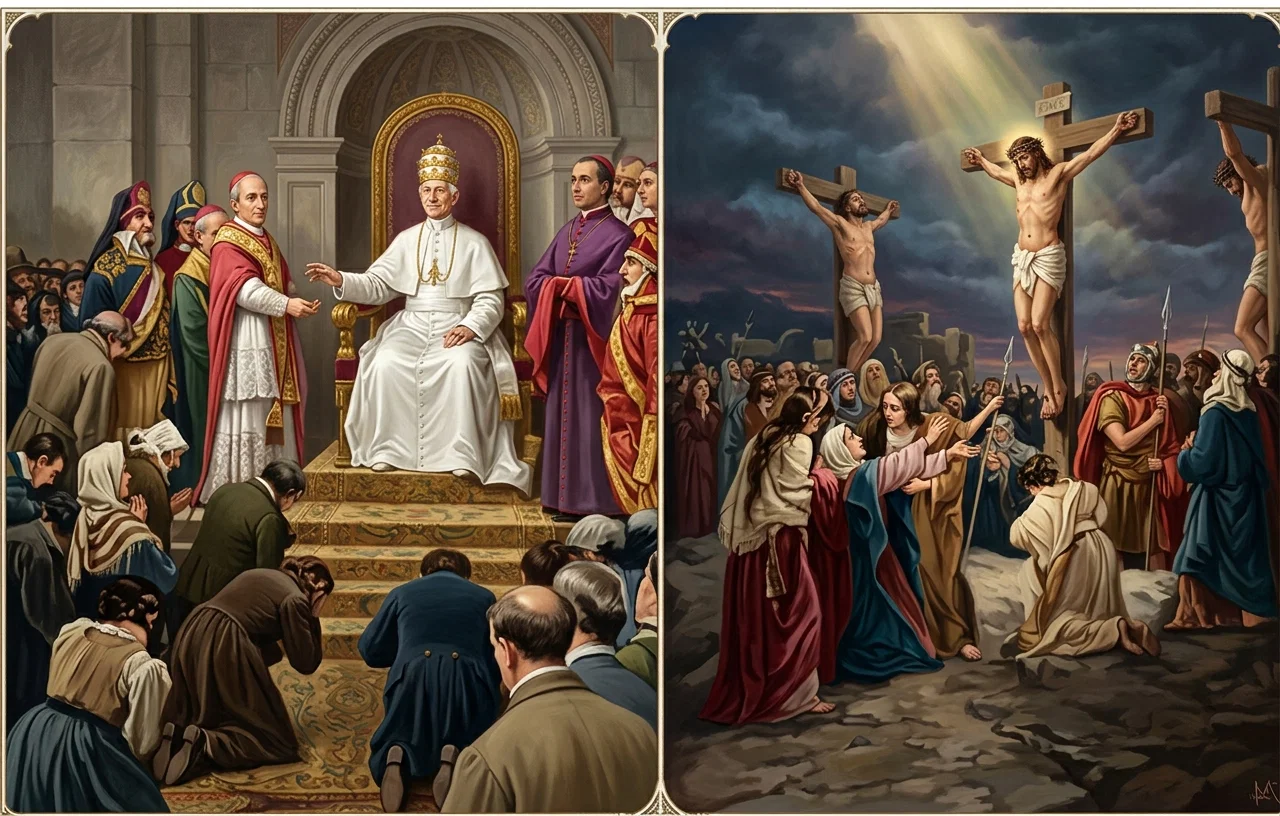
THE LOVE OF POWER THE POWER OF LOVE
“CHOOSE YE THIS DAY WHOM YE WILL SERVE”
5. Does the second, third, fifth, sixth, seventh, eighth, ninth, or tenth commandment indicate the author of the decalogue?
No; none of them.
NOTE.—The second commandment forbids the making of and bowing down to images, but does not in itself reveal who the true God is. The third commandment says, “Thou shalt not take the name of the Lord thy God in vain,” but it likewise fails to reveal the true God and giver of the law. A worshiper of the sun might say he kept this commandment so far as it itself reveals what god is meant. So of the other commandments herein referred to. In the last five commandments the name of God is not even mentioned.
6. Which commandment alone of the decalogue reveals the true God and author of the law?
“Remember the Sabbath day, to keep it holy. Six days shalt thou labor, and do all thy work; but the seventh day is the Sabbath of the Lord thy God; in it thou shalt not do any work, thou, nor thy son, nor thy daughter, thy manservant, nor thy maidservant, nor thy cattle, nor thy stranger that is within thy gates: for in six days the Lord made heaven and earth, the sea, and all that in them is, and rested the seventh day; wherefore the Lord blessed the Sabbath day, and hallowed it.” Verses 8-11.
NOTE.—The fourth commandment alone reveals the name, authority, and dominion of the Author of this law. In six days, (1) the Lord (name); (2) made (office, Creator); (3) heaven and earth (dominion). This commandment alone, therefore, contains “the seal of the living God.” By what is revealed in this commandment is shown what God is referred to in the other commandments. By the great truth revealed here, all other gods are shown to be false gods. The Sabbath commandment, therefore, contains the seal of God; and the Sabbath itself, the observance of which is enjoined by the commandment, is inseparably connected with this seal; it is to be kept in memory of the fact that God is the Creator of all things; and it is itself called a “sign” of the knowledge of this great truth. Ex. 31:17; Eze. 20:20.
Seal, Sign, and Token
7. What reason does God give for the Sabbath’s being an everlasting sign between him and his people?
“It is a sign between me and the children of Israel forever: for in six days the Lord made heaven and earth, and on the seventh day he rested, and was refreshed.” Ex. 31:17.
NOTE.—Sign, seal, and token are used interchangeably in the Bible. See Rom. 4:11; Gen. 17:11.
8. Of what does God say the keeping or hallowing of the Sabbath is a sign?
“Hallow my Sabbaths, and they shall be a sign between me and you, that ye may know that I am the Lord your God.” Eze. 20:20.
9. Of what, besides a knowledge of God as Creator, is the Sabbath a sign?
“Verily my Sabbaths ye shall keep: for it is a sign between me and you throughout your generations; that ye may know that I am the Lord that doth sanctify you.” Ex. 31:13.
NOTE.—The Sabbath is the great sign of God’s creative power wherever and however manifested, whether in creation or redemption; for redemption is creation—re-creation. It requires the same power to redeem that it does to create. “Create in me a clean heart.” Ps. 51:10. “We are his workmanship, created in Christ Jesus unto good works.” Eph. 2:10. At each recurrence of the Sabbath, God designs that it shall call him to mind as the One who created us, and whose grace and sanctifying power are working in us to fit us for his eternal kingdom.
The Sealing of God’s Servants
10. What scripture shows that a special sealing work is to take place just before the letting loose of the winds of destruction upon the earth?
“After these things I saw four angels standing on the four corners of the earth, holding the four winds of the earth, that the wind should not blow on the earth, nor on the sea, nor on any tree. And I saw another angel ascending from the east, having the seal of the living God; and he cried with a loud voice to the four angels, to whom it was given to hurt the earth and the sea, saying, Hurt not the earth, neither the sea, nor the trees, till we have sealed the servants of our God in their foreheads. And I heard the number of them which were sealed; and there were sealed an hundred and forty and four thousand of all the tribes of the children of Israel.” Rev. 7:1-4. See Eze. 9:1-6.
11. Where did the apostle see this same company a little later, and what did they have in their foreheads?
“I looked, and, lo, a Lamb stood on mount Zion, and with him a hundred forty and four thousand, having his Father’s name written in their foreheads.” Rev. 14:1.
NOTE.—The seal of God and the Father’s name must refer to the same thing. The seal is the sign or stamp of perfection, and God’s name stands for his character, which is perfection. And the Sabbath of God, kept as God ordained it to be kept, holy and in holiness, is a sign of this same thing—perfection of character. When this seal is finally placed upon God’s people, it will be an evidence that his grace and his sanctifying power have done their work and fitted them for heaven. In the world to come, all will keep the Sabbath, and will therefore have this seal or mark of sanctification, holiness, and perfection of character. Isa. 66:22, 23.
12. What is said of the character of these sealed ones?
“In their mouth was found no guile; for they are without fault before the throne of God.” Rev. 14:5.
13. How is the remnant church described?
“Here is the patience of the saints: here are they that keep the commandments of God, and the faith of Jesus.” Verse 12.
A Solemn Warning
14. Against what three things does the third angel of Revelation 14 warn men?
“The third angel followed them, saying with a loud voice, If any man worship the beast and his image, and receive his mark in his forehead, or in his hand, the same shall drink of the wine of the wrath of God.” Verses 9, 10.
NOTE.—The beast represents the Papacy; the image to the beast represents another ecclesiastical body clothed with civil power. And over against the seal of God stands the mark of the beast, the mark of the apostasy. Against this false and idolatrous worship and the reception of this mark, God sends this solemn warning.
15. What power mentioned in the thirteenth chapter of Revelation is to enforce this mark?
“He [the two-horned beast] causeth all, both small and great, rich and poor, free and bond, to receive a mark in their right hand, or in their foreheads.” Rev. 13:16.
The Mark of Apostasy
16. What does the Papacy set forth as the mark, or sign, of its power and authority?
“Question.—How prove you that the church hath power to command feasts and holy days?”
“Answer.—By the very act of changing the Sabbath into Sunday, which Protestants allow of.”—“Abridgment of Christian Doctrine,” by Rev. Henry Tuberville, D. D., p. 58.
NOTE.—In a letter written in November, 1895, Mr. H. F. Thomas, chancellor to Cardinal Gibbons, replying to an inquiry as to whether the Catholic Church claims to have changed the Sabbath, said, “Of course the Catholic Church claims that the change was her act, . . . and the act is a mark of her ecclesiastical authority in religious things.”
The true Sabbath being a sign of loyalty to the true God, it is but natural that the false sabbath should be regarded as a sign of allegiance to apostasy. And such we find to be the case.
17. What do papal authorities say of the observance of Sunday by Protestants?
“The observance of Sunday by the Protestants is an homage they pay, in spite of themselves, to the authority of the Catholic Church.”—“Plain Talk about the Protestantism of Today,” by Monsignor Segur, p. 213.
NOTE.—The statement here made is true, and a full realization of the fact will lead those who have heretofore been honestly but ignorantly observing Sunday as the Sabbath, to refuse longer to pay homage to apostasy, and return to the observance of that which is the sign of loyalty to heaven,—the only weekly day of rest which God in his Word has commanded men to keep holy—the seventh day.
18. What will be the dragon’s attitude toward the remnant people who keep the commandments of God?
“The dragon was wroth with the woman, and went to make war with the remnant of her seed, which keep the commandments of God, and have the testimony of Jesus Christ.” Rev. 12:17.
19. How strongly will this false worship and the enforcement of this mark be urged?
“That the image of the beast should both speak, and cause [decree] that as many as would not worship the image of the beast should be killed. And he causeth all, both small and great, rich and poor, free and bond, to receive a mark in their right hand, or in their foreheads; and that no man might buy or sell, save he that had the mark.” Rev. 13:15-17.
The Real Power Behind All Apostasy
20. Who is the real power operating through the beast and his image, and demanding worship?
“The dragon gave him his power, and his seat, and great authority.” Rev. 13:2, last part.
21. Who is this dragon?
“The great dragon was cast out, that old serpent, called the Devil, and Satan, which deceiveth the whole world: he was cast out into the earth, and his angels were cast out with him.” Rev. 12:9.
22. How did the devil seek to induce Jesus to worship him?
“The devil, taking him up into a high mountain, showed unto him all the kingdoms of the world in a moment of time. And the devil said unto him, All this power will I give thee, and the glory of them; for that is delivered unto me; and to whomsoever I will I give it. If thou therefore wilt worship me, all shall be thine.” Luke 4:5-7.
23. How did Jesus show his loyalty to God?
“Jesus answered and said unto him, Get thee behind me, Satan: for it is written, Thou shalt worship the Lord thy God, and him only shalt thou serve.” Verse 8.
NOTE.—The threefold message of Rev. 14:6-12 is proclaimed in connection with the closing scenes of the great controversy between Christ and Satan. Lucifer has sought to put himself in the place of God (Isa. 14:12-14), and to secure to himself the worship which is due to God alone. The final test comes over the commandments of God. Those who acknowledge the supremacy of the beast by yielding obedience to the law of God as changed and enforced by the Papacy, when the real issue has been clearly defined, will, in so doing, worship the beast and his image and receive his mark. Such will take the side of Satan in his rebellion against the authority of God.
The Final Victory
24. How many will yield to the demand to worship the beast?
“All that dwell upon the earth shall worship him, whose names are not written in the book of life of the Lamb slain from the foundation of the world.” Rev. 13:8.
25. In the judgment-hour message, whom are all called upon to fear, glorify, and worship?
“Saying with a loud voice, Fear God, and give glory to him; for the hour of his judgment is come; and worship him that made heaven, and earth, and the sea, and the fountains of waters.” Rev. 14:7.
26. Who will sing the song of Moses and the Lamb on the sea of glass?
“I saw as it were a sea of glass mingled with fire; and them that had gotten the victory over the beast, and over his image, and over his mark, and over the number of his name, stand on the sea of glass, having the harps of God. And they sing the song of Moses the servant of God, and the song of the Lamb, saying, Great and marvelous are thy works, Lord God Almighty; just and true are thy ways, thou King of saints. Who shall not fear thee, O Lord, and glorify thy name? for thou only art holy: for all nations shall come and worship before thee; for thy judgments are made manifest.” Rev. 15:2-4.