Out of Babylon to Zion

5%

Pacific Press Publishing Association · Mountain View, California · May 31, 1910

FromSigns of the Times, Vol. 37, No. 21.

Read the full edition

“Out of Babylon to Zion”

By Prof. Lucas A. Reed
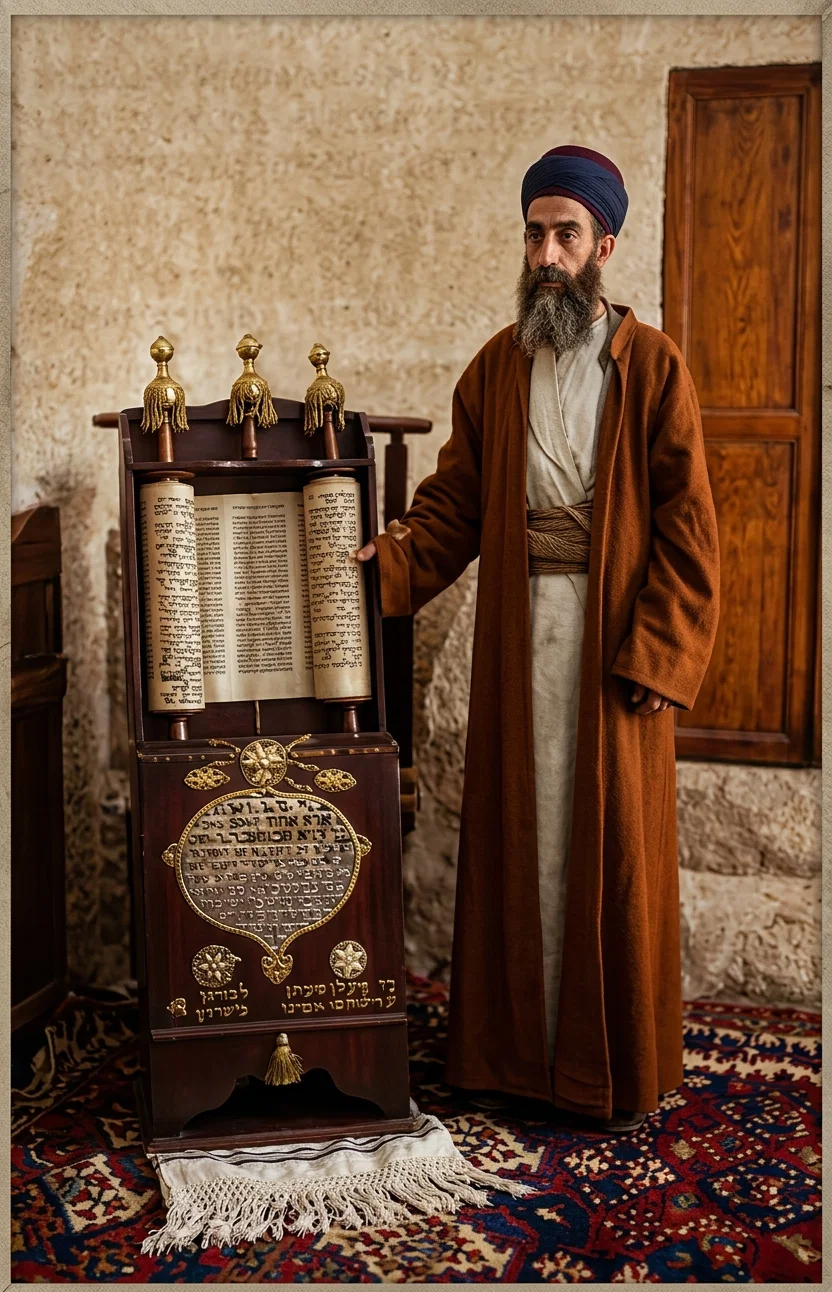
A Samaritan High Priest and Scroll of To-day

VIII. God’s Overruling Providences

The Samaritans being refused the privilege of joining the Jews in the erection of the temple, their efforts from this time on are centered upon giving the Jews as much trouble as possible, and the final result of it is that the Samaritans built a rival temple on Mount Gerizim. Altho they worshiped in accordance with the Mosaic ritual, they did not wholly renounce idolatry. Disasters attended them; their temple was finally destroyed by their enemies. They seemed to be under a curse. Still they clung to their traditions and their form of worship, and would not acknowledge the temple at Jerusalem as the house of God, nor admit that the religion of the Jews was any better than their own.
In Ezra 4 we read the story of the opposition of the Samaritans in their interference with the builders of the temple:
“Then the people of the land weakened the hands of the people of Judah, and troubled them in building, and hired counselors against them, to frustrate their purpose, all the days of Cyrus king of Persia, even until the reign of Darius king of Persia.” Ezra 4: 4, 5.
This must have happened no earlier than the second year of Cyrus; for the Jews went to Jerusalem in the first year of Cyrus, and in the second year of their coming they laid the foundations of the house of God, and then their trouble with the Samaritans followed.

Power of Prayer

Turning to the 10th chapter of Daniel we find that in the third year of Cyrus king of Persia Daniel was mourning three full weeks; that he ate no pleasant bread, neither came flesh nor wine into his mouth, neither did he anoint himself at all till three whole weeks were fulfilled. Is there any connection between this mourning of Daniel and the troubles of the children of Israel in the Holy Land? There very evidently is. The time is at the very point when the Samaritans have sent word to Cyrus, have made their false reports in order to prejudice the king and to get him to stop the work at Jerusalem. There is very plain evidence that Cyrus was giving consideration to their story, and that there was grave danger that the work of God was about to be hindered.
This is very clear when we read the words of the angel that appeared to Daniel as recorded in Daniel 10. The angel tells Daniel that from the moment he began to pray and to seek God, he, the angel of God, was commissioned to go to the court of Persia and to work upon the heart of Cyrus the king. So strong, however, was the representation of the Samaritans, that the angel states that the prince of the kingdom of Persia withstood the angel of God three weeks, or twenty-one days. All this time Daniel is praying and fasting, seeking God for His people; and so Michael, the Lord of glory Himself, comes down to the Persian court, and the angel is no longer needed with the king of Persia.
“But the prince of the kingdom of Persia withstood me one and twenty days; but, lo, Michael, one of the chief princes, came to help me: and I was not needed there with the kings of Persia.” Dan. 10:13, Revised Version, margin.
And so when Christ Himself takes up the work of influencing the mind of the king, the angel is free to come to the faithful prophet Daniel, and tell him not only the immediate future of the chosen people, but what should befall them in the latter days. Dan. 10:14. Having helped and strengthened Daniel, the angel said, “Now will I return to fight with the prince of Persia; and when I am gone forth, lo, the prince of Grecia shall come.” Thus the curtain drops before that invisible world of which we here catch just a glimpse, and yet we know that this is not a rare case. We know that God rules in the kingdom of men, and gives it to whomsoever He pleases. We know that a representative of heaven was in the Persian court through all the years that it stood; and when in the providence of God it had fulfilled its purpose, God’s protection over the Persians ceased, and another nation that would obey Him more perfectly came to take its place.

The Most High Rules

But at this time we know that the counsels of heaven prevailed. We know that the work of the Lord and of His angel upon the heart of the Persian king, and their influence in that royal court, were such as to work no hardship upon God’s pioneers in building the temple. They were not interfered with during the reign either of Cyrus or of his successor Cambyses to any serious extent. Yet the Samaritans did not give up their efforts to cause trouble. They “troubled them in building, and hired counselors against them, to frustrate their purpose, all the days of Cyrus king of Persia.” Ezra 4: 4, 5.

Under Cambyses

And when Cyrus died, and Cambyses, the Ahasuerus of Ezra, took his place, the Samaritans at once brought in new accusations, and sought to work upon the new king to bring about a cessation of labor at Jerusalem.
“And in the reign of Ahasuerus, in the beginning of his reign, wrote they unto him an accusation against the inhabitants of Judah and Jerusalem.” Ezra 4: 6.
They sent in their accusation to Cambyses, but that is all that there was about it. It seems that by this time the opposition of the Samaritans was pretty well understood. Cambyses followed out the policy of his father, and so the work was not interrupted. We know that this is so; because as soon as Gomates, the usurper, came to the throne, they brought in still another accusation which was successful in stopping the work, for we find that they obtained a decree to stop the work, and made the builders cease by force and power. Ezra 4: 23. This shows that they were actively engaged in the work during the reign of Cambyses.
And now we come to the time when the work of God at Jerusalem actually is interrupted. God’s faithful people are prevented by kingly authority from further pushing forward the good work of restoration. What had happened in the Persian kingdom to bring this about, and how it is all overruled to the glory of God and the advancement of His name, and how it brings us at once to the opening process of the book of Zechariah, is a subject so intensely interesting that it must not fail to be told.
(To be continued)