The God Who Knows

7%

Pacific Press Publishing Association · Mountain View, California · Oct 27, 1909

FromSigns of the Times, Vol. 36, No. 42.

Read the full edition

The God Who Knows

A PART OF GOD'S PREDICTIONS CONCERNING BABYLON
ONE of the essential attributes of Deity is omniscience—all knowledge. And this must include not alone a knowledge of the past and present, but a knowledge of the future — the power to foresee and to foretell.
Omniscience has been rarely claimed and never satisfactorily demonstrated among the unbiblical religions. It is one of the great challenges put forth by Jehovah and by Jehovah’s prophets to the devotees of false gods—“Let them bring them forth, and declare unto us what shall happen; declare ye the former things, what they are, that we may consider them, and know the latter end of them; or show us things to come. Declare the things that are to come hereafter, that we may know that ye are gods.” Isa. 41:22, 23.
The gods of the nations have never met this test. Jehovah stands alone in this respect, and bases His reputation, His claim to honor, on His power to foretell: “Behold, the former things are come to pass, and new things do I declare; before they spring forth I tell you of them.” Isa. 42:9.
“Remember the former things of old: for I am God, and there is none else; I am God, and there is none like Me; declaring the end from the beginning, and from ancient times things that are not yet done; saying, My counsel shall stand, and I will do all My pleasure.” Isa. 46:9, 10.
The history of the world is the demonstration of God’s omniscience. Clearly and fully has He predicted events, that when they come to pass men may know that the infinite God has spoken. When all other religions, all other gods, all human foresight, have failed, God has made good His challenge.
Before mighty Babylon reached the height of her glory under Nebuchadnezzar, the prophet of God predicted the ruin of her gilded palaces, the utter destruction of her lofty hanging gardens, the absolute end of her career. Listen:
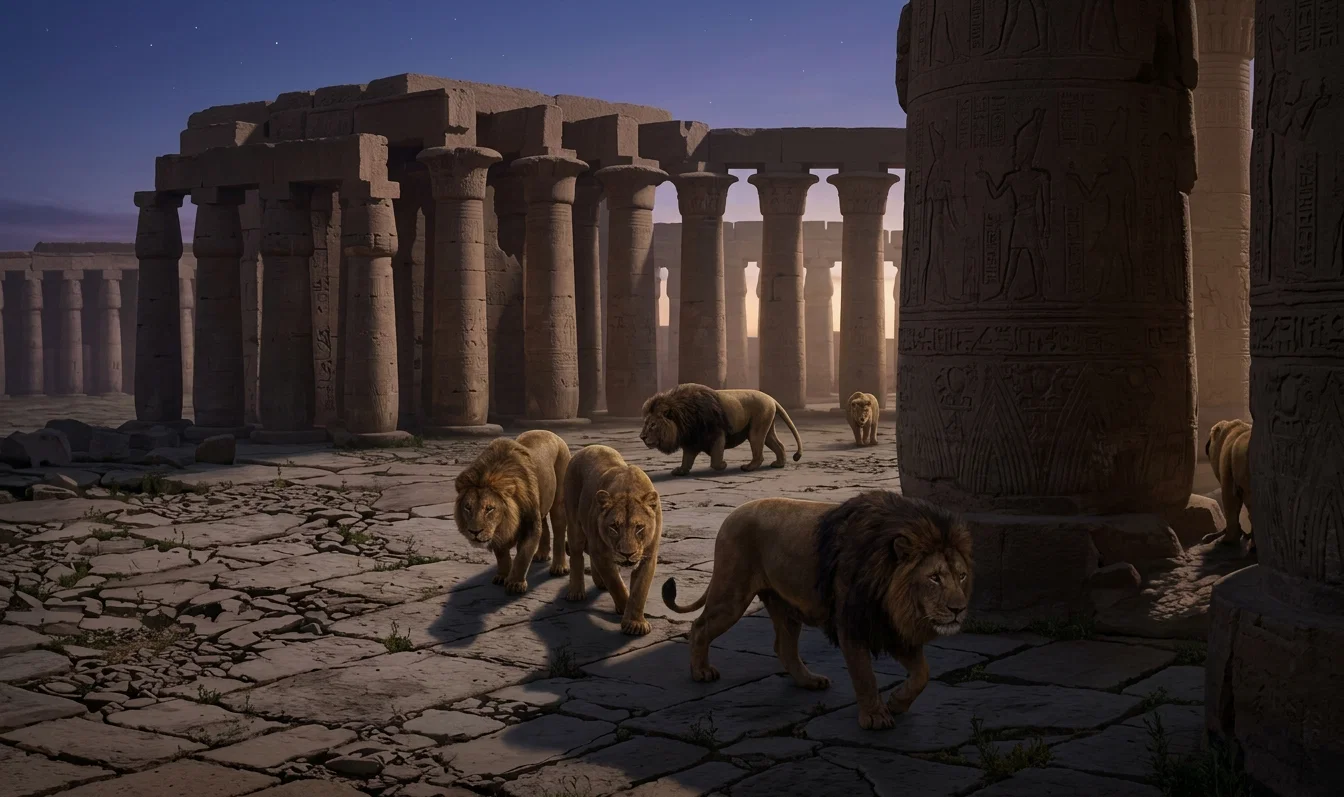
“And Babylon, the glory of kingdoms, the beauty of the Chaldees’ excellency, shall be as when God overthrew Sodom and Gomorrah. It shall never be inhabited, neither shall it be dwelt in from generation to generation: neither shall the Arabian pitch tent there; neither shall the shepherds make their fold there. . . . And the wild beasts of the islands shall cry in their desolate houses, and dragons in their pleasant palaces: and her time is near to come, and her days shall not be prolonged.” Isa. 13:19-22.
How strikingly has all this been fulfilled. An altogether different fate awaited Tyre, the proud, greedy, wealthy merchant city of Phenicia. She too was to be utterly destroyed, but her ruins would be utterly swept away. Listen again:
“And I will make thee like the top of a rock: thou shalt be a place to spread nets upon; thou shalt be built no more; for I the Lord have spoken it, saith the Lord God.” Eze. 26:14.
And we might mention Nineveh and Rabbah and No-Amon and Jerusalem, and predictions concerning various cities and lands. Literally has the Word been fulfilled. All its predictions concerning this world and its nations will be as literally fulfilled.
In the face of all these prophecies men ought to reverence the God of the Bible. In the light of these prophecies men ought to shun the pitfalls of sin and deception. In the assurance of these prophecies men ought to trust Him who knows and who “is able to save to the uttermost.”