The Doing of Duty

13%

Pacific Press Publishing Association · Mountain View, California · May 26, 1909

FromSigns of the Times, Vol. 36, No. 21.

Read the full edition

The Doing of Duty

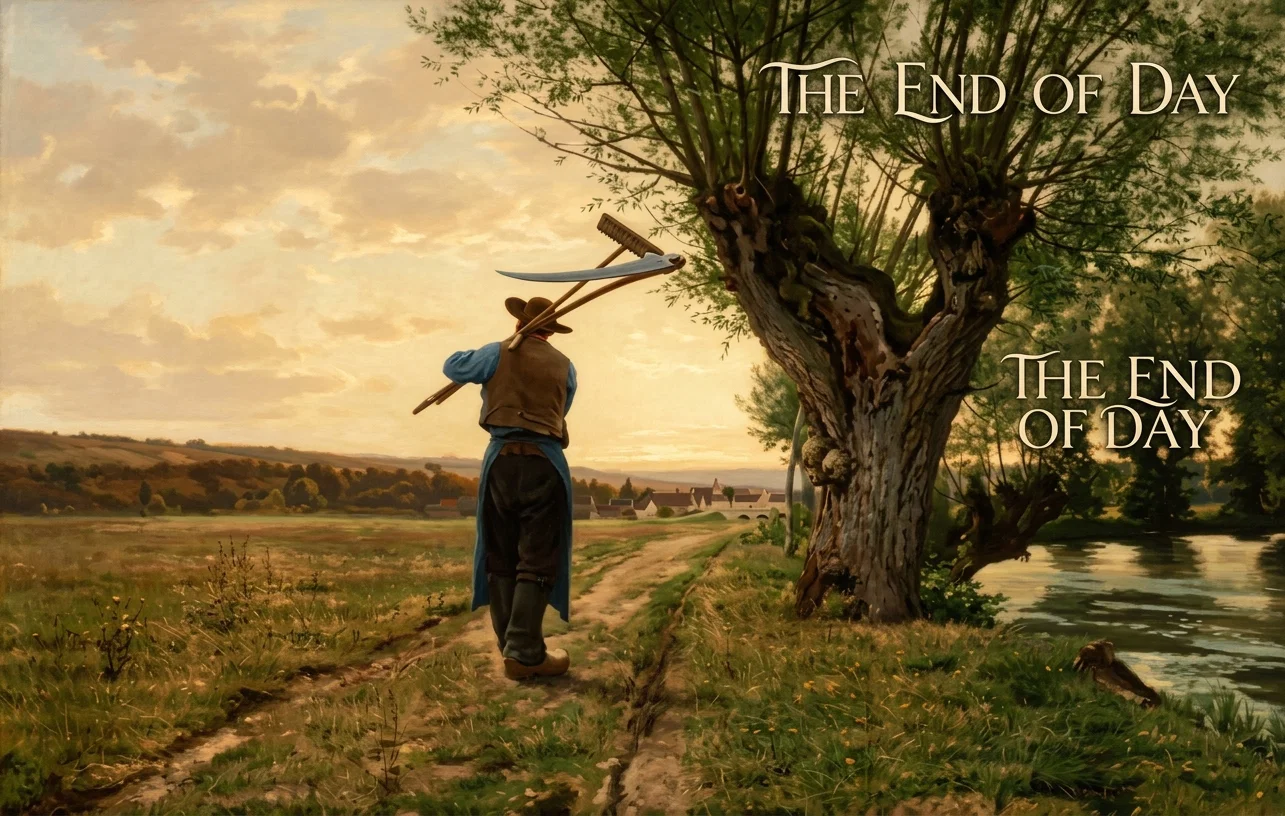
IT is a suggestive picture which the artist Adan has given us of “the end of day.” The stalwart French peasant has finished his work in a long, hot day of harvest, he has shouldered his primitive scythe and rake, and is wending his way homeward to the little hamlet in the near distance. How peaceful, how restful, is the scene! Alongside the babbling, crystal stream fringed with willows, runs the path, the grassy verdure lapping the flowing water on the right, while on the left the meadow land stretches away to the line of trees, beyond which rise the browning hills of sultry summer. In the distance before him is home where wife and children, supper and rest await.
THE day has been taken as a matter of course. Duty called to the field for the sake of wife and children, and he went. The work was hard and the sun hot, and back and limbs grew weary, but the object held him, and the doing of his work well made it a pleasure, heightened by the pleasurable anticipation of the home-coming and the twilight visit in the cottage with the loved ones or with neighbors. We may well believe that the thought of home quickened pace and heart and hand as he neared the close of the day, especially if a happy fireside lay at “the end of day;” and duty done brought a consciousness of rest and peace which all the riches of the Bank of France could not buy.
Is there not a spiritual lesson in this uncommon picture of a commonplace theme? God has given His church a work to do in this “day of salvation,” “the acceptable time.” Jesus tells us that we must work while the day lasts, for “the night cometh, when no man can work.” What a blessing it would have been if that church, like the old peasant, had done her duty, turning not aside to the blandishments of the world, to the allurements of Satan, to a thousand and one tasks and devices not given her of God, but which consumed time and energy, and profited nothing. Doing duty, day by day, simple duty, with a glad and thankful heart, is among the greatest things which this world knows. Doing duty in the grace of Christ Jesus is one of the most potent elements in character-building. We read and hear much of great, startling schemes, devised of men, to substitute for the simplicity of God’s simple plans in soul-saving; but they are generally fruitless of permanent good. What the church needs, what the world needs in the church, is duty-doers, on all occasions, at all times. We are nearing the close of the church’s day of grace. How she should seek out the Book of the Lord and read, that she may know and do her duty now.
THE individual needs the lesson. It is so easy to turn aside from duty. It is easy to think that our sacrifices, in our own way, our doing of big things which brings applause from the world, will compensate for ugly, homely, onerous duty-doing. It is so easy to forget God’s word, “He hath showed thee, O man, what is good; and what doth Jehovah require of thee, but to do justly, and to love kindness, and to walk humbly with thy God?” Micah 6:8. As expressed by our Lord: “Ye are My friends, if ye do the things which I command you.” John 15:14. Simple duty-doing in the love of the Master, for His sake and souls’ sake, glorifies the duty into a living gem of light.
DOING duty is the only safe way. Henry Ward Beecher truly said: “He who is false to present duty breaks a thread in the loom, and will find the flaw when he may have forgotten its cause.” How sad it will be to come down to the close of life’s day and find our sum total of character marred all through and through with the seams and cracks and dry rots of duties shirked or unfulfilled. The shirking was small. Its only effect was a little qualm of conscience; but its cumulative harvest is an eternal loss—perhaps a ruin of character.
“WHAT is the reward of duty-doing?” Nothing, probably, that we can measure in houses and lands, in dollars and cents, even in approval and praise of friends. It may even alienate us from fair-weather friends. We may incur the enmity of our fellows. Our only present satisfaction may be in the glad thought that we have done right, and so kept conscience clear, and know that it is right between our soul and God. So it may ever be through life. Before we have time to estimate the effect of duty-doing, a harder, more onerous, more unpopular duty may face us. It has been said that “the reward of one duty is the power to fulfil another;” and it is true. God tries us for the greater responsibilities by placing upon our shoulders the lighter burdens, so light that men frequently count them of little or no importance, and cast them idly by. Yet the doing of those simple deeds involved in faithfully bearing the responsibilities has within it the potentiality of a mighty life-work reaching beyond the stars.