Before beginning the study of this chapter there are two things worthy of our consideration: (1) The true point of view; (2) the correspondence in God’s work.
1. Some men view the earth with its people from a scientific standpoint, and make all other outlooks subsidiary to that view-point; some see it from a political, others from a social or speculative. “Vision” means simply “seeing”; and the only true visions, or seeings, are the seeings of God. Not as mortal, earthly men see—limited in vision by imperfect knowledge, wrong education in perspective, national, personal, political, and religious prejudices—would God have His people see. The only true view-point is to go up with God and view, with Spirit-anointed eyes from His throne, earth with its people. The only true seeing is the seeing of God. Where John says, “I saw,” Ezekiel tells the things seen were “visions of God.” Eze. 1:1; 8:3.
This prophecy beginning with the fourth chapter of Revelation is emphatically the seeings of God as regards this world; and he who comes into harmony with it, in the spirit of it, will look upon this world in a different light than he ever saw it in mortal view.
2. God’s work in heaven corresponds with God’s work on earth. The symbols that John saw before the throne were symbols of the agencies of God and the work He is doing in the earth. Knowing His work in either place, the instructed child of God knows the work that He is carrying forward in the other.
The fourth chapter of the Revelation opens a new scene in John’s vision. It does not mean that what John saw came afterward, or that it was to occur after the events recorded in the specific letters to the seven churches; it simply declares that the scenes recorded in the fourth chapter and onward were seen by him after the events of the first three chapters were seen. Let us question the text:—
What did John see after the visions of the seven churches?
“After these things I saw, and behold, a door opened in heaven.”¹ Verse 1.
What did he hear?
“The first voice that I heard, a voice as of a trumpet speaking with me, one saying, Come up hither, and I will show thee the things which must come to pass hereafter.”¹
What then occurred, and what did he see?
“Straightway I was in the Spirit; and behold, there was a throne set in heaven, and One sitting upon the throne.” Verse 2.
How does John endeavor to describe the glory of the One sitting upon the throne?
“He that sat was to look upon like a jasper stone and a sardius; and there was a rainbow round about the throne, like an emerald to look upon.”³ Verse 3.
What did John see round about the throne?
“And round about the throne were four and twenty thrones; and upon the thrones I saw four and twenty elders sitting, arrayed in white garments: and on their heads crowns of gold.”⁴ Verse 4.
What came from the throne?
“And out of the throne proceed lightnings and voices and thunders.”⁵ Verse 5.
What more did John see before the throne?
“And there were seven lamps of fire burning before the throne, which are the seven Spirits of God; and before the throne, as it were a glassy sea like unto crystal.”⁶ Verses 5, 6.
What did the prophet see round about the throne?
“And in the midst [margin “before,” ch. 7:17] of the throne, and round about the throne, four living creatures full of eyes before and behind.”⁷ Verse 6.
What description is given of these creatures?
“And the first creature was like a lion, and the second creature was like a calf, and the third creature had a face as of a man, and the fourth creature was like a flying eagle.”⁸ Verse 7.
What does John hear proceed from these creatures?
“And the four living creatures, having each one of them six wings, are full of eyes round about and within; and they have no rest day and night, saying, Holy, holy, holy, is the Lord God, the Almighty, who was and who is and who is to come.” Verse 8.
How does this song affect the elders?
“And when the living creatures shall give glory and honor and thanks to Him that sitteth on the throne, to Him that liveth for ever and ever, the four and twenty elders shall fall down before Him that sitteth on the throne, and shall worship Him that liveth for ever and ever, and shall cast their crowns before the throne.” Verses 9, 10.
What is the song which they sing?
“Worthy art Thou, our Lord and our God,
To receive the glory and the honor and the power;
For Thou didst create all things,
And because of Thy will they were,
And were created.”⁹ Verse 11.
Exposition and Comment.
1. Heaven is as literal a place as our God is a literal Being, as our great High Priest is literal. While we have no description to write of God the Father, while He is omniscient, omnipresent, He is also a personal Being, having a Personal Presence somewhere, self-limited, in some place as He is in no other place. If God were one great all-embracing, intangible, incomprehensible sphere, as much in one place as in another, then surely God’s Word has deceived His children! Because, while that Word does tell us that He is everywhere present by His Spirit, in constant, living touch with all parts of His vast creation, it also reveals Him as having a Personal Presence in that country of His imperial realm called Heaven. Thence came the Son. To that place He returned. Thence He will come again. From that great Central Heaven, that “Celestial Alhambra,” go radiating out to all the circling worlds the swift messengers of God, angels of light, bound on their exalted, tireless ministry of love for their King. To that place the redeemed will go. There they will be confessed before the Father by the Son. And while now He dwells “in the light which no man can approach unto, whom no man hath seen nor can see,” because of sin, yet in that great day when every mark of sin shall have been obliterated forever by His love and His power, His children “shall see His face.” If He were only such as ancient Pantheism, or its modern phases of “Christian Science” or “Theosophy,” would teach us, He could have told us that in His Word, and we could have understood it as well as multitudes now understand the teachings of those through whom “the father of lies” would take from us our Father-God and Brother-Saviour. It was into the heaven of our God that the door opened before the beloved disciple.
2. “Come up hither.”—So God called Moses up into the mount with Him (Ex. 24:12); so also Ezekiel (Eze. 40:2); on the mountain also the transfiguration was shown (Mark 9:2). So God would have the heralds of His Gospel come up upon higher spiritual planes. “O thou that tellest good tidings to Zion, get thee up on a high mountain.” Isa. 40:9. The servant of God must be above the low plane of the dusty deserts and miasmatic sloughs, and foglands of earth if he would see in God’s seeing. Mark also that John, and we with John, were not called up to the throne of God to satisfy our curiosity about heaven, but to see “the things which must come to pass hereafter.”
3. John did not see the person of the Father; rather it was a glory like the changing hues of intense light shining through all the indescribable lights and shades, the coruscations and scintillations, the brilliancies and beauties of the water-green jasper and red carnelian; while over this overwhelming glory arched the covenant bow of God. Emerald.—A beautiful green stone from which flashed the colors of the rainbow, a token of God’s mercy. To that center of all true seeing, are God’s people called with John to behold with clearer vision God’s dealings with men.
4. “Four and twenty elders.”—Compare with the twenty-four courses of priests in the temple. 1 Chron. 24:1–19. Clothed in white raiment would indicate a righteous character, robes washed in the blood of Christ; and the crowns of gold would show conquerors over sin. Christ Jesus is our great High Priest. When He died the graves were opened. After He arose some of the dead came forth. Matt. 27:52, 53. When He ascended on high “He led captivity captive” (margin, “a multitude of captives,” Eph. 4:8), trophies of His victory over sin and death, assistant priests or ministers for man’s salvation in the sanctuary on high, and representing in their own persons all those whom God will use mightily in His work in the earth,—the clean of hand and pure of heart.
5. “Lightnings, voices, thunders,” indications of the glory, the goodness, the power, of God. Compare with Ex. 19:16; Rev. 8:5; 11:19; 16:18. In all these other references is clearly shown God’s wrath against sin.
6. “The seven lamps of fire” and “the glassy sea” were found in the earthly sanctuary in the sevenfold candlestick and the laver at which the priests washed. John saw what they represented, the seven Spirits of God, the one all-pervading Life of God, the agency of all God’s potency in creative and redemptive affairs and the laver of regeneration, the washing of the Word. Titus 3:5, margin; Eph. 5:26.
7. “Round about the throne.”—Not “in the midst,” but before and “round about.” “Living creatures,” so called by Ezekiel. “Beasts” is a very bad translation. It is literally “living ones.” Ezekiel sees these upon the earth, below the firmament, while the throne was above the firmament. To the human eye the movement of the living creatures and the wheels seemed confusion, but out of it all God brought supreme order, and control. In a larger sense the symbol of the throne covers all God’s kingdom. “Jehovah hath established His throne in the heavens; and His kingdom ruleth over all.” All that is in His kingdom is in a sense in the presence of and round about His throne. “Thus saith Jehovah, Heaven is My throne, and the earth is My footstool.” Hence all the things of earth may be well spoken of as in His immediate presence.
8. Into this wonderful symbolism comes the lion, the ox, the man, the flying eagle. Over these there have been endless speculation. That they are not real creatures is evident from a comparison of Ezekiel 1 and Revelation 4. The former has each of the four faces on each of the four symbols, yet he calls all one “living creature.” In Ezekiel each one has four wings, in John’s record each one has six wings. There are other differences also. These creatures have been said to be God’s living throne, but the position of the creatures and context forbid this. They have been said to represent the four ages, antediluvian, postdiluvian, and Levitical Christian, and the ages of glory which follow. Others have said that they stand as four great characteristics of God: His greatness and majesty (the lion), His strength and patience (the ox), His knowledge and wisdom (the man), His exalted and ever glorious reign (the flying eagle). And these things are true of God in fact, and the symbols are fitting; but let us study the subject further in the light of God’s work among His people.
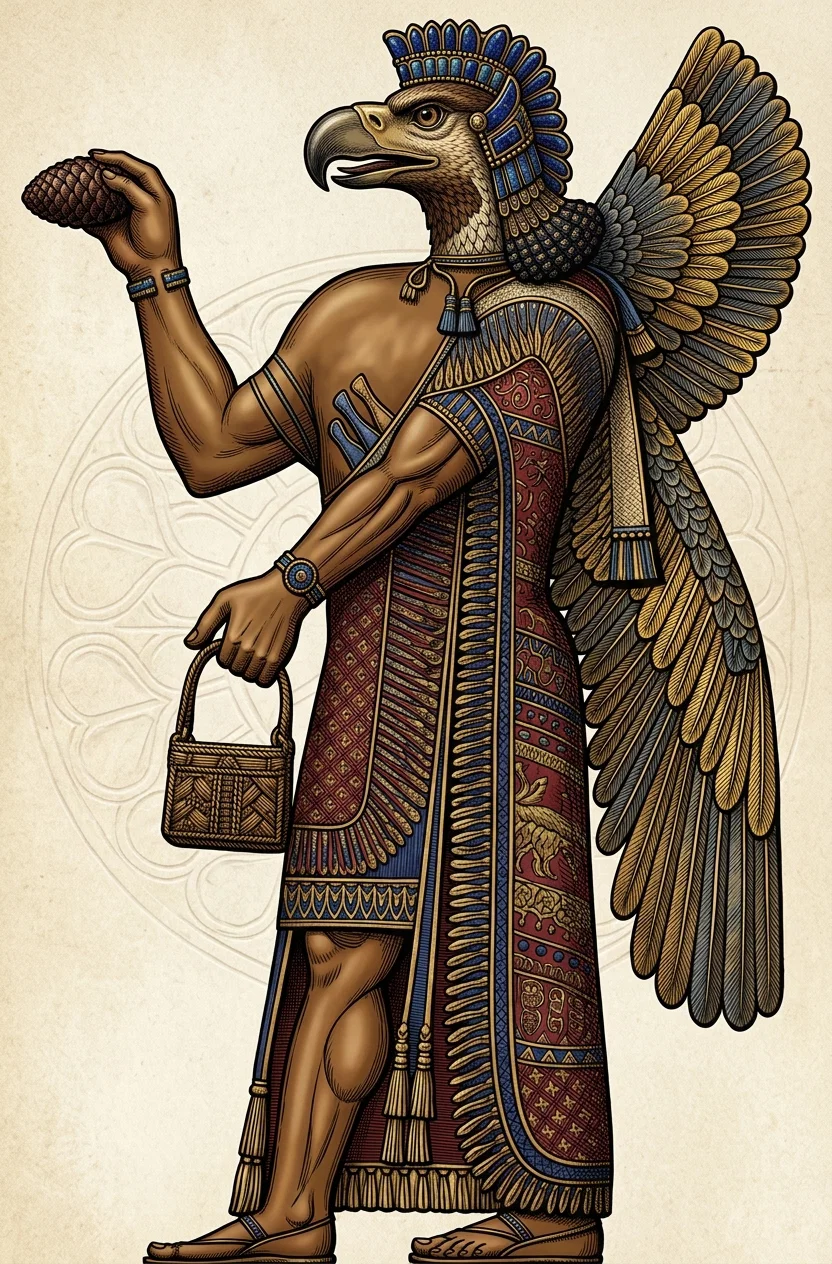
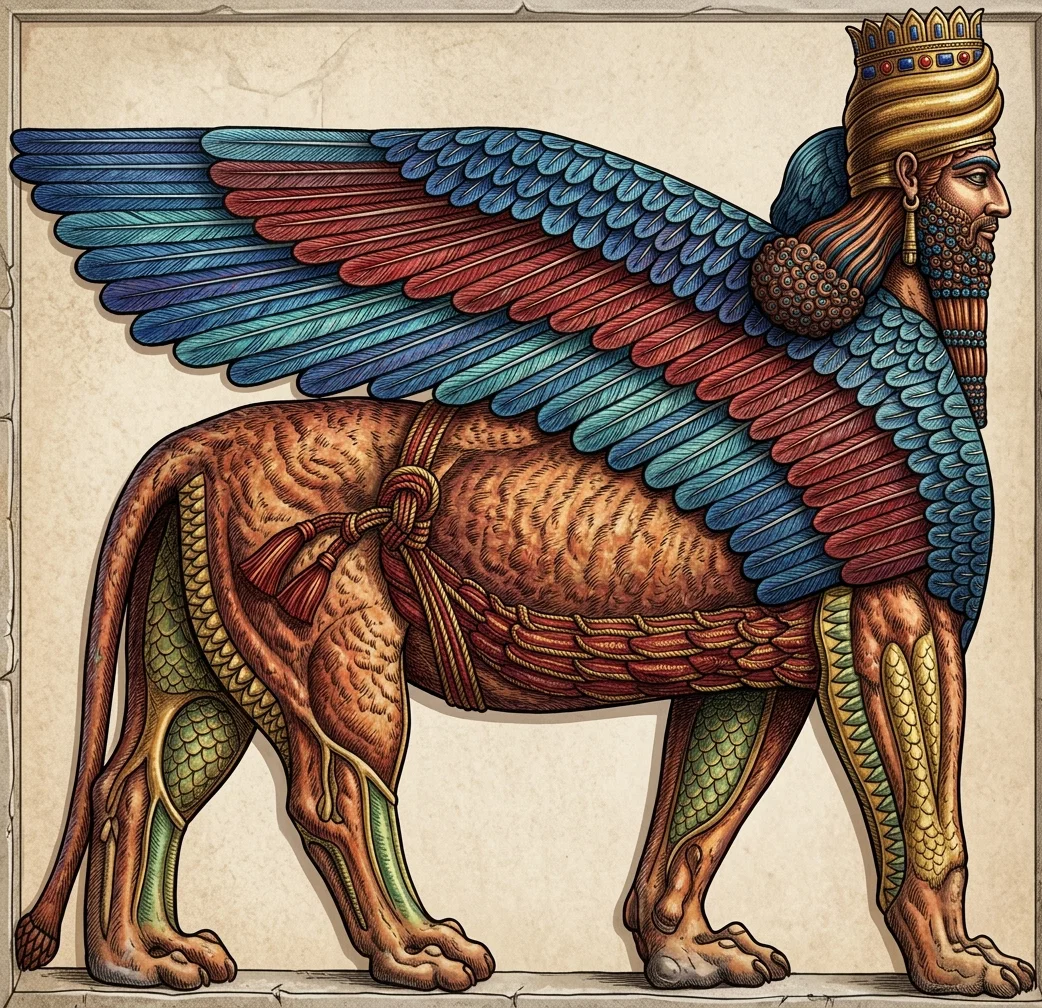
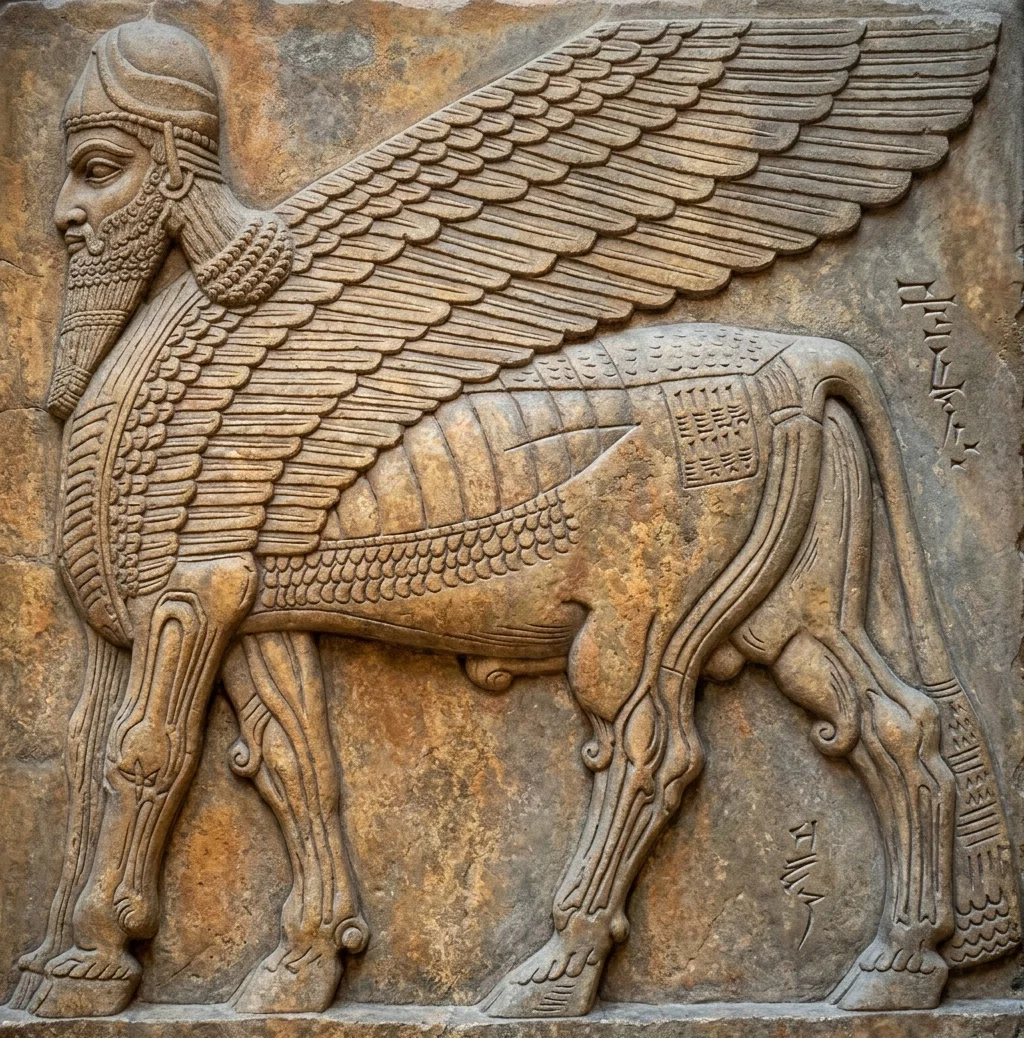
Anciently, the people of God pitched about the sanctuary, wherein was God’s holy law, above which abode the glorious Shekinah, the visible symbol of God’s presence, in four grand divisions under four standards: Judah’s, said to be a lion; Ephraim’s (or Joseph), an ox; Reuben’s, a man; Dan’s, an eagle. These standards stood for the hosts of God, through whom He designed to do His work for the world. Outside of the nation of Israel we find these same symbols repeated and combined in various forms in Babylon and Assyria, etc. For instance, we have as representations of Deity the eagle-headed man, the eagle-winged, man-headed lion, the man-bull, winged man with horns, etc. What may we conclude from all this?—This, at least, that these symbols represent the various organizations and powers of earth, which heavenly agencies are directing, and which God is so using to His glory, despite the seeming incongruities, that they are said to cry, “Holy, holy, holy, is the Lord God, the Almighty.” He makes even the wrath of man to praise Him. What to man is incomprehensible, vague, uncertain, calamitous, is to God clear and certain; and He is making all things work together for good to them that love Him. “Full of eyes” would well describe the great multitude of persons in the sea of restless, ever-moving, never-resting humanity. The most prominent, striking feature to one looking over a gathering of persons is the ever-restless eyes, looking, peering, searching, every way, everywhere.
What, then, did John see from the view-point of God’s throne?—Briefly this: God’s glory, God’s ministers, cleansed and Spirit-filled, God’s all-pervading Spirit, and cleansing word, and the great mass of restless, seething humanity, incongruous, unnatural, yet ever used by God despite all the incongruities and contradictions to His own glory. “The wrath of man shall praise Thee.” “We can do nothing against the truth, but for the truth.”
9. “Worthy art Thou.”—It is the song of God’s children, those who look at the events of earth,—at the fast passing human panoramas,—not from the limited low outlooks of earth. Those who come up to the heights of God and see with His seeings, behold as do these cleansed and crowned elders how even all the efforts of Satan and the fruits of sin on earth are demonstrating in constant progression through the working out of God’s plan that He only is holy, and worthy of praise and glory and honor and power. Surely God’s people, those who believe in Him, should not be mourning pessimists, but join in the glorious song of praise to our God.