GOD'S WONDERFUL WORD

7%

Pacific Press Publishing Company · Oakland, California · Oct 17, 1895

FromSigns of the Times, Vol. 21, No. 41.

Read the full edition

GOD'S WONDERFUL WORD.

BY D. T. J.
God has chosen to make known his will by means of his word, and has endowed all his intelligent and morally-responsible creatures with the faculty of understanding and making themselves understood by means of language. God's will is the law of the universe; and when he speaks, everything, animate and inanimate, understands and obeys, except man, who is in rebellion against him. Paul says in his letter to the Romans, “For the invisible things of him from the creation of the world are clearly seen, being understood by the things that are made, even his eternal power and Godhead; so that they are without excuse.” Rom. 1:20. Here our minds are directed to the “things that are made”—his creative works—that they may teach us of the invisible things of God. Let us turn to the work of creation and see what lessons it has for us: “In the beginning God created the heavens and the earth.” David tells us how he did it: “He spake and it was done, he commanded and it stood fast.” And again he says, “By the word of the Lord were the heavens made, and all the host of them by the breath of his mouth.” Each advance step in the work of creation was marked by a definite command from the mouth of the Creator. On the first day God said, “Let there be light; and there was light.” On the second day he said: “Let there be a firmament in the midst of the waters, and let it divide the waters from the waters. . . . And it was so.” On the fourth day God said, “Let there be lights in the firmament of the heaven to divide the day from the night; . . . and it was so.” In the work of creation the concept was first in the mind of the Lord; then the word went forth, “Let there be,” and “it was so.”

Unchangeable.

God being all wise, he never makes mistakes; therefore his word is immutable. This is true whether it be in his creative work or in the laws which he has made to govern animate and inanimate nature, whether those laws be natural or moral. His purpose once expressed is his “eternal purpose.” Hear his own words on this point: “My covenant will I not break, nor alter the thing that is gone out of my lips.” Ps. 89:34. “All his commandments are sure. They stand fast forever and ever.” Ps. 111:7, 8. “Think not that I am come to destroy the law, or the prophets; I am not come to destroy, but to fulfill. For verily I say unto you, Till heaven and earth pass, one jot or one tittle shall in nowise pass from the law, till all be fulfilled.” Matt. 5:17, 18.

The Word Incarnate.

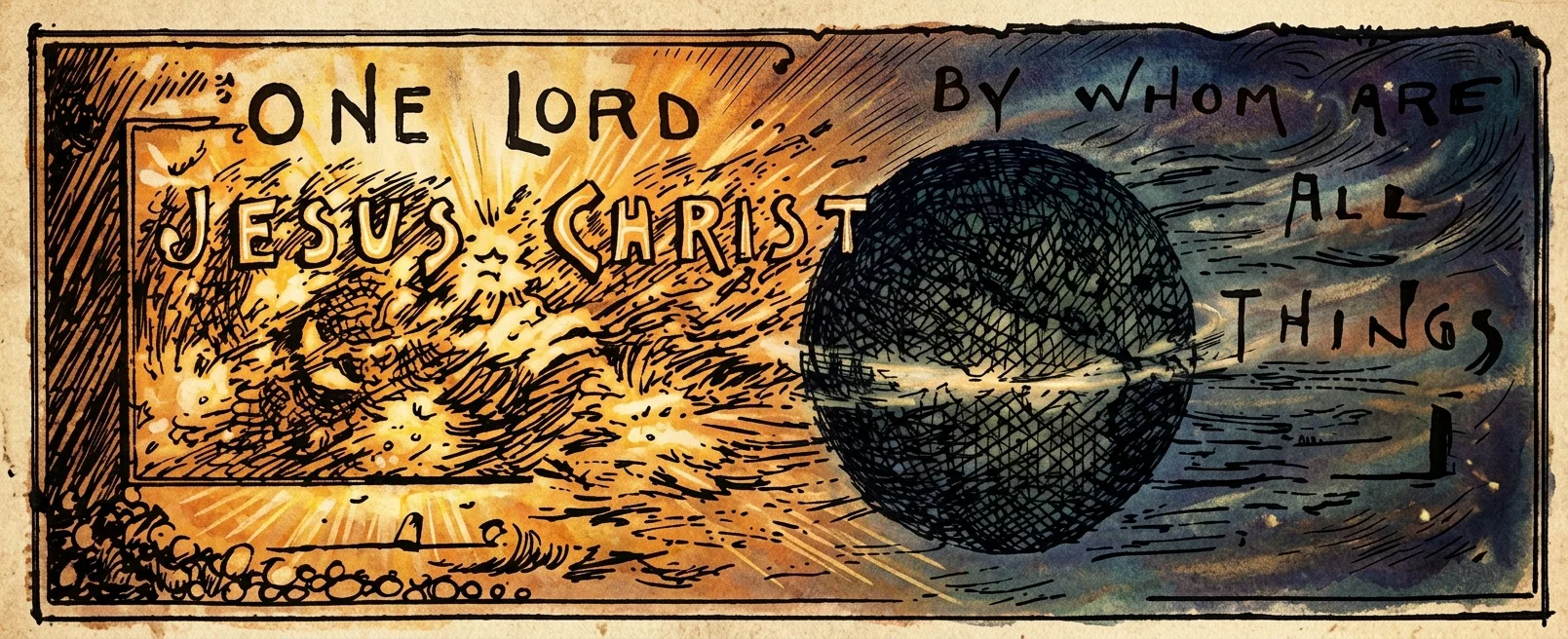
In the days of man's innocence God talked with him. Gen. 3:8. And after his fall God's love prompted him to reopen communications with him and offer terms on which he might be redeemed from sin and restored to the favor of God. This he did by making his word incarnate in his Son, and sending it into the world to accomplish his will. As the world and all things which it contains, including man, were created by the word of God, so are the world and all things which it contains, including man, to be regenerated by his word. The inspired apostle, in introducing this work of regeneration and redemption, says: “In the beginning was the Word, and the Word was with God, and the Word was God. The same was in the beginning with God. All things were made by him; and without him was not anything made that was made. In him was life; and the life was the light of men.” John 1:1–4. Christ is the medium, and the only medium, that God has provided through which to communicate with man; therefore Christ is to man the Word of God. Every word that is spoken by God to man comes through Christ; and Christ, with all the power of a Godhead, is behind every word that God speaks, to guarantee its fulfillment. When Christ was in the world, he was the word of God incarnate. His daily life, his miracles, his teachings, were equally a revelation of God's will to man; and whether the word be spoken directly by Christ or by him through another, it is equally the word of God, and has equal power to accomplish that for which it is given. When Christ was in the little ship on the Sea of Galilee, tossed by the storm, the three words, “Peace, be still,” produced a great calm. The winds and the sea obeyed him. When Peter said to the lame man who was laid at the beautiful gate of the temple: “In the name of Jesus Christ of Nazareth rise up and walk, . . . immediately his feet and ankle bones received strength. . . . And he entered with them into the temple, walking, and leaping, and praising God.” Acts 3:6–8. When Elisha, sitting in his house, sent his servant to tell Naaman the Syrian, who had come to inquire what he should do to be healed of his leprosy, to dip himself seven times in the river Jordan, the power of God went with that word to heal Naaman as soon as he had obeyed it.

The Written Word.

The written word is as full of life and power as the words spoken by Christ and the apostles and prophets. “For the prophecy came not in old time by the will of man; but holy men of God spake as they were moved by the Holy Ghost.” 2 Peter 1:21. In giving the promise of the Spirit to his disciples, Christ said, “But the Comforter, which is the Holy Ghost, whom the Father will send in my name, he shall teach you all things, and bring all things to your remembrance, whatsoever I have said unto you.” John 14:26. And to the Jews he said, “Search the Scriptures; for in them ye think ye have eternal life; and they are they which testify of me.” John 5:39.

The Word a Detector.

There are two spiritual powers in the world—truth and falsehood. One proceeds from the “God of truth;” the other, from the “father of lies.” The first works through the Word, which is called “truth” (John 17:17), through the law, which is called “the truth” (Ps. 119:142), and through the Holy Spirit, which is called the “Spirit of truth” (John 16:13), to lead men into the truth and through the truth to salvation. The second works through “all deceivableness of unrighteousness” (2 Thess. 2:10), through the “spirits of devils” (Rev. 16:14), through “all power and signs and lying wonders” (2 Thess. 2:9), to deceive men and lead them to destruction. In his prophetic discourse given in answer to the question, “What shall be the sign of thy coming, and of the end of the world?” the Saviour says, “There shall arise false christs, and false prophets, and shall show great signs and wonders; insomuch that, if it were possible, they shall deceive the very elect.” Matt. 24:24. John in speaking of the workings of this power in the last days, under the symbol of a beast, says, “And all that dwell upon the earth shall worship him, whose names are not written in the book of life of the Lamb slain from the foundation of the world.” “And he doeth great wonders, so that he maketh fire come down from heaven on the earth in the sight of men, and deceiveth them that dwell on the earth by the means of those miracles which he had power to do in the sight of the beast.” Rev. 13:8, 13, 14. When these great deceptions come, how are men to determine between them and the genuine workings of the Spirit of truth? The word of God will be the only detection and the only refuge open to men. That word, which is “quick, and powerful, and sharper than any two-edged sword, piercing even to the dividing asunder of soul and spirit, and of the joints and marrow, and is a discerner of the thoughts and intents of the heart,” will, if it is treasured in the mind and heart, enable men to make the closest distinctions between the workings of the word of truth and the counterfeits which Satan will invent to deceive men. The word of God, which admits of no changes or substitutions, will be the only refuge which men will have. It is in anticipation of such deceptions that the apostle says in writing to the Galatians, “But though we, or an angel from heaven, preach any other gospel unto you than that which we have preached unto you, let him be accursed.” Gal. 1:8.

The Word Triumphant.

In the view which John had of the closing scenes of the world's history, he says: “And I saw heaven opened, and behold a whitehorse; and he that sat upon him was called Faithful and True, and in righteousness he doth judge and make war. His eyes were as a flame of fire, and on his head were many crowns; and he had a name written, that no man knew, but he himself. And he was clothed with a vesture dipped in blood; . . . and the armies which were in heaven followed him upon white horses, clothed in fine linen, white and clean. And out of his mouth goeth a sharp sword, that with it he should smite the nations; and he shall rule them with a rod of iron; and he treadeth the wine-press of the fierceness and wrath of Almighty God. And he hath on his vesture and on his thigh a name written, KING OF KINGS, AND LORD OF LORDS.” And in the midst of this description the revelator says, “And his name is called THE WORD OF GOD.”