EDITORIAL

9%

Pacific Press Publishing Association · Mountain View, California · Aug 6, 1912

FromSigns of the Times, Vol. 39, No. 30.

Read the full edition

EDITORIAL

Into and Out of Egypt

The Ways and Means of the Infinite
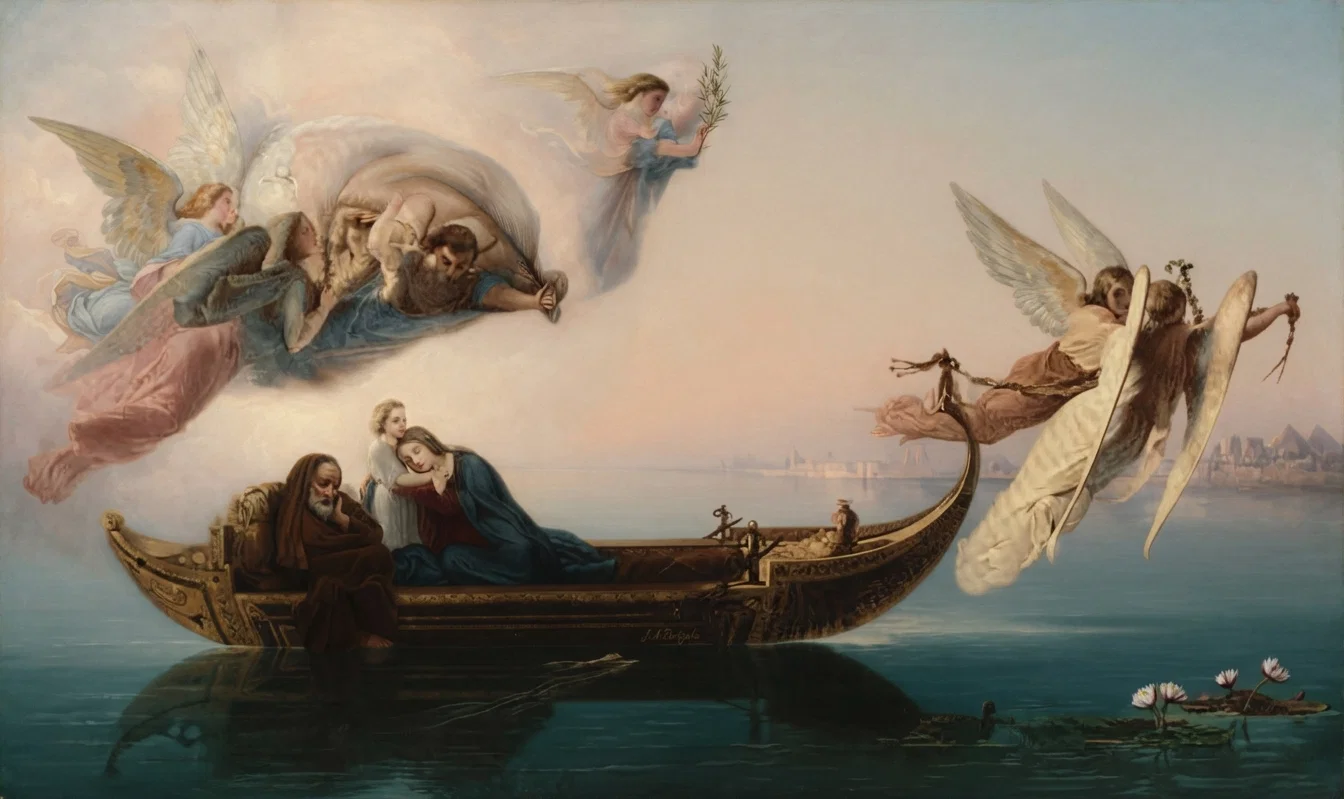
GOD permits men to manifest their own character, but not work their own will. "The Most High ruleth in the kingdom of men." "He doeth according to His will in the army of heaven, and among the inhabitants of the earth." He uses even the strangest means to accomplish His ways; and His providences, to the thoughtful, reverent soul, are full of surprises.
FLIGHT INTO EGYPT
FLIGHT INTO EGYPT
THIS is illustrated in the life of our Lord. He was born of a woman; and the introduction of the Saviour of the world to humanity, that He came to save, was that of a helpless Babe in the manger. His mother must offer for her purification, according to the law, the humble offering of the poorest, two turtle-doves. (See Lev. 12:8 and context.) Yet to this Child bowed alike the humble shepherds of Judea and the wealthy Magi of the East, as well as the shining angels of God. But to Herod, the cruel, the vindictive, the licentious, the beastly, the little Child was a rival; and to the haughty priests and rulers of the Jewish nation His advent made no appeal. The disposition of Herod was such that he could slay a multitude of children in order to make sure of destroying his one Rival, and he an old man, and the Rival a babe!
THE circumstances offered, however, another opportunity for the display of God's providential working. The riches of the East, through the Magi, furnished means to the family, and God sent them to one of the darkest of earth's kingdoms for safety, into a land which had stood for all that is dark and sinful and low and base. There God cared for His Son.
THE artist has pictured the thought beautifully. Yet we may be sure that in no such vessel did the holy family float down Egypt's river. No human eye in Egypt saw such a royal barge divinely propelled and guarded, but just as truly was God's care over the Child. That river represents Egypt, and the course and flow of time during their sojourn in that dark land. Beyond, dim and indistinct, are the monuments of the past, the glory of her kings, the pyramids and the mighty cities. And in that land the anxious father has surcease of care, and the loving mother joys in the study of her first-born Son. Angels of God guided and protected them, even as they are represented in conveying and convoying the little craft in which the father sleeps, and the mother and Child joy in each other's love. So God's care is over all His children. Invisible agencies of God, "angels that excel in strength," work out His own wise counsels, lead through dark places, protect in the midst of dangers, or build invisible walls around His loved ones which all the powers of evil can neither penetrate nor overthrow.
WHEN the time came, God called His Son "out of Egypt." In this, too, there is symbolism. The Son of God came to this world for us, and stood as the representative of humanity, from the helpless babe to the full-grown man, and in Him God calls each and every son "out of Egypt," even as He called that other son fifteen centuries before, referred to in Hosea 11:1. "When Israel was a child, then I loved him, and called My son out of Egypt." But God's son then did not wholly heed that call. He came out of Egypt physically, both he and his, but many left their hearts there, and took with them the unsanctified, overmastering desires for the things of Egypt. Their slogan in the journey to which God called was often "Back to Egypt," instead of "On to Canaan." These unbelieving ones never reached the land of promise. "Their carcasses fell in the wilderness," fit symbols of those who stay in the darkness, unbelief, and sin of the spiritual Egypt of this world. It always means wilderness and death.
God's call then was to everlasting freedom from slavery and sin, Egypt standing for all that was bad, and the Promised Land for all that was good. Said Moses, the man of God, just before Israel crossed the Jordan, “He brought us out . . . that He might bring us in.” Deut. 6: 23. He is the Creator of all men, but He would have His people know that He is their Redeemer as well. And so in giving His holy law through Israel to the world He said, “I am Jehovah thy God, who brought thee out of the land of Egypt, out of the house of bondage.” Ex. 20: 2. It was God’s call to salvation, call to freedom, call to love and obedience and service.IN Christ Jesus our Lord God calls us out of Egypt. Kind, watchful, merciful has He been to us all our sinning, slavish days; and our dull ear has not heard His voice; our dim eye has not seen the burning bush; our poor, insensate heart has not longed for the holiness. But He calls, and calls to you, sinner, or cold-hearted professor, whoever you are, calls you out of the Egypt of darkness and idolatry, of unbelief and superstition, of stubbornness and rebellion, of slavery and death. He calls you that He may set your feet in the highway of light and truest worship, of faith and truth, of meekness and loyalty, of freedom and life. Your way may lead in strange paths, you may be persecuted for His sake, and stripped of all worldly goods; you may be called to pass through a hostile wilderness filled with deadly serpents, bare of food and moisture. But if you are faithful, His call will be effective, and all His promises will be more than realized in the immortal, transcendent, blessedness of the eternal reign with Christ.
W.