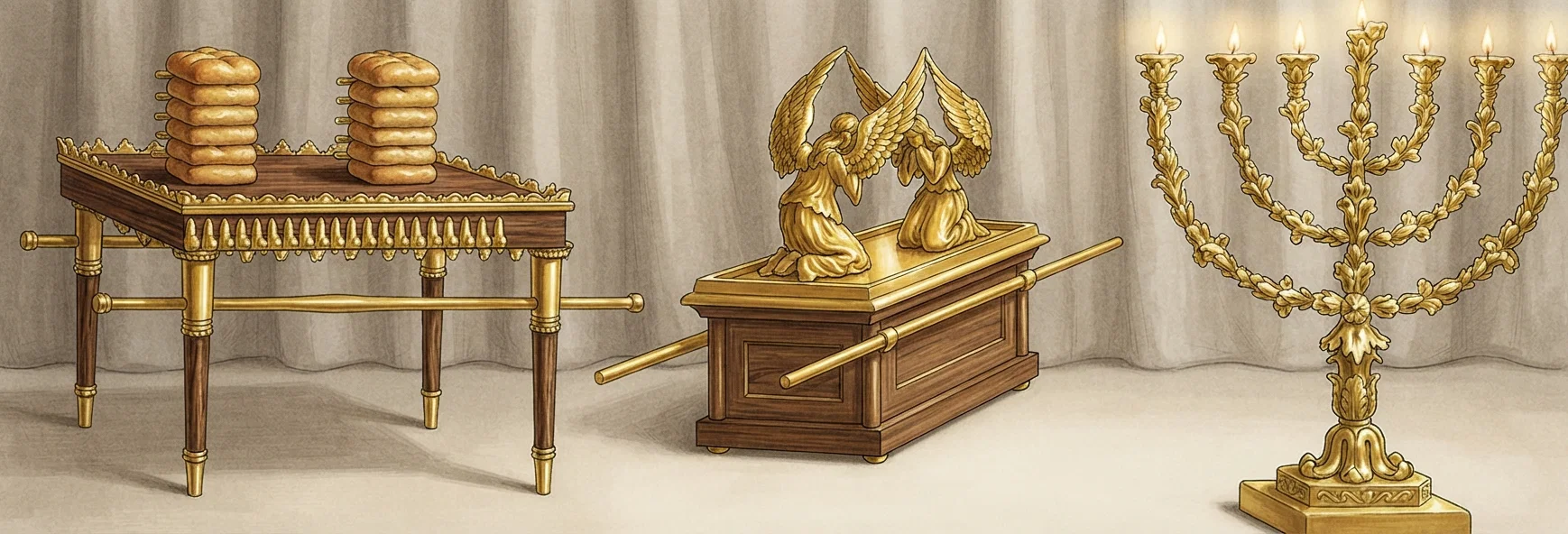
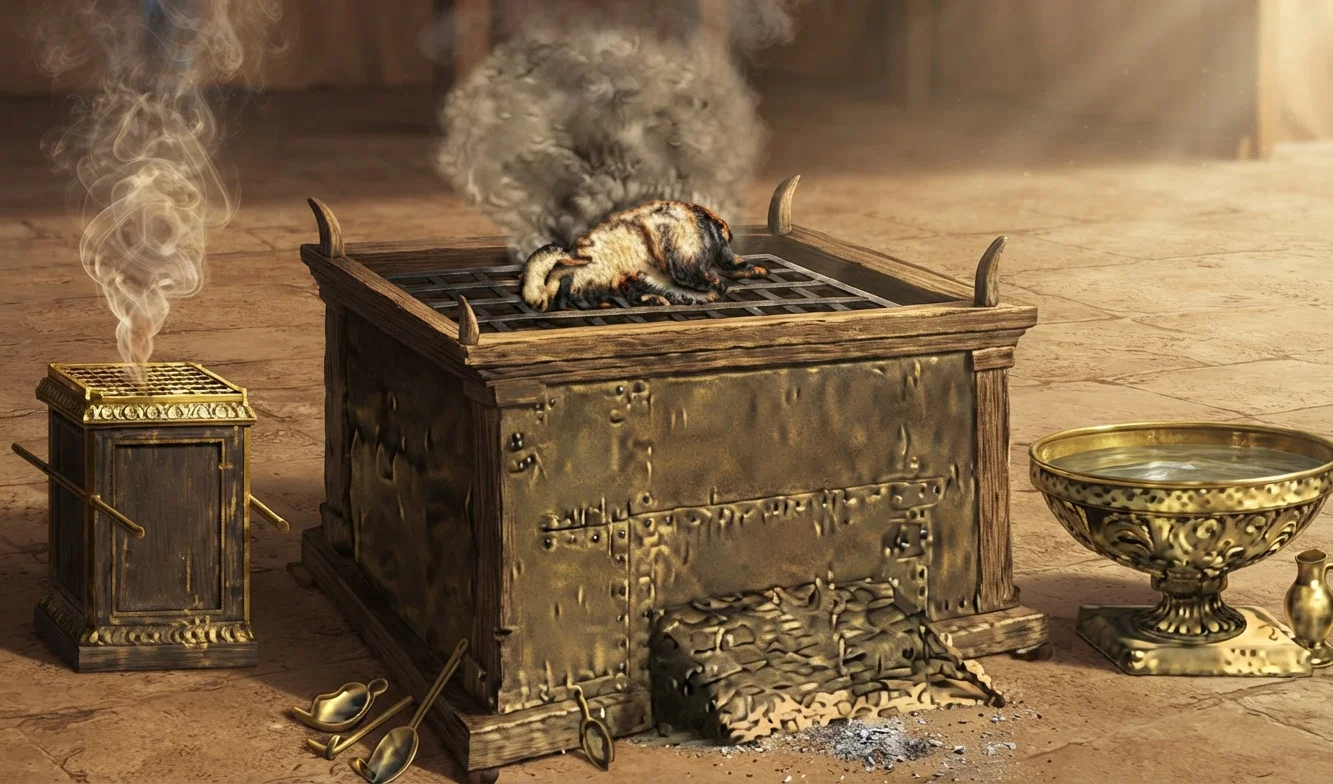
THE true object of the sanctuary, with its entire sacrificial service, was to teach men more perfectly the way of life; to reveal to them God's plan for the forgiveness of sin, and for the final disposition of evil and of its author. "Thy way, O God, is in the sanctuary." It is there that His goodness, His mercy, and His love, as well as His power and His glory, may be seen. There God's name was placed, His law reposed, and His Shekinah glory was manifest. In the sanctuary, "mercy and truth are met together; righteousness and peace have kissed each other." Ps. 77:13; 63:2; 85:10. The psalmist said: "I was envious at the foolish, when I saw the prosperity of the wicked, . . . until I went into the sanctuary of God; then understood I their end." "The wicked shall perish, and the enemies of the Lord shall be as the fat of lambs: they shall consume; into smoke shall they consume away." Ps. 73:3, 17; 37:20. The burning of the fat of the sacrifices upon the altar revealed the end of sin and sinners as well as of the originator of evil. Rev. 20:10; Eze. 28:18. We will therefore study the various steps taken in the disposition of sin, as disclosed in the services of the sanctuary.
The Sinner and His Offering
The sinner was instructed to bring an offering such as the law prescribed, to the door of the tabernacle of the congregation. The transgressor then laid his hands upon the head of the victim, and confessed over it his sin. This was a very solemn rite, and was of great significance. The imposition of the offerer's hands upon the head of the offering meant the transference of the guilt to the substituted victim. That this is the true meaning of this rite, is clearly stated in the scripture: "Aaron shall lay both his hands upon the head of the live goat, and confess over him all the iniquities of the children of Israel, and all their transgressions in all their sins, putting them upon the head of the goat, . . . and the goat shall bear upon him all their iniquities." Lev. 16:21, 22. Having confessed his sin upon the head of his victim, the penitent transgressor then with his own hand took its life. It was because of imputed sin that the offering was slain; and in the act of taking its life, the sinner thereby acknowledged that he was worthy of death. The priest then took the blood, and approaching as near to the ark containing the law that had been violated as it was possible for him in the daily ministration to do with impunity, the priest dipped his finger in some of the blood, and sprinkled it "seven times before the Lord, even before the veil." Lev. 4:17. The blood, which is the life (Lev. 17:11), having been borne into the sanctuary and sprinkled before the veil, the sin, through that medium, was transferred in figure from the transgressor to the sanctuary, where it rested till the great day of atonement. A substitute had been accepted in the sinner's stead, and his sin was forgiven him. But tho he was free for the time being, full atonement had not been made for his sin, for "in those sacrifices there is a remembrance again made of sins every year." Heb. 10:3. The offering had, however, provided a means whereby his sin had been transferred to the sanctuary.
The Sin Borne into the Sanctuary
The blood of the offering was not always taken into the sanctuary; in certain instances the flesh was eaten in the holy place by the priest, and in such cases he bore in his own person the iniquity of the transgressor. Lev. 10:12-18. Whatever the specific form of service that may have been employed in the relief of the individual or the congregation from guilt, in every instance the sin was borne into the sanctuary, where it was deposited awaiting the great day of atonement, when, in figure, final disposition would be made of it.
In this manner, sin was constantly accumulating in the sanctuary. Day after day, week after week, and month after month, through the entire year, this continual round of services was carried forward; the innocent substitutes in unbroken line were led to the slaughter, the solemn note of confession was ceaselessly sounding, the crimson stream that cleansed the sinner from his sin was ever flowing, while the priests with grave and serious mien incessantly sprinkled the token of forfeited life before the broken law. Through this perpetual round of service, sins were continually transferred from the people to the substitutionary offerings, and through them to the sanctuary.
The tenth day of the seventh month; the most memorable day of the Jewish year, the day of all days, when expiatory sacrifice was to be made for the sins of the whole people, when the sanctuary was to be cleansed from its accumulated sins, and these were removed into a land of separation—such was the great day of atonement, the one fast-day of all the Jewish calendar. This day had to do with all the people, for all the people were commanded to afflict their souls on that day; and if a single individual refused, he was to be cut off from among his people. Lev. 23:27, 29. On this day the sins of the entire year were brought to remembrance and final atonement was made for them. Heb. 10:3; Lev.616:30. In the daily ministration, sins were borne into the sanctuary; while on this day the process was reversed, and it provided a means by which they were borne out.
Yearly Service of the High Priest
On the great day of atonement, the high priest was the central figure, and the holy of holies was the place of special interest. Into this apartment "went the high priest alone once every year." Heb. 9:7. Having bathed his person, and robed himself in the holy white linen garments peculiar to the service of the day, the high priest brought a young bullock for a sin-offering, and made an atonement for himself and for his house. Having killed the bullock, with a censer full of burning coals of fire from off the golden altar, and his hands full of sweet incense, he entered into the most holy place. He then threw the incense upon the burning coals, and enveloped the mercy-seat with a cloud of smoke, which veiled the glory of the Shekinah from his person, "that he die not." Then, dipping his finger into the blood, he sprinkled it "upon the mercy-seat . . . seven times." Leviticus 16. Having performed this service for himself and for his family, the high priest, being cleansed from every stain of sin, was then prepared to perform the most solemn service of the year,—to enter into the presence of the great God, and to make an atonement for the whole people.
Casting Lots upon the Two Goats
The two goats that had been brought, and upon which lots had been cast, one lot for the Lord and one for the scapegoat, or Azazel, were then taken. The goat upon which the Lord's lot had fallen was killed, and his blood was taken within the veil and sprinkled upon the mercy-seat and before the mercy-seat, as was the blood of the bullock. With the blood of the Lord's goat, which was slain as a sin-offering for all the people, the high priest made "an atonement for the holy place, because of the uncleanness of the children of Israel, and because of their transgressions in all their sins; and so shall he do for the tabernacle of the congregation, that remaineth among them in the midst of their uncleanness." Thus was the sanctuary cleansed and hallowed "from the uncleanness of the children of Israel." He then brought the live goat, and laying both his hands upon its head, confessed over it "all the iniquities of the children of Israel, and all their transgressions in all their sins, putting them upon the head of the goat," and sent him away "by the hand of a fit man into the wilderness." And the goat bore "upon him all their iniquities into a land not inhabited ['of separation,' margin]."
The high priest with the blood of the Lord's goat, passed into the holy of holies, and sprinkled the blood upon the mercy-seat, directly over the broken law, to make satisfaction for its claims. The sins of all the people had been transferred to the sanctuary previous to the death of the Lord's goat, hence no sins were confessed upon its head; therefore when the high priest carried its blood into the sanctuary, he did not bear sin into that sacred enclosure. When its blood was sprinkled upon the mercy-seat, it represented a sinless life. This being all that the law required, its claims were satisfied, and the people were free.
The high priest now as it were gathers up the sins of all the people for the past year, and bears them out of the sanctuary. He then places them, by confession, on the head of the scapegoat. The goat then bears them away, and with it they perish.
This round of service was repeated year after year in the earthly sanctuary, and in the temple which later took its place, till the shadow was displaced by the substance in the ministration of our great High Priest in the "greater and more perfect tabernacle, not made with hands." It was a beautiful figure of the real service in heaven which actually takes away sin, and it foreshadowed the end of the awful conflict with sin. In future articles we will speak of the substance which cast the shadow.
The furniture of the sanctuary. Upper row, from left to right, the table of showbread; the ark containing the law, over which was the mercy-seat; and the golden candlestick. Lower row, from left to right, the altar of incense, the altar of burnt offering, and the laver.