THE TRAVELS OF ST. PAUL

17%

Pacific Press Publishing Company · Oakland, California · Nov 25, 1897

FromSigns of the Times, Vol. 23, No. 46.

Read the full edition
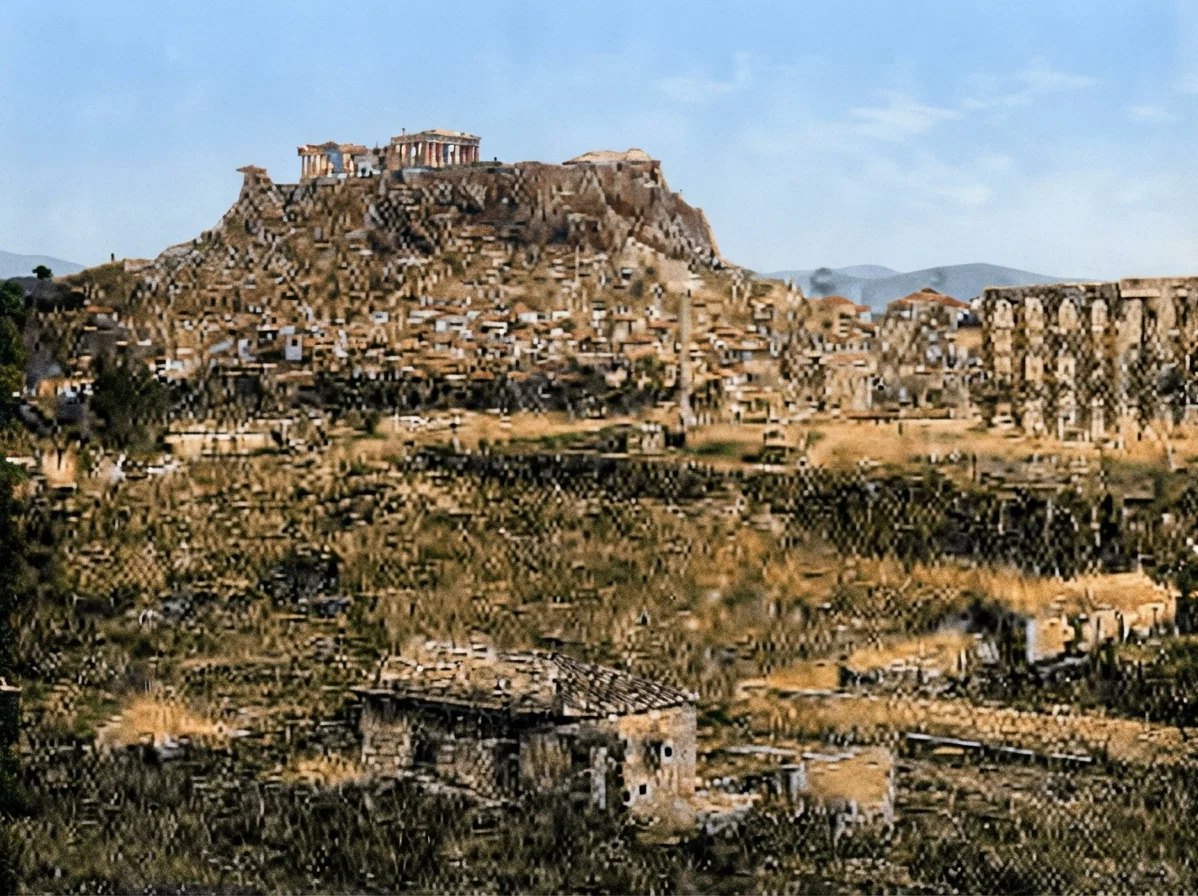
ATHENS.
(From a Photograph by BONFILS.)
ATHENS. (From a Photograph by BONFILS.)

THE TRAVELS OF ST. PAUL.

BY SIR CHARLES WILSON, K.C.B.
ANTIOCH, the metropolis of the Greek kings of Syria, and afterwards the residence of the Roman governors of the province of the same name, stood on the left bank of the Orontes, which a little lower down separates the range of Mount Amanus from the chain of Lebanon. Built partly on an island, partly on low ground, and partly on the rocky slopes of Mount Silpius, it was a city of singular beauty, adorned with magnificent temples, palaces, and colonnades. Its delightful climate, and the close proximity of the sanctuary of Apollo—with its fountains, its groves, and its licentious rites—attracted pleasure-seekers from all parts of the Roman Empire. But a large majority of its population was a worthless rabble of Greeks and Orientals, which passed its time in the theatres or in faction fights on the race-course. There was also a large Jewish colony dating from the time when, under the Seleucid monarchs, and especially during the reign of Antiochus Epiphanes, Antioch was closely connected with Jewish history. How far the Antiochian Jews had been able to resist the Greek influence to which they were exposed is uncertain; but many of the Greeks appear to have become "God-fearing proselytes," or "Proselytes of the Gate."
On the dispersion that followed the martyrdom of Stephen, certain Jews of Cyprus and Cyrene, who had been brought up in Greek lands, came to Antioch, and addressed both Jews and Greek proselytes in the synagogue. Their preaching was successful. A mixed body of Jews and Greek proselytes formed a primitive congregation, which gradually increased in numbers until it attracted the attention of the church in Jerusalem. In accordance with a former precedent (Acts 8, 14), Barnabas, "a good man, and full of the Holy Ghost and of faith," was sent by the church to encourage the new congregation. After exhorting them to "cleave unto the Lord," he went to Tarsus to seek for Saul, whose sponsor he had been before the apostles at Jerusalem, and whose special qualifications for work amongst the Gentiles he knew. They returned together (43 A.D.), and henceforth Antioch becomes the centre of progress and of historical interest in the church. Here the brethren were first called Christians, or "they that are connected with Christos"—a title that could not have originated with the Jews. Whether Christos were a god or a leader the Antiochians knew not, and popular fancy changed the name to Chrestos ("good, useful"), a term which occurs in the form Chrestians in inscriptions.
Agabus having foretold a dearth, the congregation sent Barnabas and Saul with relief to the brethren in Judea. The visit, probably that referred to in Gal. 2. 2 as due to a revelation, marks an important stage in the development of the church. The older apostles recognized the apostleship of Barnabas and Saul (Gal. 2. 9), and their special mission to "preach Him among the Gentiles." Saul was also able to confer privately