Editorial

6%

Pacific Press Publishing Company · Oakland, California · Oct 7, 1897

FromSigns of the Times, Vol. 23, No. 39.

Read the full edition

Editorial

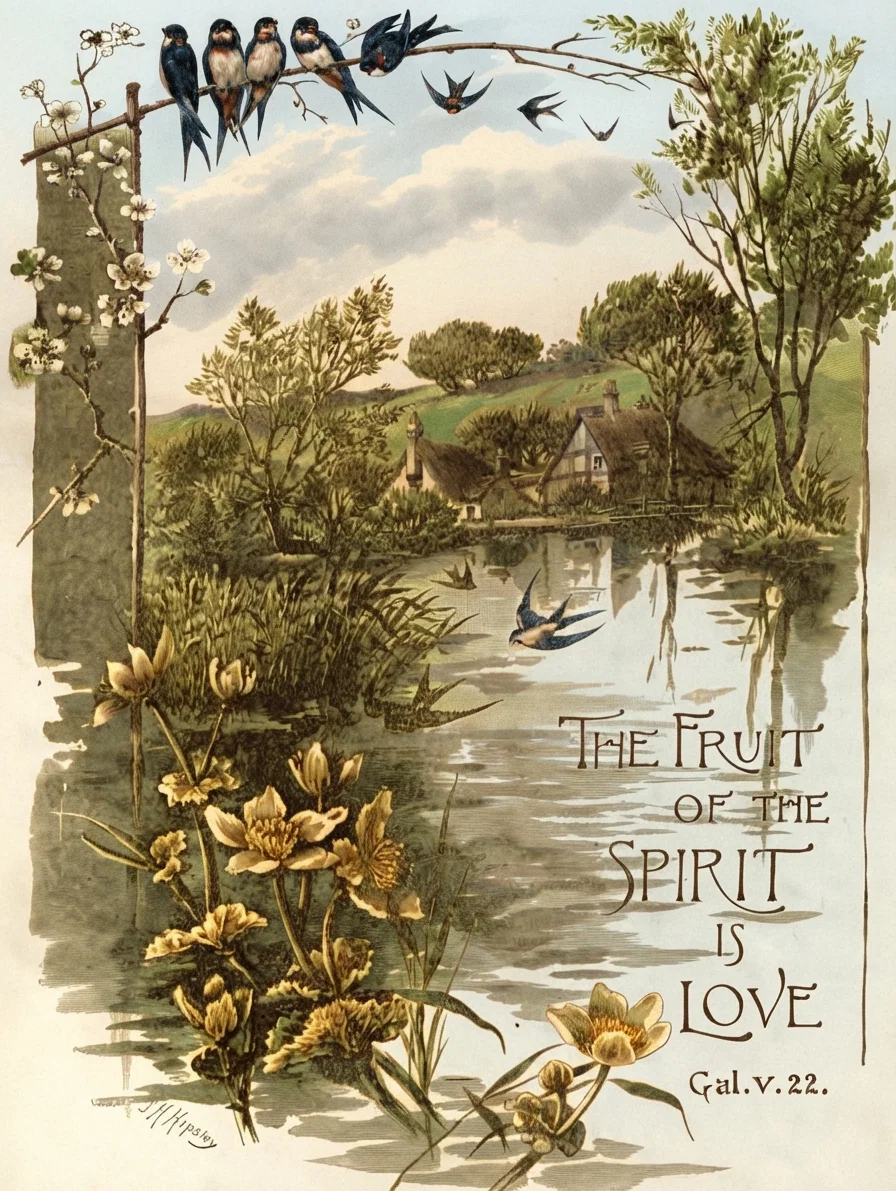
"The Fruit of the Spirit Is Love."

"Fruit" is that which is brought forth; the result or consequence of a thing; that which springs from its very nature. The fruit of a thing always reveals the character of that which bore it.

The Spirit.

The "Spirit" of the text is the mighty beneficent energy or life of God, that through which God imparts all life and power; by which creation was wrought (Gen. 1:2; Ps. 33:6; Job 26:13); by which all is upheld; and by which all shall be restored. It is "the Spirit of Life," "the Eternal Spirit," "the Spirit of Holiness," the blessed "Comforter" of the people of God. "If any man have not the Spirit of Christ, he is none of his." Rom. 8:9. He who is not controlled or led of the Spirit is not of God. "The minding of the flesh is death; but the minding of the Spirit is life and peace." Rom. 8:6, margin. For the flesh and Spirit "are contrary the one to the other." Gal. 5:17.

"Led of the Spirit."

There are many in these days who claim to be "led of the Spirit." It is with them "the spirit;" the Word of God, the experiences of others, are nothing to them. They do not need the Word; they have "the spirit." They do not need God's law; they are taught by the spirit. And they will frequently quote, "If ye be led of the Spirit, ye are not under the law." Gal. 5:18. Such persons may be deceived, and those who are deceived may and do deceive others. The claim to sinlessness which many of them make is often inconsistent with their actions. How may they know whether they are deceived or not? How may others know?—By the fruit borne in the life. If the life of these persons is a sin-perverted life, the fruit will reveal it. If the life is the normal life of God that also will be revealed.

"The Fruit of the Spirit Is Love."

This is the fruit which the life of that person must bear who is "led of the Spirit." And yet claim is laid to love with as little reason as it is to the spirit of love, because of a wrong conception of what love is. Such judge divine love, the love "shed abroad in our hearts by the Holy Ghost which is given unto us" (Rom. 5:5), by the imperfect human love of the world. It is to them an emotion, a passion, an ecstasy. It is something that one must feel. It, in their mind, must make one happy and life easy. But—

What Is Love?

Love is a principle, a power, a life, which eventuates in doing, in serving, in sacrificing. Words are only one form of its expression, and the weakest form of all. Here are God's definitions of love: "Love is the fulfilling of the law." Rom. 13:10. "And this is love, that we walk after his commandments." 2 John 6. "For this is the love of God, that we keep his commandments; and his commandments are not grievous." 1 John 5:3. "The fruit of the Spirit is love;" love is the keeping of the commandments of God; the fruit of the Spirit, therefore, is the keeping of the commandments of God.

The Spirit of Christ.

The Spirit was given to Christ without measure. John 3:34. Before Christ came to this world, he thus spake by the Spirit through David: "Lo, I come; in the volume of the book it is written of me, I delight to do thy will, O my God; yea, thy law is within my heart." Ps. 40:7, 8. When he came he fulfilled this prophecy. "My meat," said he to his disciples, "is to do the will of him that sent me." John 4:34. "I have kept my Father's commandments," he tells us near the close of his earthly career, "and abide in his love." John 15:10. Of our Lord's conduct in this respect there is no question; he kept the royal law, the Decalog, in its every particular. What does that mean to us?—He says, "Follow me." And his beloved disciple writes, "He that saith he abideth in him [Christ] ought himself also so to walk, even as he [Christ] walked."1 John 2:6. "Leaving us an example," says Peter, "that ye should follow his steps." 1 Peter 2:21. What more do we wish? Do we have love for God? He says, "If ye love me, keep my commandments." John 14:15. "Ye are my friends, if ye do whatsoever I command you." John 15:14.

"Not under the Law."

He who thus loves God is not under the law. He only is under the law who is condemned by it, who is out of harmony with it, who transgresses it. He is a sinner, for "sin is the transgression of the law." 1 John 3:4; Rom. 7:7. He who is in harmony with the law loves the law. It is in his heart. He is neither under the law or above the law; he is with the law. The law is in him; for Christ lives in him; and the law in Christ is "the law of the Spirit of life." Rom. 8:2. By walking after that Spirit he fulfils in his life "the righteousness of the law," in other words he keeps it. Rom. 8:4. Walking after the Spirit of God, he keeps the law of God, and brings "forth fruit unto God" (Rom. 7:4), and against him there is no law of God (Gal. 5:18-23). That spirit, therefore, which would lead us to transgress God's law is not the Spirit of God, but the spirit of the flesh, "at enmity with God," and not subject to his law. Rom. 8:7. The fruit of the Spirit is love. The Spirit is the Spirit of God. The "love is of God." And love keeps God's commandments. Therefore, "let us not love in word, neither in tongue; but in deed and in truth." 1 John 3:18.

Love above Feeling.

We would not decry feeling or emotion. The happiest, holiest, purest, most enjoyable feelings known to mortals those know who are at peace with God, and who keep his commandments. "O that thou hadst hearkened to my commandments! then had thy peace been as a river, and thy righteousness as the waves of the sea." Isa. 48:18. "And the work of righteousness shall be peace; and the effect of righteousness quietness and assurance forever." Isa. 32:17. But feeling may change. Sickness, perplexity, the wrong conduct of others, may bring sadness and sorrow, or physical discouragement; but love abides. The devoted unselfish mother loves her child. At one time she may be in the enjoyment of rest and ease with no anxiety as to his welfare. Joy and gladness light up her face; but these are not the evidences of love. Such in the days of prosperity are often seen with the most selfish mothers. Again we see her. Her son is ill, irritable; querulous, and complaining. The mother is worn and weary with ceaseless vigil and labor. Physical strength is well nigh exhausted, and feeling is departed; but love abides. As dearly as in the sunshine of yesterday she loves her boy; and her love is manifest in the doing. Our Lord's life was not all sunshine. We read of no exuberant feelings of joy, no manifestations of ecstasy. "His visage was so marred more than any man," but his love did not lessen. God's love was shown for his Son when by the Jordan and on the "holy mount" his voice was heard. "This is my beloved Son in whom I am well pleased;" but God loved him not less in the wilderness of temptation, in the Garden of Gethsemane, or when enshrouded in the darkness of Calvary. Love is above all feeling; it is an eternal, abiding, life-giving principle.