"The Lord hath prepared His throne in the heavens; and His kingdom ruleth over all." Ps. 103:19.
2. What shows that His law is the same in all places of His dominion?
The prayer that Jesus taught: "Thy will be done in earth, as it is in heaven." Matt. 6:10.
3. How do we know that His will is expressed in His law?
"I delight to do Thy will, O My God; yea, thy law is within My heart." Ps. 40:8.
"And knowest His will, . . . being instructed out of the law." Rom. 2:18.
4. How much is expressed in this law?
"Let us hear the conclusion of the whole matter: Fear God, and keep His commandments; for this is the whole duty of man." Eccl. 12:13.
5. Where will we meet this law again?
"For God shall bring every work into judgment, with every secret thing, whether it be good, or whether it be evil." Verse 14.
"As many as have sinned in the law shall be judged by the law." Rom. 2:12.
6. What law is this which is the rule of human conduct and by which we must be judged?
"If ye fulfil the royal law according to the Scripture, Thou shalt love thy neighbor as thyself, ye do well: but if ye have respect to persons, ye commit sin, and are convinced of the law as transgressors. For whosoever shall keep the whole law, and yet offend in one point, he is guilty of all. For He that said [margin, "that law which said"], Do not commit adultery, said also, Do not kill. Now if thou commit no adultery, yet if thou kill, thou art become a transgressor of the law. So speak ye, and so do, as they that shall be judged by the law of liberty." James 2:8-12.
NOTE.—There can be no question as to the law here meant. (1) It is the royal law of the great King whose "kingdom ruleth over all." (2) It is not a new law, but the law according to the Scripture,—a law found in the Old Testament. (3) It is the law which contains the precepts: "Do not kill;" "Do not commit adultery." This is the Ten-Commandment law. See opposite page. (4) It is the same law to which the wise man refers by which we must be judged.
7. How does the Lord refer to this law?
"And the Lord said unto Moses, Come up to Me into the mount, and be there; and I will give thee tables of stone, and a law, and commandments which I have written." Ex. 24:12.
"And He gave unto Moses, when He had made an end of communing with him upon Mount Sinai, two tables of testimony, tables of stone, written with the finger of God." Ex. 31:18.
"And the tables were the work of God, and the writing was the writing of God, graven upon the tables." Ex. 32:16.
8. After Moses had broken these tables (Ex. 32:19), what did the Lord write upon the second tables?
"At that time the Lord said, . . . I will write on the tables the words that were in the first tables." Deut. 10:1, 2.
9. What did the Lord write upon the tables?
"And He wrote on the tables, according to the first writing, the Ten Commandments, which the Lord spake unto you in the mount out of the midst of the fire in the day of the assembly: and the Lord gave them unto me." Verse 4.
"These words the Lord spake unto all your assembly in the mount out of the midst of the fire, of the cloud, and of the thick darkness, with a great voice: and He added no more. And He wrote them in two tables of stone, and delivered them unto me." Deut. 5:22.
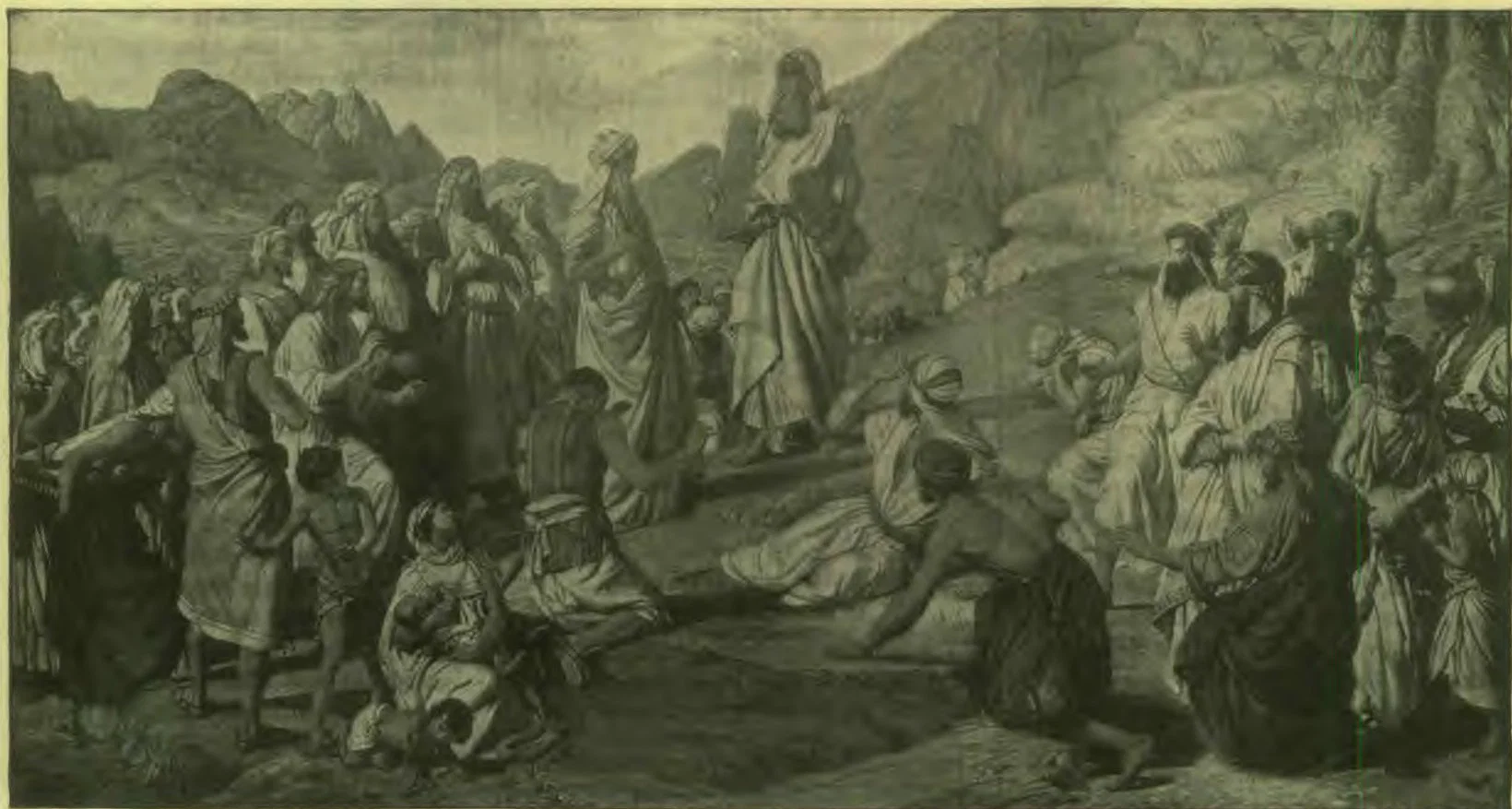
NOTE.—There can be no question on the part of him who with unprejudiced heart reads the record of the giving of the law of Ten Commandments. It was spoken amid unearthly grandeur by the voice of God, engraved by the finger of God upon tables of enduring stone, placed in a holy receptacle made expressly for it, and over it was placed the mercy-seat, in the most holy place of the sanctuary or house of God. Around it all the worship and service of God revolved. By every possible way God showed the holiness, the perfection, the completeness, of this great summary of all morality, the Decalogue. (Continued on Page 14.)7
"All His commandments are sure. They stand fast forever and ever." Ps. 111:7, 8.
"All Thy commandments are righteousness." Ps. 119:172.
"Thy righteousness is an everlasting righteousness, and Thy law is the truth." Ps. 119:142.
NOTE.—Surely a perfect law, a law of truth and righteousness, admits of no change. It is the reflect of God's holy character; it can not change. It hangs upon the two great principles of love to God and love to our neighbor, as declared in both Old and New Testaments. Deut. 6:4-6; Lev. 19:18; Matt. 22:36-40.
13. What does Jesus say of that law?
"Think not that I am come to destroy the law, or the prophets: I am not come to destroy, but to fulfil. For verily I say unto you, Till heaven and earth pass, one jot or one tittle shall in nowise pass from the law, till all be fulfilled." Matt. 5:17, 18.
14. What is the transgression of this law called?
"Sin is the transgression of the law." 1 John 3:4.
15. How many are condemned by it?
"All have sinned, and come short of the glory of God." Rom. 3:23.
"Now we know that what things soever the law saith, it saith to them who are under [within, subject to] the law; that every mouth may be stopped, and all the world may become guilty before God." Rom. 3:19.
16. For what did the Son of God give Himself?
"Who gave Himself for us, that He might redeem us from all iniquity [law-breaking], and purify unto Himself a peculiar people, zealous of good works." Titus 2:14.
17. What, then, will faith do for us?
"Do we then make void the law thru faith? God forbid; yea, we establish the law." Rom. 3:31.
18. Will rites or ceremonies avail us?
"For in Christ Jesus neither circumcision availeth anything, nor uncircumcision, but a new creature." Gal. 6:15.
19. What will faith in Christ lead us to do?
"For in Jesus Christ neither circumcision availeth anything, nor uncircumcision; but faith which worketh by love." Gal. 5:6.
"Circumcision is nothing, and uncircumcision is nothing, but the keeping of the commandments of God." 1 Cor. 7:19.
20. How is the love of God manifested?
"For this is the love of God, that we keep His commandments; and His commandments are not grievous." 1 John 5:3.
21. In so doing whom will we follow?
"He that saith he abideth in Him ought himself also so to walk, even as He walked." 1 John 2:6.
J. R. Herbert, R. A. Moses Descending from Mount Sinai.