ON THE ROAD TO POWER

3%

Pacific Press Publishing Association · Mountain View, California · Aug 15, 1916

FromSigns of the Times, Vol. 43, No. 32.

Read the full edition

ON THE ROAD TO POWER

Papal Supremacy to Be Restored — Turkish Power to Be Extinguished
TWO things, above all others, are going to be clear when this terrible war is over. First, at bottom, this war is a struggle over the Eastern question. It started for the control of Constantinople and the Near East. That was the crux of the whole conflict. You may say it is a struggle between England and Germany; and it is. You may say it is a struggle between Russia and Germany; and it is. But at bottom, the whole storm wages and centers around the possession of the Near East. It was over that thing that Austria was determined to wipe Servia off the map, so that she and Germany could force their way farther to the south and east, down to Saloniki; and that is why the great drive was made a few months ago by the Teutonic forces which did wipe Servia and Montenegro off the map. But when those two tremendous drives were done, it was only to find that the allied powers had gone in and established themselves 400,000 strong in that same Saloniki.
Why was that? Have you noticed that all through this war, but few if any really decisive victories have been won? All the way along, it has been first one side gaining, and then the other. When the war started, the central empires had a cry that in three weeks they would be in Paris. Two long years have almost rolled away, and they are not in Paris yet. When they were within twenty-five miles of Paris, something happened. The government of Paris had fled from its capital, and the people were leaving the city in large numbers, when, as if an angel of God waved his hand over that advancing host, they were turned back, and driven to the line of the Aisne. Now the entente allies are making tremendous drives. What does it mean? — This,— that "the days of visitation are come, the days of recompense are come." Hosea 9:7. God is punishing every one of those sinful nations.
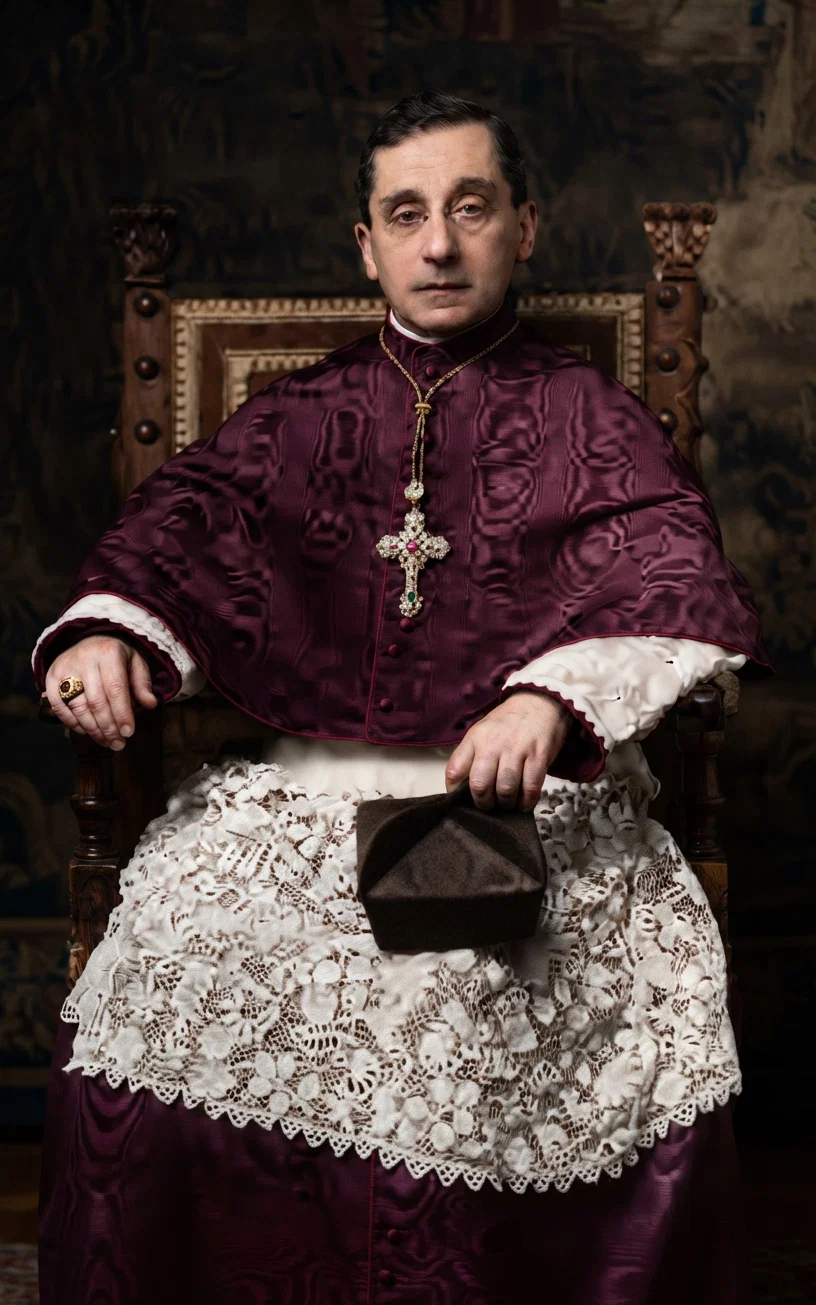
BENEDICT XV, THE DIPLOMAT

Committing Political Suicide

At the beginning of the war, England notified Turkey to stay out, and used the expression, "For you to enter into the struggle will be for you to commit political suicide." But in the closing days of October or the fore part of November, 1914, she entered the war on the side of the central empires.
In the month of November, 1914, on the occasion of the lord mayor's banquet in the city of London, Premier Herbert Asquith, of England, delivered a most notable speech. The lord mayor's banquet in England is one of those occasions when the prime minister of the country is supposed to take the people into his confidence, and tell them the real things the government has in its mind. On that day, at that banquet, at which were present all the ambassadors of the leading powers, all the great generals — Sir Douglas Hague, Earl Kitchener, General Joffre, and others — Asquith, in making his speech, used words something like this:
"The allied nations can never forget the base ingratitude of the Ottoman empire. France and England over and over again have stood by the Ottoman power and kept it from being destroyed. And now, in our time of need, when we are fighting a battle for our very existence, this perfidious power has unsheathed his sword upon the side of our enemies. The allied nations have sworn that we will never sheathe the sword, but will flesh it and flesh it and flesh it again and again and again, not only until the Turk is driven from Europe, but until he is extinguished as an Asiatic power."

Extinguished as an Asiatic Power

LET us get the full force and meaning of those words. Over two thousand years ago, Daniel, himself a prophet and a prime minister, said of the Turk under the name of "king of the north," "He shall come to his end, and none shall help him." Dan. 11:45. Many a statesman, from that time on, has said that the Turk must be driven from Europe. Lord Palmerston said it, Lord John Russell said it, the earl of Beaconsfield said it, Gladstone said it, Bismarck said it, and other men have said it; but Herbert Asquith was the first one of all the statesmen since the day when Daniel, the prime minister of Medo-Persia, made the prophecy, to say, We will not be contented with simply driving the Turk from Europe, but we will flesh and flesh and flesh our sword again and again and again, and never rest until that perfidious power is extinguished as an Asiatic power.
What does that mean? — It means that the mightiest aggregation of power in all the world has set its hand to this, — We will never rest until we have brought the Turkish power to an end. Over and over and over again have statesmen said, "The Turk must go from Europe;" but never until Herbert Asquith spoke has any word been uttered by any statesman to the effect that the time had come when the Turk must be not only driven from Europe, but extinguished as an Asiatic power.
What says the Scripture? —"At that time shall Michael stand up, the great Prince which standeth for the children of thy people: and there shall be a time of trouble, such as never was since there was a nation even to that same time: and at that time thy people shall be delivered, every one that shall be found written in the book. And many of them that sleep in the dust of the earth shall awake, some to everlasting life, and some to shame and everlasting contempt." Dan. 12:1, 2.
Two great things are to come out of this war. Whatever happens, you will see that this war will put the Turkish power on the road to extinction. We do not mean to say that this war itself will spell the ultimate extinction, but we do mean that it will put him on the highroad to that thing, as never before. But, you say, supposing the allies do not win? — If they do not, it makes no difference; because remember that Germany is not helping the Turk, but Germany made the Turk help Germany. It makes no difference which way this thing goes. The German powers on one side, and the allied powers on the other, are both fighting for the same goal. One may seek to accomplish it one way, the other another way; but they both have that same thing in their heads, — the control of the Near East. Germany knows if she can control that, she has struck a vital blow against the power and prestige of the British Empire. The Triple Entente, or the quadruple entente, as it is now, feels that the hour has struck for Russia to possess herself of that territory, so that their power may be more firmly intrenched in the East.
The other thing to come out of this war is mightier than the destruction of the Turk. It is a thing which, in a way, means far more to us than the destruction of the Turk. It is the placing of the Church of Rome well on the road to the pinnacle of power. And when the war is settled, more than likely the papacy will settle it.
We have not time to go into that in detail, to substantiate this statement, but only to give you this little line of thought: Beginning with the time of Napoleon Bonaparte, when Berthier took the pope prisoner in 1798, down to 1870, when Victor Emmanuel took away the last of the papal states, the papacy was losing prestige; and to some extent, it has been losing it ever since.
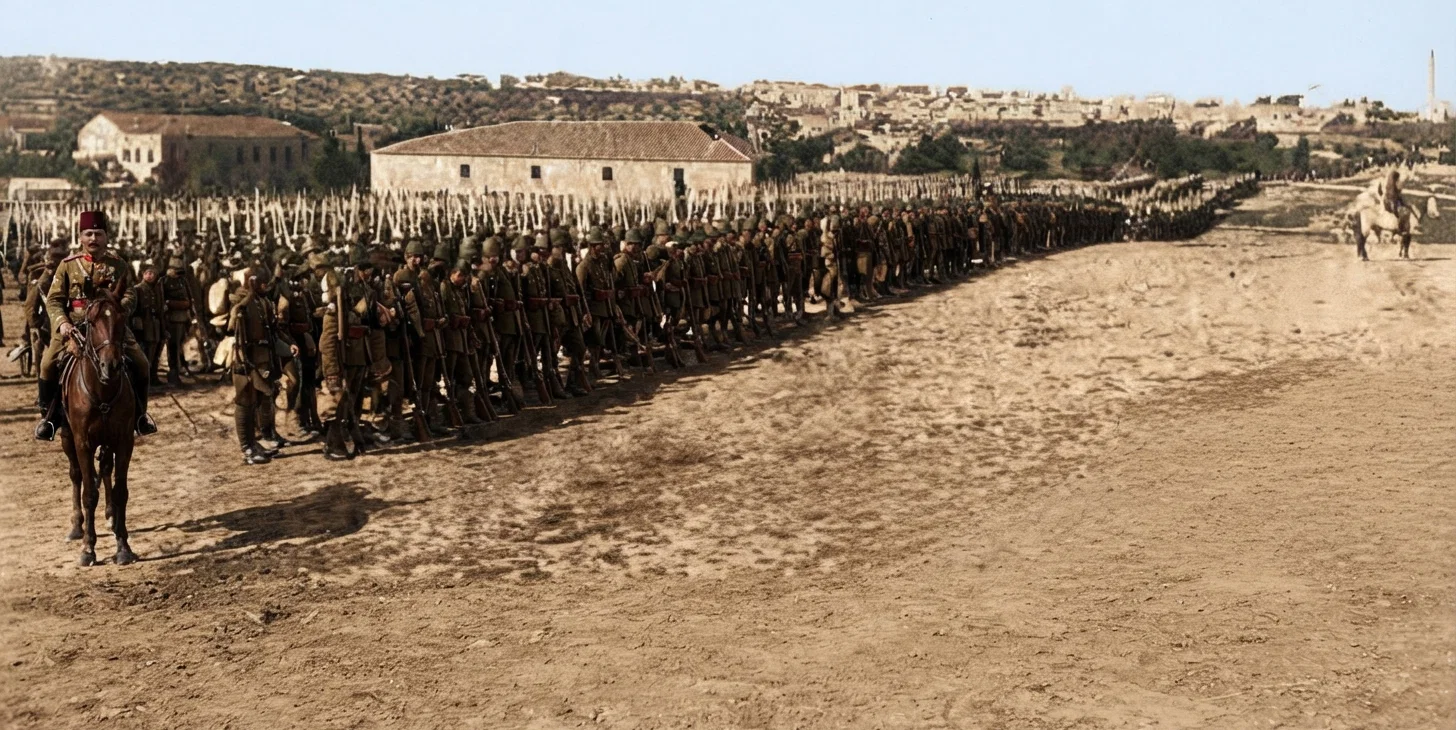
TURKISH TROOPS "At the beginning of the war, England notified Turkey to stay out."

Papal Prophecies

DURING the years of 1864, 5, 6, 7, 8, and 1872, 4, and 5, the Church of Rome uttered some prophecies, the most marvelous prophecies that have ever been uttered outside of the Bible. Pope Pius IX prophesied, Cardinal Manning prophesied, the archbishop of Florence prophesied, and other prominent churchmen prophesied. Of all these prophecies, those by Cardinal Manning are the clearest and plainest, and in substance they are this:
That the world had wandered away from the true fold of the so-called church of Christ; that the kings of the earth had departed from the teachings of the papacy in regard to civil government; that the pope, the vicar of Christ, was no longer regarded as supreme above all the rulers of the earth; and because of the new doctrine that governments derive their just powers from the consent of the governed, the world had gone astray, and had left the Bible doctrine of civil government and religion.
"And," said Manning, "because of this vast apostasy in Germany, in France, in England, and elsewhere, there is only one thing that can come, and that one thing will come. There will come a mighty war, the mightiest war the world has ever seen; and it will come as a judgment from God because the world has wandered away from the Church of Rome. And when that war comes, kings and their crowns will go down in the ruin and the wreck; and when it is all over, there will be just one institution and power above them all as the only savior of mankind on earth, and that institution will be the Church of Rome, with the vicar of Christ at her head. In that day, she will be the mistress of the field; and kings and princes and potentates, and the nations of the earth, will come on bended knee, seeking at her hand the laws of tranquil repose." That is the gist of those prophecies.
And when this war came, Rome said: "This is the war we have been prophesying about. This is God's judgment because the world has gone away from the teachings of the only true church of Jesus Christ."

Chose a Diplomat

WHEN the war broke out, there sat on the throne in Rome a man who was probably the best pope who ever lived, Pope Pius X. He was a peasant, a monk, a very simple-hearted man, a man whom the Jesuits detested, a man who cared nothing for pontifical splendor, nothing to be numbered amongst the great of earth; but his whole thought seemed to be, to do good to men. In the opening days of the war, Pope Pius X died of a broken heart, because he could not bear the thought of the bloodshed and trouble and frightfulness that had come upon the earth. At least, it is said by many that that was the cause of his death. On the other hand, there are many Catholics in Europe who will tell you that he did not die, but that he was put out of the way. Be that as it may, immediately the conclave of cardinals met to elect his successor. They said something like this: We do not need a pious priest, we do not need a great theologian, we do not need a great financial administrator; but we do need a diplomat, a man who will use this war to put Rome back where she belongs; and so we will choose Guiacomo della Chiesa.
Guiacomo della Chiesa took the papal throne and the name of Benedict XV. He is an aristocrat. He was educated in a university, took his degree in law, and then took his degree as a priest of the holy orders of the church. He was picked up soon after this by Cardinal Rampolla, who was one of the favorites of Pope Leo. Rampolla was sent by Leo XIII to Madrid as the papal ambassador to that court, and he took this young man Guiacomo della Chiesa with him as his private secretary. There Della Chiesa became schooled in the arts of diplomacy and statecraft, and all that goes with them.
After a while, Cardinal Rampolla was recalled to Rome. After he got there, he was made secretary of state, and then this man Della Chiesa was made assistant secretary of state, for the papacy. So all his work and all his life and all his training has been along the ways of diplomacy and statecraft.
When Pope Pius X came to the throne, he did not want Della Chiesa around, so the young man went off and took work elsewhere. But when the conclave met, they chose him to be pope, under the title of Benedict XV. When he went in on the platform, he was told that he was elected to put the papacy back into power, or — to use the words of Scripture — to "heal" the "deadly wound." (Rev. 13:1-3.) Read those prophecies of Cardinal Manning regarding this war, and how Rome believed she would come into her own again. At the same time, read the seventeenth chapter of Revelation, and you will be deeply impressed that the papal prophecies are almost word for word what is written in that chapter of Saint John the divine. The parallel is remarkable.
Now, when Della Chiesa came to the throne, he issued a papal bull. That expression "bull" comes from the Latin word which means a seal; because the most authoritative documents that Rome issues are sealed with the seal of the fisherman Saint Peter.
In this encyclical, Benedict charges that this present war has come about because there has been a divorcing of the teaching of the gospel and the teaching of the true church from the ruling of countries and the education of the young. Then he goes on to say that God has called him to the papal throne to settle this war. We do not know how the war will be settled; but certain it is that from the time he took the throne, Guiacomo della Chiesa, Benedict XV, has never ceased to impress upon the world, by voice and pen, that he is the one to settle this struggle, and that when he does settle it, the world must acknowledge him and his church again. What is that but the "healing" of the "deadly wound"?
We do not know that Rome will get it all in one step. We do not know just what the unrollings of the scroll will be; but we should see that that is the biggest thing wrapped up in this war. Both the question of Turkey and the question of the healing of the deadly wound are in it. That means that the trials of this people are going to begin the very day this war is over; and while this war means sorrow and trouble to us now, it is going to mean such infinitely more when the war is over.