Their Institution and Courses of Study—How They Strengthened and Prospered the Nation—A Model for Success To-Day
By the late MRS. E. G. WHITE
WHEREVER in Israel God's plan of education was carried into effect, its results testified of its Author. But in very many households, the training appointed by Heaven, and the characters thus developed, were alike rare. God's plan was but partially and imperfectly fulfilled. Fathers and mothers in Israel became indifferent to their obligation to God, indifferent to their obligation to their children. Through unfaithfulness in the home, and idolatrous influences without, many of the Hebrew youth received an education differing widely from that which God had planned for them. They learned the ways of the heathen.
SAMUEL ESTABLISHES SCHOOLS OF THE PROPHETS
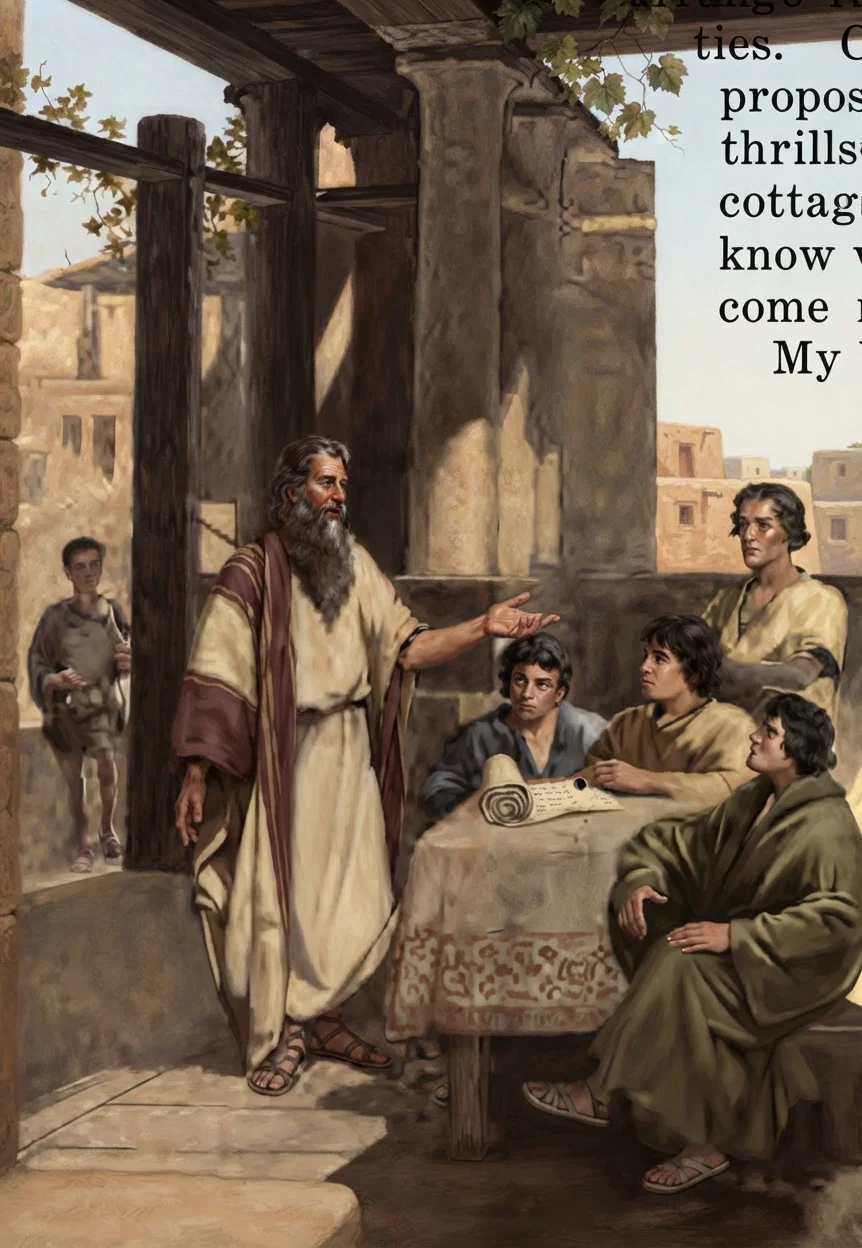
To meet this growing evil, God provided other agencies as an aid to parents in the work of education. From the earliest times, prophets had been recognized as teachers divinely appointed. In the highest sense, the prophet was one who spoke by direct inspiration, communicating to the people the messages he had received from God. But the name was given also to those who, though not so directly inspired, were divinely called to instruct the people in the works and ways of God. For the training of such a class of teachers, Samuel, by the Lord's direction, established the schools of the prophets.
These schools were intended to serve as a barrier against the wide-spreading corruption, to provide for the mental and spiritual welfare of the youth, and to promote the prosperity of the nation by furnishing it with men qualified to act in the fear of God as leaders and counselors. To this end, Samuel gathered companies of young men who were pious, intelligent, and studious. These were called the sons of the prophets. As they studied the word and the works of God, His life-giving power quickened the energies of mind and soul, and the students received wisdom from above. The instructors were not only versed in divine truth, but had themselves enjoyed communion with God, and had received the special endowment of His Spirit. They had the respect and confidence of the people, both for learning and for piety.
In Samuel's day, there were two of these schools,—one at Ramah, the home of the prophet, and the other at Kirjathjearim. In later times, others were established.
WORKED TO SUSTAIN THEMSELVES
The pupils of these schools sustained themselves by their own labor in tilling the soil, or in some mechanical employment. In Israel, this was not thought strange or degrading. Indeed, it was regarded as a sin to allow children to grow up in ignorance of useful labor. Every youth, whether his parents were rich or poor, was taught some trade. Even though he was to be educated for holy office, a knowledge of practical life was regarded as essential to the greatest usefulness. Many also of the teachers supported themselves by manual labor.
In both the school and the home, much of the teaching was oral; but the youth also learned to read the Hebrew writings, and the parchment rolls of the Old Testament Scriptures were open to their study.
CHIEF TOPICS OF STUDY
The chief subjects of study in these schools were the law of God, with the instruction given to Moses, sacred history, sacred music, and poetry.
In the records of sacred history were traced the footsteps of Jehovah. The great truths set forth by the types in the service of the sanctuary were brought to view, and faith grasped the central object of all that system,—the Lamb of God, that was to take away the sin of the world. A spirit of devotion was cherished. Not only were the students taught the duty of prayer, but they were taught how to pray, how to approach their Creator, how to exercise faith in Him, and how to understand and obey the teachings of His Spirit. Sanctified intellect brought forth from the treasure house of God things new and old, and the Spirit of God was manifested in prophecy and sacred song.
PROSPERITY RESULTED FROM THESE SCHOOLS
These schools proved to be one of the means most effective in promoting that righteousness which "exalteth a nation." Prov. 14: 34. In no small degree, they aided in laying the foundation of that marvelous prosperity which distinguished the reigns of David and Solomon.
Then Israel reached the height of her greatness. The promise given to Abraham and repeated through Moses was fulfilled: "If ye shall diligently keep all these commandments which I command you, to do them, to love the Lord your God, to walk in all His ways, and to cleave unto Him; then will the Lord drive out all these nations from before you, and ye shall possess greater nations and mightier than yourselves. Every place whereon the soles of your feet shall tread shall be yours: from the wilderness and Lebanon, from the river, the river Euphrates, even unto the uttermost sea shall your coast be. There shall no man be able to stand before you." Deut. 11: 22-25.
To this end, Samuel gathered companies of young men who were pious, intelligent, and studious.
THOSE WHO TRUST, WILL RECEIVE
But as a nation the children of Israel failed of receiving the benefits that God desired to give them. They did not appreciate His purpose or coöperate in its execution. But though individuals and peoples may thus separate themselves from Him, His purpose for those who trust Him is unchanged. "Whatsoever God doeth, it shall be forever." Eccl. 3: 14.
RECORDED FOR OUR INSTRUCTION
While there are different degrees of development and different manifestations of His power to meet the wants of men in the different ages, God's work in all time is the same. The Teacher is the same. God's character and His plan are the same. With Him "is no variableness, neither shadow of turning." James 1: 17.
The experiences of Israel were recorded for our instruction. "All these things happened unto them for ensamples: and they are written for our admonition, upon whom the ends of the world are come." 1 Cor. 10: 11. With us, as with Israel of old, success in education depends on fidelity in carrying out the Creator's plan. Adherence to the principles of God's word will bring as great blessings to us as it would have brought to the Hebrew people.