A GREAT deal has been said and written of late concerning this famous letter of Pope Pius X. The English translation appears in the supplement to the Roman Catholic organ "The Tablet," which was issued in London, June 11 and 18, 1910. The text covers about twelve and one half columns, and furnishes interesting and instructive reading-matter. Protestant circles in Germany have been stirred considerably by some of its utterances, and great meetings have been held in various parts of the country, protesting against the language used, which has been interpreted to refer to the Protestant Reformers of the sixteenth century and their successors, the evangelical denominations of to-day.
In this Encyclical, St. Charles Borromeo, who was canonized by Pope Paul V, is set forth as an example worthy of the imitation of believers and especially of pastors in our own time. It is declared that this age presents a parallel to that in which Borromeo lived — during the Protestant Reformation of the sixteenth century; which the said saint did all within his power to crush by means of the Inquisition; and he did more — he attempted through the part he acted in the Council of Trent, and in his own city of Milan, to effectually work a counter-reformation in the Roman Catholic Church. The letter quotes the words of Pope Paul V, who canonized Borromeo:
John Wyclif, whose writings were among the first disturbers of the Papacy. He is called "The Morning Star of the Reformation."
"The Lord, who alone works great wonders, has done magnificent things with us in these latter times, and in His wonderful dispensation He has erected a great luminary above the apostolic rock, by choosing Charles from the bosom of the most holy Roman Church to be a faithful priest, a good servant, a model for the flock and model for pastors, who, lighting up the whole church with the very brilliancy of his holy works, shines out before priests and people as an Abel in innocence, an Enoch in purity, a Jacob in bearing labors, a Moses in meekness, an Elias in burning zeal, who shows forth in himself for our imitation the austerity of a Jerome amid an abundance of luxuries, the humility of a Martin in its highest grade, the pastoral solicitude of a Gregory, the liberty of an
Ambrose, the charity of a Paulinus, who, in fine, gives us to see with our eyes and to touch with our hand a man who, while the world smiles with all its blandishments upon him, lives of the spirit, trampling earthly things underfoot, seeking continuously the things of heaven, and that not merely because by his office occupying the place of an angel, but because he was emulous on earth to think the thoughts and do the works of the life of the angels" (Bull "Unigenitus," Cal. Nov. anno 1610).
Rome's Characterization of the Reformation
The work of those who are called Reformers in the sixteenth century is thus characterized:
"In those days when passions ran riot, and the knowledge of the truth was almost completely perverted and obscured, there was a continual struggle with errors, and human society, going from bad to worse, seemed to be rushing towards the abyss. In the midst of these errors rose up proud and rebellious men, 'enemies of the cross of Christ . . . men of earthly sentiments whose God is their belly' (Phil. 3:18, 19). These, bent not on correcting morals but on denying dogmas, multiplied the disorder, loosening for themselves and for others the bridle of licentiousness, and condemning the authoritative guidance of the church to pander to the passions of the most corrupt princes and peoples, with a virtual tyranny overturned its doctrine, constitution, discipline. Then, imitating those sinners to whom was addressed the menace: 'Wo to you who call evil good and good evil' (Isa. 5:20), that tumult of rebellion and that perversion of faith and morals they called reformation and themselves reformers. But, in truth, they were corruptors, for undermining with dissensions and wars the forces of Europe, they paved the way for the rebellions and the apostasy of modern times, in which were united and renewed in one onslaught those three kinds of conflict, hitherto separated, from which the church has always issued victorious, the bloody conflicts of the first ages, then the internal pest of heresies, and, finally, under the name of evangelical liberty, a vicious corruption and a perversion of discipline unknown perhaps in medieval times.
"To this crowd of seducers God opposed real reformers and holy men to arrest the impetuous current and extinguish the conflagration, and to repair the harm already done. Their assiduous and manifold works for the reformation of discipline were all the more comforting to the church by reason of the great tribulation that afflicted it, and afforded a proof of the words: 'God is faithful who . . . also with temptation will make issue' (1 Cor. 10:13). It was in these circumstances that by a providential disposition the singular zeal and sanctity of Charles Borromeo came to bring fresh consolation to the church.
"For God so ordained that his ministry was to have a force and efficacy all its own not only in checking the audacity of the factious, but in teaching and kindling the children of the church. He curbed the mad ardors of the former, and refuted their futile charges with the most powerful eloquence by the example of his life and labors; he raised the hopes of the latter and revived their zeal. And it was truly wonderful how from his youth he united in himself all those qualities of the real reformer, which in others we see scattered and isolated; virtue, sense, doctrine, authority, power, quickness; and how he combined them all to serve for the defense of Catholic truth against the onrush of heresies, as is the proper mission of the church, reviving the faith that had grown dormant and almost extinct in many, strengthening it by provident laws and institutions, restoring the discipline that had been dethroned, and strenuously leading back the morals of the clergy and people to the tenor of Christian life."
The encyclical then describes the early training and the career of Borromeo, which were a splendid preparation for his life-work, and the part he was to act in the Council of Trent. It continues:
"And yet all these things were but a preparation and a novitiate, in which his heart was trained with piety, his mind with study, his body with labor, while he always kept himself, modest and humble youth as he was, as clay in the hands of God and God's vicar on earth. A life of preparation such as this was just the kind to be despised by the innovators of the time, through that same foolishness which leads the modern innovators to despise it, in their failure to observe that the wonderful works of God are brought to maturity in the shade and silence of the soul dedicated to obedience and prayer, and that in this preparation lies the germ of future progress, as the hope of the harvest lies in the sowing."
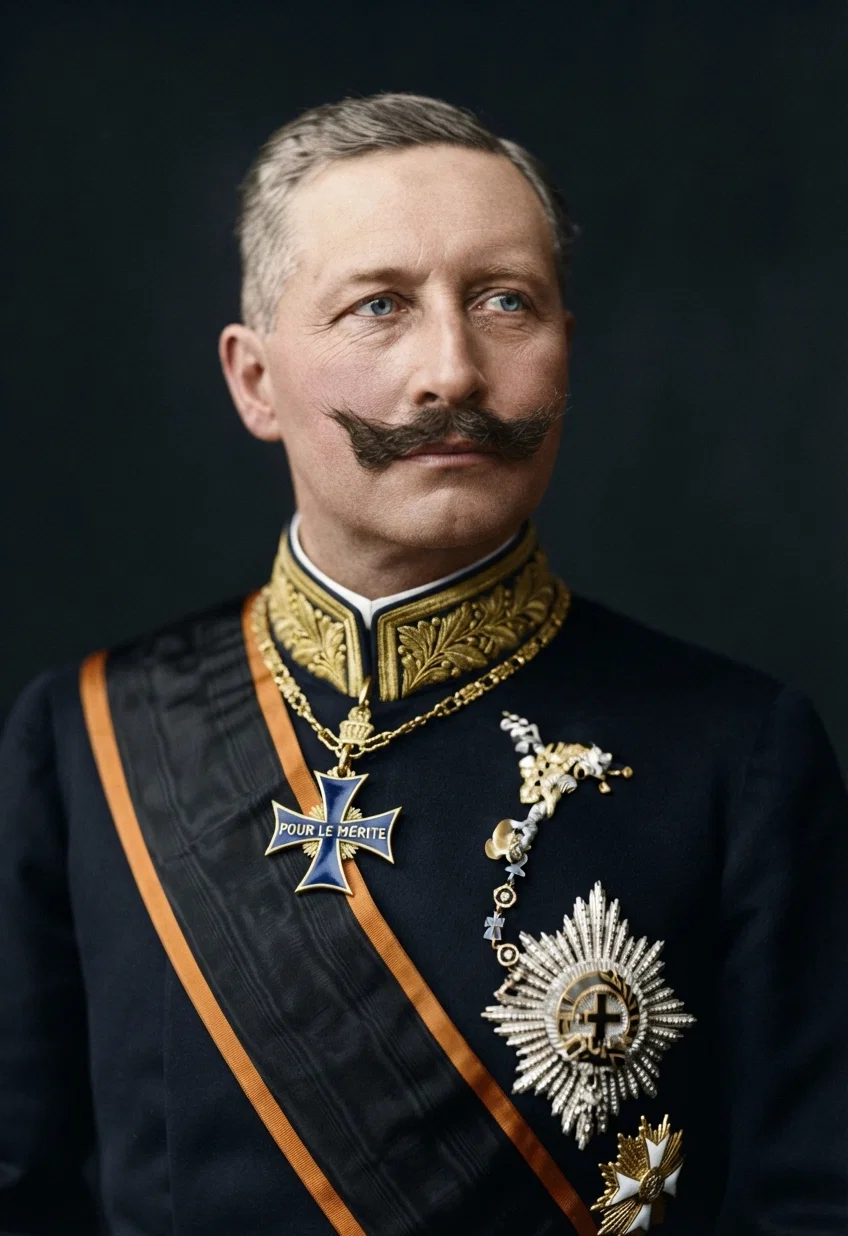
The German Kaiser, whose people are stirred over the Papal Encyclical.
"All these striking results he attained by adopting in his work of reformation the rules laid down shortly before by the Council of Trent."
Protestantism Likened to Mohammedism
"No thought was given to all this by the Reformers opposed by St. Charles, for they presumed to reform faith and discipline at their own caprice — nor is it better understood, venerable brethren, by the moderns against whom we have to combat to-day. These, too, subvert the doctrine, laws, institutions of the church, forever talking about culture and civilization, not because they have this so much at heart, but because under such sounding words they are enabled the better to conceal the evil nature of their designs. . . . What they propose is a universal apostasy from the faith and discipline of the church, an apostasy all the worse than the one which threatened the century of Charles, from the fact that it creeps insidious and hidden in the very veins of the church, and with extreme subtility pushes erroneous principles to their extreme conclusions.
"But both have the same origin in the enemy who, ever alert for the perdition of men, 'has oversowed cockle among the wheat' (Matt. 13:25); of both revolts the ways are hidden and darksome,11with the same development and the same fatal issue. For as in the past the first apostasy, turning to the side on which fortune seemed to favor it, stirred up the powerful against the people or the people against the powerful, only to lead both classes to destruction, so the modern apostasy stimulates mutual hatred between the poor and the rich until people growing discontented with their lot lead lives more and more miserable and pay the penalty imposed upon all who, absorbed in earthly and fleeting things, seek not 'the kingdom of God and His justice.' Nay, the present conflict has become all the more grave from the fact that, while the turbulent innovators of other times as a rule retained some fragment of the treasure of revealed doctrine, the moderns would seem to have no peace until they have utterly destroyed it. . . .
"Amid so impious and so stupid a war, carried on sometimes and propagated with the aid of those who should be the first to support us and help our cause; amid this manifold transformation of error and these very blandishments of vice, by both of which many even of our own allow themselves to be led astray, seduced as they are by the appearances of novelty and of doctrine, or by the illusion that the church may well come to a friendly agreement with the maxims of the age, you are well aware, venerable brethren, that we must all oppose a vigorous resistance, and repel the assault of the enemy with those very weapons which Charles Borromeo used in his own time.
"And first of all, since they are attacking the very rock of faith, either by open denial or by hypocritical assault, or by misrepresenting revealed doctrine, we shall do well to remember what St. Charles often inculcated; viz., that: 'The first and chief care of pastors must be concerned with all that concerns the full and inviolate maintenance of the Catholic faith, the faith which the holy Roman Church professes and teaches, and without which it is impossible to please God' (Conc. Prov. I, at the beginning). . . . In truth, it is not necessary to record the other words of the saint in quoting the sanctions, laws, penalties, laid down by the Roman pontiffs against prelates who are negligent or remiss in purging their dioceses of the evil of heresy. But it will be quite opportune to meditate closely on the conclusions he draws from these: 'Hence the bishop must above all things persevere in this eternal solicitude and continuous vigilance not only to prevent the most pestilent disease of heresy from penetrating among the flock committed to him, but even to remove the faintest suspicion of it from them. And if it should happen to penetrate, which may the Lord Christ in His pitiful mercy forbid, then he must strive at once by all means in his power to have it driven out immediately, and he must have those who are infected or under suspicion of being infected with the pestilence treated according to the pontifical canons and sanctions.' (Ibid.)
"The necessity of this Christian instruction is obviously increased both by the trend of modern times and customs, and especially by the existence of those public schools, destitute of all religion, in which everything most holy is ridiculed and condemned, and in which the lips of the teachers and the ears of the scholars are equally opened for blasphemy. We speak of those which with supreme injustice are called lay or neutral, but which in reality are the prey of the domineering tyranny of a darksome sect. This new trick of hypocritical liberty you have already denounced aloud and fearlessly, venerable brethren, especially in those countries where the rights of religion and of the family have been more shamelessly trampled upon and in which the very voice of nature, proclaiming that the faith and innocence of youth must be respected, has been stifled. To remedy, as far as was possible for us, so great an evil inflicted by those same persons who, while they claim obedience to themselves, deny it to the supreme Master of all things, we have recommended that schools of Christian doctrine be established in the various cities. And while this work, thanks to your efforts, has already made good progress, still it is earnestly to be desired that it be propagated ever more widely, and that these schools be established numerously everywhere, and be provided with teachers of sound doctrine and good life."
Following this, the letter deals with the necessity of carefully training the "sacred orator whose office is closely connected with that of the necessary instruction in the first elements of religious teaching," and then throws out "A Call to Vigilance" recommending "that our flock be not fed on wind by vain and frivolous men, but be nourished with life-giving food by 'ministers of the word.'"
The example of St. Charles in his relations to civil government is referred to near the close of the letter, where it is stated that he never yielded "in anything that would be hurtful to faith and morals," or in the face of claims contrary to discipline or burdensome on the faithful even when these were made by a most powerful monarch who was also a Catholic." As to the courageous leaders, the bishops of our own day, they should have the same praise and gratitude —
"when they never fail in any of the duties of good citizens, either when it is a question of showing loyalty and respect to wicked rulers when these command what is just, or of resisting their commands when they are iniquitous, holding themselves equally aloof from the froward rebellion of those who have recourse to sedition and tumult, and from the servile abjection of those who receive as sacred laws the manifestly impious statutes of perverse men who, under the lying name of liberty, subvert all things, and impose on those subject to them the harshest kind of tyranny."
Against Modern "Heresy"
"This is happening in the sight of the whole world and in the full light of modern civilization, in some nations especially, where the powers of darkness seem to have taken up their headquarters. Under this domineering tyranny all the rights of the children of the church are being trampled upon, and the hearts of those in power have become closed to all those sentiments of generosity, courtesy, and faith which for so long shone forth in their forefathers, who gloried in the name of Christians. But it is evident that where hatred of God and of the church exists everything goes backward precipitously toward the barbarism of ancient liberty, or rather toward that most cruel yoke from which only the family of Christ and the education introduced by it has freed us. Borromeo expressed the same thought when he said: 'It is a certain and well-recognized fact that by no other crime is God more gravely offended, by none provoked to greater wrath, than by the vice of heresy, and that nothing contributes more to the ruin of provinces and kingdoms than this frightful pest.' (Conc. Prov. V. Pars. i.) Yet as far more deadly must be regarded the modern conspiracy to tear Christian nations from the bosom of the church, as we have already said.
"For the enemies of the church, altho in utter discord of thought and will among themselves, which is the sure mark of error, are at one only in their obstinate assaults upon truth and justice; and as the church is a guardian and defender of both of those, against the church alone they close up their ranks for an united attack. And altho they are wont to proclaim their impartiality and to assert that they are promoting the cause of peace, in reality, by their mild words and avowed intentions, they are only laying snares to add insult to injury, treason to violence. A new species of war is, therefore, now being waged against Christianity, and one far more dangerous than those conflicts of other times in which Borromeo won so much glory."
We have quoted so fully from this "Encyclical Letter of Our Most Holy Lord Pius X by Divine Providence Pope. To the Patriarchs, Primates, Archbishops, Bishops, and Other Ordinaries in Peace and Communion with the Apostolic See, Pius X Pope." "Given at Rome at St. Peter's, May 26, 1910, in the seventh year of Our Pontificate," that the reader may have presented before him in the very words of the Roman Church its own attitude toward modernism and especially toward "heresy."
Whoever will take the trouble to carefully and unprejudicedly investigate the policy of this system in the past will know very well what is meant by the words: "He must have those who are infected or under suspicion of being infected with the pestilence [of heresy] TREATED ACCORDING TO THE PONTIFICAL CANONS AND SANCTIONS." (Capitals ours.) That there is in some Roman Catholic countries a tendency to revolt against the church, there can be no doubt. France has revolted, Spain seems to be revolting, and the dogmas of social democracy are making mighty advances in many parts of the civilized world. The tendency is to go to extremes, and to throw off all restraint — to deny the rights of government and of religion. Skepticism, Higher Criticism, the new theology, and a hatred toward the law of God, abound on every hand. It is therefore necessary that real, genuine Christian experience become with us a matter of the greatest importance, and that our homes develop into a true sanctuary, where the actual love of Christ may be exhibited and become a powerful leavening influence in the neighborhood and in the church. These Christian virtues, however, can never be inculcated by force — by the union of church and state — by any system similar to that of the Inquisition; but they must come through the simple propagation of the real Gospel of Christ. And the times certainly demand the message to be found in Revelation 14.