ITS VASTNESS—SOME OF ITS RESOURCES, ITS GRANDEURS, AND ITS OPPORTUNITIES
OUR WORK IS GIRDLING IT
By H. H. Hall
THE bigness of South America is one of the first things that impresses you. Perhaps the first intimation you have of this great size is when you learn that the Amazon River and one of its tributaries are long enough and deep enough to permit boats of two thousand tons to ply almost three thousand miles inland to Pucalpa, Peru, whence it is less than five hundred miles by rail to the Pacific Ocean. The last of this stretch of railroad is being completed.
ONE REPUBLIC LARGER THAN OUR WHOLE COUNTRY
Then you find that Brazil alone is considerably larger than the United States of America, and are bewildered with the size and beauty of its capital city and harbor.
You see ships from every part of the globe crowding into the coffee exporting port of Santos; observe the wonderful dockage system at Buenos Aires, the largest city south of the equator; and look out upon the River Plata, which at this point is about twenty miles wide.
VAST HERDS OF CATTLE
You view the millions of cattle on many times a thousand hills in southern Brazil, Uruguay, and Argentine, and learn that Argentine alone has about ten per cent of all the cattle in the world.
You look with astonishment at the long rows of ships at Rosario, a night's ride up the river from Buenos Aires, all loading with wheat; and on consulting statistics, you find that Argentine is either the first or the second wheat exporting country in the world.
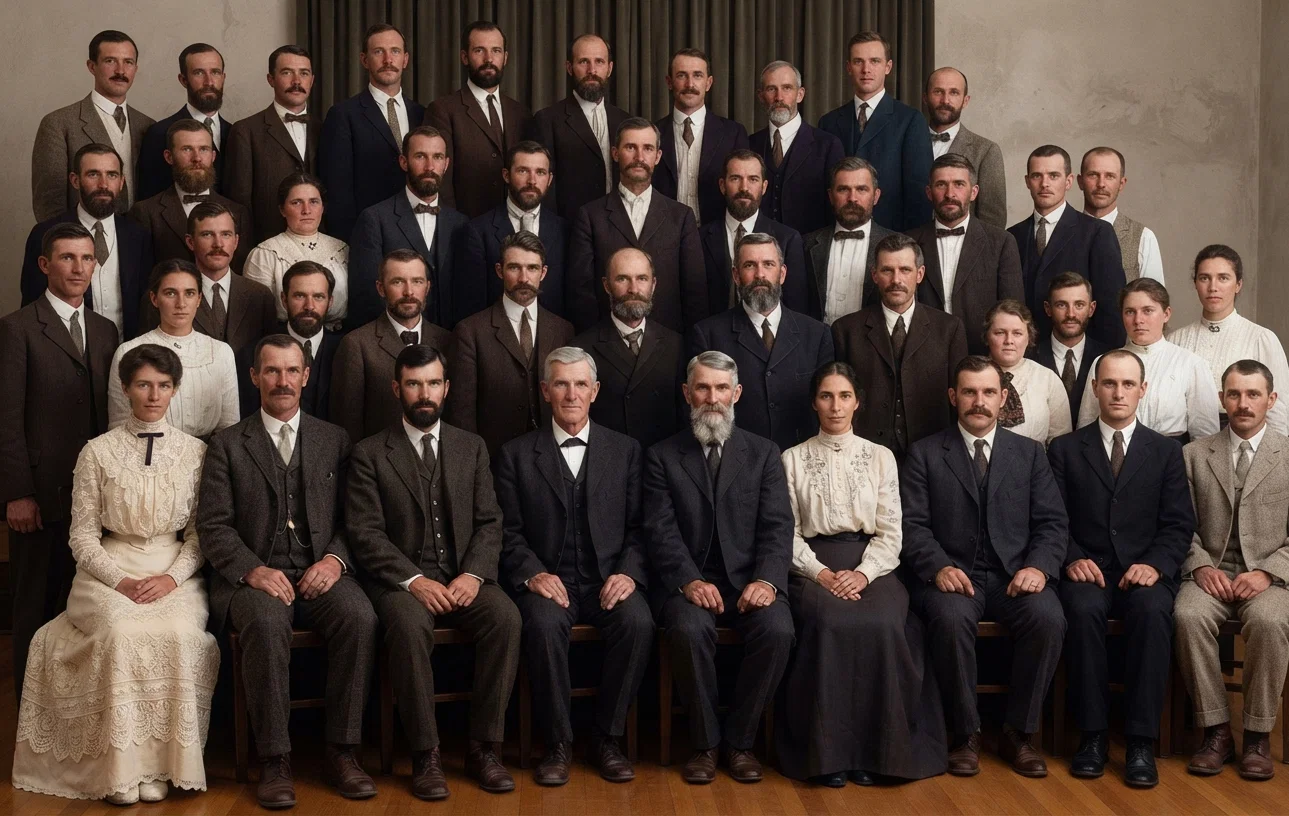
Workers in attendance at the South American Union Conference at Montevideo. From left to right, the names of those in the front row are as follows: Mrs. Inez Hoiland-Stevens, Dr. R. H. Habenicht, Elder E. L. Maxwell, Elder F. H. Westphal, Elder J. W. Westphal, Mrs. J. W. Westphal, Elder F. W. Spies, Elder F. L. Perry, H. H. Hall.
IN this article, Mr. Hall gives us a very brief general view of what he has seen in South America. He takes us in a quick trip across plain and up mountainside. We cross the famous Titicaca. We sail along the west coast, and view the vast mountain ranges of our neighbor continent.
In a few paragraphs at the close, he tells of our union conference meeting at Montevideo, Uruguay. Next week he will give us a glimpse of our publishing work, and the schools and sanitariums our workers are establishing to assist them in their evangelistic efforts. Editor.
TWO HUNDRED MILES WITHOUT A CURVE
You take the transandine train for the Pacific coast, and for almost two hundred miles find the track without a single curve. In quick succession follow mountains, zig-zag, switchback, and other engineering feats such as you have never seen before. Then you are hurled into that tunnel which has been more than twenty-five years in building, and which pierces the very backbone of the old Andes at an elevation of two miles above the sea.
FRUIT IN ABUNDANCE
Perhaps you ride for a day by rail through the fertile irrigated valley south of Santiago, which is appropriately called the California of South America. Here fruit of almost every kind thrives. The black raspberry vine covers the fences for miles, and in some places becomes a real pest, its fruit in many instances remaining unpicked.
Land with us at Antofagasta, which claims the whole Pacific Ocean as its harbor, as it has no other shelter except the towering mountains immediately back of it; where it never rains, and where the water for its forty thousand inhabitants is piped from many miles in the interior.
NITRATE MINES
Take the narrow gage railroad, and climb the mountains for nearly a thousand miles to La Paz. As the night comes on, you see here and there groups of blazing electric lights on the apparently barren mountainsides, marking the sites of numerous nitrate mines, from which this unequaled fertilizer is sent down to the waiting ships at Antofagasta and Iquique. From the export317tax of less than half a cent a pound, Chile received, during the years 1880 to 1904, the stupendous sum of $280,000,000.
VAST BORAX BEDS
The next day, you see what resembles a series of lakes, but which proves to be borax beds of a very high grade. A few hours later, you skirt the base of a volcano, which is still smoking leisurely away, like a reclining giant; and you learn that sulphur ninety-six per cent pure is taken from a mine near its crater.
THE BUSY INDIANS
The next day, as your breath becomes more labored, and some of your companions sit down to wash their faces, you see Indians by the thousands, all attired in red blankets and shawls. With the exception of those that greet you at the stations, they all seem busy. Even the women with babies strapped on their backs are spinning, knitting, or herding the sheep and llamas. Many of the men are plowing with queer looking crooked sticks made fast to a pole, that in turn being tied to the so-called yoke, which is another stick made fast to the horns—not the shoulders—of the ox team.
LA PAZ IN THE DIZZY HEIGHTS
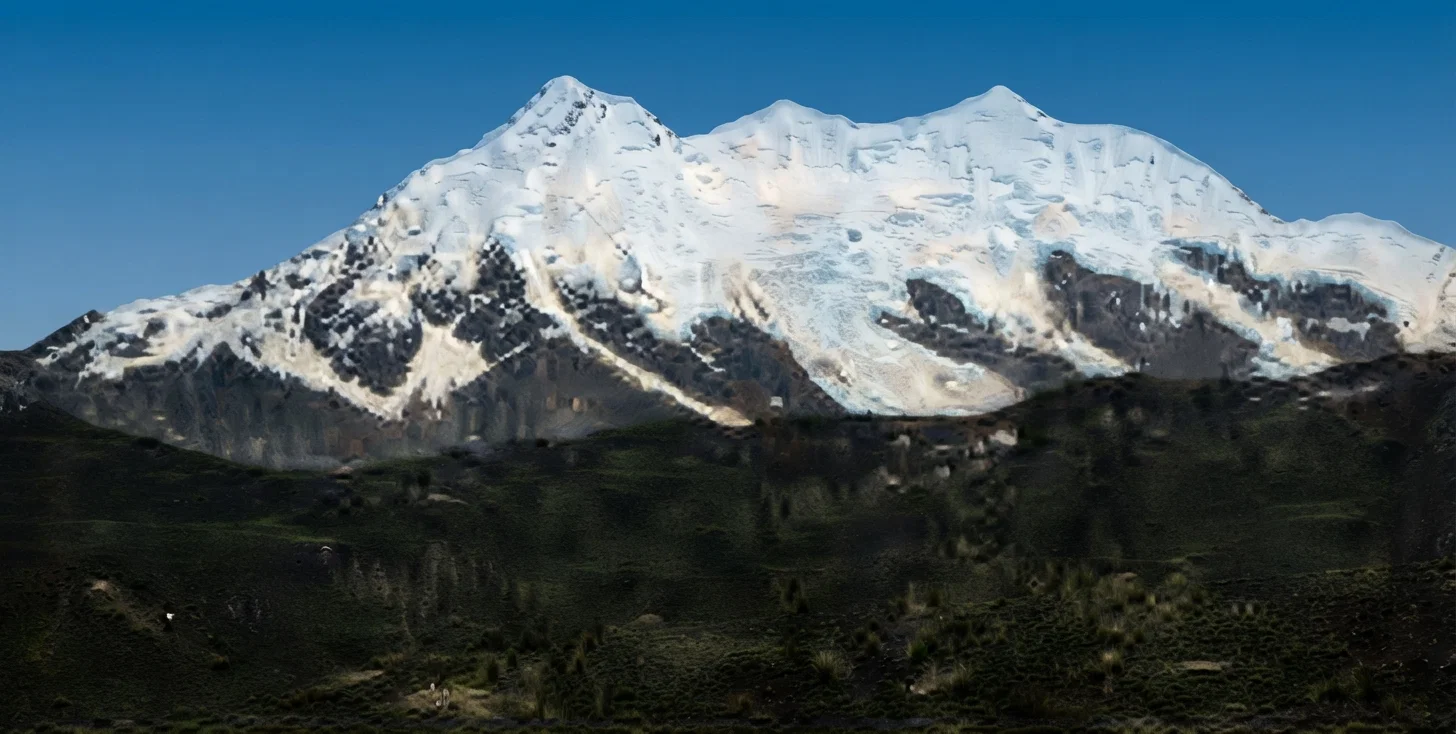
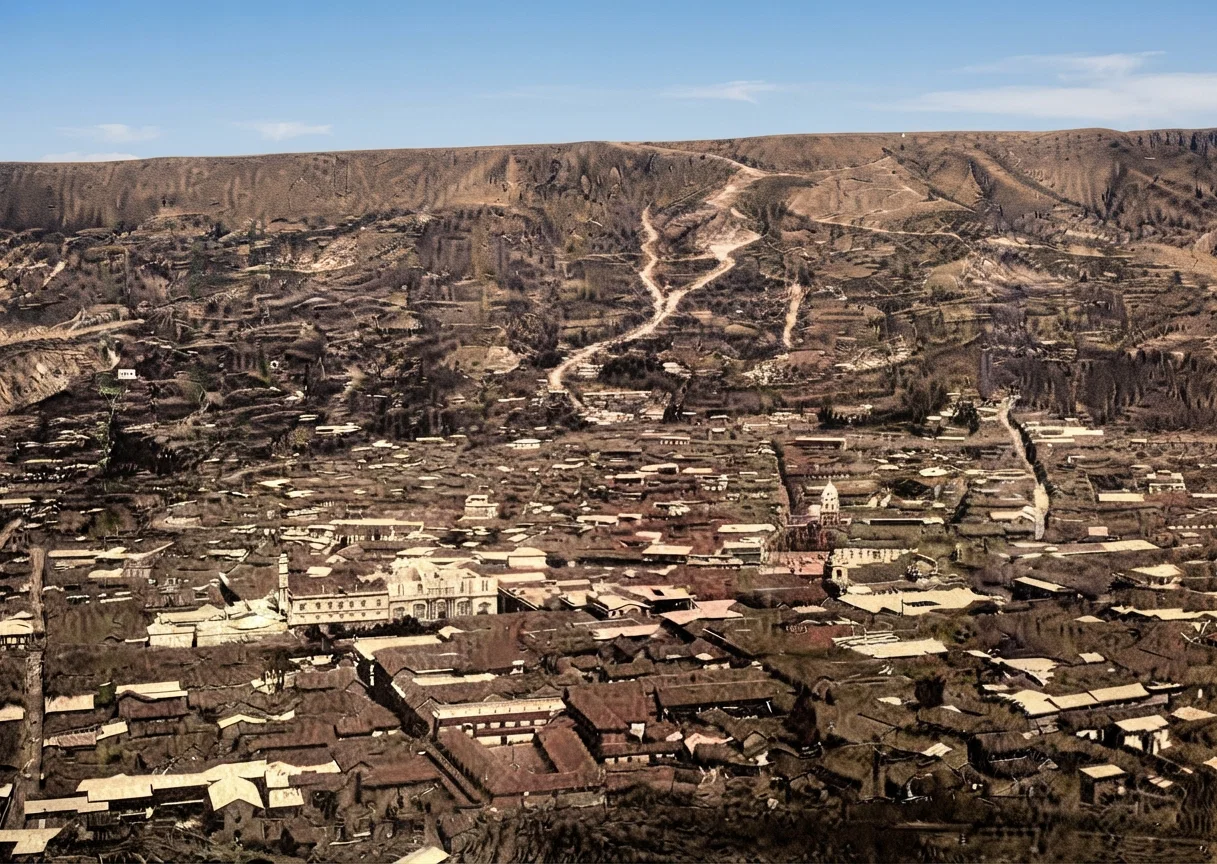
On the afternoon of the second day, as you mount to the great table-land of Bolivia, three miles high, and begin to think you have surely reached the roof of the world, the train swerves, and you see the snow-covered Illimani rising almost two miles higher yet. Its bigness no less than its beauty holds you spellbound, and you wonder, "What next?" You have not long to wait. Your train suddenly stops at the brink of a great crevice in the earth, miles wide and a third of a mile deep, in the bottom of which lies the ancient and truly wonderful city of La Paz, with its red-tiled roofs, its old cathedrals—for it was founded in 1548—its fifty thousand brightly attired Indians, and its white and mixed population of thirty thousand more.
BEAUTIFUL TITICACA
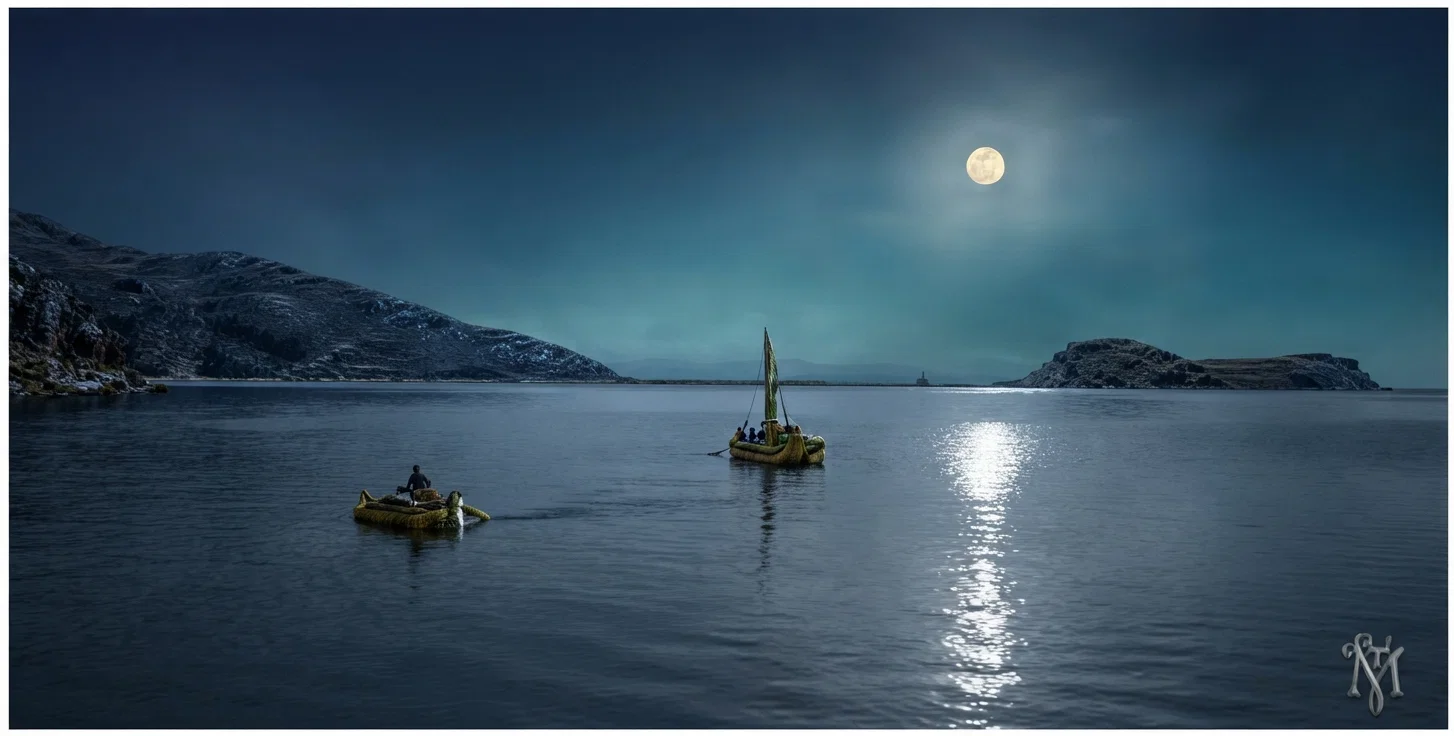
A few days later, you steam all night across the fresh water Lake Titicaca in a boat of a thousand tons, every piece of which was brought up, on mule back, over mountain trails, from the ocean, five hundred or more miles away; and you do not wonder that it took eight years to accomplish the feat. You have already seen Pikes Peak and Shasta's summit, and are startled to learn that this great moon-lighted lake among the clouds, one hundred fifty miles long and from twenty to fifty miles wide, is only two thousand feet lower than their highest points.
After landing at Puno and taking the train, you ride for a whole day in a semi-dazed condition. When you finally reach Mollendo and take the steamer north, you begin to remember the innumerable herds of beautiful llamas you saw; the great Indian villages; the mountain summit you crossed at 14,666 feet, and its effects upon at least some of the passengers; the frightful chasms down which your train crawled; the marvelous sand dunes, which maintain the same proportions, though traveling from ten to a hundred feet each year; and the sensations experienced while taking a rowboat in a surf-washed landing, and clambering up the sides of an ocean liner.
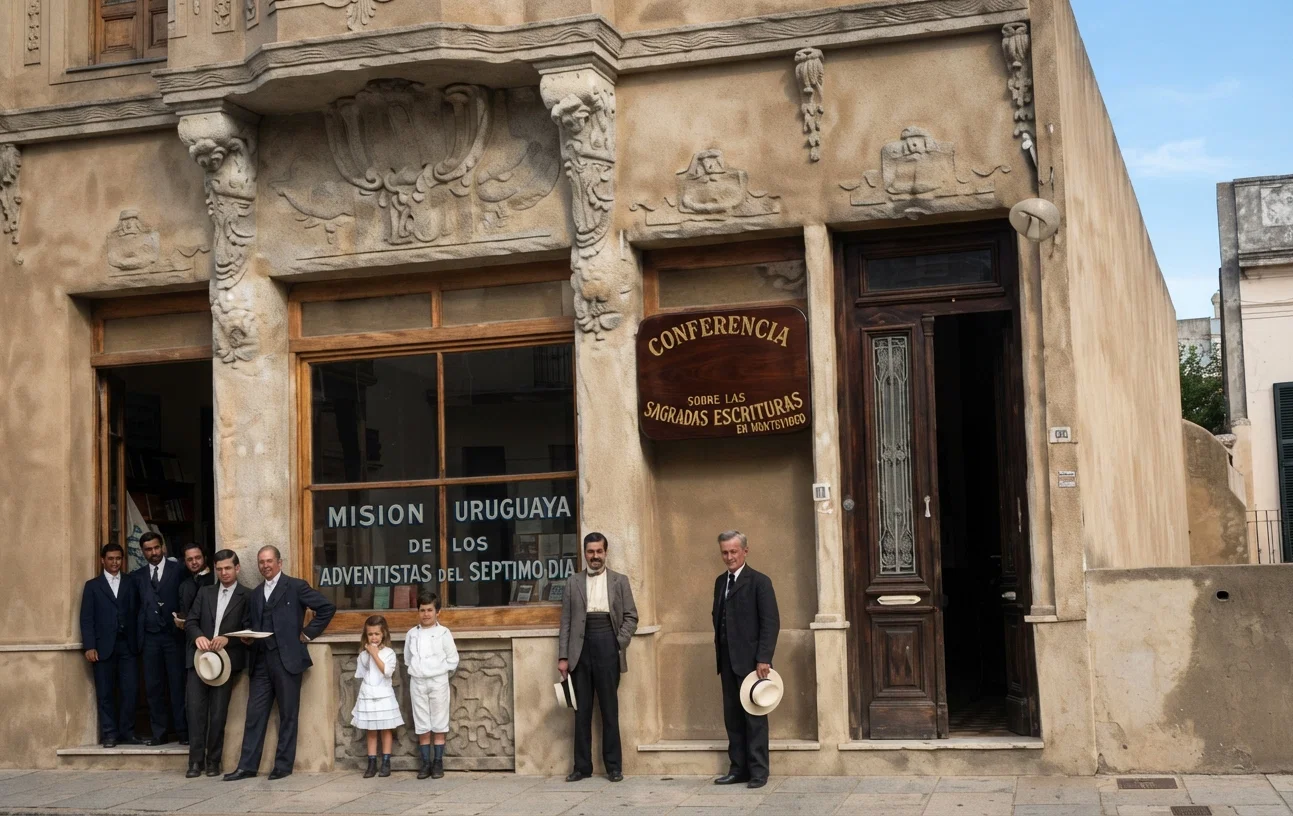
Book depository, chapel, and mission home in Montevideo, Uruguay, where the South American Union Conference was held. This building, like all the better class of structural work on the east coast, is of brick, covered with heavy cement plaster, and resembles solid concrete. It cost about $7,000, and is the best city building we have in South America.
Then as you sail day after day up the west coast, and see nothing but mountains, barren and brown, but awe-inspiring because of their very vastness and majestic isolation, rising tier upon tier until lost in the cloudy distance, you say, "Truly South America is a big country, and wonderful as it is big."
THE MEETING AT MONTEVIDEO
The union conference was just opening when I arrived in Montevideo, Uruguay, which is a city of about half a million, situated at the mouth of the River Plata. Nearly a hundred were in attendance; and while most of the services were in Spanish, yet I could detect the same spirit of enthusiasm and earnestness that seems to be manifest wherever our workers come together and relate the evidences of God's leadership and help in making known the nearness of His coming.
The reports showed the membership to stand at 1,924, which is a gain of 682 in four years; and that the tithe and mission offerings amounted to $27,336.89 for the past year. This does not include Brazil.
Because of the arrival of additional workers, more aggressive plans were laid for the future.
Elder C. E. Knight and wife, of California, who have been working in Buenos Aires14for some years, were asked to take the mountain station in Quito, Ecuador.
J. T. Thompson, who with his wife had just arrived from California, was appointed secretary-treasurer and field agent of Uruguay, with headquarters at Montevideo.
Brother Stahl, who has had such success with the Indian work, was relieved of the superintendency of the Bolivian field, to give his exclusive time to the work among that people, with headquarters at Puno, Peru.
Elder Pohle, of Peru, will take his place in Bolivia.
Brother and Sister A. G. Nelson, recently from Loma Linda, California, went to the Magellan Strait country, with headquarters at Punta Arenas, where they will engage in the distribution of gospel literature, which is such an important work in this field.
"YOUR TRAIN SUDDENLY STOPS AT THE BRINK OF A GREAT CREVICE, MILES WIDE AND A THIRD OF A MILE DEEP, IN THE BOTTOM OF WHICH LIES THE ANCIENT AND TRULY WONDERFUL CITY OF LA PAZ"
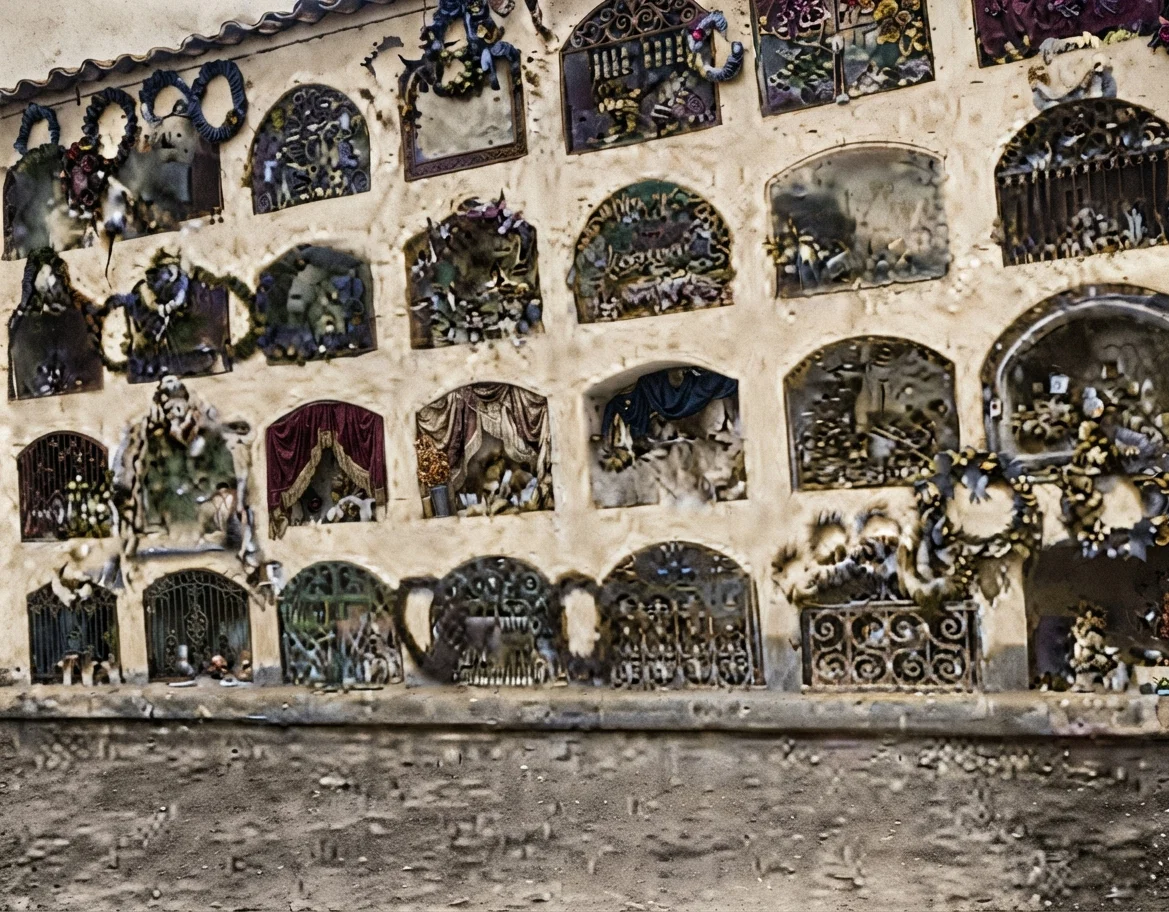
A closer view of these peculiar burial vaults, in which bodies are deposited for a specified time.
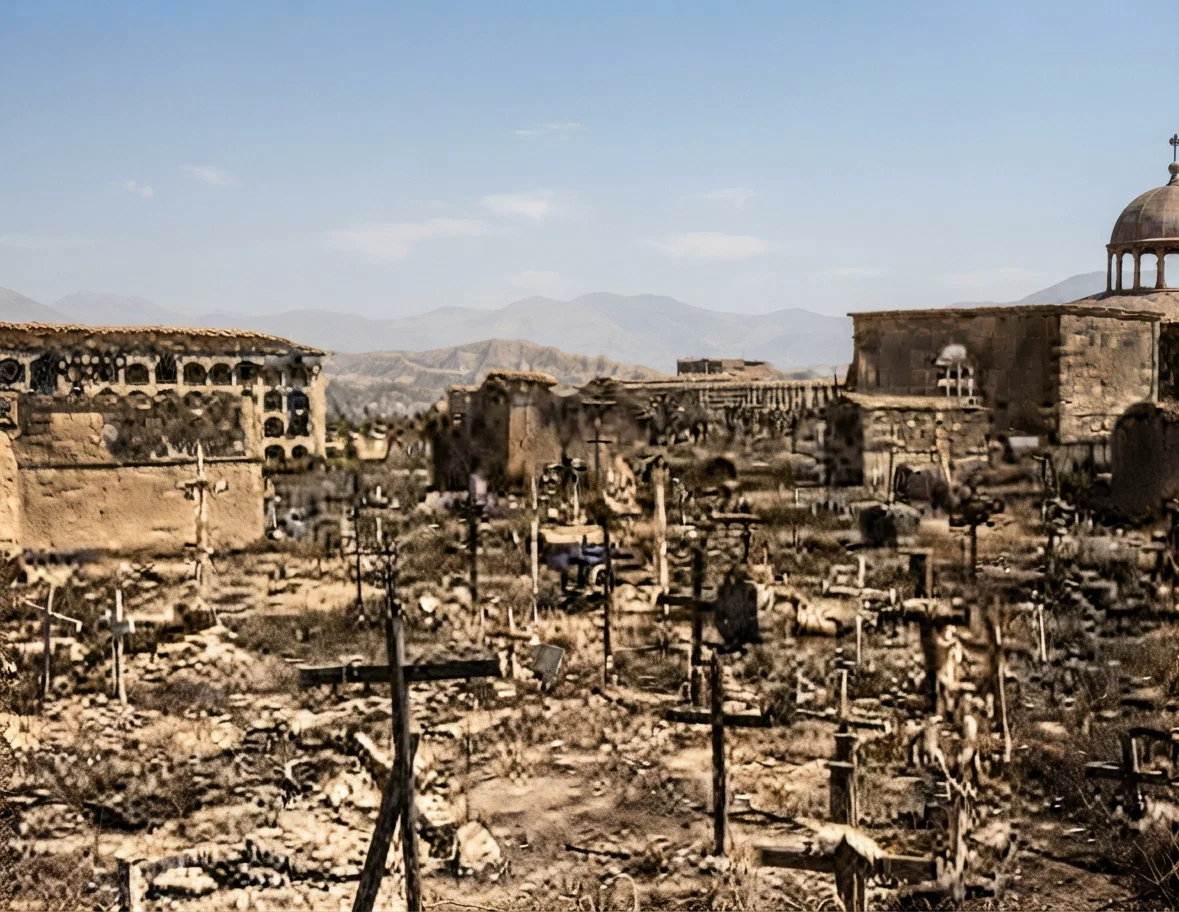
Section of cemetery in La Paz, Bolivia, with burial vaults in the distance. Photograph by W. O. Cluff.
Enrique Mangold goes to Ecuador, to engage in a similar work.
Brother H. O. Maxson was asked to take up treasury work in the River Plata academy and sanitarium; and Arthur Westphal takes his place as secretary-treasurer of the Peruvian Tract Society and Conference.
The republics of Bolivia, Peru, and Ecuador were organized into a union mission field, with Elder E. L. Maxwell, formerly from Oklahoma, and recently from Louisiana, as superintendent.
Elder J. W. Westphal was reelected president of the union, and G. E. Hartman secretary-treasurer and auditor.
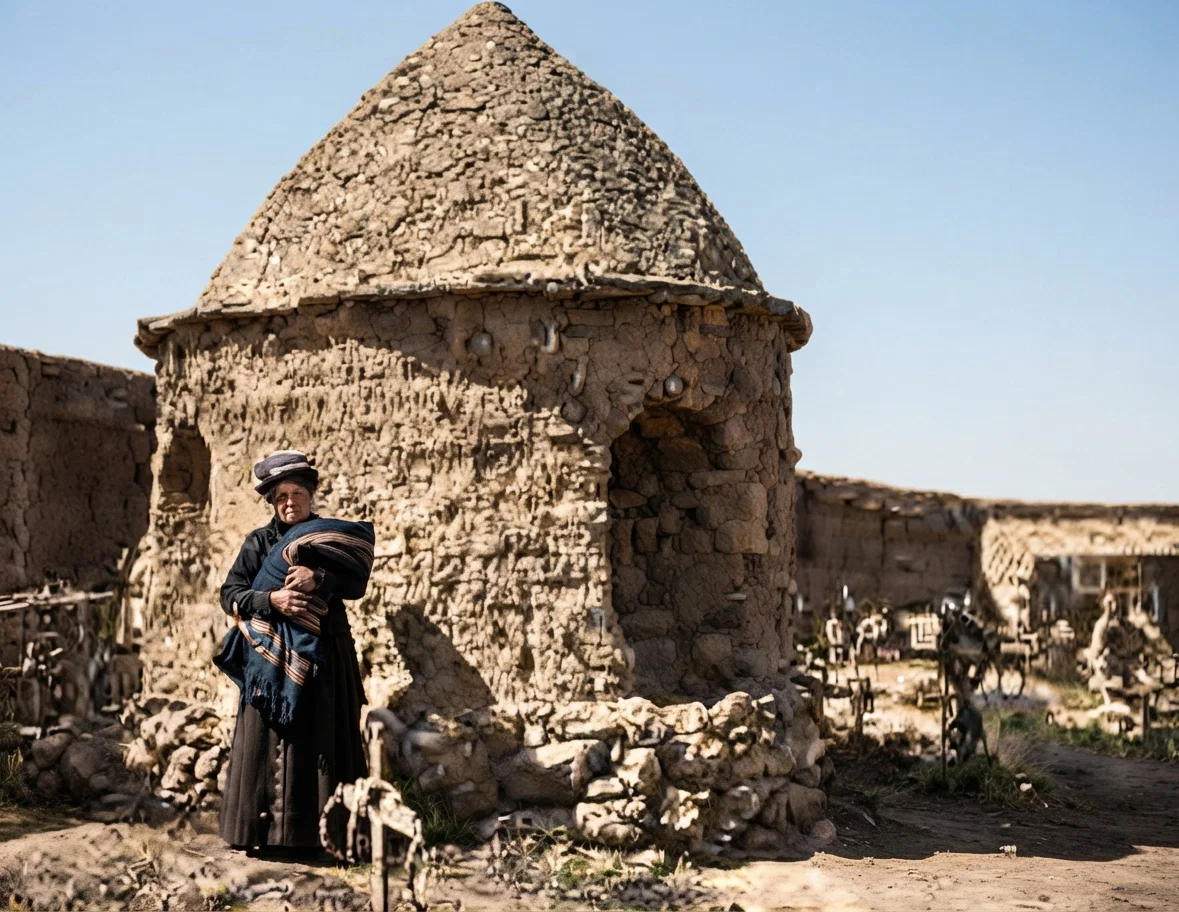
After the expiration of the period for which a vault is rented, the bones are taken out and placed in this charnel-house.