THE Printing Press "Thundered Night and Day"—Providential Freedom for the Development of the Reformation—One Lone Man Defeats the Emperor's Sword
WE left Luther at the Diet of Worms, as he closed his reply to the emperor. Soon after the meeting was over, he started for his home. When he was on this journey, masked horsemen took him from the carriage in which he was riding, and took him to the castle of Wartburg. "The pope had launched his bolt, the emperor had raised his mailed hand to strike, on every side destruction seemed to await the Reformer; at that moment, Luther becomes invisible. The papal thunder rolls harmlessly along the sky — the emperor's sword cleaves only the yielding air." (Wylie, book 6, chapter 7.) "In 1523, another diet came to a precisely contrary resolution than Worms; and after nine years, the emperor, on his return, found the disturbance, instead of being quelled, had attained gigantic proportions." (Hausser, pages 46, 47.)
A Providential Imprisonment
WHAT a working of Providence! But of what value is the Reformer shut up in a castle? Let us see. During the few months of his forced sojourn, he began a work which, if he had done nothing else, would make his name immortal to Germany and the world. This was the translation of the Bible, the New Testament of which was completed in 1523. "A considerable number of German translations of the Bible might be mentioned; but they have all become bibliographical curiosities, and nothing is known of their influence upon the nation.
Luther's translation, on the contrary, is a historical event, both for those who regard the book as their rule of faith, and for those whom it prevented from longer withholding it from the world. . . . What a great and difficult work it is to make the Hebrew writers speak German! . . . The high German style had to be created, and it was created by Luther's labor." (Hausser, pages 60-63.)
The possessions and consequent influence of Charles V have been rehearsed in a previous article, also the signs of unrest in Germany. "His difficulty was complicated by the growth of Lutheranism, in addition to which was the quarrel with France, which was intensified because Francis desired the position of emperor. Then, too, the Turk must not be forgotten; troubles in Spain and expeditions to Africa occupy his attention during this period. Thus the cause of truth has nine years of almost unlimited freedom." (See "Encyclopædia Britannica," ninth edition, article "Charles V.")
The political situation is complex. The war on Luther is a farce. Francis is looking toward Italy. Charles is in doubt about the plans of the pope. In the battle of Pavia, during February, 1525, the emperor wins a decisive victory over Francis, and imposes a severe treaty upon him. This frightened the pope, who in May joined the vanquished in an alliance against Charles. Francis was of course absolved from the oath to keep the treaty he had just signed with the emperor. Before Charles knew of this, a letter was sent to the German princes, in which he speaks definitely of suppressing heresy, and was then counting on the pope and Francis.
Saved the Protestant Cause
THIS move of the pope against Charles was the one thing that saved the Protestant cause. Think of it — two Catholic rulers and the pope himself in an alliance to forward what they called heresy!
Yet another item: In 1526, at a Diet in Speyer (or Spires), it was decreed that "every state shall live, rule, and believe so that it shall be ready to answer for itself before God and his imperial majesty." (Hausser, page 107.) This sudden turn in affairs was a hard blow for the emperor. In a letter to the cardinals in October, he said that he could not understand it, as he had been very devoted to the church. He could not, on those grounds. The pope was of the house of Medici, which has furnished more than one infamous ruler for Europe.
The pope was in difficulty from another quarter. This takes us to England for a short time. Henry VIII had married his brother's widow. As this was contrary to the canon law, a special dispensation from the pope was necessary to make the marriage valid. In a few years, he became tired of her, and applied for a divorce, which the pope would not give. Catherine, the wife of Henry VIII, was an aunt of Charles V, the emperor. The embassy from England came just after the victory of Pavia, mentioned in a previous paragraph. Instead of granting the request, the pope sent a legate to England to investigate the matter further. He was in no hurry, and in 1529 was recalled to Rome. This greatly angered Henry, who organized a court, and the divorce was given him.
Charles was furious at the alliance of the pope and Francis. Just as the emperor was offering his aid to France and the pope to put down the heretics, he received for answer a declaration of war from both. (See Hausser, page 111.) A large army of Germans and Spaniards appeared before Rome on the sixth of May, 1527. It was a wild scene, as plunder was one object of the attack. "The Germans mocked the sacred relics of Rome, and proclaimed Luther as pope." (Id.) Other complications arose; but we notice that in 1529, after a prolonged visit of Charles with the pope, a reconciliation took place, and the emperor was again ready to strike at the Reformation. But an event of utmost importance in Germany in the same year now claims our attention.358
Planning a Blow at Luther
As Charles could not attend in person the Diet of Speyer of 1529, he delegated his brother Ferdinand to preside. This was another large assembly of princes, with their retinues of knights and servants, and on the other hand, Philip of Hesse and Melanchthon. The diet was called, and informed about the business to be done. In a word, it was this: The edict of 1526 (the Diet of Speyer) was to be repealed. A motion could be made to this effect, the diet would be dismissed, and all could return home. An easy task this. But what did it mean? — "Religious freedom then, so far as enjoyed in Germany, was to be abolished."
The edict of 1526 suspended the edict of Worms regarding Luther and the cause for which he stood. By the repeal of that, the sentence passed upon Luther would come into operation, which meant that he would be put to death, and the Reformation be rooted out of the land. Persecution would of necessity follow. "The message, if passed into law, would have laid the rights of conscience, the independence of the diet, and the liberties of Germany, all three, in the dust." (Wylie, book 9, chapter 15.)
On the eighteenth, Ferdinand presided, as usual, and told the diet he was grateful for the work it had accomplished. He then turned to the elector of Saxony, Luther's protector, and told him the matter was decided, and they must submit to the majority. This was a rather abrupt answer, and the Protestant members retired to draw up a statement of their position. On the morning of the nineteenth, they appeared to present it; but Ferdinand had gone. He knew but one word, "Submit." Nevertheless, the "protest" was read. A few sentences are given, to illustrate the general character of this famous document:
A Memorable Protest
"WE are resolved, with the grace of God, to maintain the pure and exclusive preaching of His holy word. This Word is the only truth, . . . and can never fail or deceive us. . . . He who builds on this foundation shall stand. . . . For these reasons, most dear lords, uncles, cousins, and friends, we earnestly entreat you to weigh carefully our grievances and our motives. If you do not yield to our request, WE PROTEST, by these presents before God, our only Creator, Preserver, Redeemer, and Saviour, who will one day be our judge." — Wylie, book 9, chapter 15, "Historical Leaflets," No. I, full report.
"This protest, when we consider the long domineering and formidable character of the tyranny to which it was opposed, and the lofty nature and vast range of rights and liberties which it claimed, is one of the grandest documents in all history, and marks an epoch in the progress of the human race second only to that of Christianity itself." — Id.
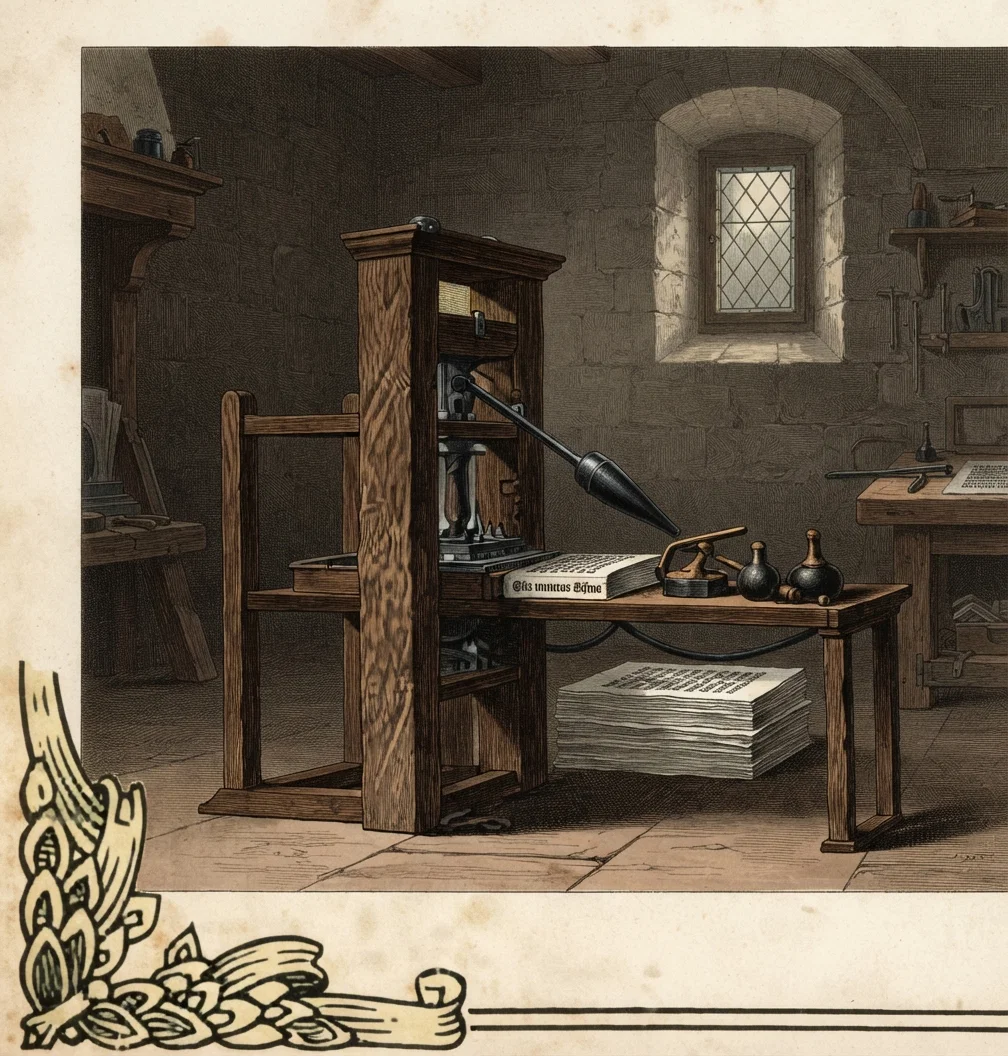
Think of it! Secular princes understanding so much of the gospel and the principles of Christianity within eight years after Luther's first public appearance! What greatly helped to make this possible? One sentence will answer this question: "The printing press, like a battering-ram of tremendous force, thundered night and day against the walls of the old fortress." (Id., book 9, chapter 3.) "In 1523, four hundred and ninety-eight publications, most of which were Protestant, were issued from Wittenberg." (D'Aubigné, book 9, chapter 11.) In this connection, it is interesting to remember that Luther spoke of the printing press as the "latest and greatest gift by which God enables us to advance the things of the gospel."
At the Diet of Augsburg, in 1530, Charles was present — the first time he had been in Germany since 1521. The whole situation was gone over, as he was very anxious for the uniting of the opposing parties. It cannot be too fully understood that Charles never comprehended the real principles at issue. As it would be too much of an insult to those concerned, Luther did not come to the meeting, but was in a castle not far away. A creed or confession was drawn up by Melanchthon at the request of the emperor. It was a rather mild paper that he presented, as he was inclined to give every possible point to his opponents. It should also be remembered that Luther would have made it much stronger, and emphasized the points of difference. This document forms the creed of the Lutheran bodies of to-day.
Resulted in Complete Religious Freedom
THE Statement of Charles, at the close of the Diet of Augsburg, that pending a council, the Protestants should submit to the pope, was to go into effect in six months. But spring came, and there was no execution of the threat. Charles was very anxious that his brother Ferdinand should be elected king of Germany; but even the Catholics opposed this. At this juncture, the Turks were coming up the Danube, and Charles was forced to sign a truce with the Protestants, to secure their much needed help in the campaign against the Turks. A large force was mustered, and started after the "on-coming infidel." For some reason, they did not offer battle, but retreated, as they had in 1529. This truce gave the Protestants complete religious freedom.
An Empire Powerless Before One Man
IN 1535, Charles conducted an expedition to Tunis; and in 1541, to Algiers. In 1540, a rebellion in Ghent was suppressed; but in 1542, he was again at variance with Francis, and continued thus until 1544. This gave another free period for the Reformation.
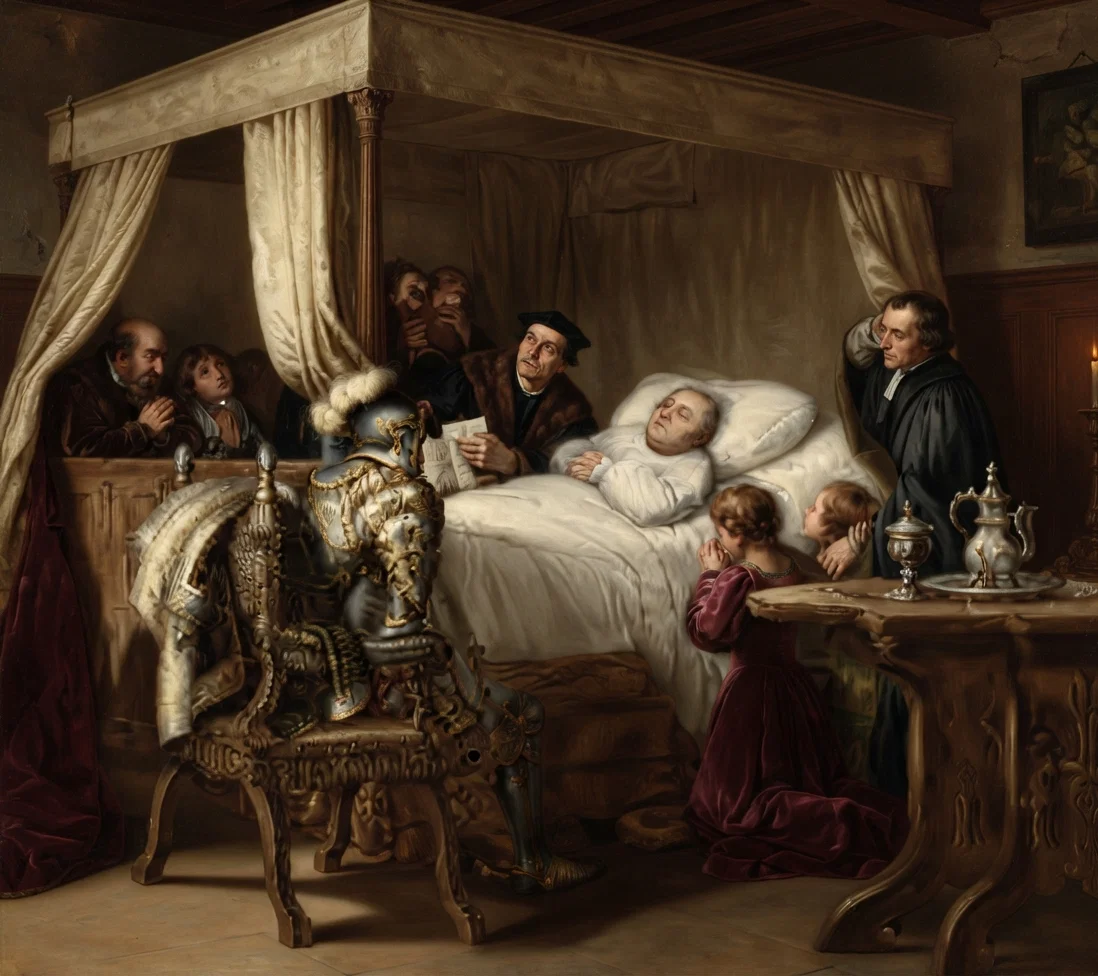
Luther was becoming very weary, and suffered much. On the seventeenth of February, he quietly passed away. A part of his last prayer is here given, as we believe the reader will be interested to read it.
"O God, my heavenly Father, and Father of our Lord Jesus Christ, God of all consolation, I give Thee thanks that Thou hast revealed unto me Thy Son, Jesus Christ, in whom I have believed, whom I have confessed, whom I have loved, whom I have declared and preached. . . . I beseech Thee, my Lord Jesus Christ, receive my soul." Three times he repeated these words, "Into Thy hands I commit my spirit; Thou hast redeemed me, O God of truth, and then gently passed away." — Wylie, book 12, chapter 4.
Luther died on his own bed. He had often said it would be a disgrace to the pope if he should so die. Ever since 1521, the law of the empire and the pope's anathema had hung over him, yet no harm came to him from either source. The emperor's sword could defeat France, the Turks, win victories in Africa, and even curb the papal policy, but was powerless against one lone man, the embodiment of the Reformation and of the principles of Protestantism.
The Treaty of Augsburg, 1555
REVERSES brought Charles to his knees in 1552. In fact, he was nearly taken prisoner by a German prince. His abdications followed, and he retired to a monastery in Spain. The peace gave full recognition to Lutheranism. But it was not satisfactory to either party, and was to a large extent the cause of wars that followed. This period of religious wars will be the subject of the next article in this series.