Finally to Be Driven from Europe — Will Take His Stand at Jerusalem — The Standing Up of Michael — Interesting Developments That Are Fulfilling Prophecy
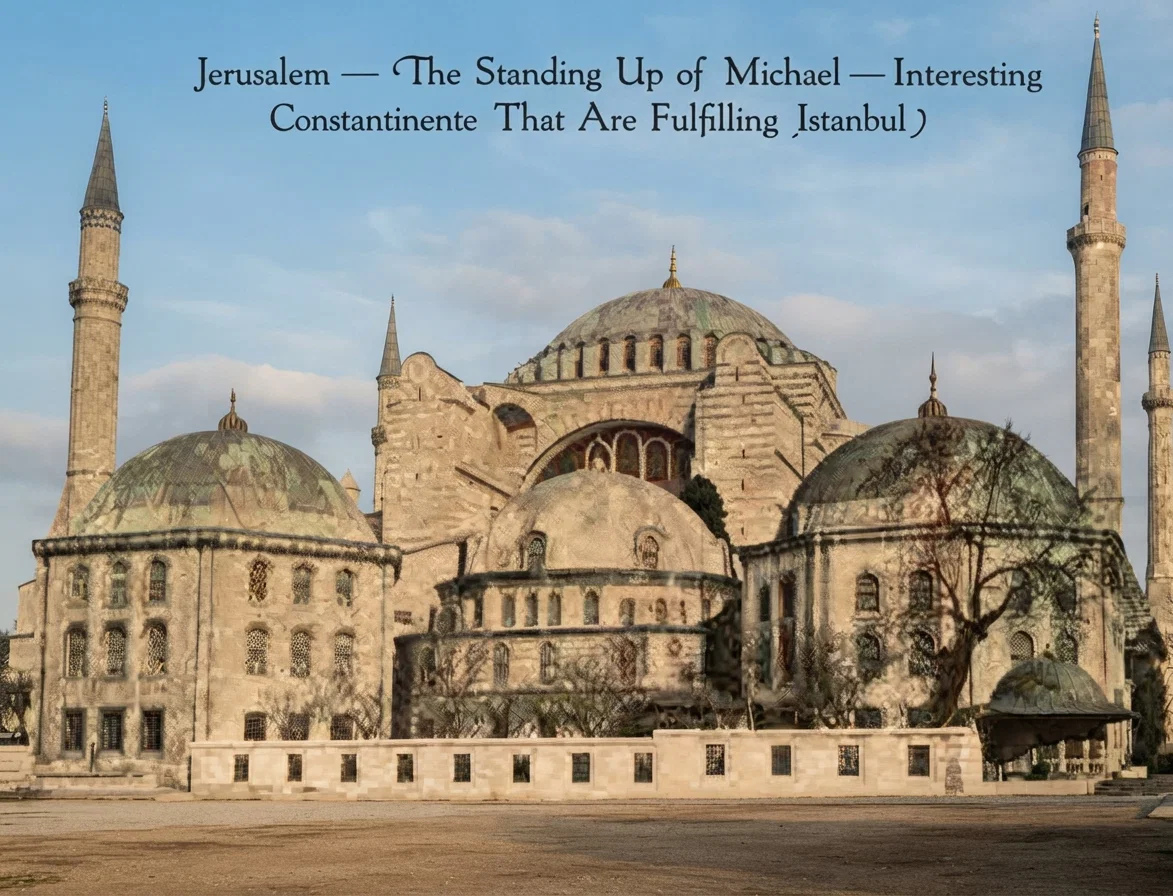
THE CHURCH OF ST. SOPHIA (HOLY WISDOM), IN CONSTANTINOPLE
WELL, the great conflagration has come at last, and to-day all Europe is wrapped in flames. With what frightful swiftness the little spark upon the middle Danube has flashed the huge tinder-box of an entire continent and set alight a dozen by-fires in Africa, Asia, and the far eastern seas! Think of it! Only a short month ago the world was settling down to its mid-summer siesta, wholly unconscious of impending ill. Kings and presidents were off yachting or paying party calls, diplomats were 'taking the waters' after the winter's gastronomic campaign, the people at large were making ready for their summer outings on seashore and mountain, while the annual stream of American tourists was fully under way.
THE GREATEST WORLD TRAGEDY
"Suddenly a cloud appeared on the southern horizon, a cloud at first no bigger than a man's hand, but swiftly covering the entire heavens and wrapping the earth in darkness, shot only by lurid lightnings. Then what a change came over the face of Europe! Its several peoples, steeled from their cradles to this very eventuality, sprang to arms, each man in the place marked out for him in his young manhood, made ready for the grim work by years of training beneath his country's flag. Smoothly and silently the well-oiled machinery of mobilization has set the stage, and the myriad players are already acting their respective parts in 'Europe-in-Arms' — the greatest tragedy of all recorded history."
Thus writes George Harvey, editor of the North American Review, in its issue of September, 1914, page 323.
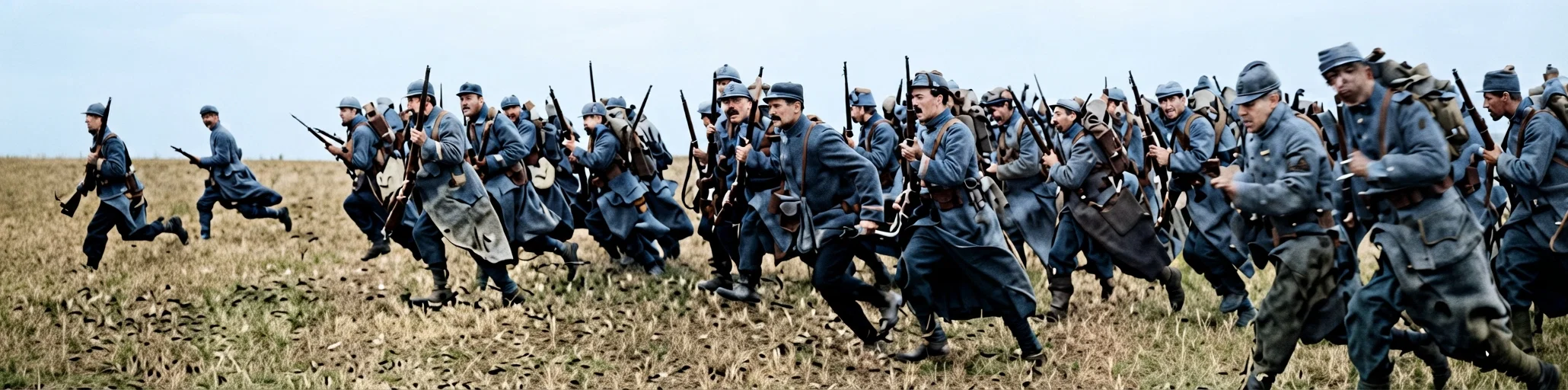
FRENCH INFANTRY ADVANCING ON THE DOUBLE QUICK
SUGGESTED SOLUTIONS
Many suggestions have been made regarding a possible solution of the present trouble, but there seems to be a universal conviction that "when the general peace comes, it must include a settlement of the Balkan question." So says Albert Bushnell Hart, professor of history, Harvard University, World's Work, September, 1914, page 13.
The settlement of the Balkan question must include the settlement of the Turkish or Eastern question. "The Balkan or near Eastern question has been one of the most complicated political problems of the world's history for half a century. . . . For four centuries and a half, ever since the conquering Turk crossed the Bosporus and took Constantinople, the grim contest has been to dislodge him by war and diplomacy." — American Review of Reviews, November, 1912, pages 539, 540.674
SEEKING COMMERCIAL CONQUEST OF ASIA
Constantinople, being the ancient seat of the later Cæsars, and possessing peculiar strategic importance, has been looked upon with jealous eyes by all the European powers.
"The great financial interests of Europe, the Jewish bankers and the immense industrial establishments, have been seeking the commercial conquest of Asia for a quarter of a century. This has been behind the Eastern question with the elimination of the Turk as a factor. Whatever great power possesses Constantinople attains enormous advantages for the domination of Asia, and holds the highways of trade to the near and middle East." — Louis E. van Norman, in American Review of Reviews, September, 1914, page 308.
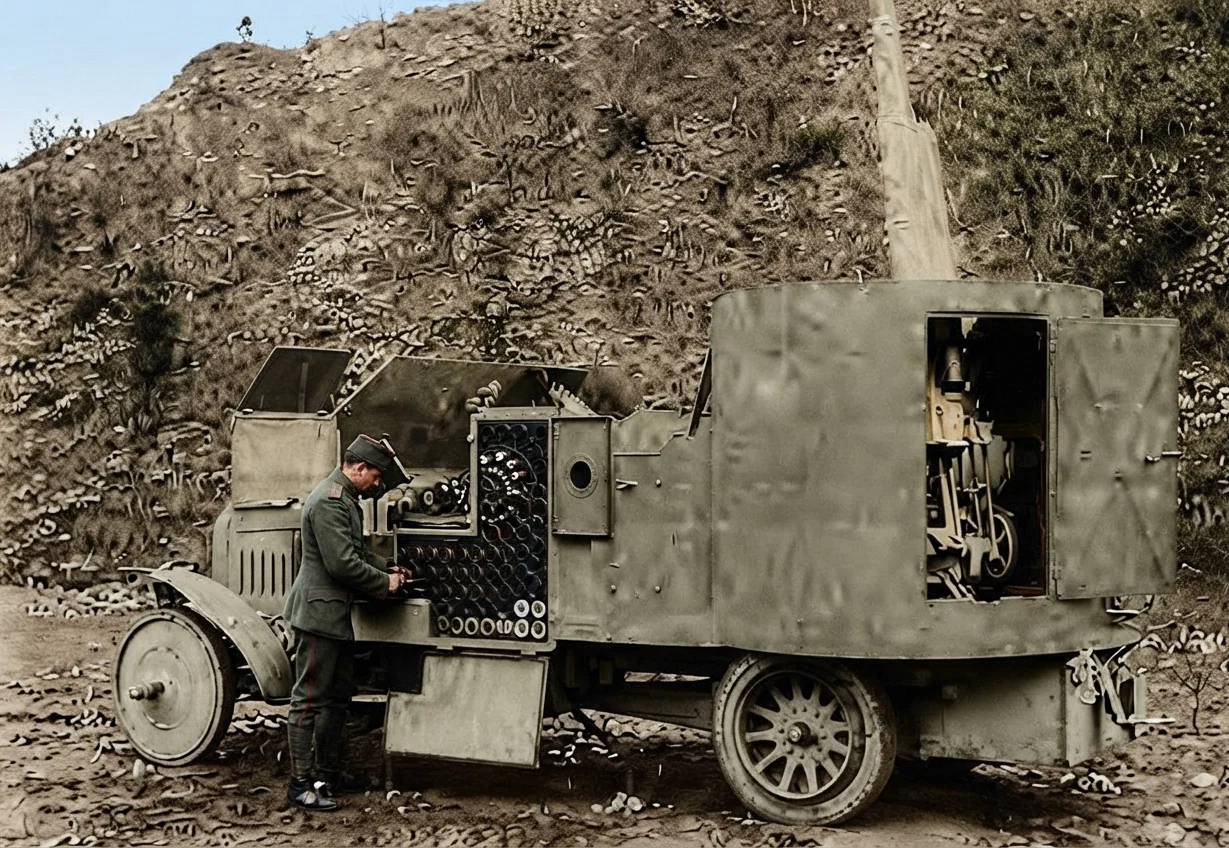
Photo by Paul Thompson
SEEKING CONSTANTINOPLE
For centuries Russia has pursued a steady and determined policy to secure possession of Constantinople.
"Ivan III married Sofia Paleologa, a niece of the last of the Byzantine emperors. Sofia never gave up her title of Byzantine empress, and she left to her descendants an unquenchable longing to establish themselves again at Constantinople. In so far as it was possible, Sofia transferred her prestige to Moscow and shared it with her husband. From this time the Byzantine coat of arms, the double eagle, appears on the Russian imperial seal. At the same time the outward ceremonial and pomp was increased. His son, Ivan IV, known as the Terrible, took the full Cæsarean title — Czar is a corruption of Cæsar." — Nevin O. Winter, in North American Review, September, 1914, page 380.
EASTERN QUESTION AND THE TURK
But what has the Eastern question or the future of the Turk to do with Scripture, and why so much concern about whether Turkey or some other power shall occupy Constantinople? More than twenty-four centuries ago, the Lord revealed to the prophet Daniel events that would take place among earthly powers in connection with the closing scenes of earth's history, as follows:
"And he shall plant the tabernacles of his palace between the seas in the glorious holy mountain; yet he shall come to his end, and none shall help him. And at that time shall Michael stand up, the great Prince which standeth for the children of thy people: and there shall be a time of trouble, such as never was since there was a nation even to that same time: and at that time thy people shall be delivered, every one that shall be found written in the book. And many of them that sleep in the dust of the earth shall awake, some to everlasting life, and some to shame and everlasting contempt." Dan. 11: 45; 12: 1, 2.
This is the conclusion of a long prophecy that begins with the Medo-Persian kingdom and closes with the establishment of the eternal kingdom and the resurrection.
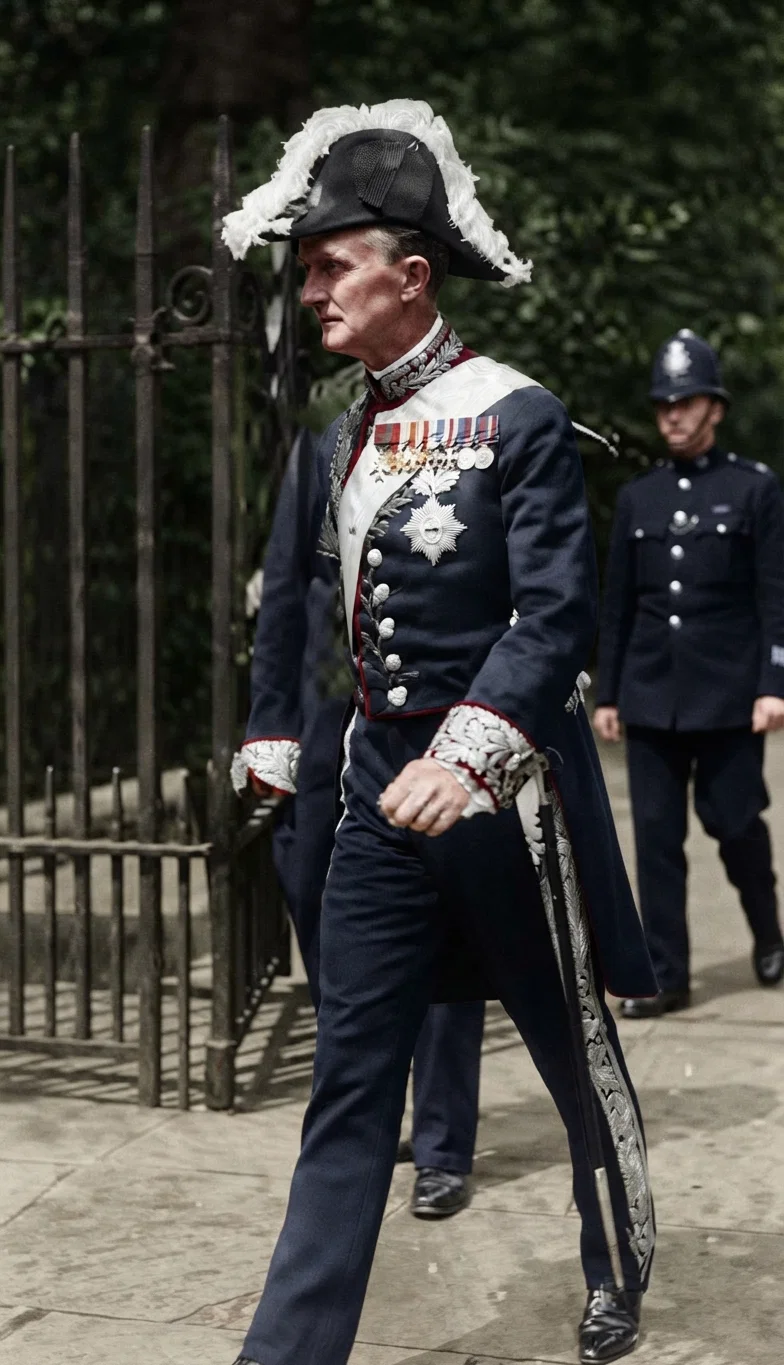
Boston Photo News Co. SIR EDWARD GREY, BRITAIN'S FOREIGN SECRETARY
THE KING OF THE NORTH
Soon after the death of Alexander the Great, his generals formed a compact for the government of his empire; but it was soon broken, and out of his conquests four kingdoms arose "toward the four winds of heaven." It was not long after this division had been effected till Cassander had succeeded in conquering all that portion of Alexander's kingdom lying to the north of Jerusalem, leaving but two of the original four divisions remaining. These are mentioned in the prophecy as "the king of the north" and "the king of the south." Since 1453 A. D., when Constantinople fell into the hands of the Turk, this power has ruled over the territory of "the king of the north."
The prophet declares, "He [the king of the north] shall plant the tabernacles of his palace between the seas in the glorious holy mountain; yet he shall come to his end, and none shall help him." Dan. 11: 45. This verse speaks of two events that all the world has looked forward to with great apprehension, and has expected to see accomplished at an early date — the driving of the Turk from Europe, and his coming to his end.
"IN THE GLORIOUS HOLY MOUNTAIN"
The "glorious holy mountain" is where Jerusalem is located. Zech. 8: 3. It is situated between the Mediterranean and the Dead Sea. According to the prophecy, the seat of government of the Turk is to be removed from Constantinople and located at Jerusalem.
During the progress of the Balkan war in 1912, many writers in the daily papers and the magazines freely expressed their conviction that the time had come for the Turk to leave Europe. While he was driven by the Balkan allies to the verge of Europe, their hands were stayed by the conference of the European powers in London, and the Turk still holds Constantinople.
Scarcely had the present war begun when it was freely predicted that this would end the stay of the Turk in Europe.
THE REAL BONE OF CONTENTION
The Los Angeles Times Magazine of August 8, 1914, says: "The real bone of contention in the present struggle is Constantinople. The day of the Turk in Europe is practically at an end, and some one will get that point of strategic importance in war and commerce. It must fall to either the Slav or the Teuton, and to which will probably be decided in the present struggle."
The same paper, under date of August 15, 1914, says: "The day of Turkey in Europe is nearly ended, and that long act in the drama of history is about to have the curtain rung down upon it, and the pronouncement made, 'Actum est.' [It is done.] There is the real impulse of the present war. Constantinople, a position of wonderful advantage, must fall into new hands, and all are wide open to catch the prize."
RUSSIA WILL DEMAND IT
Albert Bushnell Hart, professor of history, Harvard University, in World's Work for September, 1914, says: "In case of victory, the Russians will certainly demand Constantinople, which means that the Turk would be finally shoved out of Europe. England and France would probably favor that solution of the near Eastern question."
Whether or not the Turk will actually be driven from Europe as a result of the present conflict no one can tell. That it will be done soon we know, for God has spoken in the Word.
When driven from Europe he will "plant8
The Last Stand of the Turk
(Continued from page 2)
the tabernacles of his palace [locate his capital] at Jerusalem, and will come to his end, without one to help him." (Leeser translation.) The powers that drive the Turk from Europe, not willing to see the holy city made the capital of the followers of Islam, evidently decide to dispossess him of that sacred spot; but they find that the fires of Islamic fanaticism, though banked, are not dead, and its two hundred millions of adherents, extending "from Morocco to China, from Siberia to the Kongo and the Celebes," are aroused, but without avail; for, the help of former years having been withdrawn, he comes to his end in the "war of the great day of God."
MICHAEL STANDS UP
"And at that time shall Michael stand up." Dan. 12: 1. The word "Michael" occurs three times in the book of Daniel. In chapter 10, verse 13, He is called "the first Prince" (margin), and in the scripture under consideration He is said to be "the great Prince which standeth for the children of thy people." Speaking of Jesus, Peter says, "Him hath God exalted with His right hand to be a Prince and a Saviour." Acts 5: 31. And again he calls Him "the Prince of life." Acts 3: 15. Michael is Jesus.
In Jude, verse 9, Michael is called "the Archangel." But when Jesus comes to raise the dead, He speaks "with the voice of the Archangel" (1 Thess. 4: 16); and the Saviour says, "The hour is coming, and now is, when the dead shall hear the voice of the Son of God: and they that hear shall live." John 5: 25. Since Michael is the Archangel, and the voice of the Archangel is the voice of the Son of God, we conclude that Michael is Jesus Christ.
The phrase "stand up," occurring four times in this prophecy of Daniel 11, three times in verses 2-4, means the beginning of the reign of a certain king, and in this instance the beginning of the reign of Christ.
BEGINS HIS ETERNAL REIGN
Paraphrasing the scripture in the light of these simple deductions, we have the following: The Turk shall locate his seat of government at Jerusalem, and shall come to his end, and at that time Christ shall begin His eternal reign. The time of trouble to the nations, such as never was, will follow, and at that time all God's people, whose names are found written in the book of life, will be delivered.
The thought that Christ takes His kingdom and begins His reign at the beginning of this time of unparalleled trouble to the nations may seem strange to some, but it will be seen to be in perfect accord with the scripture.
Jesus spoke a parable concerning the kingdom of God, saying: "A certain nobleman went into a far country to receive for himself a kingdom, and to return. . . . And it came to pass, that when he was returned, having received the kingdom, then he commanded these servants to be called unto him, to whom he had given the money, that he might know how much every man had gained by trading." Luke 19: 12-15. Jesus receives the kingdom from His Father while yet in the far country. Dan. 7: 13, 14. With a golden crown upon His head, with the name "King of kings, and Lord of lords," written on His vesture and on His thigh, and seated upon the throne of His glory, the Son of God descends from heaven to deliver His waiting children. Rev. 14: 14; 19: 16; Matt. 25: 31.
WHEN THE CLIMAX IS REACHED
With the beginning of Christ's work as King upon His own throne, His work as our great High Priest and Advocate before the throne of grace ends, probation closes, and the irrevocable decree which fixes our eternal destiny goes forth: "He that is unjust, let him be unjust still: and he which is filthy, let him be filthy still: and he that is righteous, let him be righteous still: and he that is holy, let him be holy still. And, behold, I come quickly; and My reward is with Me, to give every man according as his work shall be." Rev. 22: 11, 12.
The awful scourge that like a mighty avalanche is now devastating the fairest parts of Europe is not the time of trouble of Daniel's prophecy, but it is undoubtedly the prelude to it. Soon the Turk will make his last stand at Jerusalem, the day of salvation will end, the great day of the Lord will begin, the time of trouble such as never was will suddenly break upon the world, the King of glory will appear, and the great conflict so long waged with sin will forever end.
WHERE DO WE STAND?
Dear reader, where will you be found in that great day? Your attitude toward the Saviour and His cause to-day may determine where you will stand then. Like the muffled tread of the thief in the night, the day of the Lord is stealing upon us. More suddenly than the present war broke over Europe, and with much more dire results, will the war of the great day of God break over all the world. The only safety in that hour will be found in Jesus.
"He that dwelleth in the secret place of the Most High shall abide under the shadow of the Almighty." Ps. 91: 1.