Untitled article

4%

Publishing Committee · Battle Creek, Mich. · Nov 26, 1857

FromReview and Herald, Vol. 11, No. 3.

Read the full edition

SYNOPSIS OF THE PRESENT TRUTH. No. 3.
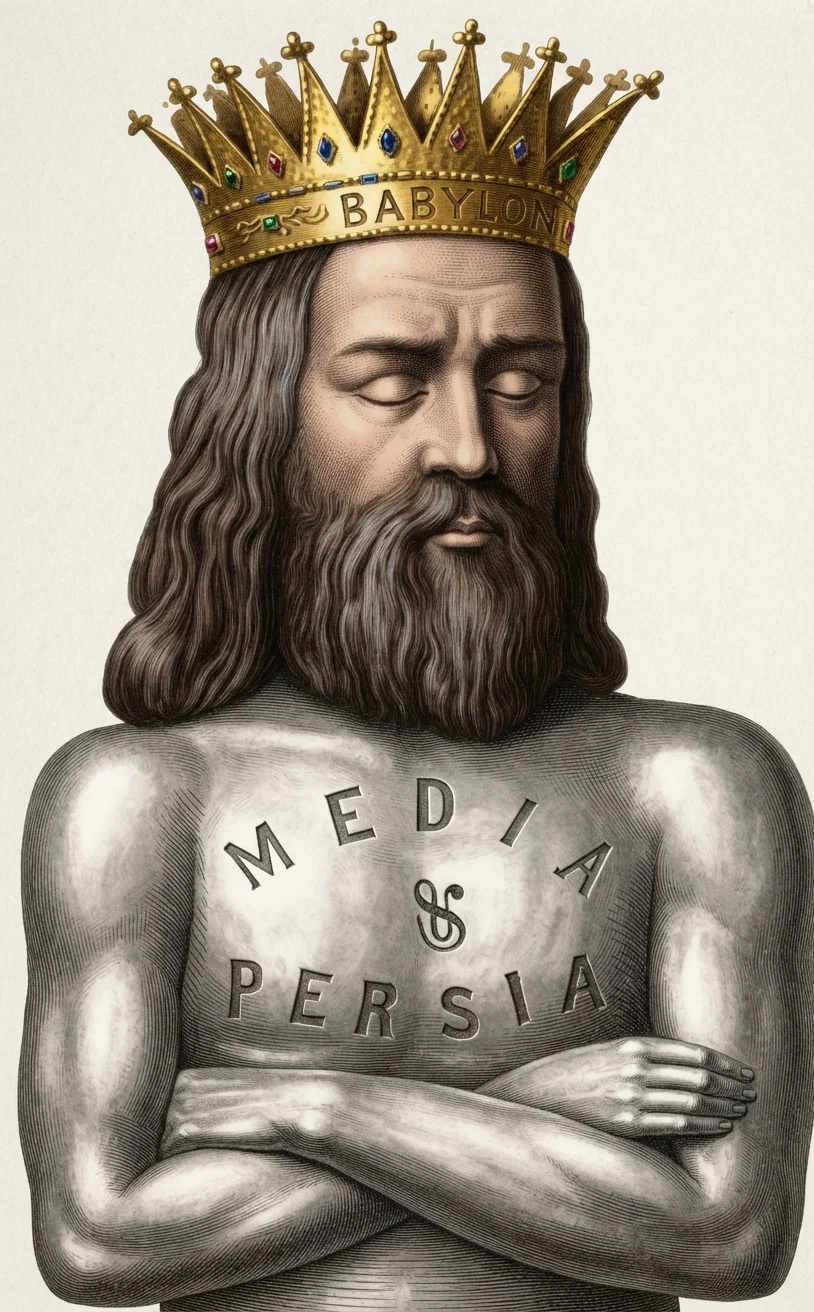
THE BREAST AND ARMS OF SILVER.
In the year B. C. 599 was born Cyrus, the famous founder of the Persian monarchy, of Mandana, daughter of Astyages, king of the Medes. His father was Cambyses, king of Persia. The year before this, Cyaxares was born to Astyages, king of the Medes, who is called in the book of Daniel [v, 31] Darius the Median. He was Uncle to Cyrus, and in due time succeeded to the throne of Media as Cyrus did also to that of Persia. We are thus particular here, because the Ram, under which we shall by and by find the Persian power symbolized, is said to have two horns, one higher than the other; the higher coming up last; and the facts here stated we shall find necessary to the application.
When Neriglissar came to the throne of Babylon, a violent war sprung up between him and the Medes, whereon Cyaxares, (or rather we will call him Darius, since he is so called in the book of Daniel,) who had just then ascended the throne of Media, called Cyrus out of Persia to his aid. In the first pitched battle the Assyrian army was routed and Neriglissar slain. He was succeeded in the kingdom of Babylon by Laborosoarchod, nine months, and then by Belshazzar, who was the last of the Babylonian, Assyrian, or Chaldean kings, as already noticed.
The war continued with uninterrupted success on the part of the Medes and Persians, under the command of Cyrus, who was generalissimo of both armies, until in the beginning of the sixteenth year of Belshazzar, Babylon was the only city that held out against him in all the East, and he sat down before that in a regular seige. This was no ordinary undertaking. Babylon was sixty miles in circumference, laid out in a perfect square, fifteen miles on each side. Its walls were impregnable, being eighty-seven feet thick, and three hundred and fifty feet high. The number of troops within for its defense was very great, and they were stored with all sorts of provision for at least twenty years. Thus furnished they scoffed at Cyrus from their lofty walls, and derided every effort he made against them. But he had been called by name and appointed to his work, by the Lord of hosts, over two hundred and sixty years before [Isa. xlv] and therefore, as an instrument of Providence though he knew it not, he moved on in his great undertaking. The predictions concerning the taking of Babylon, the people who should accomplish it, and the particular circumstances that should attend it may be found by those who take pleasure in noting the exact accomplishment of God's word, by a reference to the following passages: Isa. xiii, 17-22; xxi, 2; xlvii; Jer. l; li.
A little digression is here necessary, in order to explain how it was that destruction came so suddenly upon them ere they were aware, [Isa. xlvii, 11; Jer. l, 24,] while the king, and whole city were giving themselves to feasting, drunkenness, and revelry, in the most apparent security. Dan. v. Babylon was situated upon the river Euphrates, which ran directly through it; the banks of which being low, in order to secure the country from inundation, (as it overflowed every year when the snows melted upon the mountains of Armenia, the same as the Nile does Egypt,) high walls of brick and bitumen, of the same thickness as the outer walls, were built, on each side of it along its entire course through the city. While these were building, (their foundations being laid as low as the bottom of the river,) the whole river was turned from its channel into an artificial lake, forty miles square, prepared to the west of Babylon to receive it during this time. This being found convenient for the receiving of the surplus waters every year, to be from thence let out to water the country as needed, it was preserved till the time of Cyrus. In the walls above mentioned, against every street that crossed the river, on either side were gates of brass, and from them steps leading down to the water.
With these facts before us, we are prepared to understand the stratagem by which Cyrus, after a seige of nearly two years, at length made himself master of the place. He first dug a trench broad and deep around the city, and having ascertained that upon a certain day approaching, an annual festival was to be kept, in which the whole night was usually spent in revelry and dissipation, he resolved to take advantage of the disorder that would then prevail, and execute his scheme. He therefore stationed a body of men at the point where the river came out of the city on the lower side, and another where it entered, with orders that when they should find the water of the river so reduced as to make it fordable, they should rush into its channel, and thus enter the city. He then sent up a body of men with orders at a given time to break down the embankment at the head of the canal leading to the lake above mentioned, and thus turn the river that way, while at the same time he opened the trench which he had dug around the city, and turned the water of the river also into that. Thus its channel through the city was rendered almost entirely dry, and the soldiers entered in as ordered. But having got so far, what was now to be done? We have seen that high walls were built on each side of the river the whole length of the city, and every street closed with huge gates of brass; and there was no earthly power which could then be brought to bear, that could scale those walls or force those brazen gates. But Providence had removed all difficulty here; for it so happened in the confusion of that night of impious feasting, that these gates were all left open. It was doubtless in reference to this that the Lord had spoken by the Prophet, I will “open before him (Cyrus) the two-leaved gates; and the gates shall not be shut. I will break in pieces the gates of brass, and cut in sunder the bars of iron.” Isa. xlv, 1, 2. Thus the army of Cyrus found free entrance into the very heart of the proud city of their enemy.
From this scene we must now step a moment or two into the palace of the king. “Belshazzar the king,” says Daniel, who was there to witness it, “made a great feast to a thousand of his lords.” Chap. v. And when he had brought forth the vessels of gold and silver, which had been taken by his grand-father Nebuchadnezzar from the temple of the great God at Jerusalem, and was drinking wine from them with his princes, wives and concubines, and praising their gods of gold and silver;—suddenly there flashed out upon the wall the appearance of part of a man’s hand, tracing mysterious characters, of fearful import. Then did the king’s countenance change, the joints of his loins were loosed, his knees smote together, and no doubt his conscience smote too. The astrologers were loudly called for to interpret the writing; but here they were foiled as they were before on the dream of Nebuchadnezzar; and Daniel is called in to explain the mystery. Then the hand vanished; and the writing that was written had this interpretation: “MENE; God hath numbered thy kingdom and finished it. TEKEL; Thou art weighed in the balances, and art found wanting. PERES; Thy kingdom is divided and given to the Medes and Persians.” And while the recording angel was writing out this sentence before the eyes of the guilty king, the legions of the Medes and Persians were pouring in through the two-leaved gates of the river walls, to its execution. They met at the palace as previously concerted, and upon the guard’s opening the gate to ascertain the cause of the uproar without, they rushed in and slew the king valiantly fighting for his life. “That night was Belshazzar king of the Chaldeans slain,” says the simple and comprehensive record of the scripture, “and Darius the Median took the kingdom.” We fear that not to Belshazzar alone is the sentence applicable, “Thou art weighed in the balances and art found wanting.” How many of us, dear readers, should we be weighed in those scales by which God estimates the moral worth of mankind, would be found wanting?
Thus fell Babylon, and with it the Babylonish empire, B. C. 538, having continued from the reign of Nabonassar who founded it, two hundred and nine years.
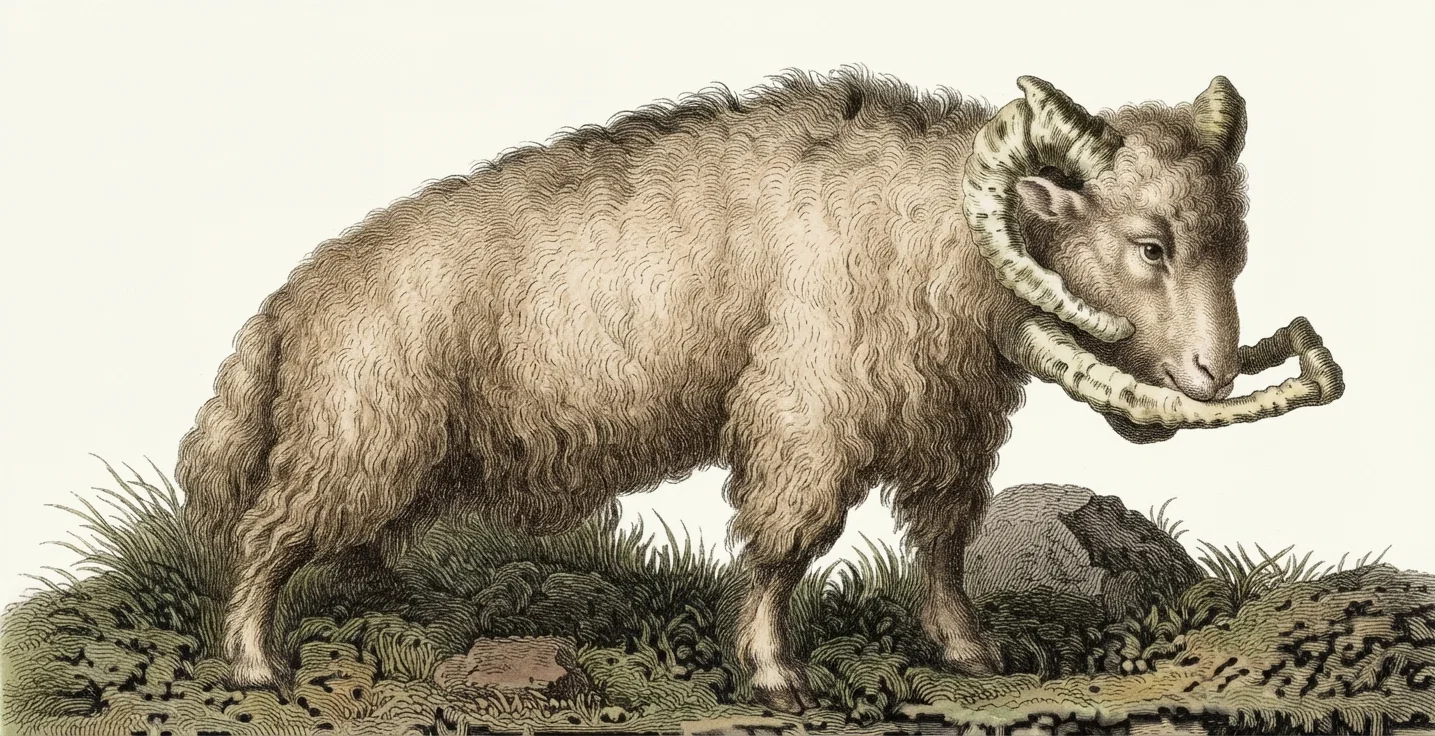
“After thee,” said the Prophet to Nebuchadnezzar, “shall arise another kingdom inferior to thee;” and we have now reached it. Hereby we are brought down in the great image, to the breast and arms of silver; [Dan. ii, 32, 39;] and in the series of the four great beasts, by which the same governments of earth as were signified by the four divisions of the metallic image, were again shown to Daniel, [chap. vii, 5, 17.] we have reached the second, and have before us—the bear.
But as if the Lord would impress the truth upon the hearts of men with line upon line, precept upon precept, the great events of the world’s history from this point onward, are by yet another series of symbols brought again before us.
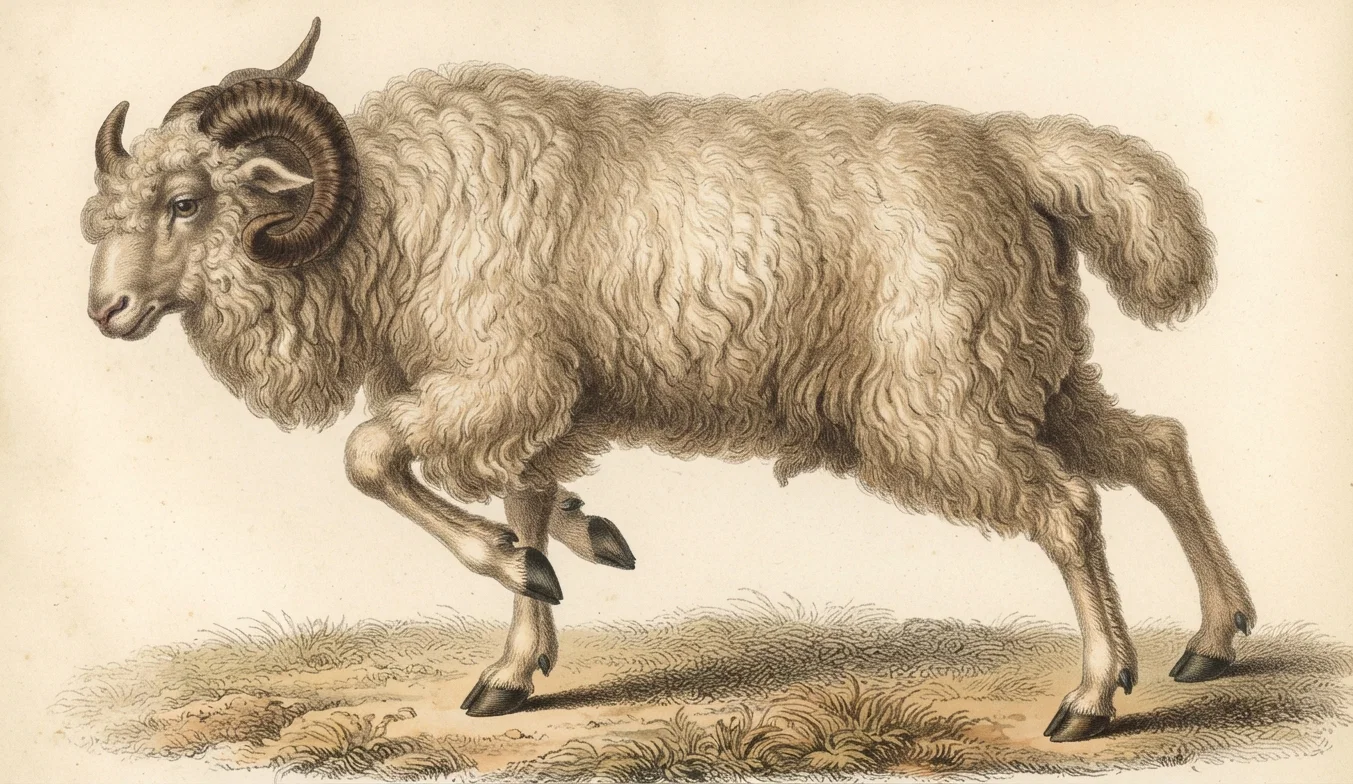
In the third year of the reign of Belshazzar, Daniel had another vision in which he saw a Ram, He-goat, and Little Horn. Dan. viii.
This Ram, with his two horns, was declared plainly by Gabriel to the Prophet, to be the kings of Media and Persia; [verse 20;] which kingdom being now under consideration, we will notice a few of his distinguishing features and the fitness of their application. His two horns were high, says the prophetic description, and the higher came up last. This has been already alluded to and we need only to say further, that the two horns denoted the two divisions of which the empire consisted, namely, the Medes and Persians; like the two arms of the image: that it was against the Medes that war was at first waged, by Neriglissar, whereupon Darius, king of the Medes, called Cyrus to his assistance as an ally, who immediately responded, by coming to his aid at the head of an army of thirty thousand Persians. And during the whole war, until the complete subversion of the Babylonish empire, the regal power was in reality vested solely in Darius, while Cyrus was only commander-in-chief of the combined armies. Accordingly upon the taking of Babylon, he placed his uncle Darius upon the throne; and hence we read in Daniel that Darius the Median took the kingdom, although Cyrus had performed all the work of its subjugation. But shortly after this event he married the daughter of Darius, and with her received the kingdom of Mediain reversion after her father's death. He died about two years after the taking of Babylon; and Cyrus, having succeeded his father a short time before in the kingdom of Persia, now added Media also to his other dominions, and became absolute monarch of the whole. “The higher came up last.”
Daniel saw the ram pushing westward, northward and southward. This may well refer to the operations of Cyrus from his first coming out of Persia to the taking of Babylon, while he lay abroad in the field pushing his conquests in all those directions, till he had at length subdued, says Prideaux, “all the East from the Egean sea to the river Indus, and thereby erected the greatest empire that had ever been in Asia to that time.” The ram was not seen pushing eastward; for Persia lying to the east, its conquests were chiefly towards the west; as it is said of the bear; he raised up on one side, that is, extended his dominion chiefly in one direction. The three ribs which the bear had in its mouth, are interpreted to mean the three kingdoms of Babylon, Lydia and Egypt, which the Persians conquered and grievously oppressed. The bear may well represent the nature of the Persian kingdom; for says Paxton, “The Syrian bear in strength and ferocity scarcely yields to the lion; and ancient historians stigmatize the Medes and Persians as the greatest robbers and spoilers that ever oppressed the nations:” but the ram with two horns was its well-known national emblem. It was usual for the Persian kings to wear a diadem made like a ram's head, of gold.
Cyrus from the time that he took on him the whole government, on the death of Darius, B. C. 536, reigned seven years. In his first year he issued his royal decree for the re-building the temple at Jerusalem, and the return of the Jews to their own land. From the taking of Jerusalem by Nebuchadnezzar B. C. 606, to this year (536) had been just seventy years, the length of the captivity which God had threatened to his people; and as they terminated, he remembered mercy in the midst of judgment, and put a period to their bondage by moving upon the heart of the king of Persia to grant them a restoration to their own land.
Cyrus was succeeded by his son, Cambyses, who reigned seven years and five months. He is called in Scripture Ahasuerus.
After the death of Cambyses one of the Magi, called Smerdis, usurped the kingdom, feigning himself to be Smerdis the brother of Cambyses, who had been slain. But the fraud was discovered and he slain after a reign of only seven months. He is called Artaxerxes in Ez. iv, 7.
Darius, a Persian nobleman, called Darius Hystaspes, then took the kingdom and reigned thirty-six years. From him the succession of Persian kings and the length of their reign is as follows:
1. Xerxes, who reigned twenty-one years. He is mentioned in Dan. xi, 2, as one who should stir up all against the realm of Grecia. He went against Greece with an army of five millions.
2. Artaxerxes Longimanus, who reigned forty-one years. His reign commenced B. C. 464. His seventh year would therefore be B. C. 457; and in this very year Ezra received his commission for the restoration of Jerusalem. Ez. vii. We shall notice this again when we come to treat upon the seventy weeks and twenty-three hundred days. Dan. viii; ix.
3. Darius Nothus, nineteen years, to B. C. 404.
4. Artaxerxes Mnemon, forty-six years, to B. C. 358.
5. Ochus, twenty-one years, to B. C. 337.
6. Arses, two years, to B. C. 335.
7. This last brings us down to the reign of Darius, who was the last of the Persian kings, and reigned four years, to the fatal battle of Arbela, B. C. 331. The character given of this Prince, says Prideaux, is “that he was for his stature and make of his body the goodliest person in the whole Persian empire, and of the greatest personal valor of any in it, and of a disposition mild and generous; but having the good fortune of Alexander to encounter with, he could not stand against it. And he had been scarce warm on the throne before he found this enemy preparing to dismount him from it.” This rough goat that now cometh from the west upon the face of the whole earth, will claim attention in our next. (To be Continued)