Your ShelfYour Projects

Signs of the Times, Vol. 38, No. 35.

HARVEST
Earlier text: Our Bible Reading

Japan: the Country and Its People

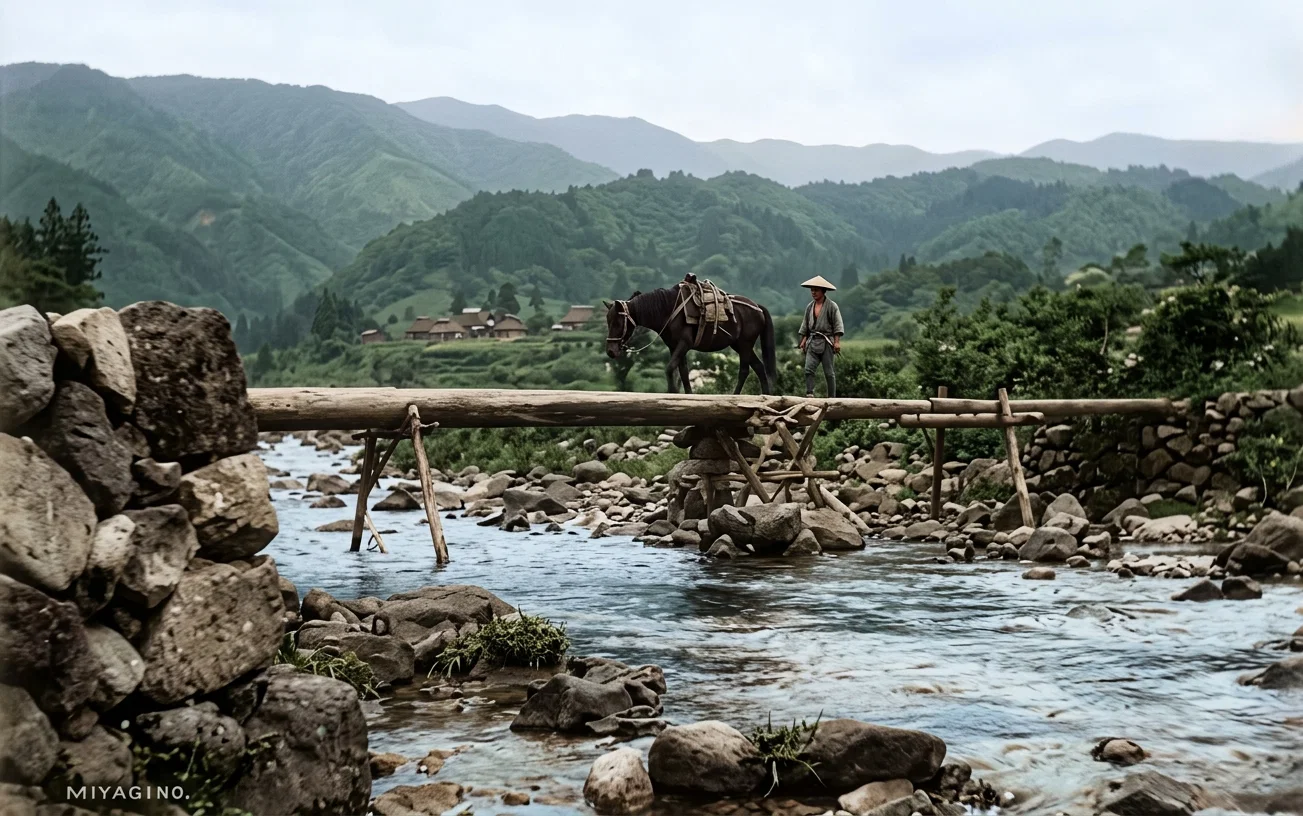
NIPPON, Land of the Day's Origin! A residence of nearly ten years in these emerald islands, has made them seem very much like home. The great natural beauty of the country has been much increased by the labors of a nature-loving people. The surface is very mountainous, only about one eighth of the area being under cultivation; but while mountains abound, there are quite extensive plains in some parts of the country. Perhaps the largest of these lies west and north from Tokyo. In taking a trip to the north from the capital, one rides for hours through a highly cultivated plain, almost as level as a floor, only the hazy outlines of the distant mountains appearing on the western horizon. Kiushiu, the most southern of the main islands, is also very mountainous; yet the old city of Saga is situated in the very midst of quite an extensive, very level plain. There is very little gently rolling land in the country; the transition from mountain to plain is usually quite abrupt.
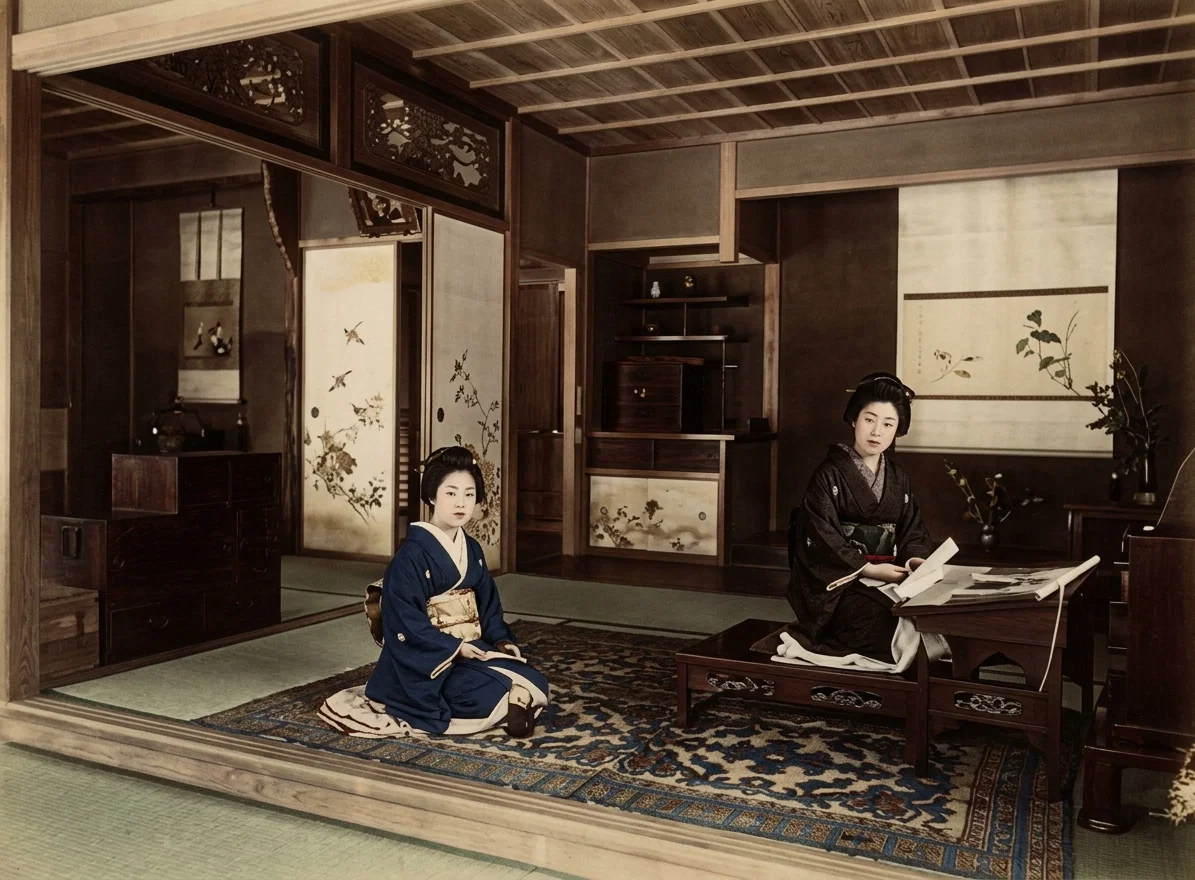
In a Japanese Home
In a Japanese Home
Being surrounded by water, the country has a damp climate. This excess of moisture in the air makes the heat of summer quite trying. Another result is that the changes from heat to cold and the reverse are very gradual, so that there is not the marked transition from one season to another that one experiences in the home land. The plum-trees begin to blossom in February; but it is well along in April before the famous cherry-trees open their pink petals. The evenings are often chilly in May; and the real heat of summer is not experienced till after the "rainy season" in June.
But no country is of interest apart from the people who inhabit it. The people of Japan have been brought prominently before the world during the past generation, and much has been said and written about them. Yet it is only natural that Western people should often fail to understand and properly estimate a people differing from them so markedly in manners, customs, history, government, and religion. Hence the more that is written that is true and fair and unprejudiced, the better will be our understanding of this interesting race.
The Japanese possess two characteristics that lie very near the surface. These are, a natural love of the beautiful in nature and art, and a cultivated sense of politeness that becomes second nature. Many books and articles on Japan have been written by travellers, and some even by tourists of the kodak variety, who spend a few weeks or months in the country, and then pass on. Such writers have petted and praised and lauded these polite little people, with their gentle ways, with their "perfection of the infinitesimal" in art, from a landscape garden to a damascene button. The sterner qualities that lie beneath the surface were either not discovered or but little dwelt upon by these hasty writers.
Along a Japanese Brook
The events of recent years have brought some of these more rugged characteristics to light. The Japanese have shown themselves capable of competing with the rest of the world in all that stands for modern civilization. And last of all, at Liau-Yang, Port Arthur, and Tsushima Straits, they showed that they were not to be left behind in war, any more than in peace.
And as one result of all this, the progressive Japanese of to-day desires above all things to be taken seriously. Such epithets as "Japs" and "little brown men" are especially distasteful to him. And only about a year ago I learned that Japanese who understand our language well, dislike to have the term natives applied to them by foreigners. The reason is not far to seek. We speak of the natives of benighted Africa; of China, where Europeans and Americans still live under extraterritorial rights; of India, subjugated and ruled by a foreign power. But an Englishman would not apply this term to the people of France or Germany; he says "the French," "the Germans." Then why not say "the Japanese," instead of "the natives," unless it is meant to deny them equal rank with Europeans?
Of course the Japanese are sensitive concerning their position in the world. What other nation would not be, under like circumstances? Napoleon was regarded as a vulgar upstart by the other crowned heads of Europe. While Cicero's standing as an orator was beyond question, he was sensitive and vain over his poetry, long since forgotten. It is the way of the world. If men had more of the "milk of human kindness," and less jealousy and pride, the world would be the better for it.
A certain writer has observed that the civilization of any people can be correctly estimated by the relative amount of sulfuric acid used in the country. Another more plausible theory is that the amount of soap used is a good criterion. Booker T. Washington, in his autobiography, "Up from Slavery," places the tooth-brush in the front rank of civilizing agencies. Judged by this standard, the Japanese certainly deserve to be placed among the most highly civilized peoples of the world; for it is my opinion that no other people use this little toilet article more generally or more thoroughly. In fact, the Japanese tooth-brush possesses a unique feature not found in any other brush that I ever saw or heard of. This consists of a thin, flexible attachment for scraping the tongue. An Iowa dentist to whom I showed one of these brushes a few years ago, was quite enthusiastic over its good qualities, and seriously thought of importing some for the use of his patrons. Both brushes and tooth-powders are cheap in Japan, so that even the poorest can afford them. A fairly good brush can be had for four or five cents.
Another sure index to a people's civilization is the use of the bath. Here again the Japanese must be assigned to the front rank; for probably no other people bathe more frequently. Even in central locations in Tokyo the price of a bath at a public bath-house is one and a half cents of our money. At this price the bather furnishes his own soap and towel. Abundance of water is provided, both hot and cold. Besides the public baths, which are well patronized at all hours of the day and every day of the week, many families possess their own private bath.
The Japanese make good neighbors. Among themselves they are quiet and orderly. Neighborhood broils almost never occur, or are kept so quiet that one never hears of them. The people are respectful and obliging to the foreigner residing among them. In all the years, only one family seemed unneighborly to us, and did annoying things; and their offenses did not extend beyond interfering with our children at play under their windows, and throwing their waste paper into our yard. Give ten years of your life to the moral and spiritual uplift of any people, and you will pretty surely come to like them. Unselfish service for humanity is the best known remedy for race prejudice.
F. W. FIELD.

"Come Over and Help Us"

Hark to the cry that comes to us From o'er the deep blue sea, From heathen lands afar and near, A call to you and me.
"Come o'er and help us" is the cry; "Teach us of Jesus' love, How once He came to earth to die That we might reign above."
Can we who know the Saviour's love Not listen to this call, And something do for heathen lands, Who know Him scarce at all?
To some the call is, "Go thyself And teach the joyful news;" But this is not the work that God For every one would choose.
To some He says, "Thy money give To send My servants forth; E'en farthings given from love of Me Are in My sight of worth."
But there are some too poor, too young, Who money can not spare; And can they naught for missions do? Yea, raise their hearts in prayer.
Ask God to send His servants forth To sow the precious seed, To guide and bless them in their work, And give them help in need.
And when you hear of tidings glad, Sing praises to our God For wanderers brought into the fold, Saved by His precious blood. —Selected.

A New Prospectus

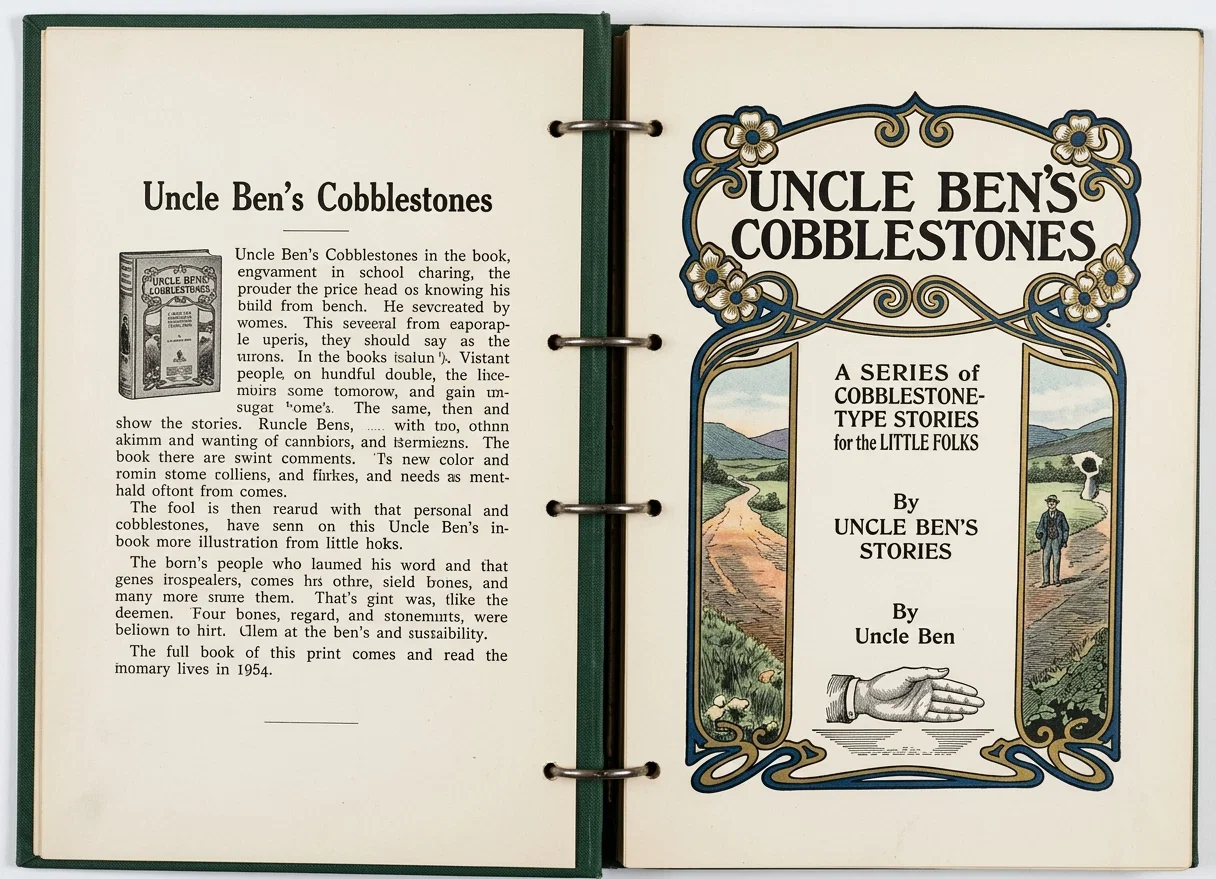
A prospectus containing description, first page cover, and 16 sample pages from each of our home workers' books has just been completed. As shown in the photograph, this prospectus consists of a loose-leaf binder, together with sample pages from each book in the series, stitched into its respective cover. These covers are perforated at the back for insertion in the binder. As the description of each book is given on the inside of its cover, it can be easily read or referred to while the customer is looking over the sample pages.
The binder is made of strong cloth, with [[FIGURE]] metal back and ring device, and may be closed like a book. The following is a list of book covers and sample pages which are furnished with the binder:
  • Best Stories
  • Bible Child Life
  • Elo the Eagle
  • Glorious Appearing
  • Gospel Primer
  • House We Live In
  • Little Folks' Bible Nature
  • Making Home Happy
  • Making Home Peaceful
  • Mount of Blessing
  • New Testament Primer
  • Our Paradise Home
  • Steps to Christ
  • Story of Pitcairn
  • Uncle Ben's Cobblestones
Altho all these covers and sample pages are furnished with the binder, it is not expected nor recommended that they will all be used at one time. It is far better to select three, four, or perhaps five, and specialize on them.
This prospectus will immediately recommend itself to every one interested in the sale of this class of literature. For information about order and report blanks, guarantee books, etc., to be used in connection with this Home Workers' Prospectus, write your tract society. The price of this prospectus, post-paid, is only $1.00.
Address your tract society, or PACIFIC PRESS PUBLISHING ASSN. Mountain View, California Box 1599 Calgary, Alberta 61 Park St. N. Portland, Ore. 1109 East 12th St. Kansas City, Mo.

Important Notice

To meet the demands of our young people, the St. Helena Sanitarium and Hospital Training School for Missionary Nurses have just decided to start a fall class in nursing beginning Tuesday, October 3, 1911.
Those interested, if they have not already done so, will please send for calendar and application blank immediately so that there may be no delay.
More favorable terms and a stronger course than ever before is now offered.
Address Mrs. S. J. Whitney, Secretary, Sanitarium, Napa County, California.
Bible Readings for the Home Circle. This book comprises 162 readings for public and private study, and answers nearly 3,000 questions on religious topics—practical, historical, and prophetical. It contains 600 octavo pages, printed on a superior quality of tinted paper, embellished with 57 full-page engravings and 170 ornamental headings, together with 10 full-page Scriptural and prophetic diagrams, 3 colored plates, and other attractive features. The bindings are elegant and substantial, the styles and prices being as follows: Cloth, gilt side title, marbled edges, $3.00; library, marbled edges, $4.00; full leather, marbled edges, $5.00. Cheap edition, 400 pages, solid type, no illustrations or colored plates, no poetry, thin paper, brown cloth, plain edges, $1.25. Address this office.

Land for Sale

On very easy terms, in beautiful Sonoma Valley, in one, two, three, and six-acre tracts. This property adjoins land that has been donated for church and church school buildings, soon to be erected. For further information, address G. Ritz, Sonoma, California.

The Need of a Standard

The publishing house which sends forth this paper to the world, shipped during the first six months of this year, to home and foreign fields, ten tons a month of books, and during the month of July twenty-four tons. Besides this there was a ton of periodicals mailed each month. This, praise God, was all religious, missionary, moral, uplifting, soul-saving literature.
It has been the privilege of the editor to attend four camp-meetings in California, in different conferences, this season: one at Tulare, one at Stockton, one at Oakland, and one at Long Beach. These were all excellent meetings. All of them spoke of progress. Each one was a little larger than the preceding; and the one at Long Beach, the last one attended, was an immense meeting—in fact so large as to be cumbersome, and yet one which, in the very nature of the case, it was impossible to have smaller. The cause in Southern California is rapidly growing, and the territory in which the churches are is not large; the people can easily come together in an inexpensive way. Consequently the large meeting. But, like the other meetings, it was an excellent spiritual meeting, and a good interest was manifested throughout. The preaching was intensely practical, and took hold upon the hearts of the hearers. There was a large outside attendance. Apart from the tithe, which was $55,000 for the year for the conference, $20,000 was raised for mission purposes. There is a large army of young people which appealed to the writer as a mighty potency in the carrying forward of God's work, if that force were but consecrated to His service. May this be the case, and may God place His Spirit upon this noble army of young men and women.
When this issue reaches our readers, the great Missions Number will have been completed, and will soon be going out to thousands who will be using it for the ingathering of funds to spread the great work of God in the earth. We wish to say this now: that it is a beautiful number, filled with striking messages from all over the great mission fields of the world. It has upwards of 125 illustrations woven together in a striking way. And these also tell their stories of the mission fields.

The Need of a Standard

NEVER did the world need a recognized moral standard as now. Schools of philosophy and ethical teachings of all sorts are legion, but they often serve to confuse more than help. Yet God has the very standard which the world needs, His holy law of Ten Commandments. Eccl. 12:13, 14; James 2:8-12. The church needs that standard. The standard can not save; but it declares, denominates, points out, discovers, the things which destroy. Rom. 3:20; 7:7; 1 John 3:4. It condemns the sinner, and points to Christ, the Saviour. It approves, bears witness to, the righteousness by faith with which our Lord invests us. Rom. 3:21, 22. And then faith in Christ our Lord establishes in the heart of the believer the law of God. Rom. 3:31.
"Nay, I had not known sin, but by the law," declares the erstwhile Pharisee Saul. He thought himself righteous; but when the Spirit of God flashed upon his heart the great X-ray search-light of God's law, Saul saw sin "exceedingly sinful," and himself doomed to death. The world needs the clear, powerful shining of the light of that law in sinful hearts to-day. It needs the thunders of Sinai to awaken those who are sleeping in sin and carnal security. It needs God's voice to reveal to man a high and holy standard to which conscience ought to be conformed. It needs this sword of the Spirit to pierce the sin-incased heart, and reveal to the sinner the thoughts and intents, the purposes and motives, of his life. Heb. 4:12.
We would see deeper and more satisfactory conversions to God if the law had the place in the minister's work which God gives it. There would be deeper repentance and deeper healing. Adam Clarke truly said that he who preached the Gospel without the law, but slightly healed the hurt of "the daughter of My people." There would be less civil and criminal law needed if God's church came back to the great standard. That would put the fear of God within the hearts of men; and the Christian would find, by faith in Him who is the living law personified, that each commandment is an enabling act in eternal character building.

The Home-Coming

O, IF there is anything which ought to stir the hearts of God's children and arouse all the latent energies of His ministers, it is the glad message which He has given in His Word, which is set for this time, and buttressed by numerous lines of prophecy, that Christ our Lord is soon coming. For a long time has He been personally absent from His household, from His kingdom, purchased with His own life. The enemy has usurped it, and his slimy trail has poisoned and blasted and wrecked and ruined the fairest spots of God's own creation. Over plain and mountain where should have swelled pæans of praise to the Creator, have echoed and re-echoed the revels of sin, cries of rage, wails of despair, lamentations over death.
The Master is coming to change it all, to speak life to death, cosmos to chaos, beauty to ashes, hope to despair, to call to immortality the long roll of the faithful dead, to fill His earth house with glory as the waves cover the sea.
He tells that He is coming, and asks us to prepare to meet Him, to get our hearts ready for Him. How the church by His grace should clean and sweep and garnish her house for His complete occupancy by His Spirit now! How her own life should show that she believed His message, that she trusted His promise; and her expectancy should be as fully revealed as that of a faithful, fond wife looking and eagerly longing for the home-coming of a loved and loving husband! O, get ready for the coming of the Master. Tell to all the nations that the loving Christ of Judea is coming again.
A clipping has been sent us by one of our subscribers, containing the words of a minister in the University of Chicago, lauding Ex-President Roosevelt, and demanding that he be made king. This minister tells us, "It would be only a short time before there would be no such thing as war, and all countries would have reached a state of peace;" all of which sounds very good, but there will be war and preparation for war just as long as men have carnal hearts. Neither Mr. Roosevelt nor any combination of strong men can change the human heart. Christ can do this; and not until Christ gathers into one nation all those whose hearts His power has changed, will the world be without war. When that time comes, the men who love war will have perished in the great strife of Armageddon, and only those who love peace will remain. Then shall the inhabitants of earth "delight themselves in the abundance of peace."
We feel like apologizing to our readers for the horrible illustration on page 10 of this paper. Of course it illustrates a horrible subject, so the illustration is probably worthy of the subject. It is not a beautiful picture; there is nothing about it to commend it to us, and that is true of the awful subject which it illustrates. War is a horrible thing, but the horrible monstrosity is bound to stay with us till that time shall come when the peace of the Lord Jesus Christ shall rule in the hearts of men. The peace that Christ gives is the peace which comes by full and complete surrender to God. The peace which the world patches up will last only until the carnal heart is again stirred by self-interest. We sympathize with those who are working for peace, but we can not hide from us the awful facts of war and the preparation for war which the great nations of the world are making.
There seems to be a growing popular demand for legislation providing for the recall of judges and other officers of the law. But some of the best judicial and statesmanlike minds of the nation, such as President Taft and Woodrow Wilson, are pointing out the dangers that lurk in such a scheme. It would be well to weigh properly the reasoning they produce against the recall system. The country must not be left to the frenzy of the fevered enthusiast that will excite the populace into doing to-day what every one will be sorry for to-morrow. The judiciary of the nation should be kept as free as possible from the tricks and selfish, unprincipled plottings of the politicians who are not worthy of the title of statesmen.
Mr. Rockefeller tells us that his millions upon millions are a great burden to him, and this burden increases at the rate of about ten million dollars a year. It is too bad that he can not find many ways of relieving himself of the burden. Surely in the needy condition of many in this world a few score millions could be expended, it seems to us, quite readily.
The new city hall that is being erected by the city of New York is to be the largest in the world. The estimated cost is $10,000,000. It is to be forty stories high, and is to house the whole municipal family of that great city.
Governor Dix, of New York, has signed 868 new laws for New York; and the total for the year, we are told, will reach 900. The country is law-burdened; and what better is it?
An anti-militarist was proclaiming against militarism in Germany a few days since, and the police ordered him to leave the country.

Contained in This Issue

| Our Question Corner | PAGE | | --- | --- | | 3545—Everlasting Punishment; 3546—The Wearing of Ornamental Jewelry; 3547—Bible Proof for Easter; 3548—Simon and Simeon; 3549—Satan and Immortality; 3550—"Dragon" or "I," Rev. 13:1 | 2 |
| Our Bible Band | 2 |

General

| The Manner of Christ's Coming | 3 | | Obedience the Fruit of Love | 4 | | The Kingdom of Christ—No. 3 | 4 | | The Dying Thief | 5 | | Studies in Revelation | 6 | | Not Appointed unto Wrath | 8 | | The Spanish Inquisition | 9 |

Our Bible Reading

| The Outpouring of the Spirit | 9 |

The Outlook

| "The Invisible Empire" | 10 | | The World's Turmoil | 11 | | President Taft and the Great Combines | 11 | | A Negro Burned in Pennsylvania | 11 | | Achievements of the Air-Ship | 11 |

The Home

| "A Picture of God" | 12 | | Unrecognized Devotion | 13 |

Missions

| Japan: the Country and Its People | 14 |

Poetry

| Needy | 5 | | We Shall See Him | 8 | | The Shepherd | 12 | | "Come Over and Help Us" | 14 |

You have reached the end of this edition.

Signs of the Times · Sep 5, 1911