Your ShelfYour Projects

Signs of the Times, Vol. 26, No. 16.

AS IT WAS IN THE DAYS OF NOE

Signs of the Times

Apr 18, 1900

Pacific Press Publishing Company · Oakland, California · Apr 18, 1900

"AS IT WAS IN THE DAYS OF NOE."
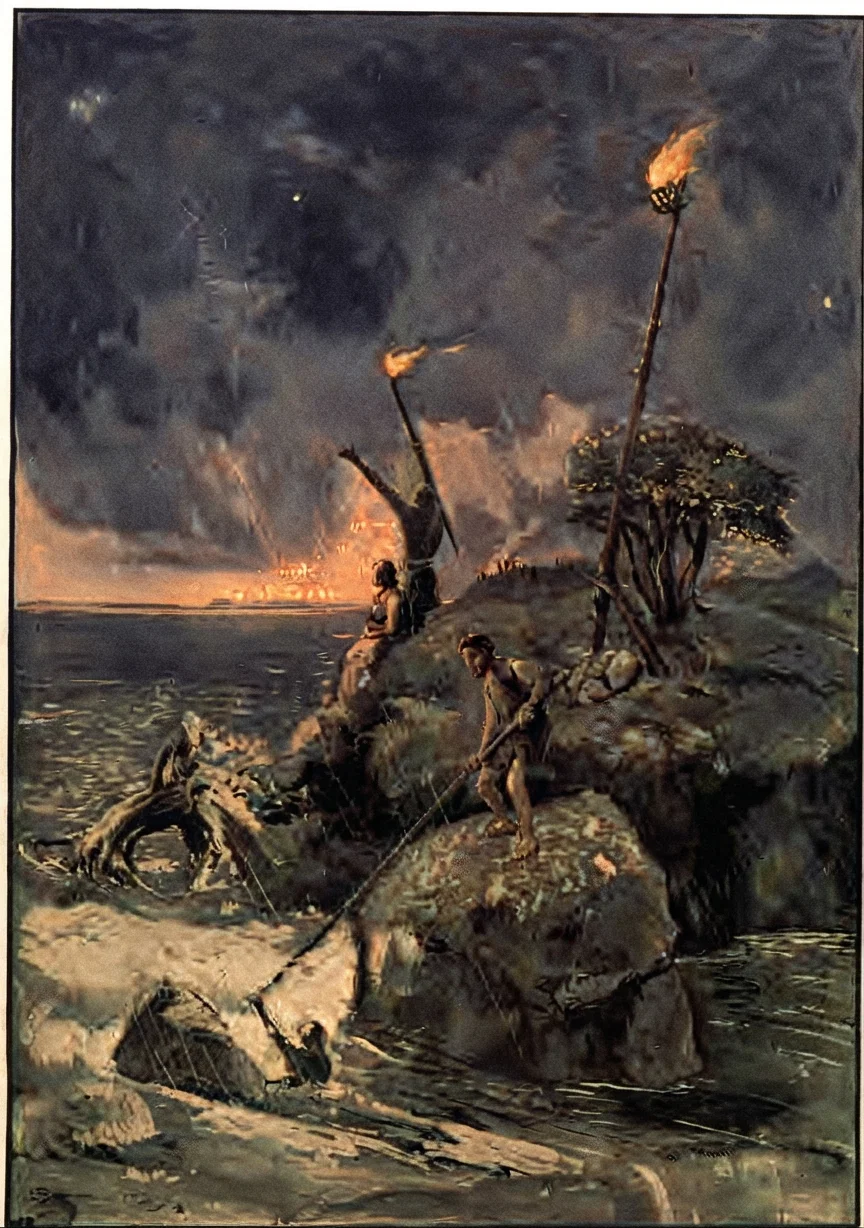
AND as it was in the days of Noe, so shall it be also in the days of the Son of man. They did eat, they drank, they married wives, they were given in marriage, until the day that Noe entered into the ark, and the flood came, and destroyed them all. Likewise also as it was in the days of Lot; they did eat, they drank, they bought, they sold, they planted, they builded; but the same day that Lot went out of Sodom it rained fire and brimstone from heaven, and destroyed them all. Even thus shall it be in the day when the Son of man is revealed." Luke 17: 26-30.
IN his time Noah was "a preacher of righteousness." The ark that he was building, in much louder tones than his preaching told of his faith in the coming flood. Every word of the great preacher, and every act of his life, were a powerful warning to the giddy world at that time.
BUT, notwithstanding this warning from the servant of the Lord, the people in that time went right on with their rounds of business and pleasure, and paid no attention to what was told them. The message sent from heaven did not please them, and therefore they would drown the warning by their riotous pleasures. And they were so successful in sweeping away every conviction that the record in Matthew tells us they "knew not until the flood came, and took them all away." Their lack of knowledge of the coming destruction did not come from a lack of opportunity to know; for they had been faithfully warned by "a preacher of righteousness," who told them upon the authority of Jehovah that the flood was surely coming. They did not believe, for the reason that they stifled their convictions and destroyed their consciences by the intoxications of pleasure and business.
FOLLOWING the Lord's usual plan, we know that He gave evidences, in addition to His word preached by Noah, to tell the people in unmistakable terms that the flood was surely coming. There were fulfilling prophecies, and signs and wonders in the physical world, all of which spoke in the most unmistakable and positive language of the overhanging doom of the antediluvian world. And, in addition to these evidences from without, there was the continual presence of the Spirit of God, that was striving with men. Before the days of the flood the Lord said, "My Spirit shall not always strive with man." Gen. 6:3. This text is some of the positive evidence that the Lord's Spirit was working within the minds of men, impressing them with the truth that was coming to them through the preaching of Noah. God's Spirit always accompanies the preaching of His Word. And one of the strongest evidences that we have of the truthfulness of the Word as it comes to us, is the manner in which the Spirit causes it to rest upon our consciences as a positive conviction, that will not leave us unless we drive it away by the most abandoned follies and sins.
"And knew not until the flood came, and took them all away." Matt. 24:39.
"EVEN thus shall it be in the day when the Son of man is revealed." Then the record of the condition of things in the days of Noah is given as a warning to those of us who shall be living at the time when the Son of man is revealed. There were some in the days of Noah who "knew not until the flood came, and took them all away;" and then the significant words are added, "So shall also the coming of the Son of man be."
THEN it is perfectly evident, because it is plainly stated in the Word, that there will be those who will be startled by the revealing of the Son of man in the clouds of heaven. They will not know that the event is near. But it will not be for the reason that they have not had the opportunity to know. It will not be that they have never had deep convictions upon the subject. A large part of the Bible is taken up with prophecies that point to the second coming of Christ. And Jesus says, "When ye shall see all these things, know that He is near, even at the doors." He tells us that we are to "know" that He is near, thatHis coming is "even at the doors." But, as it was in the days of Noah, there will be those who will stifle every conviction and drown every impulse that comes from God, so that they will not know these things that the Lord is taking so much pains to have them know.
LINE upon line of prophecy tells us that the end of all things is right at hand. There are multiplied signs in the physical world that speak it out clearly, telling us that the coming of the Son of man is "even at the doors." The Spirit of God, with all of His mighty persuasive power, is urging this truth upon the minds and consciences of men. You who are resisting the subject know that there is a mighty conviction resting upon you that can come from no human source. As you see the terrible things that are beginning to come upon this world, there settles upon you the irresistible conviction that the great day of God is at hand. This is the voice of God seeking to win you to Himself, so that He may save you from the destruction that sin is bringing upon this world.
ONE of two things is right before us: either we will yield to this voice from God, or else we will continue to stifle conviction until that voice can no longer be heard. And when the Spirit of God is resisted until His warnings can no longer be recognized in the mind and heart of man, there is but one thing for man, and that is to be left to "know not" what is coming upon the world. The devoted and loving Father has sought to teach all such, but they have refused to hear the voice of warning and entreaty.
ARE you hearing and cherishing the voice of God's Word to-day? or are you drowning the convictions that come from it by plunging deeper and still deeper in the whirlpool of business and pleasure and sin that is so completely absorbing the energies of men and women to-day? These are times of solemn import. We should be wise in every step we take.

"TRY THE SPIRITS."

WHY?—Because all are not to be believed. What does the apostle mean by spirits?—He means teachers, and the spirits by which they are actuated. The additional reason for trying them is that "many false prophets are gone out into the world." 1 John 4: 1. Was this true only in those early days?—No, it is especially true of the "latter times." Of this the apostle Paul says: "Now the Spirit speaketh expressly, that in the latter times some shall depart from the faith, giving heed to seducing spirits, and doctrines of devils." 1 Tim. 4: 1. When the disciples of Jesus asked Him concerning His coming, and the end of the world, He said: "Take heed that no man deceive you. For many shall come in My name, saying, I am Christ; and shall deceive many." Matt. 24: 4, 5.
By what standard, then, shall the spirits be tried?—"To the law and to the testimony; if they speak not according to this Word, it is because there is no light in them." Isa. 8: 20. Any one who is honestly striving to proclaim the truth will always be willing to have his teaching tested by the Word of God. Jesus and His apostles always appealed to the Scriptures. Jesus reported to His Father, "I have given them Thy Word;" "Thy Word is truth." By His Spirit He had before said, "Thy law is the truth." Ps. 119: 142. "Blessed are the undefiled in the way, who walk in the law of the Lord." Verse 1.
When He would fully convince His disciples of the truth that He must needs have died and been raised again on the third day, He opened their understanding, that they might understand the Scriptures. Luke 24: 44-47. As their final equipment as His representatives in the Gospel work, He sent them the Comforter, the Holy Spirit, the Spirit of truth, which was to guide them into all truth. John 16: 7, 13.
The apostle Paul commended the Bereans because they searched the Scriptures to see whether the things he taught them were true. And all the New Testament teachers and writers recognized the fact stated by Paul, that "all Scripture is given by inspiration of God, and is profitable for doctrine, for reproof, for correction, for instruction in righteousness; that the man of God may be perfect, thoroughly furnished unto all good works." Then no one need be led astray by the delusions that are everywhere extant; for God has given us a standard of truth, and the Spirit of understanding is for all who will ask for it in faith. Asking in faith means walking in the light of duty as fast as it is made plain by the Scriptures, in answer to earnest, honest prayer and study.
G.

LIVING BY FAITH.

THE people of God must live by faith, not by feeling. Heb. 10:38.
What then is faith?—“Now faith is the assurance of things hoped for, the proving of things not seen.” Heb. 11:1, R.V.
Assurance is defined by the “Standard Dictionary” as “the mental state or feeling of being assured; confidence; conviction; trust; reliance; as to have full assurance of safety.”
To have faith, then, is to have confidence in God; to feel sure that He is true; to trust His promises; to believe His Word. The latter part of the text—“the proving of things not seen”—is simply the complement of the first part. He who is sure that God’s Word is true will prove God; that is, he will put himself in line with God’s Word, and his experience will be a demonstration to himself, and his life will be a demonstration to others, that God is true.
Simply to hold truth as a theory is not faith. “Thou believest there is one God,” says the apostle; “thou doest well; the devils also believe, and tremble. But wilt thou know, O vain man, that faith without works is dead? Was not Abraham our father justified by works, when he had offered Isaac his son upon the altar? Seest thou how faith wrought with his works, and by works was faith made perfect? And the scripture was fulfilled which saith, Abraham believed God; and it was imputed unto him for righteousness.”
Abraham had confidence in the divine promise, and he proved God; that is, by doing just what God said, he gave Him an opportunity to demonstrate that which Abraham already believed. And Abraham’s confidence, and the obedience which was the result of the confidence, taken together, afford an example of complete faith, entitling Abraham to be “called the friend of God,” “the father of the faithful.”
Faith, then, is not only feeling sure that God is true, but is acting in harmony with that conviction; it is not only believing, but obeying. And since the very first element in faith is belief, and since there can be no belief without something to believe, it is evident that the only basis of faith is the Word of God; and this is plainly taught in Rom. 10:17: “So then faith cometh by hearing, and hearing by the Word of God.” Or, as we moderns would express it, Faith comes by hearing the Word of God. And here, too, we have the same thought as in Heb. 11:1, namely, confidence and proving, belief and obedience; for the “hearing” here spoken of is not simply perceiving the sound of words, but the receiving also of that which is spoken. See 1 John 4:6. Faith, then, is obeying God from the heart.
C. P. BOLLMAN.

"THINE EARS SHALL HEAR A WORD BEHIND THEE."

Of all discouraged men of women born, The most undone by sorest doubt was I, And shattered hopes lay 'round me so forlorn, With Satan, bold, exultant, standing by.
There, wav'ring 'twixt the right and wrong, I stood, When sudden came a whisper to my ear, "Thy God who gave the promise still is good; He shall thy rearward be; then do not fear."
How glorious this heavenly message was! It strengthened all my senses numb and dazed; It brought my dark reflections to a pause, And audibly I murmured, "God be praised."
Yea, "God be praised; His ways are true and good," Have proved e'er since a sword for every foe; No matter what assails, or ever could, His ways and plans are best for me, I know.
Los Angeles. HART HALL.

A CURE FOR DESPONDENCY.

Several years ago, while working in Ireland, I called upon a lady who had been in the habit of giving way to frequent spells of despondency. While speaking of the victory she had gained over it, she related to me the following story:—
“My little boy is very fond of ‘Pilgrim’s Progress.’ He never tires of it. I have read it to him several times, but it is always new, and he seems to thoroughly understand that it represents Christian experience. For many years I had been in the habit of giving way to despondency, never thinking there was anything in it that was incompatible with my Christian experience. One day, while feeling very low spirited, my little boy looked up into my face, saying:—
“What is the matter, mama?”
“I replied, ‘I feel despondent, my boy.’
“Does that mean you are in the ‘slough of despond,’ mama?”
“‘Why, yes, I suppose it does,’ was my reply.
“I shall never forget the earnest look he gave me, as he said:—
“‘Have you ever been through the “wicket gate,” mama?’
“‘Yes, Hammie, yes, I trust I have passed the “wicket gate.”’
“‘Then how can you be in the “slough of despond;” for the “slough of despond” is the other side of the “wicket gate”?’”
“The words of my boy rang in my ears all day, ‘How can you be in the “slough of despond;” for the “slough of despond” is the other side of the “wicket gate”?’ And I humbly promised the Lord I would never dishonor Him again by going back into the mire, after He had once set me free.”
We are told to “rejoice in the Lord always.” Be sure you are safely through the “wicket gate.” “I am the Door,” Christ says; “by Me if any man enter in he shall be saved,” saved from his hereditary traits, saved from himself, and translated into the kingdom of light, beyond the “slough of despond,” out of reach of even the margin of it, which some call “the blues.”
MRS. H. HURD HASKELL.

THE TWO MYSTERIES.

The Mystery of Godliness.

THE reason for Lucifer's discontent will further appear as we study the plan of God for the preservation of His universe. "God, who at sundry times and in divers manners spake in time past unto the fathers by the prophets, hath in these last days spoken unto us by His Son, whom He hath appointed Heir of all things, by whom also He made the worlds; who being the brightness of His glory, and the express image of His person, and upholding all things by the word of His power." Heb. 1:1-3.
In Col. 1:15-19 we read concerning Christ: "Who is the image of the invisible God, the first-born of every creature; for by Him were all things created, that are in heaven, and that are in earth, visible and invisible, whether they be thrones, or dominions, or principalities, or powers; all things were created by Him, and for Him; and He is before all things, and by Him all things consist [R.V., margin, "hold together"]. And He is the Head of the body, the church; . . . that in all things He might have the pre-eminence. For it pleased the Father that in Him should all fulness dwell."
In Eph. 1:7-10 the scheme of redemption is said to be "according to the riches of His [God's] grace, which He made to abound toward us in all wisdom and prudence, . . . according to His good pleasure which He purposed in Him [Christ] unto a dispensation of the fulness of the times [the Authorized Version more clearly expresses the thought of this phrase, "that in the dispensation of the fulness of times"], to sum up all things in Christ, the things in the heavens, and the things upon the earth." R.V. The same purpose is expressed again in chapter 2:7, "that in the ages to come He might show the exceeding riches of His grace in His kindness toward us through Christ Jesus."
And again, in chapter 3:10, 11 the same is said to be "to the intent that now unto the principalities and powers in heavenly places might be known by the church the manifold wisdom of God, according to the eternal purpose which He purposed in Christ Jesus our Lord." That is, it was God's eternal purpose to (1) create all things through Jesus Christ; (2) in case sin should enter—and we have seen from the nature of the case that it was a possibility that it should sometime enter—to make Christ the Head of His redeemed church; (3) to make the church, redeemed from a fallen race of rebels, a trophy of His grace and a triumph of love, and love alone, over all other forces; (4) thus to prove to all His creatures that He is what He claims to be,—a God whose name and every attribute is love; (5) in these ways to sum up all things in Christ, to make Him rightful Heir of all things, that in all things He might have the pre-eminence.
When Lucifer saw that Christ, who is the wisdom of God (1 Cor. 1:24), was from eternity appointed Chief (Prov. 8:23, Jewish translation), the Master Workman enjoying an intimacy with the Most High that was allowed to no other, his heart was fired with jealousy, which he soon fanned into open rebellion against the government of heaven.
"Why," questioned Lucifer, "should Christ in all things have the pre-eminence? Why should He be preferred before me? He is Morning Star; so am I. Why should God choose to 'sum up all things' in Christ when He Himself has declared that I 'seal up the sum'? Eze. 28:12. Why should Christ alone be the wisdom of God, when God Himself has pronounced me 'full of wisdom'?" With what justice, reasoned Lucifer, could God appoint Christ "Heir of all things," even tho He was the "brightness of His glory," and the "image of Himself" (Heb. 1:3, Syriac version), and slight him, when he was Lucifer, the "light bringer," declared by his Creator to be "perfect" in his ways, "complete in outline" (Jewish translation), and "perfect in beauty"? Was not he covering cherub, anointed to cover God's throne? Why should not God say of him rather than of Christ, "Let all the angels of God worship Him"? Heb. 1:6. Why should it not be said to him, "Thy throne, O God, is forever and ever"? Heb. 1:8.
These honors conferred upon Christ and denied to himself, Lucifer regarded as an injustice and an arbitrary slight of his dignity and an invasion of his rights. Thus was his heart "lifted up" because of his brightness, and he corrupted his wisdom by reason of his elegance. He regarded God's dealings with himself as unfair and unjust, and the exaltation of Christ as altogether arbitrary and partial. He decided, therefore, that he would be wholly justified in boldly asserting for himself those immunities which had been denied him by his Creator. This he resolved to do, and to claim by force what he could no longer hope to gain by other means. Thus by his diabolical scheming to destroy souls, he was "filled to the center with violence," and he sinned. Eze. 28:16, Jewish version.

The Mystery of Iniquity.

It may be permitted us to stop briefly to inquire why Lucifer was denied the honors conferred upon Christ, and which he so much coveted. The task is not difficult. The difference between Christ and Lucifer was an essential one of character and of nature, and not of mere outward environment. Christ was God, the only-begotten of the Father, full of grace and truth. He was the creative Word. John 1:1-3. He only was the effulgence of the Father's glory and the very image of His substance (Heb. 1:3), Creator and Upholder of all things (Col. 1:16). Lucifer, altho a being of brightness, was only an angel, the rightful minister of his Creator. Tho "anointed," he was still a cherub. Tho "morning star," he was created by Christ, and should have been content to render Him grateful homage, rather than to covet His superior glory.
We see, therefore, that God's dealing with Lucifer, as with all His creatures, was not arbitrary, but that "true and righteous" are all His ways. This appears still more emphatic from the following. Of Christ it is declared, "Being made so much better than the angels, as He hath by inheritance obtained a more excellent name than they." Heb. 1:4. With
God name is a true index of character. Christ, the Word, was God. John 1:3; Heb. 1:8. Christ was the Word of God (Rev. 19:13), and was therefore incorruptible (1 Peter 1:23). Lucifer, as the event proved, was not incorruptible, for God declared of him, "Thou hast corrupted thy wisdom." Eze. 28:17. Therefore none but Christ could be safely trusted with the sacred responsibilities resting upon God's own Son. To do it would be to jeopardize the whole universe, and render insecure the whole government of God.
To show again that God's dealing with Lucifer in this matter was according to character, and not in an arbitrary manner, let the following scripture be noted: Of Christ it is said, "Who, being in the form of God, counted it not a prize to be on an equality with God, but . . . humbled Himself." Phil. 2:6, R.V. For what?—Not to add to His personal glory, but to save the lost.
Contrast with this the course of Lucifer. He was not in the form of God at all, yet he counted it a prize to be thought equal with God. He therefore endeavored to exalt himself, even at the expense of casting down to everlasting destruction those who were eternally secure in the glory of heaven.
How great the difference! The one, the "love of Christ that passeth knowledge," the blessed and adorable "mystery of godliness;" the other, the strange, incomprehensible working of Satanic cruelty and hate—the "mystery of iniquity"! How much to be cherished and loved the former! How much to be feared and shunned the latter!
The query will doubtless be raised in many minds, Why was not God as willing to save Lucifer when he sinned as He has been to rescue fallen man? The answer is, God did offer salvation to Lucifer the same as He has offered and still does offer it to the sons of Adam. God is no respecter of persons. He knows no variableness, neither shadow of turning. It is "Jesus Christ, the same yesterday, to-day, and forever." God must therefore have been just as ready to save, and just as really must have offered salvation to Lucifer in heaven as He did later to man on the earth.
Why, then, did Lucifer not accept it?—For the same reason that inspires the children of men to reject God's grace to-day. The power of God to save the lost, whether men or angels, is, and always has been (for, since God changes not, His power remains the same), the Gospel of our Lord and Saviour, Jesus Christ. But then, as now, the way of life through Christ was conditioned upon self-denial and self-humiliation. Lucifer was already jealous of Christ. He looked upon the plan of salvation as a selfish scheme, to add to the glory of Christ, and he determined to oppose it with all the forces he could muster into his service.
Says the prophet, as he viewed the scene: "By the multitude of thy merchandise they have filled the midst of thee with violence, and thou hast sinned ['thou wast filled to thy center with force, and thou didst sin,' Leeser's translation]; therefore I will cast thee as profane out of the mountain of God; and I will destroy thee, O covering cherub, from the midst of the stones of fire." Eze. 28:16.
That we may the more clearly understand the meaning of this language, let us compare with it another scripture, "And through covetousness shall they [false teachers] with feigned words ['raving words,' Syriac], make merchandise of you," "having eyes full of adultery, and that can not cease from sin." 2 Peter 2:3, 14.
From this we see that when Satan entered upon the path of rebellion against the government of heaven, he decided to make merchandiseof as many as possible of God's created intelligences, and thus rob the Creator of the glory for which they were created. Rev. 4:11; Isa. 43:7. In conducting this soul-destroying "traffic" Lucifer knew that he could not hope for success should he employ the weapons of truth and love. He, therefore, laid aside these and was filled to the center with force and violence. And thus he placed himself beyond the reach of God's mercy, with a mind wholly reprobate. In this way did he become "a murderer from the beginning," and gave himself so fully to evil that there was "no truth in him." John 8:44.

CHRIST AND NICODEMUS.

CHRIST'S lessons of instruction to the Jews appeared to them as altogether new, but in reality they were the old truths which Christ Himself had given to the people of God. The precious treasure committed to Israel was lost sight of as men departed from God, and Christ as the great center of light and life came to the earth to rescue it from the rubbish of error under which it had been buried.
As Nicodemus heard Christ, his heart was stirred within him. The words of this humble Teacher aroused him to inquire if these things were so. But Nicodemus was proud of his Jewish faith, and he sought to hide his curiosity from the Saviour. He did not wish to be known as an inquirer, and he put on an appearance of dignity, as tho it were an act of condescension on his part to seek an interview with Jesus. He did not at once make known his errand, but opened the conversation by speaking in praise of the penetration of Christ and of His rare gifts as a speaker. But Christ, after courteously receiving His guest, came directly to the point, and laid open before Nicodemus the object of his visit.
Nicodemus was surprised that Christ should understand the burden of his heart. With solemn power the Saviour said: "Verily, I say unto thee, Except a man be born again, he can not see the kingdom of God. . . . The wind bloweth where it listeth, and thou hearest the sound thereof, but canst not tell whence it cometh, and whither it goeth; so is every one that is born of the Spirit."
At thought of a kingdom so pure that he could have no part in it unless he was born again, Nicodemus was filled with amazement. "How can these things be?" he asked. And Jesus said unto him: "Art thou a master of Israel, and knowest not these things? Verily, verily, I say unto thee, We speak that we do know, and testify that we have seen; and ye receive not our witness. If I have told you earthly things, and ye believe not, how shall ye believe, if I tell you of heavenly things? and no man hath ascended up to heaven, but He that came down from heaven, even as the Son of man which is in heaven. And as Moses lifted up the serpent in the wilderness, even so must the Son of man be lifted up; that whosoever believeth in Him should not perish, but have eternal life. For God so loved the world, that He gave His only-begotten Son, that whosoever believeth in Him should not perish, but have everlasting life."
When the Israelites were dying from the sting of the fiery serpents, a brazen serpent was uplifted in the midst of their camp, that all might look and live. But there were some who would not accept the help provided. They stopped to reason concerning the foolishness of looking for relief to such a source.
That they should be saved by looking to a piece of brass was absurd to their minds, and they said, We will not look. Their decision was fatal, and many of the children of Israel perished.
The brazen serpent was uplifted in the wilderness that those who looked in faith might be made whole. In like manner God sends a restoring, healing message to men, calling upon them to look away from man and earthly things, and place their trust in God. That brazen serpent uplifted in the wilderness was a symbol of Christ. The faith which the believing Israelites exercised as they looked at it, we must exercise as we look to Christ. With the same simplicity sinners must receive the Saviour; for He alone can save from sin. He is our ransom. Whoever rejects the salvation He proffers is lost to God and heaven.
What would have become of the wounded Israelites had they all refused the only remedy provided for them,—had they said, We will try other means; we shall try the skill of our physicians; there is wisdom enough among us to heal the disease?—Had they done this, they would all have perished. So those who to-day slight the remedy God has provided for sin, who refuse to accept Christ as a personal Saviour, will perish in their sins.
To-day God has given to men the truth with power. He has opened His Word to those who are searching and praying for light. But when these messengers gave the truth they had received to the people, many were as unbelieving as were some of the Israelites. To-day many are caviling over the truth brought to them by humble messengers. How can this message be truth? they question. How is it possible that by looking to Jesus, and believing in His imputed righteousness, I can gain eternal life? Those who have thus refused to see the truth do not realize that it is God with whom they are in controversy, that in refusing the message sent them, they are refusing Christ.
God designs that the message of redemption shall come to His people as the latter rain; for they are fast losing their connection with God. They are trusting in men, and glorifying men, and their strength is proportionate to the strength of their dependence. We are to know more than we know at the present time. We are to comprehend the deep things of God. There are themes to be dwelt upon which are worthy of more than a passing notice. Angels have desired to look into the truths which are revealed to those who are searching God's Word with contrite hearts. Those who will devote their powers to the study of God's Word, and especially to the prophecies referring to these last days, will be rewarded by the discovery of important truths. The last book of the New Testament Scriptures is full of truths that need to be understood. Satan has blinded the eyes of men, and they have been glad of any excuse for not studying this book. But here Christ has declared through His servant John what shall be in the last days.
As we search the Scriptures, the character of Christ will appear in its infinite perfection. He is the One in whom our hopes of eternal life are centered. He is eternal life to all who will eat His flesh and drink His blood. Those who look to Him may be healed of the serpent's sting. By beholding Him, we may become changed into the same image. Faith, love, and holiness will grow in the soul. "This is life eternal," Christ said, "that they might know Thee the only true God, and Jesus Christ, whom Thou hast sent." When we realize the value of this knowledge, these glorious truths will glow in our hearts, tremble upon our lips, and pervade our whole being.
In giving us His Word, God has put us in possession of every truth essential for our salvation. The storehouse of the unsearchable riches of Christ is open to heart and hand. Thousands of men and women have drawn water from the wells of salvation, yet the supply is not diminished. These men have not exhausted the grand and holy themes of the Word of God. Thousands more may engage in searching out the mysteries of salvation. When the life of Christ and the character of His mission are dwelt upon, rays of light will shine forth, and at every fresh attempt to discover truth, something that has never yet been unfolded will be revealed. The study of the incarnation of Christ, His atoning sacrifice and mediatorial work, will employ the mind of the diligent student as long as time shall last; and, looking to heaven, with its unnumbered years, he will exclaim, "Great is the mystery of godliness."
MRS. E. G. WHITE.

THERE IS A GOD.

"The fool hath said in his heart, There is no God." Ps. 14:1; 53:1.
SAY'ST thou no God? Go out beneath The canopy of heav'n by night, And view the countless shining stars All radiant in their wondrous light, And mark how truly day by day They follow their appointed way.
No God? Who fashioned this green earth Its wide expanse of isles and main, Its thousand rivers flowing on Unto the sea to rise again In fleecy clouds across the land, To give new life on every hand?
Who gave the eagle safe abode Where tempests dwell and strongest beat, And to the dove a tranquil home Amid the forest's safe retreat, For each a mission to fulfil, To show God's kind and loving will?
There is a God. No room for doubt, All nature cries in language plain; The great truth writ o'er all the earth Tells man denial is in vain; And to refuse Him due respect But shows a darkened intellect.
Behold Him in the tender blade Just starting from the earth in spring, Or in the sturdy oak that stands Amid the forest, crowned a king, And has for years withstood the blast, And stronger grown as each storm passed.
The purling stream through downy meads, And grand Niagara's mighty flow, Unite to tell there is a God, As onward to the sea they go. They all His glory do proclaim, And teach us to revere His name. Vienna, N. J. C. N. HALSTEAD.

The Bible Has Never Failed

An infidel once said to an old lady that he could prove to her own eyes that the Bible was a lie. She replied, "I would believe the Bible before I would my own eyes." "What do you mean by that?" said the infidel. She answered, "These old eyes of mine have failed me a thousand times, but the blessed old Book has not failed me at a single point."

Love as Worship

DISINTERESTED love and self-denying service to our fellow creatures are the most acceptable worship we can offer to our Creator. —Channing.

Seeing Is Not Always Believing

“SEEING is not always believing. For instance, we see liars frequently.”
Continue reading: THE NECESSITY OF A RESURRECTION