Your ShelfYour Projects

Signs of the Times, Vol. 27, No. 22.

LIGHT—RECEIVED OR REJECTED

Signs of the Times

May 29, 1901

Pacific Press Publishing Company · Oakland, California · May 29, 1901

LIGHT—RECEIVED OR REJECTED.

The Darkness of Error, or the Light of Christ.
ONE of the noblest characters among the heathen of which history gives account is that of Socrates, called the “moral philosopher of Athens,” and “the parent of philosophy.” If he himself had been asked, “What are you?” he would probably have said, “Simply a child endeavoring to find and follow the light.”
HE was born in ancient Attica, B. C. 469. His father was a sculptor, and he himself doubtless followed the same trade, or profession. He served as a true and brave soldier, after the custom of the times, and at sixty was chosen a senator, where he stood alone in resisting the mad impulses and excited passions of the people.
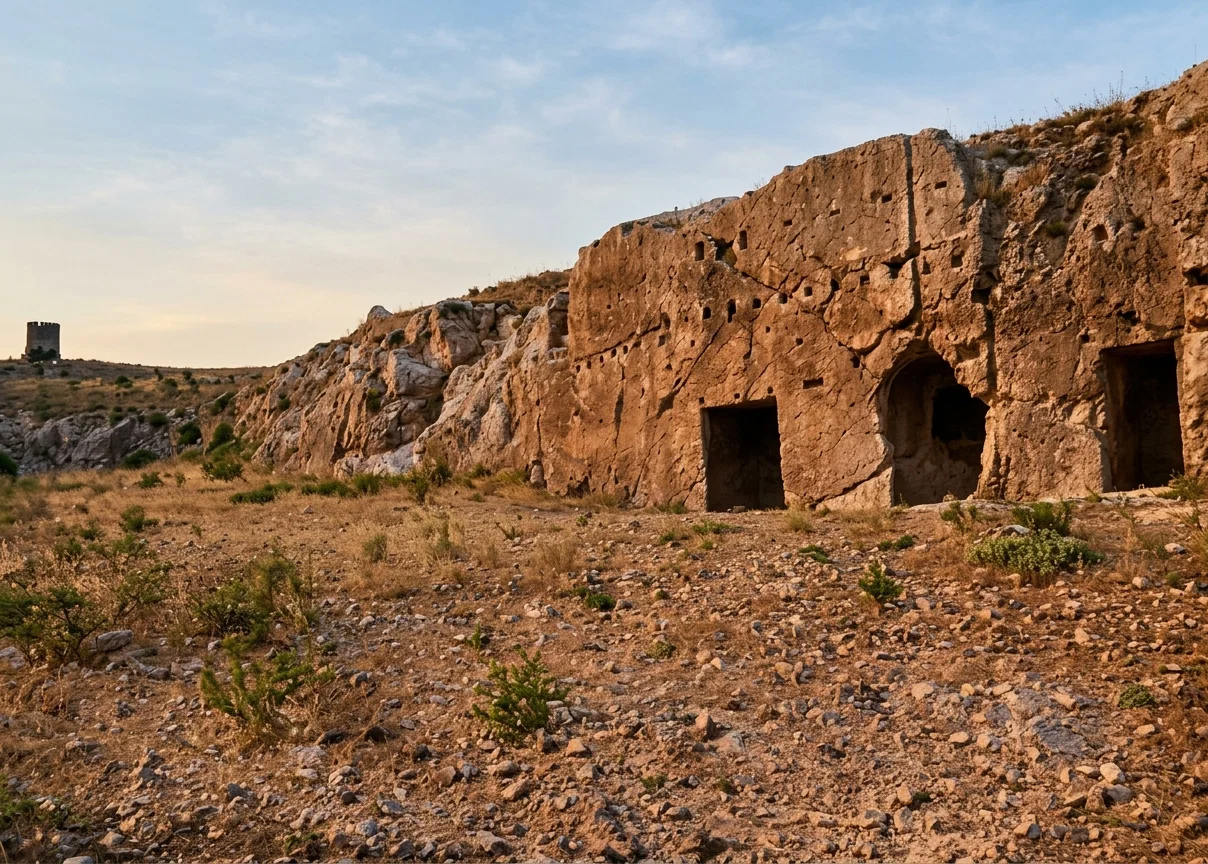
The Prison of Socrates, Athens.
His philosophy was an inquiry after truth; its method was by questioning with the simplicity of a child. He believed that the chief good, the being’s end and aim, was happiness; but not that superficial happiness which comes by riches, honor, fame, power, or the gifts of fortune; but the happiness which comes from that well-being which springs from well-doing in obedience to the will of God. He believed in one supreme, overruling Power, and the lesser gods, which he admitted were held by him on a lower plane than by other heathen, in about the same way, some think, as angels are held by Christians. Of that we are not certain. At the age of seventy he was accused of corrupting the youth in turning them from the local gods of the nation, and by a small majority was condemned to die, which he did by drinking the poisoned hemlock. He was one of the noble army who died a witness to freedom of thought and the rights of conscience.
HE was not a perfect man. He held great errors, among them the immortality of the soul. He saw no other way, perhaps, by which God could perpetuate the life beyond. The effect of his teaching upon the Greeks was, on the whole, good; for it served to shake their confidence in their multitude of gods, and prepare them for the true Gospel of Jesus Christ. He believed that God guided him, and that He was just as willing to guide every other soul.
THERE are some reflections upon the career and teaching of this great man which may be of profit to us. The first is, that God has often outside of His church those who are truly His followers according to all the light they have. “Because that which may be known of God is manifest in them; for God manifested it unto them. For the invisible things of Him since the creation of the world are clearly seen, being perceived thru the things that are made, even His everlasting power and divinity; that they may be without excuse.” Rom. 1:19, 20. “For when Gentiles which have no [written] law do by nature the things of the law, these, having no law, are a law unto themselves; in that they show the work of the law written in their hearts, their conscience bearing witness therewith, and their thoughts one with another accusing or else excusing them.” Ch. 2:14, 15.
SOCRATES seemed to be one of those who had the work of the law written in their heart. He was not perfect in conduct; but it is not perfection of act, which might demand infinite knowledge, and which no finite being could measure, that God requires, but perfection of heart, motive, submission to His will. “For the eyes of the Lord run to and fro throughout the whole earth, to show Himself strong in the behalf of them whose heart is perfect toward Him.” 2 Chron. 16:9. We do not know as Socrates met this; it seems from many things in his life that he did. But we are not his judge. We are using him here as an illustration of how God works, and foolish man counterworks.
EVERY ray of the light of day comes from the sun. If but one ray pierces a darkened passage, and that ray be followed, it will lead to brighter light, till the one led by it stands flooded in light. Every ray of spiritual light comes from God thru the Sun of Righteousness, Jesus Christ. It shines out from star and sun. It is reflected from plant and lake and tree and mountain. It pours out from the wonderful Word of God. It is revealed by His followers, who are likened to candlesticks and burning lights. If but one gleam of light come to the soul in darkness; if but one ray pierce the gloom of heathendom, and sin, and false philosophy, and that one ray be followed persistently, it will lead to God. Nay, more; God is in the light, and that light is “the light of life;” “the light which lighteth every man coming into the world.” John 1:9, R. V. If received, it connects the receiver with God,—will flood his whole soul, shine away the sin and darkness, and lead him home to the land of light. Even thus will God save heathen men, who receive God’s light, and let it shine thru them to others.
BUT man may live in a flood of Gospel light, and his soul be divided, imperfect, dark. He does not receive it all. He reads God’s Word. He is told of wondrous down-trodden truth. To receive it involves a cross; it would make him unpopular; and he refuses. His light begins to grow dim; or it may at once become darkness. One ray of light received is sufficient to save if it is received with all the heart, if it is allowed to dominate the life. One ray of light rejected by him who dwells in a flood of it, is sufficient to consign the soul to eternal darkness. The rays are many; the sun is one. He who rejects the ray, rejects in the ray, sooner or later, the sun. He who closes his heart to one truth, will sooner or later reject all. But he who has known naught but erroneous theory, yet who accepts the only one ray which shines upon him, will be glorified in that light of God, despite his errors; for the light reigned over the darkness.
THERE is a sad reflection comes in this connection, and that is that men having light turn from the great Master of all true philosophy—Christ Jesus—to follow a man, philosopher, far in advance of his nation tho he was; and sadder still, that they should look to his great error as light and truth, which he received thru generations of darkness from the father of lies, but against which is all the teachings of Jesus Christ. That error is the immortality of the soul. Its originator is shown in Gen. 3:4, which read in connection with 2:17. Jesus Christ came to give life thru righteousness, incorruptibility of character thru the power of His endless life over sin, immortality of the whole man thru His second coming and the resurrection. Those who receive Him receive life, while “he that believeth [‘obeyeth,’ R. V.] not the Son shall not see life, but the wrath of God [destruction] abideth on him.” John 3:36. Socrates taught good things, but he had no power to give his disciples. Jesus Christ taught the true way, and He will give the infinite power of God to every soul who needs it, to enable him to overcome. Those who prefer to seek for the immortality of man in the traditions of the past, or in the teachings of the greatest philosophers, instead of in the life, the power, and teachings of Jesus Christ, are as one who would choose as his final dwelling the catacombs of Rome, or the mouldy stone prison of Socrates in Athens, in preference to the mansions of light and glory prepared of Jesus Christ for all who know Him—not man, but God. “Fear God, and give glory to Him.”

COME, TASTE.

“MR. SPURGEON tells of a man who invited his neighbor to come and eat some apples that grew in his orchard, but the neighbor refused. He invited him a second time, and was again refused, and finally the neighbor frankly told him that he had eaten some of his apples growing near the road, and found them very sour. ‘O,’ replied the friend, ‘I planted those sour apples on the outside for the bad boys, who, if they get a taste of good apples, will rob my orchard. The good apples grow in the center of the orchard.’ Now, many of us are eating the sour apples that hang over the highway of worldliness. We need to come into the orchard of separation, and the apples that grow there are like the manna that comes down from heaven.’”

The Light of the Wicked Put Out

THE END OF SIN'S DOMINION.—NO. 2.

The Light of the Wicked Put Out.

IF, in the regeneration, anything should remain that could possibly entice to sin, its very existence would be a constant menace to the peace and happiness of angels and redeemed men.
The greatest tempter known to time and space is Satan, the deceiver of the whole world. Then, too, “he was a murderer from the beginning,” having said in his heart (not openly) that he would exalt his “throne above the stars of God,” and be like the Most High.” This meant that, give him opportunity, he would destroy the Son of God, “the bright and morning Star,” and establish his kingdom, as he hoped, upon the ruins of Christ’s kingdom.
The loyal angels, not knowing what was in his heart or mind, must see him given opportunity to carry out his inmost purpose concerning the Son of God and His government, that he might thereby be unmasked, and stand before the universe in his true character, displaying all his naked ugliness; at which time only could the angels see the justice of God in visiting upon Satan due reward for his career of anarchy. But should he not have opportunity to develop his character before his destruction, there was danger that angels would regard the God of love as a tyrant, and hence could not in reality worship Him, nor be happy in His service.
Thus we are brought to the consideration of one of the manifold purposes for which Christ laid aside His divinity—immortality—and took upon Himself humanity—mortality—as it is written, “Forasmuch then as the children are partakers of flesh and blood, He also Himself likewise took part of the same; that thru death He might destroy him that had the power of death, that is the devil.” As long as Christ was the Son of God in heaven, wholly divine, Lucifer could not carry out the murderous intent of his heart, but when He became the Son of man, human, now was Satan’s opportunity.
True to his original purpose, Satan was watching the fulfilment of prophecy for the appearing of “the Seed of the woman”—Christ—who was to “bruise” his head. With this motive in view he “stood before the woman”—the true church—“to devour her child as soon as it was born.” Manifesting his wrath thru Herod and Pagan Rome, his tool and mouth-piece at that period of the world’s history, he tried to destroy the infant Saviour at Bethlehem, and on other occasions, as in the great temptations at the end of the forty-days’ fast, and by Christ’s own town’s people at Nazareth, when they took Him to the brow of the hill to “cast Him down headlong.” Failing in this, he finally secured His crucifixion and burial. But He could not be “holden of the pains of death,” and having triumphed over Satan, even in death itself, He came forth conqueror over death and the grave, and, holding the keys of both, “was caught up unto God and to His throne.”
At this point Satan had so fully developed his character that he could be denied access to heaven, and so that angelic spectators—intensely interested and concerned in what had been made manifest—could with heart and voice join in the acclamation sounded in heaven, “Now is come salvation and strength, and the kingdom of our God, and the power of His Christ, for the accuser of our brethren is cast down.”
Satan was unmasked as a murderer before the intelligences of heaven, and himself had made it apparent to all that he was worthy of the death penalty. All this was done “that in the dispensation of the fulness of times He [God] might gather together in one, all things in Christ, both which are in heaven, and which are on earth [angels and the redeemed of men] even in Him.”
Execution must be deferred for a time still, but the time will come when the serpent’s head must be crushed. Till then he will exist as a “terror,” but a fire will be brought forth, which shall devour him and bring him “to ashes upon the earth, in the sight of all them that behold him,” and to this end was “Tophet ordained of old, for the king [of darkness] it is prepared; the pile thereof is fire and much wood” (or fuel, including all the combustible material in the earth and atmosphere).
When “the light of the wicked” is thus “put out,” all that do wickedly “shall be stubble; and the day that cometh shall burn them up, saith the Lord of hosts.” Thereafter there will be none to entice any away from God, none to beguile; all deceivers, with their father,will be dead. “And there shall be no more thence a pricking brier unto the house of Israel, nor any grieving thorn of all that are round about them that despised them; and they shall know that I am the Lord God;” “which in His times He shall show, who is the blessed and only Potentate, the King of kings, and Lord of lords; who only hath immortality.”
“This day concludes the destiny of man; The hour, appointed from eternity, To end the war of sin, that long has fought, Permitted, against the sword of Holiness.”
GEO. W. REASER.

GOD’S PURPOSE FOR US.

God created man for His own glory. It was His purpose to re-populate heaven with the human race, if after test and trial they proved to be loyal to Him. Adam was to be tested, to see whether he would be obedient or disobedient. Had he stood the test, his thoughts would have been as the thoughts of God. His character would have been moulded after the similitude of the divine character.
But Adam did not endure the test. Satan, the fallen angel, jealous of God, determined to defeat the purpose of heaven by leading Adam and Eve into sin. He approached Eve, not in the form of an angel, but as a serpent, subtle, cunning, and deceitful. With a voice that appeared to proceed from the serpent, he spoke to her, and his conversation was like the words which to-day wise and wicked angels speak thru various agencies. As Eve listened, the warnings that God had given faded from her mind. She yielded to the temptation, and as she tempted Adam he also forgot God’s warnings. He believed the words of the enemy of God.
In Eden Satan used the serpent as his instrument. To-day he makes use of the members of the human family, striving by means of every species of deception to hedge up the path of righteousness cast up for the ransomed of the Lord to walk in.
What were the words Satan spoke to Eve?—“Ye shall not surely die; for God doth know that in the day ye eat thereof, then your eyes shall be opened, and ye shall be as gods, knowing good and evil.” The “evil” was disobedience to God’s commands. And Adam did indeed go thru the experience of knowing evil, with all its fearful consequences.
The eyes of Adam and Eve were opened, but to what?—To see their own shame and ruin, to realize that the garments of heavenly light that had been their protection were no longer around them as a safeguard. They saw that nakedness was the result of transgression. As they heard the voice of their Creator in the garden, they hid themselves from Him; for they anticipated that which before they had not known,—the condemnation of God.
The lie which Satan told Eve, “Ye shall not surely die,” has been sounding thru the centuries from generation to generation. Thus Satan tempted our first parents, and thus he tempts us to-day. And from age to age men and women have fallen into his snare, notwithstanding that they have before them Adam’s disobedience and its results. To-day men think and act the words of the great deceiver, giving the impression that God does not mean what He says.
The accusation which Adam brought against Eve, “The woman whom thou gavest to be with me, she gave me of the tree, and I did eat,” had no influence to save him from the result of disobedience. God said, “Because thou hast hearkened unto the voice of thy wife, and hast eaten of the tree, of which I commanded thee, saying, Thou shalt not eat of it; cursed is the ground for thy sake; in sorrow shalt thou eat of it all the days of thy life; thorns also and thistles shall it bring forth to thee.”
Adam and Eve were shut out of Eden, and an angel with a flaming sword guarded the way to the tree of life, that the disloyal, disobedient pair might not gain access to it, and thus immortalize transgression.
Mark this point. The Lord did not place in Adam fallen and disobedient the confidence which He placed in Adam loyal and true, living by every word that proceeded out of the mouth of God. God’s plan was to give man clear-sightedness in all his work. This was arranged for Adam by his heavenly Father. There was to be co-operation between God and man. But this plan was interfered with by Adam’s transgression. Satan led Adam into sin, and the Lord could not communicate with him after he had sinned as He did when he was without sin.
Satan’s instrument, the serpent, was cursed. And all who to-day allow themselves to be used by Satan as his instruments in leading others to disregard the commands of heaven, are under the curse of God. Man’s safety lies in whole-hearted belief in a “Thus saith the Lord.” This is the declaration of truth. Those who from any motive are led away from the truth, to venture into a path of their own choosing, are following a path which will lead them to destruction.
Adam and Eve were given a probation in which to return to their allegiance; and in this plan of benevolence all their posterity were embraced. After the fall, Christ became Adam’s instructor. He acted in God’s stead toward humanity, saving the race from immediate death. He took upon Him the work of mediator between God and man. In the fulness of time He was to be revealed in human form. He was to take His position at the head of humanity by taking the nature but not the sinfulness of man. In heaven was heard the voice, “The Redeemer shall come to Zion, and unto them that turn from transgression in Jacob, saith the Lord.”
Christ was anointed “to preach good tidings unto the meek; . . . to bind up the broken-hearted, to proclaim liberty to the captives, and the opening of the prison to them that are bound; to proclaim the acceptable year of the Lord, and the day of vengeance of our God; to comfort all that mourn; to appoint unto them that mourn in Zion, to give unto them beauty for ashes, the oil of joy for mourning, the garment of praise for the spirit of heaviness; that they might be called trees of righteousness, the planting of the Lord, that He might be glorified.”
It is God’s purpose that His name shall be exalted among the nations. “For Zion’s sake will I not hold my peace, and for Jerusalem’s sake will I not rest, until the righteousness thereof go forth as brightness, and the salvation thereof as a lamp that burneth. And the Gentiles shall see thy righteousness, and all kings thy glory; and thou shalt be called by a new name, which the mouth of the Lord shall name. Thou shalt also be a crown of glory in the hand of the Lord, and a royal diadem in the hand of thy God.”
This is to be the experience of those who hold fast the beginning of their confidence firm unto the end. The whole of the sixty-second chapter of Isaiah is a representation of the work Christ will do thru those who follow His example. “Go thru, go thru the gates; prepare ye the way of the people; cast up, cast up the highway; gather out the stones; lift up a standard for the people. Behold, the Lord hath proclaimed unto the end of the world. Say ye to the daughter of Zion, Behold, thy salvation cometh; behold, His reward is with Him, and His work before Him. And they shall call them, The holy people, The redeemed of the Lord; and thou shalt be called, Sought out, A city not forsaken.”
MRS. E. G. WHITE.

THE LEVITICAL BURNT-OFFERINGS.

Every offering of the Levitical system which had to do with the work of atonement, was required to be an animal of some kind, so that the giving up of life in behalf of the sinner could be typically set forth. When the sacrifice was to be burned on the altar, it must be a male. Lev. 1:3, 10. In order to identify himself with his offering, the sinner brought his victim to the door of the tabernacle, and in the presence of the priests and other witnesses he solemnly laid his hand on the head of the offering, thus acknowledging his guilt. With this ceremony the offering was accepted as the sinner’s substitute, a suitable sacrifice with which to make an atonement for his sin. Verse 4. The accepted substitute was then killed, skinned, and cut in pieces by the one for whom it stood, when the priests laid the parts in order upon the altar preparatory to the offering being consumed by fire. Verses 5–9.
Besides these individual sacrifices, daily burnt-offerings also were made, evening and morning, for the sanctification of the whole congregation, the priests, and the tabernacle, in order that God might dwell in the midst of His people Israel. Ex. 29:38–46. All this typical work was designed to meet its fulfilment in the presentation of our own bodies as holy, living sacrifices to God, in order to our sanctification as a dwelling-place for Him. Rom. 12:1.
There was another gift required of the people of ancient Israel, which was known as the “meat-offering.” This usually consisted of salted flour, with a white vegetable resin added, called frankincense, which rendered the offering combustible and fragrant. Instead of flour, one might acceptably offer cakes made of the same material, provided they were salted and anointed with oil. Still another form of meat-offering was that of green corn, salted, and dried before the fire, and having oil and frankincense added to it. Lev. 2:7, 13–16.
It will be observed that every one of these offerings had to be seasoned with salt. From the nature of the ingredient it may be readilyinferred that its use in these offerings had some reference to the conditions of saving grace. In fact, the Lord says of His followers, “Ye are the salt of the earth.” Matt. 5:13. That is to say that thru His people He will save the earth from desolation. They are really His “covenant of salt” with earth’s inhabitants. Num. 18:19. But these simply stand as representatives of the Lord Jesus, who is the Head of this eternal covenant. He is the great Bread-offering given for us. John 6:48. That He might be an acceptable offering, He was first anointed with the “oil of gladness” (Heb. 1:9), and when, under this preparation, He was humiliated to man’s estate, He was again anointed with the Holy Spirit of power, with which to do the work assigned Him. John 3:34; Acts 10:38.
As His witnesses and representatives, we too are to present our bodies as acceptable sacrifices unto God, which can be done only by having the anointing of the same Spirit by which He, as our great High Priest, became our forerunner in the work of salvation. Rom. 8:9–11; Heb. 6:20. “Have salt in yourselves” (Mark 9:50), is therefore an exhortation of great moment to those who would present themselves as acceptable offerings to the Lord. By seasoning the sacrifice of self with the power of God’s grace, one binds himself to the Lord with an indissoluble “covenant of salt,” and thus becomes positively assured of God’s presence and eternal salvation.
The frankincense of the typical offering was not only combustible, but its consumption caused a sweet-smelling savor pleasant to the Lord. Lev. 2:2. So we are made a “sweet savor of Christ” unto God. 2 Cor. 2:15. That is, by conquering us, and exhibiting us as His willing captives, we become, not our own, but His sweet savor unto God. As the frankincense of the typical offering was all burned in the fire, so we, whom Christ has taken on His great heart of love, must be entirely consumed, that He, the “Bread of heaven,” may be reserved to the heavenly priesthood, as shown in the type.
As no leaven was permitted in the typical sacrifices offered on the altar, so now none is permitted in the service we offer to Christ. Leaven was old dough which had undergone fermentation and consequent corruption. To mix such with the meat-offering would be to corrupt the whole, because only a little leaven permeates and corrupts the whole lump. Gal. 5:9. Corrupt doctrine in the faith of men, is pointed out as leaven. Matt. 16:6, 12. To entertain this is to become permeated with corrupt practises in harmony with the doctrines held, and so be counted hypocrites in the sight of heaven. It was thus with the church at Corinth, which had become rather proud of the evil practise of one of its members. In writing to them of this matter the apostle sharply reproved them, saying, “Your glorying is not good.” After stating the general nature of leaven, he urged them to purge out the old substance, and so become a new and acceptable body of people, having become unleavened. A prominent feature in this old leaven of theirs was the doctrine that a man could have the wife of another under certain circumstances without condemnation. This had led one of their number into a depth of corruption never before heard of. The advice was to purge out the old doctrine, which was a “leaven of malice and wickedness.”
This may be thought an extreme presentation of the case; but it is a Bible illustration of the matter, and shows what is possible in the entertainment of false and mischievous doctrines. Sincerity and truth are the constituents which make the offering of the Christian acceptable to God. No excesses of evil follow the adoption of this combination; therefore let all buy the truth at any cost, and sell it not at any price.
J. O. CORLISS.

A CONSUMING FIRE.

THAT is what the Lord is said to be, as stated in Heb. 12:29. It is His design to consume our dross, to burn out all that is unholy in our natures. See Isa. 1:25. He does not intend that we shall be devoured in the consuming fire. Isa. 43:2. But if we do not submit to the refining process, then we ourselves shall be consumed. Josh. 24:20; 1 Sam. 12:25. The same manifestation of God’s power may be either a savor of life unto life or of death unto death. 2 Cor. 2:16.
There is a remarkable illustration of this in Lev. 9:23, 24; 10:1, 2. By the consuming fire that burned up the offering that the people had brought, they knew that God accepted of them, and they were filled with rejoicing at what they saw and felt. But the very next incident recorded is that of Nadab and Abihu bringing an offering of incense to the Lord, but in such a manner (with strange fire) that He did not accept of them. The terrific consequence was that these sinners were consumed by fire from the same source from which the fire came that consumed the sacrifice, causing such rejoicing. This is an object-lesson to every one of us. Shall God’s purposes and ordinances which He has ordained unto life be allowed to serve their original and legitimate design, or shall we permit them to be unto death to us? The result will depend upon the course we take.
God raised up Pharaoh that He might show forth His power in him. He raised up Saul of Tarsus for the same purpose. It was His choice to manifest His power in the salvation of these men, and thru them the salvation of other people. One of these men allowed God to carry out His purpose in him; the other stubbornly refused to do this, and so the power of God was manifested in him to his destruction, and also that of many others who were misled by him.
Sometimes the prayer is offered to God that He would cause us to be to Him as clay in the hands of the potter. That is very well, but let us remember that He Himself says that is just where we are anyway. “Behold, as the clay is in the potter’s hand, so are ye in Mine hand, O house of Israel.” Jer. 18:6. The subsequent verses show that what becomes of us, the clay, depends upon the course we take. It is not merely what we are passively, but what we are actively, that determines how we shall be affected by the consuming fire.
Oakville, Ontario.
F. D. STARR.

HELP FOR THE DRUNKARD.

During the evangelistic meetings in Washington, we frequently witnessed the mighty power of God in enabling those who had been addicted to habits of intemperance to abandon the intoxicating cup. Men frequently arose and said, “I have for years struggled with the demon of strong drink, but never till my conversion have I been victorious.”
I rejoice in all that temperance societies are doing to save the drunkard; but I feel that too much dependence is sometimes placed upon man's ability to rescue himself from the enslaving power of drink. Sinners of every grade need to be told that they are lost, and that Christ alone can save them. When this great truth is brought home to them by the Holy Spirit, then it is they begin to cry for mercy, and soon find by happy experience that the Lord Jesus is “able to save them to the uttermost that come unto God by Him.”
As an illustration of this truth, I give the experience of a gentleman of culture in one of the government departments at Washington. In a letter which he addressed to me he says:—
“Subsequent to my conversion, as you know, I frequently testified to the saving power of Christ in my regeneration. But never had I given a full statement of the terribly depraved and lost condition which I was in prior to my conversion, particularly in regard to my slavery to rum. The subject was too mortifying to me to speak of it in public, tho I sometimes felt condemned for not doing so, as it might have had a good effect upon others who were victims of the same wretched vice. I was reared by Christian parents and nurtured in the Sunday-school. At sixteen years of age I stepped out from under their influence into the abyss of worldly pleasures, and sought them in the ball-rooms, theaters, gambling dens, rum mills, and other places of infamy, only however to find grief, distress, heart-burnings, and bitter remorse. My constant indulgence in the accursed cup for twenty years, had become second nature with me, and to control the appetite was impossible. The fact of my living and dying a drunkard, and my helplessness, was so loathsome to me that I craved death; and on one occasion went so far as to attempt to take my own life by drinking three ounces of laudanum, but thru the providence of God I was discovered at death's door and saved. I also lived thru delirium tremens twice.
“I shudder at such revelations now that I can realize the terrible perdition which I escaped thru the great mercy of Christ; but suffice it for me to say, that from the time I received the blessed assurance of the forgiveness of sins, and the regeneration of my heart, thru the redeeming blood of Jesus Christ, I have never from that moment to this had the slightest desire to take a drink of liquor; whereas, prior to that time the appetite for liquor was so intense that I had no more control over it than a starving man would have to resist food when placed before him. Nothing but the miraculous power of a merciful God ever saved me from a drunkard's grave; and while my whole soul pours out in humble gratitude to my Redeemer for His wonderful mercy to me, I so greatly fear the return of that terrible appetite that I endeavor to keep myself constantly under the influence of His Holy Spirit by unremitting prayer, in the faith that He is not only able, but will save me from that as well as all other sins. My life is now one of almost uninterrupted sunshine and happiness. Those things that once seemed to afford me pleasure, I now abhor, and my sole delight now is in the association of Christians. I am never so happy as when on Saturday evening we young converts assemble, and strengthen the bonds of our Christian brotherhood by relating our individual experiences as to our spiritual progress from week to week.”
I remember that during the revival in St. Louis, there were about one hundred and thirty drunkards converted, who banded themselvestogether in a society to strengthen one another by mutual prayer and counsel.
Thirty years ago a tramp came to my father's door one Saturday evening, and asked the privilege of sleeping in the barn. He was an educated Scotchman. He had spent all his money in Boston for liquor. With blistered feet he walked a hundred miles, pressing on his way to New York, where, without doubt, he would soon have slept in a drunkard's grave. But a little kindness shown to him for a few weeks, and the presentation of “Christ and Him crucified” to him in love and tenderness, induced him to become a Christian. For many years he occupied an important position as a teacher, and has since passed away, loved by many. Let us pray and labor for the salvation of those addicted to strong drink. God is able to save them.
Should you, my reader, possibly be of this number, I pray that you may ask God to forgive you all your sins for Jesus' sake, and to give you a new heart and put His Holy Spirit within you, so that you shall hate every evil thing you have hitherto loved.
May God help you to heed these words: “Let the wicked forsake his way, and the unrighteous man his thoughts; and let him return unto the Lord, and He will have mercy upon him; and to our God, for He will abundantly pardon.” Isa. 55: 7.
Jesus' words to you are, “Him that cometh unto Me I will in nowise cast out.” John 6: 37.
Believe in Him now, and be saved. Yes, Jesus loves you. He will receive and change your heart, and give you strength to resist every temptation. Only trust him.
“Come to Jesus, all ye weary, Burden'd with a load of sin; Come to Jesus, He is ready To receive such wanderers in.
“Come to Jesus, He'll receive you, Take His yoke and learn of Him; As your Prophet to instruct you,— As your King be ruled by Him.
“Come to Jesus, He'll receive you; He will cancel all your guilt. 'Twas for this He came to save you,— 'Twas for this His blood was spilt.”
REV. E. PAYSON HAMMOND, M. A.
Continue reading: THE COMING OF THE KING