Your ShelfYour Projects

Signs of the Times, Vol. 22, No. 9.

Christ’s Mission

Signs of the Times

Feb 27, 1896

Pacific Press Publishing Company · Oakland, California · Feb 27, 1896

Christ’s Mission
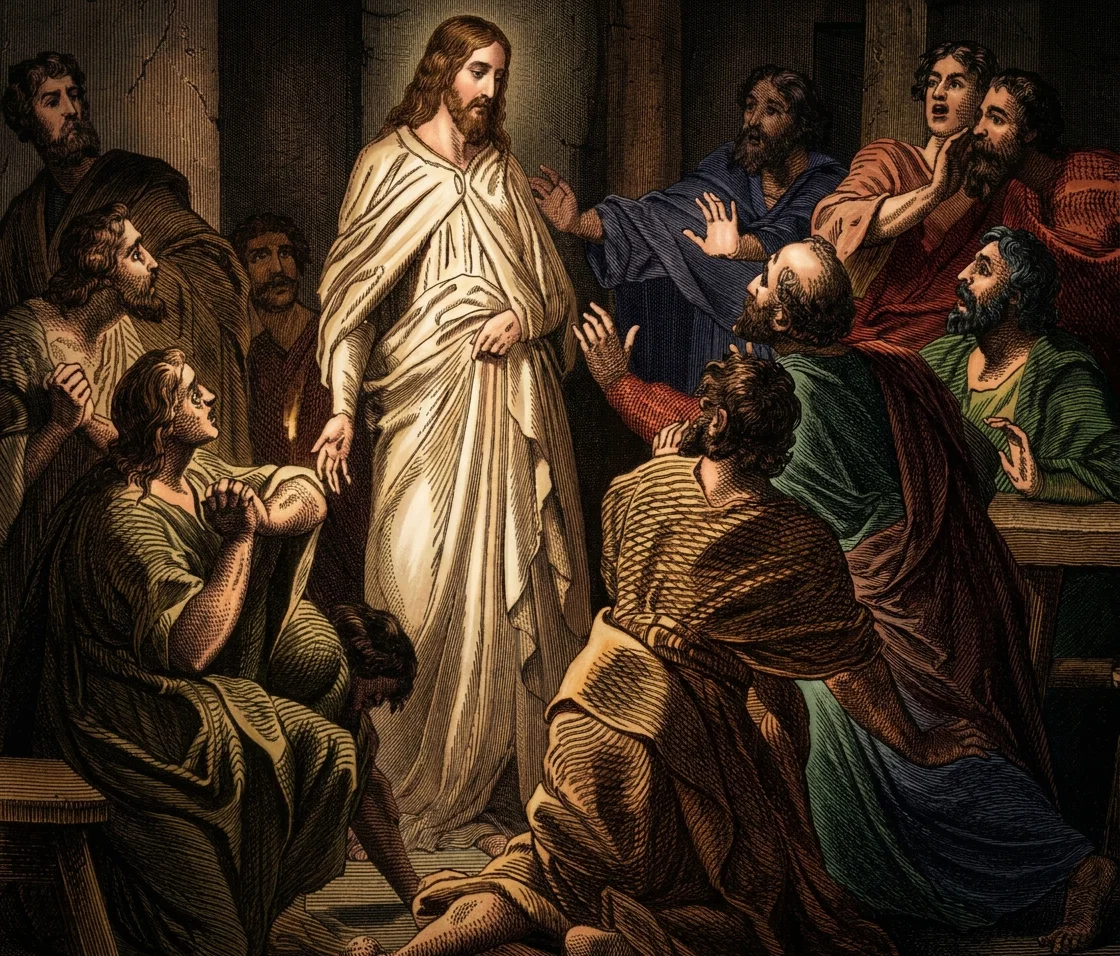
“PEACE BE UNTO YOU.”
“Peace Be unto You.”
—After his resurrection from the dead Jesus twice appeared to the doubting and desponding disciples, bearing the blessed thrice-spoken message, “Peace be unto you.” See John 20:19–26. Truly it must have been a message of peace to the souls of the eleven on the tempest-tossed sea of doubt.

Christ’s Mission.

—And yet to bring peace to man is the mission of Christ. Among the names given him by the Gospel prophet is “The Prince of Peace.” The apostle declares (Eph. 2:14), that “he is our peace.” And many times do we read the message, “Grace be unto you, and peace, from God our Father and the Lord Jesus Christ.” His universal and everlasting message to all mankind is, “Peace, peace to him that is far off, and to him that is near, saith the Lord; and I will heal him.” Isa. 57:19.

The Opposite of Peace, and Why?

The opposite of peace is war, strife, agitation, unrest. Out of it grow worry, wear, sickness, discouragement, despair, death. Its cause is sin and rebellion against government. Cuba is not at peace with Spain, and the fruits of the strife are seen in the island. Armenia is at war with Turkey, and the dire results are known all over the world. The cause of civil unrest and strife is rebellion against constituted authority. The lack of peace with God means rebellion against his government. But rebellion against God’s government is opposition to his holy law, or transgression of his law. And transgression of his law is sin. Sin, therefore, transgression of God’s law (1 John 3:4; Rom. 7:7), is the remover of peace from the heart, and the source of all the unrest, strife, doubt, and despair within. “There is no peace, saith my God, to the wicked.”

Righteousness in God.

—God is righteous; that is his essential character. Righteousness belongs unto God (Dan. 9:7); it is inherent in him. “The righteous Lord loveth righteousness.” Ps. 11:7. God’s government is, like himself, righteous; for the law of his government is righteousness; that is, it is the expression of the righteousness which is in God. And therefore we read, “All thy commandments are righteousness.” Ps. 119:172. For “the law is holy, and the commandment holy, and just, and good.” Rom. 7:12. “Hearken unto me, ye that know righteousness, the people in whose heart is my law.” Isa. 51:7. And as God is infinite and eternal in all perfection, his law of righteousness must be perpetual and eternal also. And this, too, the prophet declares. “My salvation shall be forever, and my righteousness shall not be abolished.” Isa. 51:6. “All his commandments are sure. They stand fast forever and ever, and are done in truth and uprightness.” Ps. 111:7, 8. “Thy righteousness is an everlasting righteousness, and thy law is the truth.” Ps. 119:142. “It is easier for heaven and earth to pass, than one tittle of the law to fail.” Luke 16:17. These and a multitude of Scripture texts declare that God is righteous, that his righteousness is expressed in his law, and that his holy law in the very nature of the case is unchangeable.

In Righteousness Is Peace.

—God being what he is, there can be only peace with him. We can not conceive that he was out of harmony with the perfect creation he brought forth. He was peace itself; it can not even be imagined that the perfect creation could be at war with its Author. As long as man walked with God, there was absolute peace. No pulse beat of pain or strife touched the great heart of responsive nature. All was submitted to God’s will in animate and inanimate creation, and God’s will is righteousness and peace. “And the fruit of righteousness is sown in peace.” James 3:18. “And the work of righteousness shall be peace.” Isa. 32:17. And had man ever walked in God’s law, there would have been demonstrated the word of the Lord by the prophet, “O that thou hadst hearkened to my commandments! then had thy peace been as a river, and thy righteousness as the waves of the sea.” Isa. 48:18.

The Choice of Strife.

—But as a righteous character can not be formed without choiceand as a righteous character is the most precious thing in the sight of God, man was therefore given his choice of good or evil, righteousness or sin, life or death, peace or strife. Man chose the latter, and since that time humanity has been well represented by the great restless sea, continually in motion, engulfing in its treacherous waves the hopes of millions. “The wicked are like the troubled sea, when it can not rest, whose waters cast up mire and dirt. There is no peace, saith my God, to the wicked.” Isa. 57:20, 21. Man is at war with his Maker, his King. The law that “was ordained unto life” by the Creator, worked wrath and death in sinful man. Rom. 4:15; 7:10. In that law was the righteousness and therefore life of God. It must work; all life is operative. But when man threw across the law of its working his own selfish way, his own carnal or fleshly heart, the law of life was perverted, and became the law of death. Righteousness perverted is sin. Peace perverted is strife. And when man chose his own way in preference to God’s way, he chose the way of strife and unrest instead of peace.

“The Enmity.”

—The enmity is, therefore, not of God, but of man. “Because the carnal mind is enmity against God; for it is not subject to the law of God, neither indeed can be.” Rom. 8:7. God is a God of love. He loves not only the righteous, but the sinner; so much he loved him as to give his only-begotten Son to die in the sinner’s behalf, and purchase reconciliation with God. “And all things are of God, who hath reconciled us to himself by Jesus Christ. . . . To wit, that God was in Christ, reconciling the world unto himself, not imputing their trespasses unto them.” 2 Cor. 5:18, 19. The only reason, therefore, why any man is not at peace with God is because of the enmity which lurks in his own heart against God and his law. Are you at peace with God, reader? Why? and why not?

Be at Peace.

—How be at peace?—By becoming righteous, or, in other words, coming into harmony with God. How?—By yielding up all of your will and way—all of self—and choosing God’s way as revealed in his word through our Lord Jesus Christ. It must be through him. You can not work out peace. You can not manufacture it in a carnal workshop. The righteousness can not be wrought by you in sinful flesh. Faith, choice of God’s way, must let Christ in; for Christ Jesus is the personification of God’s righteousness. He was a living example in sinful flesh of just what God’s law would do, of just the kind of character the law would make when left absolutely free to work out God’s righteous will. So said our Saviour: “I delight to do thy will, O my God; yea, thy law is within my heart.” Ps. 40:8. “I have kept my Father’s commandments, and abide in his love.” John 15:10. “Who did no sin [did not transgress the law, 1 John 3:4], neither was guile found in his mouth.” 1 Peter 2:22. Accept him. Give up all of self, and take his own perfect life for all the past. This is what the Lord offers. See Rom. 3:21–26; 4:3–8. God freely gives it all, covers all the past sins with Christ’s own perfect life, and accepts that life instead of yours.

The Mind of Christ.

—More than this God does to the child of faith: He destroys the carnal mind of enmity yielded to him, and he gives a new heart, a new spirit, a new mind. (Eze. 36:26; John 5:20.) The mind of Christ is placed within (Phil. 2:5); Christ by his spirit takes up his abode in us (Gal. 2:20; Eph. 3:17; Rom. 8:9, 10). “The enmity” is gone, and Christ, “our peace” with God (Eph. 2:14), dwells within, in order that he may live in us the same life he lived on earth, develop in us the same character that was developed in him, and keep in us the same commandments which he kept. Apart from this there is no hope; “for to be carnally minded is death; but to be spiritually minded is life and peace,” and “the righteousness of the law” (its normal working, its primal object) is fulfilled in those “who walk not after the flesh, but after the Spirit.” Rom. 8:6, 4. The Spirit of God, wherever it may be, will ever honor the law of God.

A Condition.

—Peace is not a feeling, an emotion, but a condition. Settle this fact forever: God is not at enmity with us. Then, if we yield to him, in his way (there is no other way to yield), there is peace between us. Satan may tempt us, his minions may try to vex us, remembrances of past sins may return as a flood, but we have given all to God—there is peace. Rejoice in the peace, yea, rest in his love, poor soul, tossed upon sin’s billows, ever remembering that God loves, and that your arms of rebellion are surrendered. This is peace. Rest is its blessed antepast.

“Peace Be unto You.”

—This is God’s message to you, sinner. It is not a compromise, but an honorable, righteous peace. He has purchased it for you. He brings it to you in hands of infinite love, hands wounded by your sin. His message is peace, “the peace of God, which passeth all understanding,” and which, if accepted, will “keep your hearts and minds through Christ Jesus.” Phil. 4:7. It is not for a day, or a year; but “the work of righteousness shall be peace; and the effect of righteousness, quietness and assurance forever. And My people shall dwell in a peaceable habitation, and in sure dwellings.” Isa. 32:17, 18. “I will make thy officers peace, and thine exactors righteousness.” Isa. 60:17. Yea, a foretaste of that blessed peace begins now. Men may be at war with us, but we are at peace with God. Our boat may seem to be tempest-tossed on the sea of life, but He who bade the wild waves of Galilee, “Peace, be still,” will calm the wild tempest within, and bring his own blessed calm. “Peace be unto you,” dear sinner, whoever you are. Jesus Christ has purchased it, and offered it to you; will you not accept it? Can you spurn him away?

THE SURETY OF THE PROMISE.

In our last lesson we learned what Abraham found, and how he found it. At the same time we learned what God has promised us as well as Abraham, if we believe his word. God has promised to every man who believes him nothing less than the freedom of the world. This is not an arbitrary thing. God has not said that if we will believe certain statements and dogmas, he will in return give us an everlasting inheritance. The inheritance is one of righteousness; and since faith means the reception of the life of Christ into the heart, together with God’s righteousness, it is evident that there is no other way in which the inheritance can be received. This is further made clear by a statement in the last lesson, which was not noted, namely, that
“The Law Worketh Wrath.”—Therefore whoever thinks to get righteousness by the law, is putting his trust in that which will destroy him. God has promised a grant of land to every one who will accept it on his conditions, namely, that he shall also accept the righteousness which goes with it, because righteousness is the characteristic of the land. Righteousness is to dwell in it. But this righteousness can be found only in the life of God, which is manifested in Christ. Now the man who thinks that he himself can get righteousness out of the law, is in reality trying to substitute his own righteousness for God’s righteousness. In other words, he is trying to get the land by fraud. Therefore when he comes in the court to prove his claim to the land, it appears that there is a criminal charge against him; and he finds wrath instead of blessing. “Where no law is, there is no transgression;” but there is law everywhere, and therefore transgression. All have sinned, so that the inheritance can not be by the law.
“Therefore it is of faith, that it might be by grace; to the end the promise might be sure to all the seed; not to that only which is of the law, but to that also which is of the faith of Abraham, who is the father of us all (as it is written, I have made thee a father of many nations); before him whom he believed, even God, who quickeneth the dead, and calleth those things which be not as though they were. Who against hope believed in hope, that he might become the father of many nations, according to that which was spoken, So shall thy seed be. And being not weak in faith, he considered not his own body now dead, when he was about an hundred years old, neither yet the deadness of Sarah’s womb; he staggered not at the promise of God through unbelief; but was strong in faith, giving glory to God; and being fully persuaded, that what he had promised, he was able also to perform. And therefore it was imputed to him for righteousness. Now it was not written for his sake alone, that it was imputed to him; but for us also, to whom it shall be imputed, if we believe on him that raised up Jesus our Lord from the dead; whowas delivered for our offenses, and was raised again for our justification.” Rom. 4:16–25.

Questioning the Text.

What have we already found the inheritance to be?
“The world.”
And how is it to be obtained?
“Through the righteousness of faith.”
If it were of works, what would be the result?
“Faith is made void, and the promise made of none effect.”
Why?
“Because the law worketh wrath.”
Why is the inheritance of faith?
“That it might be by grace.”
To what end?
“To the end the promise might be sure to all the seed.”
Of whom is Abraham the father?
“The father of us all.”
Before whom?
“Before him whom he believed, even God.”
According to what scripture?
“As it is written, I have made thee a father of many nations.”
How could God say to Abraham before he had any child, “I have made thee a father of many nations”?
He “quickeneth the dead, and calleth those things that be not as though they were.”
How did Abraham receive the promise of God?
“He staggered not at the promise of God through unbelief.”
In what was he strong?
He “was strong in faith, giving glory to God.”
Of what was he persuaded?
“Fully persuaded, that what he had promised, he was able also to perform.”
What was the result?
“Therefore it was imputed to him for righteousness.”
For whose sake was this written?
“For us also.”
Why for our sakes?
“To whom it shall be imputed.”
What shall be imputed?
That which was imputed to Abraham, namely, righteousness.
On what condition will it be imputed to us also?
“If we believe on him that raised up Jesus our Lord from the dead.”
Why was he delivered to death?
He “was delivered for our offenses.”
For what purpose was he raised again?
He “was raised again for our justification.”
Sure to All.—Since the inheritance is through the righteousness of faith, it is equally sure to all the seed, and equally within the reach of all. Faith gives all an equal chance, because faith is just as easy for one person as for another. God has dealt to every man a measure of faith, and to all the same measure; for the measure of grace is the measure of faith, and “unto every one of us is given grace according to the measure of the gift of Christ.” Eph. 4:7. Christ is given without reserve to every man. Heb. 2:9. Therefore, as the same measure of faith and grace is given to all men, all have an equal opportunity to gain the inheritance.
Jesus the Surety.—Faith makes the promise sure to all the seed, because it has Christ alone for its object, and he is the surety of the promises of God. 2 Cor. 1:20. We read also of the oath of God, by which Jesus was made high priest, that “by so much was Jesus made a surety of a better testament,” or covenant. Heb. 7:22. Now Jesus was not given for a class, but for all, without distinction. “God so loved the world, that he gave his only-begotten Son, that whosoever believeth in him should not perish, but have everlasting life.” John 3:16. Jesus by the grace of God tasted death for every man. Heb. 2:9. He says, “Him that cometh to me I will in nowise cast out.” John 6:37. Christ dwells in the heart by faith. Eph. 3:17. Therefore, since Christ is the surety of the promise, it must be sure to every one who believes.
The Oath.—It may seem to some a little far-fetched to say that the oath by which Jesus was made priest is the surety of the promise to Abraham. But a little consideration will enable any one to see that it can be no other way. In the sixth chapter of Hebrews we read that “when God made promise to Abraham, because he could swear by no greater, he sware by himself;” and that he, “willing more abundantly to show unto the heirs of promise the immutability of his counsel, confirmed it by an oath; that by two immutable things, in which it was impossible for God to lie, we might have a strong consolation, who have fled for refuge to lay hold upon the hope set before us; which hope we have as an anchor of the soul, both sure and steadfast, and which entereth into that within the vail, whither the forerunner is for us entered, even Jesus, made a high priest forever after the order of Melchizedek.”
For Our Sakes.—Why did God confirm his promise to Abraham by an oath?—That we might have a strong consolation. It was not for Abraham’s sake, because Abraham believed fully without the oath. His faith was shown to be perfect before the oath was given. It was altogether for our sakes. When does that oath give us strong consolation?—When we flee for refuge to Christ as priest in the holy places. Within the vail he ministers as high priest; and it is the oath of God that gives us courage to believe that his priesthood will save us. Then our consolation comes from Christ’s priesthood, and so from the oath which made him priest. Therefore the oath of God to Abraham was identical with the oath that made Christ high priest. This shows most plainly that the promise of God to Abraham is as wide as the Gospel of Christ. And so our text, speaking of the righteousness that was imputed to Abraham, says, “Now it was not written for his sake alone, that it was imputed to him; but for us also, to whom it shall be imputed, if we believe on him that raised up Jesus our Lord from the dead.”
Power of God’s Word.—God “calleth those things which be not as tho they were.” Sometimes men do the same thing, but we soon lose confidence in them. When men speak of things that are not as tho they were, there is only one proper name for it. It is a lie. But God calls those things that be not as tho they were, and it is the truth. What makes the difference?—Simply this: Man’s word has no power to make a thing exist when it does not exist. He may say that it does, but that does not make it so. But when God names a thing, the very thing itself is in the word that names it. He speaks, and it is. It was by this power of God that Abraham was made the father of many nations, even of us, if we believe that Jesus died and rose again.
Quickening the Dead.—It is by the power of God’s word, which can speak of those things that be not as tho they were, and have it true, that the dead are raised. His word makes the dead live. Now it was Abraham’s faith in the resurrection of the dead that made him the father of many nations. God’s oath to Abraham was on the occasion of his offering Isaac. Gen. 22:15–18. And “by faith Abraham, when he was tried, offered up Isaac; and he that had received the promises offered up his only-begotten son, of whom it was said, That in Isaac shall thy seed be called; accounting that God was able to raise him up, even from the dead.” Heb. 11:17–19.
Righteousness and Resurrection.—The righteousness which was imputed to Abraham will be imputed to us also if we believe on Him that raised up Jesus our Lord from the dead. Therefore it follows that righteousness was imputed to Abraham because of his faith in the resurrection of the dead, which comes only through Jesus. Acts 4:2. That was what the apostles preached, and they preached the promises to the fathers. The power by which a man is made righteous, is the power of the resurrection. See Phil. 3:9–11. This power of the resurrection, which works righteousness in a man, is the surety of the final resurrection to immortality, at the last day, by which he enters upon his inheritance.
Not Weakened in Faith.—The rendering of Rom. 4:19 in the Revised Version is very striking. It reads, “Without being weakened in faith, he considered his own body now as good as dead.” That is to say, after God had made the promise to him, a full consciousness of his weakness, and of all the difficulties and seeming impossibilities in the way, did not have any effect in weakening his faith. Nothing is impossible with God, and there are no difficulties for him. Whenever a person is inclined to doubt the possibility of his salvation, let him stop and consider that God made the world by his word, and that he raises the dead, and that it is by that power that God will save him if he is willing. To doubt God’s promise to deliver us from all evil, is to doubt the fact that he created all things by his word, and that he is able to raise the dead. E. J. W.

The Living Soul Grows in God's Life

THE living soul is ever growing in the life of God.—Dr. Liddon.

Prayer Drives Away Trouble

If trouble drive you to prayer, prayer will drive away trouble.—Melancthon.

God's Visits Gratefully Received Are Repeated

God’s visits if gratefully received will be graciously repeated.—Matthew Henry.

THE TIME OF THY VISITATION.

BY MRS. E. G. WHITE.
“Thus saith the Lord that created thee, O Jacob, and he that formed thee, O Israel, Fear not; for I have redeemed thee, I have called thee by thy name; thou art mine. When thou passest through the waters, I will be with thee; and through the rivers, they shall not overflow thee; when thou walkest through the fire, thou shalt not be burned; neither shall the flame kindle upon thee. For I am the Lord thy God, the Holy One of Israel, thy Saviour; I gave Egypt for thy ransom, Ethiopia and Seba for thee. Since thou wast precious in my sight, thou hast been honorable, and I have loved thee; therefore will I give men for thee; and people for thy life.”
God brought his chosen people out of Egypt with mighty signs and wonders. He laid the land desolate by plagues, and slew the firstborn of the Egyptians in order to bring deliverance to his people. He opened to them a path through the Red Sea, and in the pillar of cloud and fire he stood as a wall of protection between his people and Pharaoh, who with his armies, chariots, and horsemen came in pursuit of Israel. At the word of command the Red Sea rolled upon the hosts of the Egyptians, while Israel sang songs of triumph and praise.
The Lord brought his chosen people out of Egypt in order that they might keep holy the Sabbath day, and fulfill the precepts of his law. He fed them with manna in the wilderness, and by a double miracle placed his seal upon the sacredness of the Sabbath institution. In awful grandeur the Lord came down on Mount Sinai and proclaimed his law to the people. The Israelites had solong lived in the midst of idolatry that they were shaping their religious life after the idolatrous customs of the land of their bondage. The Son of God gave to them his law of Ten Commandments, and proclaimed to them the rules and statutes of God in heaven and earth.
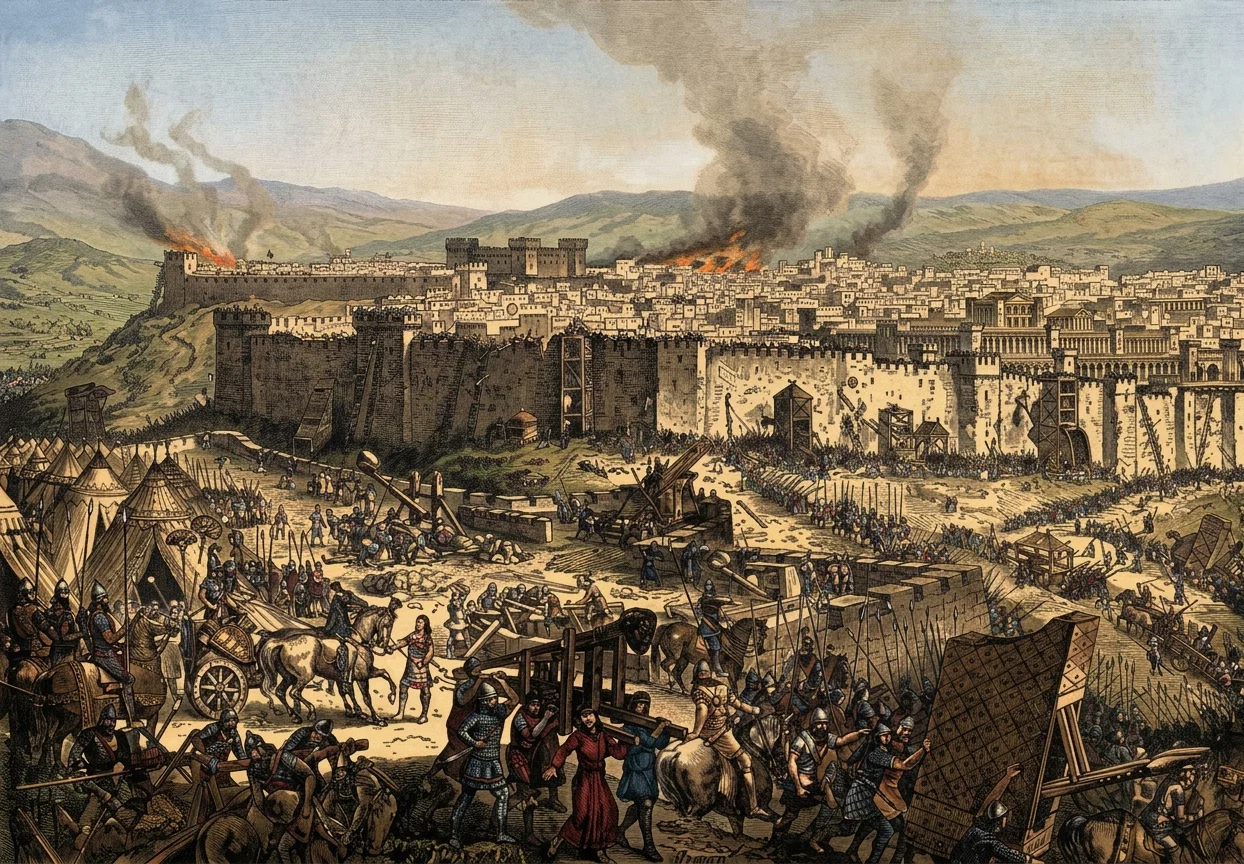
DESTRUCTION OF JERUSALEM.
He represented his people as a wild vine that he had taken from Egypt, and planted in Caanan, where he nourished and cared for it; but when he looked for it to bring forth grapes, it brought forth wild grapes. His people forgot God, and went into rebellion, but he did not withdraw his love. He sent his prophets to warn them, he instituted the sacrificial system so that they might have before their minds the one great Sacrifice, the one efficient Offering that was prefigured in their typical system. But for all his love and care, Israel abused their privileges from age to age, and their religion became a hollow formalism. Christ saw Pharisaical pride, self-exaltation, cruel, Satanic attributes, developed and cherished by the people who bore his name. They would not accept his invitation of mercy, and from national apostasy came a spirit of cruel persecution that ended in killing the very messengers that he sent to warn them of the result of their evil course. Christ saw his vineyard spoiled through cruel husbandmen until it became fruitless through ingratitude, through grace resisted, through their refusal to accept the opportunities and privileges which the God of compassion and love provided for them. For a thousand years they multiplied transgression upon transgression, and even rejected the Son of God, and were ready to put him to death. The cloud of God’s retributive judgment was about to burst upon them in unrestrained fury.
Jesus had dealt with Israel as would a loving father with a son. His love to Israel was represented in the parable of the prodigal son; but they had beaten back the waves of mercy, and, knowing what would fall upon Jerusalem, as he stands upon the mount of Olivet, his form is shaken with sobs of anguish. His heart is breaking with yearning. Tears flow forth from his eyes as he says, “How can I give thee up?”
The careless and the impenitent go on in their reckless course of disobedience, and harden themselves in rebellion against God; but they do not consider the value of the human soul. The world’s Redeemer was constantly seeking to lead men to a true appreciation of the value of the soul. He asked the question, “What shall it profit a man, if he shall gain the whole world, and lose his own soul? or what shall a man give in exchange for his soul?” A world sinks into insignificance in comparison with the soul. When Christ wept upon the mount of Olivet, he beheld with prophetic eye, not only the loss of one soul, but the destruction of a nation.
The world’s Redeemer had come from his royal courts, stepped down from his royal throne, had clothed his divinity with humanity, and for our sake had become poor, that we through his poverty might be made rich. In accepting Christ the sinful nations who were about to be destroyed might have accepted the riches of heaven, obtained an eternal weight of glory. Must his offering be in vain? In his mission on earth among men he had displayed the same power as he had displayed in delivering the nation from Egyptian bondage, in opening a path through the Red Sea, and in discomforting the army of Pharaoh. He had revealed enough of his divinity to show them that he was the Son of God, and that he was able to deliver them from the Roman yoke, if it so pleased him, and to give them temporal triumph; but it was the fact that he did not exercise his power in bringing to them temporal benefits in the way they desired, that led the scribes and the Pharisees to reject the world’s Redeemer. He bore a message denouncing every abomination in the land. He exposed their hypocrisies, and revealed the fact that their sanctity was only a cloak to iniquity.
The untainted purity of his life, the faultless character of his words and works, was a bitter reproof to the self-righteous but unclean pretenders to religion. He rebuked their course in weaving human traditions and the maxims of men into the laws of God, so that men were confused in regard to the laws of God’s government, and were led to make void his law through following human inventions. He said to them: “This people honoreth me with their lips, but their heart is far from me. Howbeit in vain do they worship me, teaching for doctrines the commandments of men. For laying aside the commandment of God, ye hold the tradition of men, . . . making the word of God of none effect through your tradition.” He charged the religious teachers with being ignorant both of the Scriptures and of the power of God.
The Jews hated Christ because he bore a beautiful, spotless character. He could hate but one thing, and that was sin. This hatred of sin on his part provoked their bitterest hostility. If he had given license to their pride, had fostered their ambition, and passed over their evil passions, their injustice, their fraud, their robbery of the poor, they would have applauded Jesus. They would not have been displeased that he healed the sick, that he had compassion on the suffering, that he raised the dead; but they were displeased because he condemned their evil works, and put them to an open shame by exposing their evil motives. He rebuked their long prayers on the corners of the streets, and the wearing of their long robes for the purpose of making people think they were very pious, when at the same time they would devour with exactions widows’ houses. They would not consent to reform and to be transformed in character; but they were determined by any possible means to get rid of Him who revealed their true character to the people, and paid no regard to their claims of superior sanctity. The fiercest and most inveterate enmity was put between Christ and these bigoted pretenders. The whole energy of the ranks of apostasy was called forth, and evil men conspired with evil angels for the destruction of the Champion of God and truth.
On the mount of Olivet Christ took a retrospective view of the ages and centuries that had passed, and realized what would be the crowning act in the nation’s apostasy. In putting to death the Son of the Infinite God they would add the last figure to the sum of their guiltiness. Can we wonder that the heart of Christ was filled with grief, and that while he wept in agonizing sobs, his form swayed as a tree before the tempest? He saw the retribution that would fall upon Jerusalem, and exclaimed: “O Jerusalem, Jerusalem, thou that killest the prophets, and stonest them which are sent unto thee, how often would I have gathered thy children together, even as a hen gathereth her chickens under her wings, and ye would not! Behold, your house is left unto you desolate.” “If thou hadst known, even thou, at least in this thy day, the things which belong unto thy peace! but now they are hid from thine eyes. For the days shall come upon thee, that thine enemies shall cast a trench about thee, and compass thee round, and keep thee in onevery side, and shall lay thee even with the ground, and thy children within thee; and they shall not leave in thee one stone upon another; because thou knowest not the time of thy visitation.”
The sheep gate was before Christ, and the path which led to the temple, and for centuries the victims had been conducted thither for sacrifice. The lambs that had been slain had been a representation of the great anti-typical sacrifice that in a few hours would be made for those who rejected his grace and compassion, the refusers of his offers of mercy. The only-begotten Son of the Infinite God would be led through the sheep gate as a lamb to the slaughter, while through the priests and rulers and through the common people would be manifested Satanic attributes. For a few moments the Son of God stands upon Mount Olivet, expressing the intense yearning of his soul that Jerusalem might repent in the last few moments before the westering sun shall sink behind the hill. That day the Jews as a nation would end their probation. Mercy, that had long been appointed as their guardian angel, had been insulted, despised, and rejected, and was already stepping down from the golden throne, ready to depart. But, O, that the rejecters of God’s mercy, full of zeal to sustain themselves in their own way, might yet turn from their man-made inventions, repent, and seek reconciliation with God! The shadows of twilight are beginning to gather, and, O, that Jerusalem might know the things that belong unto her peace! But now the irrevocable sentence is spoken, because “she knew not the time of her visitation.”
Jesus hears the tramp of the besieging army. He sees the temple in ruins. He sees famine and distress in the city. His prophetic eye sees Calvary, the hill upon which he shall be lifted up, planted with crosses as thick as the forest trees. He sees the very ones nailed thereon who clamored for his condemnation, and who cried out under their Satanic delusion, “His blood be on us and on our children.” The retribution that has fallen upon them is most terrible; for they are left to the mercy of the leader they have chosen, and Satan and his confederacy of evil angels wreak their spite upon the human family.
All this Jesus sees as the result of their refusal to accept his offers of mercy. Thus they have worked their own present and eternal ruin, and as a nation divorced themselves from God. He could say to the whole nation as he had said to Philip, “Have I been so long time with you, and yet hast thou not known me?” They had refused the messages of warning, of reproof, and mercy, that had been sent to them through the prophets, God’s delegated servants, tho these messengers had been sent to save them from taking such steps as would prove their ruin. At last God had sent his Son, and they had said, “This is the heir; come, let us kill him, and the inheritance shall be ours.”
“Have I been so long time with you, and yet hast thou not known me?” These words are applicable to very many in our own day. Many do not know him, tho he has been lifted up for us and crucified. They do not know him, tho a mighty angel from heaven parted the darkness from his track, and rolled back the stone from the door of the sepulcher, and Jesus, the Lord of light and glory, came forth from the rent sepulcher proclaiming himself the resurrection and the life.
Continue reading: Question Corner