Your ShelfYour Projects

Signs of the Times, Vol. 31, No. 16.

SIGNS OF THE TIMES

Signs of the Times

Apr 19, 1905

Pacific Press Publishing Company · Mountain View, California · Apr 19, 1905

SIGNS OF THE TIMES

PUBLISHED WEEKLY
BY THE PACIFIC PRESS PUBLISHING CO.,
Villa Street, . . . Mountain View, California.
(Entered September 15, 1904, as second-class matter at the Mountain View, Cal., post-office, under act of Congress of March 3, 1879.)
H. H. HALL, - - - - BUSINESS MANAGER.

Terms of Subscription.

Per Year, post-paid. . . . . . . . . . . . . . . . . . . . . . . . . . . . . . . . . . . . . . . . . . . . . . . . . . . . . . . . . . . . . . . . . . . . . . . . . . . . . . . . . . . . . . . . $1.50 Six Months, 75 cts. Three Months, 40 cts. To Foreign Countries, per year, $1.75.

SPECIAL TERMS.

1. One new yearly subscription and one renewal, or two new yearly subscriptions, sent at one time, $2.50.
2. Two new yearly subscriptions and one renewal, or three new yearly subscriptions, sent at one time, $3.25.
3. Three new yearly subscriptions and one renewal, or four new yearly subscriptions, sent at one time, $4.00.
Sample copies sent on application.

TO OUR PATRONS.

Please be careful to write all names of persons and places plainly.
Send money by Post-office Money Order, Express Order, or Bank Draft on New York, Chicago, or San Francisco.
Orders and Drafts should be made payable to the Pacific Press Publishing Co.
Paper money or silver should be sent in a registered letter.
Registered mail is safe. Unregistered mail is at the risk of the sender.
Postage-stamps in five or ten cent denominations will be accepted for small amounts.
The address label on your paper will indicate the time to which your subscription is paid. In case of non-receipt of papers, or any other irregularity, please notify us immediately.
When subscriptions expire, no more papers are sent to the party except by special arrangement.
You are requested to watch the date on your label, and renew early, and save the loss of papers. We can not always furnish missing numbers.
When requesting change of address, be sure to give both old and new addresses.
Important.—If you order SIGNS, Our Little Friend, books, etc., at the same time, use a separate sheet of paper for each. If this request is complied with, it will materially assist in the prompt and accurate despatch of the business.
When writing to the editor, be sure to use a separate sheet of paper.

A Subscriber's Encouraging Report

Irvington, N. J., March 29, 1905. Pacific Press Pub. Co., Mountain View, Cal. Dear Brethren:
Enclosed find M. O. for $7.50, which place to my account.
My subscribers are more than delighted with not only the improved appearance of the SIGNS this year, but with the contents. May the good work go on, and be a means of bringing many souls into the light of truth is my prayer.
I am of good courage, and strong in faith. Your brother in the Master's vineyard, W. H. LOOSE.

The Sabbath and the Law

The Sabbath and the Law.—A treatise on the Sabbath, giving its Biblical and secular history for six thousand years. 190 pages. Price, 15 cents.

The Lord's Day the Test of the Ages

The Lord's Day the Test of the Ages.—This pamphlet deals with the Sabbath institution from Eden to Eden, treating the subject in the light of three dispensations, viz.: Patriarchal, Levitical, and Christian, showing its binding obligation in all. It is illustrated, and also contains several valuable charts. 124 pages. Price, 10 cents.

Sunday in History

Sunday in History.—A vast array of historical facts regarding its development, and startling admissions of eminent clergymen relative to its sacredness. A mine of information in a nutshell. 232 pages. Price, 30 cents.
Address publishers of this paper.

One-Fifth of the Task

Accomplished

As our readers well know, special efforts have been made for some time to secure at least ten thousand new subscribers to the Signs of the Times. We are pleased to state that two thousand of these have already been received, and the interest in the work has not in any way abated. Here are extracts from a few recent letters, showing that such is the case:
SIGNS OF THE TIMES, Mountain View. Dear Friends: Enclosed please find P. O. Order for eight yearly subscribers to the Signs of the Times. Respectfully, J. J. JONES.
SIGNS OF THE TIMES. Please find $1.00, for which send the Signs of the Times to my address. I do not know the price now, as it has been several years since I was a subscriber. I am simply thirsting for the opportunity of reading it once more. HATTIE C. KELLEY.
PACIFIC PRESS PUB. CO. Enclosed find money order for three yearly subscriptions to the Signs of the Times. I. T. REYNOLDS.
SIGNS OF THE TIMES, Mountain View, Cal. Find enclosed $1.50 for my subscription to the Signs of the Times one year. I miss the Signs since my subscription expired, and feel that I can not afford to be without it.
Dear Christian Friends: I am more than pleased with the Signs. I can not afford to do without it, nor do I see how others can when they once become acquainted with it.
SIGNS OF THE TIMES. Please forward me the Signs of the Times for two years. Will find $3.00 enclosed for same. SULLIVAN WAKEHAM.
I always feel that I have a better backbone to my work when I have literature so full of Present Truth to be placing in the hands of the people as I have in the Signs of the Times. A SUBSCRIBER USING FIFTY COPIES WEEKLY.
Enclosed find P. O. Order for $10 to apply on account. Brother Schwartz sold 107 copies to-day; and I sold 114 copies. We did this in seven hours. C. DEWITT SHARP.

A New Series of Articles

We will soon have a series of articles on Present-day topics by Prof. Geo. W. Rine. Most of our readers will remember Professor Rine as the author of a very interesting chain of articles which appeared in the SIGNS last year under the general title, "The Industrial Conflict in the Light of Revelation." Perhaps they presented the great subject of Capital and Labor in the strongest, clearest, and most readable manner of anything that has ever appeared, but we believe these articles, a list of which are given below, will be still better. Certainly no one of our readers will want to miss a single one of the series, and we hope many will see that their friends and neighbors read them as well.
Why Our Lord Must Come Again, Apostasy and Confusion in the Religious World, Prevalence of Religious Vagaries, Recrudescence of Ancient Mysticisms, Revival and Dominance of Romanism, Present-Day Evolution and Combination of Wealth, Venality and Corruption of the Political World, Venality of the Commercial World, Greed Poisons the Fountains of Justice, The Ubiquity of Graft, Extremes of Opulence and Poverty, Lawlessness of Capital, Lawlessness of Labor, Industrial Federation and Strife, Oppressors Reap the Whirlwind, Greed and the Social Vice, In the Lap of Luxury, Prevalence of Crime, "The Nations Were Angry," Signs in Nature, Restitution of All Things.

REDUCED PRICES ON TWO OR MORE SINGLE SUBSCRIPTIONS

If you wish to send the paper to friends, or canvass for subscriptions, you will receive the benefits of our Agents' rates, which are as follows:
Two yearly subscriptions ordered at one time, or one new name and one renewal . . . . . . $2.50 Three new yearly subscriptions ordered at one time, or two new names and one renewal, 3.25 Four new yearly subscriptions ordered at one time, or three new names and one renewal, 4.00
Signs of the Times MOUNTAIN VIEW CALIFORNIA

THE RESURRECTION OF CHRIST.

MORE will be said during the month of April by the pulpit and religious press on the resurrection of Christ than in all the year beside. Why is this? Does the resurrection pertain to special seasons? Is it more important at one time of the year than another? What is its lesson? What does or should the resurrection of Christ mean to us? How should the great event be celebrated? How should it be remembered before the world? These are important and vital questions to every child of God, nay, more, to all people.

What Need of a Resurrection?

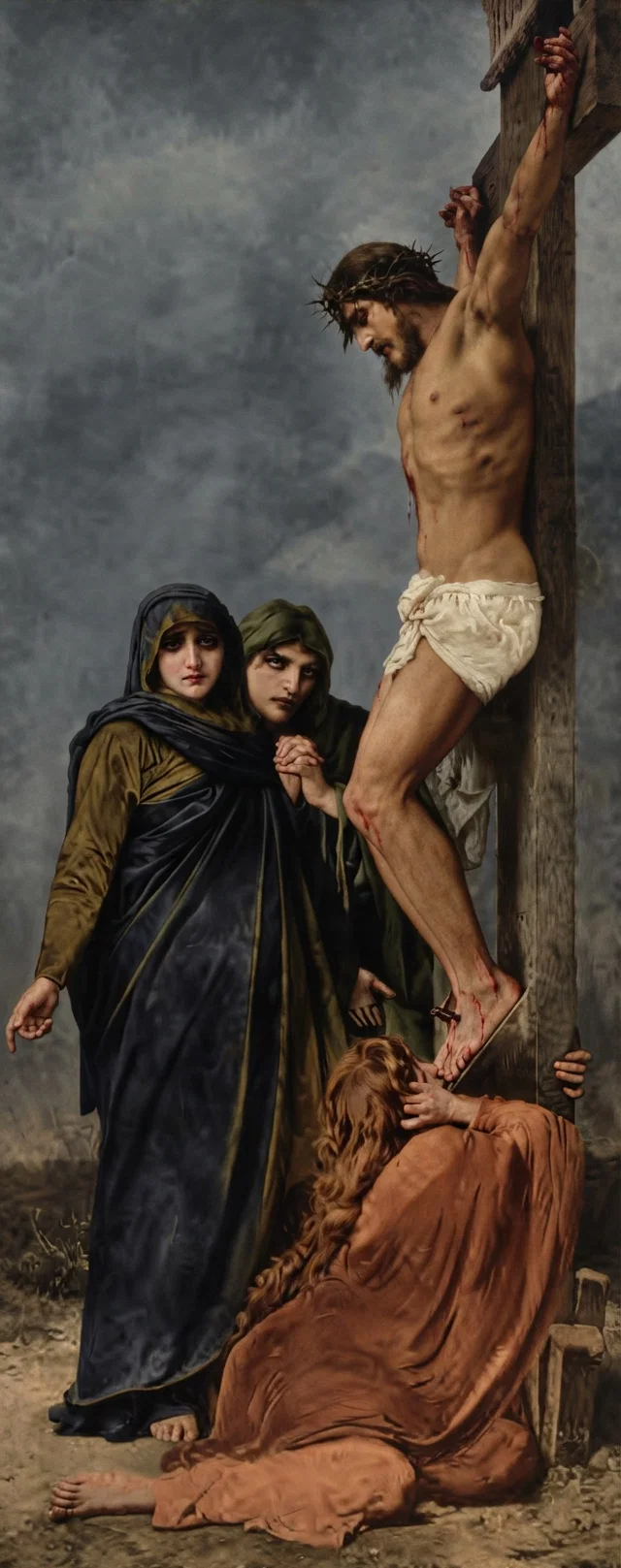
WHEN Jesus was taken down from the cross, He was dead. "Christ died for our sins according to the Scriptures; and . . . was buried." 1 Cor. 15:3, 4. This is one of the great facts of the Gospel. In order to live, He must have a resurrection. Death comes in consequence of sins. But Jesus Christ did not die because He Himself was a sinner. He kept the Father's commandments, and abode in His love. John 15:10. He "did no sin, neither was guile found in His mouth." 1 Peter 2:22. He "gave Himself for our sins." Gal. 1:4. God "made Him to be sin for us, who knew no sin; that we might be made the righteousness of God in Him." 2 Cor. 5:21. And so He died, and was buried, and hence the necessity of His resurrection.

Righteousness and Life.

HE died because of our sins; and He was raised because of His righteousness, or the righteousness of God in Him. For "in the way of righteousness is life; and in the pathway thereof there is no death." Prov. 12:28. He died, "the Just for the unjust," to bring us to God; He lives, the Prince of righteousness and life. The power which raised Him from the dead was the power of God manifest in a righteous life in sinful flesh. The law in Him was not "the law of sin and death," but "the law of the Spirit of life." Rom. 8:2. And "the Spirit is life because of righteousness." Verse 10. And as Christ was absolutely righteous, God "loosed the pains of death; because it was not possible that He should be holden of it." Acts 2:24. Death can hold forever only those who are identified with sin. Christ identified Himself with sin, but not for Himself nor in Himself; it was solely for others that He died. He lives because death can not hold the righteous. The resurrection is, therefore, the demonstration of the power of God triumphant over finished sin,—death,—even as it had been triumphant in a flesh of sin in His life.

"The Power of His Resurrection."

THE power by which He was raised is the power of God, the same power that is in the Gospel; "for it [the Gospel] is the power of God unto salvation to every one that believeth. . . . For therein [in the Gospel] is the righteousness of God revealed from faith to faith; as it is written, The just shall live by faith." Rom. 1:16, 17. The power of God in the Gospel is, therefore, the power which enables the child of faith to live the righteousness of God. This is the power of the eternal Spirit by which Christ was enabled to offer "Himself without spot," and by which His children fulfil or keep the righteousness of the law. Heb. 9:14; Rom. 8:4. It is the power of the life that Christ lived while on earth, and which He lives in every one who will have faith in Him. Gal. 2:20. It is the power by which we are "born from above," are made new creatures in Christ Jesus, "created" "unto good works," "in righteousness and true holiness." (See John 3:3-5; 2 Cor. 5:17; Eph. 2:10; 4:24.) This is the power of God, the power of His "endless life," the power of His "eternal Spirit," the power manifest in Christ's life over sin, the power triumphant over death.
That same power must be in us, and will be in us unless we receive the grace of God in vain; for "if any man have not the Spirit of Christ, he is none of His." Rom. 8:9. It is this power that the Spirit prays through the apostle that we may possess: "that ye may know . . . what is the exceeding greatness of His power to usward who believe, according to the working of His mighty power; which He wrought in Christ, when He raised Him from the dead, and set Him at His own right hand in the heavenly places, far above all principality, and power, and might, and dominion, and every name that is named, not only in this world, but also in that which is to come; and hath put all things under His feet, and gave Him to be Head over all things to the Church, which is His body, the fulness of Him that filleth all in all." Eph. 1:18-23. The resurrection, therefore, reveals to us a Conqueror over sin for the race of the lost ones in Adam, who was "declared to be the Son of God with power, according to the Spirit of holiness, by the resurrection from the dead." Rom. 1:4.

The Memorial of His Death.

THE death, burial, and resurrection of Christ are the three great facts of the Gospel. This the apostle clearly sets forth in 1 Cor. 15:1-4; after saying that what he had declared to the believers was the Gospel, which they had received, wherein they stood by which they were saved, he thus recapitulates: "For I delivered unto you first of all that which I also received, how that Christ died for our sins according to the Scriptures; and that He was buried, and that He rose again the third day according to the Scriptures."
Certainly, these great events, the death of the eternal Son of God, His burial, and resurrection, should be remembered, should be kept before the world, should be proclaimed, that others might receive it and be saved. Has God given such memorials?—He has. "As often as ye eat this bread, and drink this cup, ye do show the Lord's death till He come." 1 Cor. 11:26. The bread and wine of communion are a reminder of the death of Jesus Christ, which is continually and forever effectual—an occasional symbol of a continual spiritual feast of feeding on the Word and life of God. 1 Cor. 10:16, 17; John 6:54-56, 36. It is not on "Good Friday," or once a year, that Christ's death should be remembered, but "always bearing about in the body the dying of the Lord Jesus, that the life also of Jesus might be made manifest in our body." 2 Cor. 4:10.

The Memorial of His Resurrection.

THE burial and resurrection of Jesus Christ is symbolized by baptism. The same apostle writes: "Know ye not, that so many of us as were baptized into Jesus Christ were baptized into His death? Therefore we are buried with him by baptism into death; that like as Christ was raised up from the dead by the glory of the Father, even so we also should walk in newness of life. For if we have been planted together in the likeness of His death, we shall be also in the likeness of His resurrection; knowing this, that our old man is crucified with Him, that the body of sin might be destroyed, that henceforth we should not serve sin." Rom. 6:3-6.
But the careful reader will observe that it is not in the naked ceremony of baptism that the memorial is revealed. There is the likeness—the going down into the water, the whelming, immersion, burial, and the rising again. All this is of value only as it represents faith in the facts of the Gospel and the power of God. If the faith is genuine, it should mean a funeral and a wedding to all beholders. It says that the old man, the old life of sin, is dead, and we bury him forever; and that the new man is married to Christ, the One also raised from the dead, and whose life is in the believer. (See Rom. 7:4.) The ceremony of baptism itself is, therefore, but a symbol of the new life that is to be. It declares that the believer has forever renounced the world and sin, "that henceforth we should not serve sin." Such a life should bring forth the fruits of righteousness unto the glory and praise of God. It should declare that the Christian is a son of God by the "power of an endless life" in all the fruits of righteousness.
The value of Christianity is in its power, its life. If it be only the mere forms, the ceremonies, the ritual, the days, it is no better than Paganism. Its reality is in the power of the individual life over sin and in righteousness, of which the simple Christian ceremonies are but symbols. What a witness it is to the power of God to see a sinner, one who loved sin, who bore its varied, corrupting, loathsome fruit, a curse to himself and a disgrace to his family and neighborhood, transformed by the power of God to a righteous man, whose life bears the fruit of righteousness, peace, and joy in the Holy Ghost!
But this is no fancy picture. There are many such transformations yet, praise God. There would be many more if His professed people only knew Him and knew His power. If they knew Him, they would not need the recurrence of a spring pagan festival to bring the power of His resurrection to mind. They would not supplant His Sabbath by another pagan festival day in memory of a new event, a day never appointed of God.
The power of Christ's resurrection, the witness of that resurrection, is manifest in the righteous life of the believer, not for one day in the week, but every hour of every day. "Christ is risen!" Christian brother or sister, does your life show it? Are you "risen with Christ"? This is the vital question. What is His resurrection to you? Sinner, Christ desires to live His life in you. From beyond the tomb He sends the glad message to all, "I am He that liveth, and was dead; and, behold, I am alive forevermore, Amen; and have the keys of hell and of death." He has power to save you. He will live the same life in you that He lived while on earth—a life triumphant over sin. Will you let Him do this? If you have His power in your life; the resurrection to life and immortality awaits you.

THE RESURRECTION AND ETERNAL LIFE.

WHEN the apostle Paul was about to be "offered," or put to death, for his faith, he had faith to believe that there was laid up for him "a crown of righteousness." But he did not expect it until the Lord should come as a "righteous Judge," and give it to him—at the same time that all those who love His appearing should be rewarded. See 2 Tim. 4:6-8. This crown of righteousness is a "crown of life" (Rev. 2:10; James 1:12), and it is bestowed upon the dead saints when called to life at Christ's coming, and through an equivalent change upon those who are living at that time. This assurance is given as a "comfort" to the children of faith in the hour of death. See 1 Thess. 4:13-18.
These facts of Scripture account for Paul's expression of faith and hope in Phil. 3:8-11. Here he says: "I count all things but loss for the excellency of the knowledge of Christ Jesus my Lord; for whom I have suffered the loss of all things, and do count them but dung, that I may win Christ, and be found in Him, not having mine own righteousness, which is of the law, but that which is through the faith of Christ, the righteousness which is of God by faith; that I may know Him, and the power of His resurrection, and the fellowship of His sufferings, being made conformable unto His death; if by any means I might attain unto the resurrection of the dead."
Therefore a profession of faith in Christ would be of no avail without a resurrection. "If in this life only we have hope in Christ, we are of all men most miserable." 1 Cor. 15:19. Paul held up before the Jewish council the resurrection as the hope of Israel. Compare Acts 23:6 with chapter 28:20.
Christ died for our sins according to the Scriptures; and . . . was buried.
But there can not be any hope of a resurrection to a future life without a death. "That which thou sowest is not quickened, except it die." There could not have been any resurrection of Christ, and therefore no hope for us through a resurrection from the dead, if Christ had not died. We were all "dead in trespasses and sins," from which condition there was no relief, excepting through the death and resurrection of Christ. There was no way for Him to save sinners, excepting to bring them up from the dead, and He could not do this unless He Himself died in their behalf, unless He Himself paid the penalty of the law that hung over the race. Sin and its consequences are the works of the devil, and Christ tasted "death for every man" (Heb. 2:9) "that through death He might destroy him that had the power of death, that is, the devil." Verse 14.
In foretelling His own death Jesus said to the people, "Verily, verily, I say unto you, Except a corn of wheat fall into the ground and die, it abideth alone; but if it die, it bringeth forth much fruit." John 12:24. So He went down to the tomb, into "the valley of the shadow of death," to procure children for His kingdom. The children of God are "the children of the resurrection." Luke 20:36. This is the Christian's faith and hope; so, "if there be no resurrection of the dead, then is Christ not risen; and if Christ be not risen, then is our preaching vain, and your faith is also vain." 1 Cor. 15:13, 14.
But Christ is risen, praise the Lord, which fact stands as the climax of the power of God. See Eph. 1:19, 20. And we have the encouragement of His personal testimony that the Father hath given to Him power to give life to whom He will. Not only did He, while on earth, declare Himself to be "the Resurrection and the Life," but He has revealed Himself from heaven, giving us this assurance: "I am He that liveth, and was dead; and, behold, I am alive forevermore, Amen; and have the keys of hell [hades, the grave] and of death." Rev. 1:18. Having the keys of the grave gives Him full power and authority over this prison-house of Satan. Therefore every true Christian may know that there is laid up for him a crown of righteousness—not his own righteousness, but the righteousness of Christ, which means a crown of life. A full faith in this promise will cause him to look for and love the appearing of the Lifegiver in glory. G.

SIN IS DEATH.

Not only is the penalty of sin death, but sin of itself is death. Not only is death in the sin, but the sin of itself is all death. Sin may not appear death. In the beginnings of leprosy we do not see the dread disease, but when full grown we see it in all its fearful effects and repulsiveness. But it is no less incurable in the beginning than when fully developed.
The human family is stricken by the dread disease of sin. In its incipient stages it does not seem death, and we laugh at its presence, amuse ourselves with its mild stings, and slumber under its intoxicating wine; yet, nevertheless, “sin, when it is full-grown, bringeth forth death.” Death is its legitimate fruitage. He, therefore, who chooses sin chooses death. It matters not how harmless, beautiful, entrancing, delightful, or joyous sin may seem, to choose it means to choose death.
To choose sin against light and warning, means to reap by and by utter extinction of being. For it is not God's will that sin should exist forever; He will sometime have a clean universe, where all intelligences praise Him. Rev. 5:13. Sin will be destroyed, and every soul which has identified himself with sin will be destroyed with it. He thereby cuts himself off from the life of God, and must, apart from Him, inevitably and eternally perish.

THE RESURRECTION, THE CHRISTIAN'S HOPE.
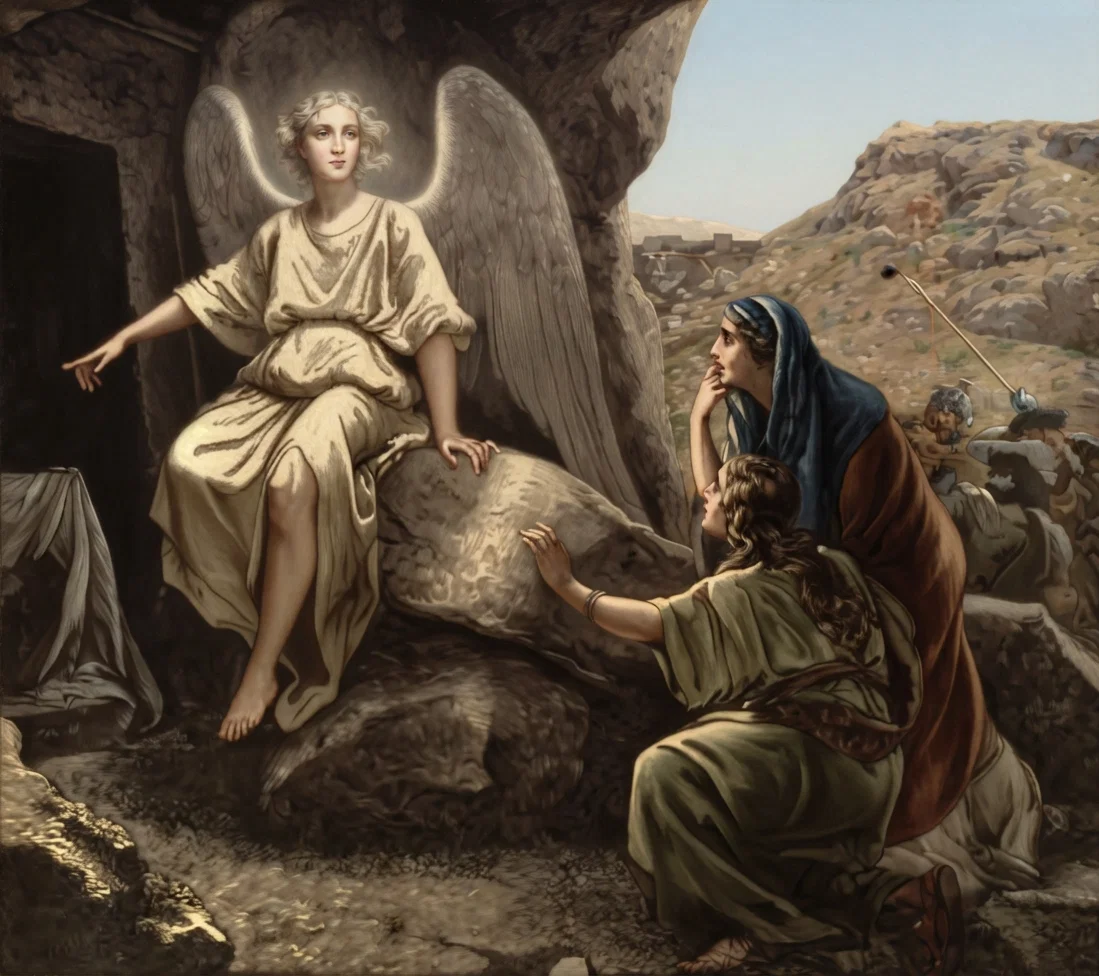
A FUTURE life is contingent upon a resurrection from the dead. "In Adam all die." As head of the race, his transgression brought his posterity, with him, under the decree of death. God could have cut him off, and, in cutting him off, cut us off also, and so have allowed His purpose in the creation of man to be frustrated by him who is at once the enemy of God and man.
God did not elect so to do. Death must come as the result of the transgression; but death must not be allowed to frustrate His glorious purpose. So Father and Son provided a way by which death is compelled to release its prey, Satan's plans be frustrated, and the purpose of God be accomplished. "As in Adam all die, even so in Christ shall all be made alive." Just as true as is the fall, just so true is the rising again from that fall. Just as sure, then, as Adam lived and died, and Christ lived, died, and rose again, just so sure is it that, tho we die, we may live again beyond the clutch of death, beyond the bars of the tomb. There is one condition—that we come into that relation to Christ known as being "in Him." It was being out of Him, out of harmony with His will and purpose, that made sinners of men, and put a gulf of separation between heaven and earth in a spiritual sense. That put God's own handiwork under a curse, and brought weeds, waste, and desolation into the fruit and flower-bearing fields of this earth.
"And . . . He rose again the third day according to the Scriptures."
But, true as it is that death and desolation have come, and destruction is decreed upon all that continue outside of God, yet "in Christ shall all be made alive." They "shall come forth; they that have done good, unto the resurrection of life; and they that have done evil, unto the resurrection of damnation." John 5 : 29. There is no place in this for misunderstanding. Life and immortality are bestowed at the resurrection to those who are accounted worthy to receive them; and at that same time those who are living and are accounted unworthy of life, are slain by the brightness of His coming, to be reserved for the resurrection of the unjust. Again: "There shall be a resurrection of the dead, both of the just and unjust." Acts 24 : 15. Through the resurrection, men are ushered into eternal life or eternal death. Without a resurrection, there is no promise of life eternal.
The resurrection of Christ to life is a pledge of God that there shall be a resurrection of those who are His to the life He has to give. We read: "If we believe that Jesus died and rose again, even so them also that are fallen asleep in Jesus will God bring with Him." 1 Thess. 4 : 14. Some in the early church had been teaching that there would be no resurrection of the dead. Paul took direct issue with such teachers, and declared: "But if there is no resurrection of the dead, neither hath Christ been raised; and if Christ hath not been raised, then is our preaching vain, your faith also is vain; . . . and if Christ hath not been raised, your faith is vain; ye are yet in your sins. Then they also that are fallen asleep in Christ have perished." 1 Cor. 15 : 13-18.
There is one conclusion that must necessarily be drawn from this scripture, and that is, that men do not have inherent immortality. For, if there be no resurrection, all who die are perished. If men are now immortal, then, whether there be a resurrection or not, death does not end existence. The immortal man, at death, would simply pass from one state of existence to another, and would not—could not—perish. But the Scripture leaves no ground for such an hypothesis. Without the resurrection, heathen and Christian alike would remain in their graves forever.
Immortality is a part of the reward which Christ is to bring with Him when He comes back to this earth, to close the epoch of sin and usher in the reign of righteousness. He tells us, in His last letter to His church: "Behold, I come quickly; and My reward is with Me, to render to each man according as his work is." Rev. 22 : 12. At His coming, this is what occurs: "The Lord Himself shall descend from heaven, with a shout, with the voice of the archangel, and with the trump of God; and the dead in Christ shall rise first." 1 Thess. 4 : 16. "We all shall not sleep, but we shall all be changed, in a moment, in the twinkling of an eye, at the last trump; for the trumpet shall sound, and the dead shall be raised incorruptible, and we shall be changed. For this corruptible must put on incorruption, and this mortal must put on immortality." 1 Cor. 15 : 51-53.
From these scriptures we see that this change from mortality to immortality and the resurrection of the righteous dead and the second coming of Christ, all take place at the same time. Immortality is bestowed upon those who are worthy of it when Christ comes back to earth. Therefore, it could not have been in the possession of men and women up to that time. Immortality would not be bestowed upon those who already had it. The righteous dead had not received life up to that time, except in promise. They receive it then. They had not possessed immortality up to that time. They receive it also at that time.
But mark this: In none of these scriptures, nor in any other scripture, is there assurance given to any that they will receive immortality and eternal life, save through the door of the resurrection. Of course, those who are alive at the time of the second coming of Christ, at the time the righteous dead are raised, are exempt from death, and so from the necessity of a resurrection; but the "change" of which the apostle speaks, and which takes place in them at the time of the first resurrection, is just as much a change from mortality to immortality, as it is in the case of those who pass through the tomb. The "corruptible" living mortal, and the mortal who has seen "corruption" in the tomb, are both made "incorruptible" at the same time, according to the plain teaching of the scriptures above quoted.
The modern church makes but little of the resurrection; the early church made much of it. The modern church is making much of present, inherent immortality; the great apostle of the early church contended against it with all the power of pen and voice. The popular modern church teaches the reception of the Christian's reward at death; the Revelator declares, through the prophet John: "Behold, I come quickly; and My reward is with Me, to render to each man according as his work is."
So I repeat, without the resurrection from the dead, none of the dead shall ever see eternal life; and that resurrection does not take place until Christ shall come in the clouds of heaven. In the resurrection lies the hope of the Christian.

Steps Nearer to Heaven

EVERY attempt to make others happy, every sin left behind, every temptation trampled underfoot, every step forward in the cause of what is good, is a step nearer to heaven. —Dean Stanley.

Rich Men and Poor Men

THERE are two things needed in these days: First, for rich men to find out how poor men live; and second, for poor men to know how rich men work.
Continue reading: GREED AND THE ADULTERATION OF FOODS