THE Protestant who writes concerning the low state of morals and religion in the Roman Catholic Church just previous to the Reformation of the sixteenth century, is at once discredited by all members of that communion, on the ground that he is a prejudiced witness, quite incapable of presenting the actual facts. No such charge, however, can be made against a Roman Catholic writer of good standing whose work bears the necessary imprimatur. We therefore present herewith some extracts from “Manual of Church History,” by Dr. F. X. Funk, Roman Catholic professor of theology in the University of Tübingen, a work which was published in London, 1910, having the imprimatur of Archbishop Bourne’s vicar-general, dated May 16, 1910. Writing of church reform before the Reformation, Dr. Funk uses the following plain language with reference to the spiritual condition of the church at that time:—
To tell the truth, the parish clergy were not in a temper to think of their own moral elevation, being in sad straits owing to the oppression practised by the monasteries and cathedral chapters, which, after having appropriated most of the parishes, refused to give their secular vicars more than the merest pittance. So wide-spread was concubinage that a French council complained (Paris, or Sens, c. 23, 1429) of the general impression being prevalent that fornication was merely venial. At Constance and Basel the abrogation of clerical celibacy was proposed by no less a person than the Emperor Sigismund. Even small towns in this age owned their public brothels. Faced by all these evils, the heads of the church made proof of astounding forbearance, preferring to leave things alone, so long as their own rights, and claims, and revenues were left untouched. The period was deeply conscious of its own irregularities. Throughout it we have to listen to complaints, and demands for reform. Though this is, of course, a pleasing feature, yet the fact that, in spite of countless desires and efforts, two centuries did not suffice to purge the church, is a sad witness to the deeply rooted character of the evils.—Vol. II, page 77.
In the same volume Dr. Funk states some facts concerning the Jesuits, that powerful organization which has contributed so much to the upbuilding of the Papacy and the undoing of the work of the Reformation during the last three hundred years. In his chapter on the suppression of the Jesuits, the following paragraph is found:—
As we have already had occasion to see, the Society of Jesus had done great service in the cause of the church. In the course of time, however, when nearly all the schools of the Catholic world had come under its control, and when its members were everywhere in demand as confessors and confidential advisers to the princes, it attained a position not devoid of danger. The society soon acquired a strong spirit of independence, which it did not hesitate to display even toward the Holy See. In effect, the determination with which the Jesuits adhered to their rites and usages in Malabar and China, in spite of their condemnation by Rome, can only with difficulty be reconciled with their vow of obedience, even though all allowances be made for their being convinced of the necessity of their methods. Their conduct was repeatedly made a subject of complaint by Benedict XIV. In his bull Immensa Pastorum (Dec. 20, 1741), he was compelled to recall to the Jesuits and to other orders the precepts of Christian charity, and to forbid them to hinder the progress of the gospel among the Indians by trading in slaves, and other inhuman practises. In this matter he was indeed obeyed, but in other directions the proceedings of the society remained open to criticism.—Page 173.
The author of this history, unlike some other Roman Catholic historians, gives due consideration to facts even though they do not always tend to the glorification of the Papacy. He admits that the great Reformation “was not without wholesome results.” Unlike other Roman Catholic writers who regard it as their first duty to exalt the church, and who apparently think it so much the worse for the facts when they do not accord with their theory, Dr. Funk does not attempt to overthrow or to belittle the great reform of that period by abusing Luther and his associates, but candidly gives credit to it for a great improvement in the affairs of the Roman Catholic Church. To use his own words:—
For the West the greater misfortune was the schism of the sixteenth century, yet, however regrettable, it was not without wholesome results. It has often been questioned whether, had it not occurred, a reform of the church [of Rome] would have been possible. To return a simple negative to this question would indeed be to despair of the church’s vitality and providence. On the other hand, there can be no doubt that the reforms were far too long delayed, and that they were introduced only when the church had been shaken to her foundations, and when a large fraction of the world had already abandoned her in disgust. History also shows us that the wholesale apostasy not only preceded, but actually caused the reforms within the church; hence there can be no doubt that the church’s improvement is closely bound up with the Protestant Reformation.—Page 271.
So much of the so-called history prepared by Roman Catholic writers is warped by the spirit of dogmatism and bigotry as to render it of little value. It is, therefore, quite refreshing to read7after an author who exhibits the spirit of the historian rather than that of the servile defender of the Papacy. These extracts from Dr. Funk’s history are of value in establishing the reliability of those Protestant historians who arrive at the same conclusions as the result of impartial investigation. W. W. P.
A Year-End Look Over the Fields
By W. A. S.
What ought we to see, according to the prophetic picture of the closing gospel work? We ought to see a movement, spreading to every nation, bearing the cry, “The hour of His judgment is come,” and calling men from the traditions of the Papacy to the keeping of the commandments of God and the faith of Jesus. That is the prophetic picture.
What do we see? As we look out over the world in this last month of the year 1911, we see this: The advent movement in the north and south and east and west of every continent; on every continent the judgment-hour cry is lifted; and on every continent the message is bringing out a people keeping the commandments of God and the faith of Jesus. That is the picture that we see as we lift up our eyes and look on the fields.
What the “sure word of prophecy” declared ages ago of the closing gospel work, we see fulfilling before our eyes. Long strides have been taken by the message in 1911. Thousands of new voices have this year been added to the number thanking God for the “blessed hope.”
Not so many missionaries have been sent out, probably, as in some former years. Yet when the list is published, it will be found that the irresistible pressure has thrust forth a larger number than was contemplated at the beginning of the year. God grant that the gifts to sustain them at the battle’s front may be found also to be larger than estimated at the beginning of the year.
The European Division has entered Persia. On May 18, Brethren F. F. Oster and H. Dirksen crossed the Persian border, and that ancient land of Cyrus and Darius is brought at last within our missionary boundaries. New forces are headed for Upper Egypt, hoping ere-long to open the Egyptian Sudan; and in Asia Minor the new Armenia Mission has been organized. The Central Asian fields have also been organized as the Siberian Union Mission.
In these days of rapid expansion we must needs be earnest students of geography if we but keep track of the lands and tribes to which the work is hastening. Strange names announce to us that the message is penetrating “the uttermost parts of the earth.” For instance, here is an extract from the minutes of a meeting of the European Division committee, fixing the five fields of the new Siberian Union:—
1. That the Volga field contain the Don territory, and the governments of Astrakhan, Saratof, and Simbirsk.
2. That the new Ural field be composed of Samara, Orenburg, Ufa, Kazan, Viatka, and Perm.
3. That the West Siberian field consist of Uralsk, Turgai, Akmolinsk, Semipalatinsk, Tomsk, Tobolsk, and Semirechinsk.
4. That the East Siberian field take in Yeniseisk, Irkutsk, Transbaikalia, Yakutsk, Amur, and Coast District.
5. That the Turkestan field contain Ferghana, Samarcand, Syr-Daria, Transcaspian Territories, Khiva, and Bokhara.
We must keep wide-awake to follow the flight of the message to-day by our prayers and interests and gifts.
Elder F. G. Lane, of the West Indian Union, reported the first baptisms in Venezuela, South America, this year; and in Peru the work for the Indians of the high Andes has been placed on a permanent basis by the location of a mission station under Brother F. A. Stahl.
South Africa has one new main station established, under Elder M. C. Sturdevant, at Tsungwesi, in eastern Rhodesia, and the various South African missions report new out-stations.
Australasia has plans for opening work in the island of Niue, mid-Pacific, and in the New Hebrides group, though we can not say whether the laborers have already been sent forward.
Representatives of the message are in the Shan States, of Burma, next to the Chinese border. Dr. Ollie Oberholtzer Tornblad reporting that Brother Tornblad and herself have found a good location where they can combine business and missionary enterprise.
Last of all, the Canary Islands have been added to our list. Brother B. B. Aldrich and family are just landing there to unfurl the first standard of this message to be planted in that group.
Thus, though the financial need in fields already entered called for a holding back from the opening of new fields this year, much new territory has been added. The work itself breaks forth, as the prophecy says, “on the right hand and on the left.” Every year the divine command urges us on, “Spare not, lengthen thy cords, and strengthen thy stakes.” There is to be no end to this commanding pressure, until the Lord appears, no place to stop.
The sealing message follows the sun-rising round the earth. And every hour of the twenty-four, now, commandment-keepers of some nation or tongue greet the break of each day with prayer and praise for the blessed advent message. “From the rising of the sun even unto the going down of the same,” saith the Lord, “my name shall be great among the Gentiles.”
“We thank Thee that thy church unsleeping,
As earth rolls onward into light,
Through all the world her watch is keeping,
And rests not now by day or night.
“As o’er each continent and island
The dawn leads on another day,
The voice of prayer is never silent,
Nor dies the strain of praise away.
“The sun that bids us rest is waking
Our brethren ’neath the eastern sky,
And hour by hour fresh lips are making
Thy wondrous doings heard on high.”
This advent movement is of God; and it is marching swiftly on along the path marked out in prophecy to triumph in our day. To triumph with it will demand now our soul, our life, our all.
W. A. S.
Our Greatest Need
By F. M. W.
WE have reached in the experience of our work another week of prayer occasion. It seems less than twelve months ago that we enjoyed the last season of refreshing, so rapidly have the days come and gone. We hope that every soul can look back and see many victories gained during the year that has passed.
As we come to this season of special seeking of God, it is well for us to consider our particular need, first, in a denominational way, and second, as individuals. Many needs exist. One great need of the church is increased facilities to carry on the work committed to it. Men and women are needed to carry the message to the thousands of unwarned souls on every side. Money is needed to send these laborers forth. There is need of means for the payment of our institutional indebtedness, for the erection of church buildings, and for the launching of many new enterprises. But over and above all these material needs, there is one great need,—the need,—namely, more of the Spirit and power of God in our denominational work.
We have a splendid organization, in the formation of which we believe God has especially directed. But the organization of itself can not meet God’s purpose in the accomplishment of his work. Of itself alone it is powerless and inert. The great need of Seventh-day Adventists as a church to-day is the power of the Spirit of God. That Spirit which Ezekiel in heavenly vision saw controlling the wheels of the divine throne needs to control the wheels of our church organization, and so direct them and operate them that they shall become a living power for God and for righteousness in the earth.
In Ezekiel’s vision, as recorded in the tenth chapter of his book, the wheels8of this living organism were “full of eyes round about.” These eyes denote intelligence. The movements of the living organism were not aimless and indifferent. Every movement was the result of purpose, and was part of a well-directed effort.
God designs that this same motive power shall be connected with the wheels of this organization; and when this Spirit of wisdom permeates the work, how many aimless and futile plans will be turned into well-directed efforts! Our labors will not be in vain in the Lord, but blessed results will attend the efforts put forth on every hand. O, we need this in our work to-day! How much time we spend in planning, and in discussing resolutions! How much earnest effort we put forth in various directions, and but little or no results are seen! Beloved, this is not in God’s order. O, he wants this movement a mighty moving power in the world! Before this great truth he designs that the nations shall bow their heads, the strongholds of Satan be cast down, and light and truth and blessing and power extend to every part of the earth. Shall we not pray most earnestly and devoutly during this season of prayer that this mighty outpouring of the blessed Spirit of God may come into this work and rest upon our denominational efforts? This visitation of divine power is the greatest need of our church at the present time.
What do we need as individuals? Our material needs are many. Some, perhaps, may be lacking the comforts of life. Many lack conveniences. We can see many things that we desire in order to make our homes more comfortable. Some long for better health, for greater temporal prosperity; but in our individual experience all these needs are subordinate to the one thing above all others that every life should possess, and that is a closer living connection with the Lord Jesus Christ. We need in our own hearts the Spirit of power. We need it to subdue our iniquities, to give us the victory over envy and jealousy and malice and evil-speaking. Indeed, as members of the church of Christ, we must personally experience this power before we shall see its mighty manifestations in connection with our organized work. God must first control the individual life. He must first be permitted to come in and cleanse his people individually. This prepares the way for his mighty workings in behalf of his church.
Our personal salvation depends upon this living experience in God. We can not gain heaven through our physical efforts. We can not purchase a passport to glory by the payment of tithes, by giving to foreign missions, by resting from physical labor on the seventh day of the week, or by carrying on a missionary propaganda among our neighbors. On the other hand, if we gain heaven, we shall do these very things. To engage in such service as a means whereby we shall gain the favor of Heaven, is quite different from doing it as a result of the indwelling of the blessed Spirit. God desires that Sabbath-keeping, that tithe-paying, that giving to missions, should exist in the service of our lives as the fruit of the blessed union that he wants us to have with him, our good deeds springing from a renewed heart, not taken on from the outside.
Shall we not now seek this blessed union,—a union so complete in its surrender to God, so satisfying in its holy, elevating joy, so inspiring our motives and purposes, that God’s service shall become a pleasure, and that what we do, whether it be the keeping of the Sabbath of the Lord, the giving of our all to God’s needy cause, the traveling from door to door with the printed truth, shall be a pleasure because it is done for the One we love? O, this is the inspiration we need in our lives! This is the incentive to Christian service for which we should seek. For this spirit of blessed union with Jesus every heart should cry out eagerly.
When this individual oneness with the Lord exists, it will bring oneness into the church. As brethren and sisters our hearts will be melted together in the bonds of holy love. Wicked, unkind criticism, the greatest bane and curse that can enter the church of God, will be banished, and with one heart and with one united spirit the believers will give themselves to the speedy finishing of this message. Let every heart during this season of prayer plead for this revealing of God in the individual experience. THE CLEANSING, ENERGIZING POWER OF THE HOLY SPIRIT IS OUR GREATEST NEED. F. M. W.
In the Beauty of Holiness
By C. M. S.
SIN stripped man's Eden raiment from him, and left his soul as naked as it did his body; and as long as we remain in sin, we have no covering for the soul. Naked we stand in the presence of all the clothed hosts of heaven, even as our first parents stood in the presence of all the other clothed creatures of the world.
But God has promised a clothing for those who forsake sin. He says: “He that overcometh, the same shall be clothed in white raiment; and . . . I will confess his name before my Father, and before his angels.” Rev. 3:5. As sin unclothed man, righteousness will clothe him,—not his own righteousness, for in the sight of heaven that is but “filthy rags.” That covering will be composed of the righteousness of him who lived the life of the human on earth sinlessly, and shed his blood for man's redemption. It is in the robe of Christ's imputed righteousness that redeemed man must appear in the presence of God, even as it is written: “He hath made him to be sin for us, who knew no sin; that we might be made the righteousness of God in him.” Thus “clothed upon,” the soul will stand arrayed in the beauty of the perfection of Christ.
But nature suffered with man in the fall. Her form and face have been altered as much as his in the tragedy that opened with his disobedience. And as the human still bears some resemblance to the Eden man, so does nature as we see her still bear the imprint of the divine Sculptor, who shaped and fashioned her features, and pronounced them “very good.” There is enough still that is lovely to point us back to Eden lost, and forward to Eden restored.
In the beautiful rivers that run down from the mountains to the sea, we have still a slight reminder of the rivers of Eden that flowed out to the four corners of the earth to water and beautify it. They are also still a symbol, though shattered and imperfect, of that “river, the streams whereof shall make glad the city of God;” of that “pure river of water of life, clear as crystal, proceeding out of the throne of God and of the Lamb.”
In the beautiful trees that God permits still to bedeck this scarred and groaning earth, we have a reflection of the trees of the garden that furnished food for our Eden parents, and of that tree of which, though they might not partake under penalty of death, yet partake they did, and surrendered their dominion to the powers of darkness. Though dim reflections of former beauty, still they carry our minds forward to that other tree in the city of God, standing on either side of the river of life, whose leaves are for the healing of the nations. How they, though marred and imperfect, bridge the chasm from Eden lost to Eden regained!
And the mountains of earth, how they speak to us of the power of God, who has “comprehended the dust of the earth in a measure, and weighed the mountains in scales, and the hills in a balance.” In all their towering grandeur, ragged, rugged, and irregular, they speak of a hand of power whose strength earth has no meter to compute. They are the sources of the rivers, and so they tell us of him who is the Source of the great river of life and salvation. They remind us also of the dwelling-place of God, “in Zion, my holy mountain.” They cause us to think of Jerusalem restored, which is to be “the mountain of the Lord of hosts, the holy mountain.”
Group them in the gallery of the mind, these mountains, rivers, wooded hills, and flower-strewn plains, and they still9tell us in wondrous chorus of the goodness, the power, the wisdom, the mercy, the long-suffering, and the love of our Father, the builder and the maker of all. But group them as they one day will be grouped for our view when they are all clothed again in the “beauty of holiness,” and when we can look upon them with eyes undimmed and unfettered by sin, and we shall need the tongue of immortality to tell the half of the beauty of that wondrous scene.
In that glorious grouping of the beauties of God's renewed creation, the “beauty of holiness” will have brought back the harmony and perfection lost through the regency of sin in this portion of the universe. In that beauty of holiness must those stand whose eyes are permitted to behold the beauties of that renovated realm. In the beauty of holiness let us serve him, that we may stand clad, on that day, in the garments of his righteousness. No taint of sin will be there; no tear shall dim the eye; sorrow and sighing shall flee away.
C. M. S.
This Week of Prayer and the Great Revival Movement Planned For
By Arthur Grosvenor Daniells
At the recent fall meeting of the General Conference Committee it was decided that during the coming winter there ought to be carried forward in all our conferences in North America an earnest revival movement among our churches. The object of this movement is to increase the zeal and courage of the faithful, to reclaim those whose feet may be slipping, and to lead all the unconverted young people in our ranks to surrender their lives to their Lord and Master. It is to bring a great revival of spiritual life, devotion, and power to all our people.
Such a movement must surely appeal to our conference officers, ministers, and brethren and sisters generally. We love our Lord and Saviour, who has given us so much of the light of his glorious gospel; we love the cause of the third angel's message, and desire to do all we can to hasten it forward to its final triumph; yet we are all conscious of a great need of a deeper religious life. We need a larger measure of the love of Christ for a lost world; we need greater power to win personal victories over sin; and we must have greater success in our soul-winning efforts.
It is to bring to all our people these great blessings that this general revival work is to be carried on this winter. This movement should begin in every conference and in as many churches as possible the first Sabbath of the week of prayer, and it should continue until every church receives the help it needs and desires. All who want the blessing of a great spiritual revival should begin at once to pray for this movement. God loves his people whom he has gathered together by the threefold message of Revelation 14. He wants to make them a truly spiritual, victorious people. He knows that only his grace and power can do this, and he will give us sufficient help as soon as we sense our need, and seek him with all our hearts.
There seems to be a strong conviction in the minds of many of our most earnest brethren and sisters that the time has come for God to give us a great spiritual blessing. For many years we have been working the best we knew how to provide facilities of every kind for the advancement of our cause. We have built up printing-houses, and have provided a large variety of valuable literature. At the same time we have thoroughly organized our publishing department, and we now have a splendid army of young men and women trained for that particular line of work. We have also established schools, trained teachers, and gathered thousands of young people into these institutions of learning to prepare them for rendering efficient service in all departments of the cause. During the last ten years special attention has been given to the reorganization of our administrative department. We have organized local and union conferences and mission fields in all parts of the world. Hundreds of men and women have been called to places of responsibility in the administrative affairs of the cause. Missionaries have been located in nearly all the countries of the world.
But all these are of little avail without the power of the Holy Spirit. We need the Spirit of God to take possession of all these workers and facilities, and sound the loud cry of the third angel's message. Nothing less than a great revival of spiritual life and power is called for by the earnest appeal that has come through the spirit of prophecy in behalf of the great masses located in our cities. While we have been developing plans and facilities for efficient work, we have reached many thousands in the towns, villages, and rural districts of the United States; but we have hardly begun our work in behalf of the masses located in the populous cities of our Eastern States and in other lands. As we now enter upon that important and difficult undertaking, we need special help from God. The call to work the cities of the world seems like the call to arms in the closing struggle of the conflict. In order to achieve the success that must attend our efforts in finishing the work in this generation, we must all be endowed with the power of the Holy Spirit.
The revival of new consecration and spiritual life has already begun with our ministers and Bible workers in the ministerial institutes that have been held. That is where it should begin, and it must continue until they are fully consecrated to the great work God has given them to do, and are endowed with the divine power they need to win the lost to Christ. But it is not enough for this revival of consecration and spiritual power to come to the workers in our cause. It must come to all the people. Every one must experience this; then every one will be aroused and impelled to do all in his power to hasten forward this work. When all stand in this relation to Jehovah and his cause, the power of God will make our efforts effective, and thousands will be constrained to take their stand for the truth; and so the earth will be lightened with the glory of God, and the Lord will come.
In view of these considerations, the coming week of prayer should surely be a season of earnest, importunate, prevailing prayer. It should mark the beginning of a great spiritual revival. This it will do if it is observed as conscientiously and whole-heartedly as it should be. May the love of Christ constrain us to do our part at this time.
A. G. DANIELLS.
Sabbath Visiting
By F. M. W.
We need to be continually on our guard lest the standard of the world around us in the observance of the first day of the week, does not become our standard of Sabbath observance. With the multitudes, Sunday is not regarded as a sacred day, but rather as a holiday. This is due no doubt to the fact that in the Sabbath controversy of the last few decades, the majority of Christian people have come to recognize that Sunday, as the Sabbath, has no divine recognition, that in its very nature it is but a holiday, the same as Christmas or Washington's birthday, etc. But this is not true of the Sabbath of the Lord.
The seventh day of the week is the one day in the weekly cycle which has been set apart for a sacred and holy use. God has reserved this day for himself. He tells us that in it we shall not do our own ways, nor find our own pleasure, nor speak our own words.
It is not a day for the discussion of business plans, nor for the making of social calls. It is proper to call upon the sick and the afflicted, or upon any one whom we can strengthen and encourage in the Lord, but it should not be made a day of social visiting, the same as Sunday is made by those around us. There is a tendency in some of our churches to let down the high and holy standard of Sabbath observance in this respect. Let us recognize the high and holy standard which God has erected, and see that we do not permit in our experience the banner of truth to trail in the dust.
F. M. W.
The Levant Field
By E. FRAUCHIGER
E. FRAUCHIGER
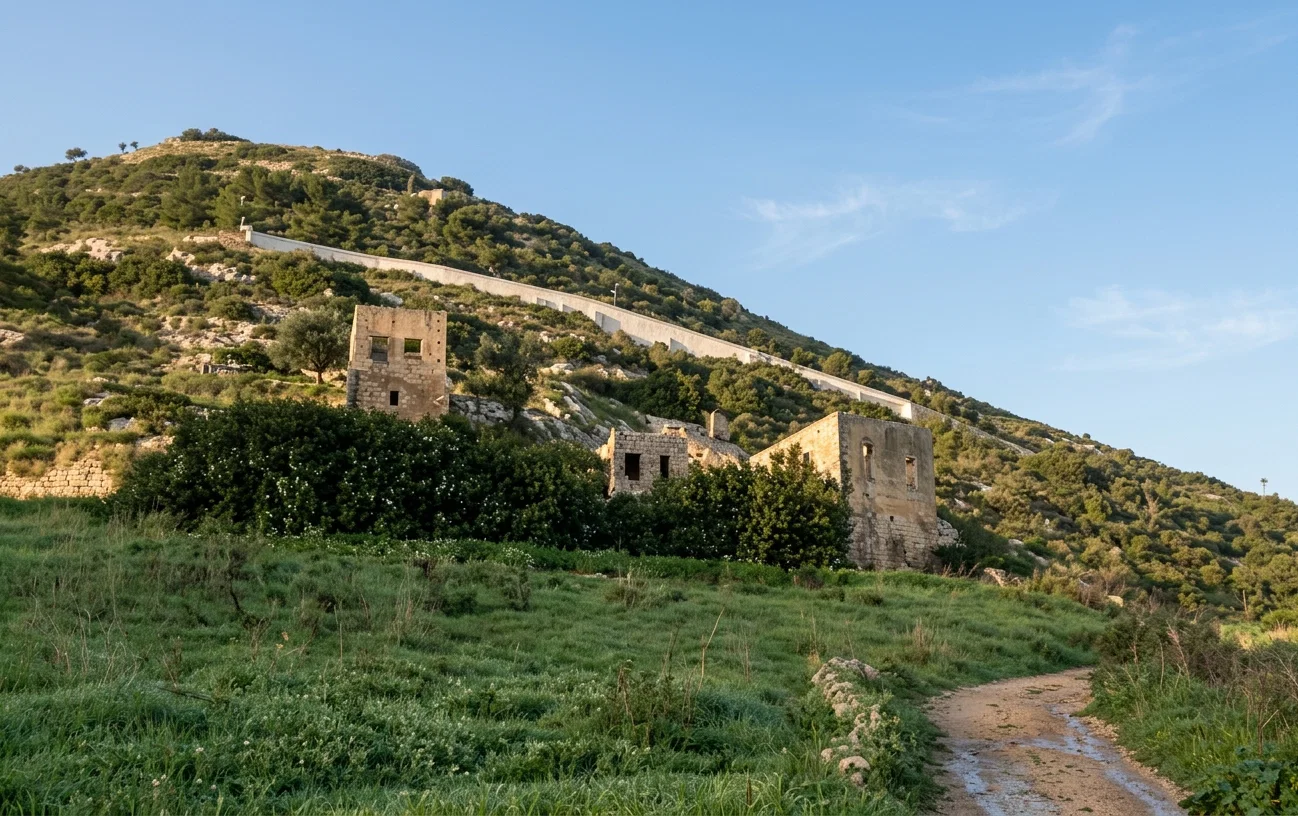
MOUNT CARMEL. AT THE TOP IS THE TRADITIONAL CAVE OF ELIJAH. AT THE BASE IS THE CAVE IN WHICH ELIJAH IS BELIEVED TO HAVE HELD HIS FIRST SCHOOL
A few months ago we were assembled at a general conference at Friedensau, where we enjoyed the gathering of nearly, 3,000 people. It was the greatest assembly of our people that has ever been held on this side of the ocean. The words spoken by God's servants from all parts of the world greatly refreshed our people, and through the two Sabbath services many souls found peace in the Lord, and became his followers. About seventy-four were baptized during the camp-meeting season. The morning talks to the workers, where we heard the fundamental principles of evangelistic work given by the president of the General Conference, and by Elders W. A. Spicer and G. B. Thompson, were also a special blessing to the night workers of the Levant field.
It was a privilege to see so many nations represented, having the same faith, the same aim, and holding the same blessed hope of the soon coming of our Lord Jesus. As workers we returned to our fields, made so difficult by the dark religious teachings of Mohammedanism, with new zeal and courage.
Elder R. S. Greaves is working among the Albanians at Janina and its vicinity. Brother F. Scior among the Greeks at Saloniki. In the Turkish field Elder A. M. Buzugherian is visiting the churches in the vicinity of Konieh, Kaisari, Marash, Aintab, and Adana, where he expects to meet Brother E. Ayvazian, who will work among the people at Teke and Hadjia. Brother A. Girou and I will work among the French and German people at Constantinople.
The Armenian field, which lies in the east of the empire, is in the care of Elder Z. G. Baharian, who reports favorably of his recent trip to Moosh. In the Egyptian field work is being carried on at two places: Brother George Keough and Brother A. Elshaheed are conducting a series of meetings at Achin (Upper Egypt), while brethren Pietrowsky and Khalil are working together in Assiut.
In the Syrian field Elder Ising and the writer are holding a series of meetings at Haifa, at the foot of Mount Carmel. This is the first tent-meeting ever held in the Levant. We are much pleased to have such a tent in so hot a country, where we have many difficulties in finding a suitable hall for our meetings. We are holding services at night, three times each week. The attendance has increased from twenty-five to eighty-five. The people are mostly German colonists, who gathered here in the great advent movement, thinking thus to fulfil the prophecy of Isa. 2: 1-4, that from this place the gospel should go out to every nation, and the millennium reign be established by their work. Being disappointed in this, they have, to a great degree, lost confidence in the Word of God. We are glad that we have found entrance into some homes where we may hold Bible readings. Our tent is situated about half an hour's walk from the traditional place where Elijah started his first school of the prophets. We found the supposed cave in which the school was held, fifty-five feet long, thirty-one feet wide, and nineteen feet high. This place is well guarded by the Mohammedans. Many Jewish and Christian pilgrims come here. On the top of the mountain we found the cave in which it is claimed the prophet Elijah was hidden when Jezebel's cruel hand was after him. Our prayer is that the same Spirit that worked in the time of Elijah may convince the souls for whom we are working, that they may take a definite stand for the Lord, and that the standard of this present truth may be established among these German people.
The first of November we expect to open our missionary school, to last six months. We hope for a larger attendance than last winter.
In regard to the canvassing work, we are glad to say that the sales among those speaking the native tongue is increasing. During the first six months we sold as much as during the whole year of 1910. We are also glad to see that our collection of Arabic tracts is increasing, and that we are succeeding in selling them also to the Arabic-speaking people. Our earnest prayer is that this center of the Levant field, which was in past ages the center of Christianity, but has since been overshadowed by the Mohammedan religion, may be enlightened by the angel of Rev. 18: 1.