If I speak with the tongues of men and of angels, but have not love, I am become sounding brass, or a clanging cymbal. And if I have the gift of prophecy, and know all mysteries and all knowledge; and if I have all faith, so as to remove mountains, but have not love, I am nothing. And if I bestow all my goods to feed the poor, and if I give my body to be burned, but have not love, it profiteth me nothing. Love suffereth long, and is kind; love envieth not; love vaunteth not itself, is not puffed up, doth not behave itself unseemly, seeketh not its own, is not provoked, taketh not account of evil; rejoiceth not in unrighteousness, but rejoiceth with the truth; beareth all things, believeth all things, hopeth all things, endureth all things. Love never faileth: but whether there be prophecies, they shall be done away; whether there be tongues, they shall cease; whether there be knowledge, it shall be done away. For we know in part, and we prophesy in part; but when that which is perfect is come, that which is in part shall be done away. When I was a child, I spake as a child, I felt as a child, I thought as a child; now that I am become a man, I have put away childish things. For now we see in a mirror, darkly; but then face to face: now I know in part; but then shall I know fully even as also I was fully known. But now abideth faith, hope, love, these three; and the greatest of these is love.
THE THANKSGIVING AND COMING-OF-THE-LORD NUMBER.
By Editor
Two weeks before Thanksgiving Day our first edition of this number was off the press, and orders being filled.
Here are a few places from which early orders have been received:
San Francisco, Cal. ..............................1,600
Birmingham, Ala. ....................................50
Calistoga, Cal. ....................................115
Sanitarium, Cal. ...................................135
Philadelphia, Pa. ....................................75
Hanford, Cal. .......................................100
Portland, Ore. ....................................1,025
Hayward, Cal. .......................................100
Armona, Cal. ........................................125
Pueblo, Colo. ........................................50
Coudersport, Pa. ....................................200
E. Germantown, Ind. ...................................6
Paradise, Cal. .......................................15
Corydon, Pa. .........................................25
Toronto Junction, Ont. ..............................500
Vallejo, Cal. .......................................100
Denver, Colo. ........................................200
Crawford, Neb. ........................................20
Mountain View, Cal. ..................................650
Alameda, Cal. .......................................100
Richmond, Cal. ........................................25
The work has just begun. Every day the number of orders is increasing.
This paper, clearly setting forth the true meaning of present-day conditions, will be sold by the thousands.
In a single illustrated article in this number, “Are We Nearing Home? Signs of the End,” the following great signs of our times are treated in a striking manner from the standpoint of fulfilling prophecy:
The Increase of Knowledge;
Increase of Riches;
The War Spirit;
The False Cry of “Peace and Safety;”
Distress of Nations with Perplexity;
Spiritism, Mis-called Spiritualism;
Power of the Papacy;
Increase of Crime;
Spiritual Declension;
Last-Day Scoffers;
The Aged Earth;
Followed by a presentation of “The Last Great Threefold Message.”
This is only one of the articles contained in this number. It contains others of equal importance.
Results of Forgetting God, by Mrs. E. G. White.
The Great Salvation, by Geo. W. Reaser.
And others.
The price of this number in quantities is such that every person may have the opportunity of using it liberally. From 25 to 75 copies, 3 cents each; 100 or more, 2½ cents each.
Order of your tract society, or direct from the SIGNS OF THE TIMES, Mountain View, Cal.
SIGNS OF TIMES
By Editor
THE TIMES OF THE TIMES
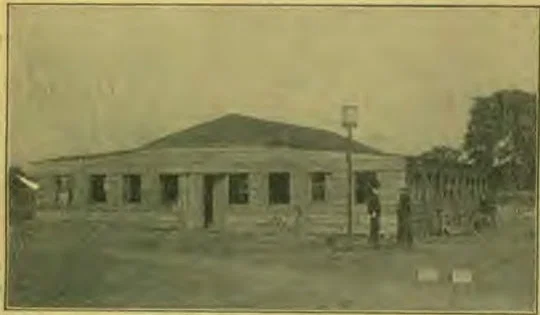
The Home of the "Signs of the Times."
BOOKS FOR HOME WORKERS
The following books are ready sellers at this time of the year. The discount to those who canvass for them is forty per cent. For additional information address your tract society.
Our Little Folks' Bible Nature
This book contains simple lessons on nature, taking up the subjects in the order of creation. It is designed as a beginner's book in reading, and at the same time to teach beautiful lessons from nature, based on the Bible.
A graphic account of the birth, death, resurrection, and ascension of Christ, interwoven with many interesting incidents in His life. The story is simply, yet beautifully told, and the lessons taught, inspiring and helpful.
The book is written in a style that will hold the interest of the children, and will so acquaint them with the life and character of the Saviour as to lead them to make Him their personal friend and to desire to be more like Him.
Familiar talks with boys and girls about the common articles of every-day use, such as air, water, sunshine, fire, smoke, glass, coal, salt, paper, matches, etc.
Uncle Ben has a very pleasing way of telling about the origin and use of these various things. There is a ray of sunshine streaming throughout the whole book, and yet it does not touch the fickle so prevalent in books for children.
The purpose of the book, aside from the useful information given, seems to be soul culture, for we observe on every page a moral fragrance that will impress young minds in the right way.
Uncle Ben tells about more than one hundred different things in all, and intersperses with happy thoughts that bring good cheer to young and old.
221 pages. Price, 75 cents.
Education
The object of true education and how it may be realized by the youth, the parent, the teacher, the writer, the tiller of the soil, and the business man, is the great theme of this book.
The first chapter deals with the first principles of education, followed by examples of true education, as illustrated in the Israelites, schools of the prophets, and the lives of great men of Bible times. The methods of the Master Teacher, and the Bible as an educator, are particularly dwelt upon. The chapters on the Study of Physiology, Manual Training, Methods of Teaching, and Discipline, are interesting as well as helpful.
Every family will want this book, first of all for themselves, and then for their friends.
320 pages; beautifully bound in cloth. Price, $1.25.
Story of Daniel the Prophet
A biography of this wonderful prophet of God. Entirely new in its conceptions and designs. The scriptures narrating the story are printed in parallel columns with the author's delineations and interpretations. This one feature of the book alone renders it very serviceable and desirable.
In connection with the story of this remarkable life, a clear and forcible exposition of the prophecies is also given. The author has endeavored, not to arouse controversy, but to suggest thoughts, both in the story and side references, that will create a religious interest and further study in the things of God.
The book contains both a scriptural and general index of subjects, has eighteen chapters, and 369 pages. Price, $1.00.
The Vegetarian Cook Book
This book contains about four hundred very carefully prepared recipes of healthful, hygienic dishes, suitable to every taste, and every condition in life. There is also one chapter on the Hygiene of Cooking, explaining the various methods, such as boiling, steaming, stewing, baking, braizing, and broiling.
The author has had a broad experience in restaurant work, and has given the results of his experiments and observation in this practical work. We believe the good, wholesome foods, hygienically prepared, will appeal to many who are suffering from the effects of bad foods and wrong combinations.
The classification of foods is so arranged, and the work so thoroughly indexed, that any recipe may be referred to instantly.
266 pages. Price, cloth, 75 cents.
Steps to Christ
This little work, by Mrs. E. G. White, presents in a simple and attractive manner, the steps by which the sinner may find Christ and be made complete in Him.
While the book is an excellent guide to inquirers and young converts, it also contains a wealth of counsel and encouragement for those older in the way, who are experiencing difficulties.
The all-pervading spirituality and wholesome counsel blended throughout its pages, cause the book to meet with general acceptance. Once read, it is often re-read and studied as a guide-book in the way of salvation.
A verse-by-verse study of the wonderful prophecies of this book, showing the response of history to the voice of prophecy. This is Part One of the combined volume of "Daniel and the Revelation."
Bound in pamphlet form. Price, 25 cents.
Thoughts on the Revelation
This is Part Two of the combined volume. It gives a clear exposition of the prophecies of Revelation, in which many marvelous things are brought to light that directly concern us, and our friends and neighbors as well.
These two volumes are so familiar to all that they need no further description.
Bound in pamphlet form. Price, 25 cents.
CITY AND COUNTRY.
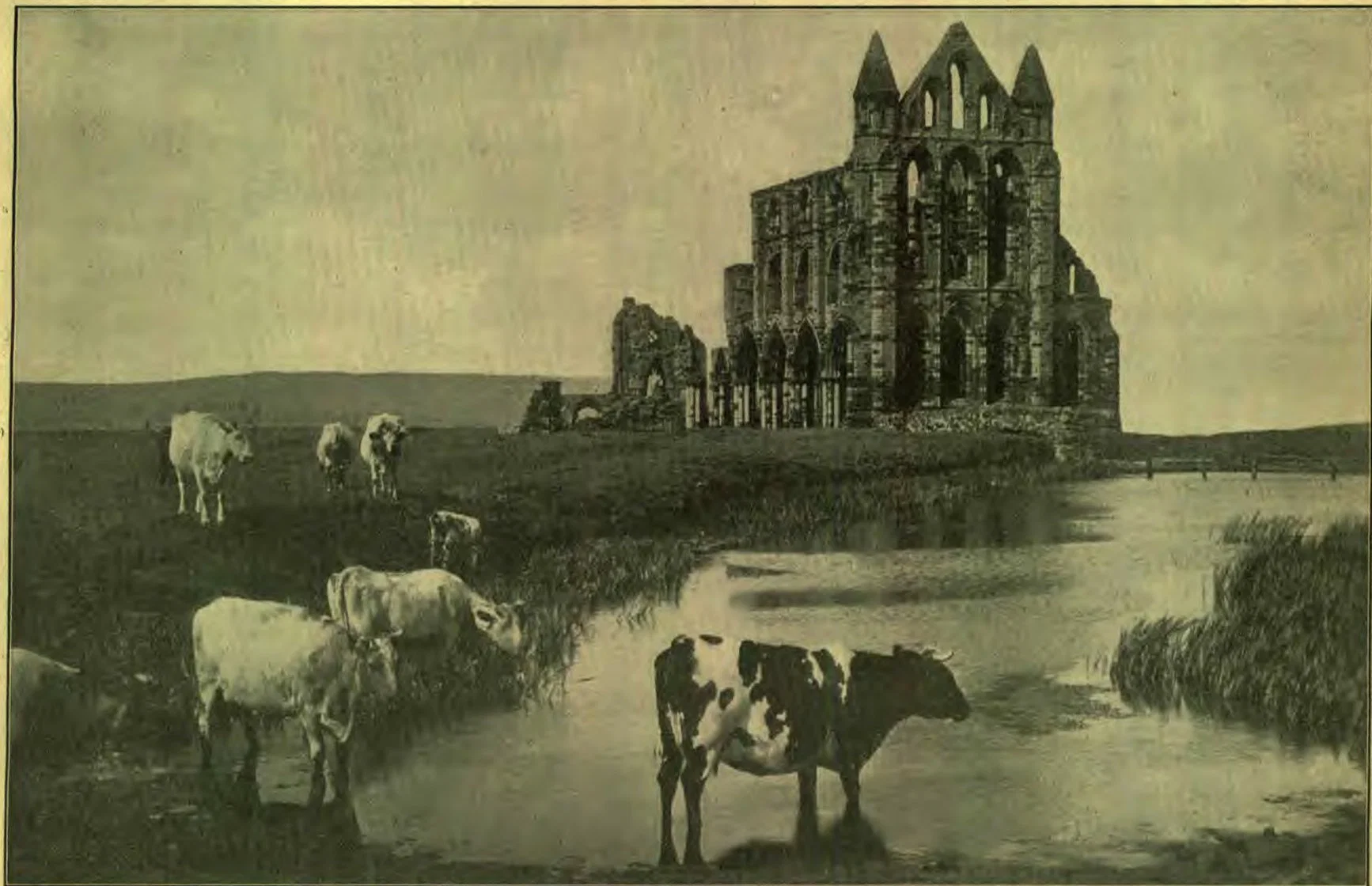
A beautiful bit of country in northeast England, in which the contrast stands strongly out between the country and the work of men's hands. The country is fresh and green and beautiful, while the work of men's hands is in ruins. These ruins are of the old Whitby Abbey, formerly a Benedictine abbey to 867, then destroyed; rebuilt in 1078, by William de Perey, as a monastery for men. The stream of water is the River Esk, where it enters the North Sea.
"GOD made the country, but man made the town" is an old saying, trite and true. It grows ever more evident as the stream of years flows by. The country stands for freedom, for peace, for beauty, for morality. The town, the city, stands for slavery, for strife, for ugliness, for immorality.
---0---
DO NOT misunderstand us. There has been wickedness, dishonesty, and immorality everywhere in this round world ever since the slimy trail of the serpent was seen in the Eden of God, and the heart of our first parents opened to receive his suggestions of evil. The flesh of humanity became the flesh of sin, the heart of humanity became the carnal heart, the heart of flesh, wherein sin reigns; and country as well as city has felt sin's weight and groaned under its curse.
God has sought to reach lost man in every way possible. "The heavens declare the glory of God; and the firmament showeth His handiwork. Day unto day uttereth speech, and night unto night showeth knowledge. There is no speech nor language, where their voice is not heard. Their line is gone out through all the earth, and their words to the end of the world." Ps. 19:1-4. Upon this, the late Bishop Taylor fittingly remarked, "God's primary school! God's primary day school! God's primary night school! God's universal, primary, day and night school!" Even so it is; and the man most affected by its teachings is the thoughtful one who is out under the open dome of heaven with heart and life open and responsive to all beneficent influences.
---0---
THERE is sin in the country; there is wickedness and vice there; but never, unless transplanted from the city, do we see it in the same degree that the city reveals it. The surrounding influences restrain it. The heart has more time to think and meditate over the lessons taught in God's primary school of nature and the advanced school of His Word. It is when men begin to herd together for selfish purposes, with idle hours and contagious, dissolute habits that vice spreads strong and flaunts itself, and wickedness and crime become organized and bold.
---0---
TRACE down the history of nations, and their decline begins when the cities become dominant. The first city-builder was Cain, the fratricide,—not Abel or Seth,—who, to exalt himself, called the city after the name of his son. Gen. 4:17. After the crisis of the Deluge, it was God's command that man4
was to spread abroad over the whole earth, and make it blossom and bear like the Garden of Jehovah; but selfish man herded together again, sought to thwart God's plan, said they would save themselves, and builded a city, and called it "Bab-il," "the Gate of God." So their own story of building runs as they wrote it on the plastic clay in the land of Shinar, and burned it into brick which has survived the changes of ages. But God called their city "Babel," "Confusion." Gen. 11:1-9. And such has been the result of the great, selfish city-builders from that day to this.
THE country deals with man honestly. It meets him in all his moods. He knows by the outward tokens what to expect. A rough, forbidding surface often covers that which is precious, but it is not just there to deceive. A fair exterior often covers rottenness, but it is not designed to entrap him. Usually he sees on the surface what is underneath. The soil, the grass, the tree, the plant, the fruit, the grain, deal honestly, openly, faithfully, and to some extent stamp themselves upon his own character.
---0---
NOT so the city; its best side is ever outside. The sightliest wall surface is often a sham. The finest exteriors are often a shell. The finest fruits and vegetables are on the top of the basket and box; the veneer of selfishness is everywhere manifest. And almost invariably it is there to deceive, to make something appear to be what it is not. The same element extends all through society. The most attractive exteriors often shut in the drunkard, the gambler, the pander, the harlot, the desperado. The meanest and lowest political plots, the darkest deeds of crime, are city-hatched and bred. The quick steps from innocence to infamy are taken there. The by-ways of crime and sin and death are legion, invitingly open to the careless feet; and sirens with voices as entrancing as that of Calypso lure to destruction. At the very best the stress and strife and struggle and intensity of city life wear on the nerves and life of the straightforward and honest, and the city must ever be fed by the life of the country, or it would die out. One or two generations from the virile country parents, and the family as a moulding power is gone, and yields to the fresh life and vigor of the country.
---0---
THE deterioration and decline of every state is marked by its increase of urban population. Trace down the history of the past and mark invariably the downward trend of that nation or people whose offspring flocked to the cities, and the city life became the dominant moulding life of the nation. So went Babylon, so went Grecia, so went Rome, so is drifting downward the great Republic of the West. There are beautiful places in our cities—palaces rivaling the greatest dreams of splendor, parks which reveal in cramped ways and restricted limits the thought of God in nature, but the city is not the country. How the earthquake shatters its hopes, reveals its iniquities, uncovers its veneered rottenness, and lays open to the eyes of all its hidden shame; and the mightier ones to come will reveal them more and more. Get out of the cities into the purer, freer air of the country.
---0---
TRUE, the country is not perfect. It has its drawbacks, its plague spots. Its beauty is marred by sin. But all these make us long for the "better country," even the heavenly, the earth made new, the green, glad earth with no waste deserts, arid soils, or hostile climes. There the glory of God will cover all the land as the waves cover the sea. In that earth will also be a city, Zion redeemed, the New Jerusalem, the capital of the new earth, living and glad and glorious with the streaming, effulgent life and light of God's presence, piercing to every part of that city of light, and making it all as open and glad as the day—that city whose Builder and Maker and Keeper is God. God's city, God's country, in very truth it will be, inhabited by God's children forever.
LEARN TO SAY "YES."
IS it not about time that our youth have a change, and be drilled awhile on learning to say, Yes? For decade after decade they have been taught that the main duty of a boy or girl is to "learn to say, No." And the lesson has been impressed upon them with very little discrimination. It is little wonder that when duty calls to some important work in connection with the cause of God, especially in actual missionary work, the rising generation are so prone to hesitate and say, No. It is little wonder that when the Spirit says to the young people of the world, Come, take of the water of life freely, they are ready to say, No. When they are called to give up the pleasures into which they have fallen by following their elders both in and out of the church, the ever-ready answer, in word or act, is, No. When confronted with the essential choice to "keep the commandments of God, and the faith of Jesus," that they may obtain eternal life, too many—alas! the great majority—respond with the repulsive No. The inherent disposition of the human heart is to rebel—to say, No. The infant that can not pronounce an intelligible syllable will kick, or strike, or scream its innate No! against its parents or attendants. Let the lessons be wisely divided between the counsel to say, No, and to say, Yes. That which is most difficult to instil is to answer, Yes, to the Spirit's call; Yes, when the Word of God speaks; Yes, ever to the call of duty. If this lesson be well learned, the saying No, to evil influences will come comparatively easy. The lesson to say Yes to parental authority will pave the way for the instinctive rejection of many evil suggestions.
The Christian life is not a succession of negative actions, it is not a system of don'ts. It is a positive life, a life of yielding to the Spirit and saying Yes to the will of the Father in heaven. It was because Jesus Christ had led a life of obedience—of saying Yes—to the leadings of the Holy Spirit, that He so readily, instinctively, said No when confronted with the strongest temptations of the enemy under the most discouraging circumstances. A merely negative backing never can sustain a positive life. A succession of noes—we might say, the "no" habit—never can, never did, build up a positive, forward life.
The youth whose training has "no" for a leading-string will naturally become a chronic objector, deeming it a virtue to say No on all occasions, and to every proposition that he has not originated. True, it often requires courage to say No, but it requires judgment to know when to say No, and it requires an education along the line of accepting and saying Yes to the teachings of the Spirit through the Word, to give that judgment and that moral courage.
Young man, young woman, learn to say Yes, from the standpoint of the Word of God, and the "no" proposition will be a much easier matter. That was what sustained the Master, and it will sustain you. There are hundreds of propositions before the young people of to-day that ought to have hearty affirmative answer; but a selfish backwardness, a lack of education in practical yielding to the Spirit's calls, is inclining too many to say No, and to procrastinate. Think of these things, and learn to say Yes, to the promptings of the Spirit.
G.
“JOINED UNTO THE LORD.”
THE idea is too prevalent that joining the church is the all-essential thing, that it is a kind of eternal-life insurance. But, important as such a union is to the Christian, of itself it is nothing; indeed, it may be worse than nothing. The church is designed to be a fold for the flock of Christ, and an organization for the better promulgation of the Gospel. But Christ never designed that anything should be housed in His fold that does not belong there by virtue of being His. One must be joined to Him in the sense of being recognized as His before being of any real service in the fold, or of any practical value as a missionary.
“He that is joined to the Lord is one spirit.” “Know ye not that your bodies are members of Christ?” But our bodies can not be members of Christ unless we are joined to Him in spirit. “If any man have not the Spirit of Christ, he is none of His.” Then the essential thing in the Christian life is to be “joined unto the Lord.” When one is thus joined in spirit, he will better appreciate the benefits, the privilege, and the opportunities of church-membership. When one treats lightly these benefits, this privilege, and these opportunities, it is evident that there is lacking a full degree of union with Christ.
The Spirit of Christ is a missionary spirit, and whoever is joined to Him will be a missionary indeed. He will love and appreciate the organization formed by divine plan for the advancement of missionary work. He will love association with those who are thus united in service. He will love the assembly where Christ has promised to meet those who are joined unto Him, even if there be but two or three of them. He will love such assembly because there he5may give and receive encouragement; because there he may learn indispensable lessons of truth; and, above all, because there is to be obtained the special blessing promised to those so assembled into His name.
That being joined to Christ Himself is the essential union for the individual to effect, is fully set forth in the lesson of the vine and its branches (John 15). Christ says, “Abide in Me, and I in you.” This individual union with Him, for He further says, “I am the Vine, ye are the branches.” But there must first be the union—the vital union—of the branch with the Vine before there can be the abiding. In case of the convert to Christ, it is a grafting of the branch into the Vine. The vital reason for this individual abiding with Christ is then stated: “As the branch can not bear fruit of itself, except it abide in the vine, so neither can ye, except ye abide in Me.” This statement is emphasized by the further counsel, “Apart from Me ye can do nothing.”
That which should deeply impress these words upon every disciple is that true discipleship is manifested in fruit-bearing. “Herein is My Father glorified, that ye bear much fruit; and so shall ye be My disciples.” So, in this manner, by abiding in Christ and bearing fruit, discipleship is established, and “he that endureth to the end, the same shall be saved.” Thus it is made clear that salvation depends upon being “joined unto the Lord.”
Note particularly that Christ says, “Except it [the branch, singular] abide in the vine,” it can not bear fruit. He does not say in the vineyard, but in the vine. The unfruitful branch may be cut off the vine and burned in the vineyard. The final doom of the backsliding branch, that does not abide in the Vine, is to be a separation from Him and a destruction by an unquenchable fire. Sheep and goats may flock together for the time being; wheat and tares may grow together until the harvest; but there will be a separation when the Master comes. He will then select for eternity the individuals who have been joined unto Him in spirit and in truth. Now, to-day, is the time to make sure this union. G.
1946.—What Is Death?
1946.—What Is Death?
Gen. 2:17, "In the day thou eatest thereof thou shalt surely die," was quoted to prove that death is a conscious existence, as Adam and Eve only began to die that day. Please explain. B.
There is a difference between "death" and "dying." One is the process, the other the finished fruit. There would be force in this application of the text if Adam and Eve had continued in that state. But they did not; they died. The margin of the text is "dying, thou shalt die." That is, Adam became then a dying man. The great fact is, that he would have died then had not the Son of God intervened, given him a new probation, and put off the final result. Any way we may look at the text, it does not teach that death is continued existence.
Dying may continue a season, but it ends in death, a completed process. If death is continued existence, what is life, its opposite?
Civil Law Cannot Advance Christianity
To advance Christianity by means of compulsory civil law is the dream of many well-meaning men. They make a slogan of the expression in John's vision of the future, that "There were great voices in heaven, saying, The kingdoms of this world are become the kingdoms of our Lord, and of His Christ; and He shall reign forever and ever." But this does not make of them Christian nations; for at the very time the "four and twenty elders which sat before God" were heard to give glory to Him who had taken to Himself this "great power," the "nations were angry." They do not become Christ's by virtue of being converted to Christianity. The Revelation shows us things that are to come to pass, and this particular scene is after probation is closed, and the nations of the earth are given into the hands of Christ by the Father for execution. Ps. 2: 7-10; John 5: 26, 27. Christ expressly stated that His kingdom was not of this world (John 18: 36); He receives His kingdom from the Father in heaven (Dan. 7: 13, 14); and the subjects of His kingdom are redeemed "out of every kindred, and tongue, and people, and nation" (Rev. 5: 9; 7: 9).
Time Enough for Courtesy
LIFE is not so short but there is always time enough for courtesy.—Emerson.
terven
the fi
it doe
Question Corner
1942.—Scope of a License.
Why are licentiates sent to preach the Gospel and not allowed to baptize?
R. P. L.
According to the usages of several churches one licensed to preach is not an ordained minister of the Lord. He simply has the permission of the brethren to prove his call to the ministry, nothing more. He must demonstrate by his ability to preach and win souls to Christ, and to show by a well-ordered life and conversation and example, that he is worthy of ordination as a minister. If he proves this to the satisfaction of the brethren, it naturally would follow that he would be ordained as a minister, and, of course, would in that case baptize. There is no law, it is true, to prevent a man from baptizing if he feels so disposed and somebody is willing to be baptized by him; but one who is connected with an organization, and has associated with him others in serving God, certainly ought to be subject to those who send him out and who are by this very act bearing responsibility with him. In such cases it is well to remember the advice given in 1 Peter 5:5: "Likewise, ye younger, submit yourselves unto the elder. Yea, all of you be subject one to another, and be clothed with humility; for God resisteth the proud and giveth grace to the humble."
Giving Alms
1943.—Giving Alms.
Do Adventists believe in the first six verses of Matthew 6? E. H. B.
They do, and also in the first five verses of Matthew 7. There is nothing in Matt. 6:1-6 to prohibit or condemn public giving or public praying; but the gift is not augmented or the prayer bettered by being offered in public. Jesus prayed in public as well as in secret; He gave in public as well as in secret. What is condemned is praying and giving to be seen of men.
1944.—Scripture References.
How much reliance should be placed on the references in the margin of our Bibles?
B.
None at all. They are not designed for doctrinal guides. Sometimes they point out opposite conditions. Sometimes they show the use of a word in another text. Frequently they point out parallel passages. They are very useful, but not authoritative.
Flesh and Blood
1945.—Flesh and Blood.
How do you harmonize 1 Cor. 15:50, “Flesh and blood can not inherit the kingdom of God,” and Job 19:26, “In my flesh shall I see God.” N. M. B.
The first text refers to the corruptible, mortal man, man in this condition. The latter looks forward to the resurrection, when all God’s children will be made immortal. The context clearly shows what time is referred to in each case.
1947.—Voting the Prohibition Ticket.
Is it right to vote the Prohibition ticket if Sabbath legislation, and other matters, which one believes to be wrong, are included in the platform? Would it not be better to keep out of a mixed-up mess? If Jesus did not meddle with politics, why should we?
B.
We see no reason why any Christian should not vote for straight prohibition. We see every reason why he should not vote for Sabbath or Sunday legislation. The latter is evil, and only evil. The devil succeeded in spoiling the good thing by inducing men to yoke up with it a great evil. We believe our correspondent's questions are to the point.
1948.—Errors in Translations.
Is it not a plain contradiction of the text, ''All scripture is given by inspiration of God,'' to say that there is a mistake in translation of scripture passages? How can we prove that any of the Bible is correct if we acknowledge mistakes in the Bible?
B.
The Holy Scriptures are one thing; the translation of those Scriptures quite another. When Paul wrote the text quoted in part above (2 Tim. 3:16), he referred to the Old Testament Scriptures, written originally in the Hebrew language. The New Testament was written in Greek. We do not have those original writings. They are probably not in existence. But we have copies of copies of them. One, for instance, was found in a convent at Mount Sinai; one was found in the Vatican; one was found in Alexandria, Egypt; many others have been found elsewhere. When the King James version was translated, the better manuscripts referred to above had not been found; the translators had copies of copies of copies unknown in number to us. The constant multiplication of these copies multiplied small errors. Devout scholars have for years been seeking to get as many copies as they could as near the original copies as possible. The Siniaite MS., the Vatican MS. 1209, the Alexandrian, and some others, carry us back to the fourth and fifth centuries; and, while they show errors in later copies, they prove as evidence of no other ancient book proves, that our Bible is correct, and that the errors in copying are infinitesimal.
The next question is, What does our Father say in these Hebrew and Greek writings which have come down to us? Of course, every true child wants to know. Therefore every translation by competent, honest scholars he will welcome. The very best translation in existence, compared with the very best originals, is the American Standard Revised Version. We do not mean by this that the King James Version is unreliable; it is not, but it is not nearly as good a rendering, it is not so uniform and clear, as the American Revision.
What kind of a blessing is spoken of in Mal. 3:10? Have any Adventist tithe-payers received such a blessing that they had not room to receive it? B.
First of all, and above all, spiritual blessing, stronger, clearer, more constant life-union with God and confidence in Him with whom we come in partnership. Secondly, temporal blessing, and if we can bear it, abundant temporal blessing. Perhaps a better answer could not be given the latter question than to ask, Have any of the class referred to been blessings to others. Every direct blessing which comes from God's children is an overflow blessing. "The Lord is my Shepherd. . . . My cup runneth over." Psalm 23. No man can ever truly obey with all his heart what God says in Mal. 3:10, and not receive a blessing. If he fails, he has failed to obey. God can not fail. Yes, Paul suffered hunger, yet he found God's grace sufficient. All of God's great blessings reach over into the glorious beyond.