Your ShelfYour Projects

Signs of the Times, Vol. 22, No. 10.

Miracle and Lesson

Signs of the Times

Mar 5, 1896

Pacific Press Publishing Company · Oakland, California · Mar 5, 1896

Miracle and Lesson
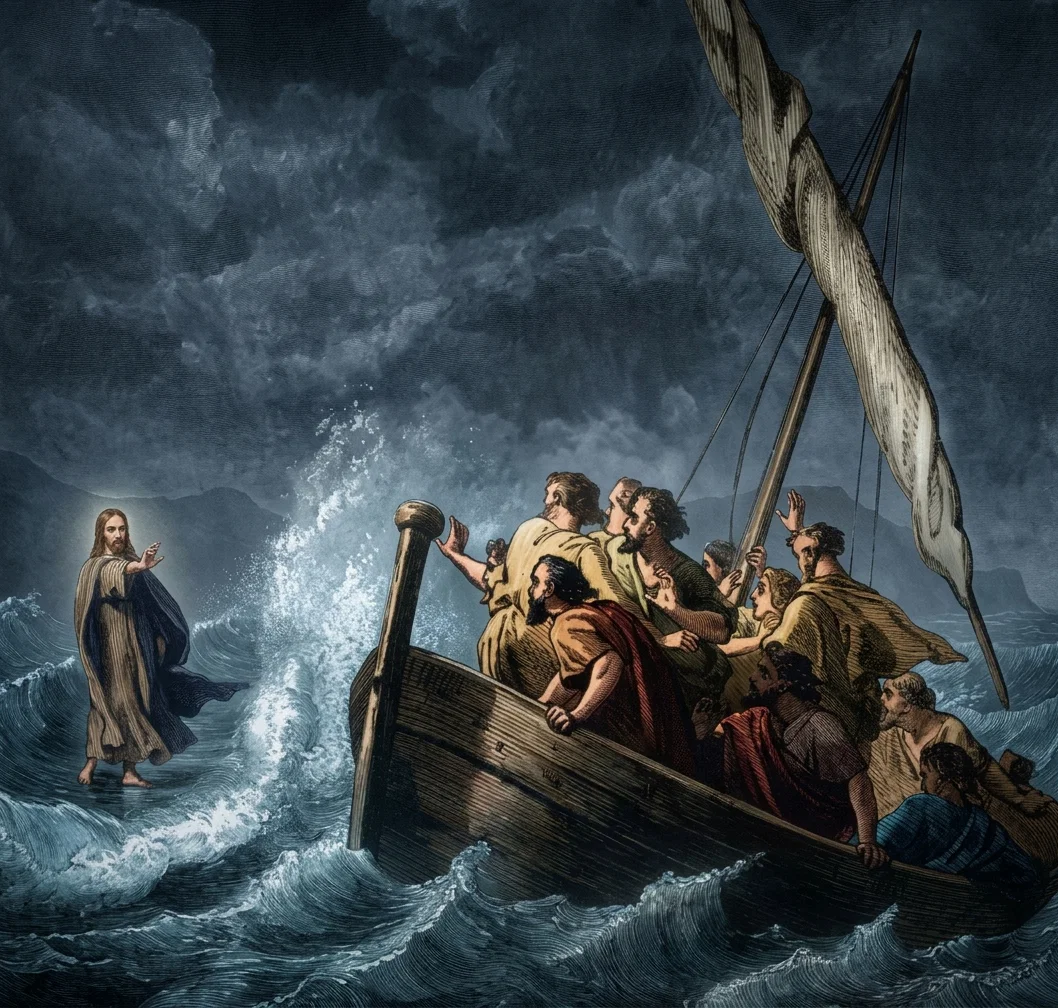
In John 6:15–21 is a short story of an event of wonderful interest in the earth-life of the Son of God. It reads as follows:—
“IT IS I; BE NOT AFRAID.”
“When Jesus therefore perceived that they would come [“were about to come,” R. V.] and take him by force, to make him a king, he departed again into a mountain himself alone. And when even was now come, his disciples went down unto the sea, and entered into a ship, and went over the sea toward Capernaum. And it was now dark, and Jesus was not come to them. And the sea arose by reason of a great wind that blew. So when they had rowed about five and twenty or thirty furlongs, they see Jesus walking on the sea, and drawing nigh unto the ship; and they were afraid. But he saith unto them, It is I; be not afraid. Then they willingly received him into the ship; and immediately the ship was at the land whither they went.”

A Temporal Kingdom

Jesus had just fed the five thousand with five loaves and two fishes. This, with his wonderful teachings, impressed the people that the promised King had come. And such a King! he could supply all their needs in the desert, furnish all that was necessary to make them the first kingdom in the world, freed forever from the yoke of intolerance and oppression. As he offered not to become king, they would force the kingdom upon him, proclaim him king, rouse the Jews, and under such a mighty Leader throw off the Roman yoke. No doubt, whatever the selfish or patriotic motives of the people might be, Satan shaped the movement. It was the temptation in another form to avoid Gethsemane and Calvary.

“Not of This World.”

But Jesus knew the people, knew that it was the loaves and fishes rather than the reign of righteousness which they desired. He must reach the goal through self-denial, and so must all who come after him. Matt. 16:24. His “kingdom is not of this world.” John 18:36. It is not set up or to be set up by man. He receives it from the Father when his work is finished, as we are told in the Scriptures. (See Luke 19:12; Dan. 7:13, 14.) It will not be possessed till his second coming (Matt. 25:31; 2 Tim. 4:1), and then it will not be by the suffrages of the people that it is established, but “the zeal of the Lord of hosts will perform this” (Isa. 9:7). Jesus therefore left them alone, and sent even the disciples away. So also will he depart from those who in these days seek him or his cause for the loaves and fishes, for emoluments and honors, to make him a temporal king through the gateway of politics. How Christ will regard it now may be known by how he regarded it then. He will send them away, and he himself will depart.

A Night of Prayer

Jesus departed to pray. He must plead for the poor, blinded, selfish, deluded people, who could not understand his mission, or the nature of his kingdom, because they had not his Spirit. He knew before of their ignorance and hardness of heart. Even his chosen disciples were blinded. But on this day, when the bread furnished for the body should have led them to seek for the Bread of Life, he had come in contact with their selfish, erroneous ideas concerning his reign. He saw not only that multitude before him, but all succeeding generations. He saw his elect church yielding to the desires of the world. He saw the same principle work out the blackness and persecution of the Dark Ages. He saw in these days how his professed followers would nominally and outwardly make him king through selfish and political means. He saw it all, and how when he came to the same people in his truth, they would reject him, and crucify him again and again. Therefore he prayed alone. His disciples knew not the burden, because they did not know him or the people or themselves. He prayed for strength for the entire trial, prayed for that people and the people of all ages, prayed for his own.

The Disciples

Other evangelists tell us that he sent them away. Discouraged, doubtless, and dissatisfied at Christ’s refusal to be made king, they set out for the other shore, disconsolately propelling their boat. A storm arises, one of the wild, fierce, impetuous electric storms, perhaps, which sweep the Sea of Galilee, and threatens to engulf their frail craft. Discouragingly, yet with despairing energy, they labor on. It is not a long voyage, yet the night is nearly over, and they are still in the midst of the sea, the storm unabated. Their discouraged condition makes them superstitious and despairing. They fear they are doomed. The flashes of lightning but fill them with dread. Doubtless when all human hope was gone, they prayed. Even skeptics will do this. We are sure thedisciples of Jesus did. But what is that? A flash of lightning from the electric cloud reveals a figure walking on the water as upon the solid earth. Is it an answer to prayer? Their doubting, discouraged hearts hardly hope for this. It must be a phantom such as they had heard about in the superstitious law of the common people, even as we hear of them to-day. It was an ill-omened specter, presaging their destruction. The strong hands relax their grasp on the oars, and, trembling with terror, “they cried out for fear.”

“It Is I.”

But their prayer had been heard. Their Master had not forgotten them. He who had sent them on a mission would insure its success, despite “the prince of the power of the air.” He who created the world could control its storms. He who made the sea could walk upon its foam-crested billows as upon solid rock. His words of assurance reached the disciples, “It is I.” The Master had come; it was no ill-omened wraith, presaging certain doom. They knew the voice.

“Be Not Afraid.”

It would scarcely seem necessary that Christ should speak that word, after revealing to them who he was. But it is like God to make assurance doubly sure. He confirmed his promise to Abraham by an oath, so that the patriarch and his seed might have abundant evidence and strong consolation. He comforts the despairing and fearful disciples by his presence and assurance, “It is I, be not afraid.” What a change takes place in the little boat! Joy and hope take the place of fear and despair. The Deliverer has come, anticipating the dawning of the morning. He goes up into the ship; they willingly, O, how willingly, receive him! The storm instantly ceases, and straightway they are at the place to which they set out to go. Bowing before their Deliverer, they confess with humble gratitude, “Of a truth thou art the Son of God.” Matt. 14:33.

“That Ye Might Believe.”

The miracle and deliverance were wrought for the disciples’ sakes, but the story is written for our sakes, that we might also believe. Nay, more, these things “are written, that ye might believe that Jesus is the Christ, the Son of God; and that believing ye might have life through his name.” John 20:31. Jesus, the Son of God, is the same yesterday, to-day, and all days to come. We may have a part in his kingdom only in his way. We can not compel him to reign in our way. Reproofs are as necessary to men now as then, and if we insist on having our way, Jesus will depart from us. If in trouble, he sympathizes with us. If we call upon him, he will deliver us. If our hearts desire his help, if our life chords are all attuned to his voice, if our spiritual ears are attent to hear him speak, if our spiritual vision is longing to behold him, we shall hear his voice in the raging storm say, “It is I;” we shall hail with joy the blest assurance, “Be not afraid;” we shall behold him walking the storm-tossed billows with the tread of a conqueror coming to our rescue. How often he comes thus, perhaps in healing reproof, in what seems the sorest trouble, in unpopular truth! But in our blindness and perversity of humanity, we see only the ill-omened phantom. Happy indeed shall we be if we recognize and acknowledge him in all our ways. Do not fear the storms of life. Christ says, “Be not afraid.”

Righteousness by Faith

We have now passed through the first four chapters of Romans. The third chapter sums up the argument that all men, whether called Jews or gentiles, whether so-called heathen or professed Christians, are to be judged by the same law, and that all are alike guilty. The law is universal in its jurisdiction, and as it condemns all, none can get righteousness by it, altho it is the statement of the righteousness of God. But God has promised righteousness to men, therefore they must get it aside from the works of the law, namely, in Christ. In his blood there is redemption for Jew and gentile alike. A man is made a doer of the law by faith alone, without the deeds of the law. This is the mystery of the Gospel. It is Christ in men, the hope of glory, and God in Christ working his own righteousness.
The fourth chapter takes up the case of Abraham, as an illustration of righteousness by faith. The faith which was imputed to Abraham for righteousness, namely, faith in the death and resurrection of Christ, will bring us the same righteousness, and make us heirs with him of the same promise. But the fourth chapter is really a parenthetical illustration, so that the fifth chapter begins just where the third closes. We therefore proceed with the subject of

Righteousness by Faith

“Therefore being justified by faith, we have peace with God through our Lord Jesus Christ; by whom also we have access by faith into this grace wherein we stand, and rejoice in hope of the glory of God. And not only so, but we glory in tribulations also; knowing that tribulation worketh patience; and patience, experience; and experience, hope; and hope maketh not ashamed; because the love of God is shed abroad in our hearts by the Holy Ghost which is given unto us. For when we were yet without strength, in due time Christ died for the ungodly. For scarcely for a righteous man will one die; yet peradventure for a good man some would even dare to die. But God commendeth his love toward us, in that, while we were yet sinners, Christ died for us. Much more then, being now justified by his blood, we shall be saved from wrath through him. For if, when we were enemies, we were reconciled to God by the death of his Son, much more, being reconciled, we shall be saved by his life.” Rom. 5: 1–10.

Questioning the Text

What have the preceding chapters set before us?
Justification by faith.
Being justified by faith, what do we have? “We have peace.”
What peace do we have?
“We have peace with God.”
Through whom do we have peace?
“Through our Lord Jesus Christ.”
What else do we have through him?
“We have access by faith into this grace wherein we stand.”
What do we therefore do?
“Rejoice in hope of the glory of God.”
What else?
“And not only so, but we glory in tribulations also.”
Why do we glory in tribulations?
“Knowing that tribulation worketh patience.”
What does patience work?
“And patience, experience.”
What comes with experience?
“And experience, hope.”
And what does hope not do?
“Hope maketh not ashamed.”
What therefore must hope do?
It must give boldness.
How does it give this boldness?
“Because the love of God is shed abroad in our hearts.”
How is the love of God shed abroad in our hearts?
“By the Holy Ghost which is given unto us.”
What evidence have we that God will give us all these blessings?
“For when we were yet without strength, in due time Christ died for the ungodly.”
For whom did Christ die?
“Christ died for the ungodly.”
In what condition were those for whom Christ died?
“Without strength.”
What is the greatest love known to man?
“Greater love hath no man than this, that a man lay down his life for his friends.” John 15: 13. Compare with Rom. 5: 7.
But what is the love of God for us?
“But God commendeth his love toward us, in that, while we were yet sinners, Christ died for us.”
When did Christ die for us?
“While we were yet sinners.”
Since we were sinners, in what relation did we stand to God?
“Alienated and enemies in your mind by wicked works.” Col. 1: 21. “The carnal mind is enmity against God.” Rom. 8: 7.
What did Christ do for us when we were enemies?
“Died for us.”
What does the death of Christ do for us? “When we were enemies, we were reconciled to God by the death of his Son.”
If when we were enemies we were reconciled to God by the death of his Son, of what may we be much more sure?
“Much more, being reconciled, we shall be saved by his life.”
Faith Works Real Righteousness.—The first verse of the fifth chapter begins with “therefore”—“Therefore being justified by faith,” etc. The word “therefore” indicates that what follows is a natural conclusion of what goes before. What has gone before?—The story of what Abraham gained by faith. He gained righteousness by faith, but it was by faith in the promise that he should have a son. That son was the child of faith. But the same faith that resulted in the birth of Isaac, also brought to Abraham righteousness. And the same will also be imputed to us, if we have the same faith. Therefore, we are taught that the righteousness of faith is as real as was the son that was born to Abraham through faith. Righteousness by faith is not a myth.
Peace.—What is peace? Most people have theidea that it is a sort of ecstatic feeling. They think that peace with God means an indescribable heavenly feeling; and so they always look for that imaginary feeling as evidence that they are accepted with God. But peace with God means the same thing that it means with men. It means simply the absence of war. We are, as sinners, enemies of God. He is not our enemy, but we are his enemies. He is not fighting against us, but we are fighting against him. How then may we have peace with him?—Simply by ceasing to fight, and laying down our arms. We may have peace whenever we are ready to stop fighting.
“Peace with God.”—Note the statement that we have peace with God. Not simply are we at peace with him, but we have his peace. This peace has been left on the earth for men; for the Lord has said, “Peace I leave with you, my peace I give unto you.” John 14: 27. He has given it to us. It is ours, therefore, already. It has always been ours. The only trouble has been that we have not believed it. As soon as we believe the words of Christ, then we have in very deed the peace which he has given. And it is peace with God, because we find the peace in Christ, and Christ dwells in the bosom of the Father. John 1: 18.
Peace and Righteousness.—“Great peace have they which love thy law.” Ps. 119: 165. “O that thou hadst hearkened to my commandments! then had thy peace been as a river, and thy righteousness as the waves of the sea.” Isa. 48: 18. Righteousness is peace, because our warfare against God was our sins that we cherished. God’s life is righteousness, and he is the God of peace. Since the enmity is the carnal mind and wicked works, it must follow that the peace is the opposite, namely, righteousness. So it is simply the statement of an obvious fact, that being justified by faith we have peace with God. The righteousness that we have by faith carries peace with it. The two things can not be separated.
Peace and Feeling.—The question is asked, “Can one have peace with God and not have a feeling of peace?” What saith the Scripture?—“Being justified by faith, we have peace with God.” What brings the peace?—The faith. But faith is not feeling. If it were necessarily the case that there must be a certain feeling with peace, then if we did not have that feeling we should know that we were not justified; and then justification would be a matter of feeling, and not of faith. The verses which follow show us that we may have this peace in tribulation as well as when everything goes smoothly.
Glory in Tribulations.—This does not mean that we are to seek for martyrdom, as some in the early centuries did. But it means, as it says, that in the midst of tribulations our peace and joy continue the same. This must necessarily be the case with peace that comes by faith. Peace that depends on feeling will depart as soon as we begin to feel tribulation. But nothing can make any difference with the peace that comes by faith. “These things I have spoken unto you, that in Me ye might have peace. In the world ye shall have tribulation; but be of good cheer; I have overcome the world.” John 16: 33.
Tribulation Worketh Patience.—What is patience?—It is endurance of suffering. The root of the word “patience” means suffering. We see this in the fact that one who is ill is called “a patient.” That is, he is a sufferer. People often excuse their petulance by saying that they have so much to endure. They think that they would be patient if they did not have to suffer so much. No, they would not. There can be no patience where there is no suffering. Trouble does not destroy patience, but develops it. When trouble seems to destroy one’s patience, it is simply showing the fact that the person had no patience.
When Does It Work?—The statement is that tribulation worketh patience. Yet there are many who become more and more irritable the more trouble they have. It does not work patience with them. Why not?—Simply because they are not in the condition that the apostle is describing. It is only in those who are justified by faith, that tribulation works patience. Nothing but faith in God can keep one perfectly patient under all circumstances.
Will It Always Work?—Will tribulation always work patience in those who believe the Lord?—Yes, invariably. “Well,” says one, “I am sure that anybody would be impatient if he had as much to trouble him as I have.” Question.—Would Christ become impatient if he had the things to endure that you have? Did he not have as much to endure, and more? You must admit that he did. Was he impatient?—“He was oppressed, and he was afflicted, yet he opened not his mouth.” Isa. 53: 7. Then if he were in your place, he would be patient. Why, then, do you not let him be in your place? Faith brings Christ into the heart, so that he is identified with us, and therefore he bears the burdens. “Cast thy burden upon the Lord, and he shall sustain thee; he shall never suffer the righteous to be moved.” Ps. 55: 22.
“All Patience.”—There is no limit to the patience that comes by faith in Christ. This is the inspired prayer: “That ye might walk worthy of the Lord unto all pleasing, being fruitful in every good work, and increasing in the knowledge of God; strengthened with all might, according to his glorious power, unto all patience and long-suffering with joyfulness.” Col. 1: 10, 11. That is, we may be so strengthened by the glorious power by which Christ endured suffering, that we may have all patience even tho suffering long, and may rejoice in the midst of it.
Patience Works Experience.—In what does it work experience?—It works experience in the peace of God through our Lord Jesus Christ. Many people confuse Christian experience with Christian profession. They speak of having had so many years of Christian experience, when it may be that they have never really experienced the blessedness of the life of Christ. They have made a profession of religion; but experience means the actual proving of the power of the life of Christ. When one has that experience, it is not a difficult matter for him to tell something of his experience when occasion calls for it.
“Not Ashamed.”—Hope makes not ashamed. Why?—Because the love of God is shed abroad in our hearts. “And now, little children, abide in him; that, when he shall appear, we may have confidence, and not be ashamed before him at his coming.” 1 John 2: 28. “Herein is our love made perfect, that we may have boldness in the day of judgment; because as he is, so are we in this world.” 1 John 4: 17. There can not possibly be a more trying day than the day of judgment. Therefore it is certain that those who will not be ashamed or afraid then, will have boldness now. And he who has boldness with God, ought certainly not to be afraid of man.
“The Love of God.”—The reason why hope makes not ashamed, is that the love of God is shed abroad in our hearts by the Holy Ghost. Note that it does not say love for God, but the love of God. What is the love of God?—“This is the love of God, that we keep his commandments.” 1 John 5: 3. The Holy Ghost, then, puts into our hearts obedience to the law of God; and it is that which gives us boldness in the day of judgment, and at all other times. It is sin that makes men afraid. When sin is taken away, then fear is gone. “The wicked flee when no man pursueth; but the righteous are bold as a lion.” Prov. 28: 1.
“Christ Died for the Ungodly.”—“This is a faithful saying, and worthy of all acceptation, that Christ Jesus came into the world to save sinners.” 1 Tim. 1: 15. “This Man receiveth sinners.” Luke 15: 2. Strange that men will allow a sense of their sinfulness to keep them away from the Lord, when Christ came for the one purpose of receiving and saving them. He is able to save them to the uttermost that come unto God by him (Heb. 6: 25); and he says that those who come to him he will in nowise cast out (John 6: 37).
“Without Strength.”—It was when we were yet without strength, that Christ died for the ungodly. Of course; because he died for the purpose that we might be strengthened with might by the Spirit. If he waited for us to gain some strength before giving himself for us, then we should be lost. When were we without strength?—Just now; and even now Jesus Christ is set forth evidently crucified among us. Gal. 3: 1. “Surely, shall one say, in the Lord have I righteousness and strength.” Isa. 45: 24.
Righteous and Good.—“For scarcely for a righteous man will one die; yet peradventure for a good man some would even dare todie.” Our English translation does not indicate the difference between the two words used here. The righteous man is the just man, the man who is careful to give every one his due. The good man is the benevolent man, the one who has done us many favors, and who does for us more than we could justly claim. Now, no matter how just a man may be, his integrity of character would scarcely lead one to die for him. Yet it is possible that for a man of great kindness some would even dare to die.
The Greatest Love.—That is the highest measure of love among men. A man may lay down his life for his friends. “But God commendeth his love toward us, in that, while we were yet sinners,” and therefore enemies, “Christ died for us.”
“For the love of God is broader Than the measure of man’s mind; And the heart of the Eternal Is most wonderfully kind.”
“Reconciled by His Death.”—God is not our enemy, but we are or have been enemies to him. Therefore he does not need to be reconciled to us, but we need reconciliation to him. And he himself, in the kindness of his heart, makes the reconciliation. We “are made nigh by the blood of Christ.” Eph. 2: 13. How so?—Because it was sin that separated us from him, and made us enemies; and “the blood of Jesus Christ his Son cleanseth us from all sin.” 1 John 1: 7. Being cleansed from sin, we must necessarily be reconciled to God.
The Gift of Life.—“The life of the flesh is in the blood.” “For it is the life of all flesh.” Lev. 17: 11, 14. In that Christ shed his blood for us, he gave his life for us. But inasmuch as the blood is applied to us, to cleanse us from all sin, he gave his life to us. In the death of Christ, therefore, if we are crucified with him, we receive his life as a substitute for our sinful life, which he takes upon himself. Our sins are remitted through faith in his blood, not as an arbitrary act, but because by faith we exchange lives with him, and the life which we get in exchange has no sin. Our sinful life is swallowed up in his boundless life, because he has life so abundantly that he can die because of our transgressions, and still live again to give life to us.
“Saved by His Life.”—Christ did not go through the pangs of death for nothing. He did not give his life to us for the purpose of taking it away again. When he gives us his life, he designs that we shall keep it forever. How do we get it?—By faith. How do we keep it?—By the same faith. “As ye have therefore received Christ Jesus the Lord, so walk ye in him.” Col. 2: 6. His life can never end, but we may lose it by unbelief. For let it be remembered that we have not this life in ourselves, but “this life is in his Son.” “He that hath the Son hath life; and he that hath not the Son of God hath not life.” 1 John 5: 11, 12. We keep the everlasting life by keeping Christ. Now it is a very simple proposition that if we have been reconciled to God by the death of Christ,—if his life has been given to us for the remission of our sins,—we shall much more be saved by that life, since he has risen from the dead. People sometimes say that they can believe that God forgives their sins, but they find it difficult to believe that he can keep them from sin. Well, if there is any difference, the latter is the easier of the two; for the forgiveness of sins requires the death of Christ, while the saving from sins requires only his continued life.
By What Life?—By what life are we saved?—By the life of Christ, and he has but one. Jesus Christ is “the same yesterday, and to-day, and forever.” Heb. 13: 8. It is by his present life that we are saved, that is, by his life in us from day to day. But the life which he now lives is the very same life that he lived in Judea eighteen hundred years ago. He took again the same life that he laid down. Think what was in the life of Christ, as we have the record in the New Testament, and we shall know what ought to be in our lives now. If we allow him to dwell in us, he will live just as he did then. If there is that in our lives that was not in his then, we may be sure that he is not living it in us now. E. J. W.

Question Corner

“Enquire, and make search, and ask diligently.”

No. 277. A Matter of a Name.

As I UNDERSTAND, the “Seventh-day Adventists” take the Bible solely for their “rule of faith,” “guide in worship,” and pattern from the apostolic church. Then may I ask where from the Bible do they get their sectarian name? T. E. REED.
The Seventh-day Adventists take the Bible for their rule of faith. However, they endeavor to pattern by the one only Model, Jesus Christ. Were they to take a Bible name, what would it be? Where has the word of God told us as to the name we should bear? We have in the Bible the “church [or congregation] of God” (Acts 20:28; 1 Cor. 1:2), and in seven other places, of which two are in the plural, “church of the living God” (1 Tim. 3:15), “churches of Christ” (Rom. 16:16), “churches of the saints,” “churches of the gentiles,” “the church of the Thessalonians,” “of Ephesus,” “of Smyrna,” etc. The word rendered church, ekklesia, simply means a company called out, a popular meeting, a congregation, an assembly. See Acts 19:32, 39, 41, where the word “assembly” comes from ekklesia. The church of God therefore means a company or assembly of God, in contradistinction to other assemblies, used more as expressive of character than as a distinctive name. We have also the terms Israel, household of God, disciples, servants, and Christians, the last given first, perhaps, as a name of contempt. All these names are used by various religious bodies as sectarian as such bodies can be. Their name seems not to alter their character, and many of their adherents admit that there are Christians in such bodies as Methodist, Baptist, etc., as worthy to bear these names as those who arrogate them denominationally to themselves. Seventh-day Adventists claim to be Christians, or followers of Christ. They claim to be disciples, or learners of Christ. They believe that they are called out by God from the world and sin wherever found, and are therefore congregations (or churches) of God; but they believe that there are many others who are Christians, disciples, etc., living according to the best light they have. But they also believe that the time has come when two great truths should be made prominent before the world,—the seventh-day Sabbath, and the coming or advent of our Lord, around which cluster the great and vital truths of the Gospel,—and they adopted the name which would hold these truths before the world, unpopular tho they be, elicit inquiry as to the why and wherefore, and so lead the inquirer to the truth of God’s word. This, in brief, is our reason.

No. 278. Women in the Churches.

I am somewhat troubled over 1 Cor. 14:34, 35. I ask for information, especially on, “Let your women keep silence in churches,” etc. E. E. B.
Our understanding of the text is that there were women in the Corinthian church who were out of place, assuming authority to teach and rule, which was also unwomanly and unscriptural. We have thought many times that it applied to many women this side of the apostles’ day. But that it does not apply to bearing testimony for Christ, helping in his work, proclaiming his truth in womanly, Christian ways, is shown by such scriptures as Ex. 15:20, 21; Judges 4:4-9, 14, and chapter 5; 2 Kings 22:14-20; Rom. 16:1-3, 6, 12, 15; Phil. 4:3, and elsewhere. See also 1 Cor. 11:5-7, 10-15, where the apostle gives direction concerning the appearance of women who take a public part in meetings. The instruction of 1 Cor. 14:34, 35 was evidently given to correct some blameworthy disorders.
PLEASE explain the third chapter of Ecclesiastes, “A time for all things,” especially verses 3, 4, 7, 8, and 21. Also please explain Mark 13:15, 16; Matt. 13:15; 17:20, 27; 18:8, 9. MRS. A. B.
Verses 1-8 of Ecclesiastes 3 is simply a statement of what has been and is in this world from the human standpoint. It is not written to show what is right, but what is, and that there is of itself alone no profit under the sun. Verse 21 simply asks the question, “Who knoweth?”—who knows, or can discriminate, between the spirit, or life, of the beast and man? The inference is that man of himself does not know.
Mark 13:15, 16 is literal instruction to the disciples as to how they should escape from Jerusalem when it was destroyed. They were not to linger to collect household goods or personal treasures, even as in the destruction of Sodom none of Lot’s family were to even look back. When the time came foretold in Mark 13:14; Luke 21:20, the disciples were to flee for their lives. There is a point of time in the last-day tribulation which will be similar. See Luke 17:26-37.
Matt. 13:15 simply shows what the Jews did for themselves by rejecting the truth of God and seeking their own honor. See John 5:43-47. They hardened their own heart, closed their own eyes, shut their own ears, that they might not hear what would reprove them. Christ could not therefore help them, nor can he help us if we pursue the same course. The only way to keep the heart tender, the ears attent, and the eyes open, is by faithful, humble obedience to all God’s requirements.
Matt. 17:20 means just what it says. But faith is based on God’s word, and God’s word is the revelation of his will. The doing of such a thing must therefore be for God’s glory, according to his will.
Matt. 17:27 contains this lesson, that, altho not morally bound to obey a certain law, yet we should do so if not contrary to conscience and God’s law, rather than set ourselves in opposition to the authorities. The tribute money was the temple tax. The miracle shows that God provided for the emergency.
Matt. 18:8, 9 may be plain if the rendering of the Revised Version is given: “And if thy hand or thy foot causeth thee to stumble, cut it off, and cast it from thee; it is good for thee to enter into life maimed or halt, rather than having two hands or two feet to be cast into eternal fire. And if thine eye causeth thee to stumble, pluck it out, and cast it from thee; it is good for thee to enter into life with one eye, rather than having two eyes to be cast into the hell of fire.” It means what it says, that it is better to give up anything, dear as a hand or an eye, than to lose eternal life. The eternal fire is the fire that eternally consumes. See Jude 7; 2 Peter 2:6.
Continue reading: DIVINITY IN HUMANITY