Your ShelfYour Projects

Signs of the Times, Vol. 21, No. 42.

The Dead Sea a Preacher

Signs of the Times

Oct 24, 1895

Pacific Press Publishing Company · Oakland, California · Oct 24, 1895

The Dead Sea a Preacher.
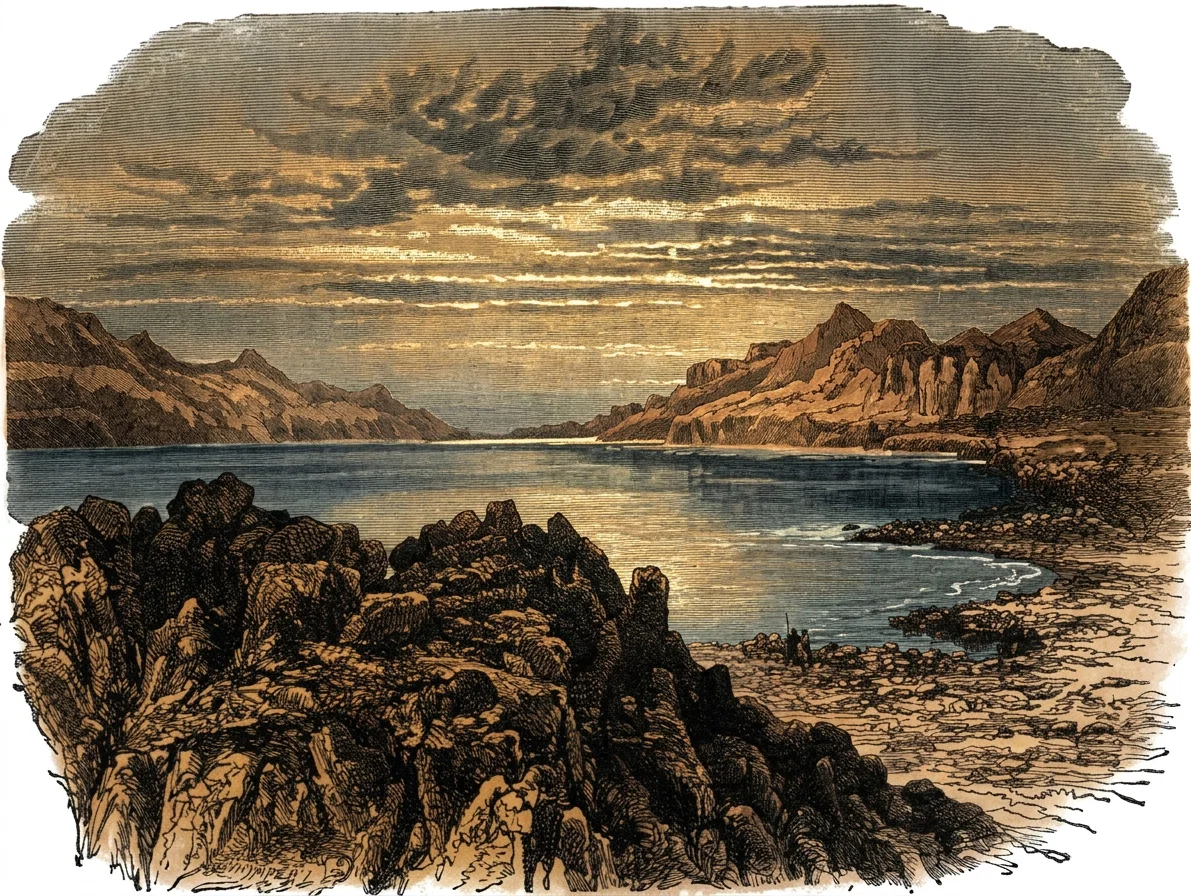
THE DEAD SEA.
THE DEAD SEA.
One of the most remarkable bodies of water in the world is that commonly known as the Dead Sea, called in the Scriptures the Salt Sea. The former name is most appropriate. It is not among the largest bodies of water, being about forty-five miles long by ten miles wide, situated sixteen miles southeast of Jerusalem, at the mouth of the river Jordan, whose waters it receives.

Remarkable Features

This remarkable sea lies in a deep oblong valley, the cliffs rising sheer from the water’s edge, oftentimes overhanging to the height of fifteen hundred feet. The lake has no outlet, and the surface of the water is thirteen hundred feet below the Mediterranean. The water itself contains twenty-five per cent of solids, more than eight times as much to the gallon as is found in sea water. And yet it is remarkably clear and pure in color. It is smooth and oily to the touch, salty and bitter to the taste, and causes an exceedingly prickly and smarting sensation to eyes, lips, and nostrils. Although sweet water springs flow into it constantly, and the Jordan pours into its salty depths six million tons of fresh water daily, its bitterness never grows less. Instead of banks adorned with the living green of grass, shrubbery, and forest, naught but the barren rocks and forbidding cliffs meet the eye, save where some cool spring of sweet living water brings life and nourishment to undersized and unthrifty terebinth, tamarisks, spina-christi (Christ thorn), and stunted and pale oleander, henbane, and mignonette, struggling for life in an inhospitable region of “unmixed desolation.” The few green spots serve only to make more vivid and drear the wasteness which everywhere reigns. The waters are almost wholly without life, only some of the lower forms are said to exist at all in its briny depths. Fish carried out into the sea by the turbulent Jordan immediately die, while sea fish transferred to its inhospitable waters soon perish. Truly it is the Dead Sea.

Its History

There are various theories concerning the sea and valley, as there are about every object of interest. But it is probable, as held by some travelers, that the Jordan once flowed to the Red Sea; that the Dead Sea is but an expansion of the Jordan, even as the Sea of Galilee, and that the surrounding region was teeming with animal and vegetable life, while on its southern shores, in a region of unparalleled fertility, lay the proud and wealthy cities of the plain, Sodom and Gomorrah. Thus it was on that long-ago morning when “Lot lifted up his eyes, and beheld all the plain of Jordan, that it was well watered everywhere, before the Lord destroyed Sodom and Gomorrah, even as the garden of the Lord.” Gen. 13:10. But when those cities, which with such great blessings should have been so righteous, became so wicked that it was to the credit of the mercy of God to destroy them for the sake of others who should come after, the very earth quaked with the punishment, the great valley of the Jordan was broken up, the land of fertility and sweetness became the land of salt and bitterness, and the valley of habitation that of desolation. The one weakly righteous man barely escaped with his life and loss of reputation. Since that the bleak and barren valley has been preaching unto the children of men a solemn Gospel message.

Its Lessons

One of its important lessons is God’s long-suffering and mercy. Long time had he borne with Sodom and Gomorrah. That they might have light he suffered Lot, who possessed a knowledge of the true God, to dwell among them, and who became one of their prominent men. (Gen. 19:1.) Not learning the way of righteousness in prosperity, God suffered them to be taken captive by their enemies; and their rescue came about because of the one righteous man who dwelt among them, through another righteous man who desired to save him. (Gen. 14:1-16). Right in their presence dwelt Abraham, the friend of God, and Melchizedek, the priest of God, holy men and renowned, holding up the light of the Gospel. (Gen. 14:17-24.) Yet the people of Sodom and Gomorrah turned not from their sins, but hardened their heart under the showers of God’s goodness. Of them and sinners like them the Dead Sea is a fitting type. Receiving ever the fresh, life-giving waters of many springs and the enormous outflow of the Jordan, it returns nothing for all these blessings but dreariness and desolation. So the Cities of the Plain, situated in one of earth’s fairest and best well-watered regions, receiving continually blessings from God, returned to him blasting instead of blessing, cursing instead of praises, sin instead of holiness,famine of soul instead of fruitage. When Lot and his family, like the few green shrubs by a fresh-water spring in a Dead Sea wadi, lost in strength and life instead of winning by their example, or blessing by their fruit bearing, it became an act of God’s mercy to remove them. Five times did the Friend of God plead for the devoted cities, till the number of righteous were doubtless reduced to the number of Lot’s household, and received God’s assurance that if that number—only ten—could be found, the city would be spared; but of Lot’s family only three heeded the merciful warning the messengers of heaven bore to all, and they not because of their righteousness, but because they hoped in God’s mercy and believed God’s word.

God’s Hatred of Sin

God hates the sin, but he loves the sinner. He is not willing that any should perish, but that all should come to repentance. His presence consumes sin, and he longs that every sinner shall so separate from the sin, so choose God, that the sin may be consumed, and the sinner cleansed and saved. But if after Infinity has exhausted its resources, and the sinner still refuses to receive him, choosing rather the sin, identifying himself with the sin, God leaves him to his choice. When God’s presence is manifest, the sin is destroyed, and those who choose it perish with it, “The wages of sin is death.” We may endeavor to persuade ourselves otherwise; but “God is not mocked; for whatsoever a man soweth, that shall he also reap.” Gal. 6:7. Jehovah declares, “As I live . . . I have no pleasure in the death of him that dieth,” and he pleads with infinite love and longing, “Turn ye, turn ye from your evil ways; for why will ye die?” Yet sin is death, and the Dead Sea is a solemn witness to the fact.

Heed the Lesson

There are other lessons connected with the sad history with reference to Lot and his choice of Sodom, with reference to his wife, who longed for the city more than God, with reference to the moral condition of his family. God has lessons for us in all these; but the two great lessons are his long-suffering and tender mercy, and his hatred of sin. He tells us also that the fate of those cities and their inhabitants is “an ensample unto those that after should live ungodly.” 1 Peter 2:6. The punishment, the destruction, is not because of any vindictive wrath of God, it is in the very sin itself which the wicked have chosen. Against their own conscience, against faithful warning, against the pleading of God’s Spirit, they choose sin, and when they receive its wages, death, they are simply “filled with their own devices,” reaping the fruitage of their own sowing. These are among the useful lessons suggested by that grim preacher of the Gospel, the Dead Sea. May its lessons, through the power of God, which shall cause even the desert to blossom like the rose, bear fruit unto eternal life in hearts that are now as barren as its own desert dreariness.

Debtor to All

The first seven verses of the first chapter of Romans, covered in our study last week, are the salutation. No uninspired letter ever embraced so much in its greeting as this one. The apostle was so overflowing with the love of God that he could not write a letter without covering almost the whole Gospel in the salutation.
The next eight verses may well be summarized in the words “debtor to all,” for they show the completeness of the apostle’s devotedness to others. Let us read them carefully, and not be content with one reading:—
“First, I thank my God through Jesus Christ for you all, that your faith is spoken of throughout the whole world. For God is my witness, whom I serve with my spirit in the Gospel of his Son, that without ceasing I make mention of you always in my prayers; making request, if by any means now at length I might have a prosperous journey by the will of God to come unto you. For I long to see you, that I may impart unto you some spiritual gift, to the end ye may be established; that is, that I may be comforted together with you by the mutual faith both of you and me. Now I would not have you ignorant, brethren, that oftentimes I purposed to come unto you (but was let hitherto), that I might have some fruit among you also, even as among other Gentiles. I am debtor both to the Greeks, and to the barbarians; both to the wise, and to the unwise. So, as much as in me is, I am ready to preach the Gospel to you that are at Rome also.” Rom. 1:8–15.

Questioning the Text

For whom did the apostle give thanks to God?
“I thank my God through Jesus Christ for you all.”
What does he say is the chief characteristic of the Romans?
“Your faith.”
How prominent was their faith?
“Your faith is spoken of throughout the whole world.”
What did the apostle always do for them?
“Make mention of you always in my prayers.”
How often did he pray for them?
“Without ceasing.”
How emphatically does he make this statement?
“God is my witness.”
How did he say that he himself served God?
“Whom I serve with my spirit in the Gospel of his Son.”
For what did the apostle pray concerning the Romans?
“Making request, if by any means now at length I might have a prosperous journey by the will of God to come unto you.”
Why was he so anxious to see them?
“I long to see you, that I may impart unto you some spiritual gift.”
Why did he wish to impart a spiritual gift to them?
“To the end ye may be established.”
What had he often purposed?
“Oftentimes I purposed to come unto you.”
Why had he not gone?
“But was let [hindered] hitherto.”
Why had he purposed to go to them? “That I might have some fruit among you also, even as among other Gentiles.”
How did Paul hold himself as related to men?
“I am debtor both to the Greeks, and to the barbarians; both to the wise, and to the unwise.”
What was he therefore willing to do?
“So, as much as in me is, I am ready to preach the Gospel to you that are at Rome also.”
A Great Contrast.—In the days of the apostle Paul the faith of the church in Rome was spoken of throughout all the world. Faith means obedience; for faith is counted for righteousness, and God never counts a thing so unless it is so. Faith “worketh by love.” Gal. 5:6. And this work is a “work of faith.” 1 Thess. 1:3. Faith also means humility, as is shown by the words of the prophet, “Behold, his soul which is lifted up is not upright in him; but the just shall live by his faith.” Hab. 2:4. The upright man is the just man; the man whose soul is lifted up is not upright or just; but the just man is such because of his faith; therefore only the man whose soul is not lifted up has faith. The Roman brethren, therefore, in the days of Paul, were humble.
But it is far different now. An instance is given by the Catholic Times of June 15, 1894. The pope had said, “We gave authority to the bishops of the Syrian rite to meet in synod at Mossul,” and had commended the “very faithful submission” of those bishops, and had ratified the election of the patriarch by “Our Apostolic authority.” An Anglican paper had expressed surprise, saying, “Is this a free union of equal churches, or is it submission to one supreme and monarchical head?” To which the Catholic Times replies: “It is not a free union of equal churches, but it is submission to one supreme and monarchical head. . . . To our Anglican pleader we say, You are not really surprised. You know well what Rome claims and always will claim,—obedience. That claim is now, if it ever was, before the world.” But that claim was not before the world in the days of Paul. In those days it was the church in Rome; now it is the Church of Rome. The church in Rome was famous for its humility, and its obedience to God; the Church of Rome is famous for its haughty assumption of the power of God, and for its demand for obedience to itself.
Praying without Ceasing.—The apostle exhorted the Thessalonians to “pray without ceasing.” 1 Thess. 5:17. He did not exhort others to do that which he did not do himself, for he told the Romans that without ceasing he made mention of them always in his prayers. It is not to be supposed that the apostle had the brethren at Rome on his mind every waking hour of the day; for in that case he could not have thought of anything else. No man can be consciously in prayer every moment, but all can continue “instant in prayer,” or, as Young translates it, “in the prayer persevering.” Rom. 12:12. This is in harmony with what the Saviour said, that “men ought always to pray, and not to faint,” or grow weary. Luke 18:1. In
the parable that follows, the unjust judge complains of the “continual coming” of the poor widow. That is an illustration of praying without ceasing. It is not that we are to be every moment in conscious prayer, for then important duties would be neglected, but it is that we should not grow weary of praying.
A Man of Prayer.—This is what Paul was. He made mention of the Romans in all his prayers. To the Corinthians he wrote, “I thank my God always on your behalf.” 1 Cor. 1:4. To the Colossians, “We give thanks to God and the Father of our Lord Jesus Christ, praying always for you.” Chap. 1:3. Still more emphatically he wrote to the Philippians, “I thank my God upon every remembrance of you, always in every prayer of mine for you all making request with joy.” Phil. 1:3, 4. Again to the Thessalonians, “We give thanks to God always for you all, making mention of you in our prayers; remembering without ceasing your work of faith,” etc. 1 Thess. 1:2, 3. And further, “Night and day praying exceedingly that we might see your face, and might perfect that which is lacking in your faith.” 1 Thess. 3:10. To his beloved son in the faith he wrote, “I thank God, whom I serve from my forefathers with pure conscience, that without ceasing I have remembrance of thee in my prayers night and day.” 2 Tim. 1:3.
“Rejoice Evermore.”—The secret of this is to “pray without ceasing.” See 1 Thess. 5:16, 17. The apostle Paul prayed for others so much that he had no time to worry about himself. He had never seen the Romans, yet he prayed for them as earnestly as for the churches that he had raised up. Recounting his labors and sufferings, he adds that they are “beside those things that are without, that which cometh upon me daily, the care of all the churches.” 2 Cor. 11:28. “As sorrowful, yet always rejoicing.” He fulfilled the law of Christ by bearing the burdens of others. Thus it was that he was able to glory in the cross of our Lord Jesus Christ. Christ suffered on the cross for others, but it was “for the joy that was set before him.” They who are wholly devoted to others, share the joy of their Lord, and can rejoice in him.
“A Prosperous Journey.”—Paul prayed earnestly that he might have a prosperous journey by the will of God to visit Rome. Read the twenty-seventh chapter of Acts, and you will learn just what kind of journey he had. Most people would say that it was not a prosperous journey. Yet we do not hear any complaint from Paul; and who can say that he did not have a prosperous trip? “All things work together for good to them that love God.” Therefore it must have been prosperous. It is well for us to consider these things. We are apt to look at matters from a wrong side. When we learn to look at them as God looks at them, we shall find that things that we regard as disastrous are prosperous. How much mourning we might save if we always remembered that God knows much better than we do how our prayers should be answered!
Spiritual Gifts.—When Christ “ascended up on high, he led captivity captive, and gave gifts unto men.” Eph. 4:8. These gifts were the gifts of the Spirit, for he said, “It is expedient for you that I go away; for if I go not away, the Comforter will not come unto you; but if I depart, I will send him unto you.” John 16:7. And Peter said on the day of Pentecost: “This Jesus hath God raised up, whereof we all are witnesses. Therefore being by the right hand of God exalted, and having received of the Father the promise of the Holy Ghost, he hath shed forth this, which ye now see and hear.” Acts 2:32, 33. These gifts are thus described: “Now there are diversities of gifts, but the same Spirit. And there are differences of administrations, but the same Lord. And there are diversities of operations, but it is the same God which worketh all in all. But the manifestation of the Spirit is given to every man to profit withal. For to one is given by the Spirit the word of wisdom; to another the word of knowledge by the same Spirit; to another faith by the same Spirit; to another the gifts of healing by the same Spirit; to another the working of miracles; to another prophecy; to another discerning of spirits; to another divers kinds of tongues; to another the interpretation of tongues; but all these worketh that one and the selfsame Spirit, dividing to every man severally as he will.” 1 Cor. 12:4–11.
Established by Spiritual Gifts.—“But the manifestation of the Spirit is given to every man to profit withal.” What is the profit?—“For the perfecting of the saints, for the work of the ministry, for the edifying of the body of Christ; till we all come in the unity of the faith, and of the knowledge of the Son of God, unto a perfect man, unto the measure of the stature of the fullness of Christ.” Eph. 4:12, 13. The gifts of the Spirit are for the purpose of building up the church, the body of Christ. But the gifts of the Spirit must accompany the Spirit. As soon as the early disciples received the Spirit in accordance with the promise, they received the gifts. One of the gifts, speaking with new tongues, was manifested that very day. It follows, therefore, that the absence of the gifts of the Spirit in any marked degree in the church, is evidence of the absence of the Spirit, not entirely, of course, but to the extent that God has promised it. The Spirit was to abide with the disciples forever, and therefore the gifts of the Spirit must be manifest in the true church until the second coming of the Lord. As before stated, the absence of any very marked manifestation of the gifts of the Spirit, is evidence of the absence of the fullness of the Spirit; and that is the secret of the weakness of the church, and the great divisions that exist. Spiritual gifts establish the church; therefore the church that does not have those gifts can not be established. Who may have the Spirit?—Whoever asks for it with earnest desire. See Luke 11:13. The Spirit has already been poured out, and Godhas never withdrawn the gift; it only needs that Christians should ask and accept.
“I Am Debtor.”—That was the keynote of Paul’s life, and it was the secret of his success. Nowadays we hear of men saying, “The world owes me a living.” But Paul considered that he owed himself to the world. And yet he received nothing from the world but stripes and abuse. Even that which he had received before Christ found him was a total loss. But Christ had found him, and given himself to him, so that he could say, “I am crucified with Christ; nevertheless I live; yet not I, but Christ liveth in me; and the life which I now live in the flesh I live by the faith of the Son of God, who loved me, and gave himself for me.” Gal. 2:20. As Christ’s life was his life, and Christ gave himself for the world, Paul necessarily became a debtor to the whole world. This has been the case of every man who has been a servant of the Lord. “David, after he had served his own generation by the will of God, fell on sleep.” Acts 13:36. “Whosoever will be great among you, let him be your minister; and whosoever will be chief among you, let him be your servant; even as the Son of man came not to be ministered unto, but to minister, and to give his life a ransom for many.”
Personal Labor.—There is a foolish notion prevalent that ordinary labor is degrading, especially to a minister of the Gospel. It is not all the fault of the ministers themselves, but largely the fault of the foolish people about them. They think that a minister must always be faultlessly attired, and that he must never soil his hands with ordinary manual labor. Such ideas were never gained from the Bible. Christ himself was a carpenter, yet many professed followers of him would be shocked if they should see their minister sawing and planing boards, or digging in the ground, or carrying parcels. There is a false dignity altogether too prevalent, which is utterly opposed to the spirit of the Gospel. Paul was not ashamed nor afraid to labor. And this he did not merely occasionally, but day after day while he was engaged in preaching. See Acts 18:3, 4. He said, “These hands have ministered unto my necessities, and to them that were with me.” Acts 20:34. He was speaking to the leaders of the church when he said, “I have showed you all things, how that so laboring ye ought to support the weak, and to remember the words of the Lord Jesus, how he said, It is more blessed to give than to receive.” Verse 35.
Slandering Paul.—At the second international convention of the Student Volunteer Movement for Foreign Missions, February, 1894, the main address for one evening was on the subject of “Paul, the Great Missionary.” The speaker said that “Paul had a faculty for dividing up the work so that he undertook very little of it himself.” It was a foolish and wicked idea to present before young volunteers for missionary service, because it was an utter falsehood, and it was anything but a compliment to the apostle. Of course the man who made the statement did not know any better. In addition to what has been cited above, read the following: “Neither did we eat any man’s bread for naught; but wrought with labor and travail night and day, that we might not be chargeable to any of you.” 2 Thess. 3:8. “I will very gladly spend and be spent for you.” 2 Cor. 12:15. “Are they ministers of Christ? (I speak as a fool) I am more; in labors more abundant, in stripes above measure, in prisons more frequent.” 2 Cor. 11:23. “But by the grace of God I am what I am; and his grace which was bestowed upon me was not in vain; but I labored more abundantly than they all; yet not I, but the grace of God which was with me.” 1 Cor. 15:10. The grace of God is manifest in service for others. The grace of Christ led him to give himself for us, and to take upon himself the form and condition of a servant. Therefore he who has the most of the grace of Christ will labor the most. He will not shun work, even though it be the most menial service. Christ went to the lowest depths for the sake of man; therefore he who thinks that any service is beneath him, is altogether too high for association with Christ.
Gospel Liberty.—Gospel liberty is the liberty that God gives men through the Gospel. It expresses God’s idea of freedom. It is the freedom seen in nature and in all the works of God’s hands. It is the freedom of the winds, blowing where they list; it is the freedom of the flowers, scattered everywhere through wood and meadow; it is the freedom of the birds, soaring unrestrained through the heavens; the freedom of the sunbeam, shooting from its parent orb and playing on cloud and mountain top; the freedom of the celestial orbs, sweeping ceaselessly on through infinite space. This is the freedom which flows out from the great Creator through all his works. It is sin that has produced what is narrow and contracted and circumscribed,—that has erected boundary lines, and made men stingy and niggardly. But sin is to be removed, and then perfect liberty will be realized once more in every part of creation. Even now this freedom may be tasted, by having sin removed from the heart. To enjoy this freedom through eternity is the glorious privilege now offered in the Gospel to all men. Who that claims to love liberty can let this opportunity pass unimproved? E. J. W.
Experience.—It is true of everything in the Bible, everything that God has for us, that no one can understand it without experiencing it. Understanding is experience. This shows that the preaching of the Gospel does not consist in laying down certain arbitrary propositions to be believed. And the acceptance of the Gospel does not consist in the belief of those propositions. It is a life, and a laying hold of life. All true doctrine grows out of the life, and he who yields to the life will go on learning more and more of the wonders of God’s law; for the law of God is but the life of God.
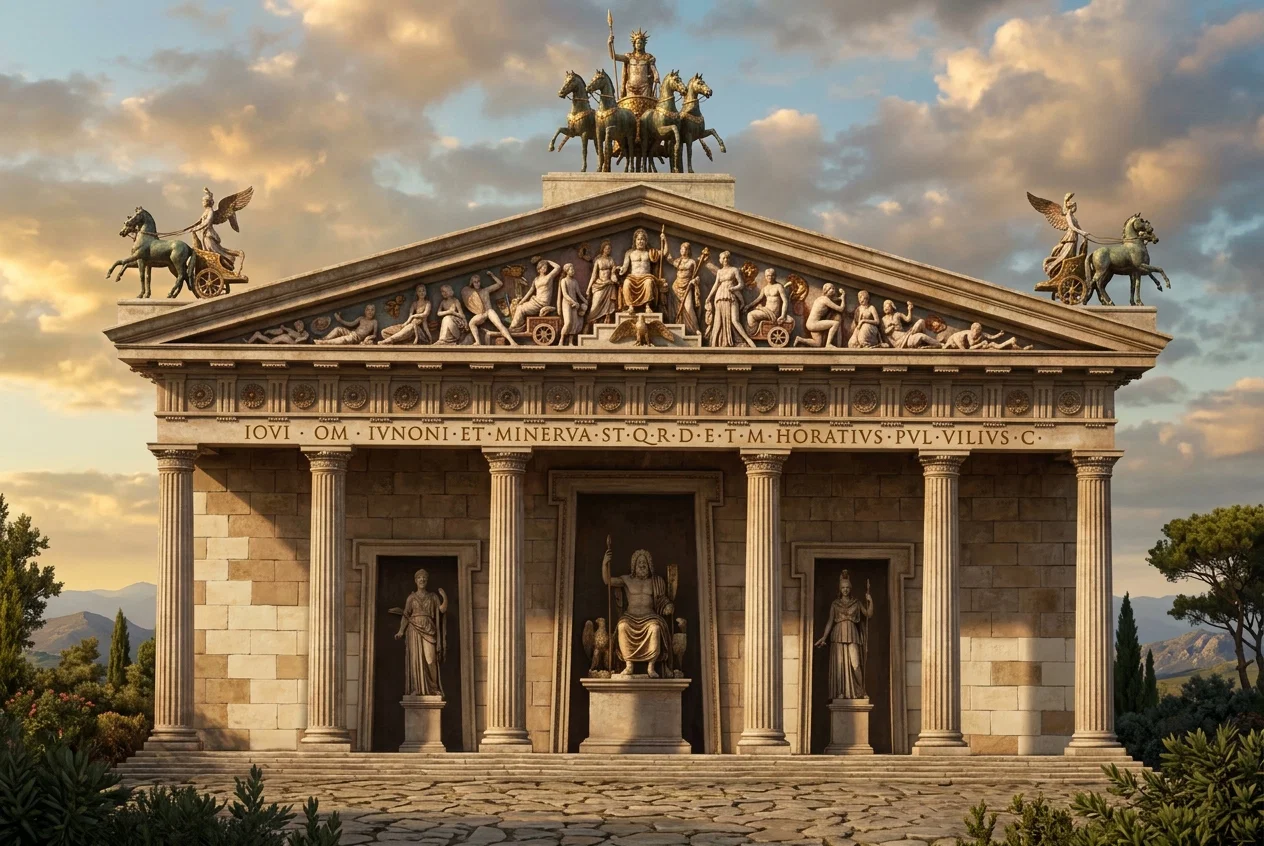
THE TEMPLE OF JUPITER.

To What Does It Refer?

No. 244. The Lord’s Day.

A CORRESPONDENT wishes to know what the Lord’s day is not, as well as what it is.
Space in this column is limited, but perhaps an extended reply is not needed. What shall determine its meaning?—Surely to Bible Christians the usage of Scripture.
1. It is not the great day of the Lord, including the 1,000 years of the millennium. (a) The expression is different both in the English and Greek. See Acts 2:20, “day of the Lord” (Greek, tēn hēmeran kuriou), to which is prefixed the adjectives “great and notable;” 1 Thess. 5:2 (Greek hē hēmera kuriou); 2 Peter 3:10, the same. The same period is referred to in other places as “the day of our Lord Jesus Christ” (1 Cor. 1:8); “the day of the Lord Jesus” (1 Cor. 5:5); “the day of Jesus Christ” (Phil. 1:6); “the day of Christ” (Phil. 1:10; 2:16; 2 Thess. 2:2); “the day of God” (2 Peter 3:12); “the day of wrath,” “the day of judgment,” “the day of perdition,” “the day of God’s wrath,” “that day,” etc. (see Acts 17:31; Rom. 13:12; 1 Peter 2:12; 2 Peter 2:9; 3:7, 12; 1 John 4:17; Rev. 6:17; 16:14); “the Lord’s day,” Rev. 1:10 (Greek, tē kuriakē hēmera). The word “day” is the same in all. The word kurios is the genitive singular of kurios, meaning a lord, master, potentate, sovereign, and may be used as a mere term of respect, or applied to God or Christ. Kuriakē, of Rev. 1:10, is the dative singular feminine of kuriakos, defined as belonging to the Lord (Jehovah or Jesus) always rendered by the word “Lord’s.” It occurs in 1 Cor. 11:20 and Rev. 1:10. So much for the expressions.
(b) The use of the terms, “the great day of the Lord,” and other kindred terms, as the contexts and similar expressions show, have reference to that period of time when God will be manifested in all his glory—life and salvation to his people; condemnation and perdition to the wicked. The Lord’s day, however, of Rev. 1:10, seems in its obvious sense to be used to denote a period of time in which John actually was.
(c) The great day of God is definitely located in Scripture as beginning when probation ends, shortly before Christ comes and the thousand years of Revelation 20 begin, and ending when sin is destroyed and the eternal kingdom of God begins. (For proof of this see Bible Students Library, No. 65, entitled “The Great Day of the Lord,” price five cents.) But John’s visions, while they included this period, pertained to much more, even the entire Christian dispensation and the giving of the blessed Gospel of truth.
2. That the term “Lord’s day” does not refer to the first day of the week is evident from the fact that that day is never elsewhere known in Scripture save as a common secular day. John’s Gospel, written about the same time as the Revelation (by some said to be later), calls the first day of the week by no other term than “first day of the week.” It is not even in the early church called “Lord’s day” until the apostasy was well under way, a century after John’s time.

To What Does It Refer?

3. Compare Ex. 20:8–11 with Col. 1:16; Mark 2:27; Isa. 58:13; 1 Peter 1:11. Do not these texts unmistakably show that the seventh-day Sabbath is “the Lord’s day”? The book is “the Revelation of Jesus Christ,” “the Alpha and the Omega,” “the first and the last.” The Sabbath is that which reveals him in this twofold character; the Creator and Redeemer of men, mighty in power and love. The Alpha is the Omega; the Beginner is the Finisher; the Creator is the Recreator; and of his mighty power, manifest in these mighty works, the Sabbath is a sign, a remembrance of power which is in Jesus Christ our Lord. The Sabbath is the Lord’s day.
Continue reading: THE SUPREME WILL AND THE DEVELOPMENT OF CHARACTER