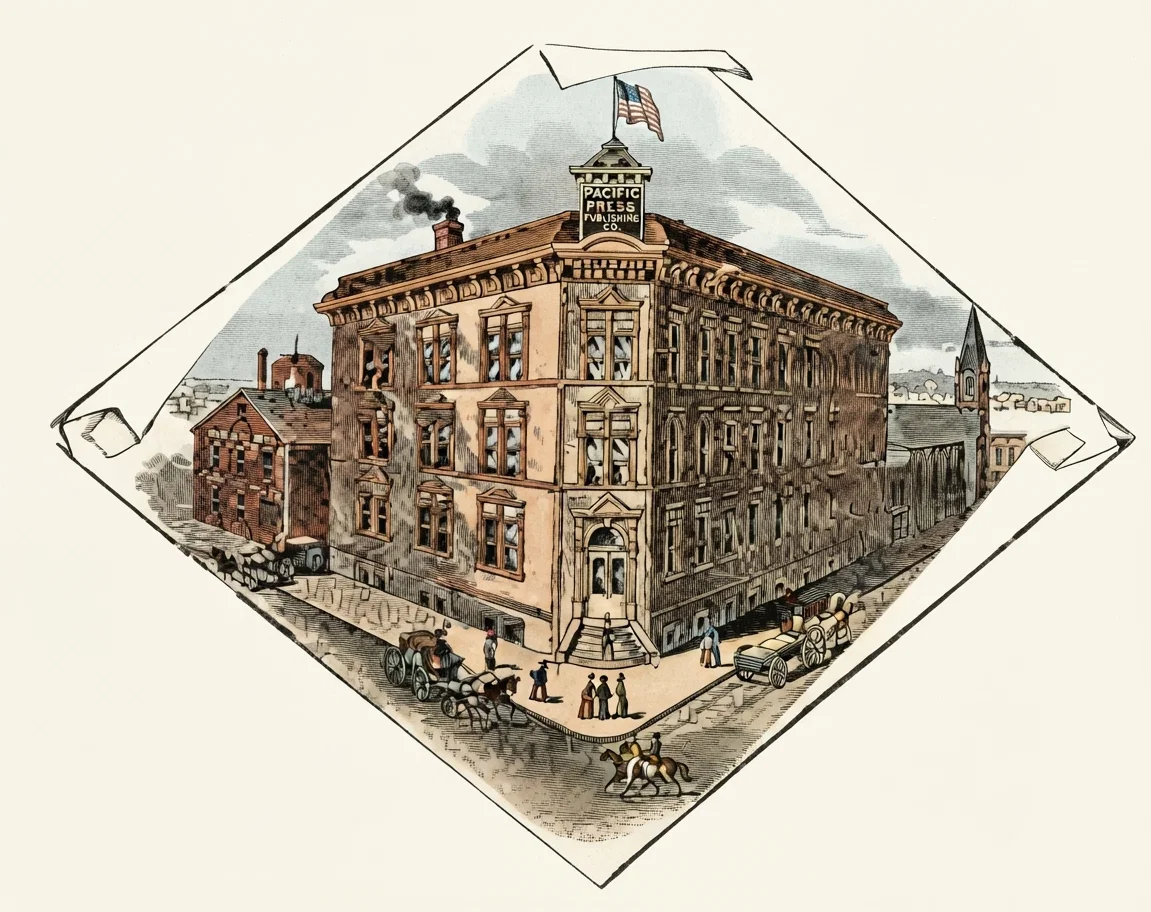
Signs of the Times, Vol. 26, No. 40.

A ROYAL PRIESTHOOD
Earlier text: A ROYAL PRIESTHOOD

Power for Witnessing

This book contains over 200 pages and is just being issued. It is well bound in cloth.
Price, 75 cents, post-paid
Notice the following list of its chapter titles:
The Preparation Something to Tell "Forgiveness of Sins" Ye Are My Witnesses Personal Experience in Receiving Repentance and Forgiveness of Sins The Spirit Calls for Confession The Spirit Calls for Restitution Righteousness, Then Power "Sin No More" Speedy Deliverance Personal Experience in Receiving Keeping Power Humility, Then Glory The Spirit in Sanctification The Holy Spirit and the Unpardonable Sin Secret of Rejoicing in Tribulation Another Reason for Rejoicing in Tribulation First a Holy Church, Then the Holy Ghost A Spirit-filled Member Possible before a Spirit-filled Church Miracles and the Sin against the Holy Ghost Filling and Feeling The Spirit Calls for Consecration "The Promise of the Spirit" How to Find Faith The Holy Ghost the Vicegerent of Christ The Holy Ghost a Gift Praying for the Spirit The Laying on of Hands "Believe That Ye Receive" Faith Illustrated Personal Experience in Receiving Personal Experience in Witnessing The Fruit before the Gifts How to Seek Spiritual Gifts Miracles of Healing The Gifts of the Spirit Withheld The Gifts of Healing and God's Reputation Confirming Signs The Sword of the Spirit "Why Marvel Ye at This?" Miracles of Healing and Health Reform. Salvation for the Body Lying Wonders Deceiving and Being Deceived How Apostles and Prophets are Chosen What Is the Outlook?
Address your Tract Society or the publishers
Pacific Press Publishing Company Oakland, California 39 Bond St., New York City 18 W. 5th St., Kansas City, Mo.

Another Triumph for the Ball-Bearing DENSMORE

The PACIFIC PRESS PUBLISHING CO., Oakland, Cal., publishers of this paper, wrote us on May 16, 1900: "We purchased our first DENSMORE typewriter about eight years ago, and have had these machines in use in our various departments ever since that time. Have also tried various other makes, but can candidly say that we have found none which gave better satisfaction, all things considered, than the DENSMORE. As an evidence of our faith in this machine, would say that we have just placed an order with your company for nineteen (19) New Densmore Typewriters."

UNITED TYPEWRITER AND SUPPLIES COMPANY

316 Broadway, New York | San Francisco, Cal., 327 Montgomery Street Offices in Detroit, Grand Rapids | Kansas City, Mo., 714 Delaware Street and principal cities

LESSON II.—SUNDAY, OCTOBER 14, 1900.

PARABLE OF THE GREAT SUPPER.

Lesson Scripture, Luke 14:15-24, R.V.
15 "AND when one of them that sat at meat with Him heard these things, he said unto him, Blessed is he that shall eat 16 bread in the kingdom of God. But He said unto him, A 17 certain man made a great supper; and he bade many; and he 18 sent forth his servant at supper-time to say to them that were bidden, Come; for all things are now ready. And they all with one consent began to make excuse. The first said unto him, I have bought a field, and I must needs go out and see 19 it; I pray thee have me excused. And another said, I have 20 bought five yoke of oxen, and I go to prove them; I pray thee 21 have me excused. And another said, I have married a wife, 22 and therefore I can not come. And the servant came, and told his lord these things. Then the master of the house being angry said to his servant, Go out quickly into the streets and lanes of the city, and bring in hither the poor and maimed 23 and blind and lame. And the servant said, Lord, what thou 24 didst command is done, and yet there is room. And the lord said unto the servant, Go out into the highways and hedges, and constrain them to come in, that my house may be filled. For I say unto you, that none of those men which were bidden shall taste of my supper."
NOTE.—The lesson section includes the lesson scripture, together with the marriage feast described in Matt. 22:1-14. Commit to memory Matt. 11:28-30; Isa. 55:1-3. It is suggested that the teacher apply to modern times the whole story of this lesson.
Golden Text: "Come; for all things are now ready." Luke 14:17.

SUGGESTIVE QUESTIONS.

(1) What did the Saviour's discourse at the Pharisee's feast lead one of the guests to say? V. 15. Note 1. (2) In replying to this remark, what parable did the Saviour introduce? What was the most important feature of this great supper? V. 16. (3) When the supper was ready, who was sent out? What invitation did he carry? What statement accompanied the invitation? V. 17. (4) How was the final invitation received by those who had been previously invited? What excuse had the first to offer? V. 18. Note 2. (5) What excuse had the second one? V. 19. (6) What was the excuse of the third man? V. 20. (7) What did the servant then do? What command did the servant immediately receive? What classes of persons were included in the master's command to his servant? V. 21. Note 3. (8) What report of his work did the servant now bring to his master? What did he still find after having obeyed his master's command? V. 22. Note 4. (9) What further command did he then receive? How urgent must his work be? V. 23. Note 5. (10) What did the master declare in regard to those who had refused his invitation? V. 24.

NOTES.

1. Eat bread in the kingdom of God.—This expressed, in the oriental way, the idea of being members of that kingdom. Eating bread with another signified a joining of interests, and the oriental was always desirous of eating bread with those of power and influence. The remark of the guest evidently indicated his expectation of eating bread in the kingdom of God. But the Saviour, in the parable which He then put forth, showed the danger of refusing the call which He was then giving and which is still being given. Many who sat at table with Him were making excuses instead of heeding the invitation.
2. Began to make excuse.—The final invitation was sent when the meal was ready. The first invitation had been received some time before. Christ's invitation to the people of this dispensation corresponds to the final invitation of the giver of the feast. When Christ began His personal work, the final invitation began to be given. All things were then ready. He had come in the fulness of time. It was for them, as it is for us, to accept the invitation and come to the feast. They refused—"began to make excuse"—and the invitation must then go to the Gentiles. But even then the feast was not complete; for the invitation must go to the very lowest classes of humanity, into "the highways and the hedges," the haunts of vice and crime, and the hovels of the poverty-stricken. All who will come may come. The parable teaches that the redemption of Christ is sufficient for the salvation of the whole world.
3. Bring hither the poor and maimed.—The Gospel of Christ was for all classes. None are excluded; but the poor, the maimed, the blind, those who realize their great need, are the ones to whom the Gospel always appeals with the greatest force. Those who are rich and do not sense their need, their dependence upon God, are slowest to accept of the invitation. Those who were first bidden were not the needy ones. The invitation held out noinducement to them. They considered themselves of equal importance with the one who gave the feast, and equally able to give feasts. The ones who were bidden later were in need and knew it. The human race to-day is poor and needy. The invitation has gone out. Those who realize their nothingness and their need will appreciate the invitation. They will come—they will come at once; and they will have on the wedding-garment. Christ's work on earth was always among the poor and needy, the lame, the maimed, the blind, and the suffering; and the wedding-garment which He is offering us is the spotless robe of His righteousness, which will cover the "filthy rags" of our own righteousness, and make us presentable to the heavenly hosts.
4. And yet there is room.—One of the most blessed facts of the Gospel. The world is not so large that any single soul need to perish. The salvation of Christ is sufficient for every soul that has ever lived upon the earth. Men will refuse to come to Christ; and men will be lost for refusing; but the plan of salvation is not to blame, nor Christ an insufficient Saviour.
5. Constrain them to come in.—This message, this invitation, was an urgent one. The idea is not that the servant was to drive them in, to force them in through fear of punishment. It does not mean the persecution of "heretics" to get them back to the fold. It does not mean that we are to compel men to worship God—that religious forms are to be forced upon men. Far from it; but, realizing the importance of his work, the servant would strenuously urge them to come in. The servant of Christ to-day is sent on just that mission. Souls of men are in the balances. The Master is holding out before them the invitation to eternal life. Refusing that, there is nothing before them but eternal destruction.

LESSON II.—SABBATH, OCTOBER 13, 1900

THE CURSE REMOVED.

Lesson Scripture, Gal. 3: 9-14, R.V.
9 "So then they which be of faith are blessed with the faithful Abraham. For as many as are of the works of the law are under a curse; for it is written, Cursed is every one which continueth not in all things that are written in the book of the law, to do them. Now that no man is justified by the law in the sight of God, is evident; for, The righteous shall live by faith; and the law is not of faith; but, He that doeth them shall live in them. Christ redeemed us from the curse of the law, having become a curse for us; for it is written, Cursed is every one that hangeth on a tree; that upon the Gentiles might come the blessing of Abraham in Christ Jesus; that we might receive the promise of the Spirit through faith."
NOTE.—Do not forget to review from the beginning each time. Before you begin the study of this lesson, be sure that you know every word of what precedes it in the chapter, not by rote, but in reality. Do not forget the first two chapters either. You should read carefully from the beginning of the Epistle several times each week, so as to keep everything fresh in mind. Very frequent reviews and constant application are the only means by which the Epistle can be mastered; but it can be done by every one, and the result will more than repay all the effort expended.

SUGGESTIVE QUESTIONS.

(1) Who are blessed? (2) With whom? (3) Who are under the curse? (4) Why? (5) What is evident? (6) Why? (7) By what are men not justified? (8) How do the just live? (9) With what is the law not connected? (10) On what condition only can a man get life from the law? (11) From what has Christ redeemed us? (12) Who has redeemed us from the curse of the law? (13) Has He redeemed us, or will He redeem us? (Note the text carefully.) (14) From what has He redeemed us from the curse of the law? (15) What is the evidence that He became a curse for us? (16) By what, then, is the curse removed? (17) Why did Christ redeem us from the curse of the law? (18) Upon whom does the blessing of Abraham come through the cross of Jesus Christ? (19) What do we receive? (20) By what means?

NOTES.

1. "THE righteous shall live by faith." That makes it evident that no one is justified by works, for if it were by works, then it could not be of faith. Notice how the one thought throughout this Epistle, as far as we have studied, is the sufficiency of Christ as the Saviour from sin. "There is none other name under heaven given among men, whereby we must be saved."
2. "THE law is not of faith." The law says, "Do this," or, "Do not do that." The written law, either in a book or on tables of stone, is of course what is referred to here, not the law in Christ, the Living Stone. "The man that doeth them shall live in them." That is the one condition on which a man can get life by the law. But none have done the requirements of the law, and so there can be no doers of the law; for even tho one should from this moment do everything that the law requires, yet, since he can not do more than his duty, his former transgressions rest upon him. Thus he would be a law-breaker at the end, in spite of all his good efforts. That man who is of the law alone, which means that he trusts in his own power to do the righteousness required by the law, is necessarily under its curse, condemned as a law-breaker by that in which he trusts.
3. "CHRIST hath redeemed us from the curse of the law," It is a work finished, complete. Our part is but to accept what Christ has done for us. It is as true of all mankind as it is of a single individual, that they have been redeemed. The price has been paid, and they belong to the Lord. Only the knowledge of this glorious truth can save any soul from sin. It is the goodness of God that leads to repentance.
4. NEVER forget that it is from the curse of the law, not its blessing, that Christ hath redeemed us. There is a blessing pronounced on those who do the commandments, and from this Christ has not redeemed us. It is from the curse—failure to do the law—that He redeemed us. He is not the minister of sin, but of righteousness.
5. WHAT is the curse of the law?—It is disobedience and its consequence, death. "Cursed is every one which continueth not in all things that are written in the book of the law, to do them." Also, "cursed is every one that hangeth on a tree." These two statements, taken together, show that if "all things" that the law requires are not done, and done continually, the man is cursed and must die. The curse of disobedience carries with it the curse of death. But from all this Christ hath delivered us. He has redeemed us, brought us back, to be faithful servants of God. He has redeemed us from disobedience, so that we may continue in all things which are written in the law, to do them. "For what the law could not do, in that it was weak through the flesh, God sending His own Son in the likeness of sinful flesh, and for sin, condemned sin in the flesh; that the righteousness of the law might be fulfilled in us, who walk not after the flesh, but after the Spirit." Rom. 8:3, 4. By the Spirit the law is written in the heart, so that he who walks after the Spirit must necessarily continue in the law. What a blessed redemption!
6. WHAT has Christ done to redeem us from the curse of the law—from disobedience to the law?—He has been made a curse for us. Isa. 53:12. God "made Him to be sin for us," altho He knew no sin, "that we might be made the righteousness of God in Him." 2 Cor. 5:21. Being made sin, He necessarily suffered death as a sinner; for the evidence that He has redeemed us from the curse of the law is the fact that he was hanged on a tree. This shows us that death is the curse of the law. Disobedience means death. All this Christ gladly suffered to redeem us from disobedience and death. It is in the cross that Christ redeemed us; the cross removes the curse. In this one fact all science is embraced.
7. WHY did Christ redeem us from the curse of the law?—"That the blessing of Abraham might come on the Gentiles through Jesus Christ; that we might receive the promise of the Spirit through faith." Do not let the following items escape your notice, as you read these verses:—
(a) The apostle Paul was a Jew, writing to converts from among the Gentiles; yet he classes himself with them. "Christ hath redeemed us from the curse of the law."
(b) Christ was made a curse for us, "that the blessing of Abraham might come on the Gentiles through Jesus Christ." Here again the apostle shows that there is no difference between Jew and Gentile. His being made a curse for us, brings the blessing on the Gentiles.
(c) Again is the same thing shown by the further statement that this occurred "that we might receive the promise of the Spirit through faith." By one Spirit do all men, of whatever race, have access to the Father. Eph. 2:18.
(d) The blessing of Abraham comes only through the cross of Christ. It was the blessing of sins forgiven,—the gift of the perfect righteousness of God; and this comes only through Christ. Therefore Abraham's faith was in Christ and His cross.
8. "The promise of the Spirit." Note well that this does not say the gift of the Spirit, but the promise of the Spirit. Now it is true that the Spirit is sent by Jesus Christ; but that is not what is spoken of here. The promise of the Spirit is what is spoken of. But all the sacrifice of Christ was not made merely that God might make the promise that we should receive the Spirit. The promise of the gift of the Spirit is in the very sacrifice of Christ. So it is very evident that "the promise of the Spirit" means not the promise of the gift of the Spirit, but the promise which the Spirit makes to us. The expression is used in the same signification as "the promise of God." The Spirit is given to all, and what is here spoken of is a promise which comes through the Spirit,—the Spirit's promise to us. What that promise is will appear as we proceed.

LESSONS BY MAIL ON MEDICAL ELECTRICITY

OR HOW TO USE THE BATTERY

By Prof. G. L. Abell, Member of the Board of Directors of the Electro-Medical Society of San Francisco
Learn how to use the battery and treat yourself. Many diseases are quickly cured by the proper application of electricity. The course embraces the treatment of every organ and part of the body. The lessons are written in plain language and are illustrated. Course, five dollars. Send for circular. Address,
PROF. G. L. ABELL School of Chemistry and Electro-Therapeutics 22 Geary St., San Francisco, Cal.

FLY SHUTTLE CARPET LOOM

The best, handiest, easiest running, cheapest, and most durable

FLY SHUTTLE CARPET LOOM

In the world,—100 yards a day. Catalogue free.
EUREKA LOOM CO.
5018 Main St., Battle Creek, Mich.
When you write, please mention the SIGNS OF THE TIMES.

Baptism: Its Significance, Nature, and Necessity

BAPTISM: Its Significance, Its Nature, and the Necessity for It. By E. J. Waggoner. Bible Students' Library, No. 79. Pacific Press Pub. Co., Oakland, Cal. 16 pp.; 2 cents.

The Talents

THE TALENTS. By M. C. Wilcox. A brief essay on "The Parable of the Talents," showing that the talents represent the various gifts of the Spirit which God bestows as he will upon those who are consecrated to him, with the duties and blessed privileges involved therein. Bible Students' Library. No. 77; 16 pp., price 2 cents.

PACIFIC PRESS PUBLISHING CO

BEASTS, BIRDS, AND FISHES will delight the children.
It is a volume of 126 pages and 363 illustrations with descriptive matter in connection with each cut. Price, 50c.

PACIFIC PRESS PUBLISHING CO

Oakland, Cal.

Instructions for Ordering.

1. REMIT by P. O. Money Order, Express Order, or Bank Draft on New York, Chicago, or San Francisco.
2. If paper money or silver is sent, register the letter.
3. Orders and Drafts should be made payable to the PACIFIC PRESS PUBLISHING CO., or to SIGNS OF THE TIMES.
Postage-stamps.—Please do not send postage-stamps, as they are liable to stick together, and are useless in this condition.
Foreign Money.—Do not send any.
Receipt.—No formal receipt is sent unless by special request. The address label on your paper will indicate the time to which your subscription is paid. In case of non-receipt of papers, or any other irregularity, please notify us immediately.
Expiration of Subscription.—All papers are discontinued at the expiration of the time paid for. Notification will be sent several weeks before date of expiration, thus enabling you to renew in ample time to secure unbroken files. Please be prompt, as we can not always furnish back numbers.
Change of Address.—When ordering change of address, please give both the old and the new address.
Important.—Use a separate sheet for SIGNS orders, separate for other papers, separate for books, for tracts, etc., and if you address the editor, use a separate sheet. All can be sent in one envelope, and the money all sent in one order, but write each kind of business on a separate sheet. In this way each order can be handed to the proper clerk and filled at once.
Articles Desired.—Those which set forth in the Spirit of Christ the great saving truths of God, short and to the point. It is better to treat one important truth clearly, in a short article, than many points vaguely in a long one. We desire no caustic, critical productions, which might minister to personal pride or pleasure, but can not save souls.

The Gospel Song Sheaf Is Still Popular
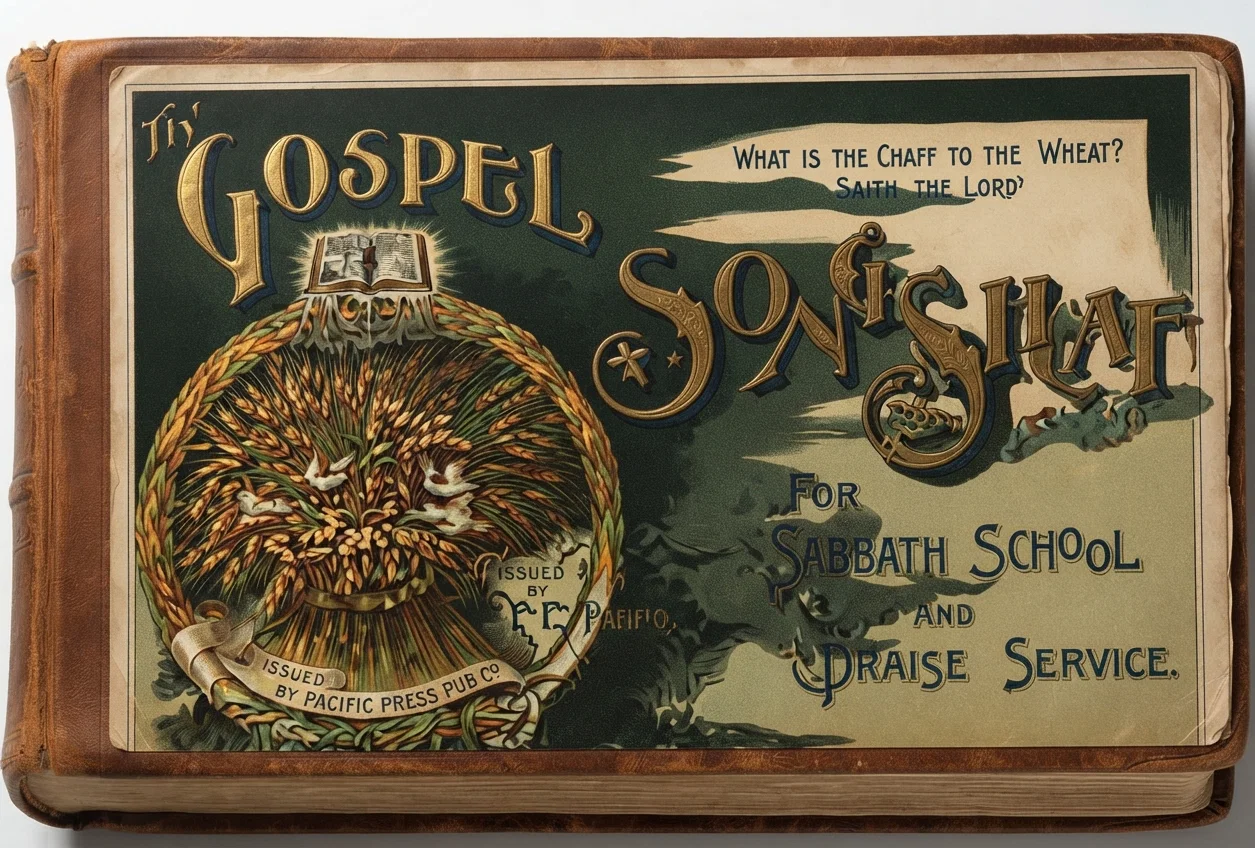
It is being used the world over. The missionary brig "Pitcairn" has just taken a supply to some of the island schools; last month a large case was sent to Australia; and we recently shipped out a thousand copies in less than a week to fill home orders. Six large editions have already been printed, and another will follow in a few months. The book is, therefore, no longer an experiment, but the recognized Sabbath-school song book of the denomination. If your school has not yet adopted it, allow us to send you a sample copy—it costs only thirty-five cents, post-paid—that you can examine its fresh, new music and become convinced that it is just what you need.
Pacific Press Publishing Co. Oakland, California 39 Bond St., New York City 18 W. Fifth St., Kansas City, Mo.

Pacific Press Publishing Co.

Printers Publishers Binders Electro-typers
Finest equipment for the execution of up-to-date work Orders for gener-al printing receive prompt and care-ful attention
Kansas City Oakland, Cal. New York

204 Remington Typewriters

64%

Remington

In the eighteen leading office buildings of PORTLAND, OREGON there are used

204 Remington Typewriters

112 of all other makes
Facts like these speak for themselves.
WYCKOFF, SEAMANS & BENEDICT 211 Montgomery St., San Francisco 249 Stark St., Portland, Ore. 147 South Broadway, Los Angeles

"DESTRUCTION UPON DESTRUCTION IS CRIED."
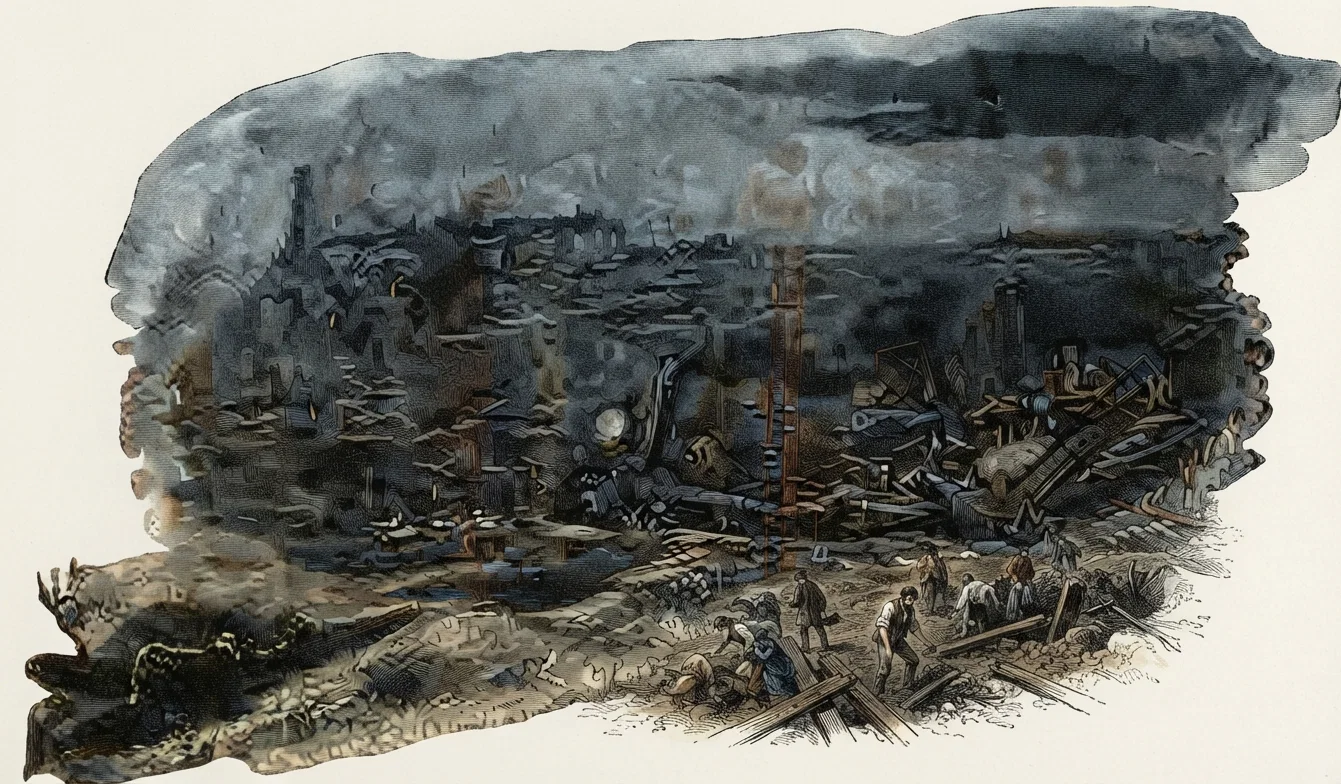
ONE of the clearest prophecies in all the Word of God tells us of the destruction that is to come upon this world in the closing days of time. That we are beginning to see its fulfilment in a decidedly striking manner must be evident to every one.
The full text of the scripture referred to in the above paragraph is as follows:—
"20. Destruction upon destruction is cried; for the whole land is spoiled; suddenly are My tents spoiled, and My curtains in a moment.
"21. How long shall I see the standard, and hear the sound of the trumpet?
"22. For My people is foolish, they have not known Me; they are sottish children, and they have none understanding; they are wise to do evil, but to do good they have no knowledge.
"23. I beheld the earth, and, lo, it was without form, and void; and the heavens, and they had no light.
"24. I beheld the mountains, and, lo, they trembled, and all the hills moved lightly.
"Destruction upon Destruction Is Cried."
"25. I beheld, and, lo, there was no man, and all the birds of the heavens were fled.
"26. I beheld, and, lo, the fruitful place was a wilderness, and all the cities thereof were broken down at the presence of the Lord, and by His fierce anger.
"27. For thus hath the Lord said, The whole land shall be desolate; yet will I not make a full end.
"28. For this shall the earth mourn, and the heavens above be black; because I have spoken it, I have purposed it, and will not repent, neither will I turn back from it.
"29. The whole city shall flee for the noise of the horsemen and bowmen; they shall go into thickets, and climb up upon the rocks; every city shall be forsaken, and not a man dwell therein.
"30. And when thou art spoiled, what wilt thou do? Tho thou clothest thyself with crimson, tho thou deckest thee with ornaments of gold, tho thou rentest thy face with painting, in vain shalt thou make thyself fair; thy lovers will despise thee, they will seek thy life.
"31. For I have heard a voice as of a woman in travail, and the anguish as of her that bringeth forth her first child, the voice of the daughter of Zion, that bewaileth herself, that spreadeth her hands, saying, 'Woe is me now! for my soul is wearied because of murderers.'" Jer. 4:20
The perfectly natural and also the common thing for folks to do is to try to throw such scriptures as the foregoing aside, by saying that they applied at some time in the past, or else that they belong to the remote future. It seems hard to bring the mind to accept the fact that these things belong to the present, and that this prophecy is being fulfilled right now.
But note with care what these words quoted from the prophet say. Verse 20 says, "Destruction upon destruction is cried; for the whole land is spoiled." The Lord Himself has decried destruction upon destruction until the whole land is spoiled. This could mean nothing less than the breaking down of the whole earth.
Of those living in these times of destruction the same Word tells us in verse 22, "For My people is foolish, they have not known Me; they are sottish children, and they have none understanding; they are wise to do evil, but to do good they have no knowledge." Now do not take the time to dispute with any individual as to whether or not this description is of present-day scenes. Open your eyes and look around you. Is it not literally true that the murders, the robberies, the vices, and general corruption of these times most unmistakably show that this generation is "wise to do evil, but to do good they have no knowledge"? And this very corruption would soon destroy the world itself if the Lord should not intervene to put an end to it.
This work of destruction continues until the time is reached of which the prophet says: "I beheld the earth, and, lo, it was without form, and void; and the heavens, and they had no light. I beheld the mountains, and, lo, they trembled, and all the hills moved lightly. I beheld, and, lo, there was no man, and all the birds of the heavens were fled." Verses 23-25.
Certainly words could not portray a more graphic description of the commotion among the elements that finally reduces this whole earth to its original chaos. There can be no doubt that the prophet is here describing the scenes of the last great day.
Then, again, observe these thrilling words: "I beheld, and, lo, the fruitful place was a wilderness, and all the cities thereof were broken down at the presence of the Lord, and by His fierce anger. For thus hath the Lord said, The whole land shall be desolate; yet will I not make a full end. For this shall the earth mourn, and the heavens above be black; because I have spoken it, I have purposed it, and will not repent, neither will I turn back from it." Verses 26-28. In these short verses who can not read the meaning of the events of this time?
Storms and tempests, earthquakes and tidal waves are sweeping whole sections of the country. These things are unusual. Such storms, such terrible destruction from the elements, were not in the days of our fathers, neither did they appear in the years of any former generation. And do not be misled by any of the sophistries of misguided men. The Lord has spoken Himself, and He is omnipotent in power. He has said that this whole world shall be visited with "destruction upon destruction." The calamities of the present are only the beginnings. What will it be when all the cities are broken down, and the mountains are trembling, and all the hills moving lightly?
Does the contemplation of these things fill you with dread and terror? If so, then turn to the ninety-first psalm and read the promises that God has given for this very time.
“The Whole Land Shall Be Desolate.”
Even tho the earth shall be in such an awful commotion, yet the Lord's protection for those who will receive Him is so complete that He positively says, "Thou shalt not be afraid." We should be learning the ways of the Lord in these stormy times, so that in the still more terrible times that are just ahead we may be able to help others into the haven of secure protection. T.

CONTAINED IN THIS NUMBER.

Poetry.

  • Common Blessings . . . . . 4
  • Tithing Hymn . . . . . 7
  • "Tell Jesus" . . . . . 10
  • The Horse, the Dog, and the Man . . . . . 12

General.

  • A Royal Priesthood, L. A. PHIPPENY . . . . . 1
  • The Bread of Life, MRS. E. G. WHITE . . . . . 2
  • "The End of the World," ALONSO T. JONES . . . . . 3
  • The Sabbath According to the Commandment, K. C. RUSSELL . . . . . 4
  • Our Heavenly Father, G. C. TENNEY . . . . . 4
  • How Things Were Made, G. B. THOMPSON . . . . . 4
  • Action and Reaction, DAVID PAULSON . . . . . 5
  • Heredity, A. J. SANDERSON, M.D. . . . . 5
  • A Lesson from Fatherhood, RUTH GARDNER . . . . . 6
  • The Perfect Law, CHARLES PELMULDER . . . . . 6

Question Corner.—No. 1083 . . . . . 7

Outlook.—The Canteen Defense—A Promised Encyclical from the Pope—A Message in the Winds—A Vital Dearth—The Hypnotic Hobby . . . . . 8, 9

Missions.—How We Spent Your Money, W. A. SPICER—Missionary Effort—Nominal Christianity in Japan—Are the Boxers Buddhists?—Mohammedans in India—Extent of Ancient Sun-Worship . . . . . 10, 11

The Home.—Some Points Regarding Food, DAVID PAULSON, M.D.—Alcohol; Its History, and Its Effects upon Society, W. H. RILEY, M.D. . . . . 12, 13

International Sabbath-school and Sunday-school Lessons . . . . . 14, 15

The "Outlook Signs."

It Will Soon Be Ready.

Are You Preparing to Help Circulate It?

There can be no question in regard to the duty of every individual who has light on the prophecies in these times. It is so perfectly plain that the end of all things is right at hand that there can be no mistake about it. The SIGNS OF THE TIMES is published to bring a knowledge of these things before the world. The publishers are doing all they know how to make the matter plain. Among other extensive plans is that of publishing the WORLD'S OUTLOOK NUMBER, to be dated November 28, and ready for circulation on November 1. We believe that the Lord is presenting His demands to us through the many striking events of these days to prepare the best thing that consecrated hearts, and minds, and hands can possibly produce. And when it is produced it seems clear that the demands of the Lord through these same events require that we should give it as wide a circulation as possible. It ought to circulate by the million. We appeal to every one whose soul is stirred by the needs of this time to co-operate with us in this great work.
In importance and real worth this special issue of the SIGNS will be second to none. In perfection of beauty in design and appropriateness of illustrations and in mechanical execution it will excel any previous issue. In price it will be as low as it is possible to put it.
It will be a double number—36 pages including cover. Single copy, 10 cents; 5 to 20 copies, 5 cents; 25 or more copies, 4 cents. Sent singly to lists of not less than 5 names at 5 cents each. These prices include postage.
Orders will be received now and filled in the order of their receipt. Address, SIGNS OF THE TIMES, Oakland, Cal.

You have reached the end of this edition.

Signs of the Times · Oct 3, 1900