Your ShelfYour Projects

Signs of the Times, Vol. 36, No. 26.

There's Life in Him

Signs of the Times

Jul 7, 1909

Pacific Press Publishing Association · Mountain View, California · Jul 7, 1909

There's Life in Him

By Mrs. L. D. Avery-Stuttle

I

Courage, O ye earth-worn pilgrims, Soon shall dawn the glorious day, When a starry crown of beauty we shall wear; When the earth shall reel and tremble, And the heavens pass away, Mong the host of ransomed millions, “we’ll be there.”

II

Tho we sleep in death and silence Mid the darkness of the tomb, When forever done with earth’s discordant strife, Christ hath crossed death’s vale before us And hath tasted of its gloom, And in Him, alone, is everlasting life.

III

O the glory, glory, glory Of the resurrection day, When with bright, immortal bodies we shall rise; When with seraphs, saints, and angels, We shall mount and soar away To the Paradise of God beyond the skies.

IV

Ah, there’s only life in Jesus, In the fulness of His grace; He will keep us if we trust His mighty love; In the resurrection morning We shall see Him face to face, In the shining New Jerusalem above.

Schedule for the Week Ending July 17, 1909.

Day Date Reading Psalms Acts
Su. July 11 Ps. 1, 2, 3 Acts 17: 1-15
Mo. “ 12 “ 4, 5, 6 “ 17:16-34
Tu. “ 13 “ 7, 8, 9 “ 18
We. “ 14 “ 10, 11, 12 “ 19:1-20
Th. “ 15 “ 13, 14, 15 “ 19:21-41
Fr. “ 16 “ 16, 17 “ 20: 1-16
Sa. “ 17 “ 18, 19 “ 20:17-38

OUR BIBLE BAND

Suggestive Notes.

Our morning lessons are truly devotional lessons, lessons which have been sung through all the centuries, and which the Spirit of God ought to sing into our own souls. The Psalms are found in one book in our common version; they are really divided into four books. Book I, Psalms 1 to 41; Book II, Psalms 42 to 72; Book III, Psalms 73 to 89; and Book IV, Psalms 90 to 150. David wrote more of these psalms than any other person, and is called “the sweet singer of Israel.” Many of the psalms were written by others. One at least, Psalm 90, by Moses. Some of them by Asaph, some of them by Solomon, others by writers this side of the Babylonian captivity. Psalm 119 seems to have been written by Daniel. Our morning lessons of the week include Psalms 1 to 19. Many of these we ought to learn by heart so that we could go over them in our solitary moments. This is especially true of Psalms 1, 15, and 19.
The 19th Psalm has been called an educational psalm. God’s primary teaching is set forth in the first six verses of the psalm, teaching by nature day and night and universally; while the higher education is set forth from verse 7 and onward.
Our evening readings begin with the seventeenth chapter of Acts and close with the twentieth chapter. These chapters have to do wholly with the experience of Paul at Thessalonica, at Berea, at Athens, at Corinth, at Ephesus, at Troas, and his farewell talk to the elders of Ephesus. How wonderfully God wrought in all these places! How, notwithstanding all the persecutions, in every case the word of God triumphed!

Question Corner

[To Our Inquirers.—(1) The name and address of all who ask questions must accompany questions, not necessary for publication, in token of good faith, and that we may reply by letter if thought best. All communications will be considered confidential if so desired, and no name will be published unless requested. But we have no time to give to anonymous or unsigned epistles or articles. (2) Let the questions be to the point. Do not say, “Explain Josh. 7:1-8,” but state the thing upon which help is desired. (3) Questions can not be answered immediately in this department. Sometimes it will mean a month or more of waiting. We can not reply to the same question frequently. Read answers to other questions; you may find reply to yours. (4) Members of the Bible Band will kindly enclose stamp if answer is desired by letter. Others will please enclose ten cents. This does not begin to meet expenses oftentimes. (5) “Foolish . . . questions avoid.”]

2875.—Baptism for the Dead.

Please explain 1 Cor. 15:29. How were we baptized for the dead and what is the baptism for the dead? B. B. 228 and F. A. B.
The only true way to get a proper understanding of 1 Cor. 15:29 is to take it in connection with the context. Note the subject of the chapter. The great fact upon which Paul lays such tremendous emphasis, is the resurrection of Christ from the dead. Christ died in our behalf; because He died, we live. He rose for our justification, and because He arose, He is able to help us to the end. All who died in faith died in view of the fact that He died in our behalf and arose to intercede for us.
Connect verse 29 with verse 19, for verses 20-28 bring in a subject directly connected, but a little outside the apostle’s argument. “If Christ hath not been raised, our faith is vain; ye are yet in your sins. Then they also that are fallen asleep in Christ have perished. If we have only hoped in Christ in this life, we are of all men most pitiable. Else what shall they do that are baptized for the dead? If the dead are not raised at all, why then are they baptized for them?” The whole meaning of the thought is that they are baptized in view of the resurrection as themselves doomed to death. Therefore the baptism for the dead is baptism of sinners doomed to death having faith in Christ who died in their behalf and who lives for their justification.

2876.—Resisting Evil.

In what respect is it that we shall not resist evil? Matt. 5:39. A. K.
First, when we are prosecuted wrongfully and unjustly. Verse 38 refers to regular judicial process in the commonwealth of Israel: “An eye for an eye, and a tooth for a tooth.” God’s children should endure persecution; they are not to carry out this law. They had better suffer wrongfully than to endeavor to avenge things by their own hands, so when they are persecuted for conscience’ sake, let them not resist the evil by trying to avenge themselves.
No. 2877.—A. K.—The expression “saved in child-bearing” in 1 Tim. 2:15 refers doubtless to the child-bearing of the Lord Jesus Christ. The One who was born of woman will be the Saviour of woman.
No. 2878.—A. K.—The law of Acts 21:20 doubtless is a general term used by the Jews at that time as including all the books of Moses. The first five books were denominated by the general term of “the law.” This would include all the sacrifices, ordinances and other things connected with it. Mal. 4:4 is probably as broad a statement. It is a call for God’s people to study the system which He gave through Moses. Not that all these ordinances are binding. Many of them were local, referring to that people and that time. Many others were typical and expired by limitation when they reached the great Antitype Christ Jesus our Lord. Many others of course are moral, applicable to all times and all ages, based on the very nature and character of God Himself. But in these types of the Mosaic dispensation there are great truths which throw light upon the present dispensation. That is especially true as regards the sanctuary question, the priesthood of our Lord Jesus Christ.

2879.—Let No Man Judge You.

Will you please explain Col. 2:14-17? (1) The word here is sabbaton, genitive plural. It is also sabbaton in the Septuagint in Ex. 28:10. (2) “Ordinances” is “dogma” (Greek, law, decree, etc.). The bond (See R. V.) was written in the dogma or law. (3) Verse 17 being nominative plural and neuter in Greek agrees with “holy day,” “new moon,” and “sabbath.” (4) The order “holy day,” and “new moon,” and “sabbath” is exactly as the order is in the Old Testament in some places. When that order appears in the Old Testament, does “sabbath” mean the Decalogue Sabbath or not? Would these considerations involve the claim that Paul in Col. 2:14-17 did not refer to the Decalogue Sabbath? J. J. S.
To answer the last question first, it would not in any wise affect the claim that Paul did not refer to the Decalogue Sabbath. The Decalogue Sabbath is not a “shadow of things to come.” It is a memorial of that which is past. It is the constant present evidence of God’s power to create and recreate.
The Greek word sabbaton is used for the singular in its plural form, partly for emphasis. Perhaps this can be easily seen by tracing it in a New Testament Greek Concordance. The kind of sabbaths, new moons, etc., is shown by the phrase before referred to: “Which are a shadow of things to come.” This was literally true of the feast days, the monthly festivals and the yearly sabbaths.
There is another consideration that is worthy of note in this passage that the student ought not to miss, and that is the point of the apostle’s teaching. He is speaking to Christians, those whom God has redeemed and re-created anew in Christ Jesus. They have been placed upon the true foundation of God’s word and it is the apostle’s desire that they shall be rooted and builded up in Christ and established in faith. All this is in harmony with God’s holy word. Our Lord Himself was that word personified, a commandment-keeper, and those rooted and established in Him by faith are also commandment-keepers; therefore being justified by Him, received by Him, sins cleansed by Him, let not man judge. Let not man condemn. In other words whatever men may say, do not let us feel condemned by them even tho we are not walking in the ordinances of men. God’s path of commandments upon which grace has placed us may lead us away from all the traditions of the church in the past, and contrary to all human laws in the present. Let not these things trouble us. Go forward looking to Christ and to Him alone. We are not to be led away by false philosophy, nor be puffed up by the fleshly mind, but the Christian is to hold fast the Head, and he who truly and intelligently holds fast the Head, Christ our Lord, will be a commandment-keeper, not to earn salvation, but because of the life within him.
No. 2880.—Temple of Janus.—A. K.—The closing of the temple of Janus we are told was a custom among the Romans. Janus was the god of light in heaven; according to some, a sun god. His shrine was two parallel arched gateways connected by side walls. The tradition is that King Numa Pompilius had built the shrine and ordered that the gates should be closed only in time of peace, and that only once between Numa and Augustus; namely, in B.C. 235, was this done. Augustus, the “International Encyclopedia” tells us, closed them three times during his reign. Augustus reigned from B.C. 27 to A.D. 14. His first closing of the temple of Janus was in B.C. 29 after his victory over Antony. It was later closed by him, according to “Haydn’s Dictionary of Dates,” in the years 25 B.C. and 5 B.C., the latter date showing that there was peace at the time the Prince of Peace came to this world. This is also confirmed in “Little’s Cyclopedia of Classified Dates,” under which he says: “B.C. 5 the temple is closed for the fifth time in Roman history because of universal peace.”
Please let me know if verses 5 and 6 in Revelation 20 are written in the original Greek. The Millennial Dawn claims them to be the work of men and not the words of God.—A Subscriber.
The fact that they are in every translation of the New Testament would certainly show that they are in the original Greek or they would not be translated as they are again and again without any question whatsoever. There is one ancient Greek copy we believe which omits, “The rest of the dead lived not again,” but that that is an omission is evident from the fact that there are different ancient copies, separate from each other, which have the words in question. Dean Alford, the noted scholar and Greek critic, in his commentary on the New Testament gives an extended note on the passage without even intimating that the text is in any wise questionable.
Rotherham’s Emphatic Translation from Tregelles’ Greek text renders: “But the rest of the dead did not live until ended should be the thousand years. This is the first resurrection. Happy and holy the one having part in the first resurrection; over these the second death has no authority, but these shall be priests of God and the Christ, and shall reign with Him a thousand years.” His third edition of the New Testament translated and critically emphasized is from the Greek text by Westcott & Hort, considered by authorities generally to be the very best. His rendering is similar to that above. And so with translation after translation. If the Millennial Dawn did not have a cause to serve it would find no trouble with the passage in particular.

Strive to Enter in at the Strait Gate

By Mrs. E. G. White
The belated traveler hurrying to reach the city gate before the going down of the sun.
THE belated traveler, hurrying to reach the city gate before the going down of the sun, could not turn aside for any attractions by the way. His whole mind was bent on the one purpose of entering the gate. The same intensity of purpose, said Jesus, is required in the Christian life. I have opened to you the glory of character, which is the true glory of My kingdom. It offers to you no promise of earthly dominion; yet it is worthy of your supreme desire and effort. I do not call you to battle for the supremacy of the world's great empire, but do not therefore conclude that there is no battle to be fought, nor victories to be won. I bid you strive, agonize, to enter into My spiritual kingdom.

The Spiritual Battle

The Christian life is a battle and a march. But the victory to be gained is not won by human power. The field of conflict is in the domain of the heart. The battle which we have to fight—the greatest battle that was ever fought by man—is the surrender of self to the will of God, the yielding of the heart to the sovereignty of love. The old nature, born of blood and of the will of the flesh, can not inherit the kingdom of God. The hereditary tendencies, the former habits, must be given up.
He who determines to enter the spiritual kingdom will find that all the passions and the powers of an unregenerate nature, backed by the forces of the kingdom of darkness, are arrayed against him. Selfishness and pride will make a stand against anything that would show them to be sinful. We can not, of ourselves, conquer the evil desires and habits that strive for the mastery. We can not overcome the mighty foe who holds us in his thrall. God alone can give us the victory. He desires us to have the mastery over ourselves, our own will and ways. But He can not work in us without our consent and cooperation. The divine Spirit works through the faculties and powers given to man. Our energies are required to cooperate with God.
The victory is not won without much earnest prayer, without the humbling of self at every step. Our will is not to be forced into cooperation with divine agencies, but it must be voluntarily submitted. Were it possible to force upon you with a hundredfold greater intensity the influence of the Spirit of God, it would not make you a Christian, a fit subject for heaven. The stronghold of Satan would not be broken.
The victory can not be achieved without the full cooperation of the will. The will must be placed on the side of God's will. You are not able of yourself to bring your purposes and desires and inclinations into submission to the will of God; but if you are “willing to be made willing,” God will accomplish the work for you, even “casting down imaginations and every high thing that exalteth itself against the knowledge of God, and bringing every thought into captivity to the obedience of Christ.” Then you will “work out your own salvation with fear and trembling. For it is God that worketh in you, both to will and to do of His good pleasure.”
But many are attracted by the beauty of Christ and the glory of heaven who yet shrink from the conditions by which alone these can become their own. There are many in the broad way who are not fully satisfied with the path in which they walk. They long to break from the slavery of sin, and in their own strength they seek to make a stand against their evil practices. They look toward the narrow way and the strait gate; but selfish pleasure, love of the world, pride, unsanctified ambition, place a barrier between them and the Saviour. To renounce their own will, their chosen objects of affection or pursuit, requires a sacrifice at which they hesitate and falter and turn back. Many “will seek to enter in, and shall not be able.” They desire the good, they make some effort to obtain it; but they do not choose it; they have not a settled purpose to secure it at the cost of all things.

Receiving the Mind of Christ

The only hope for us if we would overcome is to unite our will to God's will, and work in cooperation with Him, hour by hour, and day by day. We can not retain self, and yet enter the kingdom of God. If we ever attain unto holiness, it will be through the renunciation of self, and the reception of the mind of Christ. Pride and self-sufficiency must be crucified. Are we willing to pay the price required of us? Are we willing to have our will brought into perfect conformity to the will of God? Until we are willing, the transforming grace of God can not be manifest upon us.
The warfare which we are to wage is “the good fight of faith.” “I also labor,” said the apostle Paul, “striving mightily according to His working, which worketh in me mightily.”

The Example of Jacob

Jacob, in the great crisis of his life, turned aside to pray. He was filled with an overmastering purpose—to seek for transformation of character. But while he was pleading with God, an enemy, as he supposed, placed his hand upon him, and all night he wrestled for his life. But the purpose of his soul was not changed by peril of life itself. When his strength was nearly spent, the Angel put forth His divine power, and at His touch, Jacob knew with whom he had been contending. Wounded and helpless,he fell upon the Saviour's breast, pleading for a blessing. He would not be turned aside, or cease his intercession, and Christ granted the petition of this helpless, penitent soul, according to His promise, “Let him take hold of My strength, and make peace with Me; and he shall make peace with Me.” Jacob pleaded with determined spirit, “I will not let Thee go, except Thou bless me.” This spirit of persistence was inspired by Him who wrestled with the patriarch. It was He who gave him the victory, and He changed his name from Jacob to Israel, saying, “As a prince hast thou power with God and with men, and hast prevailed.” That for which Jacob had vainly wrestled in his own strength, was won through self-surrender and steadfast faith. “This is the victory that overcometh the world, even our faith.”
“God only is the creature’s home; The rough and strait the road, Yet nothing else can satisfy The love that longs for God.”

The Church

I. What the Term “Church” Implies
By C. S. Longacre
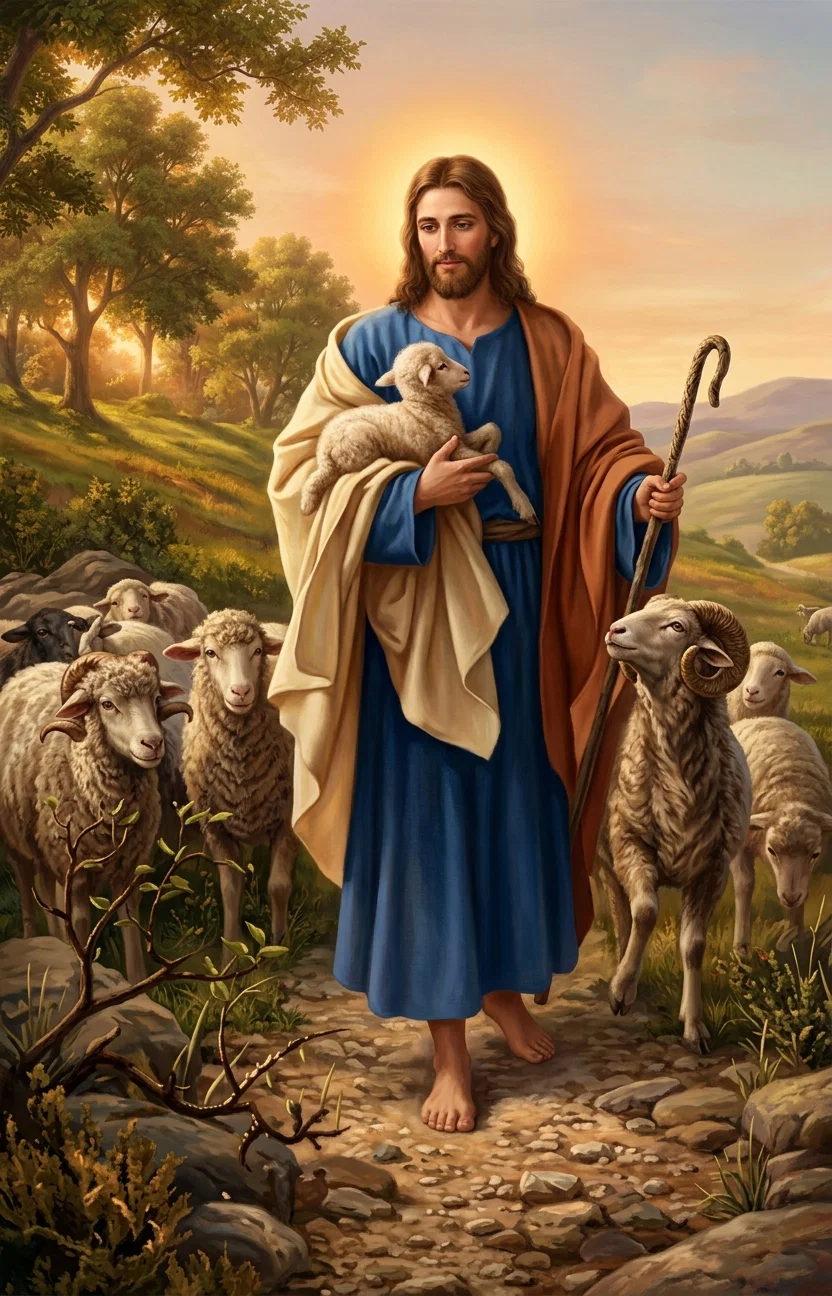
“And there shall be one fold, and one Shepherd.”

The Church Regularly Called

The significance of the term “church” is, “a religious assembly selected and called out of the world.” The Greek word translated “church” in the New Testament is “ekklesia,” meaning literally, “regularly called out.” The same word in the Hebrew is edah and kahal, which are invariably translated “assembly” and “congregation.” That the words “church” and “congregation” signify the same thing is plainly taught in Acts 7:38, as follows: “This is he that was in the church in the wilderness.” The Hebrew New Testament uses the word kahal for church in this text. The Hebrew word kahal is used in Deut. 31:30 and is translated “congregation.” “And Moses spake in the ears of all the congregation of Israel.” This same identical “congregation” Stephen called “the church.”
The Hebrew word for church in the following New Testament passage, “He [Christ] is the head of the body,” the church, is edah, which is also translated “congregation” in the following passage: “That the congregation of the Lord be not as sheep which have no shepherd.” Num. 27:17. Thus we learn from the Salkinson-Ginsburg’s Hebrew New Testament that the Hebrew words for “church of God” in the New Testament are the same words that are used in the Old Testament for the “congregation of the Lord.” This shows at once the fallacy of the argument that the church did not exist before A.D. 27.
The church has been in existence since the foundation of the world. This is evident from the definition of the Hebrew word edah. Genesius, in his Hebrew lexicon, defines the word as a secondary definition, thus: “Company, family, household.” The church is called “the household of God.” Eph. 2:19. It is also called “the household of faith.” Gal. 6:10. From this we learn that the church constitutes the elect of God, of what nation soever, from the beginning to the end of the world. They are called but “one body,” of which Jesus Christ is the only Head, and one “building,” of which He is “the chief corner-stone,” and “one fold,” of which He is “the chief Shepherd.”

Illustrations of the Church

The whole church used in a collective sense is compared to a “building;” “Ye are God’s building.” 1 Cor. 3:9. It has but one foundation; “For other foundation can no man lay than that is laid, which is Jesus Christ.” 1 Cor. 3:11. The individual members are compared to the stones of the building; “Ye also, as lively stones, are built up a spiritual house.” 1 Peter 2:5. These stones are not a disorganized and disconnected medley; “All the building fitly framed together groweth unto an holy temple in the Lord: in whom ye also are builded together for an habitation of God through the Spirit.” Eph. 2:21, 22.
The Scriptures use many and varied illustrations to set forth the symmetry of the organization of the church, its structure, its functions, its mission, its relation to its Head and its component members, and its particular phases of harmonious operations and administrations.
To show the relation the church sustains to its Head, the church is compared to “a chaste virgin” espoused to the Lord as to “one husband.” Eph. 5:31, 32; 2 Cor. 11:2. Again, to show the vital connection between Christ and the church, the figure of a goodly vine with its fruit-bearing branches is employed. The Father is represented as being the husbandman. John 15:1-8; Isa. 5:1-7. Again, to show that there is to be but one church as well as one Lord and one faith, He uses the distinctive figures of a sheepfold. “And other sheep I have, which are not of this fold; them also I must bring, and they shall hear My voice; and there shall be one fold, and one Shepherd.” John 10:16.

Organization Necessary

While the Scripture recognizes many distinct and local churches, yet all these separate churches are not absolutely independent of each other, but are fitly organized into one “body, the church,” of which Christ is the great Head. Thus we read of “the general assembly and church.” Heb. 12:23. To show that the churches are all under one common and general government and constitute an organized body, the Lordcalls the church with its component organizations “the commonwealth of Israel.”
The church is “called out” of the world and out of Babylon, but on the other hand “by one Spirit we are all baptized into one body, whether we be Jews or Gentiles,” and we all become “fellow citizens with the saints,” of “the commonwealth of Israel.” 1 Cor. 12:13.
When a whole organization becomes corrupt, it is perfectly Scriptural to come out of that body in harmony with the Lord’s call, and organize a pure one; but to contend that it is wrong in principle to have a common organization in the church as a whole to which every local church is subject, and that each local church is absolutely independent and is directly governed by the invisible Head, is as absurd as it would be for the hand to disconnect itself from the arm and body and then ask the head to pick it up and operate it without using the body and arm as a medium. The head ever acts through the body as an organized medium in the operation of its particular members that belong to it.
Organization is a good thing, perfect machinery is excellent, but these without the living Spirit pervading and operating the whole are like an embalmed body, where art has preserved perfect form without life. There may be “differences of administrations” and “diversities of operations,” but it is the same God that “worketh all in all,” in the church, and gives “to every man to profit withal.” 1 Cor. 12:5-7. The best method of administration should be tested by its results. God blesses the methods which lead the most souls to the Lord Jesus and give the most consecrated men and women to the work of God upon the earth. What the Holy Ghost uses the most effectually, we have no right to condemn.
The inspired definition for the term “church” is: “We are God’s fellow workers;” “we are laborers together with God.” The mission of the church is to serve, to toil and work for the Master. She is the saving witness of the truth. God is not satisfied to save souls through a written word only, any more than a wife is satisfied with a pack of love-letters and a marriage certificate. She wants the man; just so God needs a loving, serving church to effect His plans.
Continue reading: The Human Body
