Your ShelfYour Projects

Review and Herald, Vol. 90, No. 36.

LORD OF THE AGES

Review and Herald

Sep 4, 1913

Review and Herald Publishing Association · Takoma Park Station, Washington, D. C. · Sep 4, 1913

LORD OF THE AGES

WORTHIE HARRIS HOLDEN
O Lord of the Ages, unfailing in power, Upholding creation's dominion each hour, Eternity's circle Thy dwelling surrounds, Where dazzling glory effulgent abounds; Exceeding all vision that mortal hath known Majestic Thy being, exalted Thy throne.
Thou, Lord of the Ages, stooped low to our earth To lighten and quicken each soul that hath birth; We laud Thy compassion and infinite thought, Amazed at the wonder redemption hath wrought,— Thy great condescension, Thy marvelous love, Thy mercy unbounded, all knowledge above.
How shall we our hearts' adoration confess? How can we, Thy creatures, divinity bless? We bow in contrition and humbly present The lives Thou to us hast so graciously lent. O Lord of the Ages, our hope and our song, Soon may we in heaven Thy praises prolong!
Portland, Oregon.

Special "World's Christian Citizenship Conference" Number

The Topics Presented in This Number Are Ones of Anxious Solicitude to Every Lover of Liberty.
Note the many striking articles besides the consideration of the great principles of the National Reform Association.
FIRST EDITION SOLD OUT IN SIX WEEKS!
SECOND EDITION, 10,000, SELLING FAST!

SOME FEATURES

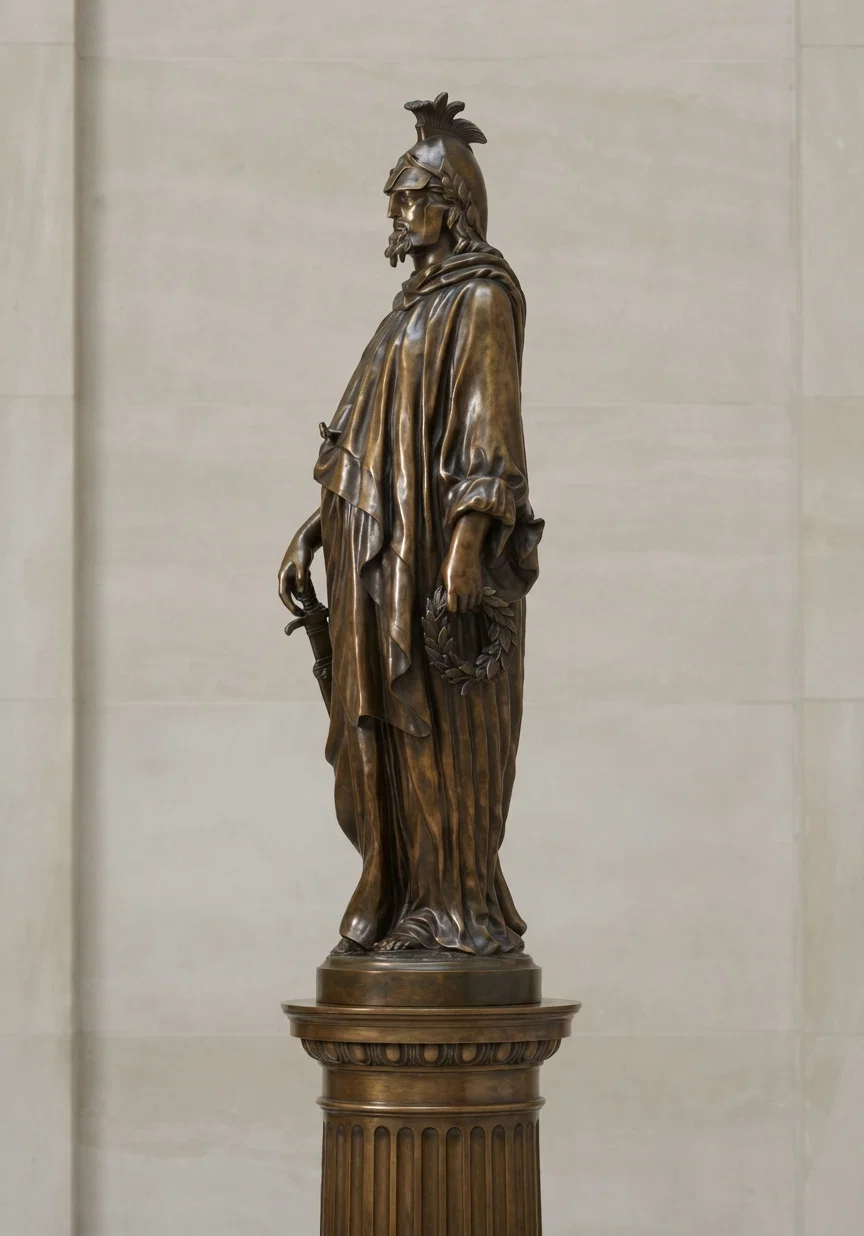
Cover: Statue of Liberty on Dome of U. S. Capitol Frontispiece: Christian Citizenship Convention Hall The "Second World's Christian Citizenship Conference" Program of the "Christian Citizenship Conference" Some "Christian Citizenship" Arguments Religious Intolerance in America Governor of Rhode Island and Sunday Law "The King's Orders" — An Old-Time Argument Madison's Prophecy Being Fulfilled A Two-Page Poster of 1913 Sunday Bills Is Sabbath Legislation Necessary? International Peace Movement and Religious Liberty Golden Rule Ignored by National Reformers Report of Sunday-Law Hearing Before District of Columbia Commissioners Strong Protest Against Sunday Closing of Post-Offices Mr. Bryan Says Sign the Temperance Pledge
PRICES, POST-PAID
PRICES, POST-PAID
Issued quarterly. Send ten cents for sample copy. Liberal terms to agents on subscriptions. Write today for particulars.
Send $1.00 for 20 copies; $2.00 for 50; $4.00 for 100; $8.00 for 200. Five to forty copies, five cents a copy; fifty or more, four cents a copy — post paid.
ORDER THROUGH OUR NEAREST AGENCY (If you do not know the address of our Agency, ask "Liberty Magazine," Washington, D. C.)
Yearly subscription - - - - - $ .35 Three years (or 3 subs. 1 year) - - - - .90 Four years (or 4 subs. 1 year) - - - - 1.00 Ten years (or 10 subs. 1 year) - - - - 2.00 Ten copies, one year, to one address or more 2.00 (Subscriptions for less than one year not accepted)
NO EXTRA CHARGE ON FOREIGN SUBSCRIPTIONS

What Others Say of "Good Form"

"This book covers a vast range, touching the conduct not only of boys and girls and young men and women, but also of those of more mature years, in various walks of life. The general principles underlying the demands of good society are brought out, and those who desire to familiarize themselves with these demands ought to secure a copy of this useful book." — G. H. Heald, M. D., in Life and Health.
"I think that the book on good form will fill a long-felt need in our work. I bespeak for it a wide circulation, and think that our young people ought to have their attention directed to the necessity of understanding those little things which go toward making up a good address, and insuring the success of those who give proper attention to them." — Prof. B. G. Wilkinson, president Columbia Union Conference.
"I am especially pleased with the new book 'Good Form and Social Ethics.' It is written in readable style and the points are reenforced with such excellent anecdotes and illustrations that the counsels given are bound to fasten themselves in the mind. Young persons will find the book of absorbing interest, and having once begun it, they will not likely leave it partially read." — Elder M. N. Campbell, president Canadian Union Conference.
"Good Form" is bound in an attractive cloth binding with gilt stamp.
PRICE, 75 CENTS.
Review and Herald Publishing Association, Washington, D. C. ORDER OF YOUR TRACT SOCIETY

Blessings Through Obedience

MRS. E. G. WHITE
THROUGH the long years of drought and famine, Elijah prayed earnestly that the hearts of Israel might be turned from idolatry to allegiance to God. Patiently the prophet waited, while the hand of the Lord rested heavily on the land. As he saw evidences of suffering and want multiplying on every hand, Elijah's heart was wrung with sorrow, and he longed for power to bring about a reformation quickly. But God himself had taken matters in charge, and all that his servant could do was to pray in faith and await the time for decided action.
For many years Israel had been following a way of their own choosing. The apostasy prevailing in Ahab's day was the result of more than a century of evil-doing. Step by step, year after year, Israel had been departing from the right way. Generation after generation had refused to make straight paths for their feet, and at last the great majority of the people yielded themselves to the leadership of the powers of darkness.
About a century had passed since, under the rulership of King David, Israel had joyfully united in chanting hymns of praise to the Most High, in recognition of their entire dependence on him for daily mercies. Listen to their words of adoration as then they sang:—
"O God of our salvation; . . . Thou makest the outgoings of the morning and evening to rejoice. Thou visitest the earth, and waterest it: Thou greatly enrichest it with the river of God, which is full of water: Thou preparest them corn, when thou hast so provided for it. Thou waterest the ridges thereof abundantly; thou causest rain to descend into the furrows thereof: Thou makest it soft with showers: thou blessest the springing thereof. Thou crownest the year with thy goodness; And thy paths drop fatness. They drop upon the pastures of the wilderness: And the little hills rejoice on every side. The pastures are clothed with flocks; The valleys also are covered over with corn; They shout for joy, they also sing."
Israel had then recognized God as the One who "laid the foundations of the earth." In the expression of their faith they had sung:—
"Thou coverest it with the deep as with a garment: The waters stood above the mountains. At thy rebuke they fled; At the voice of thy thunder they hastened away. They go up by the mountains; they go down by the valleys Unto the place which thou hast founded for them. Thou hast set a bound that they may not pass over; That they turn not again to cover the earth."
It is by the mighty power of the Infinite One that the elements of nature in earth and sea and sky are kept within bounds. And these elements he uses for the happiness of his creatures. "His good treasure" is freely opened "to give the rain . . . in his season, and to bless all the work" of man's hands.
"He sendeth the springs into the valleys, Which run among the hills. They give drink to every beast of the field: The wild asses quench their thirst. By them shall the fowls of the heaven have their habitation, Which sing among the branches. He watereth the hills from his chambers: The earth is satisfied with the fruit of thy works. He causeth the grass to grow for the cattle, And herb for the service of man: That he may bring forth food out of the earth; And wine that maketh glad the heart of man, And oil to make his face to shine, And bread which strengtheneth man's heart. . . ."
"O Lord, how manifold are thy works! In wisdom hast thou made them all: The earth is full of thy riches. So is this great and wide sea, Wherein are things creeping innumerable, Both small and great beasts. . . . These wait all upon thee; That thou mayest give them their meat in due season. That thou givest them they gather: "Thou openest thine hand, They are filled with good. Thou hidest thy face, They are troubled: Thou takest away their breath, They die, and return to their dust. Thou sendest forth thy spirit, they are created: And thou renewest the face of the earth."
Israel had indeed had cause for rejoicing. The land to which the Lord had brought them was a land flowingwith milk and honey. During the wilderness wandering, God had assured them he was guiding them to a country where they need never suffer for lack of rain. "The land, whither thou goest in to possess it," he told them "is not as the land of Egypt, from whence ye came out, where thou sowedst thy seed, and wateredst it with thy foot, as a garden of herbs: but the land, whither ye go to possess it, is a land of hills and valleys, and drinketh water of the rain of heaven: a land which the Lord thy God careth for: the eyes of the Lord thy God are always upon it, from the beginning of the year even unto the end of the year."
The promise of abundance of rain was given on condition of obedience. "It shall come to pass," the Lord declared, "if they shall harken diligently unto my commandments which I command you this day, to love the Lord your God, and to serve him with all your heart and with all your soul, that I will give you the rain of your land in his due season, the first rain and the latter rain, that thou mayest gather in thy corn, and thy wine, and thine oil. And I will send grass in thy fields for thy cattle, that thou mayest eat and be full.
"Take heed to yourselves," the Lord admonished his people, "that your heart be not deceived, and ye turn aside, and serve other gods, and worship them; and then the Lord's wrath be kindled against you, and he shut up the heaven, that there be no rain, and that the land yield not her fruit; and lest ye perish quickly from off the good land which the Lord giveth you."
"If thou wilt not harken unto the voice of the Lord thy God, to observe to do all his commandments and his statutes," the Israelites had been warned, "thy heaven that is over thy head shall be brass, and the earth that is under thee shall be iron. The Lord shall make the rain of thy land powder and dust: from heaven shall it come down upon thee, until thou be destroyed."
Well would it have been with Israel had they heeded the injunction, "Lay up these words in your heart and in your soul, and bind them for a sign upon your hand, that they may be as frontlets between your eyes. And ye shall teach them your children, speaking of them when thou sittest in thine house, and when thou walkest by the way, when thou liest down, and when thou risest up."

Just One Word

J. M. HOPKINS
CAN I speak a word of comfort That will help you day by day As you journey toward the city In the straight and narrow way? Just one word to lift the burden Or assist the load to bear, Just one word to soothe the heart pain, Just one word to lighten care?
Let me whisper, softly whisper, Just one word so full of power, Just one word so full of blessing, For each dark and trying hour. Listen, then, this word I bring you, Sweetest word to mortals known,— This one word is "Jesus, Jesus," Brought by angels from the throne.
Word of strength in time of weakness, Word of peace in hour of strife, Precious word of love and meekness, Blessed word of light and life, In the hour of lisping childhood, In the years of buoyant youth, In the age of might and manhood, "Jesus," still the Way, the Truth.
Often with your cherished Bible Bowing low before the throne, When no eye but his can see you, When with him you're all alone, Tell him all about your sadness, All about your lonely days; He can change your grief to gladness, And your sighs to songs of praise.
Roseburg, Oregon.

The Tithe as a Test

Gospel Order—No. 7

The Tithe as a Test

E. K. SLADE
God gives every blessing needful for the happiness of his children. He withholds nothing that is good that can help to make the existence of his subjects perfect and enjoyable. Before the angels sinned they enjoyed in common the great wealth of the universe and every privilege that could be granted. The only reservation that was made was the occupancy of the throne. God only could occupy that; and, in doing so, no subject was restricted in his privileges and pleasures and no needed blessing was withheld.
Lucifer's imaginations led him astray. He doubted God, and felt that he was being deprived of that upon which his happiness largely depended. He seemed to lose sight of all the bounties about him, and fixed his eyes upon that which God had seen fit not to give him. He thought, or "said in his heart," I will have that. He cherished this thought until covetousness unfitted him and his followers for the enjoyment of the heavenly home. The great principle involved in this fall is the disregard of God's right, wisdom, and love in withholding as in bestowing. Lucifer became a rival ruler, and ever since the fall he has claimed a right to that which was never given to him or any other creature.
When man was created, great gifts were bestowed upon him. Everything that he could possibly need for his happiness and existence was provided. There was just one reservation made; and had Adam maintained the right relation to God, he would have seen in this arrangement an act of love on God's part, in giving and withholding according to his knowledge of man's needs. The tree of knowledge of good and evil was reserved for the good of humanity. Man was not to be made immortal until he was tested and proved true on the point wherein Lucifer failed. Really, the fitness for true occupancy and ownership was involved in this test. Man could not be entrusted with eternal wealth until it could be known that he would not reach out with a covetous hand for that which God had reserved. To many the test has seemed arbitrary and unreasonable; but when we note the nature of the fall and apply the principle involved, it is apparent to all that this Edenic test was required in order to forestall a future apostasy and make certain man's fitness for true riches.
Satan ridiculed the restrictions made in the garden, and insinuated that God was withholding great blessings and privileges from the holy pair. It is interesting to note that the desire that germinated in his heart was the allurement held out to them—"Ye shall be as gods"—that led to their fall. They took that which God had reserved. They fell, and forfeited the right to any part in God's plans. Without the restraining influence of the gospel, Adam and his children could prove themselves no better fitted for a place in the kingdom of God than were the fallen angels. The history of the human race clearly reveals the need of the Edenic test. As "the love of money is the root of all evil," so this act of reaching out for that which God has reserved and withheld is the beginning of man's downfall. Self was made the object of man's solicitude and service in direct contrast to the perfect nature. A commonwealth was made impossible, and the ownership of the earth as intended in God's plan was thwarted. Man was wholly unfitted for perpetual life and had lost the love that would make common ownership possible.
The earth was created to be inhabited. The purpose of God cannot be defeated. Since the created being has failed in the test, making it impossible for Adam and his children to inherit the earth, a new plan for peopling the earth must be provided. Those who fell might have been set aside and destroyed forever, and others might have been created to fill their place. Instead of this a plan of redemption was provided, which was in fact a re-creation. Through the gospel, the earth is to be peopled by a re-creation, or the birth of the Spirit. Those who are thus transformed are to "inherit the earth." The transformation will be complete and the divine nature will be fully established.
Can we think for a moment that God, in this last attempt to people the earth, will require no test similar to the one provided in the garden of Eden? By careful thought it seems certain that the occupancy and ownership of the earth will be granted to those only who have been thoroughly tested on this particular point in question. No risk will be run. A covetous man can have no part in God's commonwealth. His nature must be changed before he can be entrusted with eternal riches.
In this gospel age the test is the tithe. God has the same right and purpose in reserving one tenth that he had in withholding the one tree in the garden. He does not need the one tenth, neither is it an arbitrary requirement to suit his fancy or demonstrate his authority, but it is the same test to rebuke covetousness, develop benevolence, and determine our fitness for eternal riches. Those who have lightly regarded the tithing system will do well to consider carefully God's purpose in the plan. It is a vital test that all will do well to heed. Not many of the millions of the world will regard it, but God has a few people in the earth who will recognize his right and honor and his purpose in this requirement. The earth will be inherited by those who prove true in their relation to God and recognize his right to reserve one tenth to himself. The tithe is such a test as this to the people of God at this time.
Mount Vernon, Ohio.

A Short Sermon

The Salesman's Goods

"I counsel thee to buy of me gold tried in the fire, that thou mayest be rich; and white raiment, that thou mayest be clothed, . . . and anoint thine eyes with eye-salve, that thou mayest see." Rev. 3: 18.
ALL around us in this world we hear the call, "Buy of me." Among all these calls, there is one above all, and first of all, that should be heeded. It is none other than the blessed Jesus, calling to his lukewarm children. They are wretched, miserable, poor, blind, and naked; but in his great mercy he comes and calls to them, "Buy of me gold tried in the fire, that thou mayest be rich; and white raiment, that thou mayest be clothed, and that the shame of thynakedness do not appear; and anoint thine eyes with eye-salve, that thou mayest see." Just the very things in every particular that they so greatly need! He, the wonderful Counselor, counsels them to buy of him on gospel terms, without money and without price, the very things that will make them rich for both time and eternity. O, what a golden opportunity is passing unheeded by so many! After it is too late, there will come a time when the great loss will bring an overwhelming sense of anguish and despair, to cease only with the lake of fire and the blackness of darkness forever.
Now let us briefly consider the character of that which our divine Lord offers for sale, on terms within the reach of all. First of the trinity is gold tried in the fire. This is faith and love. In Peter's ladder of sanctification, consisting of eight rounds, we have faith for the first, and love for the last; hence faith and love comprehend all the Christian graces and fruits, as beautifully revealed in the charming life of Christ. His entire life on earth was a period of passing through a furnace, heated, as it were, seven times hotter than need be. But he came out bright and shining, without the smell of fire on his beautiful robe of character. The very same faith and love he now offers to his children, that they may overcome as he overcame. Second, is the white raiment, the robe of Christ's righteousness, the wedding garment, for the marriage of the Lamb is at hand. Third and last is the eye-salve. Thus anointed with the Holy Ghost and with power, the remnant church will see all things in the light of heaven, as with the eyes of Christ, and will go forth to finish this glorious work of saving souls; and the people that sit in darkness everywhere will see great light.
St. Helena, Cal.

The Last Counsels of Moses

From Egypt to Canaan

The Last Counsels of Moses

In the last words of a man who has had long communion with God there is something akin to prophetic vision. By long acquaintance a man becomes able to represent his friend though that friend may be absent. So it is with the man of God. Jacob, when he came to die, as he recounted to his sons, now men of mature years, their failures of the past, caused by unrestrained wills, looked forward and with prophetic foresight told them what the results would mean to their future generations. Genesis 49.
Balaam, after receiving two injunctions from the Lord to only bless Israel, returned not the third time to ask of God, but set his face toward Israel, and, as the Spirit of God rested upon him for the last time, his face lighted, the lines which cruel avarice had traced there, softened or departed, and his lips, which so soon would counsel a means for the destruction of Israel (Num. 31: 16), were also for the last time opened with the most sublime utterances of the loving care of God, and the ultimate greatness of Israel under the sway of the one who, as the "Star out of Jacob," was to "have dominion." Num. 24: 17-19.
Moses had long and faithfully carried the burdens the Lord had placed upon him. He was soon to be taken from Israel, and his great heart of love yearned over this wayward people. He had been deeply tried when Korah, a prominent Levite, Moses' own cousin, one of the men who went with him into the mount and beheld the glory of God ("Patriarchs and Prophets," page 395; Ex. 24: 9, 10), had led in a conspiracy to take the reins of government, and thus thwart the plans of God. Moses saw this loved relative, eternally lost, with all that he had, drop into the opening earth. Num. 16: 31-33.
When refused passageway through Edom, all the host had wearily journeyed by the way of Mt. Hor. Here another trial awaited Moses. Aaron, though never a strong aid because of his vacillating character, was to die. He was a true man at heart, and God called him "the saint of the Lord." Ps. 106: 16. His counsel and presence had been prized by Moses, but from Hor he must lead Israel alone. This had been God's plan at the first, but when Moses was unwilling to take the responsibility, God had given him Aaron. Ex. 4: 14-16.
From Mt. Hor they journeyed through that terrible wilderness where their trials came to a climax. They were "much discouraged because of the way." Num. 21: 4. In the place of our greatest trials the Lord always sets up a monument of his love, to which we can look back with assurance and renewed courage. It was so here. When, added to all their distresses, deadly serpents appeared in great numbers, bringing death to all that were bitten, their cup was full. God instructed Moses to make a brazen serpent and place it upon a pole, sending word from tent to tent, to all that were bitten, to look and live. Num. 21: 8, 9. Our Saviour referred to this as a type of his own offering on the cross. John 3: 14, 15. The message was, in both cases, Look and live. No human knowledge could invent a remedy. But the power of faith, even though but enough to turn the eye, wrought peace and health.
How precious the antitype! Poisoned with sin, helpless, defiled, with no escape, no remedy known to man that can deliver from death,—in this condition we hear the glad news carried from home to home, Look and live. And to every one who will turn the eye of faith, there come hope and healing, "beauty for ashes, the oil of joy for mourning, the garment of praise for the spirit of heaviness." Isa. 61: 3. In the most discouraging part of the way to Canaan, they found the most encouraging promise of life through the cross.
Moses also taught them one of his last lessons of faith in Christ, through the appointing of "cities of refuge." He well knew the bitter, unrelenting spirit that dwelt in the bosoms of the unconverted in Israel, and if left to themselves, how little mercy an unfortunate person would receive at their hands. Under the counsel of God he made provision for these by appointing cities to which they could flee from the avenger. This is recorded in Num. 35: 10-15, 24-28.
In the land of their possession they were to set apart "cities of refuge," that any one who had slain a person by accident, might flee to them from the avenger. The avenger had no liberty to slay the person, man or woman, who at once set out for the city. There must be time given for the person to reach the place, "that the manslayer die not, until he stand before the congregation in judgment." Num. 35: 12. If there was delay, it might be fatal. These cities were not for the tribes of literal Israel alone, but also "for the stranger, and for the sojourner among them." Verse 15. This provision for life was for "every one."
The people of Israel were to tell the stranger, upon his entering their borders, of these cities, the way to them, and the danger in delay after having, even by accident, been the cause of death. Lev. 19: 34. The sojourner even for a night, was to be told of the precious provision. Not one of any nation was to be slain by the avenger until he had the privilege, or choice, of standing for safety in that city, and there the judges were to declare him free from guilt. Num. 35: 12, 15.
"These things were our examples." They happened for "ensamples," and were "written for our admonition." 1 Cor. 10: 6, 11. We must, then, learn the lesson. To the two on the way to Emmaus, Christ, "beginning at Moses and all the prophets, . . . expounded unto them in all the Scriptures [the Old Testament] the things concerning himself." Luke 24: 27. He told them of the brazen serpent, of the city of refuge, the two sparrows, the blood of the day of atonement. All centered in himself. He is the city of refuge. 2 Sam. 22: 3. The manslayer can come to him and find rest from the avenger, who, like "a roaring lion, walketh about, seeking whom he may devour." 1 Peter 5: 8. But to these strangers in the way, it rests upon every true Israelite to tell of the city of refuge, the way to it, and the danger in delay. All have sinned, and "the wages of sin is death." Rom. 6: 23. Then we are all guilty of death, and must avail ourselves of the merciful provision or perish. Back there, as they stood in the city of refuge, before the judges in judgment, they were pronounced free from the avenger. So also is the sinner who has fled to Christ, as he stands in the judgment, before the judges, pronounced free from the one who, as the avenger, claims the life.As Moses closed his instructions to Israel, near the borders of Canaan, his weary, eventful journey ended, all the bitterness shown him, the false accusations, the clamor for his life at times,—all these were forgotten, and his love burst forth in the most eloquent strains of rapturous adoration and benediction, the grandest conceptions of God and his loving care, ever framed in language by mortals. The thirty-third chapter of Deuteronomy will not only thrill the heart of every true Israelite, but will call forth a responding chord.
"Yea, he loved the people; all his saints are in thy hand." "The eternal God is thy refuge, and underneath are the everlasting arms." "Happy art thou, O Israel: who is like unto thee, O people saved by the Lord!" Deut. 33: 3, 27, 29.
Loma Linda, Cal.

The Greatest Religious Movement of the Ages; Another Pentecost Due

What Was Christ's Relationship to the 1844 Movement?

THIS movement, when fully understood, was the definite announcement to the world that Christ, in the year 1844, entered the most holy place of the heavenly sanctuary, and that the investigative judgment began upon the cases of those whose names were written in "the book of life;" or, as expressed by the hymn writer,— "To plead his blood for saints, And make a last remembrance of their sins."
Was it not fitting that when Christ was about to enter upon his last work of judging the subjects of his kingdom, he should send special announcement of the fact to the world in the greatest religious movement, the most far-reaching revival that the world's history had recorded up to that time?

The Relationship of Our Advocate to the Threefold Message

During the entire period of Christ's ministry in the most holy place in the sanctuary in heaven,—which session constitutes the judgment, with the law of God as the standard by which men are judged,—God has had a message heralded to the world, proclaiming the judgment in session, and that his law is the standard of this judgment. The threefold message of Revelation 14 is such a declaration. How close the relationship then between the work which Christ is doing in his sanctuary service and the message which is now being proclaimed in all the earth!

Jesus' Relationship to the World's Last Revival

As before noted, connecting with the 1844 movement without delay, there began a threefold, world-wide religious movement (Rev. 14:6-12), which will culminate in the greatest, the most important reformation and revival of all the ages. See Rev. 18:1-5.
And what will be Christ's relationship to the last revival, the final Pentecost of earth's history? The movement symbolized by the mighty angel of Revelation 18, is Heaven's announcement to the world that Christ is about to leave the mercy-seat forever, that the angel of mercy will soon take his final departure, that the door of the ark of safety will promptly close to all eternity, shutting without all impenitent sinners.
And is it not like our God, and in perfect keeping with his character, and in harmony with his past dealings with our race, that just before the curtain finally drops on human probation there will be sent to the world the mightiest, heaven-inspired revival movement of all the ages? Does not justice demand this very thing? And such will be the climax, the zenith of power of the threefold message, when that other mighty angel comes down from heaven and adds his "strong voice" to the "loud voice" of the third angel, with the result that the earth will be lightened with glory. Rev. 18:1, 2.
As we are depending on "the sure word of prophecy" for our guide, it may not be out of place to remark that absolutely no other movement now in earth than the threefold message can consistently claim preannouncement by prophecy, as God's special work on earth for our day. As Peter said of the Pentecost movement, "This is that which was spoken by the prophet Joel," so, with all confidence and assurance, we can say of the threefold-message movement, "This is that which was foretold by Christ, through his servant John."
Referring to this last Spirit-filled movement, we read in "Great Controversy," pages 610-612: "When the final warning shall be given, it will arrest the attention of . . . leading men through whom the Lord is now working, and some of them will accept it." "The great work of the gospel is not to close with less manifestation of the power of God than marked its opening." These are the times of refreshing from the presence of the Lord just before he sends Jesus. "Servants of God, with their faces lighted up and shining with holy consecration, will hasten from place to place to proclaim the message from Heaven. By thousands of voices, all over the earth, the warning will be given. Miracles will be wrought, the sick will be healed, and signs and wonders will follow the believers. . . . The message will be carried not so much by argument as by the deep conviction of the Spirit of God. The arguments have been presented. The seed has been sown, and now it will spring up and bear fruit. . . . Now the rays of light penetrate everywhere, the truth is seen in its clearness, and the honest children of God sever the bands which have held them. . . . Truth is more precious than all besides." This mighty Pentecost will leave all those unsaved without excuse when, immediately following, probation will close.
Referring again to the last great Pentecostal movement, the same writer says: "Representations passed before me of a great reformatory movement among God's people. Many were praising God. The sick were healed, and other miracles were wrought. A spirit of intercession was seen, even as was manifested before the great day of Pentecost. . . . Thousands were seen visiting families, and opening before them the Word of God. Hearts were convicted by the power of the Holy Spirit, and a spirit of genuine conversion was manifest. On every side doors were thrown open to the proclamation of the truth. The world seemed to be lightened with the heavenly influence. Great blessings were received by the true and humble people of God." —Testimonies, Vol. IX, page 126.
God is always prepared with human agencies to fulfil his prophetic word. Moses was raised up to be a mighty deliverer when hope seemed to fade into utter hopelessness. Our Father never forgets his promises nor his people. Cheer up, wayworn pilgrim; the exercise of "long patience" in waiting for God to set his hand to the task of finishing his work will soon be rewarded. Only remain true to the message a little while, and then, if spared to live, you will both see and feel the full manifestation of his power; and the next experience "which God hath prepared for them that love him," will be to stand complete in Christ in that blessed presence where there is fulness of joy forevermore.
Phoenix, Ariz.
(To be concluded)

Anticipation

THROUGH the gloom, the deepening gloom, List, O list, ye weary! Soon will burst beauty and bloom O'er this earth so dreary. The gates of dawn will open wide; Heaven's beams will light the way When he comes, his own to guide To the realms of day.
Vanish night, O vanish night! Break the morning golden, Not this mortal, earthly light, But Edenic olden; Brightly shine, brightly shine, Like some crystal chalice; Looming through a light divine, Lo, our Father's palace!
Through pearly gates that open wide, Waft breaths of heaven's weather. Broad and shining streets of gold The saints shall tread together; To sound of harp, and flute, and viol, Heaven's arches ringing.
Onward, onward, to the throne, While angel voices singing Songs of welcome to the bride, Fill the soul with gladness. Banished, banished, evermore, Earthly pain and sadness.
God of life and light and love, Gracious King of glory! Thou who gav'st thine only Son, Low we'll bow before thee! Heart of love, love divine, Lo, he comes to meet us! With outstretched hand and gracious smile, The Heavenly Father greets us.
Every note in heaven is stilled, Hushed the angel chorus. With sweeter music all are thrilled, For Jesus speaks before us — In accents sweet beyond compare Extols earth's tried and proved, In tenderest tones presents us there As his own beloved.
Royston, Ga.
Continue reading: Editorial