Following this array of evidence of the resurrection of Jesus of Nazareth, also known as Jesus Christ, Paul goes on to say: “Now if Christ be preached that He rose from the dead, how say some among you that there is no resurrection of the dead? But if there be no resurrection of the dead, then is Christ not risen: and if Christ be not risen, then is our preaching vain, and your faith is also vain. . . . For if the dead rise not, then is not Christ raised. . . . But now is Christ risen from the dead, and become the first-fruits of them that slept. For since by man came death, by man came also the resurrection of the dead. For as in Adam all die, even so in Christ shall all be made alive. But every man in his own order: Christ the first-fruits; afterward they that are Christ’s at His coming.” 1 Cor. 15: 12-23.
Abiding in Christ Through Obedience and Fellowship
"To ABIDE in Christ, means two things; namely, obedience and fellowship. By keeping the commandments of God and by communion with Him through the Spirit, we abide in Christ."
The Graveyard and Uniformity
“THE graveyard is a great place for uniformity.”
Everlasting Life in Christ
the Lord in the air: and so shall we ever be with the Lord.” 1 Thess. 4: 16, 17.
“Verily, verily, I say unto you, He that heareth My word, and believeth on Him that sent Me, hath everlasting life, and shall not come into condemnation; but is passed from death unto life. Verily, verily, I say unto you, The hour is coming, and now is, when the dead shall hear the voice of the Son of God: and they that hear shall live.” John 5: 24, 25. God is proving men as to whether they prize the gift of life and will use it to the praise of Him who gave His only-begotten Son; and on him that is faithful will He bestow everlasting life. They shall realize the Saviour’s promise, “Because I live, ye shall live also.” John 14: 19.
War, Strikes, and Unrest
By T.
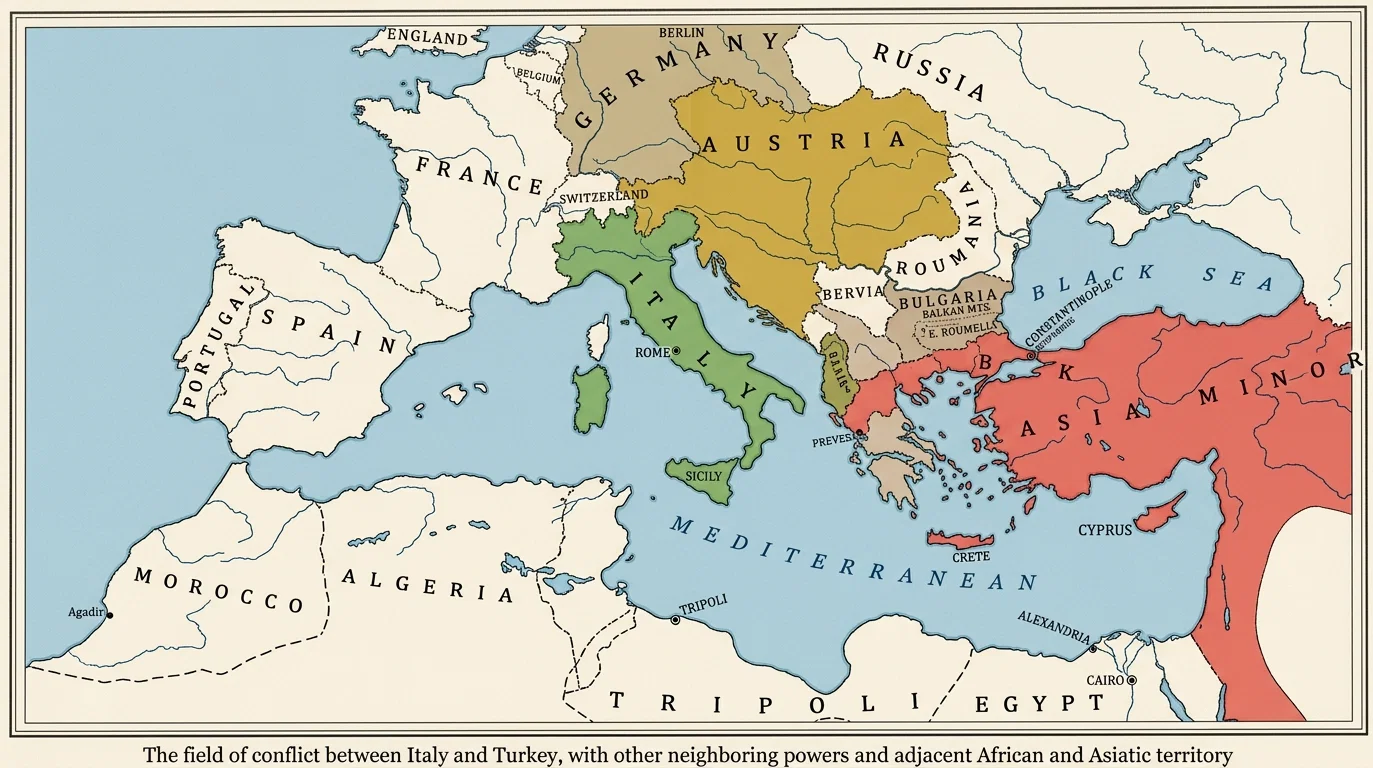
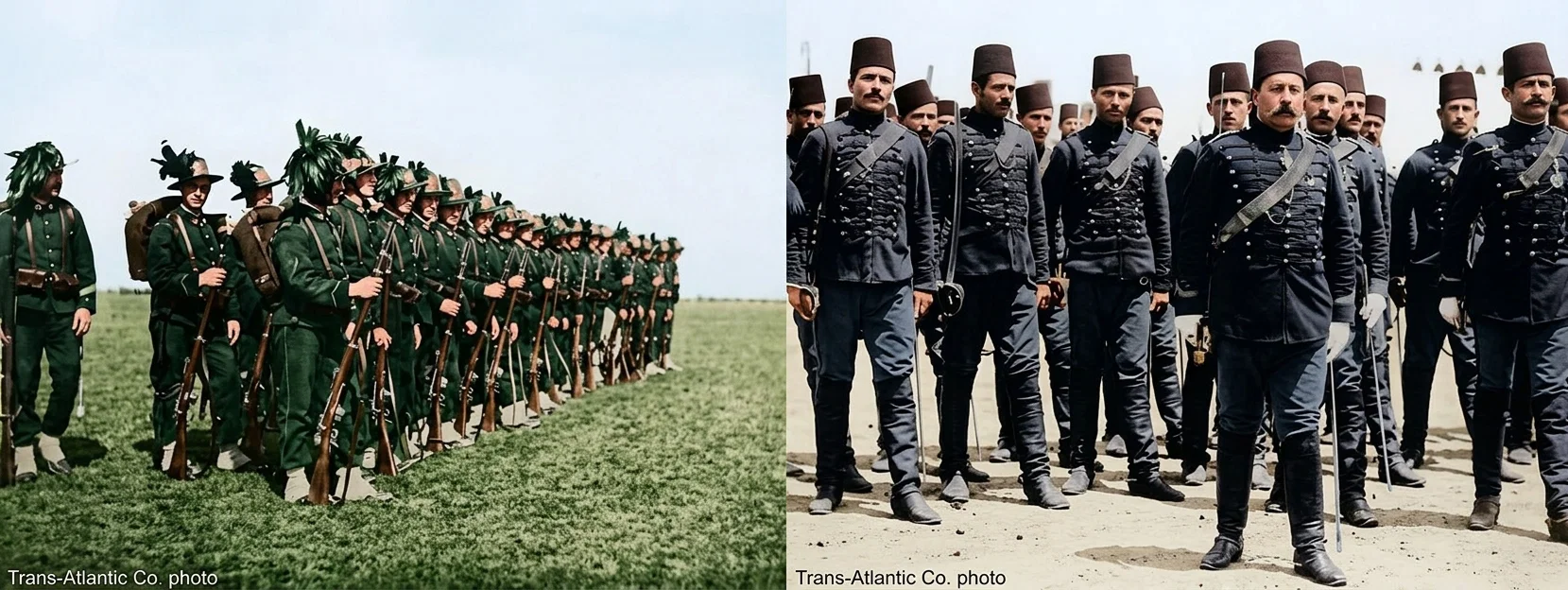
ON September 30 war was declared on Turkey by Italy. On the same day a strike began in this country which involves some of the greatest financial interests of the nation. It is too early to say what will be the outcome in either case, but it is not too early to say that this actual war between Italy and Turkey was immediately preceded by the big war scare that threatened to involve Germany and France over the Moroccan question, and this was immediately preceded by much talk of war between England and Germany, and so the war game has been going.
In like manner the strike in this country was immediately preceded by a strike in England that really amounted to a civil war. Then there was the intervening labor war in Spain that has not received so much attention, but which has nevertheless been very threatening.
These actual outbreaks in war and labor strikes are only an indication of the turmoil and unrest that are found in Germany, France, Austria, Russia, China, India, the United States, and throughout the world. The problems of war, and of capital, and of labor, that present themselves now are absolutely new, and of a different character from anything that the past history of the world affords. In other times the nations of the world were segregated, and it took a long time for men to go from one country to another, and the means of communicating thought and intelligence was no speedier than the means of travel. But now the telegraph has made one neighborhood out of the world, and the doings and the thinking of each part are made known constantly to all the inhabitants of every other part of the globe. The whole world has come to be one vast assembly or deliberative body, and by the telegraph and the daily paper it is kept in constant session. Men of prominence to-day who arise to speak are not talking to some little isolated section, but their audience is the whole wide world.
In former days a problem might arise in some neighborhood, and be heatedly discussed, and finally settled and passed by, and an adjoining county might not know anything about it until it was all over, even if they ever learned of it at all. But now great problems become world problems, and no nation, or individual neighborhood in any nation, can have happenings of note without at the same time having a world-audience.
Hence there was never a time like this in the world's history, when it was such utter folly to try to predict what a day may bring forth. In this struggle Germany, France, England, Austria, and the United States in a particular sense, and all the rest of the world in general, are making continual notations and study of what is going on in the field of war between Italy and Turkey. Experts are on the ground to represent the nations, and they are making reports of what is done, and all these nations are having something to say about it. And in like manner our industrial struggle that is going on in this nation is watched, not merely by all parts of this great republic, but the world is looking on and having more or less to say.
The field of conflict between Italy and Turkey, with other neighboring powers and adjacent African and Asiatic territory
Perplexing problems are before us, and present facilities have thrown them into the lime-light of world-problems, and we have no precedent in history to guide us. But we should each be thankful that history is not the only light we have. History looks only into the past, and its dim light is not always the most reliable guide. But prophecy throws a clear, bright light into the future; and if we stand where this light is shining, it enables us to see the meaning of the present as well.
As an instance of what prophecy will do, let us consider the present war situation. Italy, it would seem from the despatches, has already taken Tripoli, and made some naval demonstrations and done a little fighting around Preveza. Germany, France, England, Austria, and Russia are each taking a hand in the diplomacy side of the contest, for they each have vital interests centering in this war. Hence we have frequent despatches stating that "all Europe is likely to be involved in a general war" before the thing is over.
There may be a general rushing to arms, and a great war storm may gather; it may possibly break out for a short time. But the prophecies of the book of Revelation show that God has commissioned the angels to hold the winds of strife and war until a definite Gospel work has been done in the earth. The fact that the divine decree is given to hold the war spirit in check, is positive evidence that outbreaks of war would be threatening on every hand. But Omnipotence has given the command to "hold" the demons of war; and no matter how hard the "war-dogs" may pull at their chains, and even tho there may be a temporary breaking away, yet will there be no general, world-wide war till the appointed time, and then it will be Armageddon, and Armageddon is followed quickly by the second coming of Christ to put an everlasting end to every form of this mad strife.
Just so definite as this are the prophecies of the Bible; and any one who is following any other light in this time of turmoil, rioting, violence, and war, will ultimately find that he is led by an ignis fatuus that is trailing him through the bogs of uncertainty into the ruin of everlasting destruction.
Why is it, when the kind Father has provided us with the clear light of prophecy, that we will persist in wandering on, not knowing the meaning of the portents of this time! How awful it is to be in the grip of the terrors of uncertainty and despair, when we might be resting in the haven of joy where the pennant is floating that is already sun-kissed by the dawns of that rapturous morning of eternal11deliverance! These times are too intensely interesting for either gloom or despair to lay hold of the mind that has been enlightened by the prophecies of God's Word. T.
College Life and Its Tendency
Trans-Atlantic Co. photo
Mr. R. R. T. CRANE, of the Crane Company of Chicago, publishers of the Valve World, has been for years investigating the worth of higher education. He contends that his investigations justify him in saying that the colleges do not fit men for the struggles of real life; that the best practical men of America are recruited from the lower grades and the technical schools; that the colleges are not only wanting, but that college life is demoralizing.
These conclusions of Mr. Crane have been severely criticized, sneered at, ridiculed, and some have attempted to refute them. In the Valve World of August, 1911, Mr. Crane has "a refutation of the claim that colleges produce men of high moral character." Of his investigations at Harvard University, one of the leading institutions of the country, we are told that "the details are too disgusting to print," and that the post-office authorities had informed him that "the original report would be excluded from the mails." The investigations covered a period of two weeks, between the hours of 8 and 12 P.M. They were made at the restaurant of one hotel, "typical of a considerable number." This report abounds in expressions like the following, when fifty-nine students were present:
"Waiters powerless to preserve order;" "severely cut about the head by a wine-glass;" "free fight in one corner;" "chorus girls put in appearance;" "rough house reigned supreme;" "majority of students . . . drunk;" "living lives of great debauchery;" "students very lawless;" "drinking very free; partially intoxicated freshmen, . . . including the girls, were forthwith ejected;" a student, considered reliable when he entered, pays a bill for drinks in one night amounting to "over sixty dollars," and he is on the downward path of debauchery.
Some of these debauched students enter the college to prepare themselves for the ministry. All the diseases and degeneracy of debauchery follow.
Answering the charge that it is but the few comparatively who are thus degraded, we are told that this restaurant had a lower room resort where not less than two hundred met night after night, and that there were six other hotels "equally popular with the students," "and many others come in for a large percentage." Besides these hotels there are the fast clubs and fraternities where some of the worst drunkards of the college are found. Mr. Crane quotes from "Mr. E. C. Mercer, special secretary of the Association of Colleges of North America," who is laboring for reform, and he tells us of "twelve hundred college-bred men in the slums, prisons, jails, sanitariums, who were down
Topics of the Day
By Editor
It is stated that Dr. August F. Schaefer, of Bakersfield, California, has a serum which will cure consumption. He claims that many cures have resulted from it. Some doctors have faith in it; but he is not yet ready to make it public. We shall be glad if it is true.
It is said that there are now twenty-four vacant cardinalates, and the pope has the privilege of bestowing twenty-four red hats upon as many aspirants. Pressure, it is said, is being brought to bear upon the pope to fill the vacancies. Mr. Edward C. Trutt, correspondent of the Hearst papers, says that the present pontiff has created fewer cardinals during the eight years of his pontificate, than any of his predecessors during a like period of time. He is distinctly averse to the bestowal of the coveted red hats, chiefly, it is said, for economic reasons. But we are told that the prelates are growing impatient. Rumor is that no fewer than ten new cardinals will soon be created, among whom will be the archbishop of San Francisco.
Elbert Hubbard, in the San Francisco "Examiner" of September 6, makes this prophecy: "In America conscription will never again be attempted." This is like a lot of other prophecies; but notwithstanding all the attempts at arbitration and peace, war will come, and conscription will be demanded. We do not make this as a prophecy. We simply say that it is the logic of conditions.
The new treaty between Japan and England does not demand that England shall help Japan against America. This article covers it: "Should either high contracting party conclude a treaty of general arbitration with a third power, it is agreed that nothing in this agreement shall entail upon such contracting party an obligation to go to war with a power with whom such treaty of arbitration is in force." Under the old treaty England would have had to assist Japan against America.
The Socialists of Germany cast twenty-seven per cent of the entire vote, and elect less than eleven per cent of the deputies of the Reichstag. Sometimes Socialists will devise a way of making their influence felt, if not by votes, in some other way. The strongest party in the Reichstag now is the center, or Roman Catholic, party, numbering 105. If Socialists had their own, they would probably have 125 or 130.
In 1800, 79,216 souls were living on the territory now occupied by New York City; now the health board of that city estimate it at 5,000,407. New York is already more populous than London proper; and it is thought that in two years, with its suburbs it will exceed greater London. In fifteen months, since the federal census was taken, its growth has been 233,524. It is the most rapidly growing city in the world.
Dr. Benjamin W. Bacon, of Yale University, declared recently in the First Congregational Church of Berkeley, California, that what Dr. Charles N. Eliot meant by the "religion of the future" was a religion based on the Sermon on the Mount. But that is not the religion of Christ. The ethics of the Sermon on the Mount are Christian — there is no question as to that; but ethics without faith in Christ as the way, the truth, the life, are disappointing and hopeless. What are ethics without power?
The Moral Condition of College Students
By Editor
and out through fast living;' and much more to the same effect.
The investigator, after much inquiry, numerous observations, and examination of reports, gives the following estimates, which he believes to be 'as accurate as any figures could be short of two or three years of the most painstaking investigation:'
On the basis of 100 students:
Who drink liquor of some kind in freshman year, 90 per cent.
Who drink liquor of some kind in senior year, 95 per cent.
Who combine in mild degree wine and bad women, 65 per cent.
Who drink heavily, 35 per cent.
Who have two or three 'bats' a year also, 45 per cent.
Who go irretrievably to the bad (drunkards), 15 per cent.
Yale, Princeton, Cornell, Columbia, differ only in degree from Harvard, some not quite so bad, some worse. Dr. David Starr Jordan, of Stanford University, in a lecture before the University Club, Chicago, is quoted:
"One time we celebrated a great football victory. Two hundred students from the University of California spent the night on the campus. The fraternity houses were open all night. Two hundred drunken rowdies marched through the library. . . . Beer kegs were carried over the steps of the sorority house, and some of the boys made a night of it there. Later one student went to a saloon downtown, got drunk, got into the wrong house. Some one shot him."
Dr. Jordan believes there is no excuse for such a system. Who can believe it?
The investigator closes his report, 'Apparently a young man can not get any standing in college unless he is a degenerate.' Mr. Crane says, 'This is a harsher criticism of college life and its evil effects than any I have ever made, yet it comes from one who knows it at first hand. One instinctively hates to believe it true, yet a perusal of the report forces one to believe that it is true.'
This paper is published by a people who believe in the training, the education, of the whole man, morally, mentally, physically, with the moral, the spiritual, the religious element dominant. Is there not need of it? We plead with parents to learn where they are sending their boys and girls. Better a thousand times an eighth grade education with character, than a college degree with degradation.
LETTERS TO A YOUNG MAN
By L. P.
BY A YOUNG MAN
MY DEAR ROBERT,—
To-night I feel like unburdening my mind to you on the subject of culture, or the higher education, in relation to the religious life. That it is an old, worn-out topic, I am aware; yet it keeps cropping up persistently in the life of well-nigh every man, and the problems it presents are both numerous and difficult of solution. Much of the confusion arises from the fact that true culture is so often confounded with a sort of veneer that goes under the name while possessing hardly any of the qualities of the real thing. Culture is not an easy thing to define, and yet it can be readily recognized. It is in the first place always a growth from within rather than an acquisition from without. It is revealed not by a showy display of knowledge, but rather by that chastened wisdom which grows out of well-digested knowledge. Its possessor is always humble; he can not be otherwise, for he must be keenly alive to the littleness of what he knows compared with the whole sum of human knowledge, and must also realize how small is that sum when compared with the vast unknown.
The man of culture, moreover, must have heart training; he must be able to feel as well as to know. Obviously a man may have amassed vast stores of knowledge, he may have facts well classified and arranged and at his fingers' ends, without possessing one iota of true culture. There must be a blending of knowledge and of wisdom in order to have culture; and of the two, wisdom is the more important element. On the whole, Amiel's definition of wisdom seems to me about as good a setting forth of the essential character of true culture as I have seen. "Deep and grave enthusiasm," he puts it, "for the eternal beauty and the eternal order, reason touched with emotion, and a serene tenderness of heart—these surely are the foundations of wisdom."
Such a definition of culture, one might say, must preclude the possibility of any conflict between it and religion. Very true. It is only when religion or culture or both are false or one-sided that the conflict appears. Rightly conceived, the highest culture, so far from being antagonistic to piety, is a help and a stimulus thereto, while ignorance is always a drawback. The people perish, not from knowledge, but from lack of it. Ignorance is supposed to make for humility. Personally I have not so found it. The conceited men and women of my acquaintance are the ones least likely to be blamed for their much knowledge. On the other hand I have found true intellectual humility characteristic of a large proportion of the men of learning with whom I have had the privilege of associating. No doubt there was a time when the so-called laboring classes, not being able to read or write, keenly felt their own insufficiency, and were of a humble and teachable spirit; but nowadays, and especially in this our own highly favored country, the working man who is able to read the daily newspaper, feels himself quite competent to pass judgment in the most momentous questions, and his general attitude is very often that of pride and self-sufficiency.
And yet, tho all this is true, it remains a fact that a great many persons possessing a large degree at least of intellectual culture, and a good deal of that "grave enthusiasm for beauty" that Amiel speaks of, are indifferent to the claims of religion, and the young men and women who go to our great universities are not likely to find the associations there formed helpful to habits of personal piety. Needless to say, it has not always been so. All the old universities of this country, and of Europe since the introduction of Christianity, were originally founded to promote Bible religion, and most of them were intended especially to prepare ministers of the Gospel for their life-work. How comes it, then, that they have been so sadly turned aside from their original purpose that they are to-day antagonistic? The reply must be that they were then, and are now, the product of the people who maintain them. An ancient philosopher being asked why God permitted such wicked men to occupy the place of rulers, he replied that the people were bad, and God punished them by giving them bad rulers. It is not going far from the truth to say that the irreligion of the age is visited upon the people in the godlessness, or perhaps rather the refined paganism, that prevails more or less generally at many of our great institutions of learning.
What is the practical situation? Simply this: A young man grows up to university age in a family where all the outward conventions of orthodox Christianity are observed,—family prayers, perhaps hurried and formal; attendance at church and Sunday-school; and a good deal of zeal possibly in getting ready for the annual bazaar, and in other church activities of a semi-social character. Along with this the round of social gaiety is fully kept up. There are dances and balls and dinner-parties, the theater is visited regularly and with greater zest than the church, and money is spent freely on needless finery, harmful amusements, and unwholesome luxuries, while a very small amount is given to missions and to the poor. Such is the manner of life at this supposedly Christian home, where the orthodox tenets are not in the least degree disbelieved, because they evidently do not in the least interfere with the worldly life these people live. But the boy goes to the university, and what happens? —He comes home after a few years an unbeliever. In what? —Well, naturally, in the only religion that he knows anything about. His parents say he has lost his religion at the university. And this is true in so far that the poor boy lost all that he had. But the real trouble is that he hadn't much to lose. He had a kind of sham religion, and the intellectual honesty that prevails in most universities convinced him that it was a sham, and led him to give it up. The worst of it is that it did not give him a true religious experience to take its place. But in order for it to do that, the university would have to be much better than the people who support it, and that it is not.
But leaving the universities, let us return to the men. We have with us to-day men endowed with all the intellectual light and knowledge and serene wisdom of a Plato, and yet walking in the heathen darkness in which that philosopher walked, just as if Jesus of Nazareth never had appeared on the earth! Why should this be? I am afraid the chief reason is to be found in the words of Paul: "The natural man receiveth not the things of the Spirit of God." "The carnal mind is enmity against God: for it is not subject to the law of God, neither indeed can be." But as another reason, I would offer the wide prevalence in the religious world of shams which the intellectually minded are too sincere to adopt.
But what, in view of this situation, should be the attitude of Christians toward intellectual culture? Should they neglect and condemn it because some of its one-sided devotees altogether neglect and condemn religion? Should we be satisfied with low intellectual standards in our Christian schools and colleges because those of the world concern themselves with intellectual standards only?—By no means. Rather let us raise our standards even higher than the world's, so that the degree of bachelor of arts given in one of our colleges shall represent a full equivalent in intellectual effort of that given by a university. Let us, too, in all our handling of the Bible, in the exposition of prophecy, and of Christian doctrines, observe the principles of intellectual honesty, and never give the world reason for believing that we are willing to wrench texts away from their connection and pervert their meaning in order to put our own interpretation upon them. Let us gladly accept scientific facts, tho not always theories only partly supported by facts; let us welcome the searching investigations of the laboratory, and recognize most cordially the right of the man of science to study nature's lore, which is God's lore, as deeply as he possibly can; nay, let us honor him for it. But let us not deny the deepest instincts of our nature, nor orphan ourselves of that loving heavenly Father who has so graciously revealed Himself to us, just because some famous professor fails by his laboratory methods to find evidences of a God.
We want breadth, but we also want depth; intellectual culture is necessary, but also fire, inspiration, and zeal of the dead-in-earnest kind. Sharp tools are necessary, but also the living, skilful hand to use the tools. Education is of little worth without a loving, earnest, devoted heart. We can never know too much, provided only that we make our knowledge the means always of doing better work. It is easy to censure the able-bodied man who sits quietly on a flowery bank reading even the best of books while below him helpless women and children are perishing in the river. Yet that position is ours if we devote ourselves to intellectual and esthetic development to the neglect of the stern realities of life. We are in a very real sense our brother's keeper, and all that concerns the good of mankind concerns us.
Coming of the Lord
By Editor
Our Lord Will Come Again.
The Manner of Christ's Coming.
What the Coming of Christ Means to His Own.
What Christ's Coming Will Mean to Those Who Are Not His Own.
What Our Lord's Coming Means to the Earth.
The Millennium; The Great Day of the Lord.
Will there Be Warnings of His Coming?
Will there Be Signs of His Coming?
These articles will be written by Elder C. P. Bollman, an experienced writer and laborer, one who has for years been connected with the message. They will tell what the coming of our Lord means, and will include also, in their scope, that which is of growing importance, the millennium, the great day of the Lord. These will be illustrated by diagrams.
The Sabbath
The Origin of the Sabbath.
The Sabbath as Set Forth in the Law.
The Relation of Jesus to the Sabbath.
The Apostles and the Sabbath.
Is the Sabbath a Definite Day?
Prediction of Changes Regarding the Sabbath, and Their Fulfilment.
The Restoration of the Sabbath.
The Sabbath question is always to the front, and will be thoroly covered in all its phases.
Man and His Destiny
Man as Created.
Man Deceived.
Man in Death.
Fallen Man in Christ.
Man in the Judgment.
Man in the Kingdom.
The articles on man will cover man's nature and destiny from his creation in the beginning to his re-creation, when he will inherit the kingdom, and they will show the baselessness of Christian Science, Spiritism, etc.
The Testimony of Jesus
The Importance of Prophetic Study.
The Existence of Jehovah Proved by Fulfilled Prophecy.
Evidence that Jesus Is the True Messiah.
Infallible Proof that God's Word Is True and that the Bible Has No Rivals.
Marked Examples of Fulfilled Prophecy—as in the case of Cyrus, Alexander, Napoleon.
The True Church Identified by Prophecy.
Jesus Witnesses in His Remnant Church.
Prophecy of Vital Importance for the Church of Christ To-Day.
This will be a striking series of articles, presenting old truths in a new phase. By Elder G. W. Reaser. Pertaining to the ages, but of tremendous importance at this time.
These studies on the prophecies of Daniel will be designed expressly to show the great lessons which God gave through His servant for the times in which we are now living. By the Editor.
Editorials
There will be short editorial articles touching on important Bible truth and various phases of the message.
Question Corner
As usual, the "Question Corner" will be open for all questions of importance and interest.
The Law of God
What God's Law Is.
God's Law a Reflect of His Character.
His Law Universal and Eternal.
Christ and the Law.
Surely there is reason, in these days of lawlessness, for emphasizing the importance of the great law of God, the foundation of all law. The four articles on this subject will give a brief but clear, comprehensive idea of what the law of God is.
Israel
The Meaning and Origin of the Term "Israel."
God's Promises to Abraham.
Who Are "the Seed."
Who Are Israel, and the Restoration.
One of the great errors by which Satan would lead astray men in these days is over the promises to Israel, and the meaning of these promises. There will be four articles on Israel by Elder E. W. Farnsworth, which will help our readers greatly to understand this important subject.
Christian Science
"Replenished from the East."
The Source of Its Philosophy.
Its Philosophy in the Light of Reason and Revelation (Two Articles).
Christian Science as a Therapeutic Agency.
The search-light of truth is centered upon this subject, and its fallacies are revealed. Five good, strong articles from the pen of W. C. Thompson.
25 Articles
on practical godliness and Bible themes by Mrs. E. G. White. Every one is acquainted with the wonderfully elevating, uplifting, and inspiring articles of Mrs. White. They are always food for the soul, and instruction for every-day, practical, Christian life. This series promises to be fully as good as any which have issued from her pen.
Health and Temperance
There will be articles which will help build up the home. Dr. Mary Paulson, a practical physician, will write us a series of eight articles on health in the home.
W. C. Thompson will also furnish us five good, live temperance articles.
Special Home Articles
Ten home articles embracing the whole family.
Five Short Stories
Helpful, uplifting, inspiring, by various contributors. There are two or three good ones already in hand.
Bible Readings
Twenty-five Bible readings on the great topics of the message. A good study each week.
The Outlook
Three articles on Socialism, by G. W. Rine.
Three or more on war conditions, by A. O. Tait.
Three on the great peace movement, by E. W. Farnsworth.
Articles on temperance.
One or two on social evils.
One on prospective change in the world's calendars, by the editor.
Ten articles at least on conditions in Europe, Great Britain, India, China; by Bartlett, Wellman, Selmon, and others.
Missions
Special consideration will be given to the great India mission field. Other mission fields also will be considered as we may receive articles from our missionaries.
We Commend These Articles to Our Readers
By Editor
WE COMMEND THESE ARTICLES TO OUR READERS, AND INVITE YOU TO FOLLOW THEM WITH US.
Single Subscriptions for the Series, each . . . 90c
Five or More to One Name and Address, each . . . 60c
Five or More to Separate Names and Addresses, each . . . 65c
Remittances should be sent to our authorized depository for your State. See list on page 15.
A New Six-Month Series
By Editor
The grand, good Gospel truths, for which the "Signs" has stood for almost thirty-eight years, are to be given new and beautiful settings in this new six months' series of twenty-five numbers. The first number appears under date of November 14, 1911. The following is only a partial list of the contents: